


When planning a trip to Northern Vietnam, one question almost always comes up: Should I visit Ninh Binh or Sapa?
Both are breathtaking, both are unforgettable, but each offers a very different experience. Many travelers start out wondering which to choose, yet more often than not, they end up realizing that visiting both is the most rewarding option.
In this guide, we break down what makes Ninh Binh and Sapa special, when to go, how to get there, and how you can combine them into one seamless journey.
What can you find in this travel blog?
- Ninh Binh or Sapa: Things you need to know before you pick
- Ninh Binh: Halong Bay on land
- Sapa: the rooftop of Vietnam
- How to get to Ninh Binh or Sapa?
- So, Is Ninh Binh or Sapa Better?
- Suggested Itineraries
- Budget comparison: Ninh Binh vs Sapa
- Practical Tips for Visiting
- FAQs
Ninh Binh or Sapa: Things you need to know before you pick
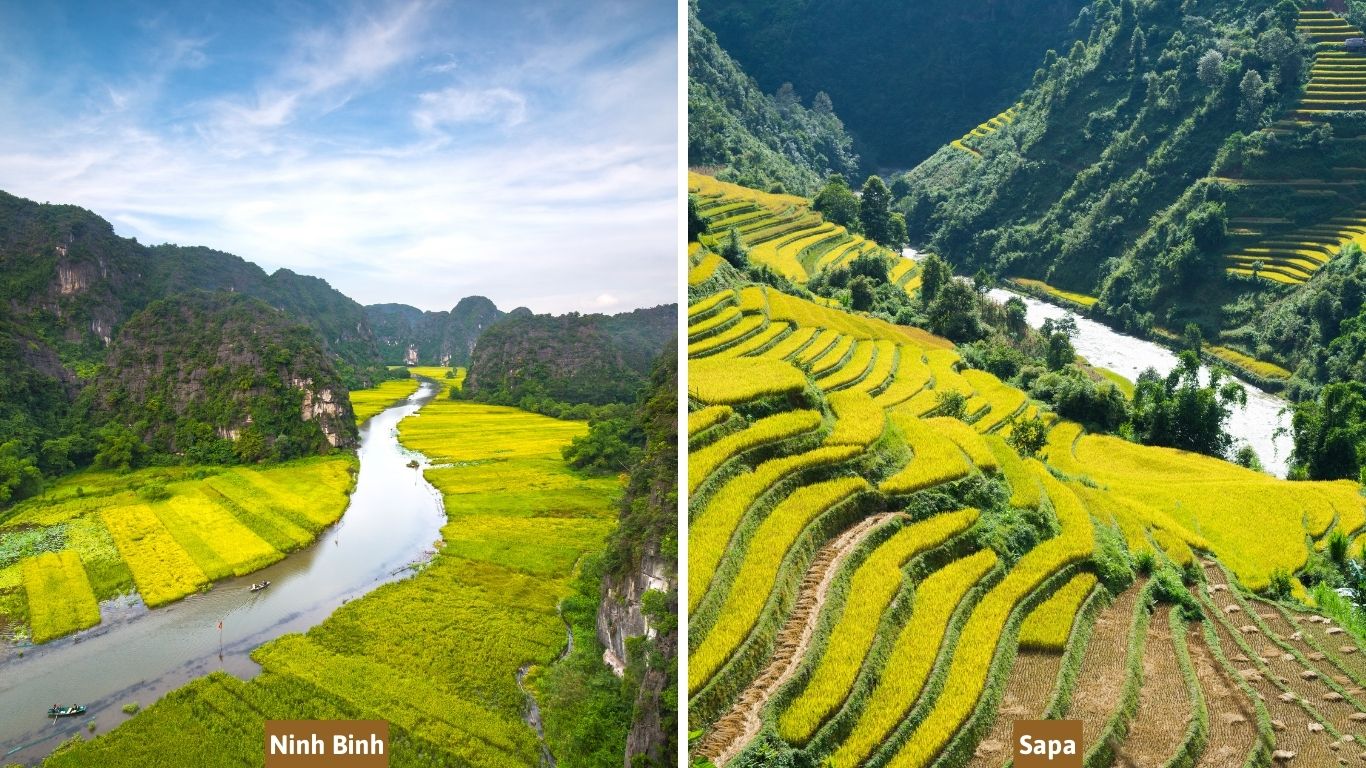
Ninh Binh is flat, slow, and watery, limestone karsts rising out of rice paddies, boat rides through caves, and a pace that makes you forget Hanoi exists. Sapa is the opposite: high altitude, misty mountains, steep terraced fields, and villages where Hmong and Red Dao communities have lived for centuries. One is a gentle escape, the other is an adventure. Both are worth it.
Ninh Binh: Halong Bay on land
Located just 100 km south of Hanoi, Ninh Binh is where limestone karst mountains rise out of emerald rice fields and tranquil rivers. Often called “Halong Bay on land,” this region combines natural beauty with deep cultural heritage.

What to see and do
The crown jewel is the UNESCO-listed Trang An Landscape Complex, a maze of waterways winding through cave tunnels and towering karst peaks. Nearby, the Tam Coc sampan ride drifts you through rice paddies and cave passages at a pace that feels almost dreamlike. For a panoramic view over it all, the climb up Mua Cave rewards you with one of the most dramatic landscapes in the country.
Hoa Lu was Vietnam’s ancient royal capital, and wandering its temple grounds gives you a sense of just how old this region’s story is. For something wilder, Cuc Phuong is Vietnam’s oldest national park, home to rare wildlife and dense rainforest trails, while Thung Nham Bird Park offers a quieter magic as thousands of storks and herons return to roost at sunset. For the full picture, our guide to things to do in Ninh Binh covers everything in more detail.
Why travellers love it
What makes Ninh Binh special isn’t just the sights. It’s the pace. You can cycle past rice paddies, watch farmers work alongside water buffalo, or stop at a roadside cafe for a local snack. It’s a place that rewards slowing down.
Best time to visit
The best time to visit Ninh Binh is March to May, when the rice fields are at their most lush, or September to November during harvest season, when everything turns golden. Summers are hot but still enjoyable, and winters are mild and quiet.
Sapa: the rooftop of Vietnam
Sitting 1,500 m above sea level in the Hoang Lien Son mountains, Sapa is surrounded by mist, terraced rice fields, and hill tribe villages. A world away from Hanoi.

Highlights
Muong Hoa Valley is the classic trek, with terraced fields dropping into the valley floor with Hmong villages at the bottom. Fansipan, the highest peak in Indochina, is reachable by cable car or on foot. Villages like Cat Cat, Ta Van, and Lao Chai are worth a morning each, and the local markets are some of the most authentic in the north.
Why do people love it?
The landscape shifts with the light. Mist rolls in, clears, rolls back. Trekking here isn’t just exercise; you’re walking through someone’s backyard, their farmland, their community. The ethnic minority cultures are vivid and very much alive.
Best time to visit
The idea time to visit Sapa is: September to November for the golden terraces, March to May for clear skies and spring flowers. Winter can be cold enough for frost, summer brings rain, but lush green valleys.
How to get to Ninh Binh and Sapa from Hanoi
Ninh Binh and Sapa sit in opposite directions from Hanoi, so there is no direct route between them. The good news is both are easy to reach, and with the right planning, you can connect them into one smooth northern Vietnam loop.
Getting to Ninh Binh from Hanoi
The easiest option is a private car, about 2 hours on a straightforward road. Trains and bus are possible but less flexible, especially if you want to stop along the way. Full breakdown in our guide to getting to Ninh Binh.
Getting to Sapa from Hanoi
A private car takes 5 to 6 hours. The overnight sleeper bus or train is a popular budget option and saves you a night’s accommodation, though you arrive less rested. For the full comparison, see our Hanoi to Sapa guide.
Travelling from Ninh Binh to Sapa
There is no direct connection. You can either take a private car the whole way, around 7 to 8 hours, or return to Hanoi first and continue from there. If you are short on time, the direct transfer is worth it. We arrange private transfers between both destinations so you spend less time figuring out logistics and more time actually travelling.
So, Is Ninh Binh or Sapa Better?
There is no wrong answer, only the one that fits your travel style and how much time you have. Ninh Binh is easier, closer, and gentler. Sapa is wilder, higher, and more demanding. If you only have a couple of days outside Hanoi, Ninh Binh wins. If you have a week and want to really get into the mountains, Sapa is worth every hour of the journey.
But honestly, the best version of this trip includes both. Rivers and caves in Ninh Binh, then terraced mountains and village life in Sapa. Northern Vietnam in full.
If you want help putting it together, our team at Vietnam Travels Online builds private itineraries around your schedule, your pace, and the experiences that matter most to you. No group tours, no fixed departures, just a trip designed around you.
Get in touch at [email protected] or visit our contact page to start planning.
Choose Ninh Binh if
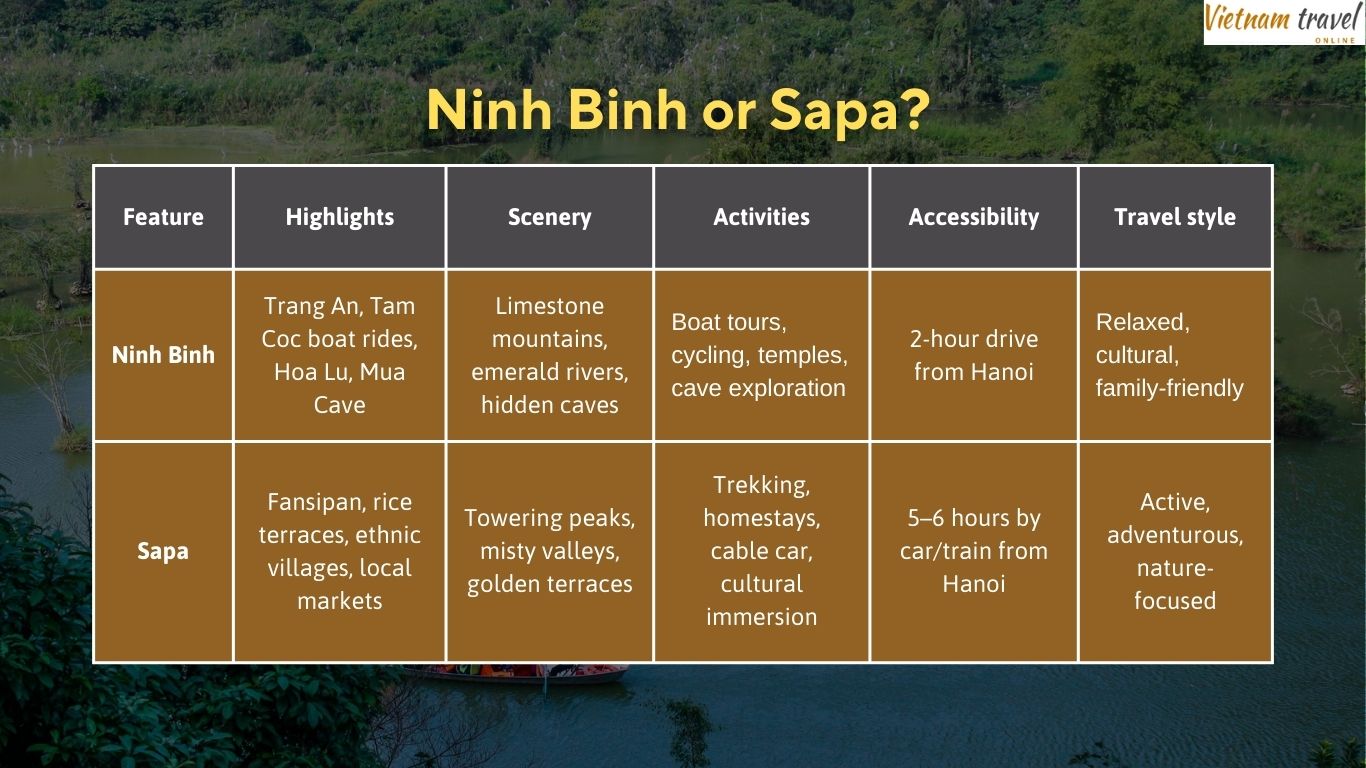
First time in Vietnam and want something easy and scenic close to Hanoi? This is your place. Travelling with family, young children, or elderly parents, the flat terrain and boat tours work for everyone. One to two days outside Hanoi is plenty here. Boat rides and cycling over hiking are more your speed. Visiting in summer when Sapa’s mountain roads get more challenging.
Choose Sapa if
Days on foot in the mountains is what you came for. Hmong and Red Dao village life is something you want to experience properly, not just pass through. Three to four nights and a longer journey from Hanoi suits your schedule. September to November is your window and you want those golden rice terraces. Fansipan, the highest peak in Indochina, is on the list.
Suggested Itineraries
Not every trip looks the same, and northern Vietnam rewards travellers who take their time. Here are three ways to structure your journey depending on how long you have.
Northern Vietnam Discovery (7 to 9 days)
The classic northern loop. Ninh Binh first for the rivers, caves, and karst scenery, then up to Sapa for the mountains, terraced fields, and village life. Our Northern Charm Discovery 8-day tour is built around exactly this route, with private transfers and accommodation taken care of.
Vietnam Highlights (10 to 14 days)
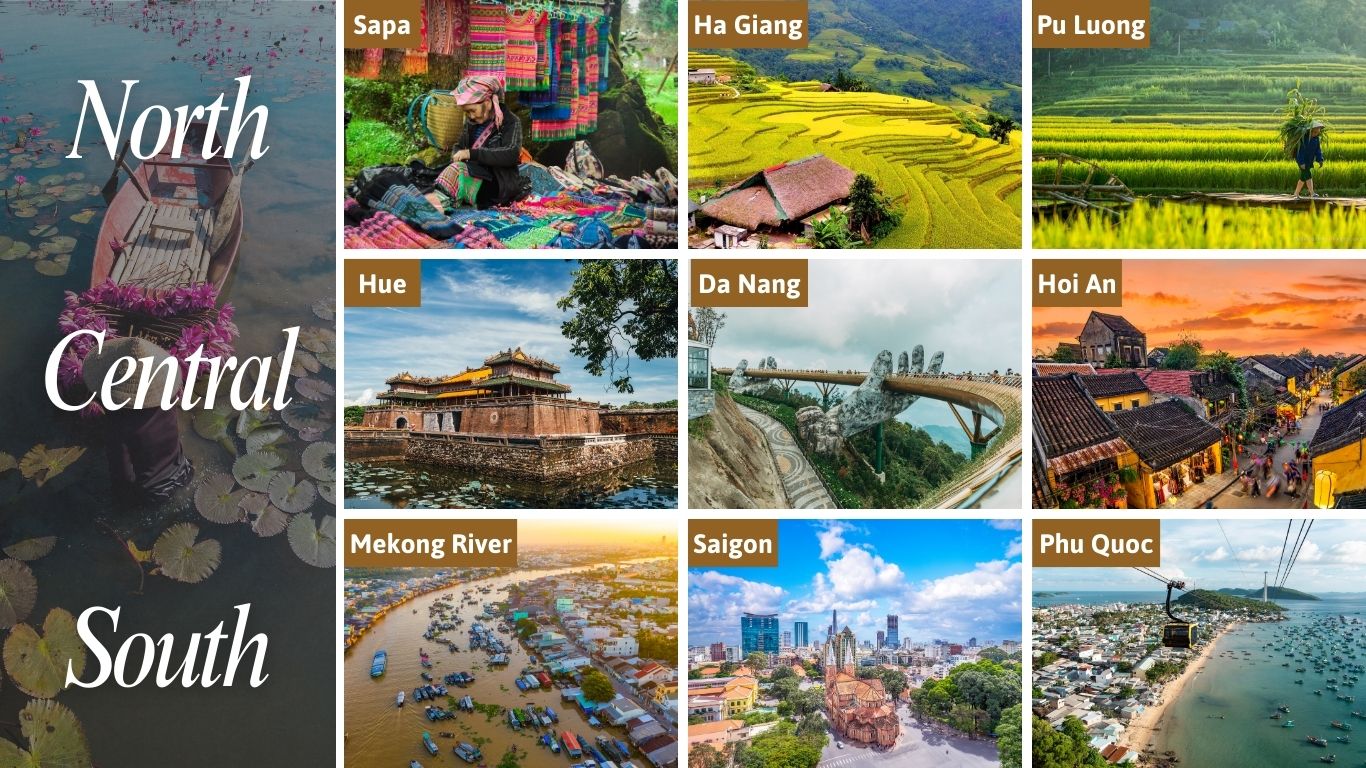
Hanoi to Ninh Binh to Sapa, then Halong Bay before flying south to Hue, Hoi An, and Ho Chi Minh City. The full picture of Vietnam in two weeks, from north to south. Our Vietnam Highlights tour covers this route with private guides and handpicked accommodation throughout.
Vietnam top to bottom (2 to 3 weeks)
For those who want to go deep. Start with Ninh Binh and Sapa in the north, work your way down through Halong Bay, Hue, Hoi An, and finish in Ho Chi Minh City. Vietnam from top to bottom at a pace that lets it actually sink in. Our 20-day Vietnam tour covers exactly this: private guides and handpicked accommodation throughout. See the full itinerary on vietnamtravelsonline.com or reach out directly, and we will tailor it around your dates.
Budget comparison: Ninh Binh vs Sapa
Planning your budget is one of the most practical ways to decide between these two destinations. Here is a realistic breakdown to help you picture the overall cost.
Ninh Binh (per person, mid-range, 2 nights)
- Accommodation ranges from $25 to $60 per night, especially for boutique guesthouses near Tam Coc or Trang An
- Trang An boat tour costs around $5 to $8 per person
- Tam Coc sampan ride is approximately $5 per person
- Mua Cave entrance fee is about $2.50
- Meals typically range from $5 to $15 per meal at local restaurants
- A private car from Hanoi costs between $60 and $80 for a return trip
The estimated total for two nights is around $150 to $300 per person
Sapa (per person, mid-range, 3 nights)
- Accommodation ranges from $30 to $80 per night, including hotels with mountain views or local homestays
- A trekking guide usually costs between $25 and $50 per day
- The Fansipan cable car ticket is around $30 to $35 per person for a return trip
- Meals range from $5 to $20 per meal, depending on your choice of restaurant
- A sleeper bus from Hanoi costs about $25 to $40 for a return trip, while a private car costs from $150 to $200
The estimated total for three nights is around $250 to $450 per person
Overall, Ninh Binh is the more budget-friendly option, mainly because of its close distance to Hanoi. In contrast, Sapa tends to cost more due to longer travel time and the added value of hiring a trekking guide, which is strongly recommended for a safer and more meaningful experience in the villages.
Practical Tips for Visiting
-
Plan your time wisely: If you only have 2–3 days, Ninh Binh is easier to explore. For Sapa, set aside at least 3 nights.
-
Private transfers make the journey smoother: Both destinations involve long travel hours. Our private cars save time and give you flexibility compared to public transport.
-
Pack for the weather: Ninh Binh is humid, so bring light clothes and good walking shoes. Sapa can be chilly, especially at night, so pack a warm layer.
-
Stay close to the highlights: Choose boutique resorts in Ninh Binh near Tam Coc or Trang An, and in Sapa, a hotel with mountain views or even a homestay in a local village.
-
Combine both if possible: A northern Vietnam journey linking Ninh Binh and Sapa gives you rivers, caves, terraces, and ethnic culture all in one trip.
FAQs
- How far is it from Ninh Binh to Sapa?
Around 400 to 420 km by road, roughly 7 to 9 hours by private car, depending on traffic and route.
- Is Ninh Binh or Sapa better?
It depends on what you are looking for. Ninh Binh is perfect for first-timers, families, and anyone who wants scenic sightseeing without the long journey. Sapa is for trekkers, culture seekers, and those who have a few extra days to spend in the mountains. If you can, do both.
- How many days do I need?
Ninh Binh: 2 to 3 days covers the main highlights. Sapa: 3 to 4 days gives you enough time to trek, visit villages, and get up to Fansipan.
- Can I visit both in one trip?
Absolutely. Start from Hanoi, two nights in Ninh Binh, then three nights in Sapa. Our Northern Charm Discovery is built around exactly this route.
- How do I get from Ninh Binh to Sapa?
No direct train exists. A private car is the most comfortable option, around 7 to 8 hours door to door. We arrange private transfers between both destinations.
- Can I combine this trip with other destinations?
Easily. Both link well with Halong Bay to the east and the full south of Vietnam beyond that. Get in touch at [email protected], and we will put together an itinerary that fits.