

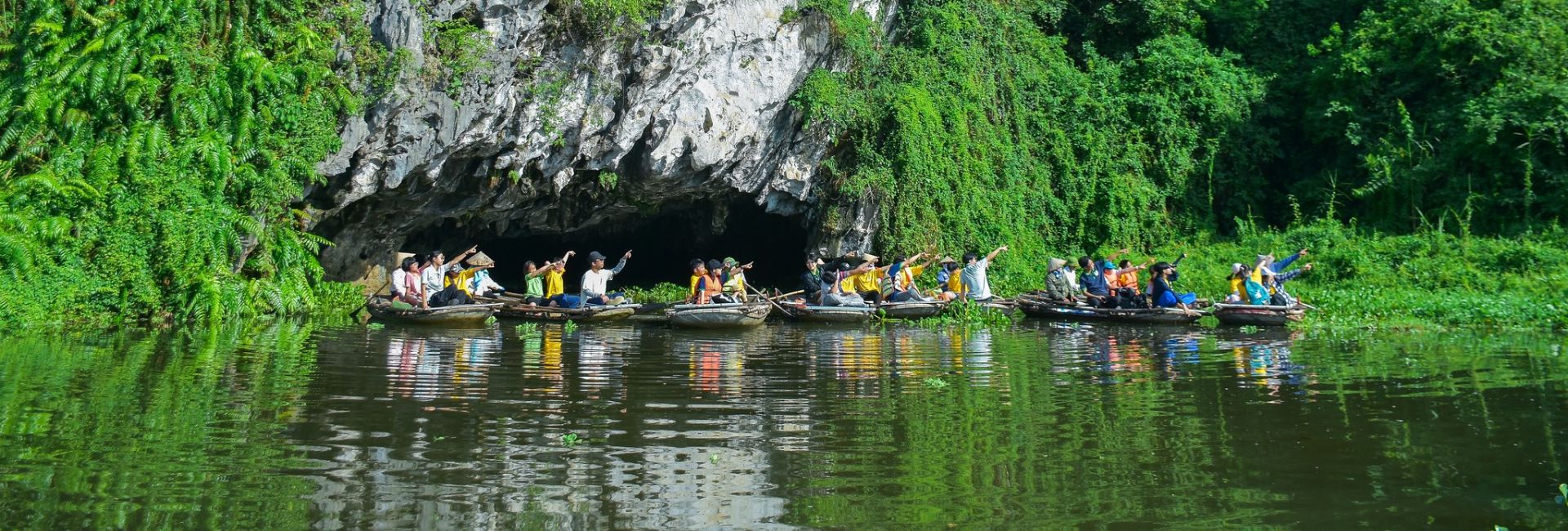
Cuc Phuong National Park is a sanctuary of rich biodiversity with highlights like the Endangered Primate Rescue Center, ancient caves, and breathtaking May Bac Peak. Ideal for nature lovers, the best time for your visit is November to February, when cool weather makes it perfect for hiking, wildlife watching, and immersing yourself in Vietnam’s oldest national park.
What you will find in this travel guide
Quick Facts & Getting There
Entrance Fees and Conservation Center Pricing
5 Highlights of Cuc Phuong National Park
What Can You Do in Cuc Phuong National Park?
Extra tips for your trip to Cuc Phuong National Park
Suggested 3-Day Ninh Binh Itinerary Including Cuc Phuong
Quick Facts & Getting There
| Detail | Information |
|---|---|
| Location | Nho Quan District, Ninh Binh Province |
| Distance from Hanoi | ~120 km south · 2 to 2.5 hours by car |
| Main entrance fee — Adults | 60,000 VND |
| Main entrance fee — Children | 10,000 VND |
| Best time to visit | November to February |
| Recommended duration | 1 full day to 3 days |
Three ways in, each suits a different traveller:
- Direct red bus (plate 35B 00837) · departs Giap Bat station, Hanoi at 3:00 pm · returns from Park Headquarters at 9:00 am · best budget option, no transfers needed
- Private car · 1,200,000 to 1,500,000 VND one way for a four-seater · book through your hotel or agencies like Handspan or Exotissimo · best for day trips since your driver waits
- Local coach · any bus to Nho Quan, then a 10 km taxi to the park gate · cheapest but requires two transfers
Booking a private car from Hanoi? We handle transfers with flexible pickup and drop-off. Contact us here.
Entrance Fees and Conservation Center Pricing
One thing that catches many visitors off guard is that the main park entrance fee is just the beginning. Several of Cuc Phuong’s specialist conservation centers charge their own separate admission, and knowing this upfront saves you the awkward moment of arriving without enough cash. Note that many of the smaller centers and local Muong stalls inside the park do not yet accept cards or digital transfers, so bring Vietnamese dong in cash.
| Attraction | Adult Fee | Child Fee |
|---|---|---|
| Main Park Entrance | 60,000 VND | 10,000 VND |
| Endangered Primate Rescue Center | 50,000 VND | 20,000 VND |
| Turtle Conservation Center | 50,000 VND | 20,000 VND |
| Carnivore and Pangolin Conservation Center | 50,000 VND | 20,000 VND |
5 Highlights of Cuc Phuong National Park
Cuc Phuong has a lot going on, but these are the reasons people come back and what makes it worth planning properly, rather than squeezing in a half day.
The Big 3 Conservation Centers
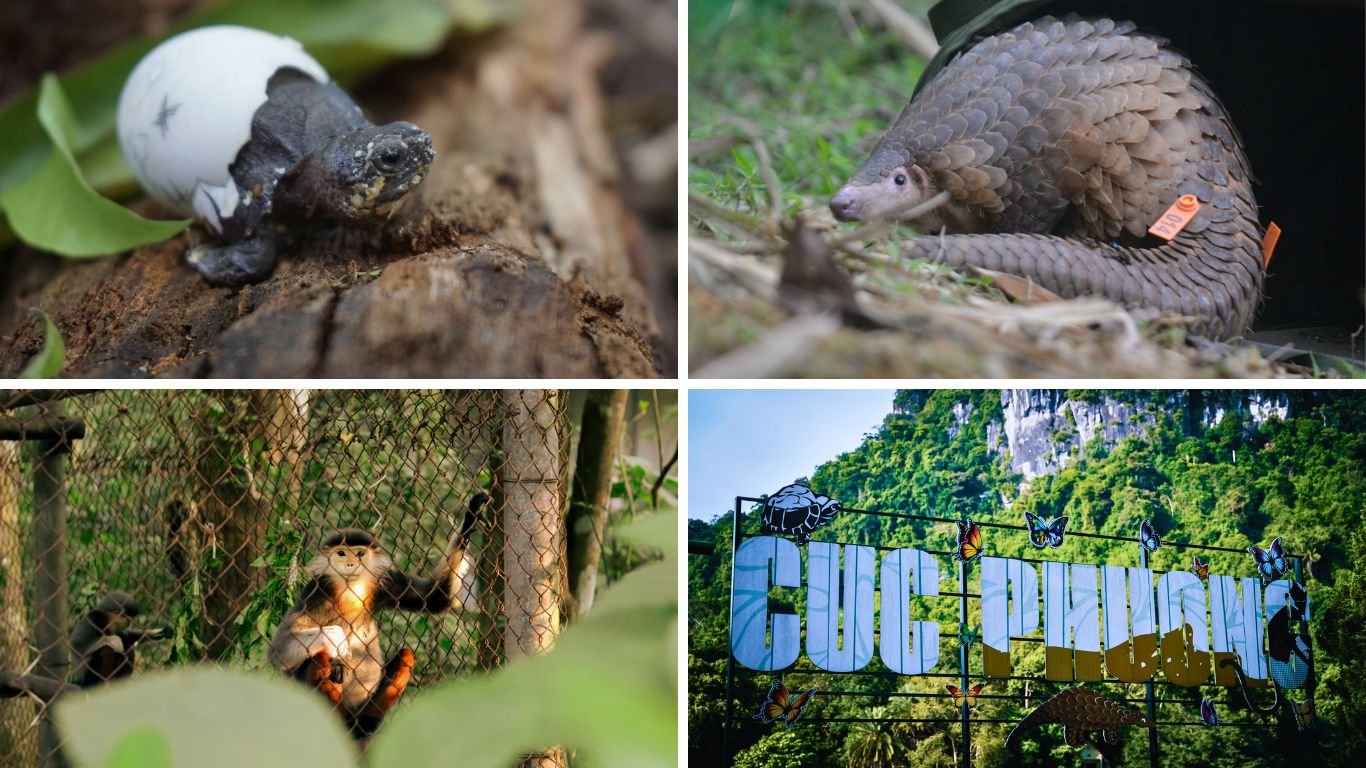
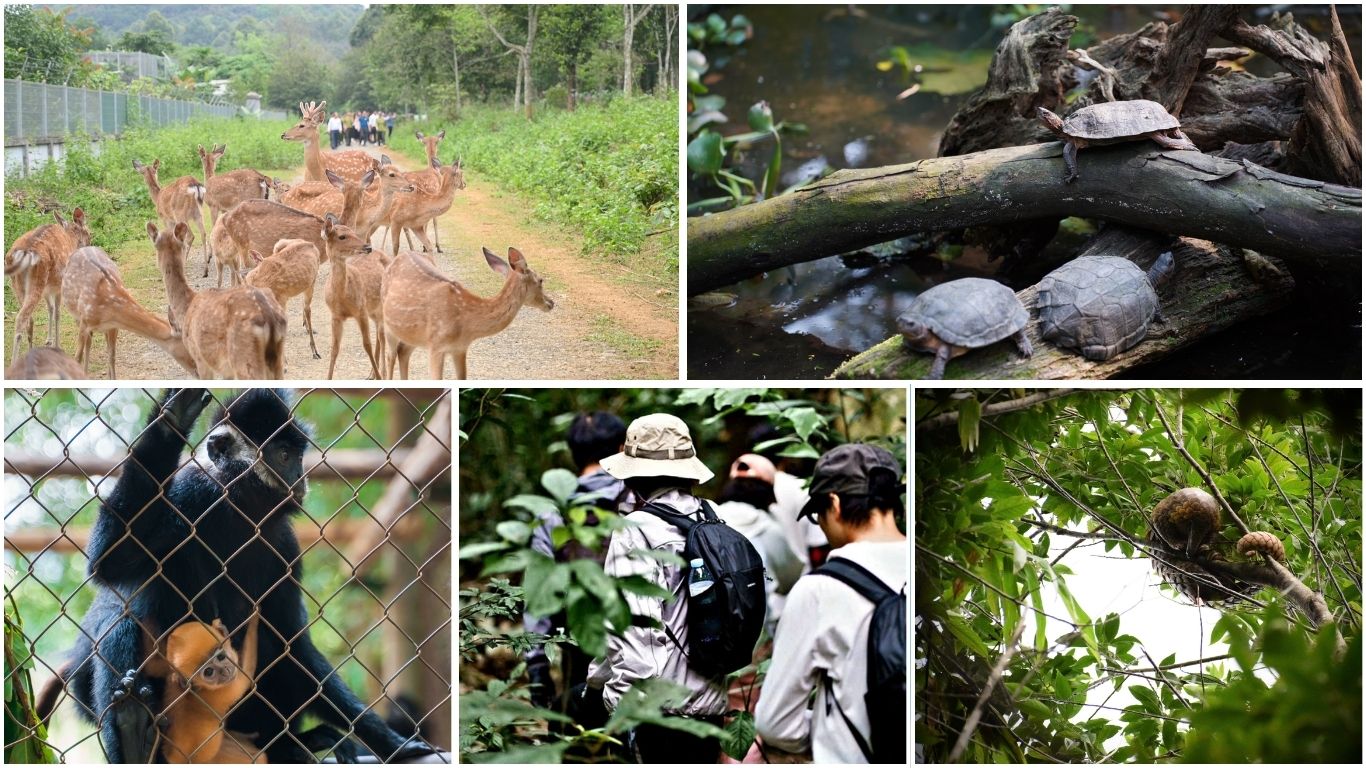
No other national park in Vietnam puts you this close to active wildlife rescue. The Primate Rescue Center, Turtle Conservation Center, and Carnivore and Pangolin Conservation Center sit within walking distance of each other, each pulling animals directly out of trafficking networks across the country. The Primate Center’s Langurs are the most visible, moving through recovery into a seven-hectare semi-natural breeding area before rewilding. The Pangolin Center is the one that surprises people most. Pangolins are the world’s most trafficked mammal, and seeing the scale of rehabilitation work here reframes how you think about wildlife in Vietnam entirely. Allow two hours across all three and do not rush the last one.
Butterfly and Firefly Seasons
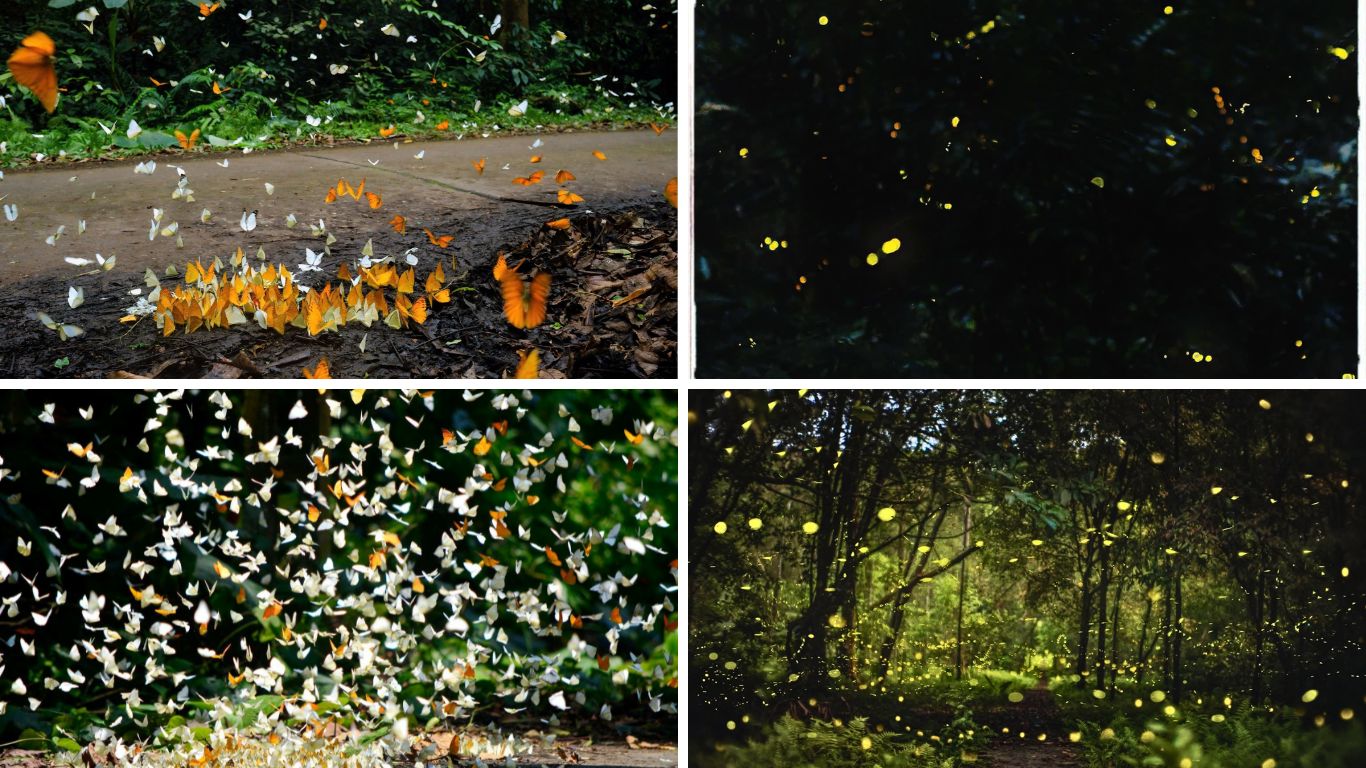
From late April through May, over 400 butterfly species are active across the park’s forest edges and clearings, making it one of the most concentrated butterfly habitats in Southeast Asia. In 2026, the season opened as early as April 7th, so if you’re visiting in late March, check local conditions rather than assuming nothing is flying yet. Firefly season overlaps closely, running April through July, and the two together make the evening hours the main event during this window.
May Bac Peak
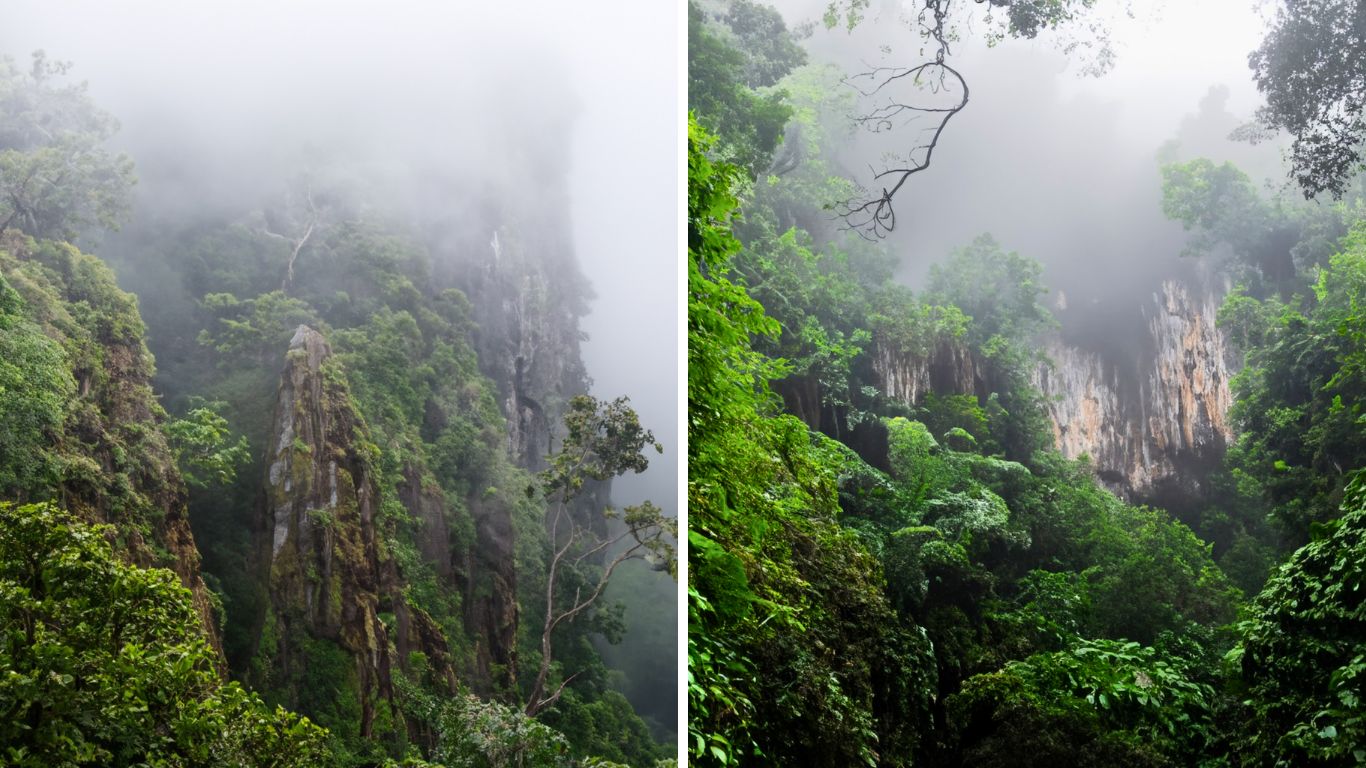
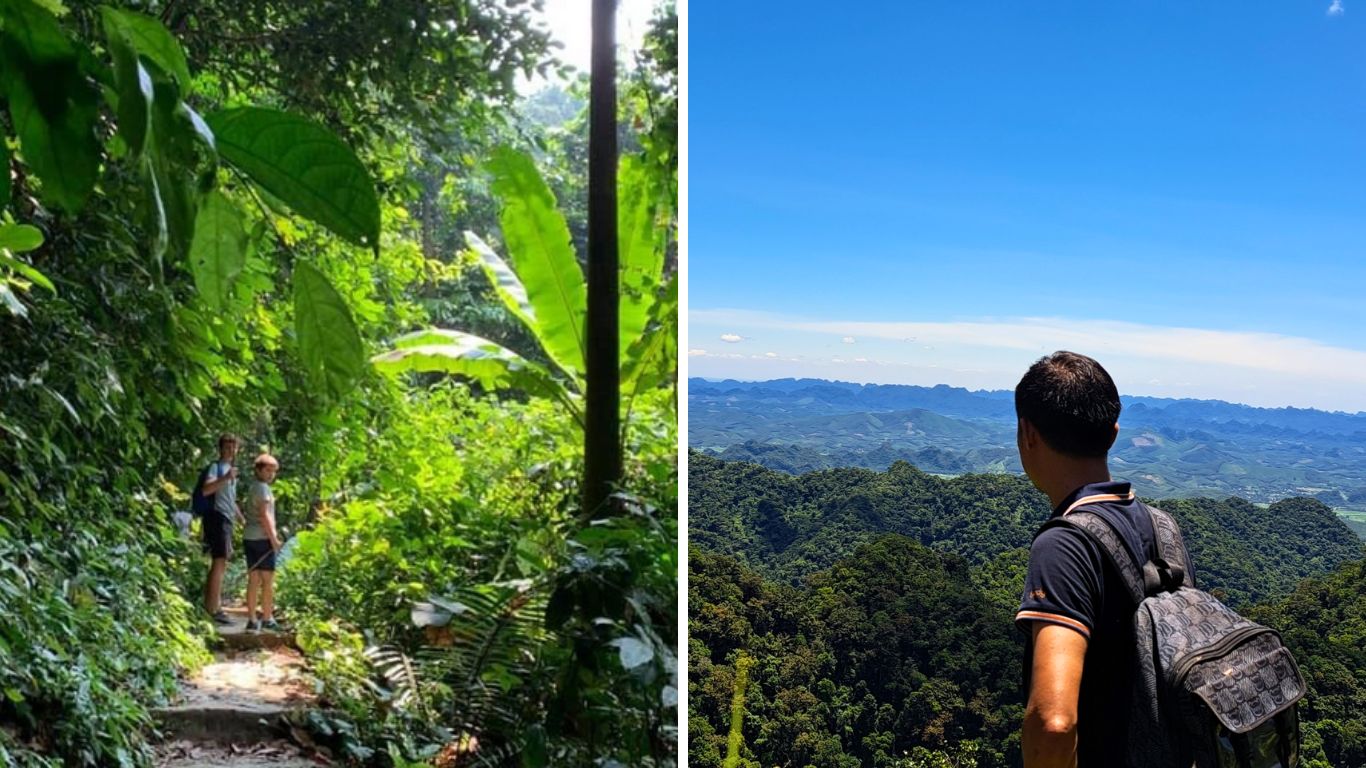
At 648 metres, May Bac Peak is the park’s most rewarding viewpoint and the destination most day visitors never reach, which is exactly why it’s worth planning for. The summit view across the primary forest canopy justifies the climb, and the trail passes through old-growth forest that sees very little foot traffic compared to the main park paths.
Prehistoric Caves
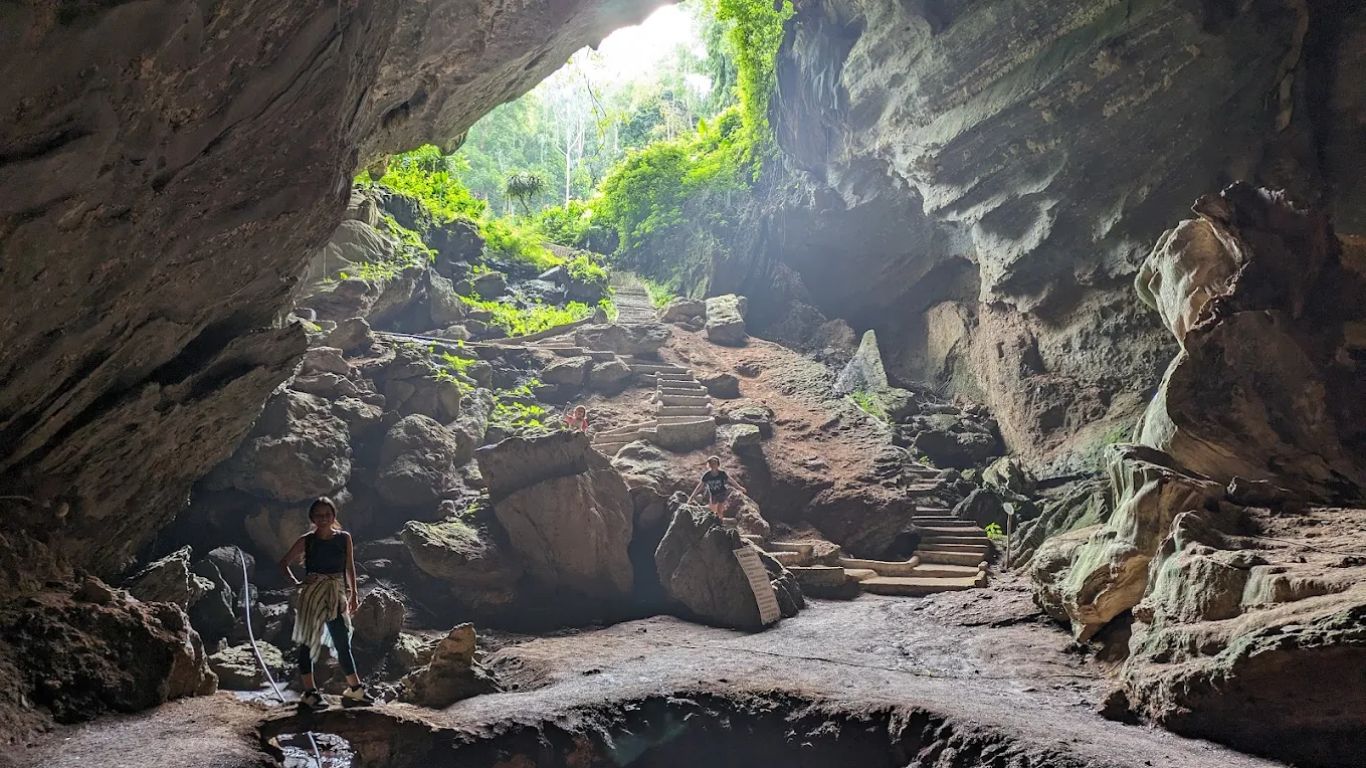
The Cave of Prehistoric Man holds evidence of human habitation stretching back 7,000 to 12,000 years, with ancient tools and cooking utensils still visible through the excavations inside. Con Moong Cave nearby is less visited but equally significant, placing it among the earliest known human settlement points in the entire region. For anyone seriously interested in Southeast Asian prehistory, these two together make a compelling afternoon.
The Thousand-Year-Old Tree
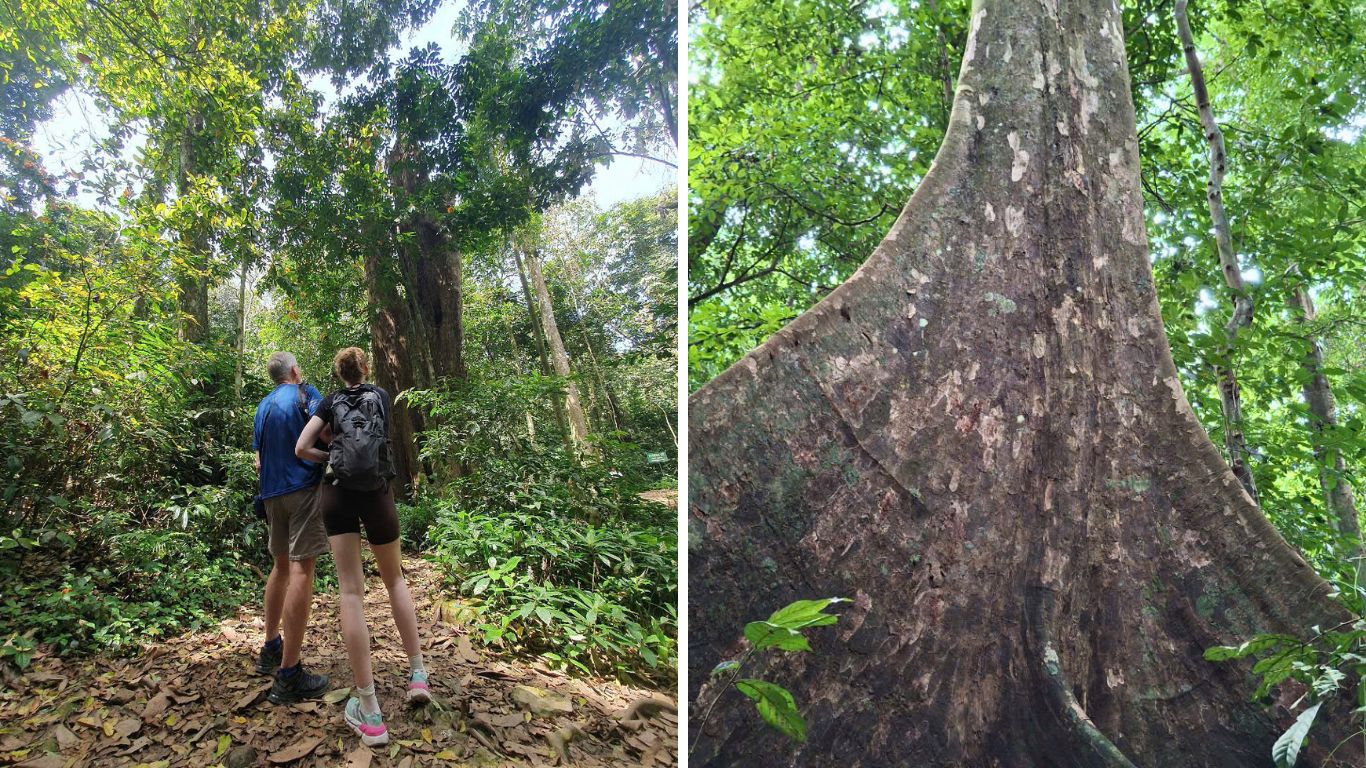
The Parashorea stellata standing deep in the primary forest has a circumference of 20 metres and has been there for over a millennium. Best reached as part of the trekking route rather than a standalone visit. Nothing about it needs embellishing; standing next to it does the work.
What Can You Do in Cuc Phuong National Park?
The park offers a lot more than a single type of experience. The key is knowing which activities match your group before you arrive, because some require preparation, some have physical demands, and a few are simply not suitable for everyone.
Trekking
Best for: Active travellers, solo explorers, couples, and small groups who want to go beyond the main visitor circuit.
Two routes, two completely different commitments.
The May Bac Peak full-day trek is the most rewarding trail in the park and the least crowded, simply because most day visitors don’t attempt it. The further in you go, the quieter the trail and the more frequent the wildlife sightings. A local guide is essential here, not optional, both for navigation and for what they spot that you’d walk straight past on your own.
The 7-kilometre loop trail is the accessible alternative, manageable for most fitness levels and comfortable for families with older children. It passes the Parashorea stellata and through the primary forest with regular wildlife encounters along the way.
Note: The May Bac Peak trek is not suitable for young children, elderly travellers, or anyone with mobility limitations. The loop trail is fine for most people, but it still requires proper footwear and water. Neither route should be attempted without a guide if you’re unfamiliar with the park.
A private local guide changes both routes entirely. Reach out here, and we’ll match you with the right person for your group.
Cave Exploration
Best for: History enthusiasts, curious travellers, and anyone who wants to go beyond the surface of what the park offers.
The Cave of Prehistoric Man and Con Moong Cave are the two significant archaeological sites inside the park. Con Moong is the one most visitors skip and the one most worth adding, holding evidence of human habitation stretching back 12,000 years and sitting among the earliest known settlement points in the region.
Note: Both caves require an authorised guide and a headlamp. The terrain inside is uneven and at times narrow. Not suitable for visitors with mobility issues, claustrophobia, or toddlers. Arrange your guide at the visitor centre before heading in.
Night Wildlife Tour
Best for: Everyone, including families with children, couples, and first-time visitors to the park. This is the one activity that works across almost all traveller types.
A tram car route along the forest edge, five kilometres over one hour, capped at 100 visitors per session to minimise impact on the animals. Seated throughout, so accessible regardless of fitness level or age. Common sightings include Slow Lorises, Civets, Black Giant Squirrels, Indian Flying Squirrels, and deer, with pangolins and wild cats possible on a good night. April through July is the window when the firefly display makes it exceptional. Outside that window, the experience depends on the night, so manage expectations if you’re visiting in the dry season.
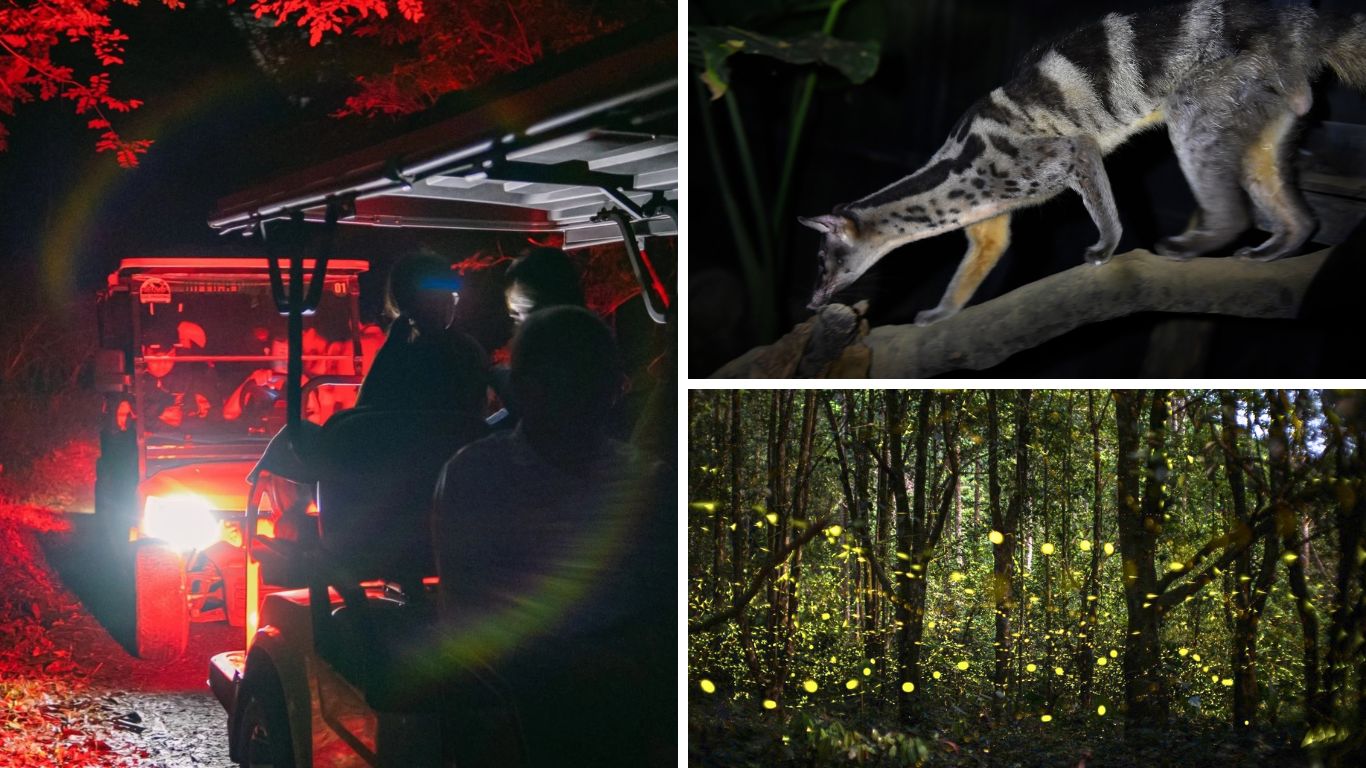
Note: Tours run nightly from 7:00 pm to 10:00 pm. Arrive at the entrance by 6:30 pm at the latest, as the tram departs on time. Book in advance during peak season, November through February as the 100-person cap fills quickly.
Cycling
Best for: Active families, solo travellers, and anyone who wants to cover more ground without committing to a full trek.
The 20-kilometre paved road through the park is flat, low traffic, and one of the most accessible ways to explore. Short rentals start from around 30,000 VND at the visitor centre, with full-day rates varying by season. Early morning gives the best wildlife sightings along the road, with langurs and hornbills most active in the first hours after sunrise.
Note: Not suitable for toddlers unless a child seat is fitted to the bike. Check the bike condition before you head out, as the visitor centre equipment varies. The full 20-kilometre road takes around two hours at a relaxed pace, so factor that into your day plan.
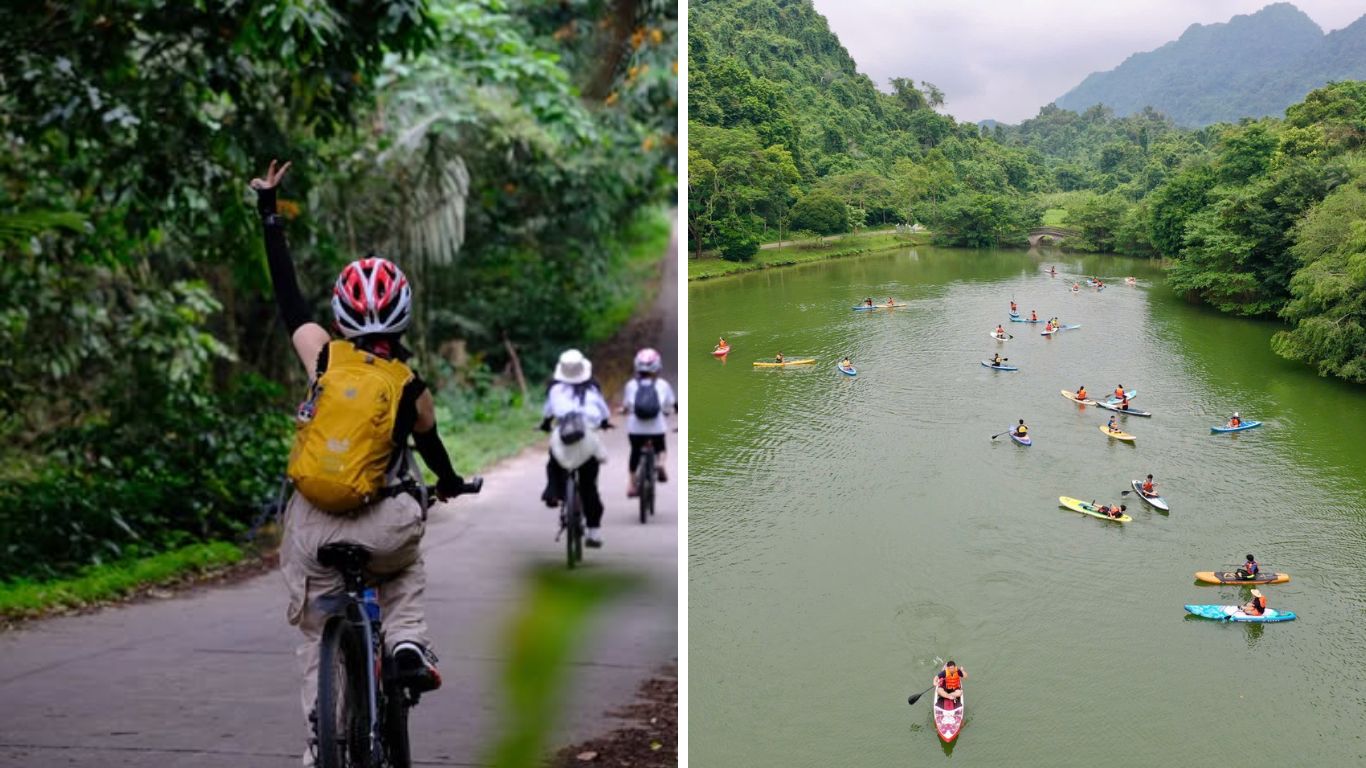
Kayaking
Best for: Couples, families with children old enough to paddle independently, and travellers who want a slower-paced afternoon away from the trails.
Mac Lake and Yen Quang Lake both offer rentals, reaching sections of the forest that no trail accesses. It’s calm, low-intensity, and genuinely peaceful in a way that the busier parts of the park are not.
Note: Dry season only for the best conditions. Avoid during heavy rain or immediately after, when water levels and currents shift in ways that make it unsuitable for casual paddlers. Not recommended for non-swimmers without a life jacket, so confirm equipment availability when you book.
Overnight Camping
Best for: Fit adults with prior trekking experience who want to experience the park beyond what a single day allows.
The full camping route covers around 30 kilometres over two to three days, with a mandatory local guide and groups capped at five people. It’s the most immersive way to experience Cuc Phuong and the one that takes you furthest from the day visitor circuit. The park’s bungalows are the practical alternative for anyone wanting to sleep inside the forest without the physical commitment of the full route.
Note: This is not suitable for children, elderly travellers, or anyone without reasonable physical fitness and prior multi-day trekking experience. Gear needs to be prepared in advance, and your guide will advise on what to bring. Do not attempt this without a local guide arranged through the park or a reputable operator.
Muong Cultural Performance
Best for: All traveller types, particularly those overnighting in the park or finishing their day with something beyond the trails.
Every evening at the park’s cultural centre, young Muong performers share traditional music, dance, and costume as a deliberate community effort to preserve their heritage for the next generation. It’s a straightforward, warm experience that rounds off a day in the park on a genuinely human note.
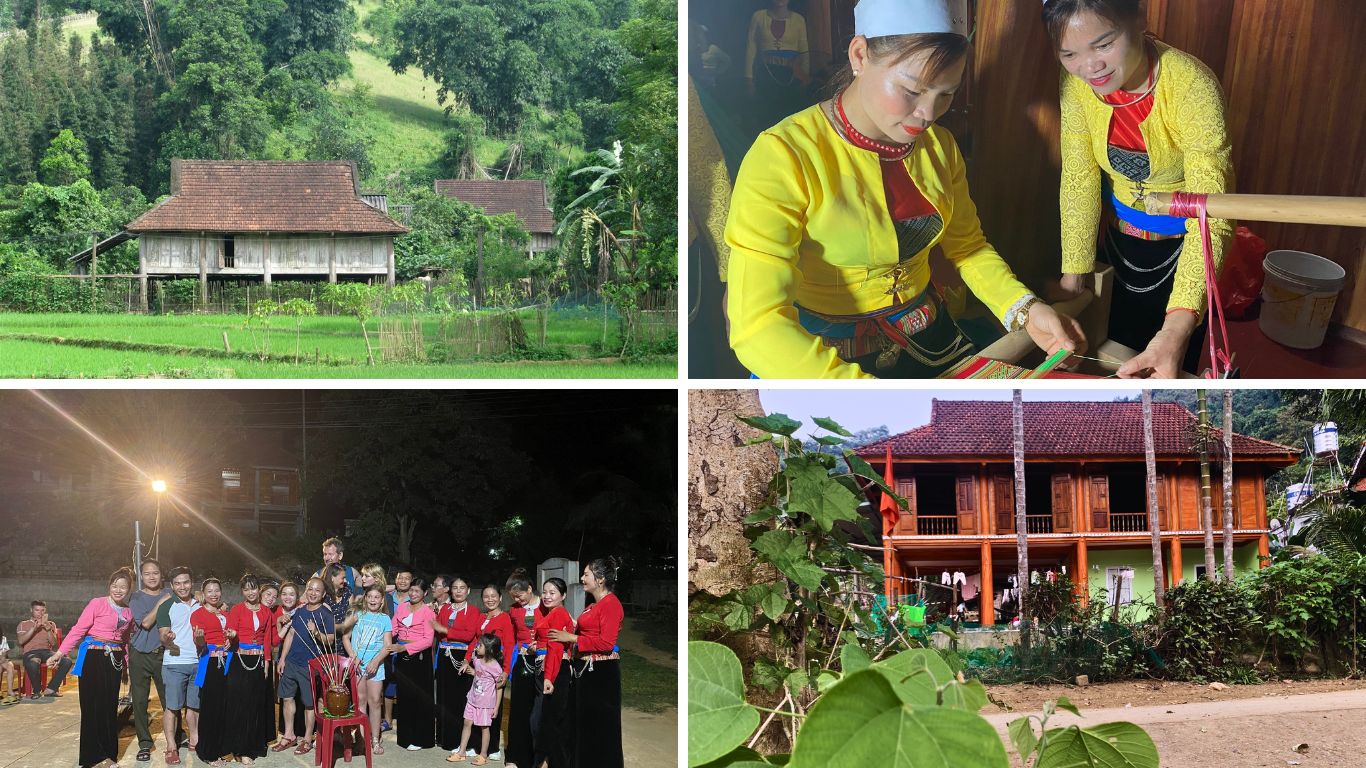
Note: Performances are in the evening, so this works best if you’re staying overnight in the park or finishing your day late. Check timing at the visitor centre on arrival, as schedules can shift by season.
Extra tips for your trip to Cuc Phuong National Park
What to pack
- Sturdy hiking shoes
- Insect repellent
- Light, quick-drying clothes
- Rain gear
- First-aid kit
- Flashlight for cave exploration
- Camera
- Reusable water bottle
What to eat in Cuc Phuong National Park
The park’s restaurant serves local Vietnamese cuisine, including specialties like grilled mountain chicken and wild vegetable soup. For authentic experiences, try the Muong ethnic minority dishes available in nearby villages. Pack some snacks for long treks, as food options within the park are limited.
Must-visit attractions near Cuc Phuong National Park
- Tam Coc: Often called “Halong Bay on Land,” Tam Coc’s limestone karsts and peaceful river make for an essential side trip. Take a traditional sampan boat ride through rice paddies and caves.
- Mua Cave: Climb the 500 steps to the peak for panoramic views of the Ninh Binh valley. The “Great Wall of Vietnam” perspective makes for unforgettable photos, especially during sunset.
- Bich Dong Pagoda: This three-tiered pagoda built into a mountainside offers stunning views and peaceful moments. The ancient architecture and cave shrines create a mystical atmosphere.
- Trang An: A UNESCO World Heritage site featuring a spectacular boat journey through caves and past ancient temples. The limestone landscape creates breathtaking scenery.
Suggested 3-Day Ninh Binh Itinerary Including Cuc Phuong
Ninh Binh rewards slow travel, and three days give you enough time to experience its best without ever feeling rushed. Here’s a route that flows naturally and covers the highlights in the most enjoyable order.
Day 1 — Arrival and Tam Coc
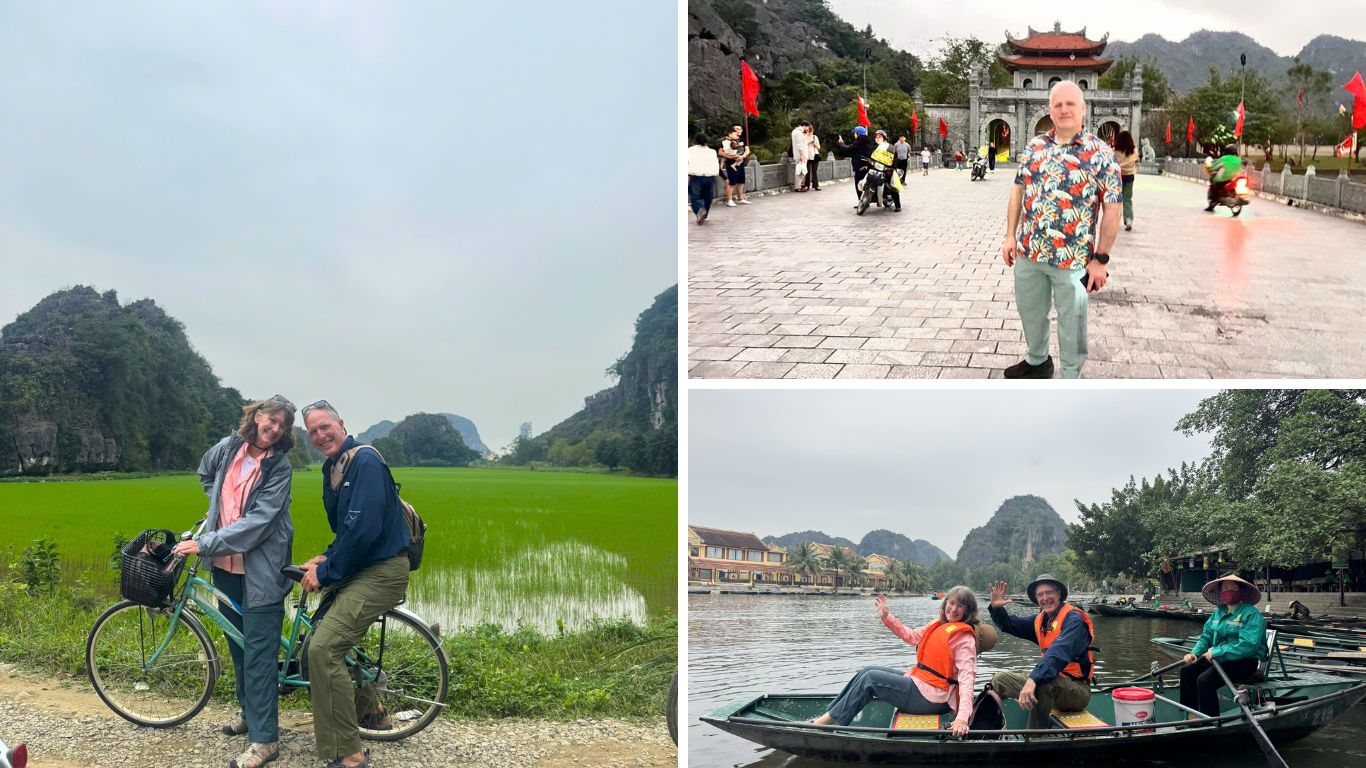
Arrive in Ninh Binh, settle into your accommodation, then head straight to Tam Coc for an afternoon boat trip along the Ngo Dong River. The limestone caves and rice paddies at golden hour are a strong opening to the province. In the evening, find a local restaurant and start with the regional specialties, including the area’s famous goat dishes and fermented rice wine.
Day 2 — Hoa Lu and Mua Cave
Spend the morning at Hoa Lu, Vietnam’s 10th-century ancient capital, where the Dinh and Le dynasty temples sit against a dramatic karst backdrop that feels untouched by time. After lunch, make the climb up Mua Cave for the panoramic summit view, and if the sky is clear, stay for sunset over the valley below. It’s one of those views that lives up to its reputation.
Day 3 — Cuc Phuong National Park, Full Day
- Arrive at the park by 8:30 am, before the heat builds
- Morning: the Big 3 conservation centers, allowing around two hours across all three
- Mid-morning: Botanical Garden trail with a National Park guide, around two hours
- Afternoon: Cave of Prehistoric Man, Con Moong Cave, and the thousand-year-old Parashorea stellata
- Late afternoon: cycling the 20-kilometre park road or kayaking on Mac Lake
- Evening: return to Ninh Binh for a farewell dinner featuring Muong ethnic cuisine
Ready to turn this itinerary into reality? We arrange fully private Ninh Binh tours with expert local guides, comfortable transport, and hand-picked accommodations at every budget. Browse our Vietnam tour options or write to us at vietnam@indochinavoyages.com and we’ll build the perfect trip around you.
Extra Tips for Your Trip
A little preparation goes a long way in Cuc Phuong. The park is well-organised, but knowing what to expect before you arrive will make your visit significantly smoother.
What to Pack
- Sturdy hiking shoes with ankle support
- Insect repellent, non-negotiable
- Light, quick-drying clothes
- A rain jacket or poncho, even in the dry season
- A basic first-aid kit
- A headlamp or flashlight for cave exploration
- A camera with extra batteries
- A reusable water bottle
- Cash in Vietnamese dong, as cards are not accepted at the gate, conservation centers, or local Muong stalls
What to Eat
The park’s own restaurant serves solid Vietnamese cuisine, including grilled mountain chicken and wild vegetable soup that are worth trying for the local flavour alone. For something more authentic, the Muong ethnic minority dishes available in nearby villages are a real highlight, and most private tours can arrange a meal stop on the way in or out. Pack trail snacks for longer treks because once you’re deep in the forest, your options disappear quickly.
Practical Tips
- Book guided treks and night tours well in advance during the November to February peak season, as spots fill quickly
- Night tours depart at 7:00 pm sharp, so arrive at the park entrance by 6:30 pm at the latest
- The Botanical Garden walk requires a National Park guide, arranged at the visitor centre on arrival
- Mobile signal inside the park is weak to non-existent, so download offline maps before you go
- Keep a respectful distance from all primates and never attempt to feed them, for your safety and theirs
- Your entrance fees and conservation center admissions directly support Cuc Phuong’s Rewilding Action Plan 2026 to 2035, a program aiming for near-zero wildlife hunting and a stronger, wilder forest for generations to come
FAQ
Is Cuc Phuong National Park worth visiting?
Yes, particularly if wildlife conservation, trekking, or prehistoric history interests you. It’s the kind of destination that reveals more the longer you stay, and it pairs naturally with the rest of Ninh Binh’s highlights.
How many days do you need?
One full day covers the Big 3 conservation centers, the prehistoric caves, and the ancient tree. Add a second day for May Bac Peak trekking and the night tour. Three days lets you add kayaking, cycling, and a more relaxed pace overall.
Can you do a day trip from Hanoi?
Yes. Depart by 8:00 am by private car, arrive by 10:30 am, and you have a full six to seven hours in the park before the return drive. It’s tight but very doable.
What are the 2026 entrance fees?
The main park entry is 60,000 VND for adults and 10,000 VND for children. Each conservation center charges an additional 50,000 VND for adults and 20,000 VND for children. Budget around 200,000 VND per adult if you plan to visit all three centers plus the main park.
When is butterfly season in 2026?
Peak season is late April through May, but 2026 saw early blooms from April 7th. If you’re visiting in late March or early April, check local reports rather than assuming you’ve missed it.
Is it family-friendly?
Very. The conservation centers work well for children, the cycling route is easy enough for families, and the night firefly tour is consistently the highlight for younger visitors.

Other tours you might consider
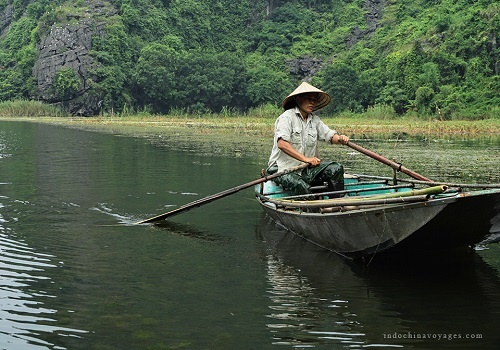
 Hanoi - Bai Dinh - Tam Coc - Ninh Binh - Halong Bay
 - Photography interest
- Family-friendly vacation
- Leisure & a bit of everything
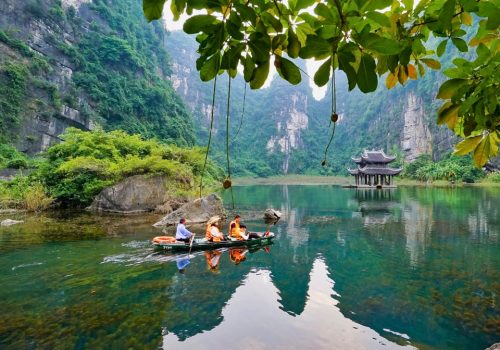 Hanoi - Ninh Binh
 - Sightseeing in notable attractions
- Photography interest
- Eco & nature lovers
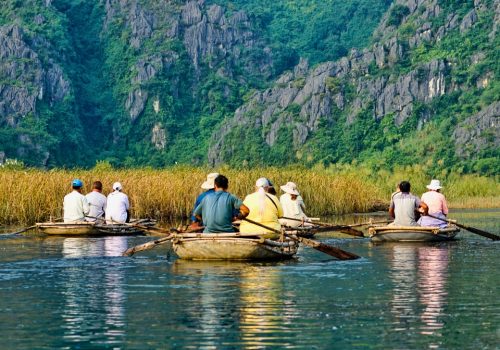 Hanoi - Sapa - Ninh Binh - Halong Bay
 - Cultural, history & local learning
- Photography interest
- Eco & nature lovers