

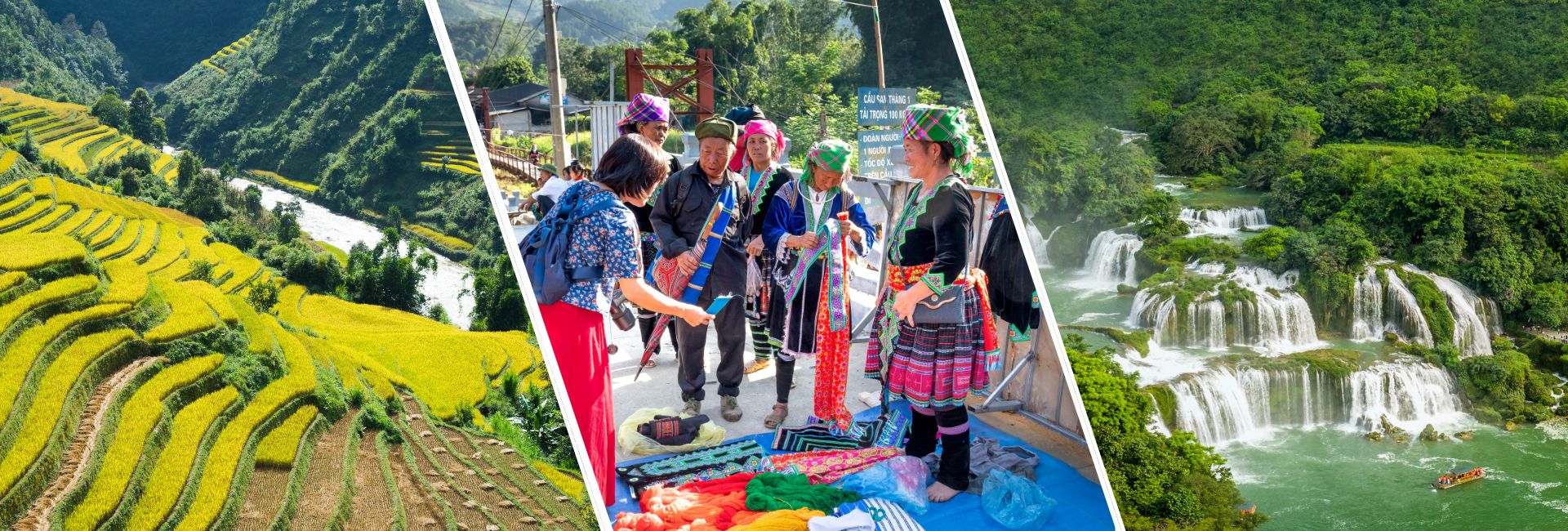
Northern Vietnam is known for dramatic mountains, ethnic diversity, and landscapes that feel untouched by time. Among the many highland destinations, Cao Bang, Ha Giang, and Sapa consistently attract first-time visitors looking for scenery and culture beyond the cities.
Although these places share a mountainous setting, they deliver very different experiences. Some feel gentle and welcoming, while others feel raw and demanding. Because of that, choosing the right destination depends less on beauty and more on travel style, pace, and expectations.
This guide compares Cao Bang, Ha Giang, and Sapa clearly, helping first-time visitors decide where to go, how long to stay, and which place suits them best.
What First-Time Visitors Usually Expect from a Mountain Journey?
For first-time visitors, a mountain journey in Vietnam is often imagined as a highlight of the entire trip. Travelers expect more than scenery. They want moments that feel rewarding, comfortable, and emotionally memorable, especially when time in Vietnam is limited.
At the same time, expectations are practical. Many visitors hope to enjoy mountain landscapes without constant long drives, physical strain, or logistical stress. Cultural encounters also matter. However, they need to feel natural and respectful, not rushed or overly commercial.
This is where many first-time travelers struggle. A destination can be visually stunning, yet feel exhausting. Another may offer rich culture, yet feel crowded or repetitive. The best first choice is the place that balances scenery, cultural depth, and travel ease, without asking too much on a first visit.
Cao Bang, Ha Giang, and Sapa all meet these expectations on the surface. What makes the decision important is how differently each destination delivers them.
Sapa – A Soft and Scenic Introduction to the Mountains
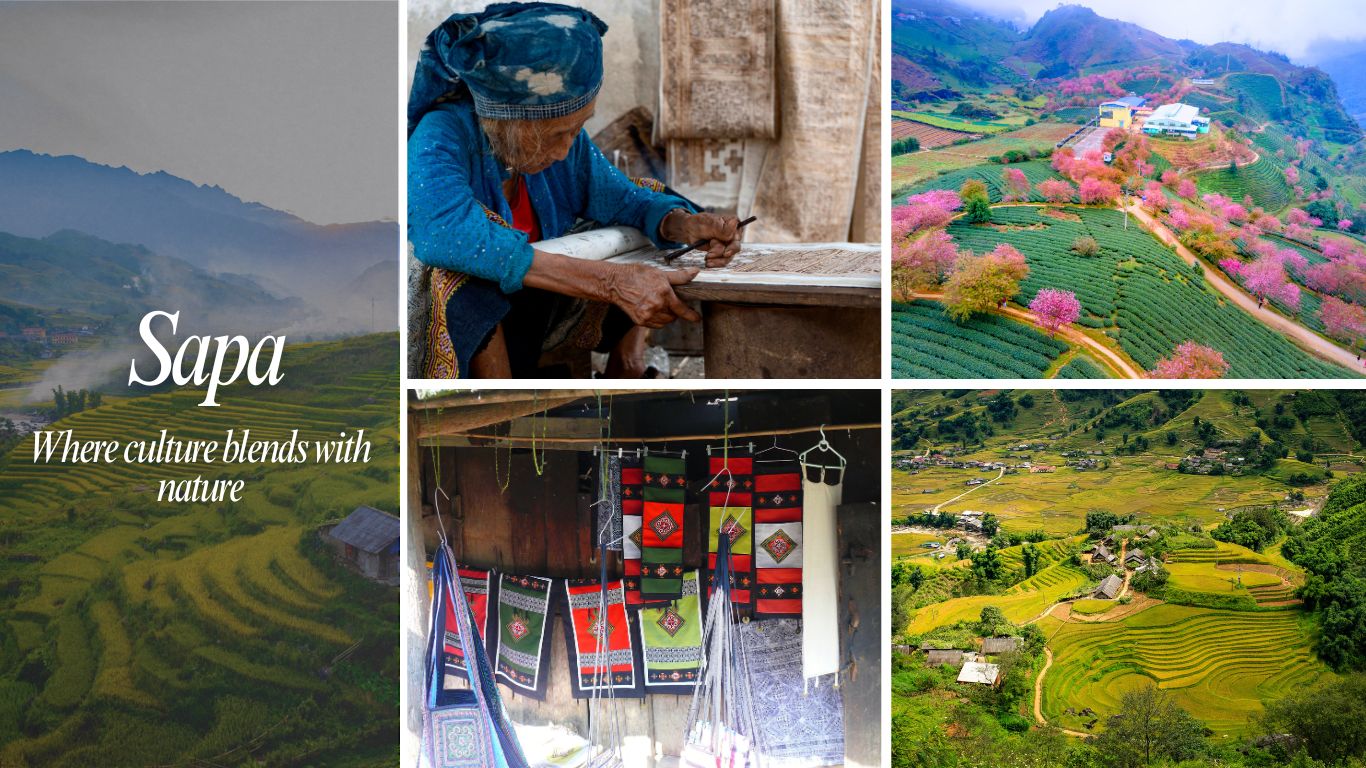
Terraced Landscapes That Feel Iconic Yet Approachable
Sapa is often the first mountain destination visitors imagine when planning a trip to northern Vietnam. The reason is simple. The landscape delivers instantly. Rolling valleys, layered rice terraces, and cool mountain air come together in a way that feels both dramatic and welcoming.
In the early morning, mist drifts slowly across the hills. As a result, the scenery feels calm rather than harsh. Fansipan Mountain adds a sense of scale, yet modern access means visitors do not need to be physically demanding to enjoy it. This balance explains why many travelers start their journey with classic Sapa tours, especially when this is their first time exploring the highlands.
Because the terrain feels open and gentle, Sapa impresses without overwhelming. For first-time visitors, that reassurance matters.
Ethnic Encounters Through Walking, Not Endurance
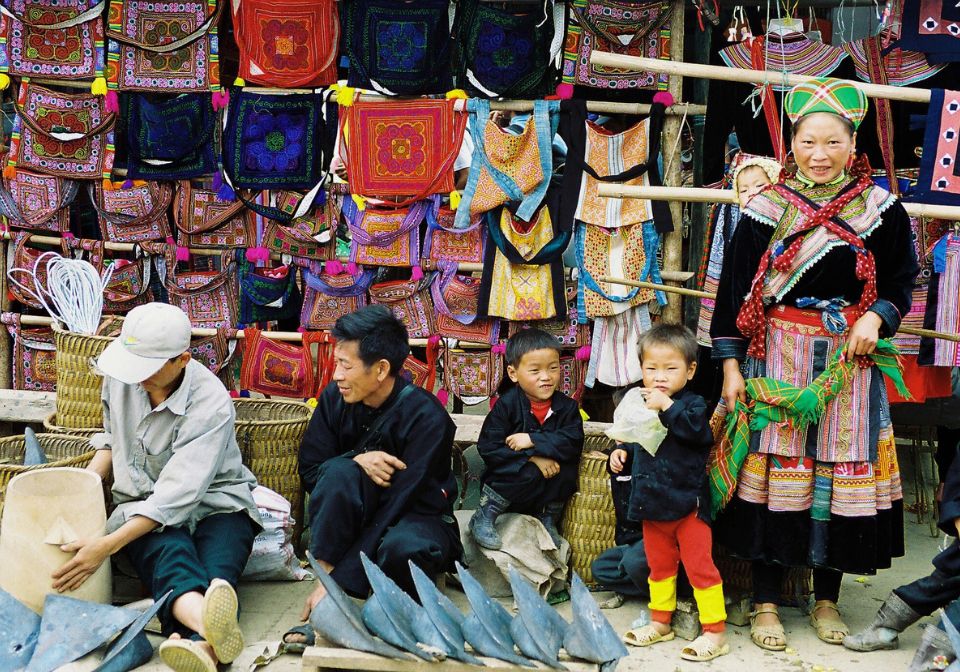
Unlike more remote mountain regions, cultural experiences in Sapa are shaped around walking, not driving. Short village treks lead travelers through Hmong and Dao communities, where daily life continues at a natural pace. Rice farming, textile weaving, and family routines become part of the journey rather than staged moments.
This is why Sapa trekking appeals strongly to beginners. Distances remain manageable, yet encounters feel genuine. Visitors can stop, observe, and interact without feeling rushed or physically strained.
Beyond villages, local life also appears in markets. Weekly gatherings introduce visitors to regional trade, food, and social traditions. Exploring Sapa markets, including the well-known Sapa buffalo market, adds another cultural layer that feels lively rather than curated.
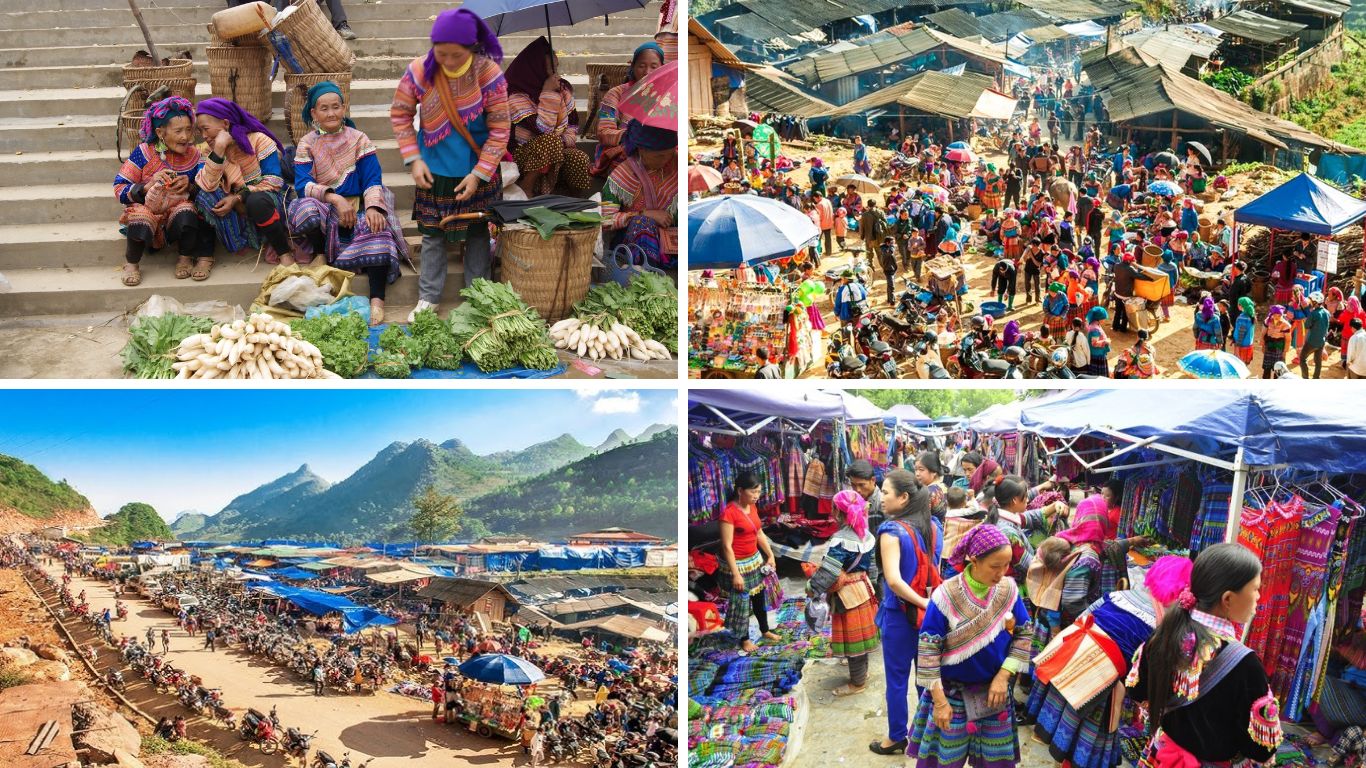
For those seeking deeper immersion, staying overnight in ethnic communities creates even stronger connections. Several villages now welcome travelers through carefully run homestays, as highlighted in these best villages for Sapa homestay tours, where comfort and authenticity stay balanced.
A Flexible Base with Clear Travel Advantages
Another reason Sapa suits first-time visitors is its flexibility. The town works well as a base, allowing travelers to adjust activities depending on weather, energy levels, or travel companions. This flexibility becomes especially important when choosing the best time to visit Sapa, as seasonal changes affect visibility, temperature, and trekking conditions.
💡Compared with other mountain destinations, Sapa also fits easily into broader itineraries. Travelers often debate Sapa or Pu Luong when looking for rice terraces, or Ninh Binh or Sapa when balancing mountains and lowland scenery. In most cases, Sapa wins for first-time visitors because it offers more variety in one compact area.
Who Sapa Is Best For and How Many Days You Need
Sapa works best for travelers who want strong scenery, meaningful cultural encounters, and a comfortable pace. Couples, families, and travelers new to Vietnam’s mountains often feel confident starting here.
Three days is ideal. This allows time for village walks, scenic viewpoints, market visits, and relaxed evenings without pressure. With less time, Sapa still delivers. With more time, it becomes a gentle rhythm rather than a rushed stop.
For many first-time visitors, Sapa does not feel like a compromise. Instead, it feels like the right beginning.
Ha Giang: A Powerful Journey Through Untamed Landscapes
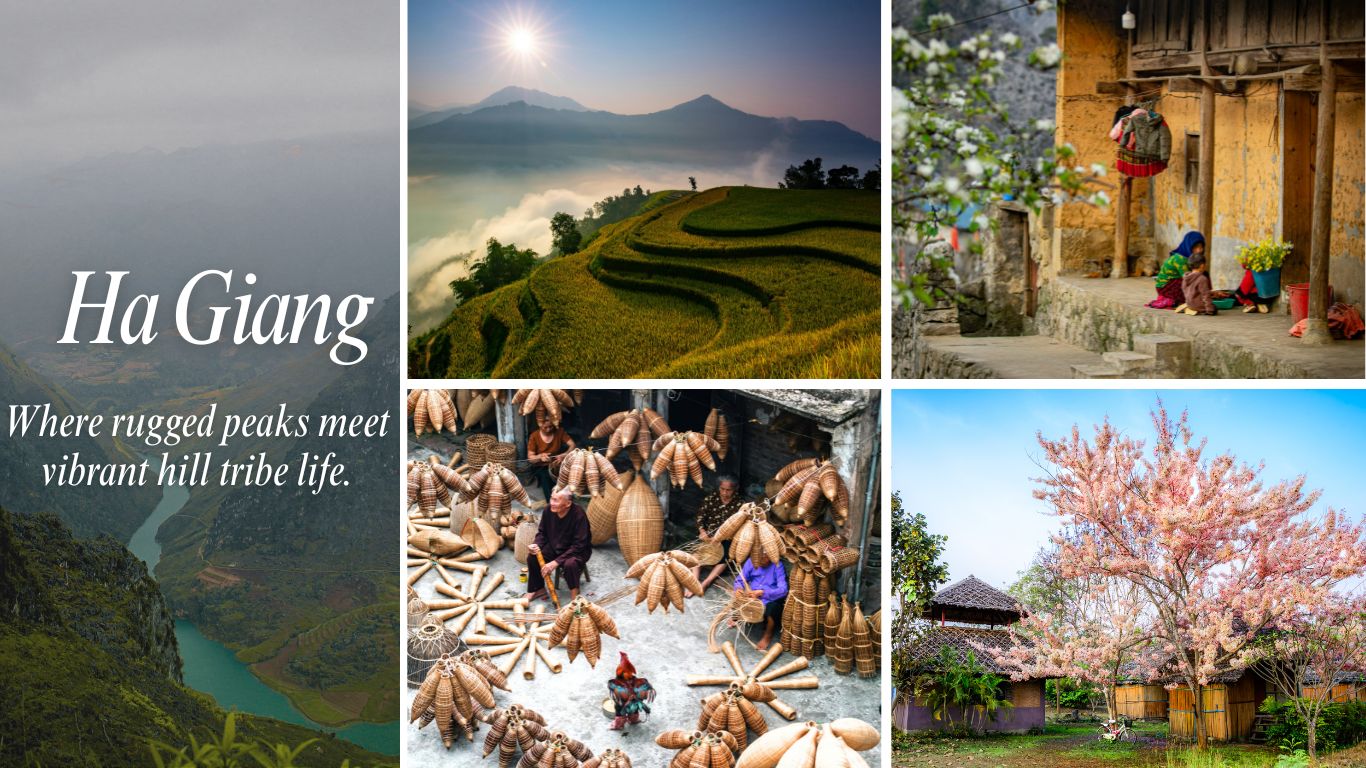
A Mountain World That Demands Your Attention
Ha Giang does not ease travelers into its landscape. From the first bend in the road, mountains rise sharply while valleys stretch deep into the distance. Roads twist across the Dong Van Karst Plateau, creating views that feel dramatic and unforgettable. In Ha Giang, the terrain is not simply a backdrop. It actively shapes the entire journey.
This region feels raw rather than polished. Unlike Sapa, which introduces mountain scenery gently, Ha Giang places travelers directly inside it. Because of this intensity, many visitors prepare carefully using a detailed Ha Giang travel guide before arriving. Planning matters here more than in most mountain destinations.
As the journey continues, the scale of the landscape becomes impossible to ignore. What looks calm from afar feels immense up close. That is why Ha Giang is often described as one of the most powerful travel experiences in northern Vietnam.
Culture Revealed Through the Journey Itself
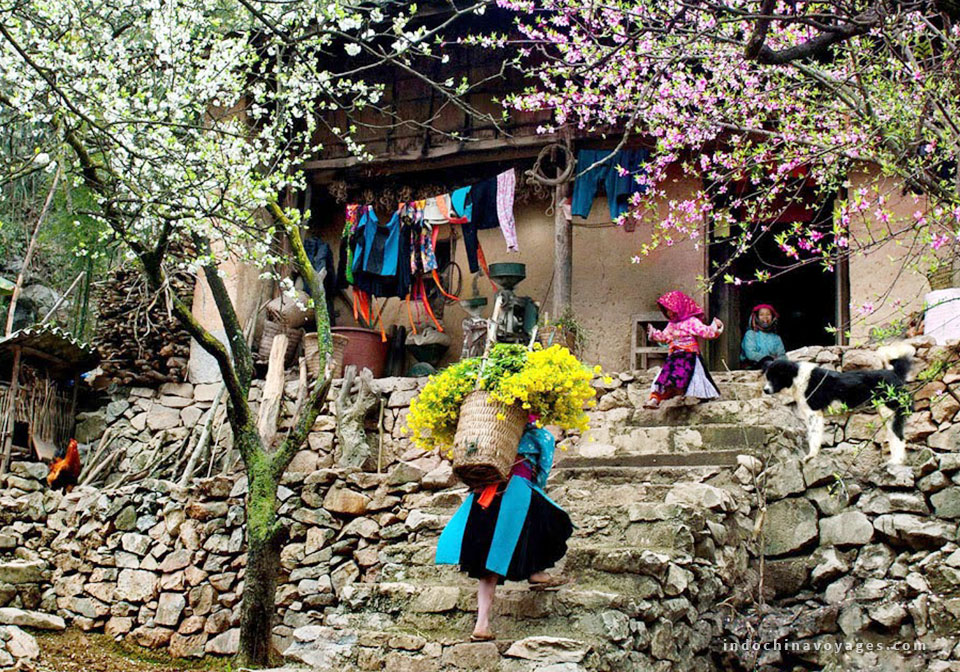
In Ha Giang, cultural life does not gather in one walkable place. Instead, it appears gradually along the road. Ethnic communities such as the Hmong, Lo Lo, and Tay live across hillsides and remote valleys. Their daily routines unfold through movement, shaped by the mountains rather than tourism.
This is what makes experiences like the Ha Giang Loop so meaningful. As travelers move through the region, culture reveals itself in real time. Weekly markets appear without warning. Roadside villages come into view between mountain passes. Families travel between settlements with animals or produce, while children walk long paths home from school.
💡For many visitors, this journey is experienced on two wheels. Stories about Foreigners riding the Ha Giang Loop by motorbike capture how closely travelers can connect with daily life when moving at the same pace as local communities. The experience feels immersive rather than observational.
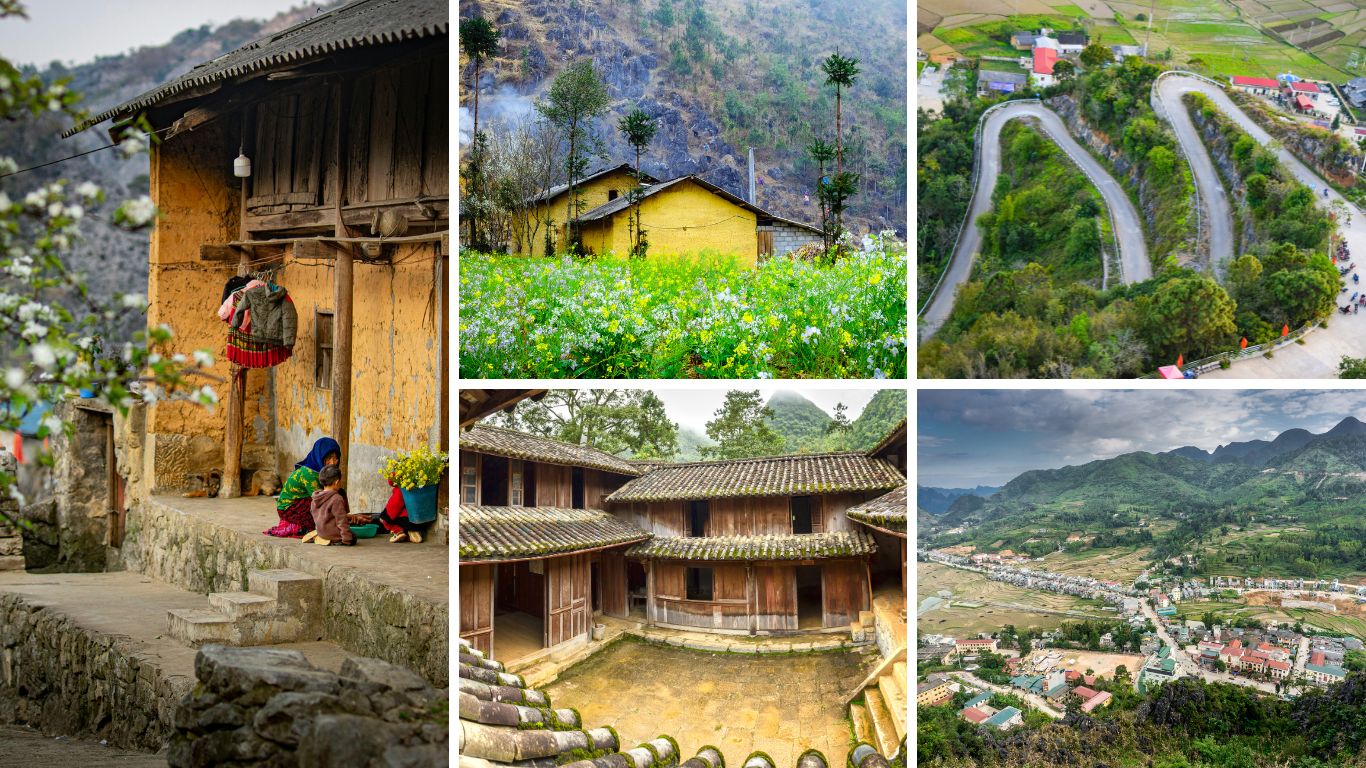
Because these moments are not arranged for visitors, they feel deeply authentic. For travelers who value cultural depth, this form of exposure often leaves a lasting emotional impression.
Where You Stay Shapes the Experience
Accommodation in Ha Giang reflects the region’s remote character. Options range from simple local guesthouses to scenic lodges overlooking valleys and mountain passes. Each choice affects how the journey feels at the end of the day.
Staying in the right place adds comfort without breaking the connection to the landscape. That is why many travelers review Ha Giang accommodations in advance. Choosing carefully helps balance rugged exploration with proper rest, especially during multi-day journeys.
When accommodation matches travel style, Ha Giang feels challenging yet rewarding rather than exhausting.
Movement, Weather, and Travel Decisions Matter Here
Ha Giang is defined by movement. Long drives, sharp curves, and changing elevations shape every day on the road. Travel here is less about individual attractions and more about how the journey unfolds.
Because conditions can change quickly, checking the Ha Giang weather and the best time to visit becomes essential. Weather affects visibility, road safety, and overall comfort, especially for first-time visitors.
💡Some travelers also compare this region with gentler alternatives. When deciding between Ha Giang or Pu Luong, the difference usually comes down to intensity. Pu Luong feels calm and pastoral. Ha Giang feels vast, dramatic, and immersive. One soothes. The other challenges.
Who Ha Giang Is Best For and How Much Time It Needs
Ha Giang suits travelers who enjoy adventure, discovery, and immersive travel. It rewards patience and curiosity rather than speed or convenience.
Four to five days is the minimum recommended stay. With less time, the journey feels rushed and physically demanding. With enough time, Ha Giang becomes not just memorable, but deeply meaningful.
For first-time visitors who are ready for a powerful mountain experience, Ha Giang leaves an impression that stays long after the journey ends.
Cao Bang: Peaceful Nature and Quiet Cultural Encounters
Landscapes That Slow You Down Naturally
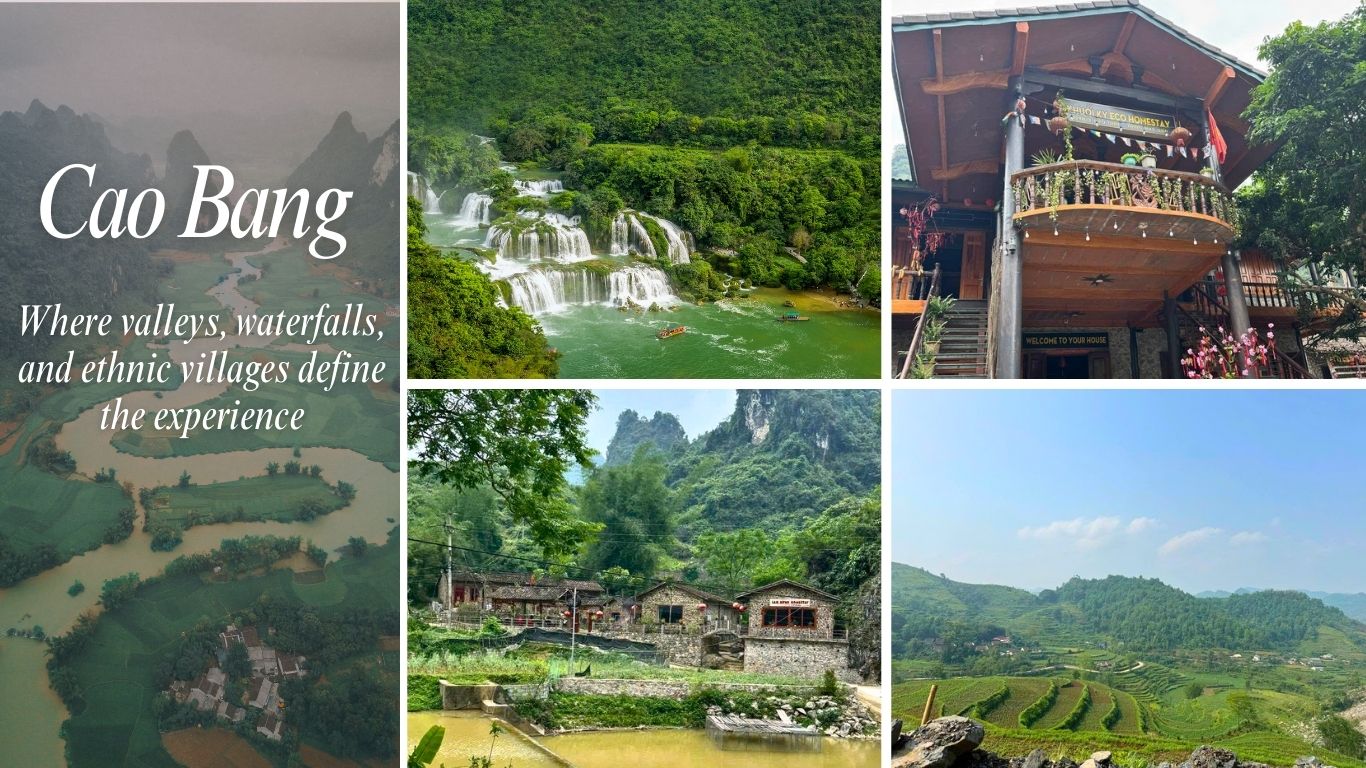
Cao Bang does not compete for attention. Instead, it invites you to slow down and observe. The scenery feels open and harmonious, shaped by rivers, limestone hills, and wide valleys rather than sharp peaks.
At the heart of the region, Ban Gioc Waterfall flows calmly across the border, surrounded by green fields and karst formations. The sound of water blends with the landscape instead of overpowering it. Because the pace is gentle, travelers often notice subtle changes in light, movement, and sound that are easy to miss in faster destinations.
Nearby, natural wonders continue beneath the surface. Exploring Nguom Ngao Cave adds depth to the experience, revealing long chambers, stone formations, and cool silence. Together, these landscapes create a feeling of balance rather than spectacle.
Cultural Encounters That Feel Personal and Unhurried
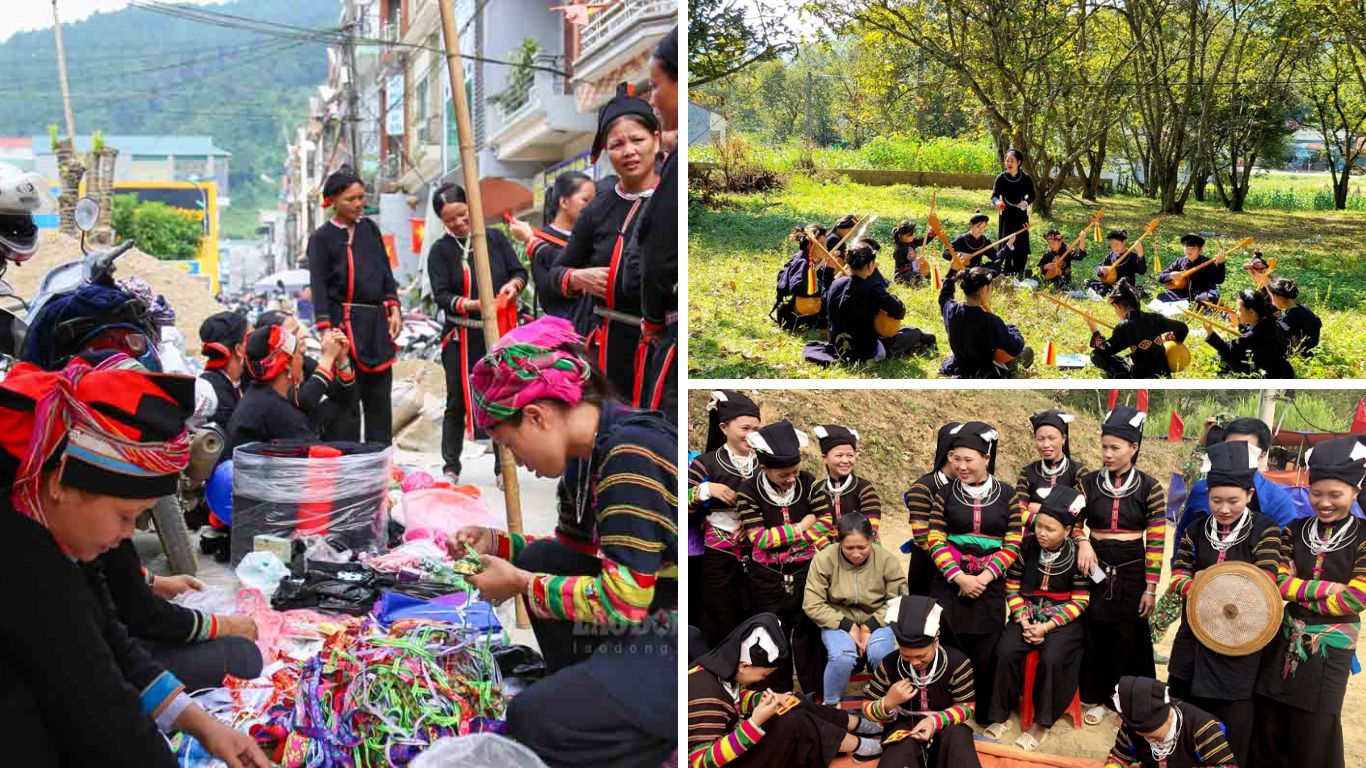
Cultural life in Cao Bang feels close and personal. Tay and Nung communities remain deeply connected to agriculture and traditional routines. Villages are spread across valleys and riverbanks, where daily life unfolds at a steady rhythm.
Visitors are welcomed with warmth rather than curiosity. Conversations take time. Meals are shared slowly. Simple activities such as walking through fields or sitting with local families feel meaningful because nothing is rushed.
Because tourism remains limited, cultural encounters feel natural rather than performed. For travelers seeking genuine connection without crowds, Cao Bang offers rare intimacy.
Who Cao Bang Is Best For and How Much Time to Spend
Cao Bang suits travelers who value reflection, photography, and cultural depth. It appeals to those who enjoy quiet exploration rather than constant movement.
Three to four days is ideal. This allows time to explore waterfalls, caves, and villages without pressure. With the right pace, Cao Bang feels restorative rather than passive.
For first-time visitors who want a calm and authentic mountain experience, Cao Bang offers something subtle but deeply rewarding.
Similarities and Differences. Which is the best among the three of them?
Cao Bang, Ha Giang, and Sapa all belong to northern Vietnam’s highland region, where mountains shape daily life and traditions remain strong. Across all three destinations, travelers see rice fields carved into hillsides, limestone formations, and ethnic communities such as the Hmong, Dao, Tay, and Nung living close to the land.
Because of these shared foundations, the three places are often grouped together during travel planning. At first glance, they seem similar. However, the way each destination presents these elements creates very different experiences.
Which Destination Works Best Overall
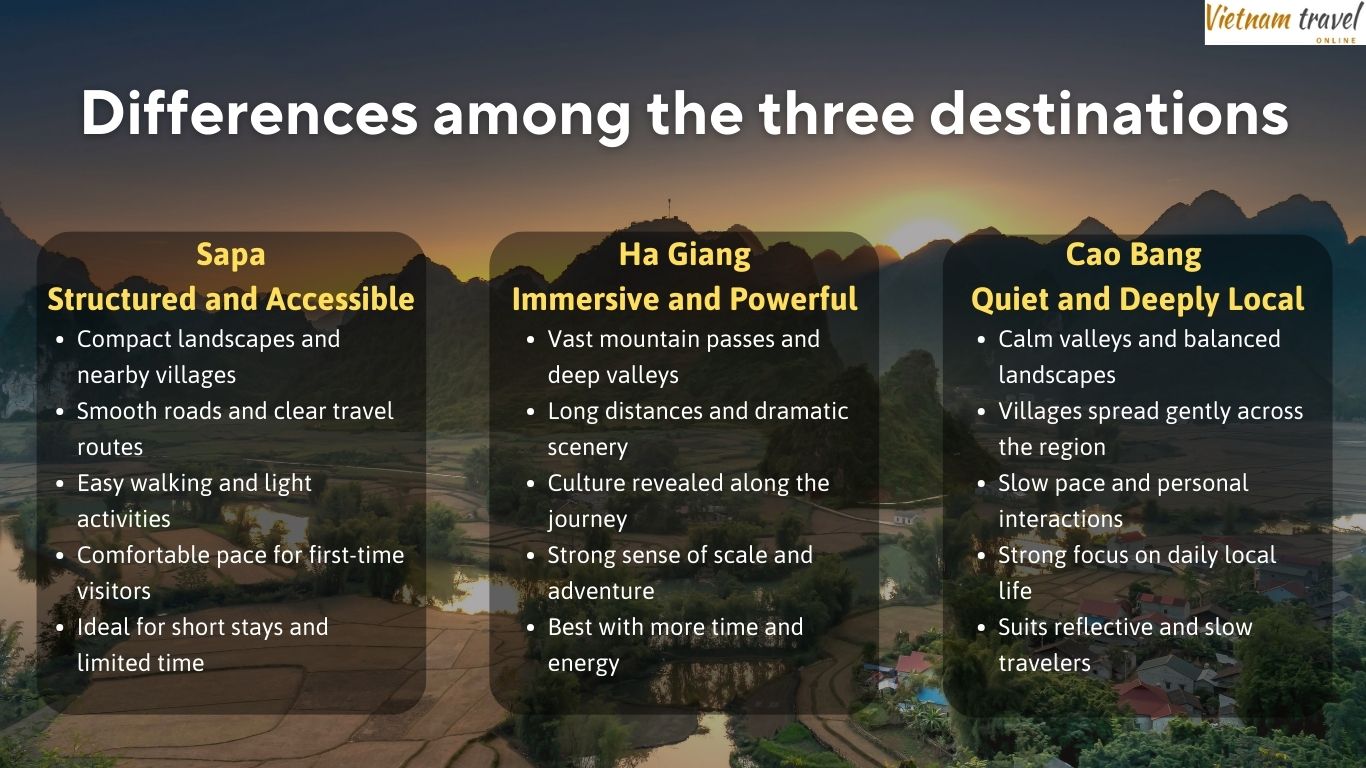
There is no single best choice among Sapa, Ha Giang, and Cao Bang. The right destination depends on travel style and available time. If impact and immersion matter most, Ha Giang delivers the strongest experience, provided you can stay long enough.
- The Best Option When Time Is Limited
If time is short, Sapa is the most practical option. Its compact layout allows travelers to experience mountain scenery and ethnic culture within two to three days. Short distances and organized routes reduce travel fatigue and risk.
- Why Ha Giang and Cao Bang Need More Time
Ha Giang depends on movement through space. When rushed, long drives become tiring, and cultural depth is lost. Cao Bang moves even more slowly. Its value lies in quiet exploration rather than quick highlights.
Suggested Journeys That Bring the Highlands to Life
We offer a wide range of sample journeys across Vietnam, each carefully shaped to reflect a different travel pace, atmosphere, and level of immersion. These routes are designed to inspire ideas rather than fix plans, helping you imagine how each region could fit into your own journey.
At Vietnam Travels Online, we are always happy to support you with personalized planning and flexible services, ensuring your trip feels smooth, meaningful, and well-balanced. If you would like to adjust an existing route or create something more personal, feel free to contact us at vietnam@indochinavoyages.com or reach out through our contact form.
Short Mountain Escapes That Still Feel Complete
Not every traveler has the time for a long journey, yet the mountain experience can still feel rewarding when the route is well designed. The Best Hanoi to Sapa 5 Days journey is ideal for first-time visitors who want iconic scenery, gentle village walks, and smooth travel without pressure. Meanwhile, Explore the Trails of Ha Giang 5 Days suits travelers who prefer stronger landscapes and are comfortable spending more time on winding mountain roads, even within a limited schedule.
Both options focus on quality rather than coverage, which helps avoid rushed sightseeing while still delivering a clear sense of the northern highlands.
Longer Routes for Deeper Cultural and Scenic Immersion
When time allows, longer itineraries reveal a very different side of northern Vietnam. The Northeast Vietnam Explorer 7 Days journey moves through Cao Bang and surrounding highland areas, where waterfalls, quiet valleys, and ethnic villages unfold at a slower and more reflective pace. Cultural encounters feel more personal because travel days are balanced and unrushed.
For travelers who want to place the mountains within a broader national context, In-Depth Vietnam Explore 20 Days connects the highlands with Vietnam’s cities and coastline. This extended route allows landscapes and cultures to change gradually, creating a complete and meaningful picture of the country.
Related Travel Guides You May Find Useful
Explore more travel insights and planning tips that complement your mountain journey:
-
Get practical advice on getting to the mountains with the train or sleeping bus to Sapa guide.
-
Compare two iconic northern destinations in the Sapa or Ha Giang travel comparison.
-
Thinking beyond the highlands? See how Ha Long Bay and Lan Ha Bay differ to plan your coastal adventure.
-
Not sure whether to visit Ninh Binh or Ha Long Bay next? This comparison breaks down the highlights.
-
Planning central Vietnam, too? Learn which destination suits your travel style in the Hoi An or Hue guide.
-
If landscapes are your focus, the Ninh Binh or Pu Luong comparison helps you choose between two scenic, rural regions.
Essential Travel Tips for Northern Vietnam’s Mountain Regions
-
Mountain travel in northern Vietnam is slower than in the lowlands, so flexible schedules help avoid unnecessary fatigue.
-
The weather in highland areas changes quickly, which makes light layers and waterproof clothing a smart choice year-round.
-
Ethnic villages are living communities, and respectful behavior and asking before taking photos is essential.
-
Comfortable walking shoes matter more than style because paths often include slopes, stones, and uneven ground.
-
Early mornings usually offer the clearest views, the most active markets, and the calmest village atmosphere.
-
Overpacking daily activities reduces enjoyment, while allowing time to pause often leads to deeper experiences.
-
Local guides add cultural context and support meaningful interaction, especially in remote villages.
-
Cash remains important in mountain regions since many small shops and markets do not accept cards.
-
Mobile signal can be limited in remote areas, so downloading maps and key information in advance is helpful.
FAQs
Is it easy for first-time visitors to travel to northern Vietnam’s mountains?
Yes, it is manageable with planning, especially in Sapa, where roads, hotels, and guided activities are well developed. Ha Giang and Cao Bang require more patience due to longer travel times and winding roads.
Which destination offers the best cultural experience?
All three regions provide meaningful cultural encounters, although Ha Giang feels the most immersive due to its vast landscape and remote villages. Meanwhile, Cao Bang offers quieter and more personal interactions, while Sapa presents culture in a more structured way.
How many days are recommended for a mountain trip?
Two to three days works well for Sapa, while Ha Giang usually needs four to five days to feel complete. Cao Bang is best enjoyed over three to four days at a relaxed pace.
Can these destinations be visited year-round?
Yes, although the experience changes by season, as mist is common in Sapa, summer heat affects Ha Giang, and waterfall conditions in Cao Bang depend on rainfall.
Is mountain travel suitable for families or older travelers?
Sapa is the most suitable due to easy walks and good infrastructure, while Ha Giang and Cao Bang are better for travelers who are comfortable with longer drives and simpler facilities.
Do I need a guide when visiting these regions?
A guide is not required, but it adds value by providing cultural context, easing communication, and improving safety, especially in remote areas.