

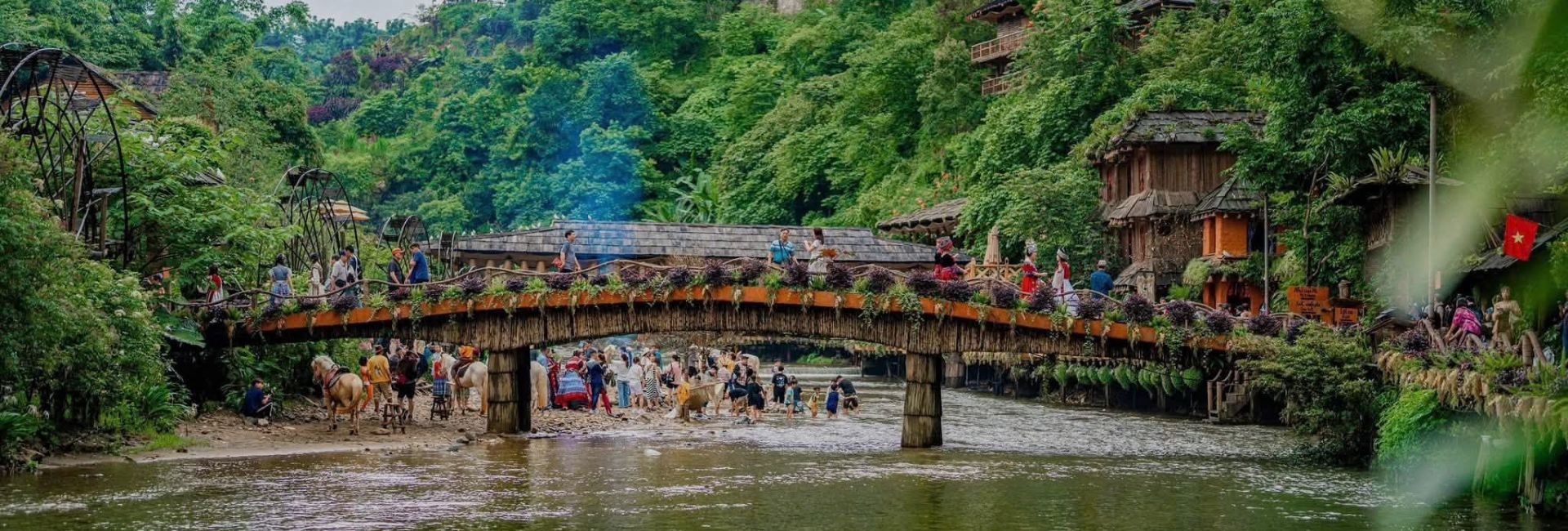
Sapa in July is one of the most beautiful and most misunderstood times to visit the northern highlands. While the rest of Vietnam swelters in lowland heat, Sapa stays cool and dramatic, its terraced hillsides turning a vivid, almost unreal shade of green. Yes, there will be rain. Yes, the trails get muddy. But travellers who come prepared will find some of the most breathtaking mountain scenery in all of Southeast Asia.
This guide covers everything you need before you go. The weather, the rice terrace highlights, the best villages, smart itinerary options, and the practical tips that actually make a difference on the ground.
What can you find in this travel blog?
- Is July a Good Time to Visit Sapa?
- Sapa Weather in July
- Rice Terrace Season in July: Sapa’s Biggest Highlight
- Best Places to See Green Rice Terraces
- Best Things to Do in Sapa in July
- Crowds and Travel Costs in July
- July Events and Seasonal Experiences in Sapa
- Suggested Itineraries for Visiting Sapa in July
- Practical Travel Tips for Visiting Sapa in July
- Sapa in July vs Sapa in September
- FAQs
Is July a Good Time to Visit Sapa?
The short answer is yes, but with the right expectations. July sits in the heart of Sapa’s rainy season. That means the landscape is at its most lush and alive. Understanding what makes this month both special and challenging will help you get the most out of your trip.
What Makes July Special in Sapa?
July is peak growing season for the rice terraces. The transformation is genuinely stunning. The paddies shift from pale yellow-green to a deep, saturated emerald as the plants mature. The result is layered, sweeping landscapes that photography simply cannot do justice to until you are standing right in front of them.
Beyond the scenery, July brings a certain authenticity. The mountains stay wrapped in mist and cloud throughout much of the day. This gives Sapa a moody, cinematic quality that drier months cannot replicate. You will also find fewer international tourists than during the famous September harvest season. That means quieter trails, more genuine interactions with local communities, and a pace that feels unhurried.
Pros and Cons of Visiting Sapa in July
Every season in Sapa comes with trade-offs. July is no different. Here is an honest look at both sides:
- What works in your favor:
- Rice terraces at their most vibrantly green
- Comfortable mountain temperatures, especially compared to Hanoi
- Dramatic mist and cloud landscapes ideal for photography
- A more authentic, less crowded atmosphere
- What to be prepared for:
- Frequent afternoon showers that can arrive quickly
- Muddy trekking trails that require proper footwear
- Morning fog that occasionally blocks views toward Fansipan
The key is flexibility. Travellers who plan around the rain rather than against it tend to have a far richer experience.
Sapa Weather in July
Weather in Sapa is not quite like anywhere else in Vietnam. The altitude changes everything, from the temperature to the way rain moves through the valleys. Knowing what to expect before you arrive makes a real difference.
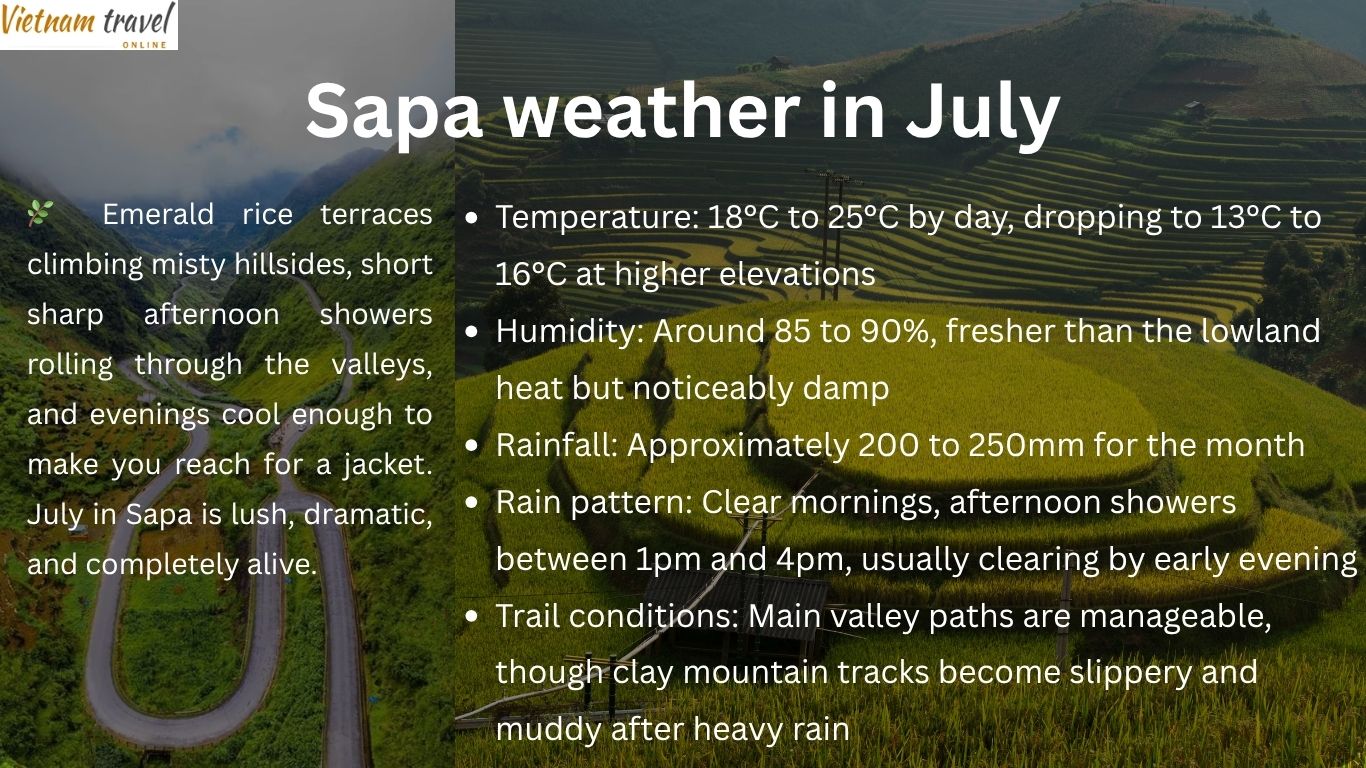
Temperature and Climate
Daytime temperatures in July typically sit between 18°C and 25°C. That feels genuinely refreshing if you have just arrived from Hanoi or Ho Chi Minh City. Evenings cool down considerably, often dropping to around 15°C or lower at elevation. A light layer is always worth having close by. Humidity runs high throughout the month. This contributes to that lush, tropical-mountain atmosphere but can make midday feel heavier than the numbers suggest.
Rainfall and Rainy Season Conditions
July falls squarely in Sapa’s summer rainy season, which runs roughly from May through September. That said, the rain rarely falls all day in a steady downpour. More commonly, mornings start clear and bright. Afternoons bring short but heavy showers. Evenings settle into mist and cool air. Rain patterns also vary between the valley floors and the higher mountain peaks. Upper elevations receive more persistent cloud cover and moisture.
The valleys around Muong Hoa tend to clear faster after rain. That makes them reliable options for afternoon walks even when the upper trails are still wet.
What to Pack for Sapa in July
Packing smart for July means layering rather than overpacking. A few essentials that genuinely earn their place in your bag:
- Lightweight, quick-dry clothing for warm daytime trekking
- A thin fleece or jacket for cool evenings and early mornings
- Waterproof trekking shoes or boots with solid ankle support
- A compact raincoat or packable poncho (umbrellas are less practical on trails)
- Waterproof dry bags or covers for cameras, phones, and documents
Rice Terrace Season in July: Sapa’s Biggest Highlight
If there is one reason to choose July over any other month, it is the rice terraces. Sapa’s hillside paddies are famous year-round. But in July, they reach a level of visual intensity that genuinely stops people in their tracks. Here is what makes this season so special, and exactly where to go to see it at its best.
Why the Rice Fields Are So Beautiful in July
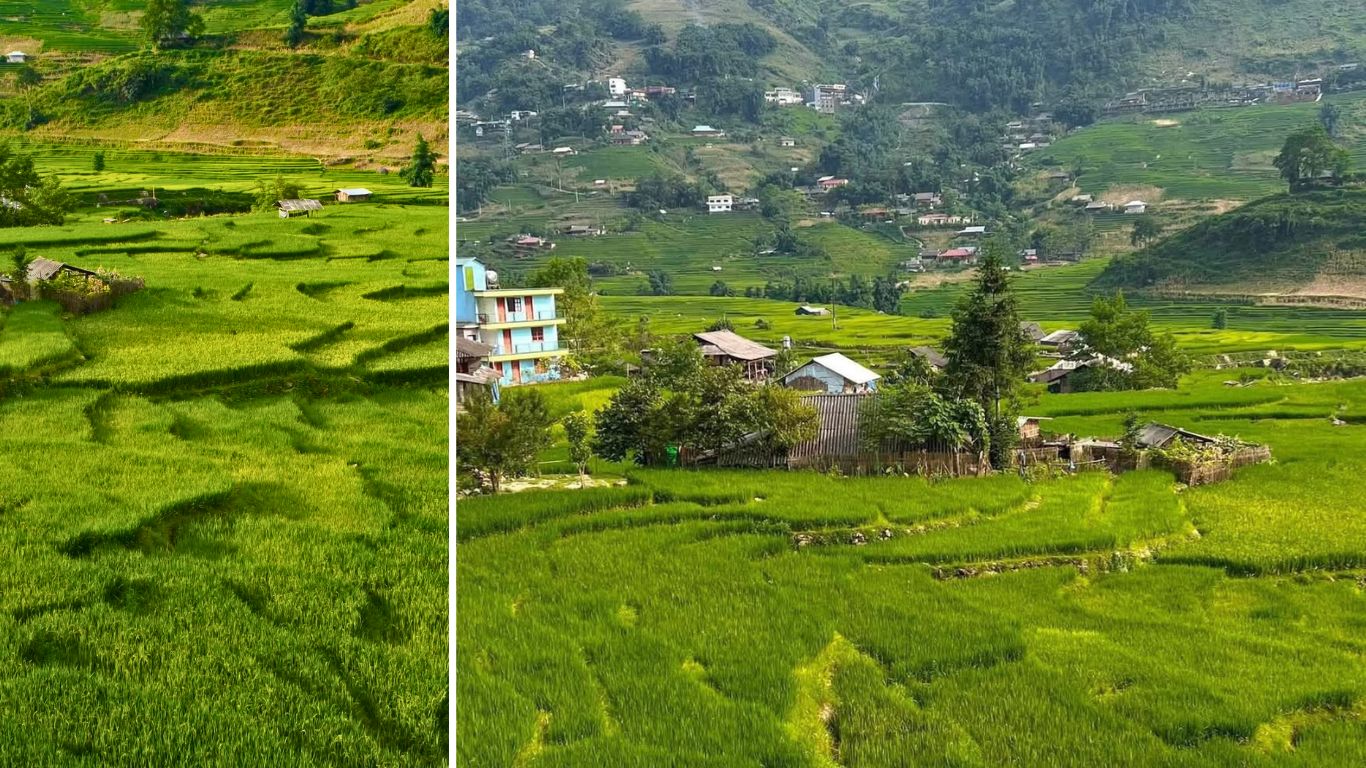
The rice planting season begins in late May and early June. By July, the terraces are in full mid-growth mode. The plants stand tall and dense, covering every carved ledge of the hillside in brilliant emerald green. When morning mist rolls through the valleys and catches the light, the contrast between vivid paddies, dark mountain ridges, and white cloud layers creates scenes that feel almost painted.
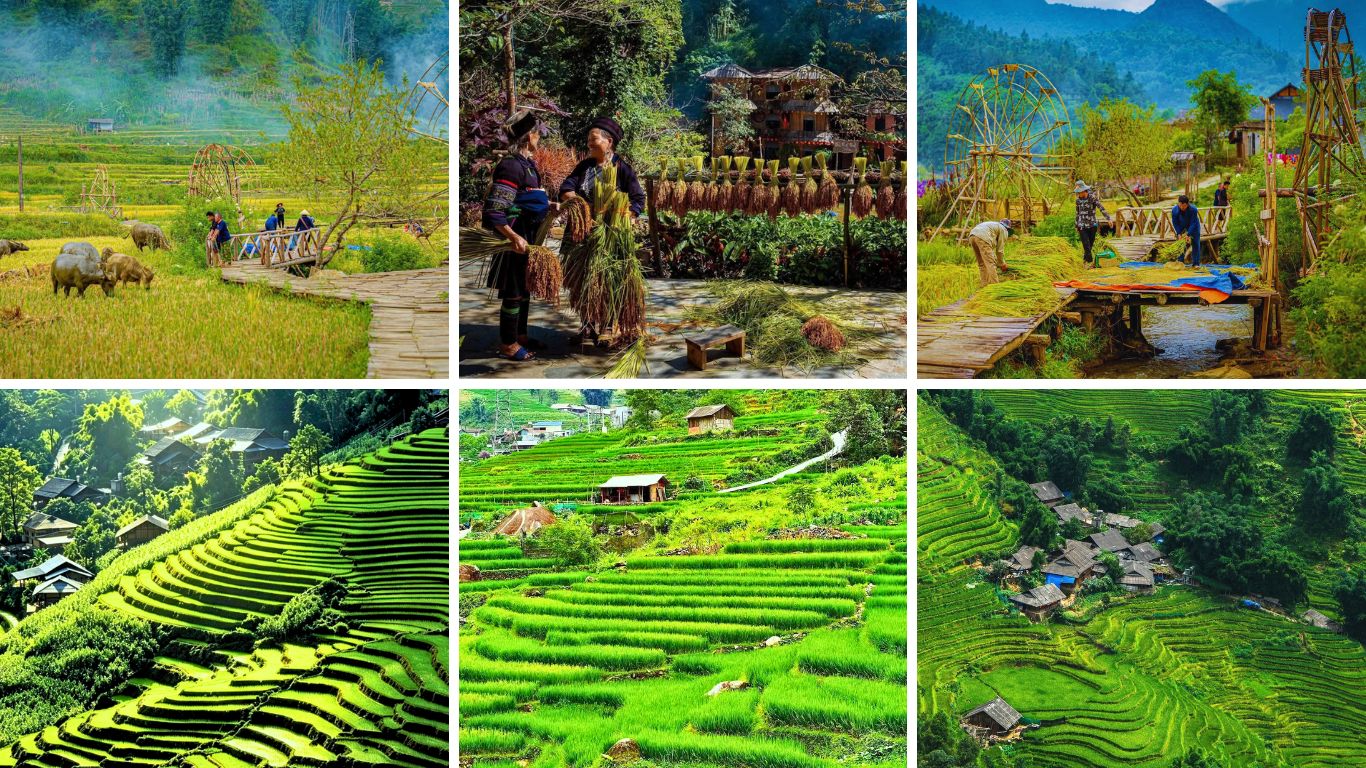
This is also the season when you will see farmers actively working the fields. They wade through flooded terraces, adjust irrigation channels, and tend the crops. It adds a layer of human life to the landscape that the harvest season, as golden as it is, does not always capture.
Best Places to See Green Rice Terraces
Sapa has several standout locations for terrace viewing. Each one offers a genuinely different experience. The right combination depends on how much you want to walk, how adventurous you are, and how much time you have. For a deeper look at all the villages worth visiting, our guide to Sapa villages covers the full picture.
Muong Hoa Valley
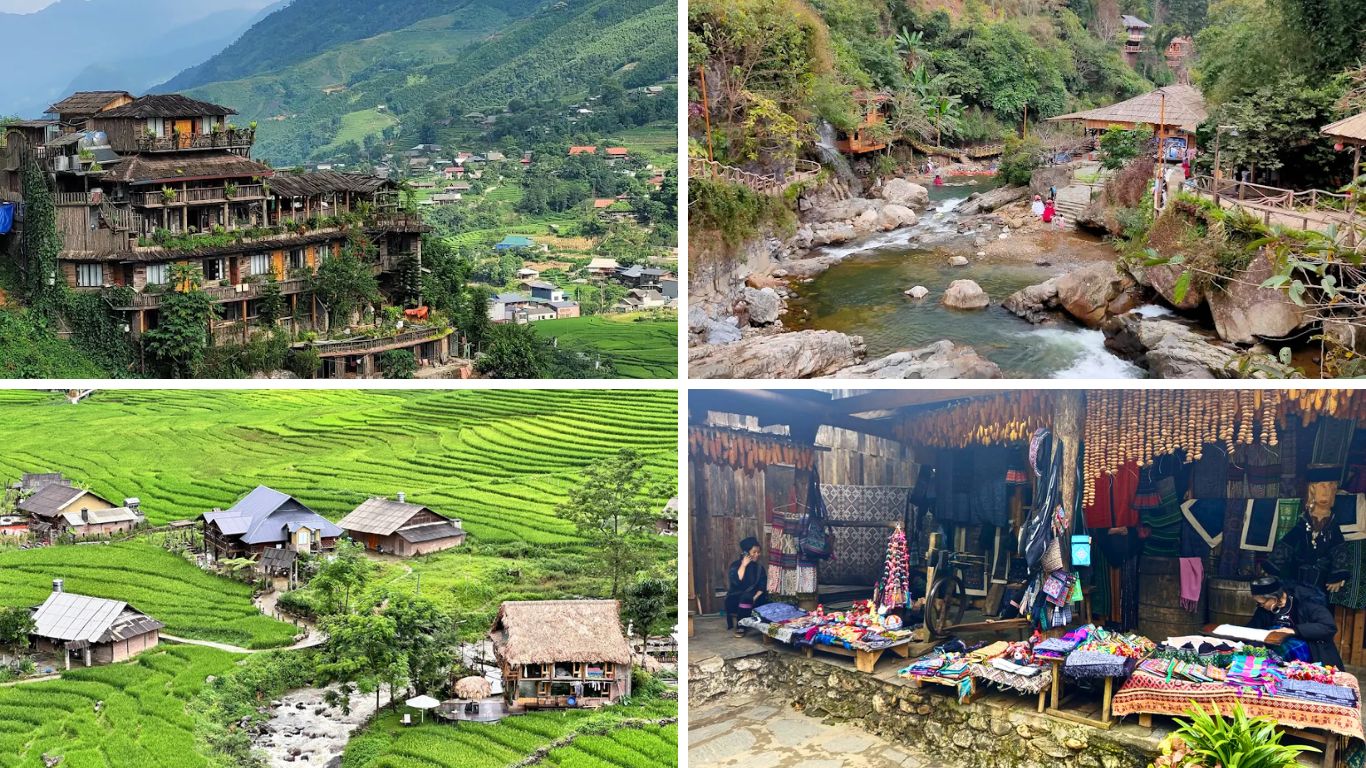
Muong Hoa Valley is the classic starting point, and for good reason. The valley floor stretches wide and open, flanked by terraced slopes that seem to climb endlessly upward on both sides. Access from Sapa town is easy. The walking paths here are well-worn enough to manage even after rain. For a more detailed look at what makes this valley so special, the dedicated Muong Hoa Valley guide is worth a read before you go.
Lao Chai and Ta Van Villages
These two villages sit at the accessible, lively heart of Muong Hoa Valley. They are the best base for anyone wanting to combine terrace scenery with cultural immersion. Lao Chai is home to the Black Hmong community. Ta Van sits just beyond and is predominantly Giay. The trekking route between the two is one of the most popular in the region. The network of local homestays here makes an overnight stay easy to arrange. If a relaxed pace, good food, and real community connection matter to you, this is your spot.
Y Linh Ho
Y Linh Ho offers a noticeably different character. The terrain here is steeper and more dramatic. It is the preferred entry point for trekkers who want something more physically demanding and visually intense. The viewpoints are less crowded than the main valley routes. Photography opportunities in July, when mist drifts through the gorge below, are outstanding. This one suits travellers who are comfortable on wet, uneven ground and want to earn their views.
Ban Ho
Ban Ho sits lower in altitude than most of Sapa’s trekking destinations. That makes it noticeably warmer and often clearer after heavy rain. The valley has a remote, unhurried quality that is hard to find closer to town. What makes Ban Ho particularly worth the journey in July is its waterfalls, which run full and powerful during the rainy season. Add the natural hot springs to that, and you have one of Sapa’s most underrated experiences. After a long day on muddy trails, soaking in warm spring water is a genuinely satisfying end to the day.
Best Things to Do in Sapa in July
Sapa in July rewards travelers who come with a mix of plans and flexibility. The landscape is the main draw, but the experiences here go well beyond just looking at pretty hills. From trekking to cable car rides and cultural village visits, there is more than enough to fill several days, even when the weather has its own ideas.
Trek Through the Green Valleys
Trekking is the defining activity in Sapa. In July, it becomes something genuinely memorable, even if the trails demand a little more respect than in the dry season. The most popular routes run through Muong Hoa Valley toward Lao Chai and Ta Van. Extensions toward Y Linh Ho are possible for those wanting more mileage. For a proper overview of routes, difficulty levels, and what to expect underfoot, the Sapa trekking guide lays it all out clearly.
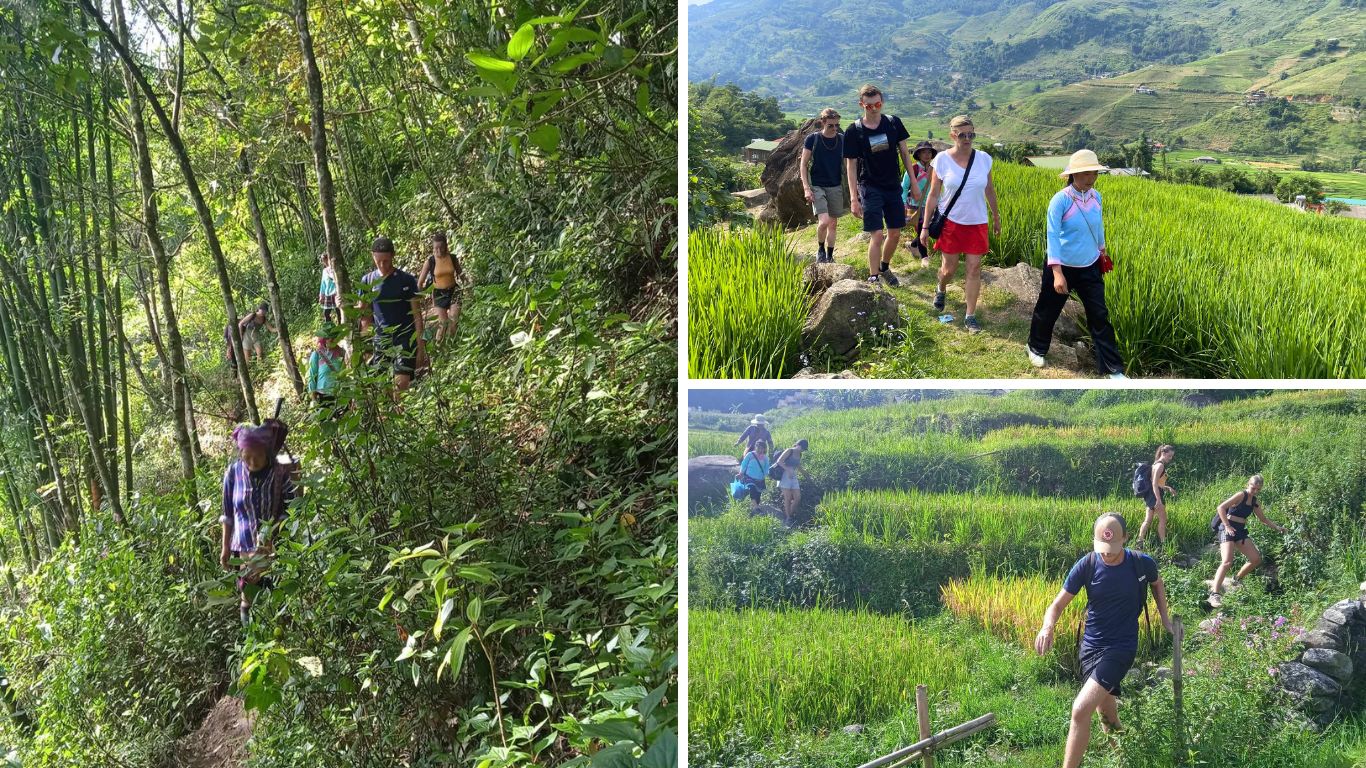
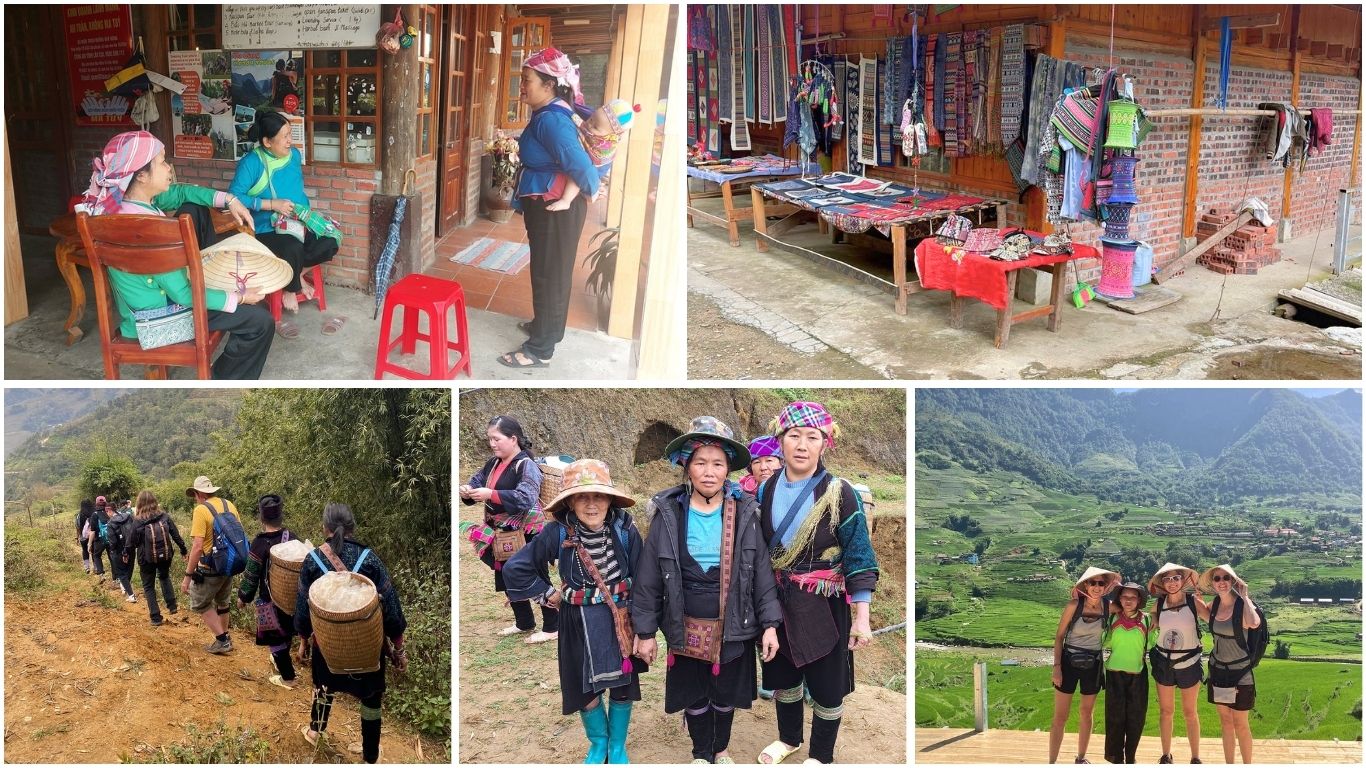
One point that cannot be emphasised enough: hire a local Hmong or Dao guide in July. This is not simply a cultural recommendation. In the rainy season, clay paths that look straightforward on a map can turn into dangerous mudslides within minutes of heavy rain. Local guides, many of them women from the Hmong and Red Dao communities, know exactly which sections become unstable after rain. They also know which alternative grass routes are safer. Their knowledge is not something a map or app can replicate. Our team can connect you with trusted local guides through a private Sapa tour tailored around your pace and interests.
Ride the Cable Car to Fansipan
At 3,143 metres, Fansipan is the highest peak in Indochina. The cable car that climbs to its summit is one of the most dramatic rides in Vietnam. In July, the experience takes on a slightly surreal quality. On clear mornings, the views across the mountain ranges are jaw-dropping. On cloudier days, the cable car lifts you above the mist layer entirely. You emerge into bright sunshine while the valleys below disappear into white. Even when summit visibility is limited, the ride is worth the trip. If the peak is fully socked in, the temple complex near the summit station and the surrounding stairways still make for an interesting few hours.
Visit Ethnic Minority Villages
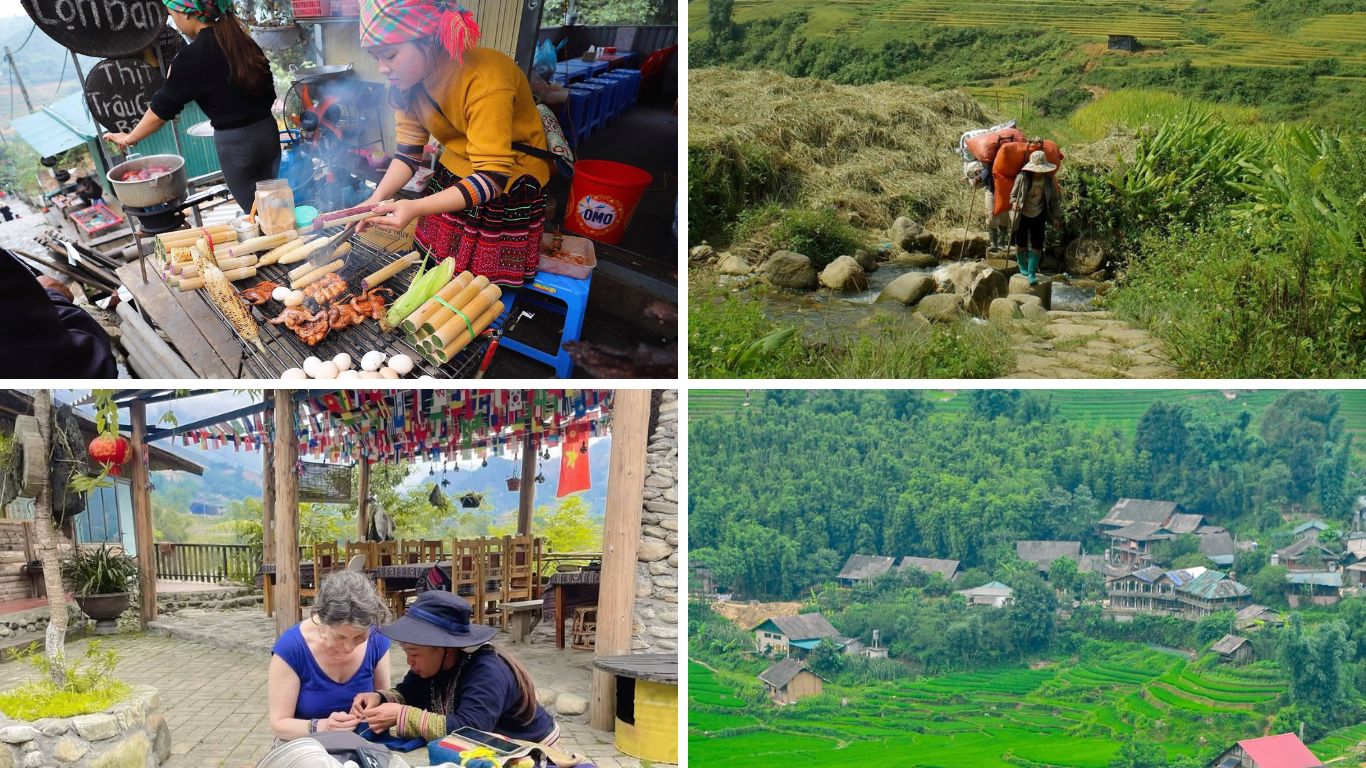
Sapa’s surrounding villages are home to several distinct ethnic minority groups. These include the Black Hmong, Red Dao, Giay, and Tay communities, each with its own language, clothing traditions, and way of life. Visiting in July means catching families in the middle of the farming season. This gives the experience a lived-in, unperformed quality that peak tourist months sometimes lack. Engage respectfully, buy directly from local artisans where possible, and book any homestay through a reputable operator who works directly with the community.
Capture Sapa’s Summer Landscapes
For photographers, July is arguably Sapa’s most rewarding month. The combination of emerald terraces, drifting mist, and dramatic cloud formations creates conditions that are nearly impossible to find elsewhere. Early morning is the golden window. The light is soft, the valleys often clear of rain, and the terraces catch the low sun beautifully. Sunrise viewpoints above Muong Hoa Valley and the hillsides above Ta Van both deliver consistently. On overcast days, shoot in diffused light rather than waiting for sun. The muted tones and atmospheric mist can produce equally striking results.
Enjoy Sapa’s Cool Mountain Atmosphere
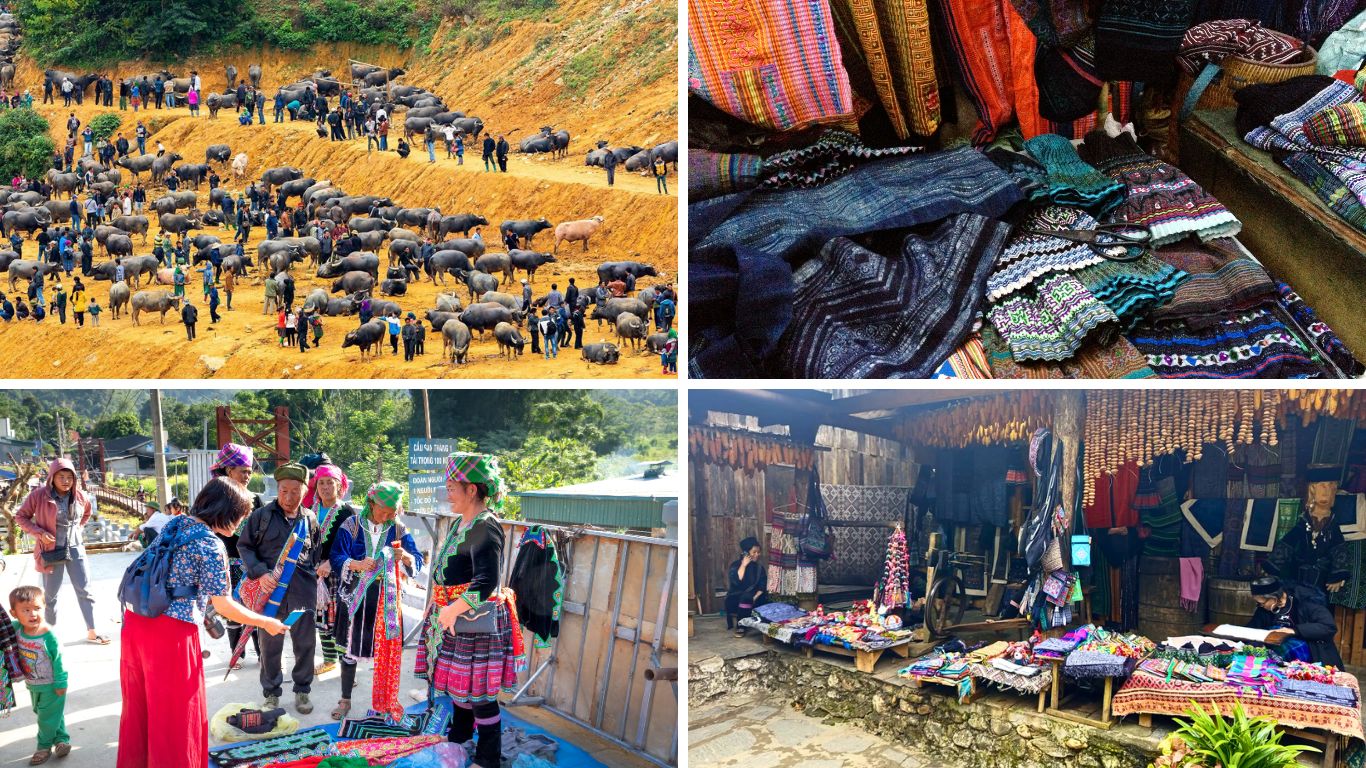
Not every hour in Sapa needs to be spent on a trail. The town itself has genuine charm. A growing number of cafes and small restaurants sit right on the valley edge, offering uninterrupted views across the terraced slopes. On rainy afternoons, settling into one of these spots with a hot coffee and watching the mist roll through the mountains is one of those quiet travel moments that stays with you. Sapa’s market area is also worth a wander for local produce, handmade textiles, and a taste of everyday highland life. For a proper overview of what the local markets have to offer, the Sapa markets guide is a useful read.
Crowds and Travel Costs in July
July sits in an interesting middle ground for visitor numbers and pricing. It is neither the quietest nor the most crowded month in Sapa. That actually puts it in a sweet spot for travellers who want a real experience without fighting through tour groups at every viewpoint.
Is Sapa Busy in July?
July coincides with Vietnam’s domestic summer school holiday period. Weekends can see a noticeable uptick in Vietnamese families travelling from Hanoi and other northern cities. Weekdays, however, remain considerably calmer. The trails around Lao Chai and Ta Van see the most foot traffic. Routes toward Y Linh Ho and Ban Ho stay relatively quiet throughout the week. If a peaceful experience is a priority, targeting weekday visits to the more remote villages makes a significant difference.
Hotel Availability and Prices
Accommodation in Sapa during July ranges from budget guesthouses to mid-range boutique hotels and a handful of genuinely impressive luxury properties with valley-facing rooms. Prices sit slightly higher than the shoulder months of April and May. They generally stay below the premium rates charged during the September harvest rush. Booking two to three weeks ahead is advisable for mid-range and above, particularly for weekend nights.
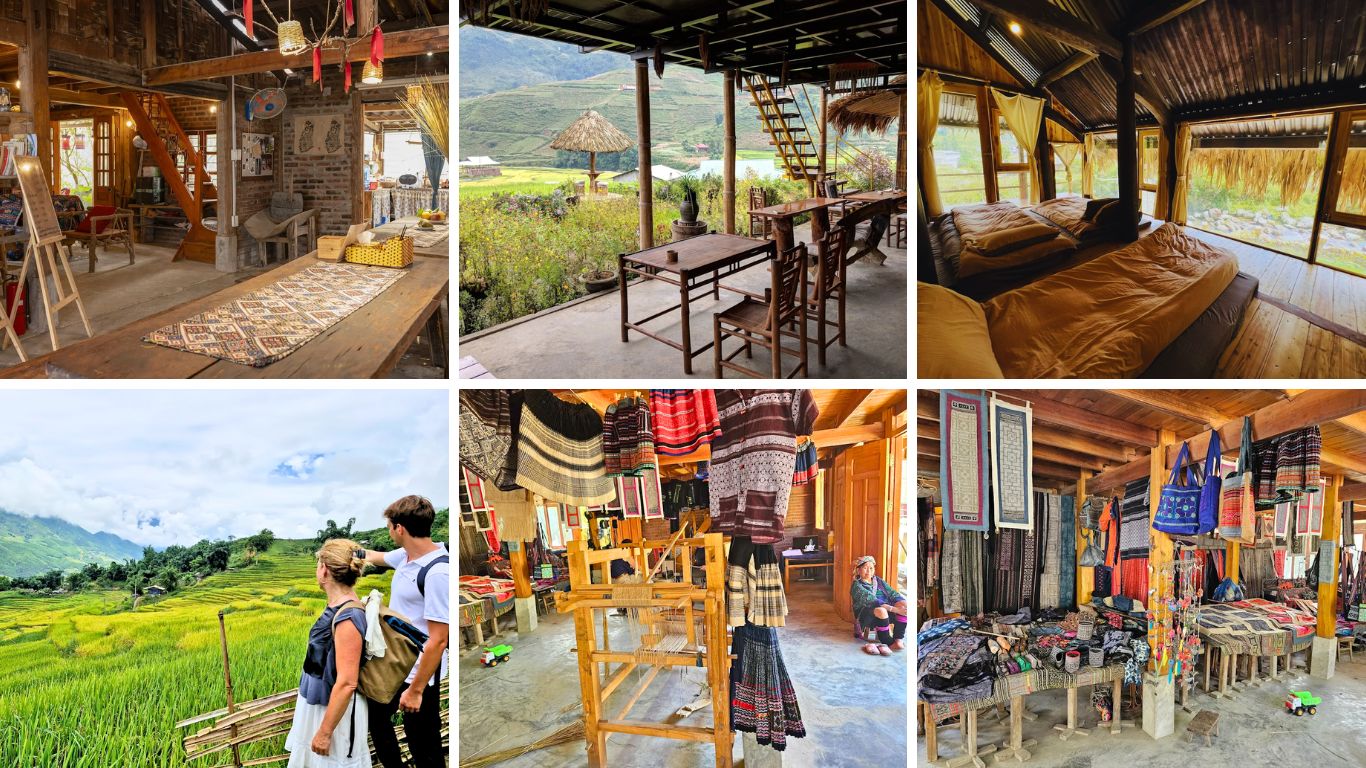
Our team can arrange accommodation as part of a fully tailored private package. This often secures better rates and locations than booking independently. Reach out at [email protected] to start planning.
Tour and Transportation Costs
Getting to Sapa from Hanoi is straightforward. Overnight sleeper trains and private transfers are both popular options. Private transfers offer more comfort and flexibility, especially useful if you are travelling with family or trekking gear. In terms of overall value, July sits in a reasonable position. You are paying in-season prices but getting a landscape that rivals, and in some ways surpasses, the more expensive September peak. Private day tours and guided treks are competitively priced in July, and the investment in a knowledgeable local guide is genuinely worthwhile given the trail conditions.
July Events and Seasonal Experiences in Sapa
There are no major festivals anchored specifically to July in Sapa. But the month has its own rhythm that makes it feel far from ordinary. The cultural and agricultural life of the highlands is very much in motion. Paying attention to it is what separates a sightseeing trip from a genuine travel experience.
Life in the Rice-Growing Season
By July, the terraced fields are fully planted. Farming communities are deep into the maintenance phase of the growing season. Walking through the valley trails, you will regularly pass farmers knee-deep in flooded paddies. They are adjusting irrigation channels, weeding between the rows, and checking the progress of their crops. These are not staged moments for tourism. They are simply daily life in the highlands. The fact that you can walk right alongside it, with a local guide to provide context, is one of the most quietly extraordinary things about visiting Sapa in this season.
Summer Markets and Local Culture
Sapa’s markets run throughout the year. But the summer months bring a particularly strong showing of fresh highland produce, seasonal vegetables, and handmade textiles. The main market in Sapa town operates daily. Surrounding village markets follow a rotating weekly schedule that varies by location. The Sapa buffalo market at Bac Ha, a short drive from Sapa, is one of the most atmospheric market experiences in northern Vietnam. It is well worth including if your schedule allows. Local artisans from the Hmong and Red Dao communities sell directly at many of these markets. That makes them a far more meaningful place to shop than the tourist stalls near the main square.
Suggested Itineraries for Visiting Sapa in July
Whether you have two days or a full week, Sapa rewards thoughtful planning. The rainy season adds a layer of unpredictability that actually makes structured itineraries more valuable, not less. Below are three options built around realistic July conditions. Each one balances scenery, culture, and the flexibility you will need when the afternoon clouds roll in.
A Short Mountain Escape (2 Days)
Two days in Sapa is enough to get a real feel for the place, provided you use the time strategically.
Day 1: Head to Fansipan in the morning, when visibility tends to be at its clearest. The cable car ride is best experienced early, before the afternoon mist builds. After descending, take a proper lunch break. Use the midday heat and likely afternoon rain as rest time at your hotel or a valley-view cafe.
Day 2: Visit Cat Cat Village in the cooler late afternoon or early evening. A word of caution worth taking seriously: both Fansipan and Cat Cat involve significant stair climbing and steep descents. Attempting both on a single July day is far more exhausting than it sounds. The humidity peaks just when Cat Cat’s valley stairs are at their steepest. If heavy rain arrives, substitute Cat Cat with a walk along the viewpoints above town. Or simply settle into one of Sapa’s excellent cafes with a valley view. There is no shame in letting the mountains come to you.
Experience the Green Rice Terrace Season (3 Days)
Three days give you enough time to properly explore the valley and slow down enough to actually feel the place.
Day 1: Arrive in Sapa and settle in. Take an easy afternoon walk to orient yourself around the viewpoints above town. Visit the local market before dinner.
Day 2: Full day trek through Muong Hoa Valley toward Lao Chai and Ta Van, with a local Hmong guide leading the way. Stay overnight in a traditional homestay in Ta Van for the full highland experience.
Day 3: Morning walk through the terraces before heading back toward Sapa town. If the skies cooperate, the Fansipan cable car makes a great afternoon add-on. The Spectacular Northwest Journey 7-Day tour is a great option if you want this kind of experience fully arranged.
Northern Vietnam Nature Journey (5 to 7 Days)
For travellers with more time, combining Sapa with the broader north opens up one of the most diverse itineraries in the country.
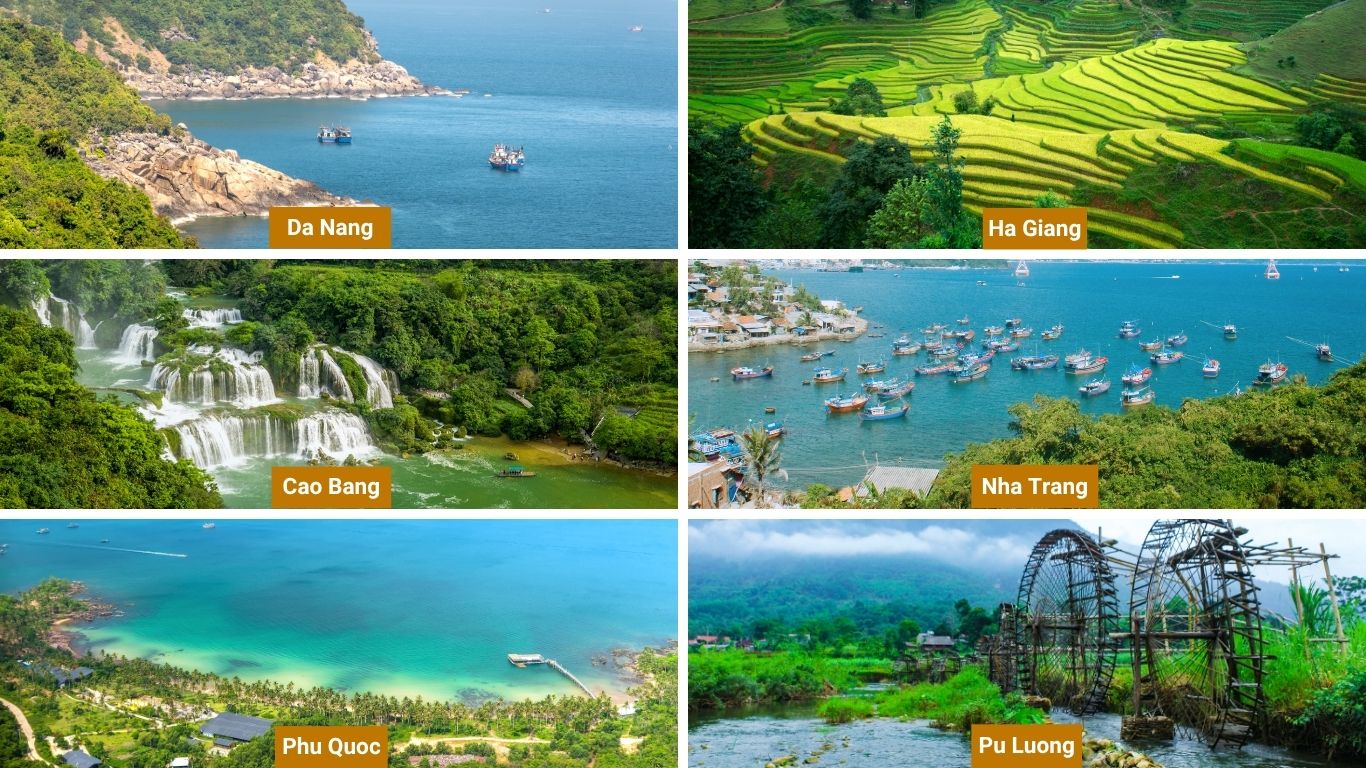
Spend your first two to three days based in Sapa, covering the valley treks and village visits outlined above. From there, the options depend on your interests. Ha Giang to the east offers equally dramatic mountain scenery with a rawer, less-visited feel. The Sapa or Ha Giang guide breaks down the differences clearly. Ninh Binh to the south provides a striking contrast, swapping highlands for limestone karst landscapes and river valleys. The Ninh Binh or Sapa guide is a useful resource for weighing that choice.
For a fully crafted northern Vietnam journey, the Northern Charm Discovery 8-Day tour and the In-Depth Vietnam Explore 20-Day tour both offer well-structured routes that cover the highlights without rushing.
Practical Travel Tips for Visiting Sapa in July
A little preparation goes a long way in Sapa, especially in the rainy season. These are the tips that actually matter on the ground, drawn from real experience across different highland conditions.
Prepare for Sudden Rain
July rain in Sapa does not always give much warning. A clear morning can shift to a heavy downpour within thirty minutes, particularly in the early afternoon. Checking a mountain-specific weather app each morning is useful. More important, though, is building flexibility into your daily plan. Keep weather-sensitive activities like open viewpoints and summit visits in the morning slot. Treat afternoons as variable time that can pivot to village exploration, a market visit, or a cafe stop as conditions dictate.
Choose Appropriate Footwear
This one genuinely cannot be overstated. Clay-heavy trails around Sapa become extremely slippery after rain. Standard trainers or flat-soled shoes offer very little grip on steep, wet terrain. Waterproof trekking boots or trail shoes with a deep lug sole make the difference between an enjoyable walk and a potentially dangerous one. If you arrive without suitable footwear, several shops in Sapa town sell and rent basic trekking gear. Quality varies, so bringing your own is always preferable.
Start Outdoor Activities Early
Morning in Sapa during July is consistently the best window for outdoor activity. The air is clearer, the light is softer, and the trails have had the night to drain from the previous day’s rain. Starting a trek at seven or eight in the morning rather than ten makes a noticeable difference in both conditions and photography. It also puts you well ahead of any afternoon weather before it has a chance to change your plans.
Keep Your Schedule Flexible
Mountain weather in Sapa moves faster than most travellers expect. Build buffer time into each day. Avoid back-to-back activities with no breathing room. Know in advance what your indoor or low-key alternatives are. This makes the whole trip feel more enjoyable and far less stressful. Some of the most memorable moments in Sapa happen precisely when the original plan falls through and something unexpected takes its place.
Sapa in July vs Sapa in September
This is one of the most common questions our team receives from travelers planning a northern Vietnam trip. It is a genuinely useful comparison to make before booking. Both months offer spectacular scenery, but the experience is quite different in character.
Landscape Differences
July brings the lush, intensely green terraces of the growing season. The landscape is vibrant and alive with the energy of the farming calendar. September delivers the golden harvest, when the ripe rice turns the hillsides amber and yellow. That colour palette photographs extraordinarily well. Neither is objectively better. They are simply different moods of the same landscape.
For a side-by-side breakdown across scenery, weather, and crowd levels, the best time to visit Sapa is covered in thorough detail by the Sapa guide.
Weather Comparison
July is rainier and more humid. Frequent afternoon showers and persistent mist at higher elevations are the norm. September sits at the tail end of the rainy season. That means fewer and lighter showers, better visibility overall, and more consistently clear mornings. Trekking conditions in September are generally more forgiving underfoot. That said, July’s mist and drama can produce more visually striking photography conditions for those who know how to work with it.
Which Month Is Better for You?
Choose July if you prefer lush green scenery, a quieter international crowd, and a more immersive sense of the farming season in full swing. The Sapa or Pu Luong guide is also worth reading if you are weighing other green-season destinations in the north.
Choose September if you want iconic golden harvest shots, more reliable trekking weather, and do not mind sharing the trails with more visitors. Either way, Sapa in these months is genuinely hard to get wrong.
Ready to Experience Sapa in July?
Planning a trip to Sapa is much easier when you have the right support. Our team at Vietnam Travels Online specialises in private, fully tailored northern Vietnam journeys. From guided treks through Muong Hoa Valley to complete multi-week itineraries combining Sapa with Ha Giang, Hanoi, and beyond, every detail is handled. Accommodation, local guides, private transport: all taken care of, so you can focus entirely on the experience.
Browse our Vietnam tours for inspiration, or visit vietnamtravelsonline.com to explore tailored options. For a direct conversation about your trip, reach the team at [email protected] and we will take it from there.
FAQs
Is July a good time to visit Sapa? Yes, absolutely. The rice terraces are at their most intensely green, and the mountain atmosphere is dramatic and beautiful. Just come prepared for afternoon rain.
How cold is Sapa in July? Daytime temperatures sit between 18°C and 25°C. Evenings can drop to around 15°C, so pack a light jacket.
Does it rain a lot in Sapa in July? Afternoon showers are common, but full-day rain is less typical. Mornings are usually the clearest window for outdoor activities.
Are the rice terraces green in July? Absolutely. July is peak growing season, and the terraces are at their most vibrant emerald green.
Is Sapa crowded in July? Weekends can be busy with domestic visitors. Weekdays and the more remote villages remain noticeably quieter.
Do I need a guide for trekking in Sapa in July? Yes, strongly recommended. Wet clay trails can turn dangerous quickly, and local Hmong and Dao guides know which routes are safe after rain.
What should I wear trekking in Sapa in July? Lightweight quick-dry clothing, waterproof trekking boots, and a packable rain jacket cover most situations well.
How do I get from Hanoi to Sapa? The overnight sleeper train and private transfer are the most popular options. Private transfers offer more comfort and flexibility, particularly for families.
Is Sapa better in July or September? July for lush green scenery and fewer crowds. September for golden harvest colours and more stable trekking conditions. Both are excellent.
Can I visit Fansipan in July? Yes. On a clear morning, the cable car ride above the clouds is genuinely spectacular. Clear summit views are not guaranteed, but the experience is worthwhile regardless.