


Vietnam’s coastline stretches over 3,000 kilometers, and every stretch tells a different story. From dramatic limestone karsts in the north to powdery white-sand islands in the south, the country offers a coastal experience unlike anywhere else in Southeast Asia. Whether you are planning a honeymoon escape, a family adventure, or simply a few slow days by the sea, Vietnam’s beach towns deliver in ways that keep travelers coming back year after year.
In 2025, Vietnam welcomed over 21 million international visitors, a record high, and the best part? Much of the coastline still feels refreshingly uncrowded. This guide walks you through the top 10 beaches worth putting on your radar, when to go, and how to make the most of every single day.
What will you find in this travel blog?
- When is the ideal time to visit Vietnam’s beach towns?
- Which Beach Matches Your Travel Style?
- Top 10 Best Beaches in Vietnam
- Planning Your Vietnam Beach Trip
- Travel Tips for Vietnam’s Beaches
- FAQs
When is the ideal time to visit Vietnam’s beach towns?
Vietnam’s long coastline means the climate shifts significantly from north to south. Picking the right time to visit can make or break your trip, so here is a quick breakdown by region.
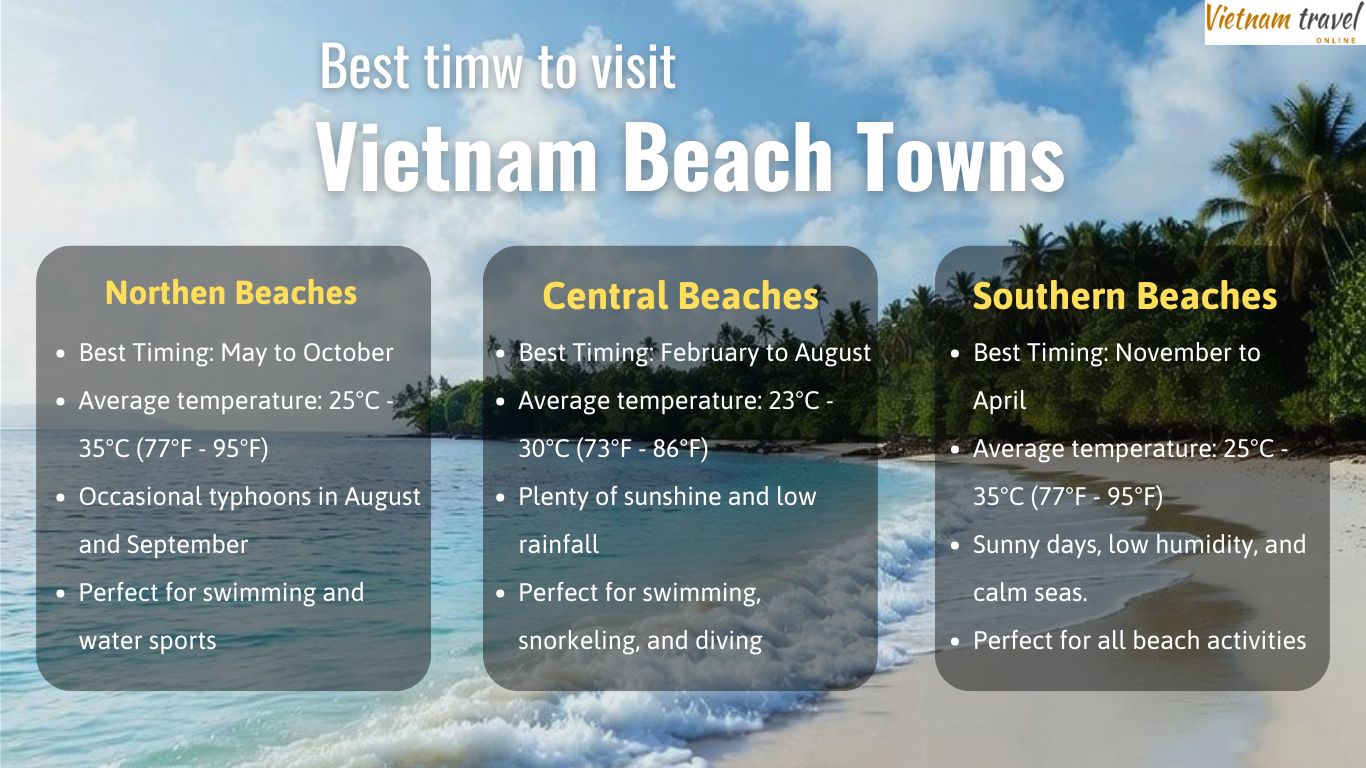
Northern beaches are best enjoyed from May to October, with temperatures sitting comfortably between 25 and 35°C. Keep in mind that August and September can bring typhoons, so it pays to monitor forecasts closely. From November to April, the weather turns cooler and misty, which softens the scenery but limits beach time.
Central beaches hit their sweet spot between February and August, offering sunshine, calm seas, and warm water perfect for swimming and snorkeling. September through January sees heavier rainfall around Da Nang and Hue, though Nha Trang stays relatively dry throughout the year.
Southern beaches shine brightest from November to April during the dry season. The wet season from May to October still brings warm temperatures, and rain typically arrives in short bursts rather than all-day downpours, leaving plenty of sunshine in between.
For a deeper dive into planning your trip around the seasons, our guide on Vietnam’s best summer escapes is a great place to start.
Which Beach Matches Your Travel Style?
Before diving into the full guide, here is a quick cheat sheet to help you find your fit at a glance.
Beaches in Northern Vietnam
Northern Vietnam’s beaches are best visited from May to October. During these months, temperatures range from 25°C to 35°C (77°F to 95°F), making the warm weather ideal for beach activities. The sea is usually calm and clear, perfect for swimming and water sports. However, be aware that August and September might bring occasional typhoons.
From November to April, the weather is cooler (15°C to 20°C or 59°F to 68°F) and can be quite chilly, especially in December and January. While this period sees less rainfall, it can be misty and overcast, which might affect visibility on northern Vietnam beaches.
Beaches in Central Vietnam
The central coast of Vietnam is best enjoyed from February to August. During this period, temperatures range from 23°C to 30°C (73°F to 86°F), with plenty of sunshine and low rainfall. The sea is calm and perfect for swimming, snorkeling, and diving.
September to January can be wet, particularly in Hue and Da Nang, with a chance of flooding in October and November. However, Nha Trang remains relatively dry year-round. The temperatures during these months are cooler, ranging from 18°C to 23°C (64°F to 73°F).
Beaches in Southern Vietnam
Southern Vietnam’s beaches are best visited from November to April. This is the dry season, with temperatures ranging from 25°C to 35°C (77°F to 95°F). You can expect sunny days, low humidity, and calm seas, ideal for all beach activities.
From May to October, the region experiences its wet season. While temperatures remain warm (23°C to 33°C or 73°F to 91°F), this period sees increased rainfall and potential storms. However, rain often comes in short, heavy bursts, leaving plenty of sunshine in between. The seas can be rougher during this time, which might affect water activities and boat tours.
Top 10 Best Beaches in Vietnam
Vietnam’s coastline has no shortage of spectacular spots, but these ten stand out for their scenery, character, and the kind of memories they tend to leave behind. From iconic bays to hidden islands just beginning to appear on the map, here is where to go.
1. Halong Bay — A Once-in-a-Lifetime Seascape
Best time to visit: October to April | Recommended stay: 2 to 3 days
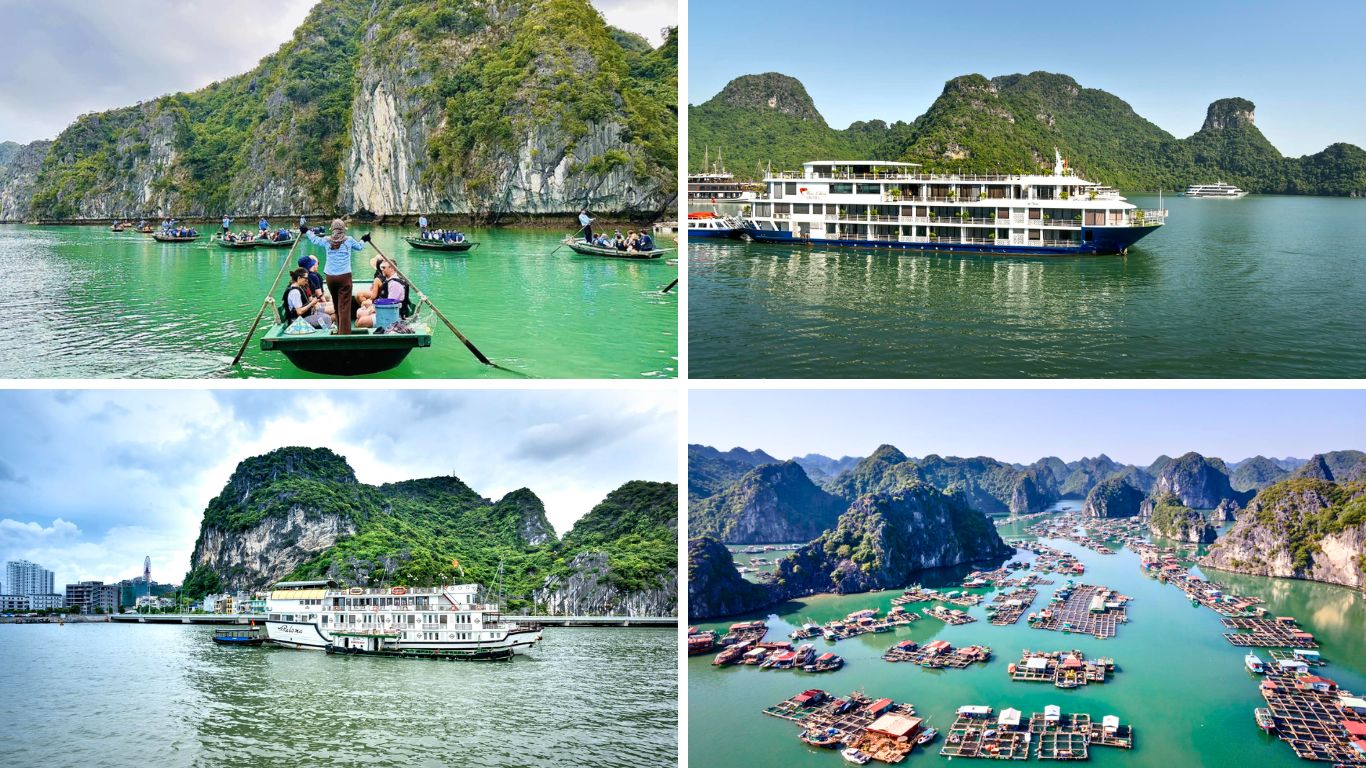
There are places you visit and places that stay with you, and Halong Bay firmly belongs in the second category. Around 1,600 limestone karsts rise from jade-green waters across a UNESCO World Heritage seascape that genuinely earns every superlative thrown at it. The classic way to experience it is by overnight cruise, drifting between islands at dawn, kayaking through hidden lagoons, and ducking into cathedral-like caves lit by filtered light.
December and January can bring a light mist that settles over the bay in the early morning. Rather than a drawback, it adds a quietly dramatic atmosphere that daylight hours burn away by mid-morning. If you are combining Halong Bay with a broader northern itinerary, our 4-day Hanoi and Halong Bay tour is a popular choice, or explore our dedicated cruise options at Halong Junk Cruise for something more tailored.
Best for: Couples, families, and first-time visitors to Vietnam.
2. Co To Island — The North’s Best-Kept Secret
Best time to visit: May to September | Recommended stay: 2 to 3 days
About 80 kilometers off the mainland coast, Co To Island is the kind of place that still surprises people. Northern Vietnam is not typically associated with clear, vivid blue water, yet Co To delivers exactly that. Hong Van and Van Chay beaches have bright white sand and sea that shifts from turquoise to deep blue on sunny days, a combination you rarely find this far north.
Tourism infrastructure is steadily growing without yet overwhelming the island’s natural character. You can cycle between beaches, hike to a lighthouse for panoramic views, and pull up a chair at a simple seafood shack for freshly caught crab and squid at prices that feel almost too good. A new highlight for 2026 is the nearby Thanh Lan Island, with its ancient sedimentary cliffs and untouched shoreline. Pair the whole trip with Halong Bay for a complete northern coastal experience.
Best for: Off-the-beaten-path explorers, nature lovers, and photographers.
3. My Khe Beach, Da Nang — Vietnam’s Best Beach Base Camp
Best time to visit: May to August | Recommended stay: 4 to 5 days
My Khe Beach is beautiful, no question about it. Golden sand, coconut palms, consistent surf, and a sunrise over the East Sea that will have you setting your alarm earlier than planned. You could spend a day or two here very happily. But here is what makes Da Nang genuinely worth five days: it is the best-positioned beach base in the entire country.
Within easy reach of the city, you have the Marble Mountains, the iconic Golden Bridge on Ba Na Hills, and the ancient streets of Hoi An just 30 minutes south. Use My Khe as your morning ritual and the surrounding region as your playground. Our 4-day Da Nang Beach Break is built around exactly this idea, and our dedicated My Khe travel guide covers the beach in much more detail.
Best for: Active travelers, families, and anyone wanting a central hub for central Vietnam.
4. An Bang Beach, Hoi An — Slow Mornings and Brilliant Sunsets
Best time to visit: March to September | Recommended stay: Day trips from Hoi An, or 1 to 2 nights
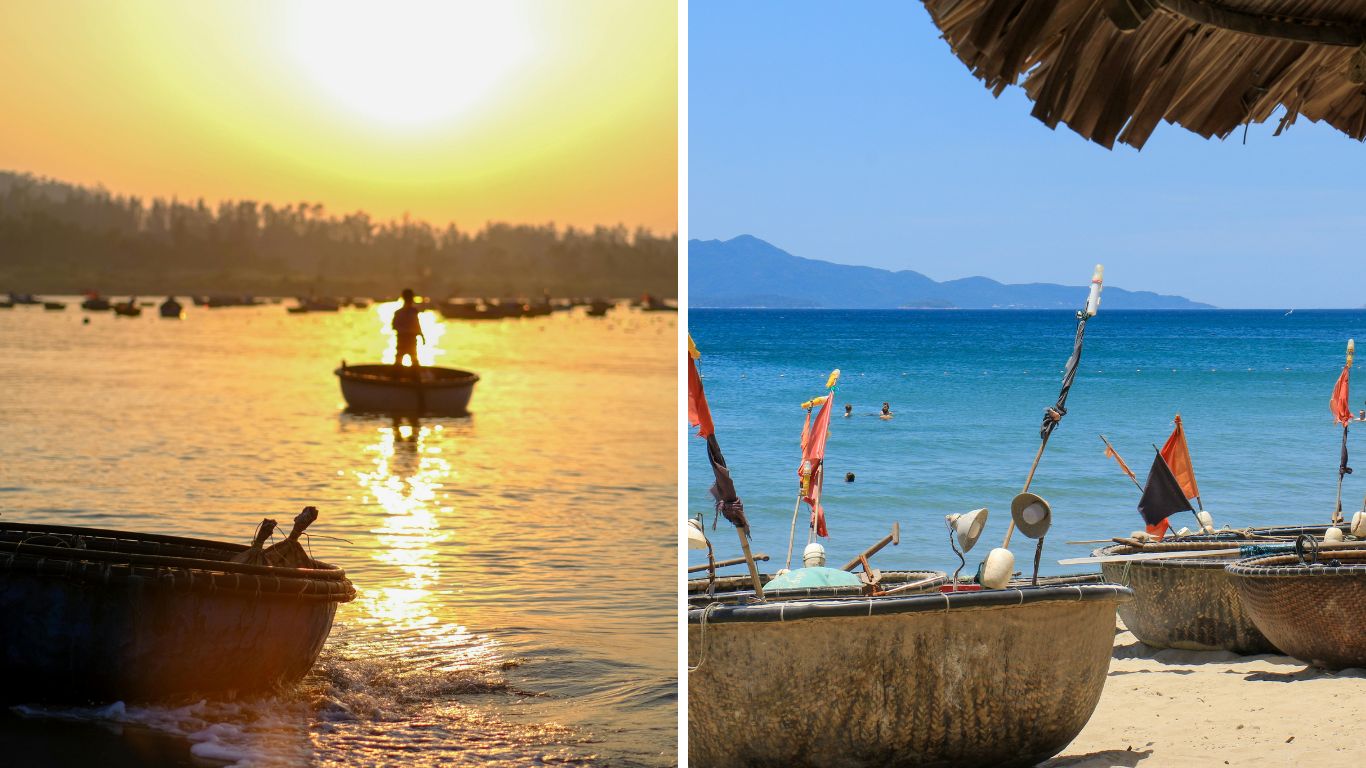
An Bang sits just 5 kilometers from the lantern-lit streets of Hoi An Ancient Town, yet it operates at an entirely different pace. Boutique restaurants set tables directly on the sand. Paddleboard instructors wait patiently for beginners. And the sunsets here, with the sky turning deep orange over the South China Sea, are the kind you photograph a hundred times and none of them quite capture.
Mornings are best spent on a bicycle, weaving through the rice paddies between Hoi An and the coast. The route is flat, quiet, and lined with glimpses of rural Vietnamese life that feel miles away from any tourist trail. If you want the full picture of this stretch of coastline, our An Bang Beach guide has everything you need to plan your stay.
Best for: Couples, solo travelers, and those who prefer a relaxed vibe close to Hoi An’s cultural sights.
5. Quy Nhon — Vietnam’s Hottest Coastal Town Right Now
Best time to visit: January to August | Recommended stay: 2 to 3 days
Quy Nhon just earned a spot on TripAdvisor’s Top 25 Trending Destinations globally for 2026, the only Southeast Asian city on the list, and it is easy to understand why. The beaches are quiet, the Cham towers nearby add genuine historical depth, and the seafood scene is outstanding without the tourist markup you find further up the coast.
Pull up a plastic stool at a local shack, order a plate of banh xeo tom nhay (jumping shrimp pancakes), and wash it down with a cold beer while the sea breeze rolls in. That is the Quy Nhon experience in a nutshell: deeply local, unhurried, and honest. Eco-friendly accommodation options are opening across the area, making it a great fit if sustainable travel matters to you. If you are looking for a private guide or tailored itinerary through Quy Nhon and the surrounding Binh Dinh province, our team is happy to help.
Best for: Authentic travelers, food lovers, and culture enthusiasts.
6. Doc Let Beach — Nha Trang Without the Noise
Best time to visit: February to August | Recommended stay: 1 to 2 days
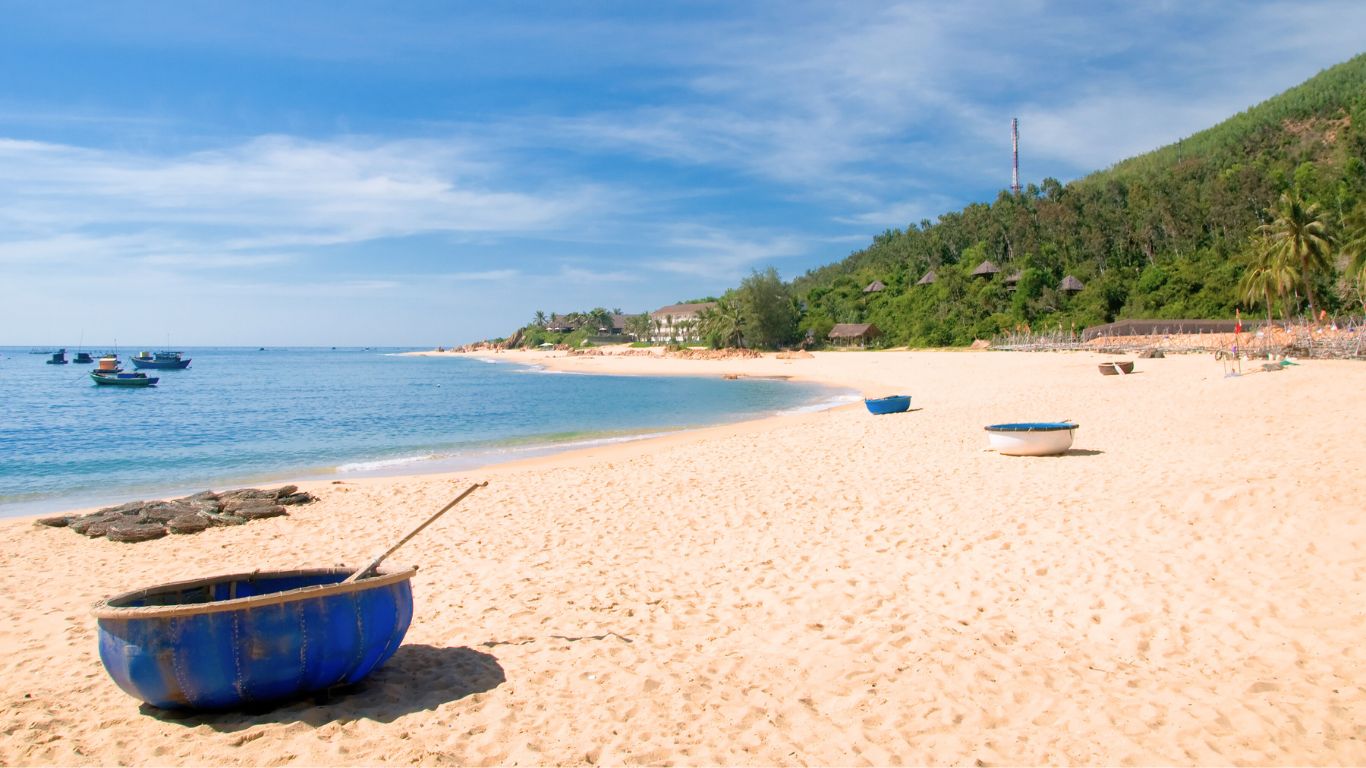
About 50 kilometers north of Nha Trang, Doc Let is where Nha Trang regulars quietly escape when they need a breath of space. The sand here is powdery and pale, the water crystal clear, and the crowd noticeably thinner. People who visit for the first time almost always say the same thing: they wish they had stayed longer.
Doc Let works beautifully as a day trip from Nha Trang, or as a quiet base if you would rather skip the city noise entirely. The drive up the coast is scenic in its own right, passing fishing villages and stretches of shoreline that rarely make it onto mainstream itineraries.
Best for: Relaxation seekers, couples, and anyone who finds Nha Trang a little too loud.
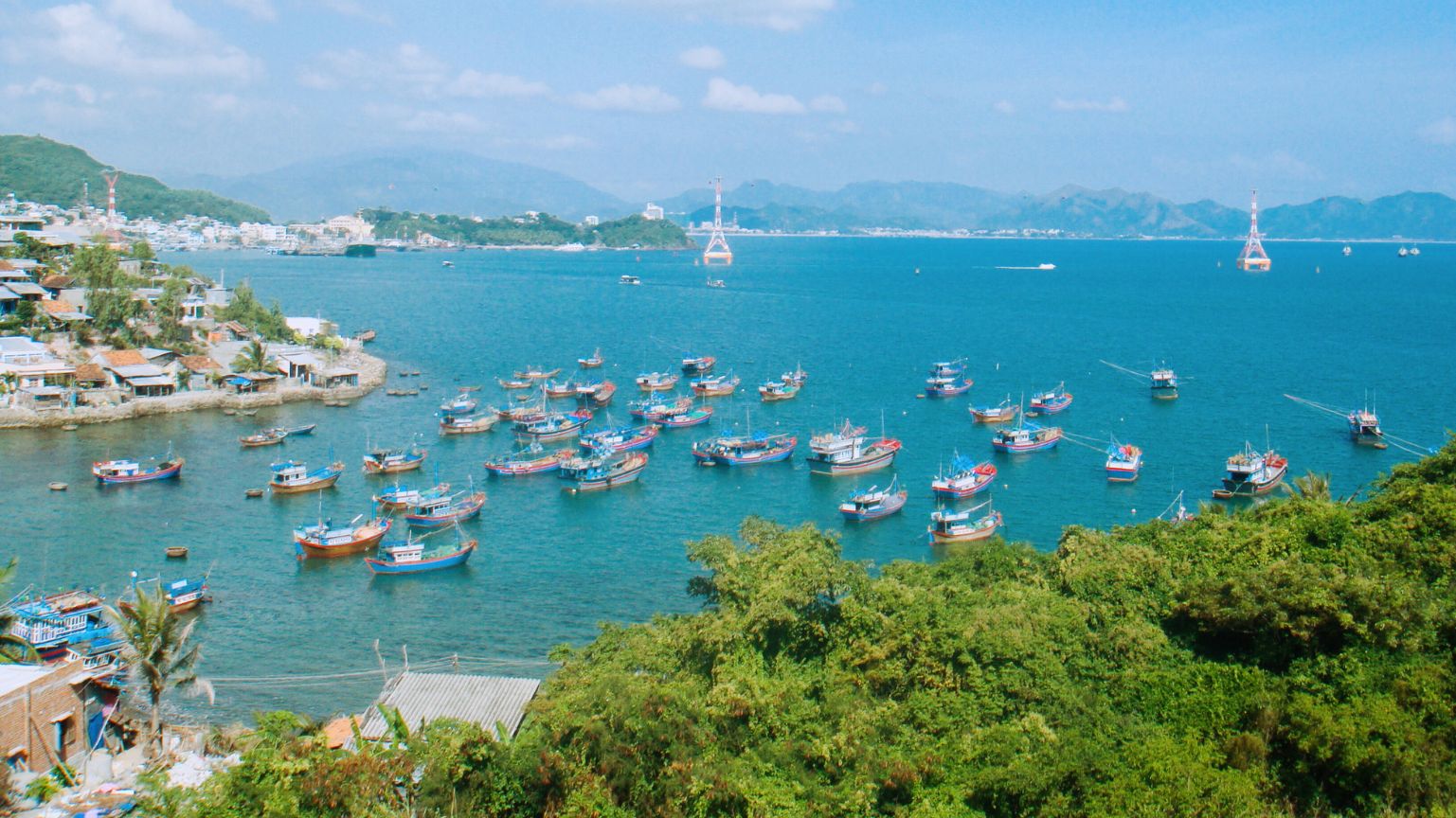
7. Nha Trang — The Lively Capital of Vietnam’s Coast
Best time to visit: February to August | Recommended stay: 2 to 3 days
Nha Trang makes no apologies for being busy, and that is part of its appeal. The city beach is well-maintained and patrolled, the water is generally clean, and the range of activities on offer is hard to match anywhere else on the Vietnamese coast. Scuba diving and snorkeling around Hon Mun Island reveal coral reefs alive with color. The ancient Po Nagar Cham Towers give the city a cultural anchor. And the mineral-rich mud baths at Thap Ba Hot Springs are a genuine highlight, therapeutic and a little surreal all at once.
As the sun goes down, the city shifts gears entirely. Beachfront restaurants fill up, bars come alive, and the whole strip takes on a festive energy that runs well into the night. For five compelling reasons to add Nha Trang to your itinerary, take a look at our dedicated Nha Trang beach guide.
Best for: Young travelers, groups of friends, divers, and nightlife enthusiasts.
8. Mui Ne — Wind, Dunes, and a Very Easy Weekend
Best time to visit: November to April | Recommended stay: 2 to 3 days
Mui Ne has always been Southeast Asia’s kitesurfing capital, and that reputation is well earned. Consistent winds, long stretches of open beach, and a well-established network of surf schools make it one of the best places in the region to get into the water with a kite. But even if you never touch the equipment, Mui Ne is worth the trip for the landscape alone.
The red and white sand dunes on the edge of town feel genuinely surreal, especially at sunrise and sunset when the light turns everything golden and the shadows stretch long across the sand. Here is the new headline for 2026: the Dau Giay to Phan Thiet expressway has cut the drive from Ho Chi Minh City down to just over two hours, compared to five or more previously. That makes Mui Ne one of the most accessible weekend escapes in the south, and visitor numbers are already reflecting it.
Best for: Water sports lovers, adventure travelers, and weekend trippers from Ho Chi Minh City.
9. Phu Quoc — Paradise with Two Very Different Sides
Best time to visit: November to April | Recommended stay: 3 to 5 days
Phu Quoc has changed significantly over the last few years, and knowing which part of the island suits you will make a real difference to your trip. The south, particularly the Sunset Town and Grand World area, is now a fully developed resort zone. Mediterranean-style architecture, luxury hotels, a cable car, casinos, and entertainment complexes have transformed this end of the island into something closer to a themed resort destination. If that is what you are after, it delivers.
The north is a different world entirely. Phu Quoc National Park covers more than half the island and stays beautifully wild, with dense jungle, hidden waterfalls, rare wildlife, and trails that see relatively few footprints. The An Thoi archipelago to the south offers outstanding snorkeling and diving regardless of which side of the island you base yourself. For honeymoon planning in Phu Quoc, our Vietnam honeymoon guide has dedicated advice, and our 4-day Phu Quoc Beach Escape is a great starting point for a private, tailored stay. You can also compare your options in our Phu Quoc vs Halong Bay guide.
Best for: Honeymooners and luxury seekers in the south, nature and eco travelers in the north, and families in both.

10. Con Dao — Untouched, Historic, and Genuinely Unforgettable
Best time to visit: November to February for beaches, May to October for sea turtle nesting | Recommended stay: 2 to 3 days minimum
Con Dao is the kind of destination that quietly becomes someone’s favorite place in Vietnam. The beaches are immaculate, the national park is one of the most biodiverse in the country, and the former French colonial prison, now a museum, offers a sobering and important window into Vietnamese history that no other island destination quite matches.
From May to October, guided night tours give you the extraordinary chance to watch sea turtles nest on the beach, and hatchlings make their first dash toward the water. It is the sort of experience that stays with you long after you leave. The diving around Con Dao’s reefs and dugong habitats is world-class and blissfully uncrowded. Getting here requires a short flight from Ho Chi Minh City or Can Tho, and accommodation ranges from basic guesthouses to a handful of very good boutique resorts. For private tour arrangements and accommodation booking, reach out to our team at [email protected].
Best for: Nature lovers, history enthusiasts, divers, and travelers who want to genuinely escape the crowd.
Planning Your Vietnam Beach Trip
Getting the most out of Vietnam’s coastline is much easier when you have the right support behind you. Whether you are looking for a private guided tour, a carefully chosen boutique hotel, or a seamless multi-destination itinerary that covers beaches and culture in one trip, our team has been putting together coastal journeys since 2008.
For families heading to the coast, our guide on one week at Vietnam’s beaches with kids is packed with practical advice. If you want to explore beyond the coast and take in the full country, our 20-day in-depth Vietnam tour covers everything from Hanoi to the Mekong Delta. And for the top summer picks across the country, our top 10 beaches to visit in summer is a great companion read.
Ready to start planning? Browse our full range of private Vietnam tours at Vietnam Travels Online or get in touch directly through our contact page. Every itinerary we put together is private, tailored, and built around how you actually want to travel.
Travel Tips for Vietnam’s Beaches
A few things worth knowing before you go:
- Visa: Vietnam has expanded exemptions for many nationalities in recent years. Check the latest rules before booking, as the situation has shifted in your favor.
- Payments: QR code payments via VietQR have taken off across Vietnam, including in smaller beach towns. Many street vendors and local restaurants now prefer a quick scan over cash. Linking an international card through the Grab app is one of the most convenient ways to pay and get around.
- Cash: Still carry local currency, particularly on islands and in remote areas where ATMs are scarce and can run dry during peak season.
- Weather: Always check the forecast 48 hours before beach days. Typhoons during August and October can arrive quickly along the central and northern coast.
- Water safety: Red flags on the beach mean stay out of the water, full stop. Currents during the monsoon season are far stronger than they appear from shore.
- Dress code: Cover up when leaving the beach to visit towns, temples, or markets. It is respectful of local customs and a practical defense against the midday sun.
- Hydration: Fresh coconut water is everywhere and is genuinely one of the best things you can drink in this heat. Use it often.
- Language: A little Vietnamese goes a long way. Xin chao (hello) and Cam on (thank you) will earn you real warmth almost everywhere you go.
FAQs
Which part of Vietnam has the best beaches? The central coast offers the best overall balance of white sand, clear water, and cultural access. The south wins on tropical island atmosphere, and the north is unmatched for dramatic scenery.
Where is the clearest water in Vietnam? Phu Quoc, Con Dao, Doc Let, and the waters around Nha Trang’s offshore islands consistently rank highest, thanks to limited development and distance from river mouths.
Should I visit Con Dao or Phu Quoc? Choose Con Dao for untouched nature and genuine quiet, Phu Quoc for resort comfort and easier logistics. Many travelers now combine both since they are close to each other.
Are Vietnam’s beaches better than Thailand’s? They offer different things. Vietnam tends to be less crowded and more culturally layered, while Thailand has more developed resort infrastructure. If authentic experience matters, Vietnam edges ahead.
Is Vietnam good for a beach honeymoon? Absolutely. Phu Quoc and Con Dao are two of the most romantic island destinations in Southeast Asia. Our Vietnam honeymoon guide has everything you need.
Can I visit multiple beaches in one trip? Yes, very doable. Central Vietnam lets you move between Da Nang, Hoi An, and Quy Nhon with ease. For a fuller journey combining coast and culture, our 20-day Vietnam tour covers it all.
Vietnam Travels Online is a division brand of Indochina Voyages. Our team has been crafting private tours and tailor-made itineraries across Vietnam and Southeast Asia since 2008, with a 98% excellent rating on TripAdvisor. Get in touch at [email protected] or visit Indochina Voyages to start planning your trip.