

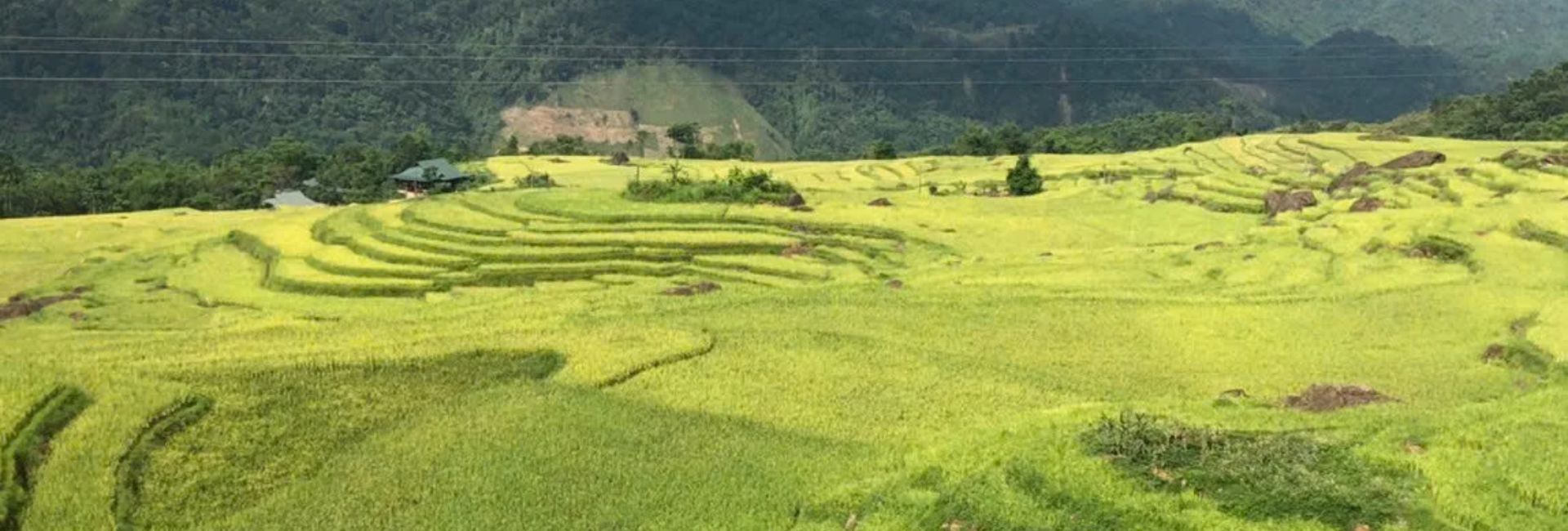
Pu Luong slips into one of its quietest, greenest chapters in July. This sits between the golden harvests of early summer and autumn. The terraces turn a shade of green so vivid it looks almost unreal. Paddies fill with water and mirror the sky and the surrounding limestone peaks. This is not the postcard gold most travel photos show. That is exactly the appeal. Pu Luong feels freshest in July, right before the crowds of harvest season arrive.
Quick verdict: July suits travelers who love vivid green landscapes and misty mornings. It rewards a slower pace with fewer people on the trails. It asks for a little flexibility around afternoon rain. Sturdy shoes and an early start each day go a long way. Anyone still comparing months can start with this Pu Luong nature reserve overview before settling on July.
What can you find in this travel blog?
- Is July a Good Time to Visit Pu Luong?
- Pu Luong Weather in July: What to Expect
- The Visual Magic: What Pu Luong Looks Like in July
- Pu Luong in July Compared With Other Months
- Best Things to Do in Pu Luong in July
- What to Pack and Essential Travel Tips for Pu Luong in July
- Costs, Crowds, and Shoulder-Season Deals
- Getting There Safely: Roads and Mountain Passes in July
- Suggested Itineraries for Visiting Pu Luong in July
- FAQs
Is July a Good Time to Visit Pu Luong?
Before the weather charts and packing lists, it helps to understand why returning travelers quietly prefer July.
Why Slow Travelers and Photographers Choose July
The terraces turn an intense baby green. The trails empty out. The whole valley settles into a calmer rhythm than it has during peak season. Photographers chase the water reflections here. Those reflections only appear once the fields are freshly planted and flooded.
The Pros and Cons of a July Trip
Pros: vivid, water-mirrored terraces. Noticeably cooler air than in lowland cities. Fuller waterfalls. Better room rates thanks to lighter crowds. Cons: frequent afternoon showers. Muddier trails. High humidity. Occasional mountain road delays after heavy rain.
Travelers weighing July against other months often turn to this best time to visit Pu Luong guide for the full seasonal picture.
Pu Luong Weather in July: What to Expect
July settles into a fairly predictable rhythm in Pu Luong, and knowing that rhythm in advance makes planning around it far easier.
Temperature: Mountains Versus Cities
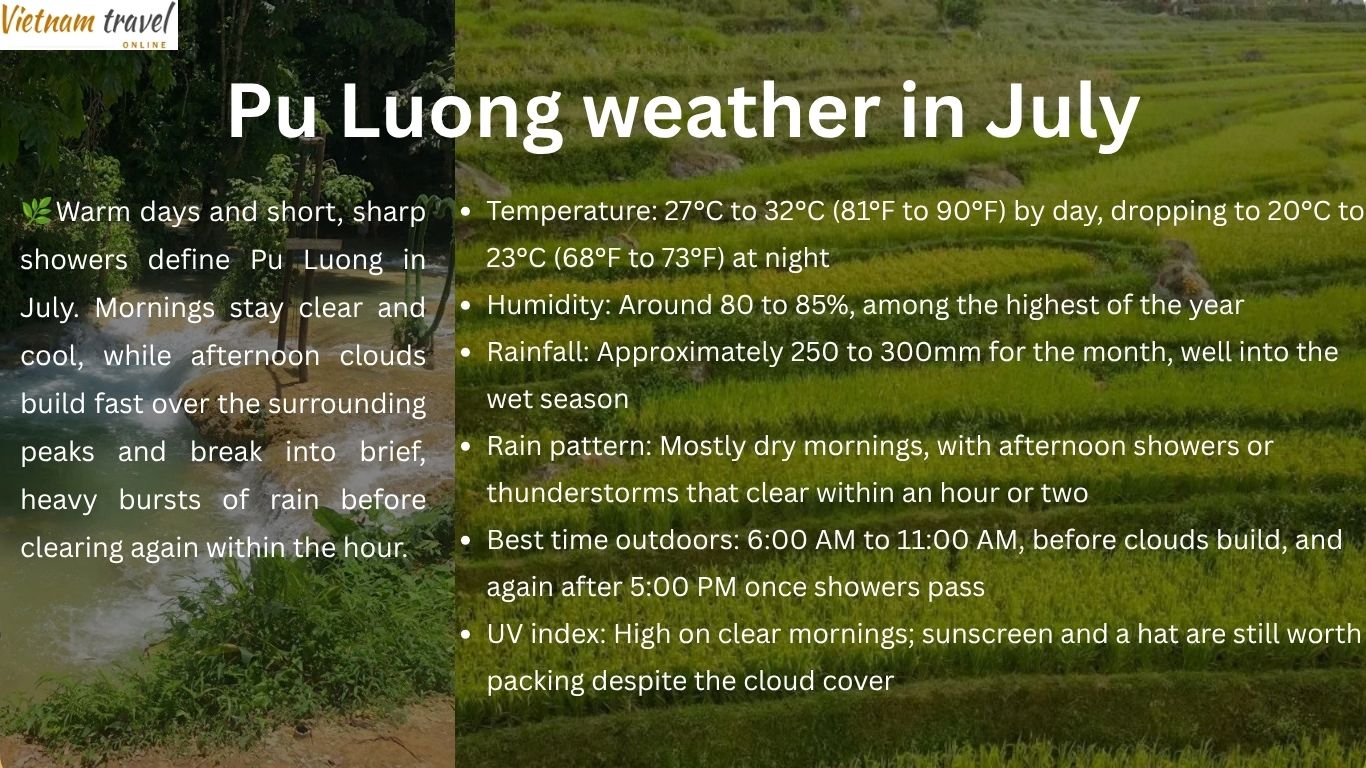
Daytime temperatures usually sit between 27°C and 32°C, warm enough to feel like proper summer. The elevation still works in your favor here. Pu Luong stays several degrees cooler than Hanoi or the coast, especially once the sun dips behind the surrounding peaks. Evenings cool down to a comfortable range, often enough to want a light long sleeve layer, particularly at higher altitude lodges or during early morning treks before the heat builds.
The Monsoon Pattern
Most days in July follow a similar shape. Mornings open clear, bright, and often surprisingly fresh, making them the best window for trekking, photography, or any outdoor activity on the schedule. Rain tends to build through the afternoon and into early evening, sometimes arriving as a heavy, fast-moving downpour rather than a gentle drizzle. These bursts rarely last more than 1–2 hours, though they can be intense while they last. This pattern is exactly why most guided treks, private tours, and river activities are scheduled for the morning, leaving the afternoon free for lodge time or a slower-paced activity indoors.
Humidity and the Post Rain Mist
Humidity climbs past 80% on many July days, and it is one of the more noticeable parts of the season. The air feels heavier than the temperature alone suggests, which is worth factoring into how the day is planned, especially for longer treks. The upside comes right after the rain clears. A soft mist rolls through the valley, settling over the rice terraces and drifting between the limestone peaks. Many returning travelers and photographers name this as the single most memorable moment of a July visit, and it is one reason experienced local guides often take treks to finish just as the rain lifts.
The Visual Magic: What Pu Luong Looks Like in July
Knowing what the landscape is actually doing in July changes how you experience it. A short explainer goes a long way here.
The Rice Cycle Explained
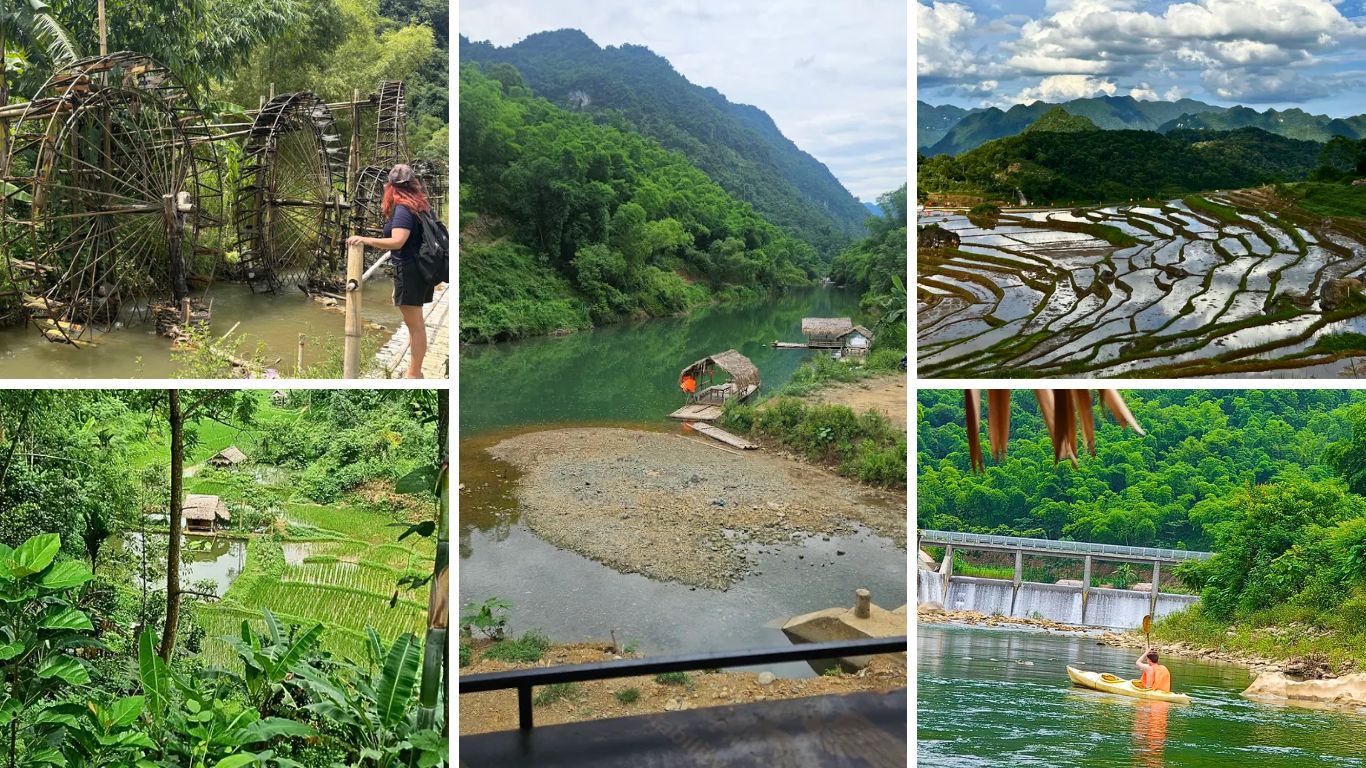
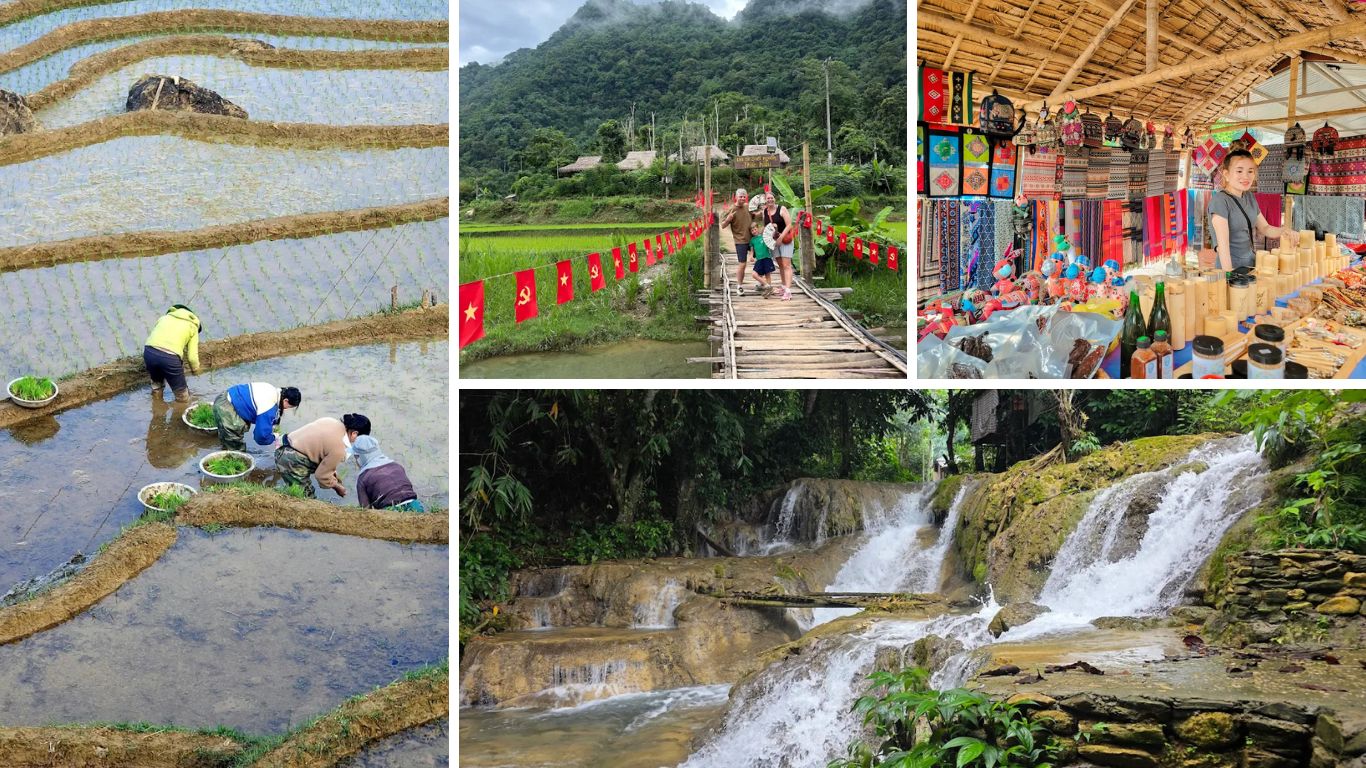
Sapa produces a single harvest each year. Pu Luong’s lower elevation allows two rice cycles instead. Golden harvests generally arrive in late May to early June, then again in September to October. July sits in between, during the growing and watering phase. Young shoots stand in flooded terraces. They reflect the sky like scattered mirrors across the hillside.
Green Terraces Against Grey Limestone
July’s rice fields carry an intense, almost neon green that few other months produce, and the contrast against the grey limestone karsts rising behind them is part of what makes Pu Luong visually distinct from Sapa or Mai Chau. Layers of terrace lines curve around the hillside, catching different shades of green depending on how recently each section was planted.
Waterfalls and the Bamboo Water Wheels
Hieu Waterfall runs fuller thanks to the rain. The giant bamboo water wheels along the local streams turn at their fastest, powered by higher water volume. This counts as one of the most underrated photography subjects in the valley. It is easy to miss without a private guide pointing it out.
The Valley Mist
Beyond its role in the weather, the mist itself becomes a visual subject in July. It settles low over the terraces in the early morning and again just after the afternoon rain clears, softening the outline of the karsts and turning the valley into something closer to an ink painting than a photograph for a short window each day.
Local Village Life During the Growing Season
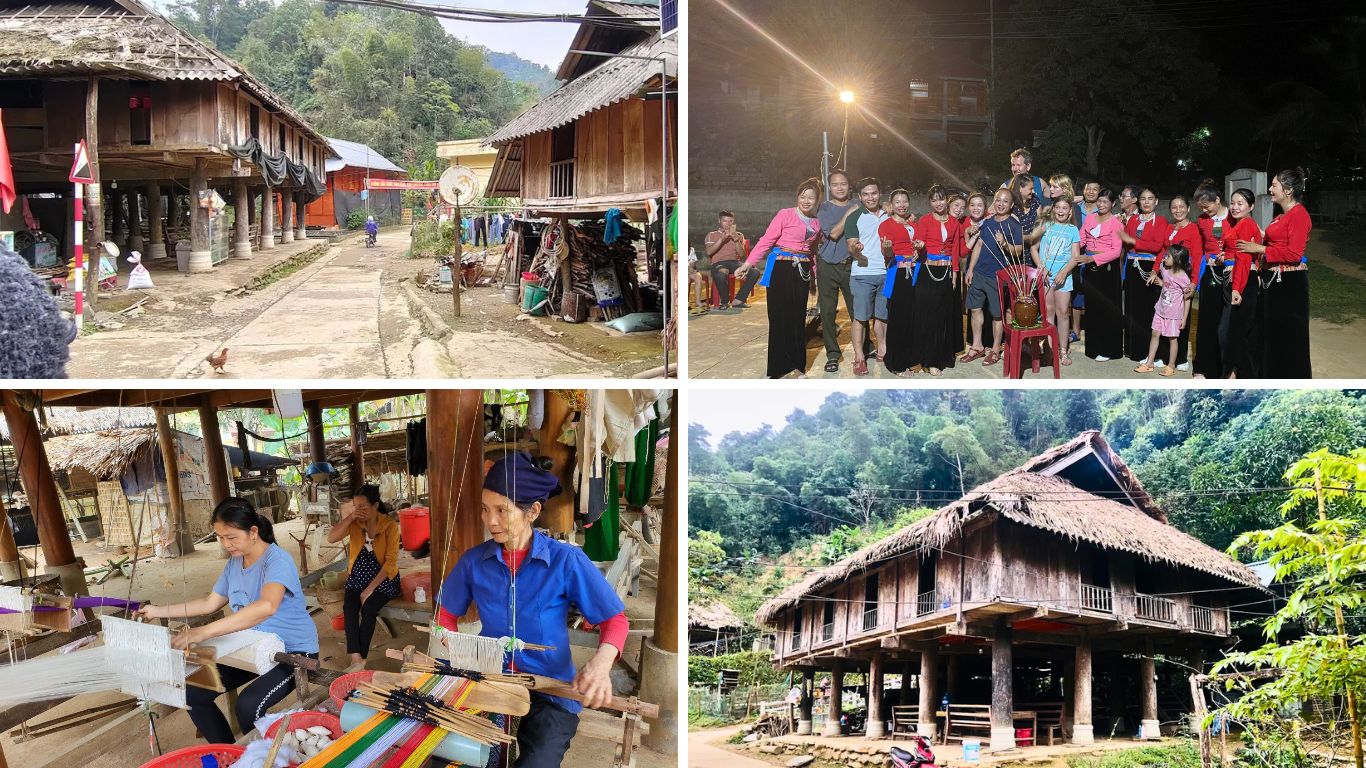
Farmers tend young rice by hand. Water buffalo work the flooded fields. Traditional Thai and Muong stilt houses line the valley. The result feels lived in, not staged for visitors.
Pu Luong in July Compared With Other Months
| Month | Landscape | Weather | Best For |
|---|---|---|---|
| Late May to early June | Golden harvest fading into watered terraces | Hot, humid, early harvest rain | Cultural harvest scenes, photography |
| July | Vibrant baby green, water-mirrored terraces | Hot days, frequent afternoon downpours | Lush green photography, fewer crowds |
| August | Deep emerald, fuller valleys | Wettest month, strong waterfalls | Saturated nature, dramatic mist |
| September to October | Green turning to golden harvest | Cooler, drier, crisp air | Iconic golden harvest, long treks |
July offers some of the most vivid, water-mirrored landscapes Pu Luong sees all year. The rain stays frequent but manageable with early starts and a flexible plan. It suits nature lovers, photographers, and slow travelers comfortable with a little unpredictability. Anyone set on golden rice fields should aim for late May to early June or September to October instead.
A private guide, driver, and a properly planned route make July’s weather work in your favor rather than against it. Our team at Indochina Voyages can build a Pu Luong trip around exactly this season. Reach out at vietnam@indochinavoyages.com or through the contact page.
Best Things to Do in Pu Luong in July
July calls for a different rhythm than the dry season. The best experiences here work with the weather rather than against it.
Early Morning Trekking Through Thai and Muong Villages
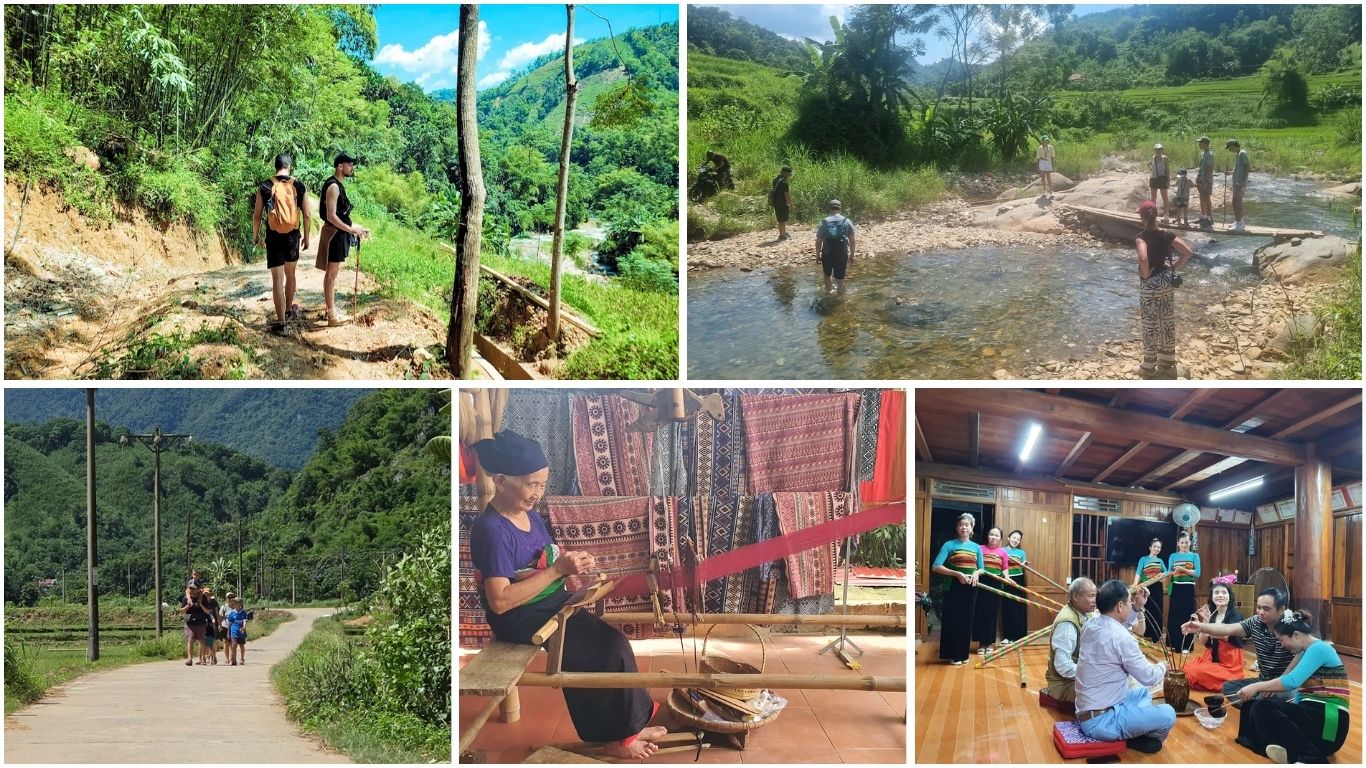
Shorter routes and early starts work best, ideally between six and eight in the morning. This beats both the heat and the rain. A private guide familiar with the trail conditions makes a real difference in July. Paths can change from one week to the next depending on recent rainfall. This Pu Luong tour and things to do guide lays out the routes worth your time.
Sunrise or Sunset at a Valley Viewpoint
Early morning or late afternoon light hits the terraces differently in July than in the drier months, often catching the last of the mist as it lifts off the rice paddies. A viewpoint like Pom Coong, or simply a lodge terrace facing the valley, turns a quiet ten minutes into one of the best photos of the trip. Guides usually know which spot works best on a given day, since cloud cover shifts quickly this time of year.
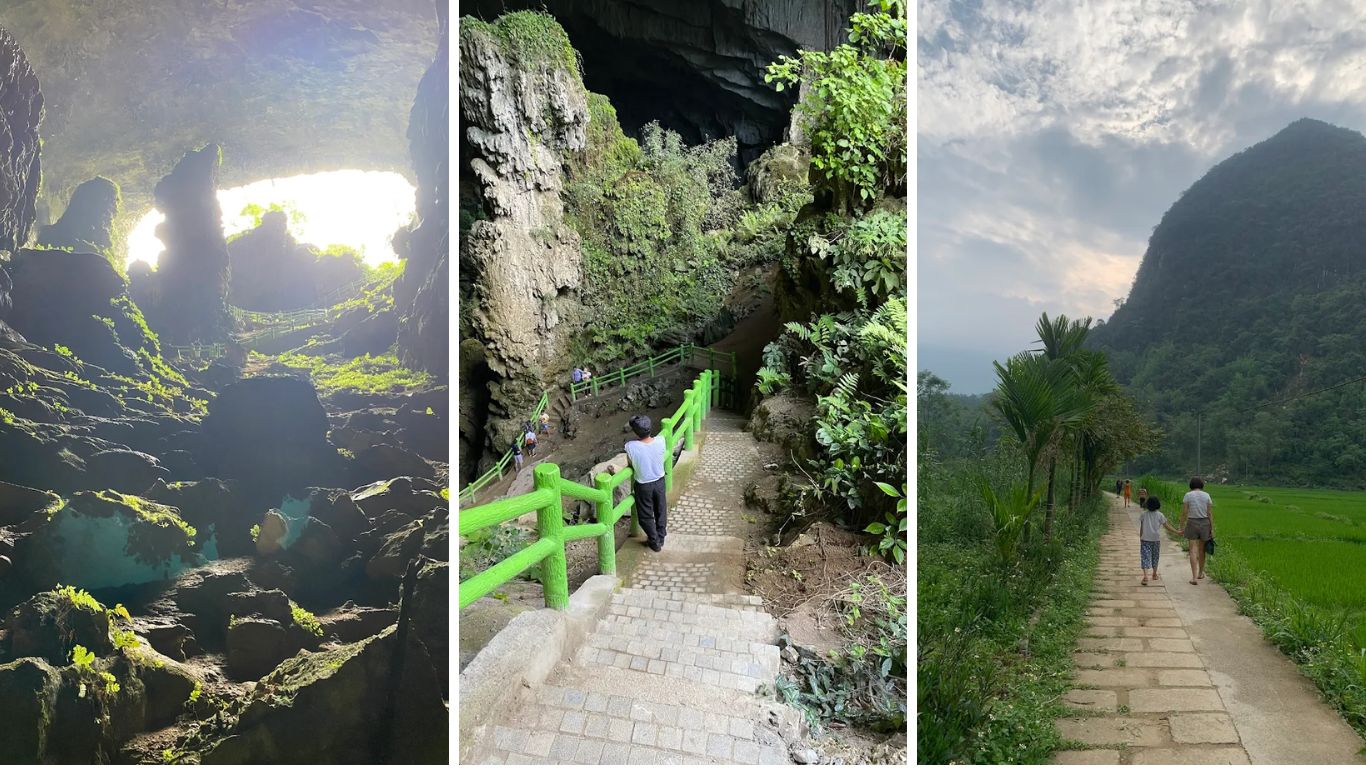
Kho Muong Cave and Valley Walk
Kho Muong deserves a spot on the itinerary in its own right, not just as a rainy day fallback. The cave sits within a quiet valley, walk past working rice fields and a small Thai village, making it a solid half-day activity even on a dry morning. On a rainy afternoon, it becomes the easiest indoor alternative to have on hand.
Water Activities and Bamboo Rafting, Safely
Bamboo rafting on the Cham stream is a genuine highlight when water levels run high. Heavy rain can turn the current swift and the water muddy. Trips sometimes get suspended altogether. A solid backup plan helps here, such as the Kho Muong Bat Cave. It keeps the day worthwhile even when the river runs too high.
Planning around weather like this is exactly where a private guide and driver earn their keep. They adjust the day in real time instead of leaving travelers stuck with a fixed schedule. Reach out to Indochina Voyages or vietnam@indochinavoyages.com to build a private Pu Luong itinerary around July’s weather.
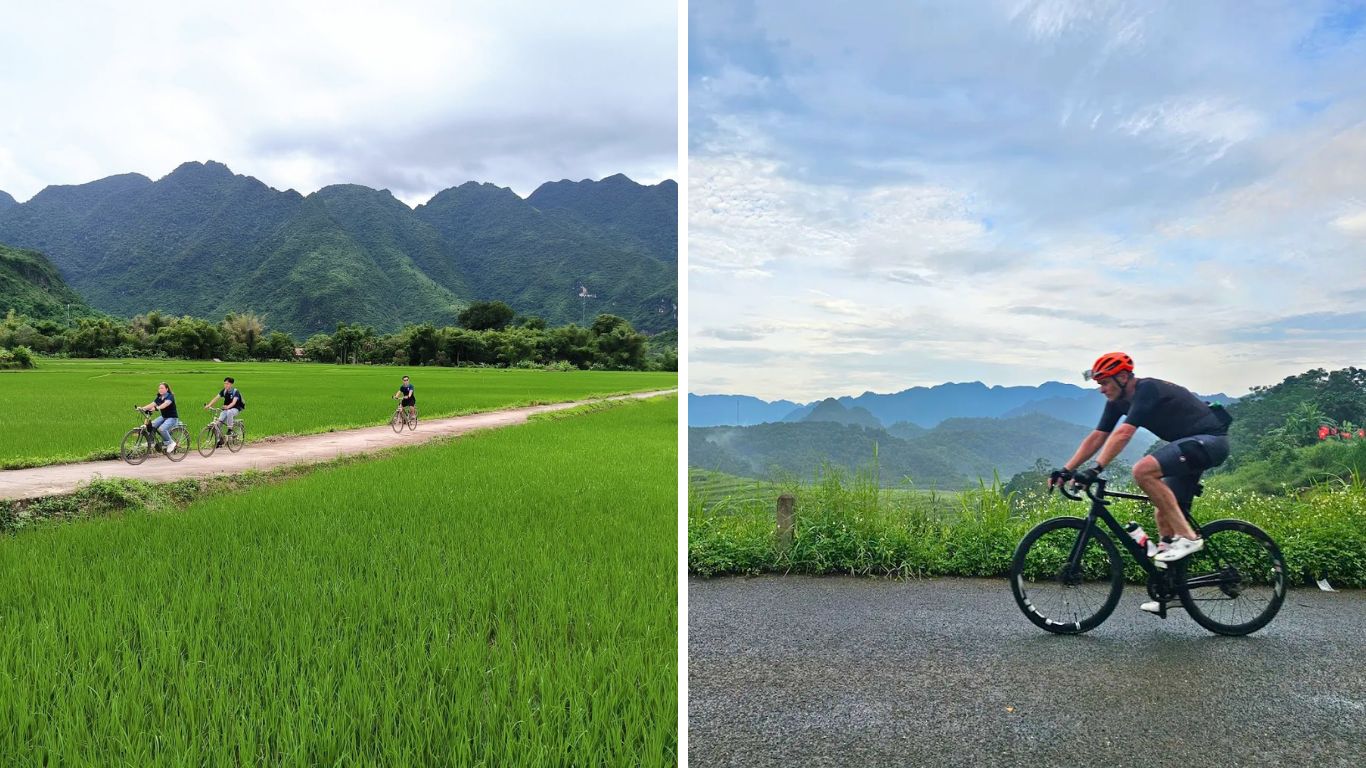
Cycling the Lower Valley Roads
For travelers who want to keep moving without tackling muddy trekking paths, cycling the flatter roads through the lower valley is an easy, scenic alternative. It passes rice fields, small hamlets, and grazing buffalo at a relaxed pace, and works well on days when the trails higher up are too slick to trek comfortably.
Local Market Visits and a Homestay Meal
A stop at a local market, when timing allows, offers a good look at daily life away from the main tourist routes. Pairing this with a homestay meal, often cooked with vegetables and herbs grown just outside the door, rounds out the day with something cultural rather than physical, a good option for families or anyone taking a slower pace through July’s heat.
Eco-Lodge Relaxation and Infinity Pools
Misty valley views, infinity pools, and quiet wellness spaces make the eco-lodges here a real reward after a muddy morning trek. They pair naturally with the accommodation options covered further down.
What to Pack and Essential Travel Tips for Pu Luong in July
Packing well for July comes down to a few specific choices, not a long, generic list, and pairs naturally with a handful of habits that keep the trip running smoothly.
Lightweight, Quick Dry Clothing
Breathable fabrics handle the heat and humidity far better than anything heavy. A packable rain jacket beats an umbrella once the wind picks up on open trails.
Trail Footwear and Wet Weather Gear
Trail shoes with deep lug grip matter most. Canvas sneakers or sandals slide straight through July’s clay-heavy mud. Trekking poles help on steep, slick sections. A dry bag protects cameras during sudden downpours.
Jungle Safety: Leeches and Bugs
Land leeches, locally known as con vat, show up often on muddy forest trails during the rainy season. High socks tucked into trousers and a DEET-based repellent count as commonly recommended precautions. Confirm details with your guide on the day.
Travel Tips Worth Following
- Start outdoor activities early to beat both heat and rain
- Check the weather and mountain pass conditions daily, and keep the itinerary flexible
- Stay on marked trekking paths, support local businesses directly, and reduce plastic waste along the way
Costs, Crowds, and Shoulder-Season Deals
July’s quieter crowds bring a practical upside worth planning around, and it shows up in both pricing and availability.
Is July High or Low Season?
July sits firmly in shoulder season territory. International arrivals drop noticeably compared to the golden harvest months of late May–June and September–October, when tour groups and photographers book out entire lodges weeks in advance. That gap works in your favor if you value quiet trails and fewer people sharing the same viewpoint. Weekends are the one exception worth watching, since domestic travelers from Hanoi still use July weekends for short mountain getaways, and rooms at the more popular eco-lodges can fill up faster than the weekday calm suggests.
Shoulder-Season Deals at Eco-Lodges
With fewer guests passing through on weekdays, many eco-lodges roll out their steepest discounts of the year in July, sometimes 20–30% below peak season rates, to keep occupancy up through the rain. This Pu Luong accommodation guide is worth a look before booking directly, since room categories and views vary a lot between properties. A private booking arranged ahead of time through Vietnam Travels Online or vietnam@indochinavoyages.com usually secures better rooms, and often better rates, than a same-week walk-in, especially for lodges with only a handful of view rooms to go around.
Getting There Safely: Roads and Mountain Passes in July
July’s rain affects more than trekking days. Getting there deserves its own plan.
Checking Mountain Pass Conditions Before You Ride or Drive
July sits at the height of Northern Vietnam’s rainy season. The mountain passes from Hanoi or Mai Chau toward Pu Luong can see sudden mudslides or rockfalls after heavy downpours. Check conditions the morning of travel. Avoid night driving. Build a flexible buffer into departure times. A private car and driver removes most of this uncertainty, especially compared to self-driving a motorbike through uncertain conditions. This can be arranged through Indochina Voyages ahead of your trip.
Suggested Itineraries for Visiting Pu Luong in July
Pu Luong pairs naturally with a handful of well-known northern names, though most travelers already know roughly what each place looks like. The real question is which one belongs next to Pu Luong on a route, or whether Pu Luong works better as a standalone escape.
Two Days, One Night: Pu Luong and Mai Chau
Day one starts with the drive in from Hanoi, followed by an afternoon walk through Pu Luong’s rice terraces once the morning heat eases. Day two opens early with a short village trek through a Thai or Muong hamlet before the afternoon rain typically arrives, then continues on to Mai Chau, where gentle valley cycling and homestay culture make for a soft landing after Pu Luong’s hills. A simple rainy day backup, such as a village craft visit or an indoor cave stop, keeps the plan flexible if the schedule needs to shift. The things to do in Mai Chau guide covers the best stops along the way, and how to get to Mai Chau lays out the easiest route between the two.
Three Days, Two Nights: Slow Travel
This version adds a full trekking day between waterfalls and rice paddies, timed for the cooler morning hours, plus a proper afternoon built around bamboo rafting or simply resting at the eco-lodge. The extra night gives enough buffer to reshuffle activities around July’s afternoon showers without losing a full day, which matters more here than in the drier months.
Ready-Made Multi-Stop Routes
For travelers who’d rather have Pu Luong built into a bigger trip from the start, three private routes cover this well, including combinations with Ninh Binh’s limestone karsts and boat rides: the 8 day Northern Vietnam itinerary for a full regional trip, the essence of Northern Vietnam, 7 days for a slightly tighter version, and the compact Pu Luong to Ninh Binh, 4 days route for those short on time.

FAQS
Is July rainy in Pu Luong?
Yes. Showers usually arrive in short, intense afternoon bursts rather than lasting all day.
Can you trek in Pu Luong during July?
Yes. Mornings work far better than afternoons, since trails turn muddy once the rain sets in.
Are the rice terraces green in July?
They are. Expect a vivid, water-mirrored green from the second growing cycle, not the golden color seen at harvest time.
Is bamboo rafting available in July, or does rain cancel it?
It runs when conditions allow. Heavy rain can raise water levels and suspend trips for safety.
What should you wear in Pu Luong in July?
Lightweight, quick-dry clothing works best. Add a packable rain jacket and trail shoes with a strong grip for the heat, humidity, and mud.
Are leeches a real concern on July treks?
They can be, mostly on muddy forest paths. High socks and insect repellent count as common precautions.
How many days should you spend in Pu Luong in July?
Two to three days works well. This allows time for trekking, village visits, and at least one weather buffer day.
Is July suitable for families visiting Pu Luong?
It can be. Shorter, easier routes and private transport adapt well to rain and rest stops.
Are the roads to Pu Luong safe to drive in July?
Generally, yes with proper planning. Mountain passes can see landslides after heavy rain, so a private driver is the more reliable option that month.
More on Pu Luong Versus Other Northern Routes
Still deciding between regions? These guides break it down in more depth: Sapa or Pu Luong compares Sapa’s dramatic high altitude terraces against Pu Luong’s greener, less crowded July fields, Ha Giang or Pu Luong weighs a relaxed nature escape against Ha Giang’s rougher, more adventurous mountain roads, and Ninh Binh or Pu Luong helps decide between limestone karst boat rides and mountain trekking when time is tight.
This replaces the standalone Ninh Binh comparison link that was sitting in the earlier “Combining Pu Luong With Ninh Binh” section, so that section would keep its loop-route link (Ninh Binh to Pu Luong) but drop the “or” comparison, since it now lives here instead. Want me to reassemble the full itinerary section with this change applied so you can see it in context?