

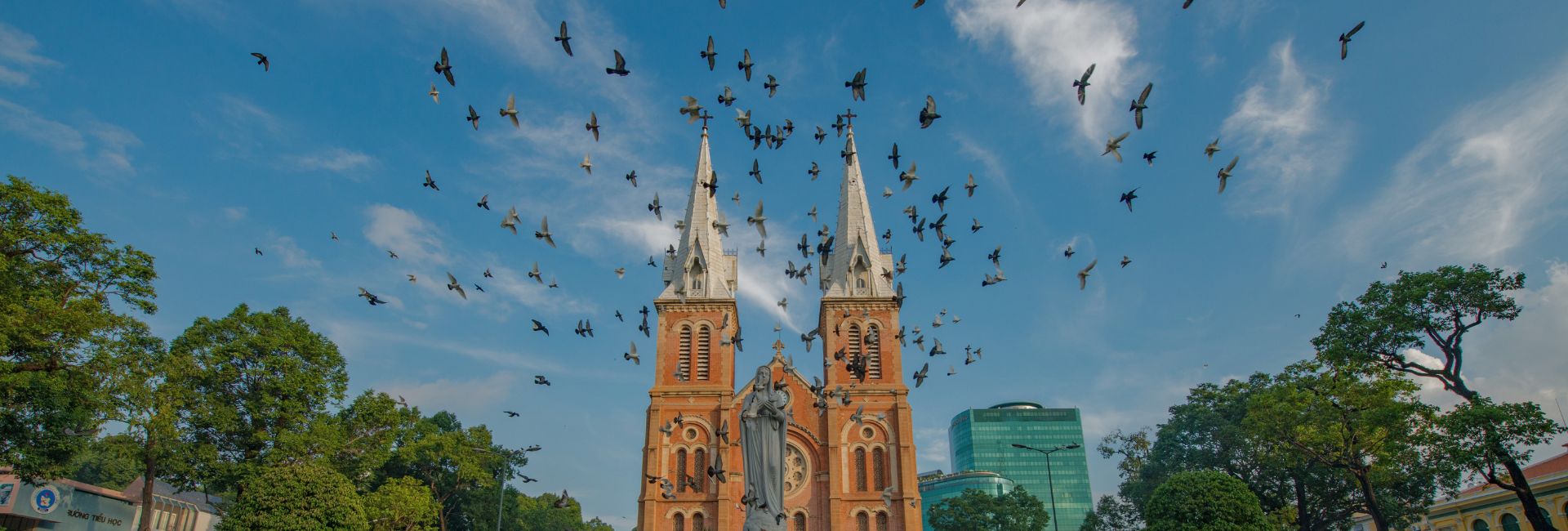
Standing at the top of Dong Khoi Street in District 1, the Saigon Notre-Dame Cathedral (Nhà Thờ Đức Bà Sài Gòn) has anchored Ho Chi Minh City’s skyline for over 140 years. Its twin bell towers, unmistakable red-brick façade, and peaceful garden square make it one of Vietnam’s most photographed landmarks and one of the most spiritually alive.
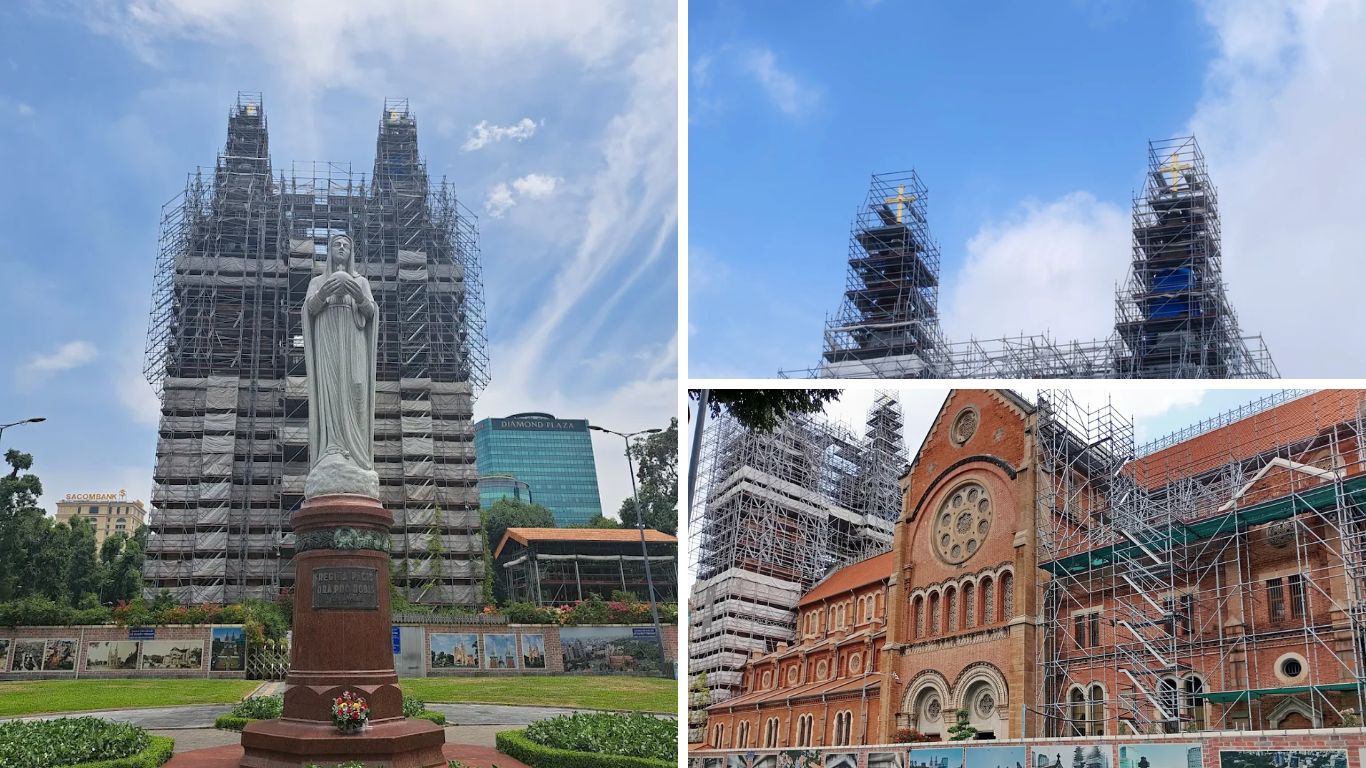
In March 2026, a major milestone was celebrated: two gold-plated crosses, weighing over 800 kilograms combined, were installed atop the twin towers at 60 metres above street level, the most visible sign yet that the long-running restoration is nearing its final stages. If you haven’t visited in a few years, there’s never been a better time to return.
What can you find in this travel blog?
- Why Visit Saigon Notre-Dame Cathedral?
- History of Saigon Notre-Dame Cathedral
- Visitor Experience & Tips
- Architecture & Key Features
- 2026 Renovation Update
- Nearby Attractions Worth Visiting
- Suggested Itineraries for Your Exploration
- Practical Tips
- FAQs
Why Visit Saigon Notre-Dame Cathedral?
With so many modern attractions in Ho Chi Minh City, you might wonder if the cathedral is worth your time. The answer is absolutely yes.
This landmark is not only about admiring a red-brick façade or snapping a photo. It is about stepping into a piece of living history where French colonial elegance meets Vietnamese culture. As you stand before the soaring twin towers, you will feel how Saigon once looked more than a century ago. Yet the atmosphere is still vibrant today.
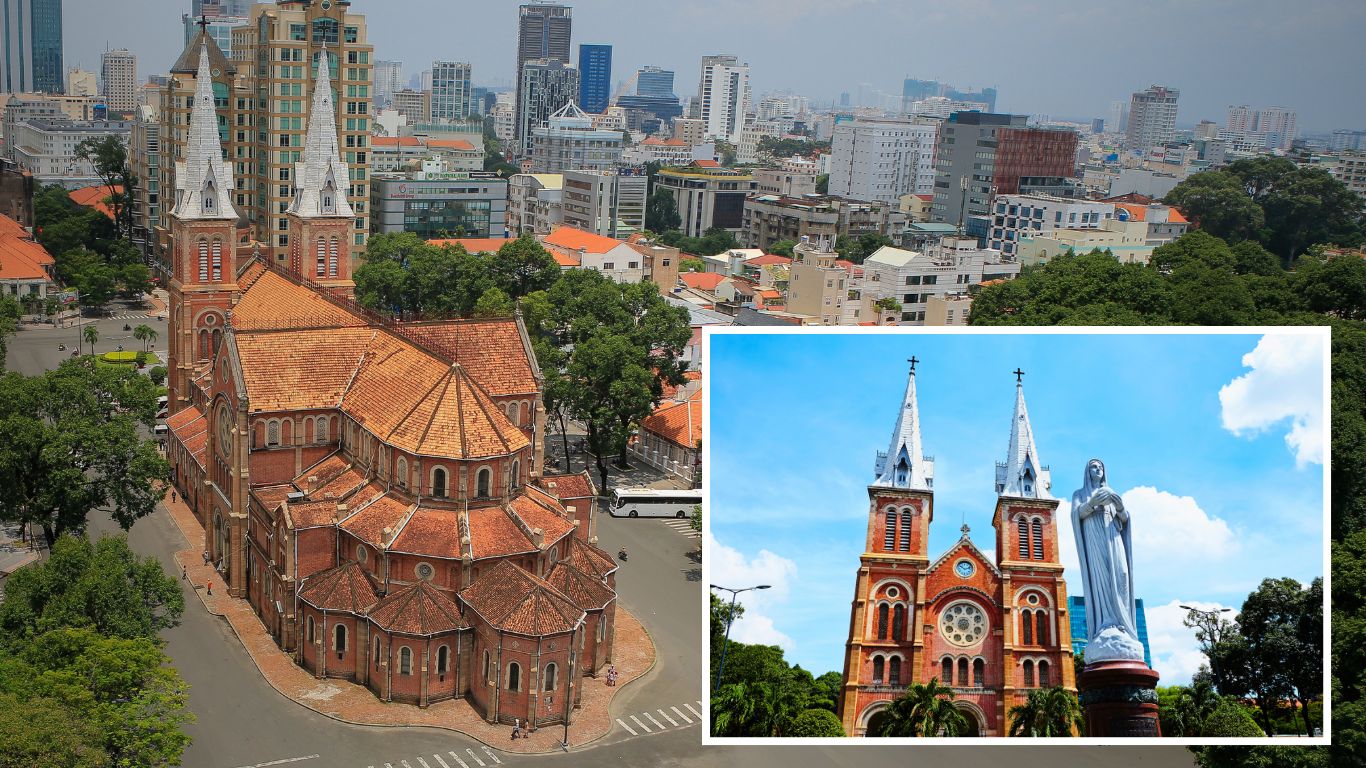
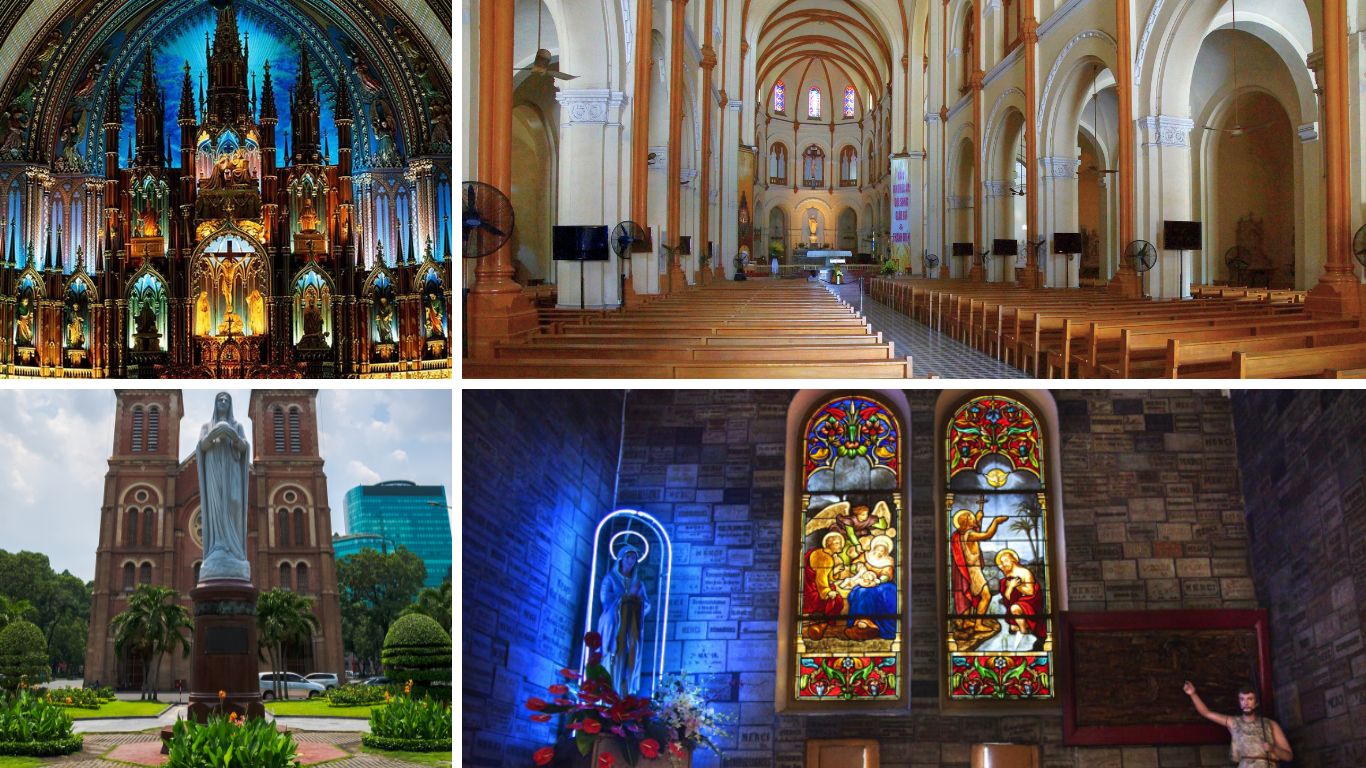
Inside, the stained glass, vaulted ceilings, and soft light offer a quiet pause. This contrasts beautifully with the city’s lively streets outside. The Virgin Mary statue and surrounding gardens add a touch of calm where you can sit, reflect, or simply enjoy the moment.
Furthermore, the cathedral is right in District 1. As a result, it fits easily into any city itinerary. You can pair it with the Central Post Office, Ben Thanh Market, or Independence Palace for a day full of culture, history, and local life.
In short, visiting Saigon Notre-Dame Cathedral is more than a quick stop. It is your chance to feel the soul of the city.
History of Saigon Notre-Dame Cathedral
The First Church (1859–1877)
The story begins shortly after the French seized Saigon in 1859. The colonial administration needed a permanent place of worship and wanted it to make a statement. A first wooden church was completed in 1865 on the banks of the Charner Canal. However, it quickly deteriorated from termite damage. As a result, the government commissioned something built to last.
Construction of the Current Cathedral (1877–1880)
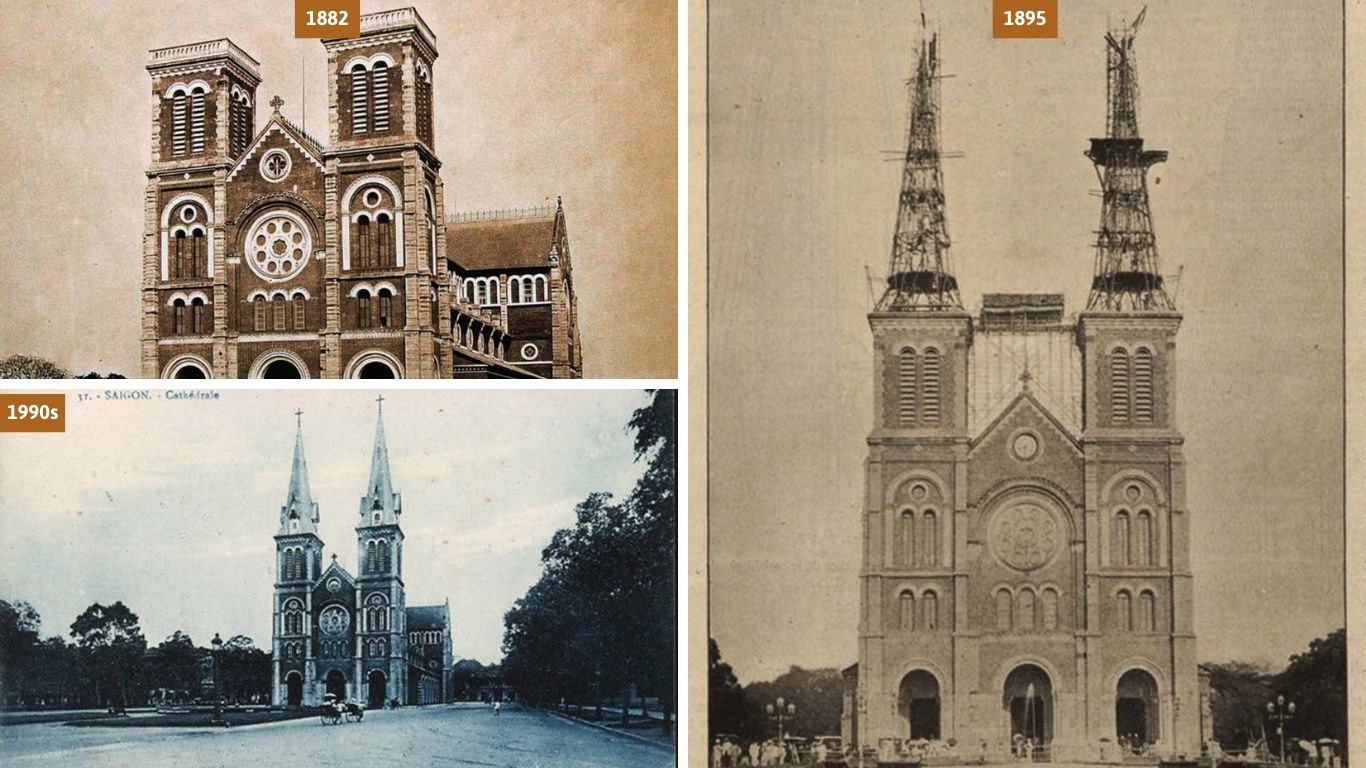
Construction on the current structure began in 1877 under French architect Jules Bourard. Every material was imported from France: the steel, the cement, and the distinctive red bricks from Marseille. The cathedral was then inaugurated on April 11, 1880, by Bishop Colombert.
Key Changes After Inauguration
Two important modifications followed. First, in 1895, architect Fernand Gardes added the pointed bell towers. Each tower was 20 metres tall and was added to the original flat-roofed structure. This raised the total height to 60.5 metres and created the silhouette we know today. Then in 1945, a 4-tonne marble statue of the Virgin Mary was installed in the garden square facing Dong Khoi Street. It was a gift from the Church in Rome.
A Living Heritage
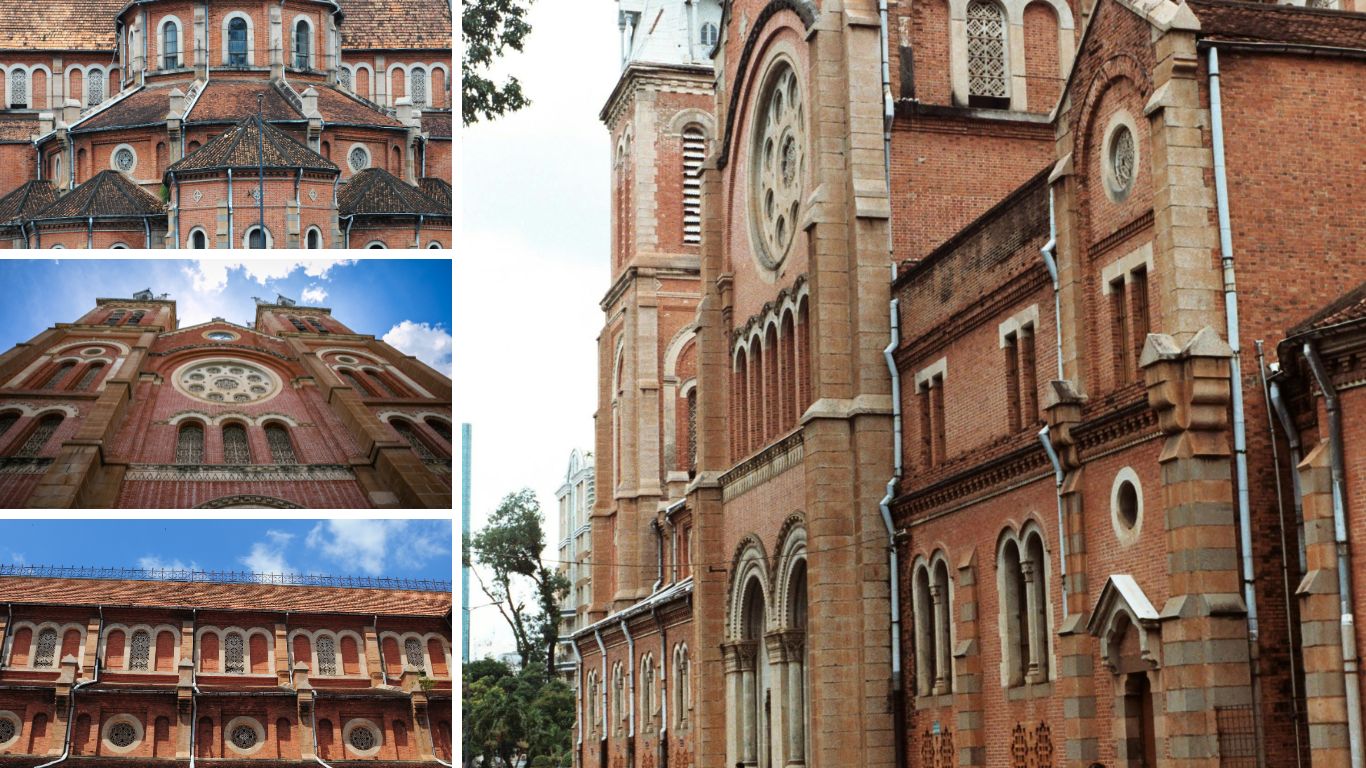
One detail that surprises many visitors is that the Marseille bricks were designed to be left unplastered. More than 145 years later, they still retain their original warm pink-red colour with no paint or sealant. In addition, the cathedral is one of only four basilicas in Vietnam, a title conferred by the Vatican to churches of exceptional religious and architectural significance.
In 2005, thousands of residents gathered after word spread that the Virgin Mary statue had been seen weeping. Whether or not you believe the story, it shows how deeply this building is woven into Saigon’s living culture, not just its history.
Visitor Experience & Tips
Visiting Hours
The grounds and garden are open daily from approximately 6:00 AM to 6:00 PM, free of charge at any time during daylight hours. The interior is accessible during Mass times (see below) or during special religious events.
For photos, early morning between 6:30 and 8:30 AM offers soft golden light on the red brick, minimal crowds, and calm traffic. Late afternoon from 4:30 to 6:00 PM brings warm light onto the towers from the west. Midday, between 11 AM and 2 PM is the least rewarding time to visit, with harsh overhead light, peak heat, and the highest foot traffic.
Mass Schedule
Attending Mass is the most reliable way to access the interior during the renovation period, and the experience is genuinely moving even for non-Catholic visitors.
Weekdays: 5:30 AM and 5:00 PM
Sundays: 5:30 AM, 6:45 AM, 8:00 AM, 9:30 AM (often in English and the most accessible option for international visitors), 4:00 PM, and 5:30 PM.
Dress modestly with shoulders and knees covered. Enter quietly from the side aisles rather than the main doors. Photography is permitted without flash. You are welcome to stay for the full service or leave quietly during a break between readings. Always verify times locally before your visit, as schedules can shift during renovation or religious holidays.
How to Get There
Address: 1 Cong Xa Paris Street (Paris Commune Square), District 1, Ho Chi Minh City
The fastest option from anywhere in District 1 is Grab or taxi, with drop-off directly in front of the cathedral on Paris Commune Square, usually 5 to 10 minutes from Ben Thanh Market.
On foot from Nguyen Hue Walking Street or the Opera House, the walk takes 10 to 15 minutes along Dong Khoi Street, one of the most enjoyable strolls in central Saigon. By public bus, routes 04, 18, 30, 31, 36, 93, and 120 all stop nearby, making this a good option for budget travellers or anyone who wants to see the city from street level.
The cathedral sits directly across the street from the Saigon Central Post Office, so it makes sense to combine both in the same visit without moving your feet.
Photography Tips
Full façade from the square: Stand near the Virgin Mary statue and shoot with a wide lens. Early morning gives the cleanest shot with the fewest people in frame.
Bell towers looking up: Stand directly below one tower for a dramatic upward perspective. The new gold crosses show clearly, even in afternoon haze and are a detail almost no existing travel photo includes.
Stained glass from inside: During morning Mass, the coloured light through the 56 Chartres windows is extraordinary, and a phone camera handles the diffused light well.
Detail shots: The unplastered brick texture, the pointed arches above the doorways, and the iron railings all reward close-up exploration.
View from Diamond Plaza: The mall opposite the cathedral has upper floors with a direct elevated view down onto the roof and towers, a perspective most visitors miss entirely.
Architecture & Key Features
Notre-Dame Cathedral Basilica of Saigon is built in the Neo-Romanesque style, a 19th-century revival movement inspired by Roman architecture from the 11th and 12th centuries. Rounded arches, thick brick walls, and restrained ornamentation define the style.
Twin Bell Towers and Red-Brick Façade
The twin bell towers rise 58 metres to the belfry and 60.5 metres to the tip of the newly installed gold-plated crosses. Six bronze bells cast in France, with a combined weight of over 28 tonnes, still ring for Mass. The unplastered Toulouse brick façade is self-cleaning, which is why it shows no moss after more than a century of tropical rain.
Interior: Stained Glass, Nave and Vaulted Ceilings
The single central nave runs approximately 93 metres long, flanked by side aisles under soaring vaulted ceilings. The interior’s defining feature is its 56 stained-glass windows made by the Lorin workshop in Chartres, France, each depicting biblical scenes in vivid colour. When afternoon light hits them, the space transforms completely. During the renovation, the interior is accessible mainly during Mass, making attending a service the best way to experience it.
Virgin Mary Statue and Garden Square
The white marble Virgin Mary statue stands at the centre of the garden, facing Dong Khoi Street. It draws Catholic pilgrims and curious tourists alike and remains one of the most quietly powerful spots in central Saigon. The surrounding garden is small but green and calm, offering a genuine contrast to the motorbike-filled streets just outside.
The Rose Window
Above the main entrance, the large circular rose window is richly coloured and best appreciated from inside during morning Mass, when light streams through it from the east.
2026 Renovation Update
Workers began restoring Saigon Notre-Dame Cathedral in July 2017. The project covers the roof tiles, drainage systems, bell towers, interior and exterior structures, and the preservation of bells and musical instruments. The team originally planned to finish in 2020, but COVID-19 disruptions and the difficulty of sourcing heritage-compatible materials pushed the deadline first to 2023 and then to 2027.
March 2026 milestone: Workers hoisted two gold-plated crosses, weighing over 800 kilograms in total, onto the twin towers. The crosses had been on public display inside the cathedral since December 2023. In March 2026, the team finally lifted them into place at 60 metres above street level.
What this means for your 2026 visit: The towers look impressive and the restoration team has largely completed the upper sections. Some scaffolding may still sit on the lower façade. The garden square and exterior are fully accessible, and you can enter the interior during Mass. Most existing travel photos do not yet show the new gold crosses, so your photos from this visit will capture a detail almost no other travel blog has documented yet.
Nearby Attractions Worth Visiting
The cathedral sits at the centre of District 1’s best colonial-era cluster. A comfortable half-day walking circuit covers:
- Saigon Central Post Office: directly across the street. The most beautiful post office in Vietnam, with a sweeping arched iron interior, is still operating. Worth at least 20 minutes.
- Nguyen Hue Walking Street: 5 minutes on foot. Ho Chi Minh City’s main pedestrian boulevard, with the People’s Committee Building at the far end. Lively with street performers and cafés on weekend evenings.
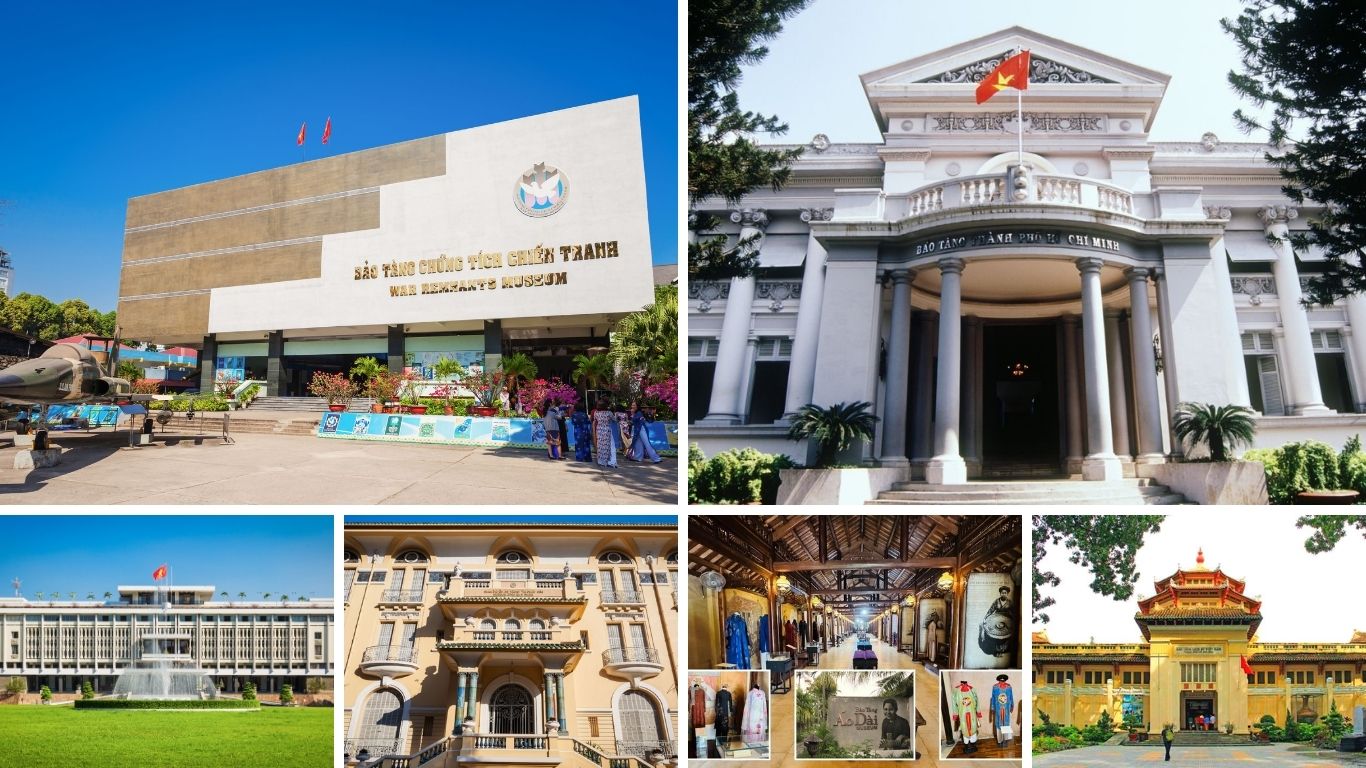
- Independence Palace: 10 minutes on foot. The preserved 1960s government palace, where the Vietnam War effectively ended in April 1975. The underground bunkers and intact period interiors are genuinely fascinating. Allow 1.5 to 2 hours.
- Ben Thanh Market: 10 minutes on foot. Saigon’s iconic central market. Best for a quick browse, street food, and local colour. The surrounding food stalls in the evening are more interesting than the market itself.
- Book Street (Dinh Le Street): 5 minutes on foot. A short pedestrian street lined with bookshops and independent cafés, with a calm atmosphere unusual for central Saigon.
- Museums in Ho Chi Minh City: the War Remnants Museum and Fine Arts Museum are both within a short Grab ride, essential context for understanding the city’s history.
Suggested Itineraries for Your Exploration
Southern Vietnam Highlights (6 Days)
Combine city life with the calm beauty of the Mekong Delta. After exploring Ho Chi Minh City and its cathedral, you can cruise through the rivers, visit floating markets, and meet local villagers. This trip perfectly balances bustling city streets with peaceful countryside experiences. More details here: Southern Vietnam Highlights 6 Days.
Vietnam Highlights Experience (15 Days)
Discover Vietnam from north to south. You will explore Hanoi, Halong Bay, Hue, Hoi An, and Ho Chi Minh City, including the cathedral. Along the way, you will enjoy cultural landmarks, historical sites, and authentic cuisine. This itinerary is perfect for travellers who want a full picture of Vietnam’s diversity. Learn more: Vietnam Highlights Experience 15 Days.

Cambodia & Vietnam Grand Discovery (16 Days)
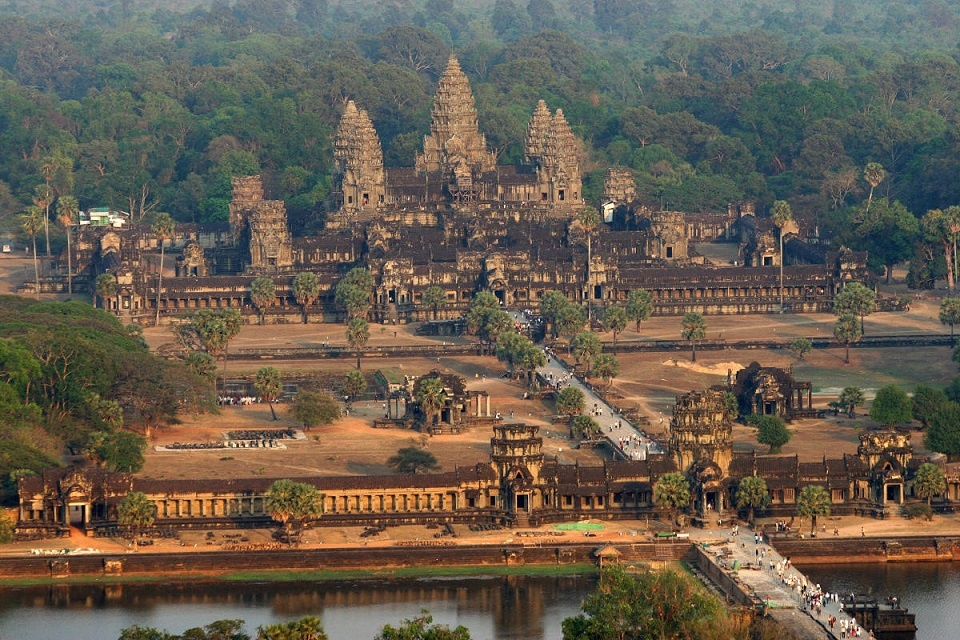
For an ultimate Indochina adventure, visit Saigon’s cathedral, cruise the Mekong River, explore riverside communities, and discover Angkor Wat in Cambodia. This journey combines culture, history, and local life in a seamless experience. Check it out here: Cambodia and Vietnam Grand Discovery 16 Days.
If any of these itineraries excite you, the team at Vietnam Travel Online is ready to help. You can choose from a wide range of ready-made tours or request a fully customised journey. Whether it’s Vietnam tours or Indochina trips, simply reach out via our contact form to start planning.
Practical Tips
- Best time to visit: Early morning or late afternoon for the best light and fewest crowds.
- What to wear: Modest clothing with shoulders and knees covered. A light backpack and small cash are also handy.
- Photography: Focus on the red-brick façade, twin towers, stained glass, Virgin Mary statue, and gardens for the best shots.
- Interior access: Attend one of the Mass services listed above, since that is the most reliable way inside during renovation.
- Combine attractions: Pair your visit with the Central Post Office, Ben Thanh Market, or Nguyen Hue Walking Street for a well-rounded full-day experience.
FAQs
Is there an entrance fee? No. You can enter the cathedral grounds completely free of charge. The church welcomes donations during Mass, but never expects them.
Can I visit the interior during the renovation? Yes, mainly during Mass times or special events. However, scaffolding may still block some views in certain areas.
Is the cathedral wheelchair accessible? Mostly yes. Wheelchair users can access the garden square and main entrance easily, though some interior areas have steps.
What can I photograph? You can photograph the façade, bell towers, rose window, Virgin Mary statue, and gardens freely. Inside during Mass, you can also take photos as long as you avoid using flash.
Can I attend religious services? Yes. Weekday Mass runs at 5:30 AM and 5:00 PM. On Sundays, the church holds multiple services, including a 9:30 AM Mass that the priest often conducts in English.
When will the renovation finish? The restoration team expects to complete all work by end of 2027. In March 2026, workers installed the gold-plated crosses atop the twin towers, marking the most recent major milestone.