

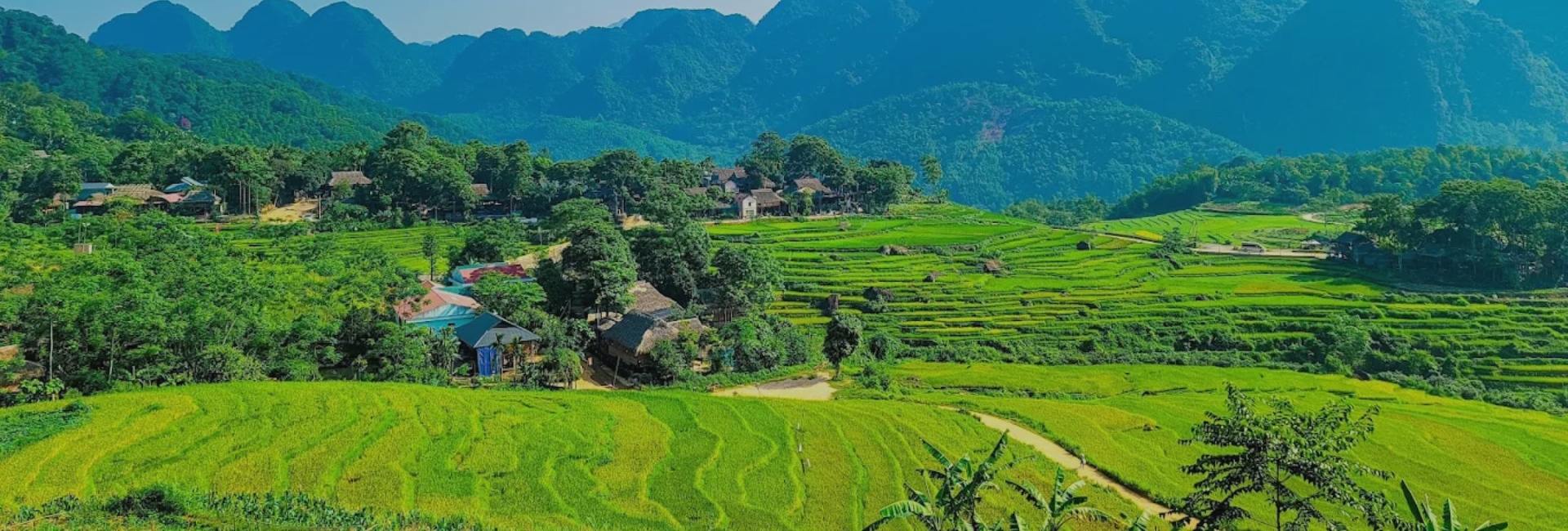
Pu Luong in September is one of the best times to visit, as the rice terraces shift from bright green to warm gold. The air feels lighter after the summer heat, and villages grow busier as harvest season begins. Trekking trails wind through fields that seem to change color week by week, so the view can look completely different depending on when you go.
Early September still feels like summer. Fields are greener, and rain is more likely. Late September brings golden terraces, drier trails, and real harvest energy in the villages. Either way, September stands out as one of the very best months to visit Pu Luong, especially for rice terrace views and quiet rural life away from the crowds.
This guide covers everything worth knowing before a trip to Pu Luong in September. It includes weather patterns, the best spots for golden rice fields, trekking routes, village stays, costs, and how Pu Luong compares to other northern destinations. For a smoother experience, a private tour and guide service can handle the planning from start to finish.
Quick Facts: Pu Luong in September
- Weather: Warm days, cooler evenings, occasional showers early in the month
- Rice fields: Turning from green to gold, most vivid in the second half of the month
- Best for: Trekking, photography, harvest season culture
- Recommended trip length: 3 days, 2 nights
- Rain chance: Moderate, higher in early September, lower by late September
What can you find in this travel blog?
- Is September a Good Time to Visit Pu Luong?
- Pu Luong Weather in September
- Rice Fields in September
- Best Things to Do in Pu Luong in September
- How Many Days Do You Need in Pu Luong?
- What Does a Trip to Pu Luong Cost?
- Can You Combine Pu Luong With Somewhere Else?
- How to Get to Pu Luong in September
- What to Pack for Pu Luong in September
- Where to Stay in Pu Luong in September
- Practical Tips for Visiting Pu Luong in September
- FAQs About Pu Luong in September
Is September a Good Time to Visit Pu Luong?
The short answer is yes. September sits right at the point where Pu Luong’s rice terraces begin their most striking change. Fields move from lush green to golden waves that ripple in the breeze. This alone makes it one of the most rewarding months for classic terraced-mountain scenery.
Pu Luong suits couples, mature travelers, nature lovers, photographers, and slow travelers particularly well. It also appeals to anyone looking for a calmer alternative to the busier trails of Sapa. That said, travelers chasing nightlife, heavy tourist infrastructure, or truly dramatic high-mountain landscapes may find other spots, like Sapa or Ha Giang, better suited to those needs. For everyone else, September in Pu Luong offers one of northern Vietnam’s most rewarding and least crowded trips.
Ready to see it in person? Get in touch through Vietnam Travels Online or explore the full range of Vietnam tours and Indochina tours to start planning a private, fully tailored Pu Luong itinerary.
Pu Luong Weather in September
Weather in September shifts across just a few weeks, so it helps to know what to expect before planning each day.
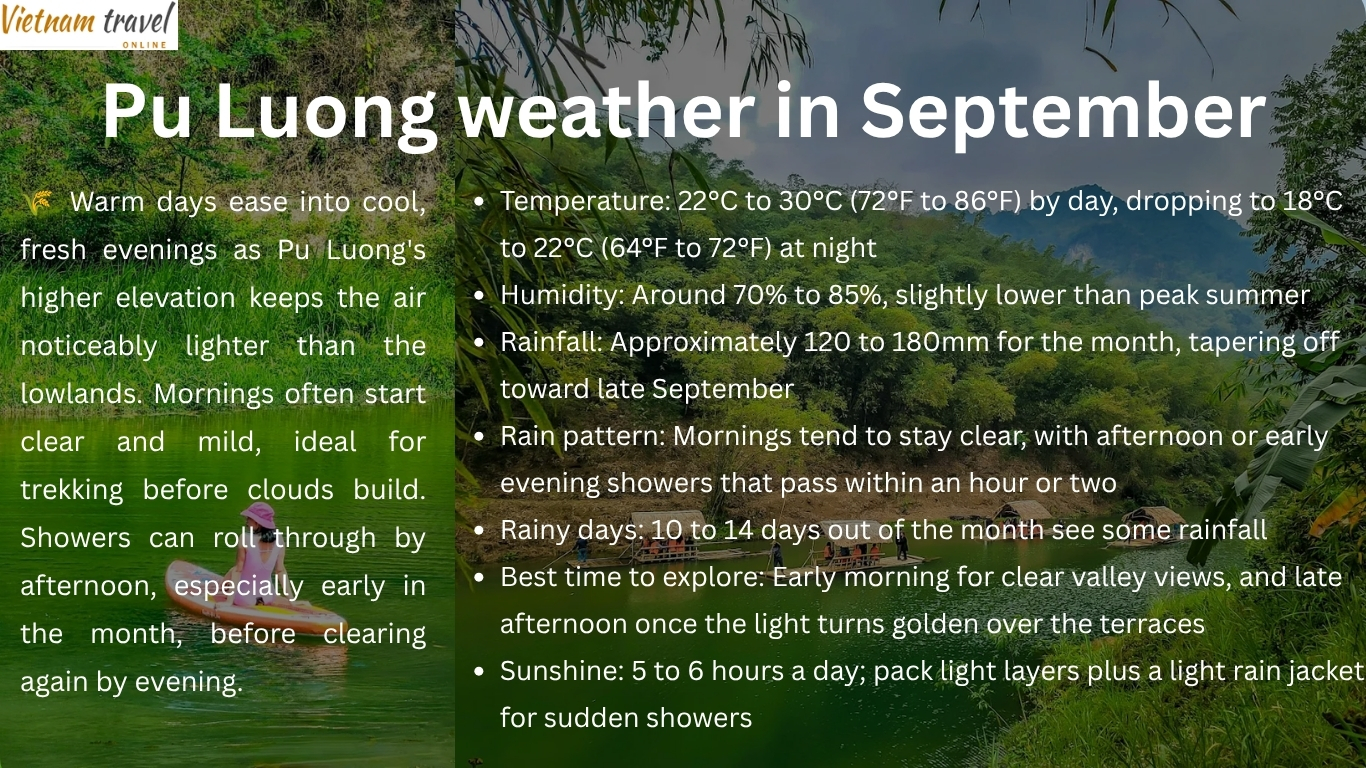
Temperature in Pu Luong in September
Daytime temperatures feel warm and pleasant rather than hot. This is a welcome change from the intensity of July and August. Sunny afternoons can still bring real warmth, so it would be a mistake to expect cool weather all day. Light layers work better than heavy jackets during daylight hours.
Evenings cool down quickly, especially in higher spots like Son Ba Muoi. A light jacket becomes useful once the sun sets. Humidity stays present, as it does across the region, but it feels less heavy than during peak summer. Compared with Hanoi, Pu Luong feels noticeably fresher and cooler. This contrast is exactly why travelers escape the capital for a few days here in September. Elevation, tree cover, and open valley air all play a part in that shift, even though the two places sit just hours apart by private transfer.
Rainfall and Humidity
September still belongs to the tail end of the wetter season. Rain showers remain likely, especially in the first half of the month. Heavy rain can turn trekking trails muddy, so footwear choices matter more than usual. Mornings tend to offer the clearest window for outdoor plans, often starting bright before clouds build later in the day.
Rain is not only a drawback, though. Mist and low cloud drifting across the rice terraces add real atmosphere to the landscape, and many photographers seek out exactly this look. A private guide who knows the terrain well can adjust the day’s plan around shifting weather, so the experience stays strong no matter what the sky does.
Early September vs Late September
| Period | What to Expect |
|---|---|
| Early September | Greener rice fields, warmer conditions, and a higher chance of rain |
| Mid September | Rice begins turning yellow across many areas |
| Late September | More golden terraces, harvest activity, and increasingly comfortable weather |
Rice timing shifts from valley to valley based on elevation, farming schedules, and that season’s weather. No single date guarantees peak gold across the whole region.
Pu Luong in September vs Other Months
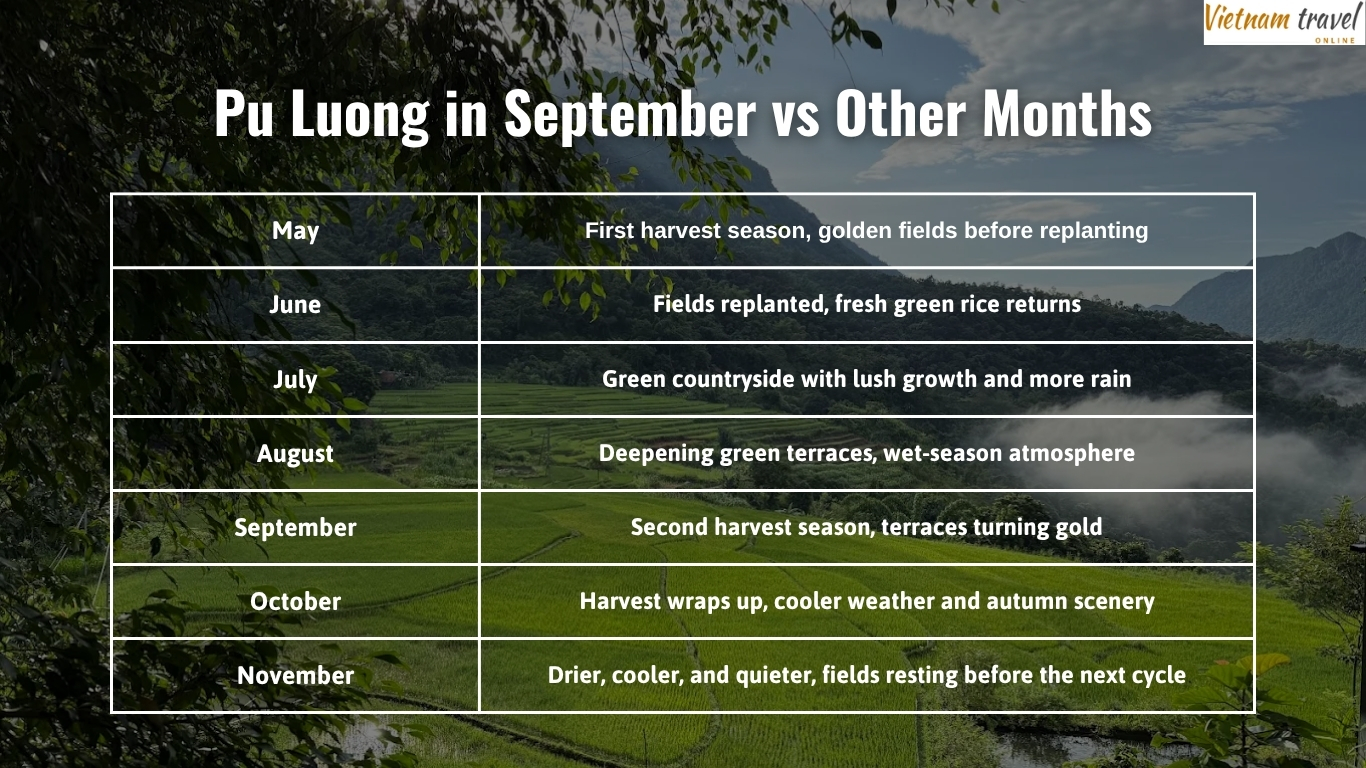
For a fuller look at how the seasons compare, this best time to visit Pu Luong guide breaks down each month in detail. This guide to the Pu Luong Nature Reserve covers the wider region too.
Pu Luong Rice Fields in September
The rice terraces are the true centerpiece of a September trip. This section covers exactly when and where to catch them at their best.
When Are the Rice Fields Golden in Pu Luong?
The transformation follows a clear pattern. Green fields shift to yellow green, then deepen into full gold, before reaching harvest. This does not happen at the same pace everywhere. Some terraces may already glow gold while others nearby stay green. Elevation, sunlight, and local farming schedules all affect the timing.
Rather than expecting every field to turn gold on one date, think of September as a moving window of color. Different areas peak at slightly different times through the month. This is part of what makes the trip so rewarding, since it rewards travelers who explore more than one viewpoint. A local guide raises the odds of catching the most vivid fields on any given day, since timing shifts year to year with rainfall and planting schedules.
Where to See Rice Terraces in Pu Luong
Several villages across Pu Luong offer very different terrace views. Each one is worth knowing before choosing where to spend time.
- Lung Cao offers wide, elevated views across layered terraces, ideal for dramatic photos.
- Kho Muong sits in a remote valley, with terraces framed by limestone cliffs.
- Don Village gives easy, classic terrace views close to the main road, good for shorter visits.
- Hieu Village pairs terraces with streams and small waterfalls for extra scenery.
- Bang Village frames its fields against traditional stilt houses, adding cultural depth.
- Son Ba Muoi sits higher up, with cooler air and a distinct feel from the lower valleys.

Each area has its own character. A well-planned private tour route can connect several of them across a few days for more variety.
What Is Harvest Season Like?
Harvest season brings Pu Luong’s terraces to life in a way photos alone cannot capture. Farmers cut rice by hand across the fields. Buffalo help with the heavier work. The whole rhythm of village life shifts around this seasonal task. Walking village paths during this time means passing wooden houses, watching freshly cut rice dry in the sun, and seeing a way of life that has continued here for generations.
This cultural depth sets Pu Luong apart from places that offer scenery alone. Even one day spent walking through an active harvest leaves a stronger impression than simply photographing the fields from a viewpoint. This mix of landscape and lived experience is what keeps travelers coming back year after year.
Best Things to Do in Pu Luong in September
September opens up plenty of activities. This section covers the experiences most worth prioritizing during a visit.
Trek Through the Rice Terraces
September stands out as a strong month for trekking. Cooler temperatures pair well with the reward of walking straight through golden and green terraces. Unlike the heat of summer, September’s milder conditions make longer walks enjoyable rather than tiring.
Trekking options vary by fitness level and time available. Easy village walks suit a relaxed first look at the landscape. Half-day treks offer a deeper view of multiple terraces and viewpoints. Full-day treks push further into the valley and cross more elevation. Longer multi-village routes reward serious hikers with a full picture of Pu Luong’s varied terrain.
Rain, when it hits, can make some trails slippery, particularly steeper sections near Kho Muong or Son Ba Muoi. A private guide who knows current trail conditions can adjust the route on the day, so safety and scenery both stay on track.
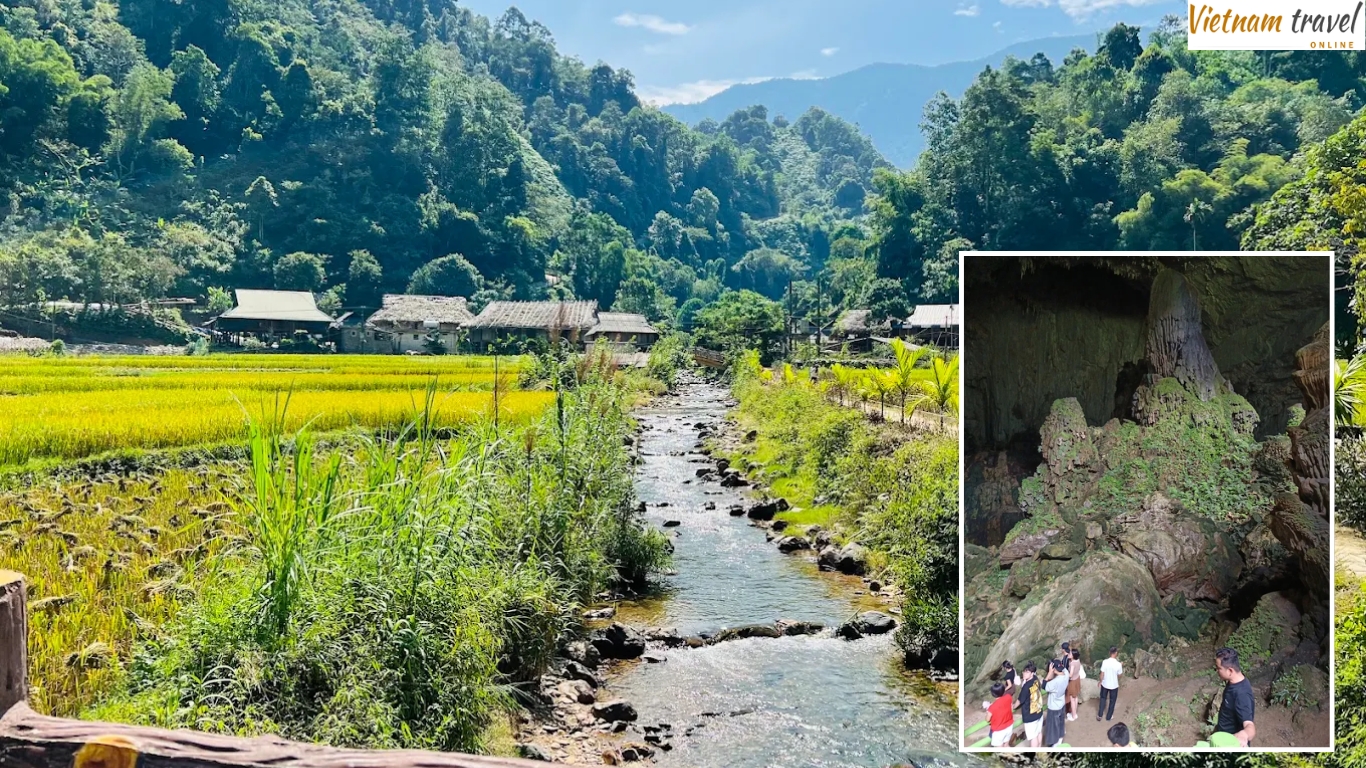
Village Life & Local Culture
Beyond the scenery, Pu Luong’s real charm lives in its villages. Walking through Don Village, Kho Muong, Hieu Village, or Bang Village during September opens a real window into daily routines that have barely changed over time. Small trade, weaving traditions, and quiet chats with residents all add texture to a visit that goes beyond simple sightseeing.
Unhurried time in these communities tends to leave the strongest impression. A short conversation with a local family, arranged easily through a private guide, often becomes the most memorable part of the whole trip.
See the Traditional Water Wheels
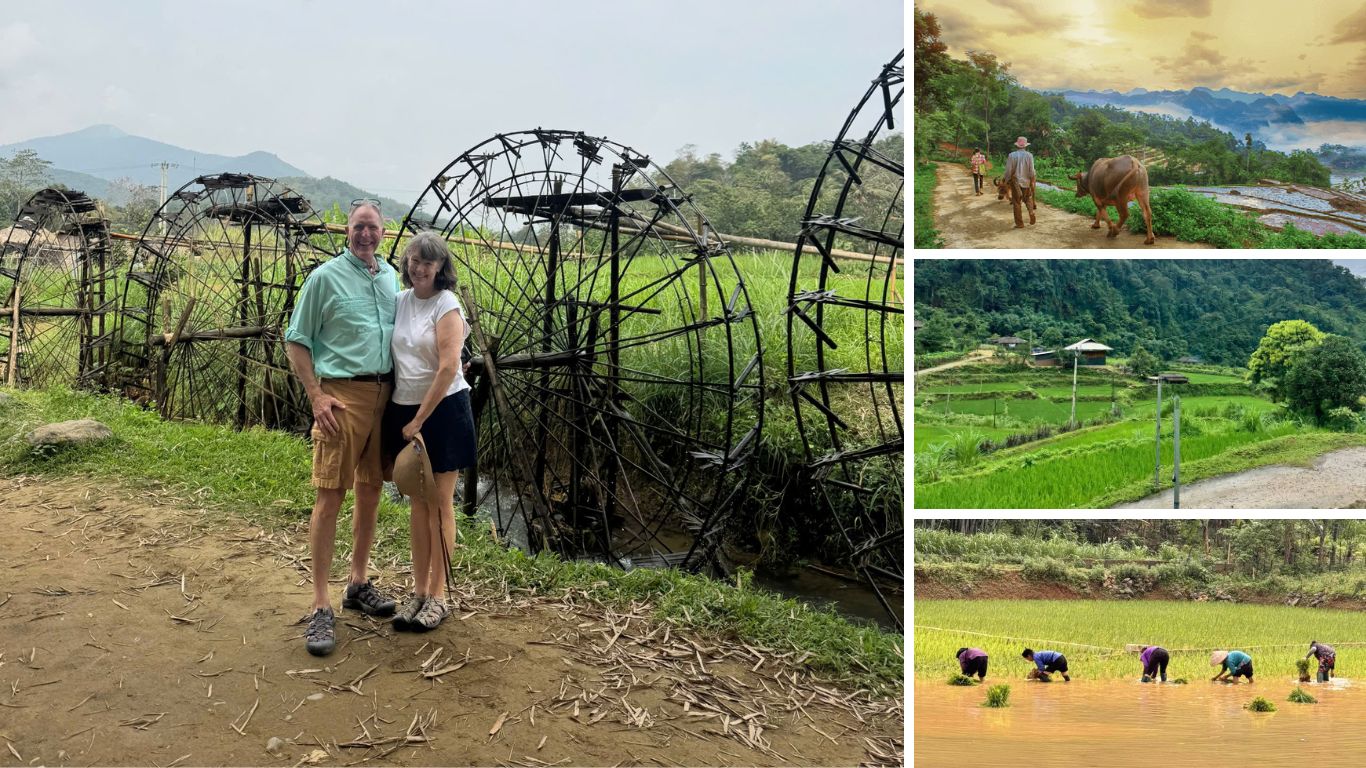
Pu Luong’s traditional water wheels remain one of its most striking sights. These large wooden wheels sit along the region’s streams. They have long played a real role in local farming, lifting water up to irrigate fields that sit above the natural water line. Watching them turn slowly against a backdrop of rice terraces is a strong reminder of how deeply tradition shapes daily life here.
Beyond their function, the water wheels have become something of a symbol for Pu Luong. They appear in countless photos and reflect the region’s balance between nature and human skill. Seeing them in person, rather than only in pictures, reveals small details easy to miss otherwise, from the sound of the water to the craft in how each wheel is built.
Stay in a Traditional Homestay or Lodge
Staying among the rice terraces adds a whole new layer to a Pu Luong trip. Waking up to valley views, sharing home-cooked meals, and spending evenings in a wooden house builds a real connection to the landscape. A day trip simply cannot offer the same feeling.
Peaceful evenings surrounded by mountains and fields are hard to put into words, especially after a full day of trekking. For travelers who want more comfort without losing the atmosphere, several boutique lodges across the valley combine modern touches with those same sweeping views. A private booking service can match the right option to personal taste and budget.
Enjoy Local Food and Village Life
Meals in Pu Luong reflect the land around them, built on fresh, local ingredients and simple cooking. Eating in a rural homestay, often alongside the family hosting the stay, adds a personal touch that restaurants rarely match. Rather than chasing a long list of dishes, it helps to simply enjoy food grown right where you are sitting. That, more than anything, is what makes meals in Pu Luong memorable.
How Many Days Do You Need in Pu Luong?
Three days and two nights makes the ideal length for a Pu Luong trip. This balance leaves enough time to enjoy the place without rushing. Two days often feels too short once travel time from Hanoi is added in, leaving little room for trekking, village visits, and rest.
Three days gives enough space to cover rice terrace viewpoints, a proper trek, village exploration, and at least one relaxed evening at a homestay or lodge. Going beyond three days mainly suits very slow travelers who want to linger, or serious trekkers aiming to cover several remote routes. For most visitors, three days delivers the fullest experience without extra time pressure.
Day 1: Hanoi to Pu Luong
Travel from Hanoi to Pu Luong by private transfer, taking around three to four hours. After checking into your homestay or lodge, enjoy a gentle village walk with your first views of the rice terraces. In September, the fields may range from green to golden, depending on the harvest timing. End the day with a home-cooked local dinner.
Day 2: Rice Terrace Trekking and Village Life
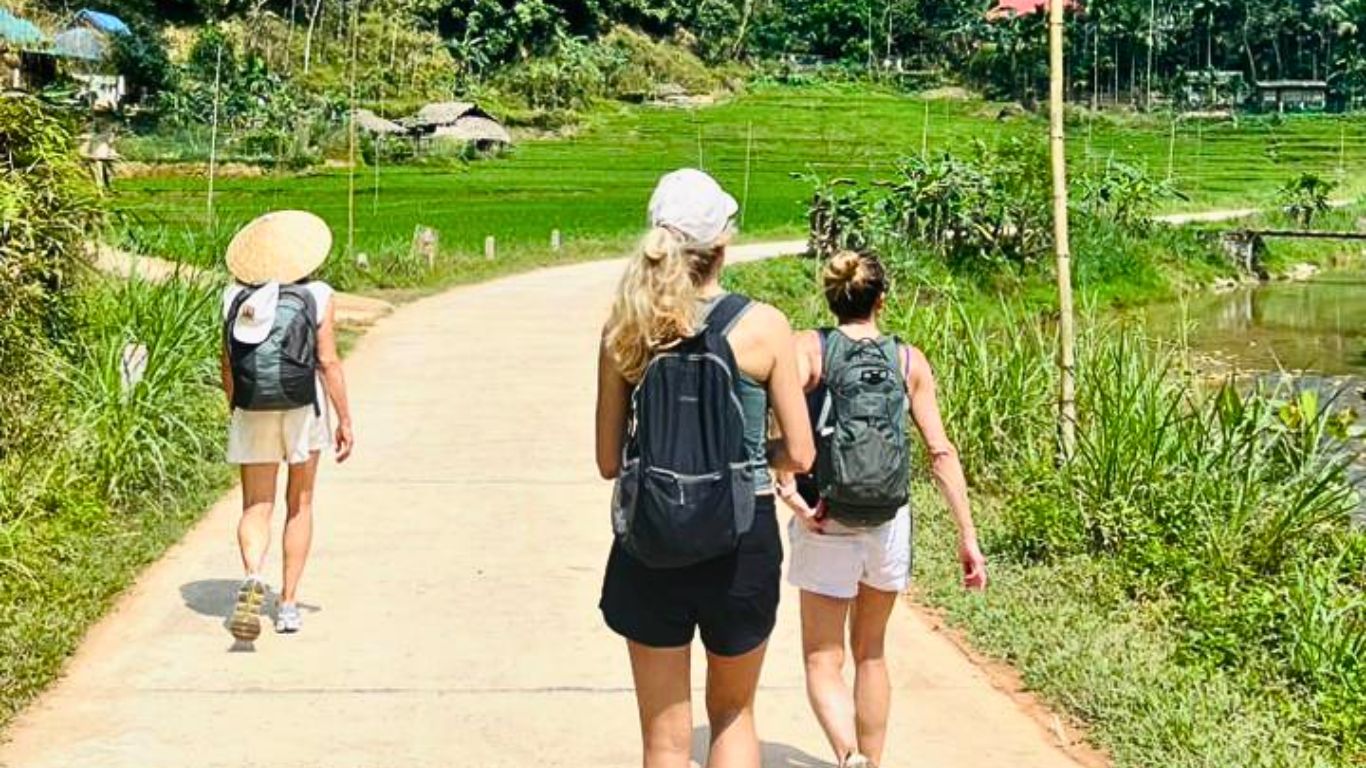
Spend the day trekking through Pu Luong’s rice terraces and nearby villages. September brings cooler mornings and changing colours across the fields, with some areas already turning golden. Along the way, see traditional water wheels, local homes, and daily farming life before returning to your accommodation for a peaceful evening.
Day 3: Countryside Walk and Return to Hanoi
Enjoy a short morning walk and one last look at the September rice terraces before breakfast. Then travel back to Hanoi, taking around three to four hours. Three days and two nights give you enough time to enjoy Pu Luong’s scenery, villages, and trekking without rushing.
For this exact route with no planning stress, a ready-made Pu Luong authentic adventure tour covers all three days with private transport, guiding, and accommodation included.
What Does a Trip to Pu Luong Cost?
Budgeting for Pu Luong stays fairly simple, and the region tends to offer better value than more touristy mountain spots. Homestays sit at the lower end of the price range. They offer simple rooms and shared meals with a local family. Boutique lodges cost more but bring private bathrooms, better bedding, and polished valley views.
A guided day trek or private tour usually falls into a mid-range price, depending on group size and route length. Private transport from Hanoi adds a further cost depending on vehicle type and whether it is shared or exclusive. Compared with Sapa, Pu Luong tends to work out cheaper across accommodation, guiding, and transport, without giving up quality.
For an exact quote based on specific dates and preferences, reach out directly through vietnam@indochinavoyages.com to build a private itinerary around a set budget.
Can You Combine Pu Luong With Somewhere Else?
Pu Luong pairs well with several other northern destinations. The right combination depends on the kind of scenery and pace a traveler wants.
Pu Luong or Mai Chau?
Pu Luong brings stronger rice terrace views, more serious trekking, and a quieter, more rural feel overall. Mai Chau, in contrast, offers easier access from Hanoi, gentle valley scenery, and a softer cultural experience suited to travelers who want less physical effort. This Pu Luong to Mai Chau comparison breaks down which suits a specific travel style.
Pu Luong or Ninh Binh?
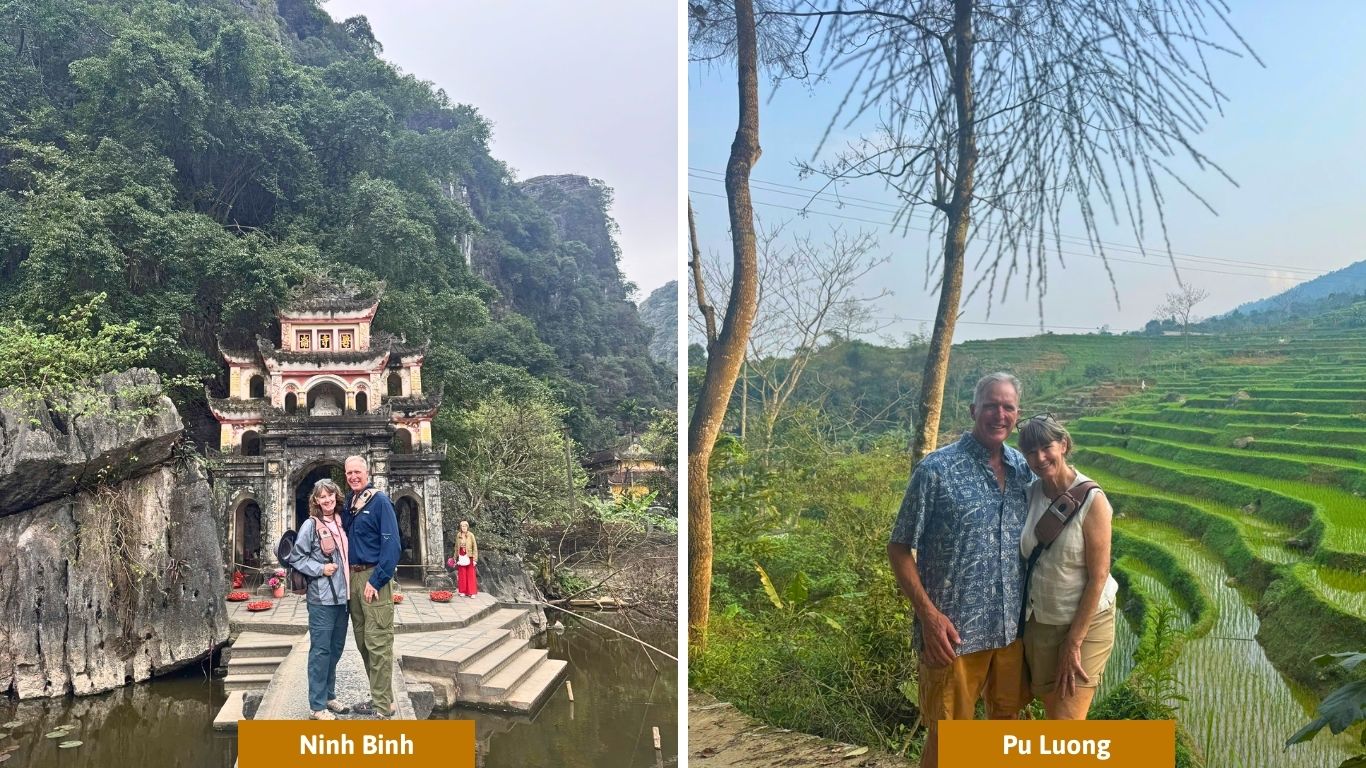
Pu Luong delivers mountains, rice terraces, trekking, and village culture. Ninh Binh offers something else entirely, built around limestone karsts, rivers, caves, temples, and boat trips. These two places complement each other well precisely because the scenery contrasts so much, making a combined trip feel varied rather than repetitive. This Ninh Binh to Pu Luong guide covers the full route.
Pu Luong or Sapa?
Pu Luong feels quieter, more rural, and more relaxed. Sapa brings higher mountains, cooler air, the option to summit Fansipan, and far more tourist infrastructure. Travelers chasing authenticity and peace tend to lean toward Pu Luong. Those wanting bigger mountain drama and more amenities often pick Sapa. This Pu Luong versus Sapa comparison covers the choice in more depth.
Pu Luong or Ha Giang?
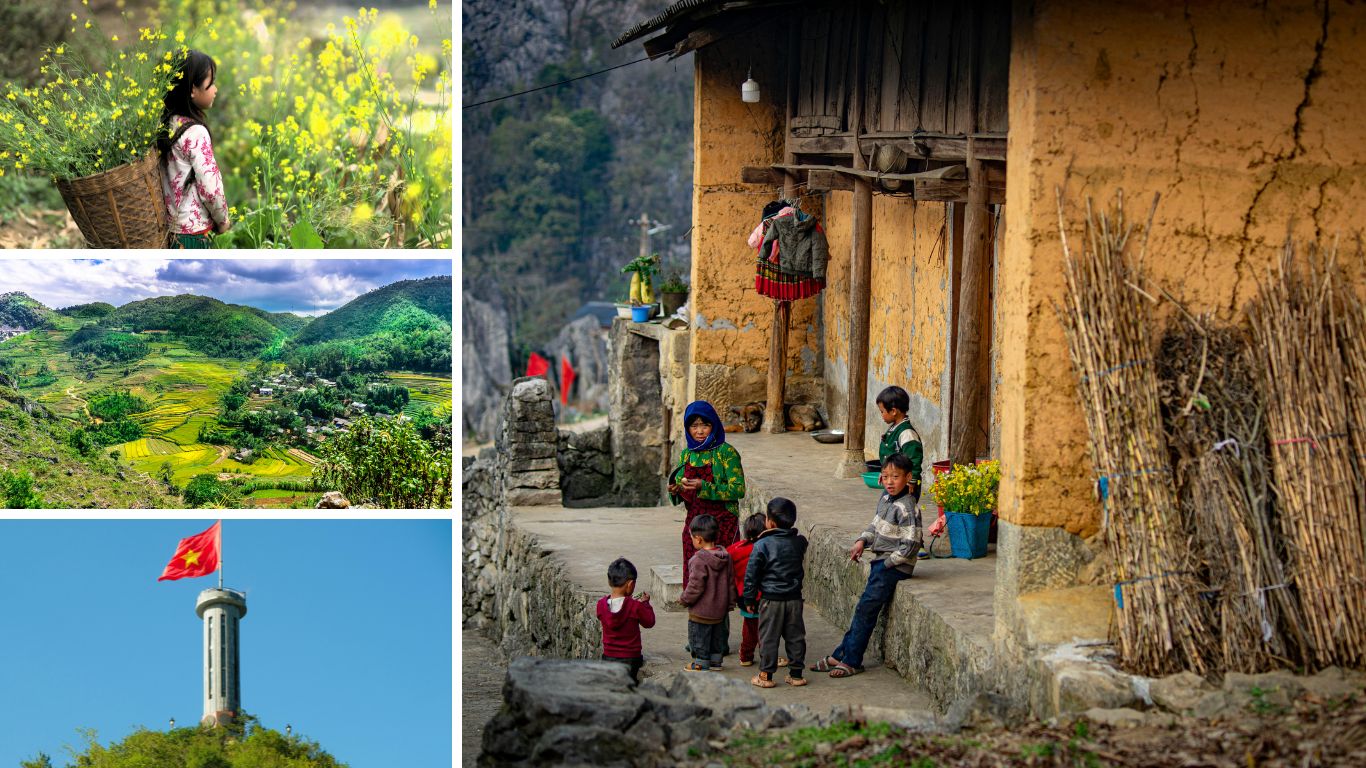
Pu Luong offers relaxed countryside, rice terraces, and easy trekking. Ha Giang delivers dramatic, high-altitude scenery, winding roads, and a more adventurous trip overall. Keep in mind that Ha Giang takes considerably more travel time to reach. This Pu Luong or Ha Giang guide takes a closer look.
Quick comparison
| If you want… | Choose |
|---|---|
| Golden rice terraces and quiet trekking | Pu Luong |
| Thai culture and an easy valley escape | Mai Chau |
| Limestone scenery and river journeys | Ninh Binh |
| Higher mountains and more facilities | Sapa |
| Dramatic mountain roads and adventure | Ha Giang |
Among these pairings, Pu Luong combined with Ninh Binh remains one of the most popular routes in northern Vietnam. A ready-made Pu Luong to Ninh Binh 4-day itinerary covers this exact journey with private transport and guiding included.
How to Get to Pu Luong in September
From Hanoi to Pu Luong
The drive from Hanoi to Pu Luong takes around three to four hours, depending on traffic and the exact village destination. A private car offers the most comfort and flexibility, with stops along the way and a direct drop-off at the chosen accommodation. Shared minivan transfers work as a budget-friendly option for travelers happy to follow a fixed schedule. Tourist shuttles run on set timetables for those who prioritize cost over flexibility.
For most travelers, especially families or those short on time, a private transfer removes the guesswork and makes for a smoother start to the trip.
Traveling to Pu Luong From Other Northern Destinations
Getting to Pu Luong from other northern hotspots stays simple with private transport. The drive from Mai Chau takes a short time thanks to the short distance between the two. Coming from Ninh Binh takes longer, but the trip still fits within a single travel day. Sapa sits much further away, so most travelers treat that leg as a separate part of a longer trip rather than a same-day link. A private vehicle booked in advance avoids the fixed schedules that come with shared shuttles, no matter the starting point.
What to Pack for Pu Luong in September
Packing smart for September makes a real difference to comfort throughout the trip:
- Comfortable, broken-in trekking shoes
- Lightweight, breathable clothing for daytime warmth
- A light rain jacket for sudden showers
- Quick-drying clothes suited to humid conditions
- A small daypack for trekking days
- Insect repellent for village and countryside walks
- Sun protection, including a hat and sunscreen
- A reusable water bottle
- A waterproof bag or pouch to protect electronics from rain
Good footwear and reliable rain protection matter more than almost anything else on this list. Trail conditions can shift fast if showers roll through.
Where to Stay in Pu Luong in September
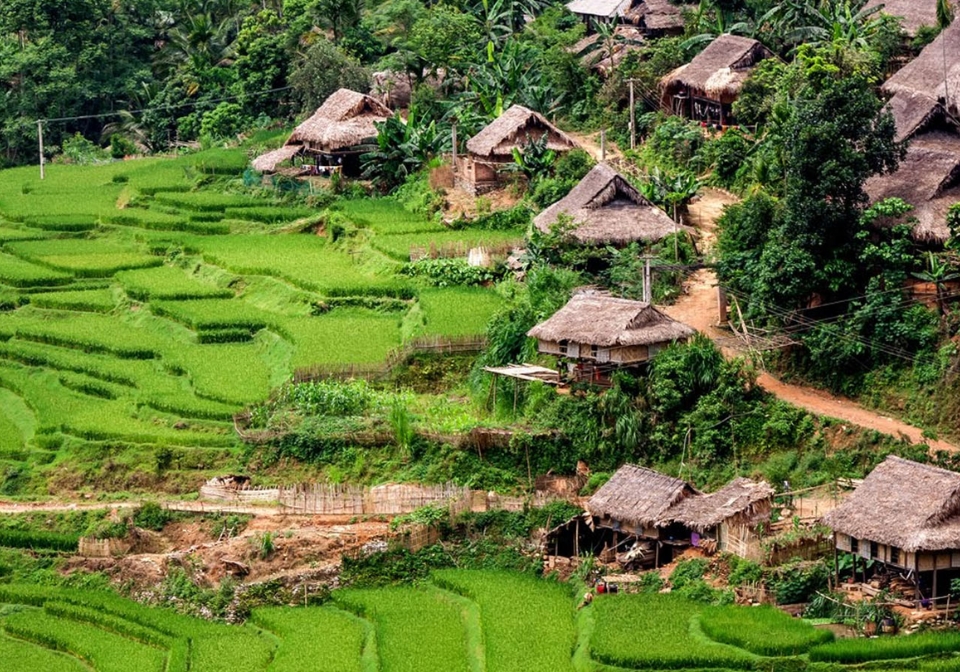
Don Village
Don Village suits travelers who want easy access along with classic Pu Luong scenery close by. Its spot near the main road makes it simple to reach without giving up the postcard views the region is known for. It works especially well for shorter stays or late arrivals.
Hieu Village
Hieu Village offers a quieter setting with a stronger countryside feel. This suits travelers who want to slow down and settle deeper into the landscape. The pace here feels noticeably calmer than at busier access points, which makes it a strong pick for longer stays.
Kho Muong
Kho Muong suits travelers who value remoteness and serious trekking over convenience. Its more isolated valley location rewards those willing to travel a bit further, offering a truly tucked-away feel along with access to some of the region’s tougher trails.
Homestay or Lodge?
The choice between a homestay and a lodge comes down to priorities. A homestay offers strong local atmosphere, simple accommodation, and real interaction with a host family, great for travelers who want an authentic slice of daily life. A lodge offers more privacy, comfort, better facilities, and often stronger valley views, better suited to travelers who still want the scenery without giving up comfort. A private booking service can match the right option to travel style and budget ahead of arrival.
Practical Tips for Visiting Pu Luong in September
A few practical points help the trip run smoothly from start to finish:
- Check the forecast regularly before heading out on longer treks.
- Start outdoor activities early, before clouds tend to build.
- Wear proper walking shoes suited to muddy or uneven trails.
- Allow flexibility in the schedule after heavy rain.
- Book accommodation well ahead for popular harvest-season dates.
- Do not expect every rice field to turn golden at the same time.
- Carry cash, since rural areas often lack card payment options.
- Follow a guide’s advice closely on trail conditions.
- Respect private homes, farmland, and local communities when taking photos.
Planning ahead with a private tour operator takes care of most of this automatically, leaving more time to actually enjoy the trip.
FAQs About Pu Luong in September
Is September a good month to visit Pu Luong? Yes, September brings comfortable weather, golden rice terraces, and active harvest season, making it one of the best months to visit.
Are the rice fields golden in Pu Luong in September? Many terraces turn golden by mid to late September, though timing varies by area and elevation.
Does it rain in Pu Luong in September? Rain is still possible, especially early in the month, though mornings are often clear for outdoor activities.
Is September good for trekking in Pu Luong? Yes, cooler temperatures and golden terraces make September one of the most enjoyable trekking months.
How many days do you need in Pu Luong? Three days and two nights is the ideal length for most travelers to properly experience the region.
What should I wear in Pu Luong in September? Lightweight, quick-drying clothing paired with sturdy trekking shoes and a light rain jacket works best.
How much does a trip to Pu Luong cost? Costs vary by accommodation type and transport choice, though Pu Luong is generally more affordable than Sapa.
Can I combine Pu Luong with Ninh Binh? Yes, this is one of the most popular and natural route combinations in northern Vietnam.
Is Pu Luong better than Sapa in September? It depends on preference: Pu Luong offers a quieter, more rural experience, while Sapa offers higher mountains and more infrastructure.
For a fully customized private itinerary covering transport, guiding, and accommodation, reach out anytime at vietnam@indochinavoyages.com or browse available tours here.