

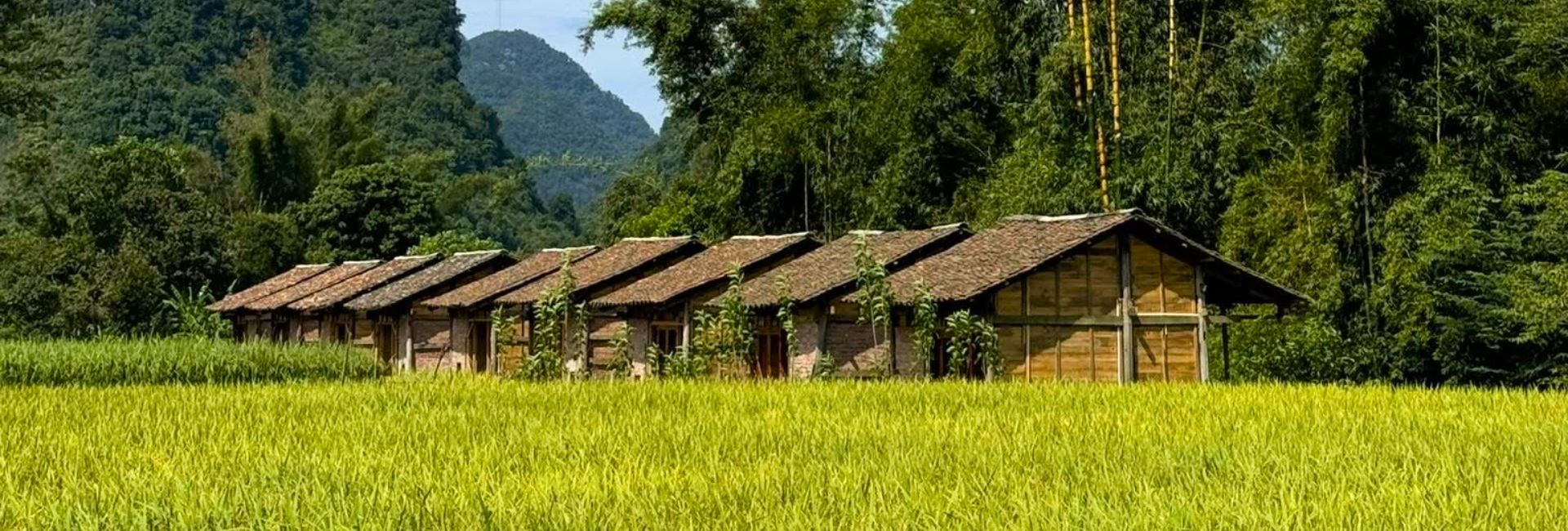
You’ve narrowed it down to northern Vietnam. You’ve heard the names, seen the photographs, and now you’re sitting with the same question that stops every traveller in their tracks: Cao Bang or Ha Giang? Both sit in Vietnam’s dramatic northeast, both promise landscapes that don’t look real until you’re standing inside them, and both require genuine planning to experience properly. This blog won’t declare a winner. Instead, it will help you understand what each destination actually delivers, which one fits your travel style, and why the most rewarding answer might be to stop choosing altogether.
What can you find in this travel blog?
- What Cao Bang and Ha Giang Actually Offer
- Cao Bang vs. Ha Giang: The Real Comparison
- Who Each Destination Is Really For
- Cao Bang Highlights Worth Knowing
- Ha Giang Highlights Worth Knowing
- The Real Answer: Do Both
- Sample Combined Routes
- Practical Differences to Know Before You Choose
- FAQs
What Cao Bang and Ha Giang Actually Offer
Most travellers arriving at this comparison already know the broad strokes. So rather than walking through every attraction, here’s what each destination genuinely feels like on the ground. That’s what the decision really comes down to.
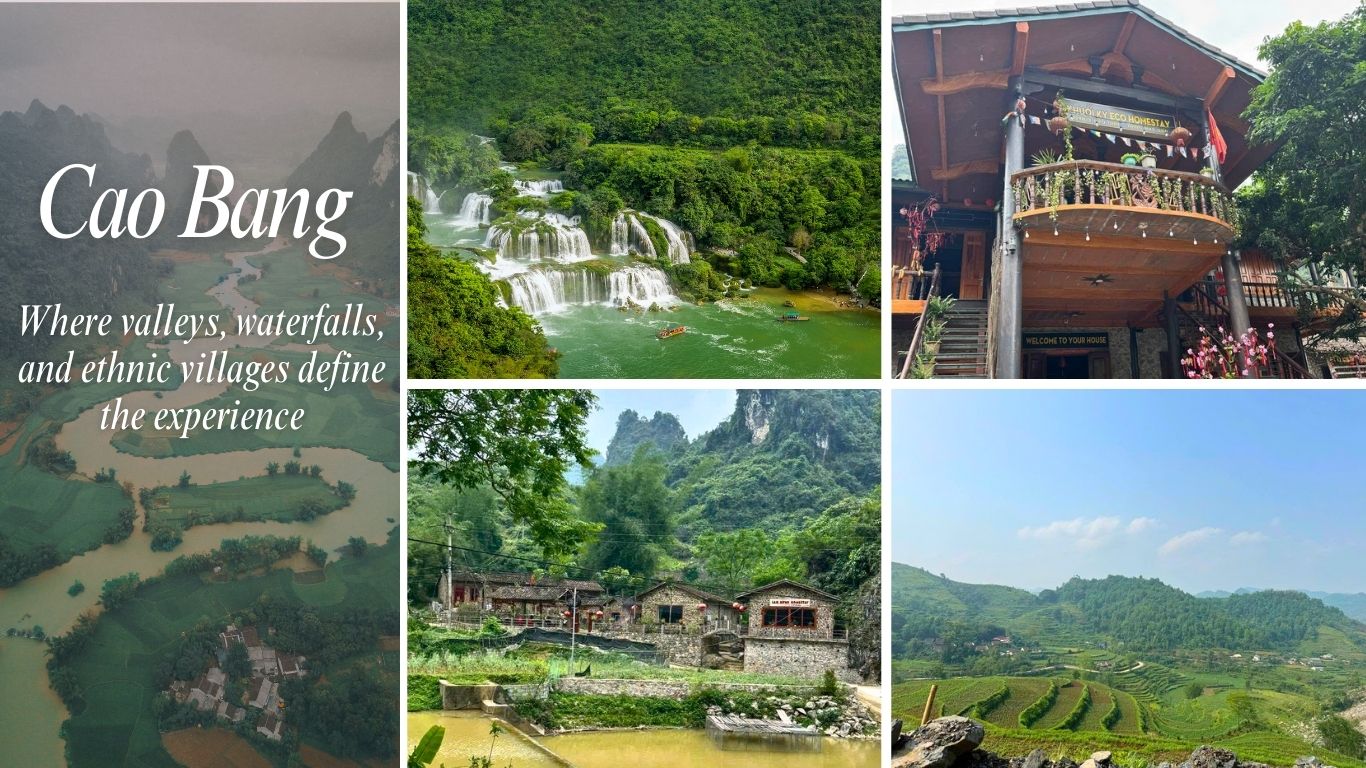
Cao Bang in a Nutshell
Cao Bang is lush, layered, and quietly extraordinary. It sits within the Non Nuoc Cao Bang UNESCO Global Geopark, a vast territory of emerald rivers, karst peaks, and ancient limestone caves shaped over 300 million years. The headline act is Ban Gioc Waterfall, one of the widest border waterfalls in Asia. But the supporting cast is just as compelling: Nguom Ngao Cave, Phong Nam Valley, Angel Eye Mountain, and a network of ethnic minority villages where traditional crafts and stone house architecture are still part of everyday life. Crucially, all of it is accessible by private car, which opens the experience to a much wider range of travellers than most northern Vietnam destinations.
For everything you need to plan the trip, the Cao Bang travel guide covers every corner in detail.
Ha Giang in a Nutshell
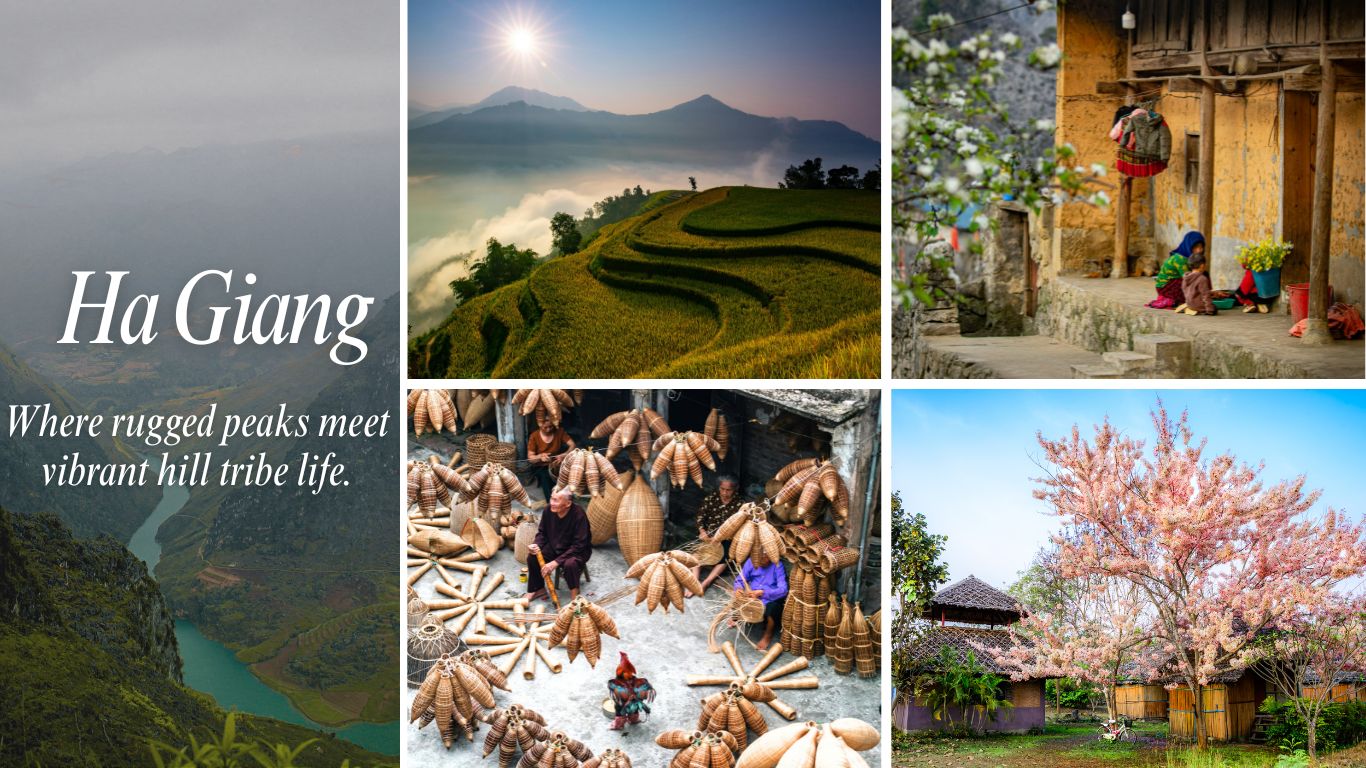
Ha Giang is rawer, rockier, and considerably more demanding. The landscape shifts from lush lowland valleys into the stark, wind-carved plateau of Dong Van, where limestone peaks push through thin soil and minority villages cling to ridgelines above vertiginous drops. The loop road through Ma Pi Leng Pass is one of the most dramatic drives in Southeast Asia, and it rewards courage while punishing overconfidence in equal measure. Ha Giang doesn’t ease you in gently. It grabs you immediately and doesn’t let go until you’re back on the flatlands.
Before committing to the loop, the Ha Giang loop guide breaks down exactly what to expect on the road.
Cao Bang vs. Ha Giang: The Real Comparison
Knowing the highlights is one thing. Making the right choice for your specific trip is another. These are the categories that genuinely matter when you’re deciding between the two, and where the differences become most clear.
Further reading:
Side-by-Side at a Glance
| Cao Bang | Ha Giang | |
|---|---|---|
| Crowds | Low, still off the main trail | High, especially Oct–Nov |
| Road difficulty | Moderate, manageable by car | Challenging, infamous steep passes |
| Best for | Culture, waterfalls, caves, photography | Mountain views, motorbike adventures |
| Scenery type | Karst valleys, rivers, lush green | Rocky plateau, dramatic ridgelines |
| Suitable for | Families, couples, mature travelers | Younger adventurers, experienced riders |
| Commercialization | Minimal | Growing fast |
Scenery and Landscape
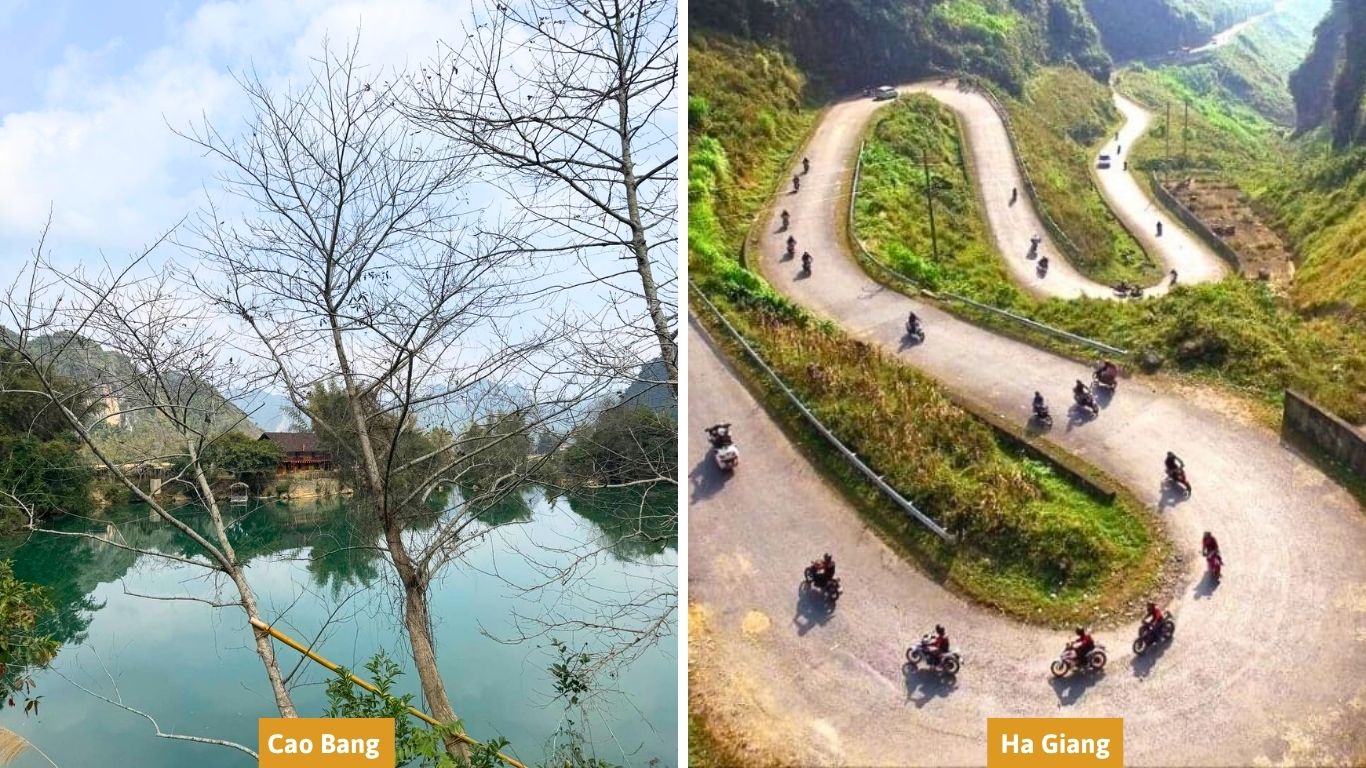
Cao Bang and Ha Giang sit in the same corner of Vietnam but feel like entirely different worlds. Cao Bang is defined by water: rivers, waterfalls, flooded rice terraces, and valleys so deeply green they look filtered. Ha Giang is defined by stone: bare karst peaks, rocky plateaus, and a horizon that feels ancient and uncompromising. Neither is more beautiful than the other. They simply speak different visual languages, and which one moves you more depends entirely on what kind of landscapes you respond to.
Activities and Experiences
This is where the comparison becomes most practical, and where the two destinations diverge most sharply.
In Cao Bang, you can:
- Take a bamboo raft to the base of Ban Gioc Waterfall
- Walk two kilometres through Nguom Ngao Cave’s stalactite chambers
- Hike to the natural circular opening at the summit of Angel Eye Mountain
- Spend a night inside a 300-year-old stone house in Khuoi Ky Village
- Drive the 14-level switchbacks of Me Pja Pass
- Visit working craft villages where incense-making and blacksmithing are still daily livelihoods
- Walk the banks of Lenin Stream at the reflective Pac Bo Historical Site
In Ha Giang, you can:
- Ride or drive the full loop through Ma Pi Leng Pass and Dong Van Karst Plateau
- Stand at Lung Cu Flag Tower on Vietnam’s northernmost point
- Explore the ancient stone house quarter of Dong Van Old Town
- Visit the Sunday markets of Meo Vac and Dong Van
- Trek between H’mong and Lo Lo minority villages on multi-day routes
- Camp on ridgelines with views stretching into China
The activity profiles tell two very different stories. Cao Bang rewards culturally curious travellers who enjoy a thoughtful mix of nature, history, and heritage. Ha Giang rewards those who want physical challenge, open road, and a frontier feeling that’s increasingly hard to find anywhere else in Vietnam.
Road Conditions and Getting Around
This is the most practical difference of all, and for many travellers it will settle the decision immediately. Ha Giang’s loop road is narrow, steep, and genuinely unforgiving in places. Riding it by motorbike requires real experience and physical confidence. Even by private car, sections of the route demand a skilled and familiar local driver. Travellers who aren’t comfortable on two wheels in mountain terrain can find Ha Giang more stressful than enjoyable, particularly in wet weather.
Cao Bang is far more navigable by comparison. The road from Hanoi is long but smooth, and all routes between major sites can be covered comfortably by private vehicle without any technical driving demands. For travellers who want the wild northeast without the white-knuckle stretches, Cao Bang is the more accessible choice by a considerable margin.
Thinking about riding the Ha Giang loop independently? The guide on foreigners riding the Ha Giang loop by motorbike covers everything worth knowing before you commit.
Who Each Destination Is Really For
Rather than a vague recommendation, here’s a direct breakdown by traveller type so you can place yourself in the picture immediately.
- Families with children or elderly travellers: Cao Bang is the clear choice. Private car access, manageable terrain, and a wide variety of experiences that don’t require physical exertion make it genuinely suitable for mixed-age groups.
- Couples looking for atmosphere and romance: Both destinations work well, but Cao Bang edges ahead for immersion and intimacy. Ha Giang is better if shared adventure is central to the relationship.
- Solo travellers and motorbike riders: Ha Giang was built for you. The loop is one of the great solo travel experiences in all of Southeast Asia, and the culture of the road creates connections you won’t find elsewhere.
- Photographers: Cao Bang in September to October for the golden rice terraces and waterfall power. Ha Giang in October to November for the buckwheat flower fields and the extraordinary plateau light.
- History and culture travellers: Cao Bang, without question. Pac Bo Historical Site, intact ethnic minority villages, and craft traditions that haven’t been packaged for tourism make it a richer cultural destination.
- First-time visitors to northern Vietnam: Cao Bang offers a softer and more forgiving entry point. Ha Giang tends to be more rewarding the second time around, when you already understand what northern Vietnam travel involves.
Not sure which fits your group? We are Vietnam Travels Online is happy to help you match the right destination to the right travelers before you book anything.
Cao Bang Highlights Worth Knowing
Cao Bang’s appeal runs deeper than its most famous waterfall. These are the experiences that define what the region actually feels like from the inside, and why travellers who arrive expecting one thing so often leave talking about something else entirely.
- Ban Gioc Waterfall spans over 300 metres across the Vietnam-China border and is best experienced from a bamboo raft at its base. Go in September for maximum flow and arrive early before the day crowds build.
- Nguom Ngao Cave sits just three kilometres from Ban Gioc and offers two kilometres of walkable chambers filled with stalactite formations locals call the upside-down lotus. Far less visited than Phong Nha in central Vietnam, which means you can move at your own pace.
- Phong Nam Valley doesn’t appear on most itineraries, which is precisely why it should be on yours. Rice terraces, limestone walls, and Tay village life combine into one of the most photogenic half-days in the northeast.
- Khuoi Ky Village offers overnight stays in 300-year-old stone houses built by Tay families. Evenings here involve home-cooked meals, local rice wine, and a level of quiet that most travellers haven’t experienced in years.
- Angel Eye Mountain has become Cao Bang’s most talked-about new destination, with a natural circular summit opening that frames the sky like a giant eye. Camping overnight near the top has become popular for good reason.

Private guided access to all of these sites, including transport and accommodation, can be arranged through Indochina Voyages.
Ha Giang Highlights Worth Knowing
Ha Giang’s reputation rests on the loop road, but the destination is larger and more layered than that single route suggests. These are the experiences that make Ha Giang genuinely unforgettable rather than just challenging.
- Ma Pi Leng Pass is the emotional peak of the Ha Giang loop, a section of road carved into a cliff face above the Nho Que River gorge that produces the kind of views that make you stop the engine and sit in silence.
- Dong Van Karst Plateau is a UNESCO Global Geopark and one of the four ancient karst plateaus in the world. The landscape here is geological theatre on a scale that’s hard to process until you’re inside it.
- Dong Van Old Town preserves a cluster of stone houses and Pho Bang architecture that dates back over a century, with a Sunday market that draws H’mong, Lo Lo, and Giay minority communities from across the surrounding mountains.
- Lung Cu Flag Tower marks Vietnam’s northernmost point and sits atop a hill overlooking villages that straddle the border with China. The symbolism of the location adds a layer to the visit that pure scenery alone can’t provide.
- Meo Vac Sunday Market is one of the most authentic minority markets in northern Vietnam, less visited than Bac Ha and considerably more atmospheric for it.
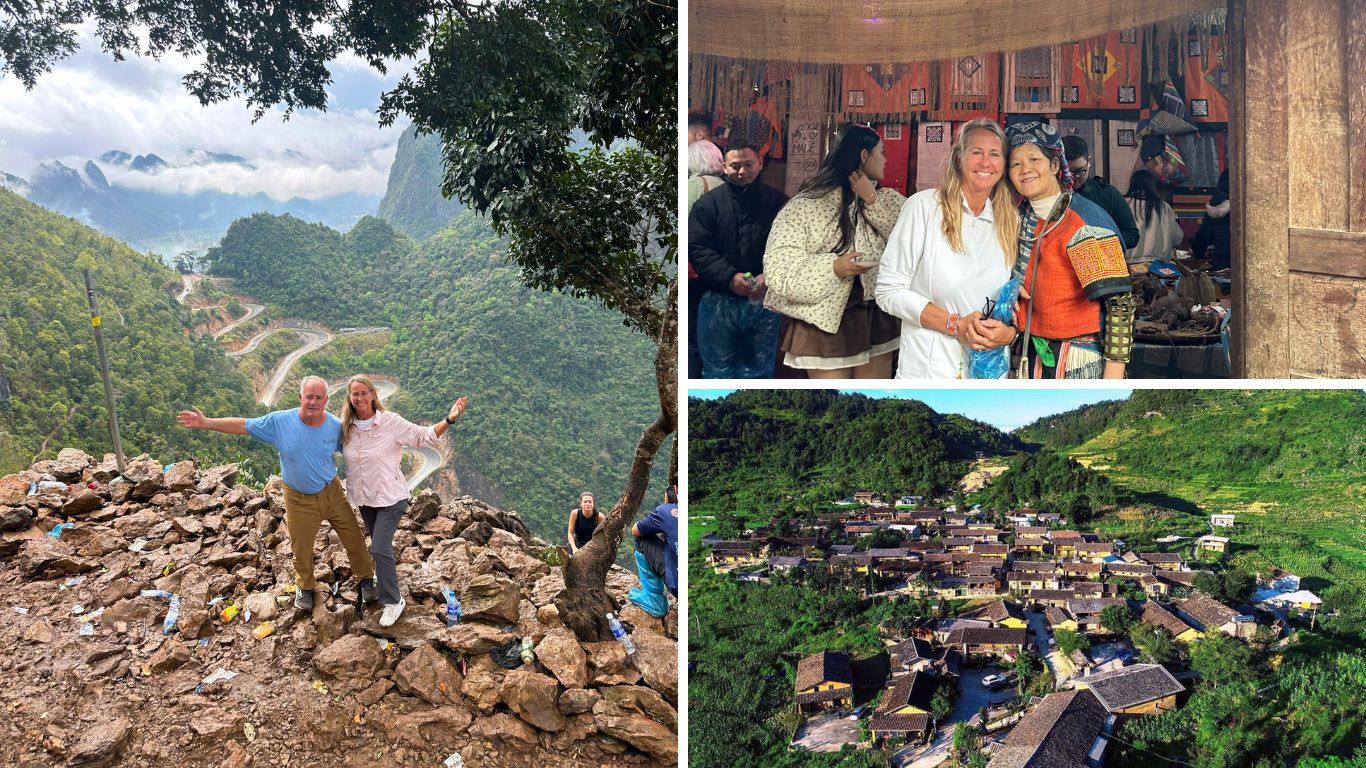
For timing your Ha Giang trip correctly, the Ha Giang weather and best time to visit guide is essential reading before you plan.
The Real Answer: Do Both
Here’s what most comparison blogs won’t tell you directly. Cao Bang and Ha Giang are not rivals. Instead, they are complementary destinations that sit on opposite ends of the same emotional spectrum. Ha Giang’s rocky drama and Cao Bang’s lush green valleys speak two completely different visual languages. Experiencing both in a single trip creates a contrast that makes each destination richer than it would ever be alone.
The route connecting them through Bao Lac is itself one of the most beautiful and least-travelled roads in northern Vietnam. Most tourists never drive it. Those who do, however, consistently name it among the highlights of their entire trip.
Why They Work Better Together
Ha Giang opens with intensity. The loop road, the plateau, the exposed ridgelines: together they establish a mood that’s genuinely hard to find anywhere else. Then Cao Bang answers with something softer and more layered. Arriving at Ban Gioc after days of rocky drama, the contrast of all that green water and lush valley floor hits differently than it would coming straight from Hanoi. Together, the two destinations create a natural narrative arc that a single-destination trip simply cannot replicate.
Sample Combined Routes
Not every traveller has the same amount of time, and fortunately the northeast is flexible enough to reward every length of stay. Whether you have five days or ten, there’s a route that fits.
The 5-Day Express
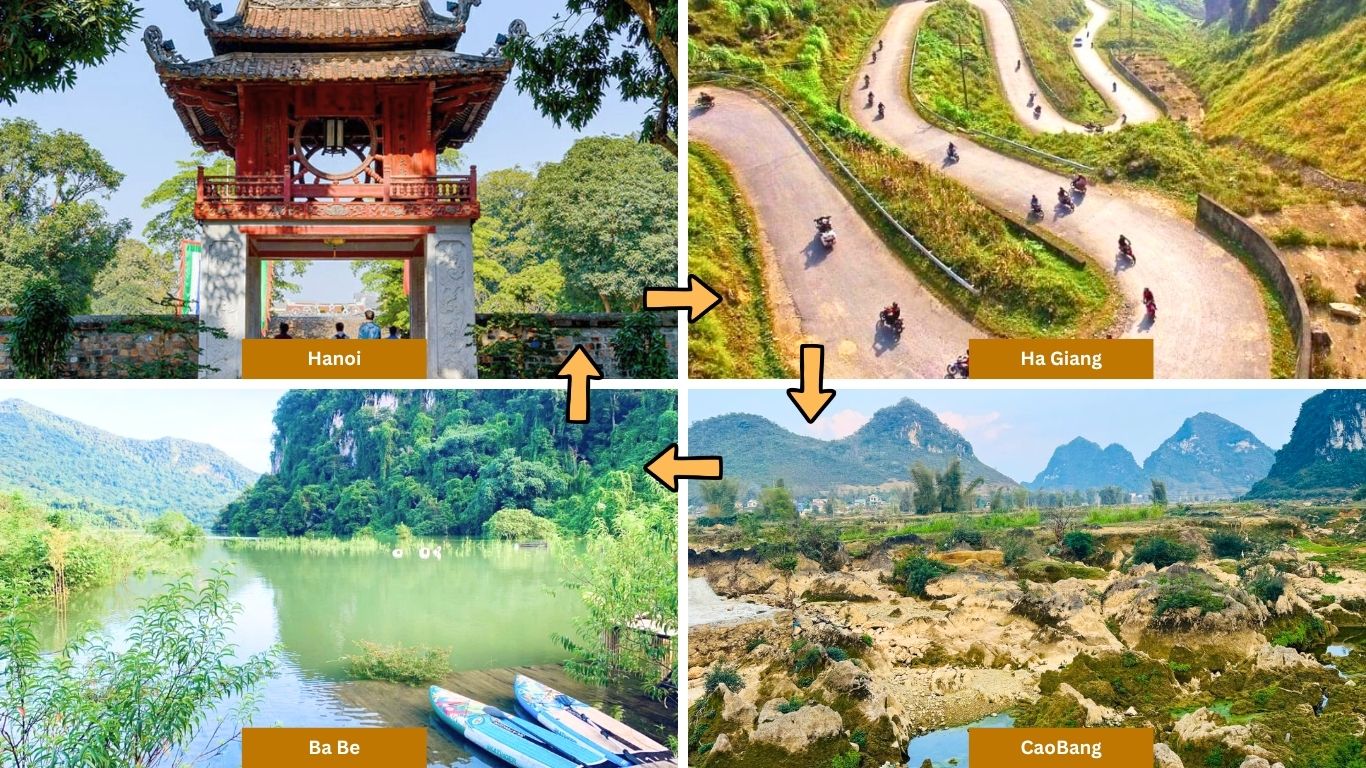
For travelers with a tight schedule but serious ambitions. You move fast, but nothing important gets left out. The journey opens in Ha Giang, pushes through the dramatic passes of Quan Ba and Yen Minh toward Dong Van, then crosses Ma Pi Leng Pass above the Nho Que River gorge before descending through Bao Lac into Cao Bang province. A stop through Phong Nam Valley sets the scene before an overnight near Ban Gioc. The final morning belongs entirely to the waterfall and Nguom Ngao Cave before the return to Hanoi. Five days. Two provinces. One route that most travelers remember for years.
The 7-Day Full Northeast Loop
The benchmark journey and the itinerary that most private tour clients choose. It covers both destinations properly, without rushing either one, and builds in enough breathing room to let the places actually settle. Full day-by-day details and private booking options are on our Northeast Vietnam Explorer 7 Days page.
The 10-Day Immersive North
For travelers who want to go beyond the highlights entirely. Ba Be Lake joins the route, nights are spent inside village homestays rather than hotels, and the pace slows down enough to let genuine cultural encounters happen. This is the version of the northeast that most tourists never reach and rarely forget. Reach out to vietnam@indochinavoyages.com to build it privately around your dates and travel style.
All three routes are available as fully private journeys, with dedicated transport, handpicked accommodation, and local guides who know both regions in real depth. Our team at Indochina Voyages handles every detail so the only thing left for you to do is show up and experience it.
Practical Differences to Know Before You Choose
A few things that genuinely affect the decision and don’t always make it into comparison blogs.
Budget. Ha Giang can be done affordably on a rented motorbike and guesthouse circuit. Cao Bang, on the other hand, requires more planning and slightly higher transport costs given the distances involved. Private tours of both regions sit at comparable price points overall, but Ha Giang logistics tend to be more straightforward for independent budget travelers.
Best timing. Both destinations peak between September and November, when rice harvest colours are at their best and weather across the northeast is most reliable. Ha Giang additionally has a secondary peak in March to April for buckwheat flower season. Cao Bang’s winter months from December to February, meanwhile, offer a quieter, mist-filled experience that Ha Giang simply doesn’t match in the same way. For a full seasonal breakdown, the Ha Giang weather guide is worth reading before you finalise dates.
Physical comfort. Be honest with yourself here. Ha Giang on a motorbike means long days in the saddle, steep climbs, and exposure to unpredictable mountain weather. Cao Bang by private car, in contrast, means long drives but no physical strain beyond the hikes you choose to take on. The gap between the two in terms of physical demand is larger than most people expect before they arrive.
Guide and local support. Both destinations benefit enormously from a knowledgeable local guide, though for different reasons. In Ha Giang, a guide adds safety awareness and navigational confidence. In Cao Bang, a guide unlocks cultural depth that independent travel simply cannot access. For either destination, arranging private guiding in advance through Vietnam Travels Online makes a meaningful difference to what you actually take home from the experience.
FAQs
Is Ha Giang or Cao Bang better for first-timers?
Cao Bang is easier to start with. It is more relaxed, with accessible roads and a balanced mix of nature and culture.
Can you visit both in one trip?
Yes, and it is highly recommended. Plan at least 5 days, while 7 days gives a better pace.
Which is better for photography?
Both are excellent. Ha Giang suits dramatic landscapes, while Cao Bang is stronger for culture and softer scenery.
Which is easier to travel independently?
Cao Bang is easier with a private car. Ha Giang is popular for independent travel but requires more riding experience.
What is the best time to visit both?
Late September to October offers the best weather, golden rice fields, and strong waterfalls.
How do you get from Ha Giang to Cao Bang?
Travel via Meo Vac and Bao Lac. The journey takes 5 to 7 hours and is very scenic.
Conclusion: Stop Choosing. Do Both.
Cao Bang and Ha Giang represent two sides of the same extraordinary coin. One is lush, layered, and quietly revelatory. The other is raw, dramatic, and unforgettable in a way that stays with you for years. Choosing between them is genuinely difficult because they deliver such different things, and the honest answer is that the northeast of Vietnam is best understood when you experience both.
The travelers who combine them almost universally say the same thing: each destination made the other better. The contrast is the point.
When you’re ready to make it happen properly, with private transport, handpicked stays, and guides who know both regions in genuine depth, our team at Vietnam Travels Online is the right place to start. Or drop a line directly to vietnam@indochinavoyages.com and build your northern Vietnam journey from scratch.