

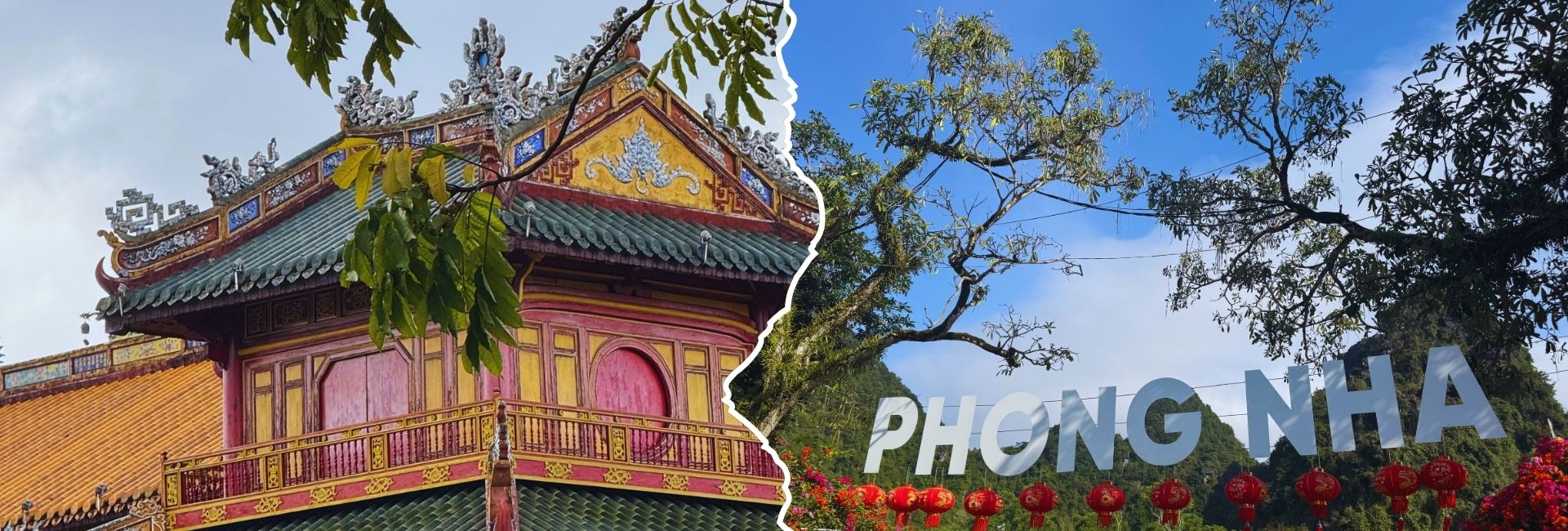
Central Vietnam offers an impressive range of landscapes and cultural heritage. Within this region, travelers often wonder whether they should visit Hue or Phong Nha. Both destinations are remarkable, yet they deliver very different travel experiences.
Hue represents Vietnam’s imperial past with royal architecture, elegant pagodas, and refined cuisine. Meanwhile, Phong Nha introduces travelers to dramatic limestone mountains and one of the most spectacular cave regions in the world. Because of these differences, choosing Hue or Phong Nha often depends on your travel style and expectations.
Some visitors prefer historical depth and cultural exploration. Others feel drawn to outdoor adventure and nature discovery. Understanding the highlights of each destination helps you decide which one fits your journey best.
Hue or Phong Nha: Location, Access, and Best Time to Visit
Both destinations sit in Central Vietnam, yet they belong to different provinces and landscapes.
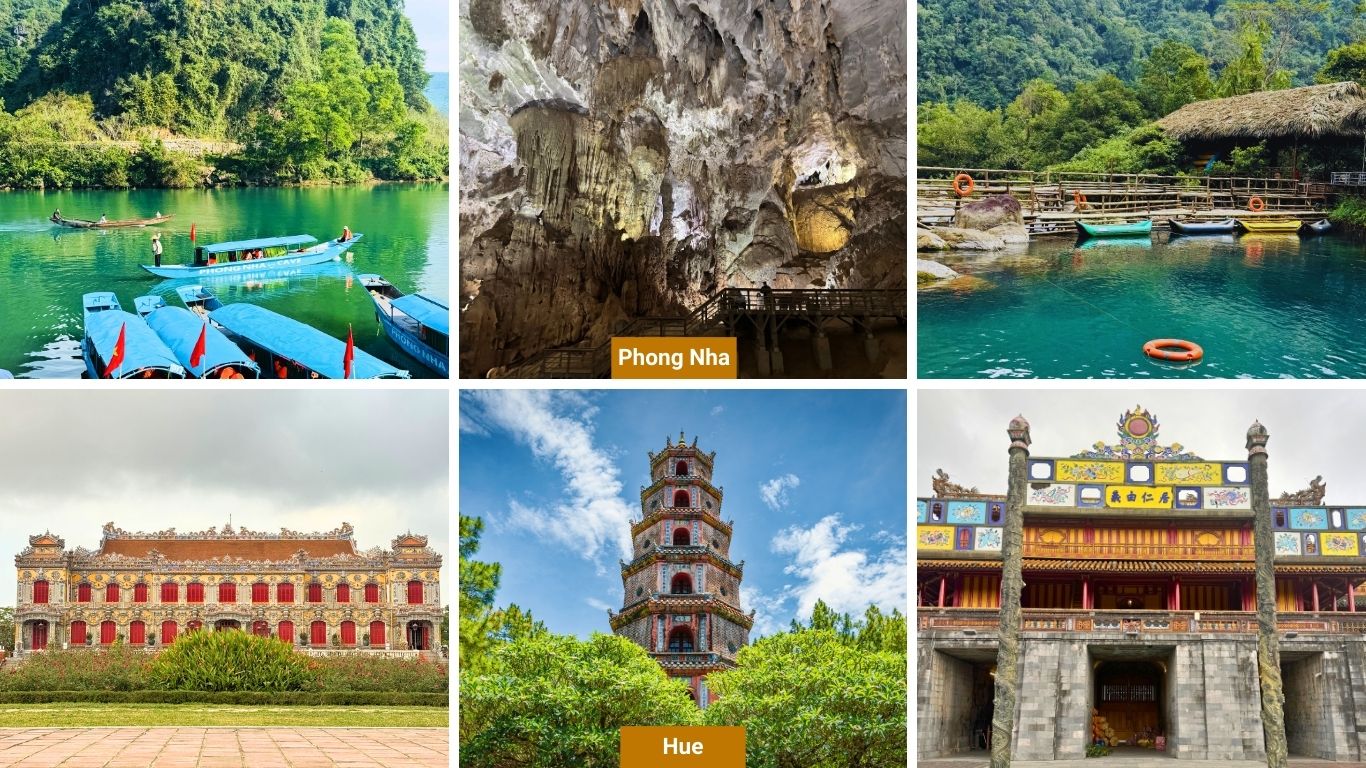
Phong Nha, on the other hand, sits in Quang Binh Province inside Phong Nha – Ke Bang National Park. This UNESCO-listed park is famous for limestone mountains, underground rivers, and vast cave systems. As a result, travelers considering Hue or Phong Nha will notice a clear contrast between imperial heritage and wild nature.
How to get there
Reaching each destination is relatively straightforward, although the transportation options differ slightly.
Hue
-
Phu Bai International Airport connects Hue with major Vietnamese cities
-
Direct trains run from Hanoi, Da Nang, and Ho Chi Minh City
-
Private car transfers from Hoi An or Da Nang take around 2–3 hours
Phong Nha
-
Dong Hoi Airport is the nearest airport
-
Trains also arrive at Dong Hoi Railway Station
-
A one-hour transfer brings travelers from Dong Hoi to Phong Nha village
Travelers who wish to explore both destinations can take a scenic private transfer. The journey between Hue and Phong Nha takes around four hours.
Best time to visit
Weather conditions play an important role when deciding between Hue and Phong Nha. Fortunately, both destinations share a similar travel season in Central Vietnam.
In general, the best time to visit falls between February and August. During these months, the weather remains warm and suitable for sightseeing, cultural exploration, and outdoor activities.
However, some seasonal differences are worth noting:
-
Hue feels most comfortable from February to April, when temperatures stay mild, and the humidity remains manageable. This period is ideal for exploring the citadel, royal tombs, and historic pagodas. If you want a deeper seasonal guide, you can explore the best time to visit Hue for more detailed insights.
-
Phong Nha becomes particularly appealing from March to August, when dry conditions make cave exploration, river activities, and jungle trekking much easier.
Because of this overlap, many travelers combine both destinations within the same itinerary to enjoy Central Vietnam at its best.
Where to stay
Accommodation options differ slightly in atmosphere.
Hue offers a wide range of boutique hotels, heritage properties, and luxury riverside resorts. Many travelers enjoy staying near the Perfume River or the historic citadel area.
Phong Nha provides a smaller yet charming selection of eco-lodges, boutique guesthouses, and nature retreats. These accommodations often sit beside rivers or limestone mountains, creating a relaxed countryside atmosphere.
Private travel services can also arrange transport, guides, accommodation, and curated activities according to your schedule and travel style.
Is it worth visiting?
Both destinations are absolutely worth visiting. However, the choice between 2 places depends largely on the type of travel experience you prefer.
Hue rewards travelers who appreciate history, architecture, and cultural storytelling. The city offers imperial monuments, ancient pagodas, royal tombs, and a refined culinary tradition shaped by the Nguyen Dynasty.
Meanwhile, Phong Nha attracts visitors who love nature, adventure, and exploration. The region offers spectacular caves, jungle landscapes, underground rivers, and outdoor activities inside a UNESCO-listed national park.
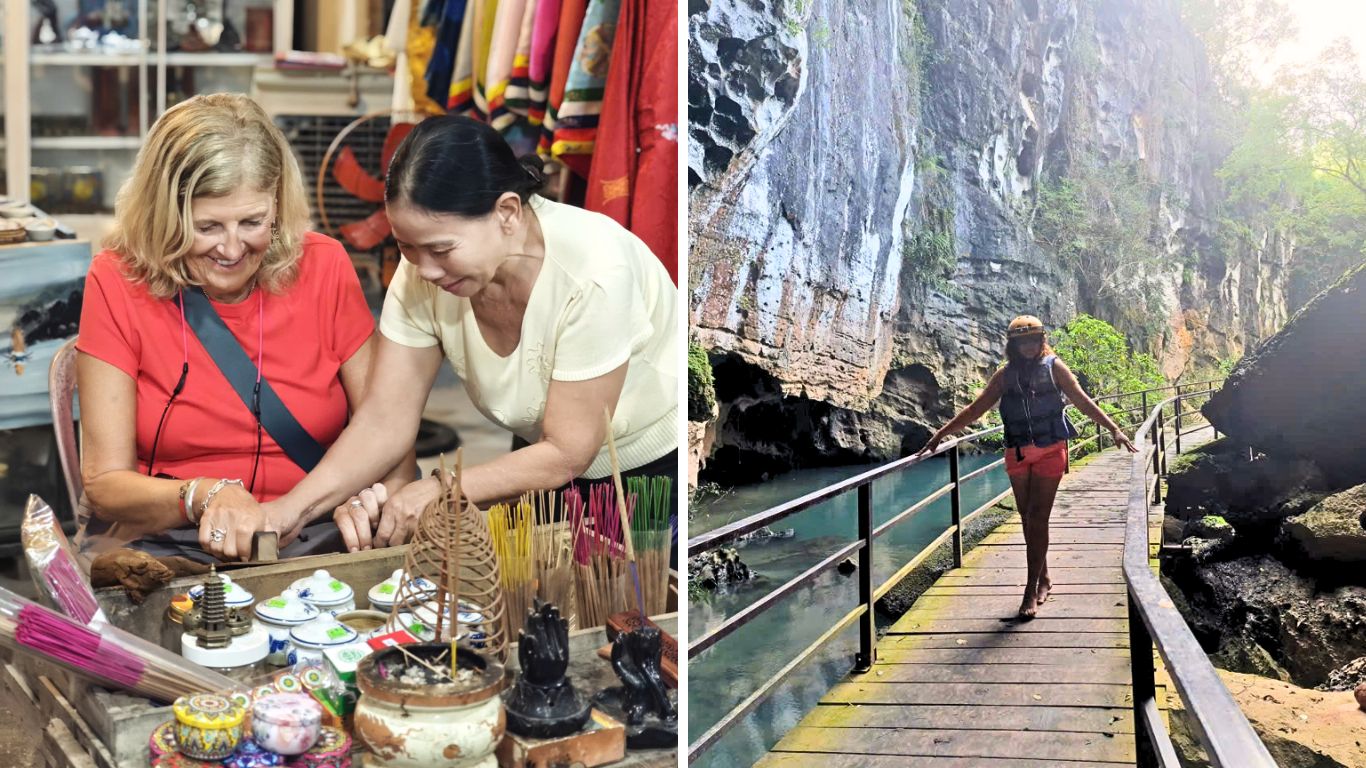
Many experienced travelers actually choose to visit both destinations because they complement each other beautifully. Hue provides cultural depth and historical insight, while Phong Nha adds dramatic natural scenery and adventure. Together, they create a well-balanced Central Vietnam journey that blends heritage, landscape, and unique local experiences.
Hue’s Imperial Heritage and Cultural Highlights
Travellers know that Hue immediately stands out for its deep historical and cultural identity. The city served as Vietnam’s imperial capital during the Nguyen Dynasty for more than a century.
Because of this legacy, Hue preserves one of the most remarkable collections of royal architecture in Southeast Asia. Palaces, temples, tombs, and pagodas still reflect the elegance of the former royal court.
Exploring Hue, therefore, feels like walking through a living history museum. Each monument tells a story about emperors, royal ceremonies, and the refined traditions that once shaped Vietnamese court life.
The Imperial Citadel
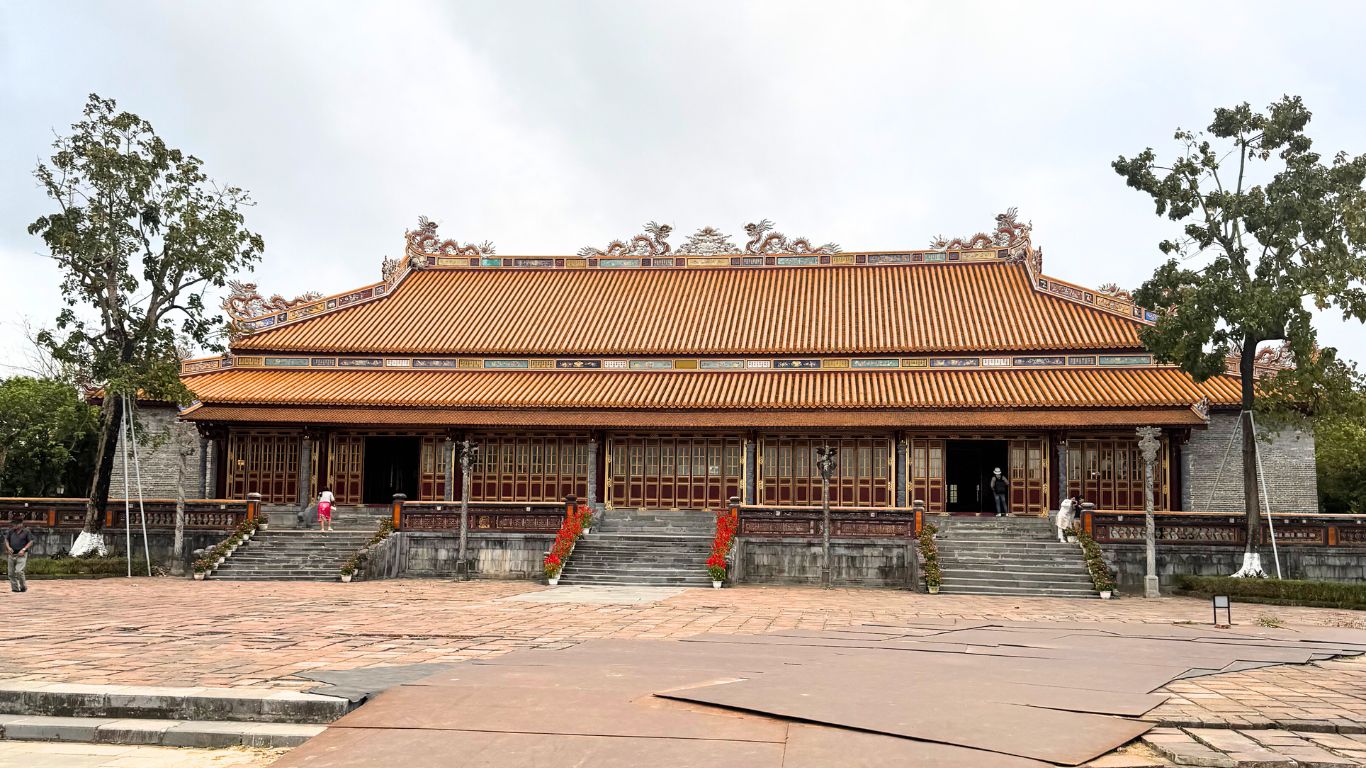
The Imperial Citadel forms the historical heart of Hue and remains its most iconic landmark. This massive complex once served as the political and ceremonial center of the Nguyen Dynasty.
Inside the citadel, travelers discover grand gates, ancient temples, royal palaces, and quiet courtyards. Although parts of the complex were damaged during past conflicts, ongoing restoration has brought many structures back to life.
Walking through the citadel allows visitors to imagine the daily life of emperors, mandarins, and royal guards who once ruled the country from this fortified city.
The Royal Tombs of the Nguyen Emperors
Hue is also famous for its impressive royal tombs scattered along the Perfume River. Each tomb was carefully designed according to the personality and philosophy of the emperor it commemorates.
Some of the most remarkable tombs include:
-
Minh Mang Tomb, known for its perfect harmony with nature
-
Khai Dinh Tomb, famous for its elaborate fusion of Vietnamese and European design
-
Tu Duc Tomb, a peaceful complex surrounded by pine forests and lakes
These tombs function not only as burial sites but also as architectural masterpieces that blend landscape, symbolism, and imperial art.

Thien Mu Pagoda
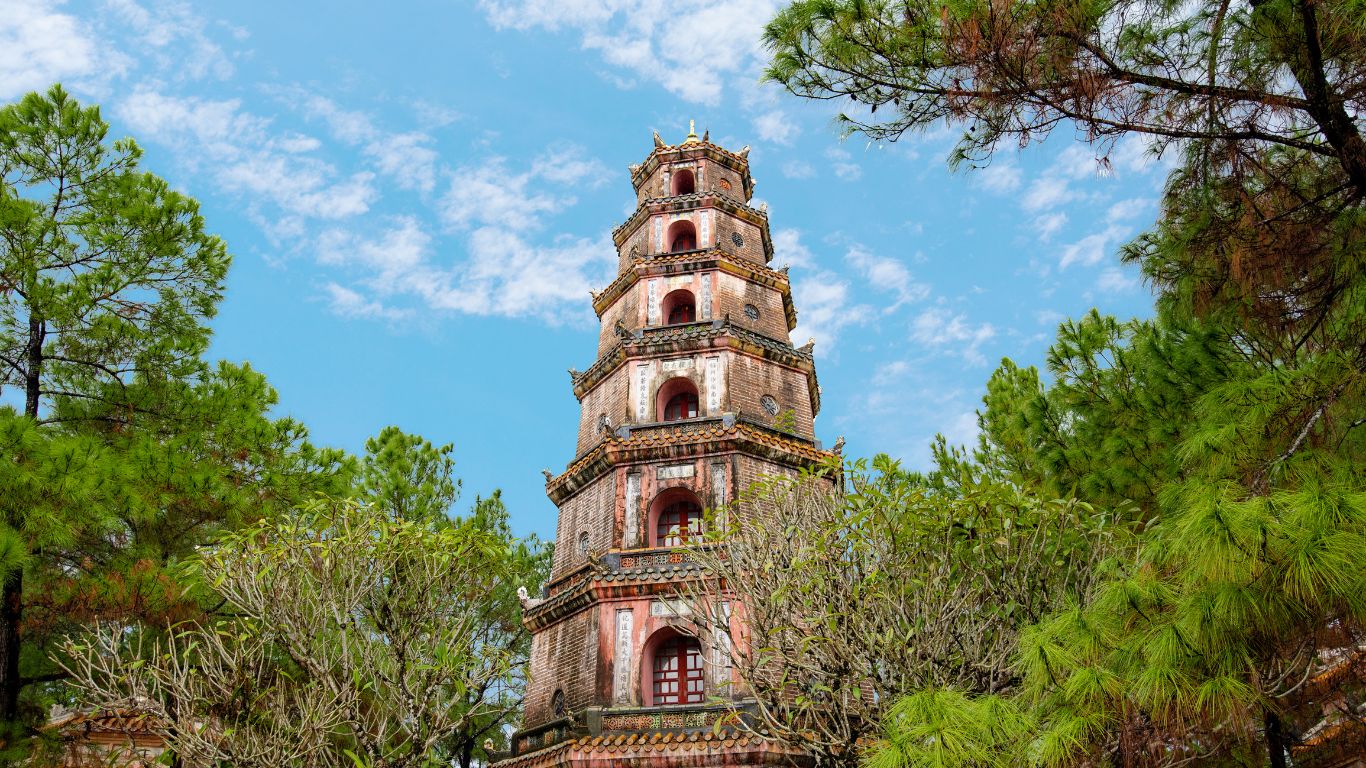
Standing gracefully above the Perfume River, Thien Mu Pagoda is one of the most recognizable spiritual landmarks in Central Vietnam.
The pagoda’s seven-story tower rises elegantly above the surrounding landscape. For centuries, this site has served as a place of Buddhist worship and quiet reflection.
Visitors often come here to admire the river view, observe monks in their daily routines, and experience a peaceful atmosphere away from the city center.
Traditional Craft Villages
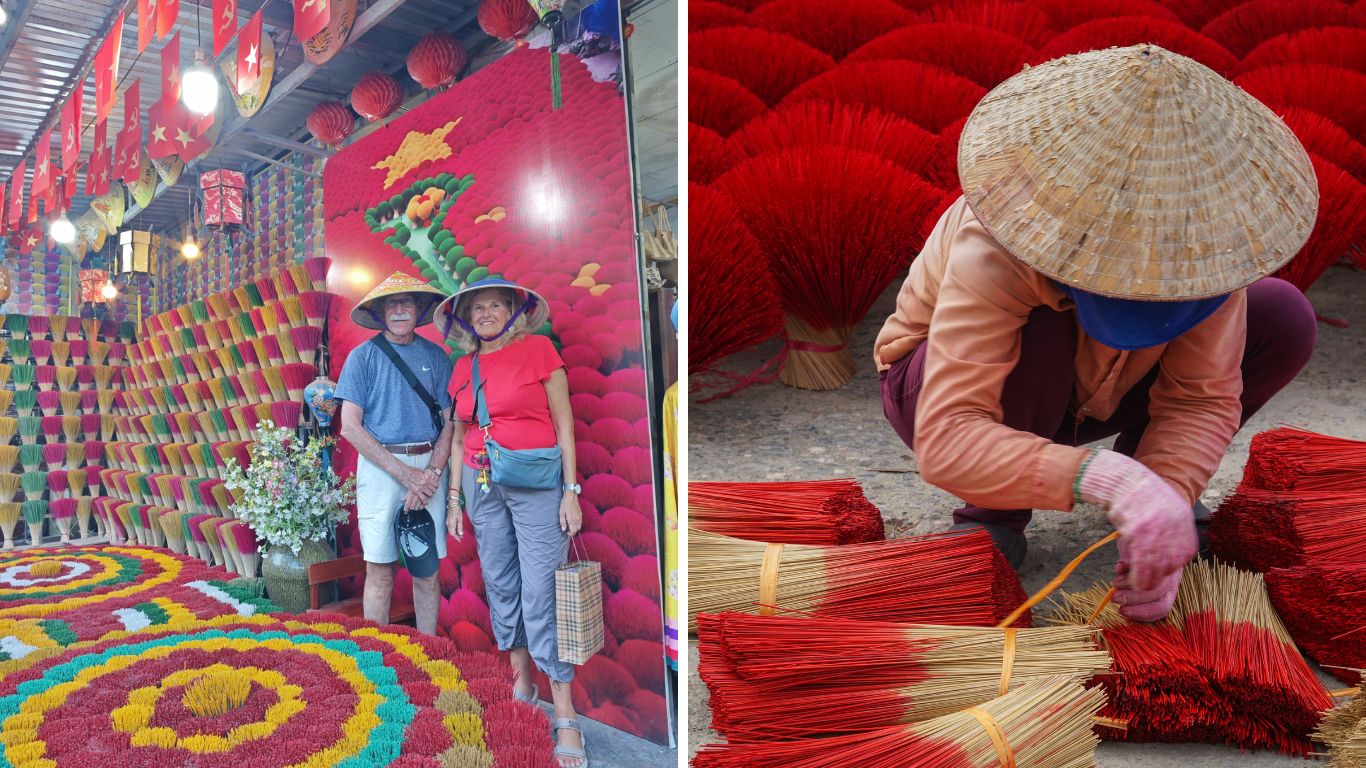
Beyond royal monuments, Hue also preserves traditional villages that keep centuries-old crafts alive.
Several villages around the city welcome visitors who wish to experience local culture:
-
Thuy Xuan Incense Village, famous for colorful incense bundles
-
Phuoc Tich Ancient Village, known for historic houses and pottery traditions
-
Thanh Tien Village, where artisans create delicate paper flowers
These communities offer a glimpse into the everyday life and craftsmanship that supported the imperial city for generations.
Hue’s Refined Imperial Cuisine
Another highlight that distinguishes Hue from other Vietnamese cities is its cuisine. Many dishes originated from the royal kitchens and still reflect refined culinary traditions.
Hue cuisine focuses on delicate flavors, artistic presentation, and balanced ingredients. Even simple meals often resemble miniature works of art.
Some famous dishes include:
-
Bun Bo Hue, the city’s signature spicy noodle soup
-
Banh Beo, small steamed rice cakes topped with shrimp
-
Banh Khoai, a crispy Hue-style pancake
Because of this rich culinary heritage, many travelers say that discovering Hue through its food is just as memorable as visiting its historical monuments.
Phong Nha’s Natural Wonders and Adventure Experiences
While Hue showcases imperial history, Phong Nha reveals a completely different side of Central Vietnam. Instead of ancient citadels and royal tombs, the landscape here is defined by dramatic limestone mountains, thick jungle, and winding rivers.
Phong Nha sits within Phong Nha – Ke Bang National Park, a UNESCO World Heritage Site known for its extraordinary cave systems. Over millions of years, underground rivers carved vast caverns beneath the mountains. Even today, scientists continue discovering new caves, making this region one of the most fascinating geological areas in the world.
Because of this natural environment, travelers deciding between Hue and Phong Nha will notice that Phong Nha focuses strongly on outdoor adventure and nature exploration.

Caves and the Underground River
Phong Nha Cave remains the most famous attraction in the region and offers a unique way to experience the landscape. Visitors reach the cave by boat along the peaceful Son River before entering a spectacular underground river system.
Inside the cave, the boat slowly moves through vast chambers filled with limestone formations. Stalactites hang dramatically from the ceiling while the cave walls reflect soft light across the water.
This gentle boat journey makes Phong Nha Cave accessible for many travelers while still showcasing the incredible scale of the national park.
Paradise Cave: One of Asia’s Most Impressive Caverns
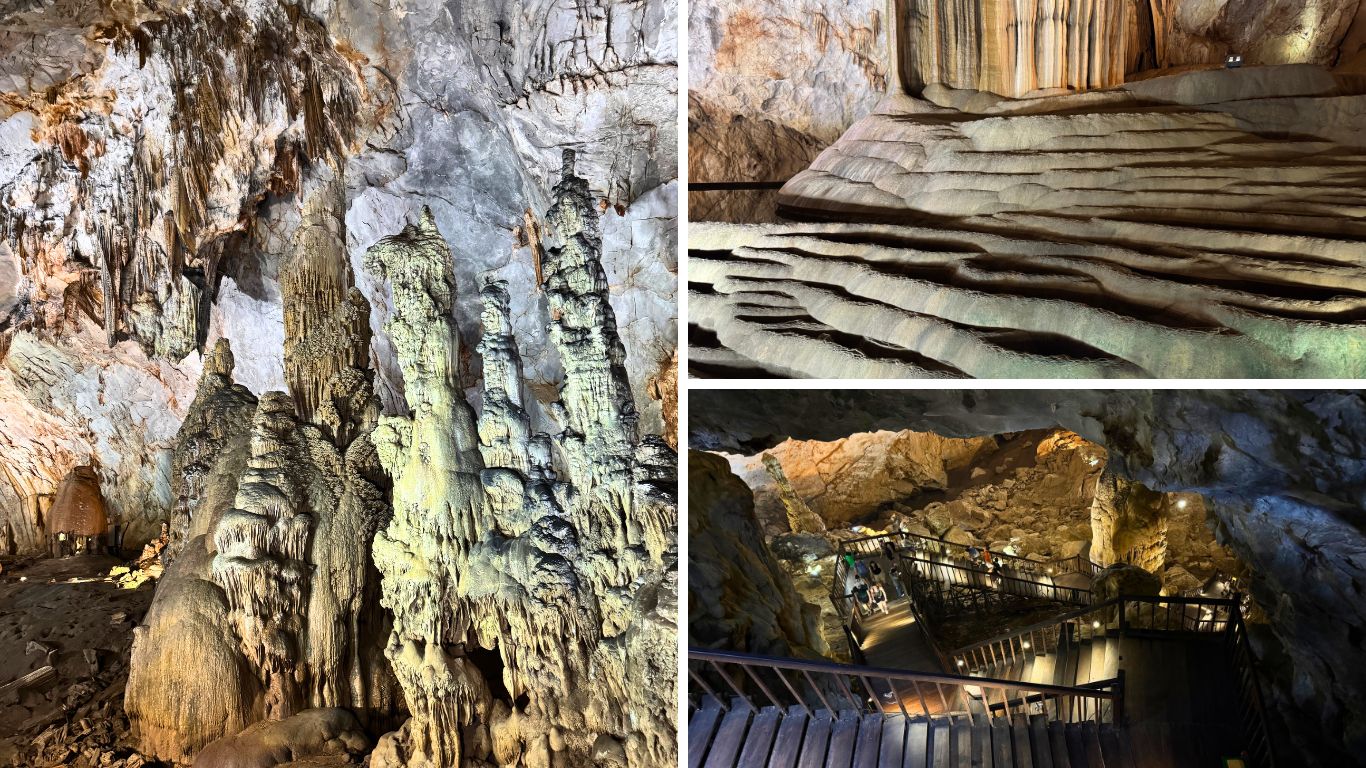
Paradise Cave presents another unforgettable highlight. Unlike Phong Nha Cave, visitors explore this cave on foot through a long wooden walkway.
The cave stretches for more than thirty kilometers, making it one of the longest dry caves in Asia. Inside, enormous chambers display intricate stalactites and stalagmites formed over millions of years.
Soft lighting highlights the natural formations and creates a surreal underground landscape. Many travelers consider Paradise Cave one of the most visually impressive caves in Vietnam.
Countryside Cycling and Local Village Life
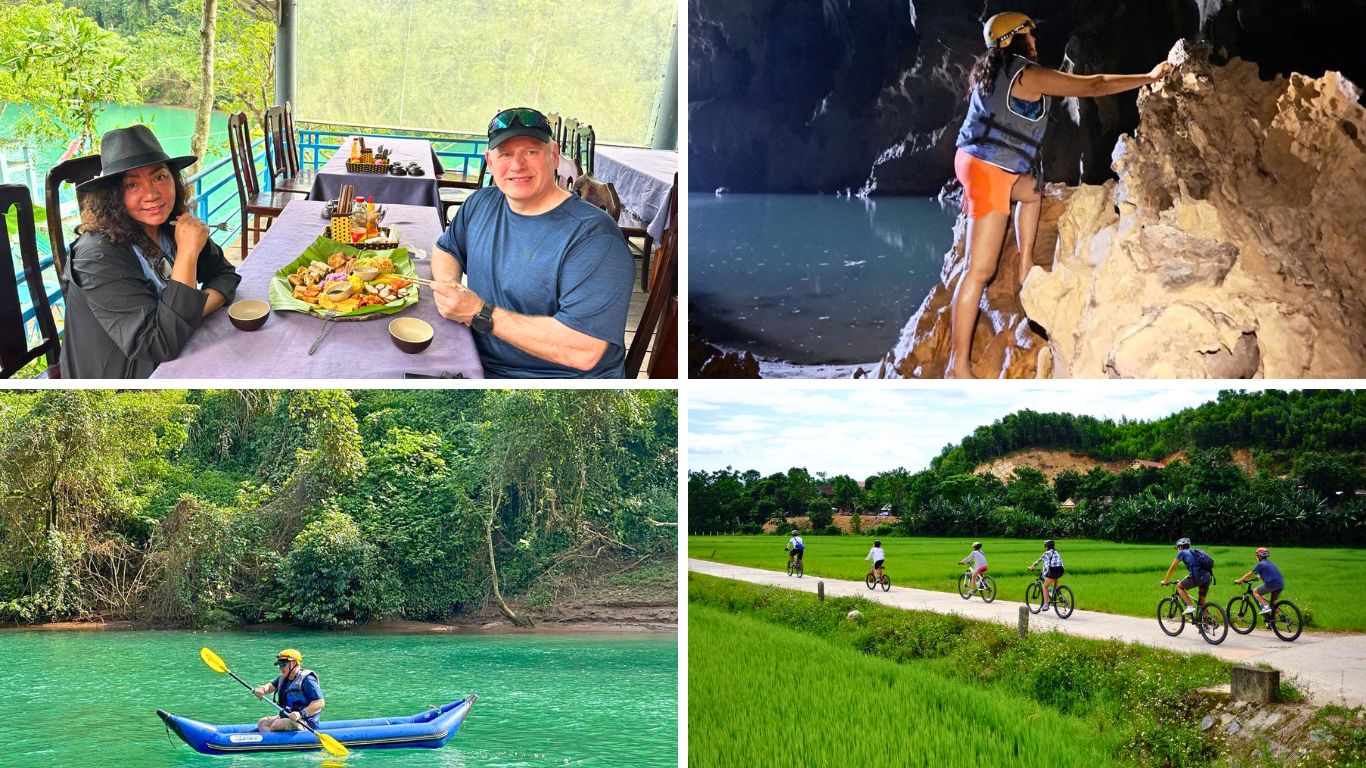
Beyond caves and jungle trails, Phong Nha also offers peaceful countryside scenery that many visitors enjoy exploring by bicycle.
Quiet rural roads pass through rice fields, small villages, and river landscapes. Along the way, travelers often encounter friendly local communities, grazing water buffalo, and farmers working in the fields.
This slower pace allows visitors to appreciate a quieter side of rural Vietnam while enjoying the fresh air and scenic surroundings.
Jungle Trekking and Adventure Cave Expeditions
For travelers seeking deeper adventure, Phong Nha offers a range of jungle trekking and cave exploration tours.
These guided expeditions take visitors into remote sections of the national park where they hike through dense forest, cross streams, and explore hidden caves. Some tours involve swimming through underground rivers or climbing across rocky passages.
Because of these experiences, Phong Nha has become a favorite destination for travelers who enjoy active exploration and outdoor challenges.
Kayaking on the Son River
The Son River flows gently through Phong Nha village and adds another relaxing activity to the destination.
Kayaking along the river offers a different perspective of the surrounding limestone mountains. The water remains calm for most of the year, making the activity suitable even for beginners.
Many travelers enjoy kayaking in the late afternoon when the sunlight softens, and the landscape becomes especially peaceful.
Because of these diverse activities, Phong Nha appeals particularly to travelers who love nature, adventure, and outdoor discovery.
Travel Experience: What Makes Each Destination Unique
The difference between Hue and Phong Nha becomes clear when comparing the overall travel experience.
Hue creates a cultural journey through Vietnam’s royal history. Travelers spend their days visiting monuments, tasting traditional cuisine, and enjoying the peaceful riverside atmosphere. The pace feels relaxed and reflective.
Phong Nha, in contrast, delivers a sense of adventure. Visitors explore caves, hike through forests, and discover dramatic landscapes shaped over millions of years. The experience often feels exciting and physically engaging.
In simple terms:
-
Hue offers a cultural and historical exploration.
-
Phong Nha offers a nature and adventure experience.
Because of this contrast, the two destinations often complement each other perfectly within one itinerary.
Suggested Vietnam Itineraries Including Hue and Phong Nha
A short but spectacular cave adventure in Phong Nha
For travelers drawn to nature and adventure, Phong Nha offers an unforgettable introduction to Vietnam’s dramatic cave landscapes. Over a few days, visitors can cruise along the Son River into Phong Nha Cave, walk through the immense chambers of Paradise Cave, and enjoy peaceful scenery surrounded by limestone mountains and jungle. The journey balances exploration with relaxation, making it perfect for a short escape into nature. A carefully designed itinerary, such as Explore Phong Nha – Ke Bang 3 Days, allows travelers to discover the highlights of this remarkable cave region in a compact yet rewarding trip.
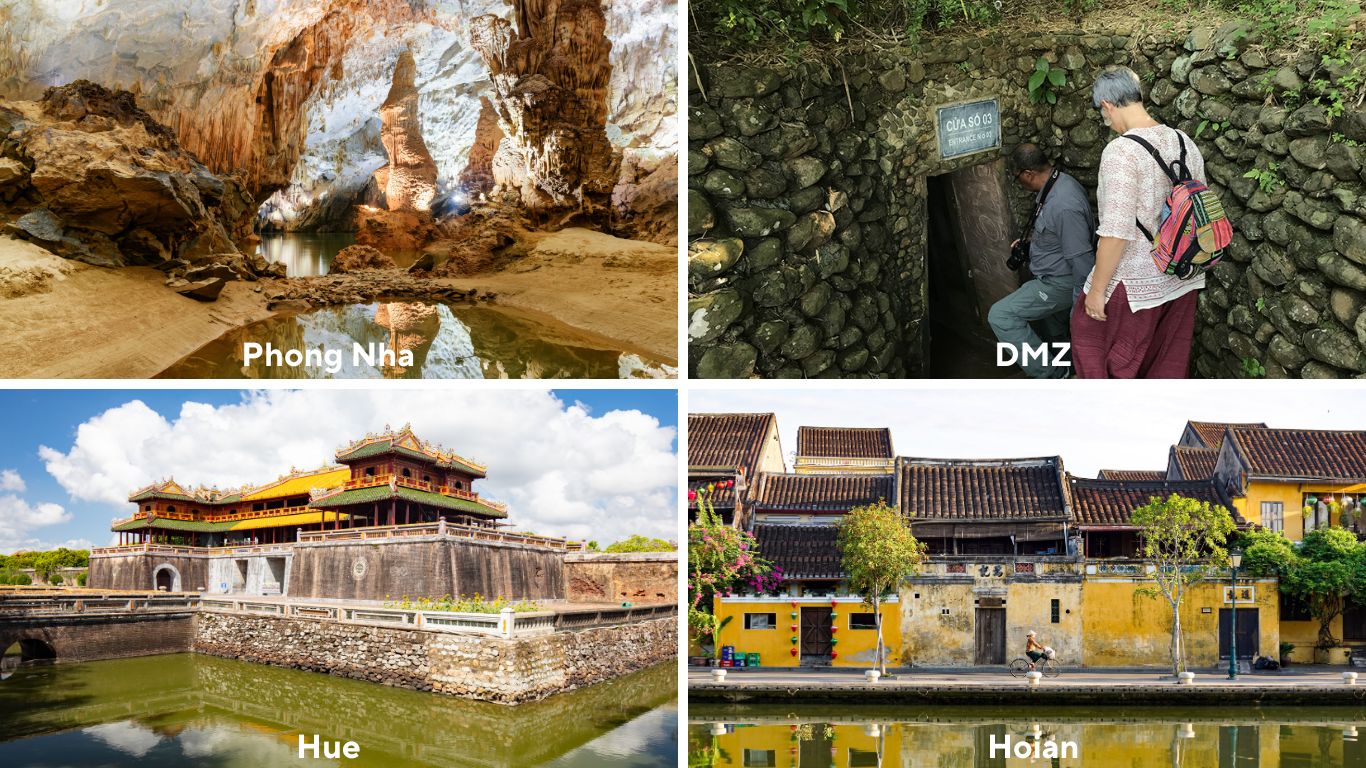
Discover the imperial elegance of Hue and Central Vietnam
Travelers interested in history and culture will find Hue a fascinating gateway to Vietnam’s imperial past. Walking through the Imperial City, visiting royal tombs surrounded by tranquil gardens, and cruising along the Perfume River all reveal the refined atmosphere of the former royal capital. Along the way, the journey also introduces scenic landscapes and charming towns across Central Vietnam. The Classic Central Vietnam 4 Days itinerary provides a well-balanced cultural experience for those who want to explore the region’s historic highlights in a short time.
A deeper journey through the charm and heritage of Central Vietnam
For travelers with more time, a longer journey reveals the full beauty and diversity of Central Vietnam. These routes often combine the natural wonders of Phong Nha with the imperial heritage of Hue and the timeless charm of Hoi An. The experience blends cave exploration, historical discovery, and relaxing cultural moments into one memorable journey. Options such as Central – The Charm of Central 6 Days or the more immersive Historic Central Vietnam 7 Days itinerary allow travelers to explore Central Vietnam in greater depth while enjoying a comfortable and well-paced trip.
Plan your Hue and Phong Nha journey with local travel experts
Choosing between Hue or Phong Nha can sometimes feel difficult because both destinations offer unique experiences. Fortunately, you do not have to choose only one. Many travelers combine the imperial heritage of Hue with the spectacular caves of Phong Nha to create a balanced Central Vietnam journey.
At Vietnam Travel Online, we specialize in tailor-made travel experiences designed around your interests, schedule, and travel style. Our team can assist with private transportation, handpicked hotels, experienced local guides, and carefully planned itineraries. If you would like to design your own Central Vietnam adventure, feel free to contact us through our website or explore more of our sample tours to start planning your trip.
Practical Tips for Visiting Hue and Phong Nha
Planning carefully helps travelers enjoy both destinations comfortably.
-
Spend two days in Hue to explore the citadel and several royal tombs.
-
Plan at least two days in Phong Nha for caves and outdoor activities.
-
Travel between Hue and Phong Nha by private car for the most comfortable journey.
-
Start sightseeing early in the morning during the summer months.
-
Book cave tours in advance, especially during peak travel seasons.
Following these simple tips makes it easier to enjoy either destination.
FAQs
Is Hue or Phong Nha better for first-time visitors?
Both are great for first-time travelers in Central Vietnam. Hue suits visitors interested in history and culture, while Phong Nha attracts nature lovers and adventure seekers.
Can you visit Hue and Phong Nha in one trip?
Yes. The distance is manageable, so many travelers combine Hue’s imperial heritage with Phong Nha’s cave landscapes in one itinerary.
How many days should you spend in each destination?
Around two days in Hue and two days in Phong Nha usually works well. This gives enough time to see major sites and explore the caves.
Which destination feels more relaxing?
Hue feels calmer with cultural sightseeing and historic monuments. Meanwhile, Phong Nha is more active with cave exploration and outdoor adventure
Relate content you might need:
- Hoi An or Hue: Seeing Central Vietnam Beyond Attractions
- Ha Long Bay vs Lan Ha Bay – Which One Should You Explore?
- Ninh Binh or Sapa: Which Vietnam Destination Should You Choose
- Sapa or Ha Giang: Which Vietnam Gem Should You Choose?
- Ninh Binh vs Pu Luong: Which Countryside Adventure Suits You Best?