


Da Nang and Hoi An are often discussed together, yet they serve very different roles in a Central Vietnam journey. Many travelers underestimate this choice, assuming distance alone makes them interchangeable. In reality, where you stay affects how you move each day, how much energy you spend, and how connected you feel to the landscape around you.
This guide compares Da Nang and Hoi An as lived destinations, not just sightseeing stops. It looks at landscape, atmosphere, daily movement, and experience depth, helping travelers choose with intention rather than habit.
What can you find in this travel blog?
- Landscape and Setting: Space Versus Containment
- Visual Character: Modern Energy vs Preserved Memory
- What You Actually Do: Activities That Shape the Experience
- Movement and Daily Rhythm: How Your Days Unfold Over Time
- Crowds and Personal Space
- Choosing What Fits You Best. Da Nang or Hoi An?
- Can You Combine Da Nang and Hoi An?
- Practical Travel Tips for Da Nang and Hoi An
- FAQs
Landscape and Setting: Space Versus Containment
Da Nang and Hoi An sit less than an hour apart, yet they reflect two very different ideas of travel. Da Nang is a modern coastal city that opens outward, offering space, flexibility, and constant motion. Hoi An, by contrast, is compact and inward-looking, built around atmosphere, repetition, and a carefully preserved sense of the past.
Many travelers underestimate how much this difference matters. After the first few days, beauty becomes familiar, but rhythm remains. How far you move, how often you repeat the same streets, and how crowded your evenings feel will shape your enjoyment far more than a checklist of attractions.
Da Nang: A Landscape That Opens Outward
Da Nang’s landscape is defined by contrast and scale. The city stretches along a wide coastline where My Khe Beach meets long, open roads, while the Han River cuts calmly through the urban center. To the north, Son Tra Peninsula rises sharply from the sea, adding forested hills and viewpoints that feel surprisingly wild for a city of this size. This layering of beach, river, and mountain creates a sense of constant expansion.
What stands out most is how space shapes daily experience. Even on busy days, Da Nang rarely feels crowded. There is always another café facing the water, another quiet stretch of sand before sunset, or another road leading toward greener scenery. Movement feels natural, and variety comes without effort.

Landscape highlights in Da Nang include:
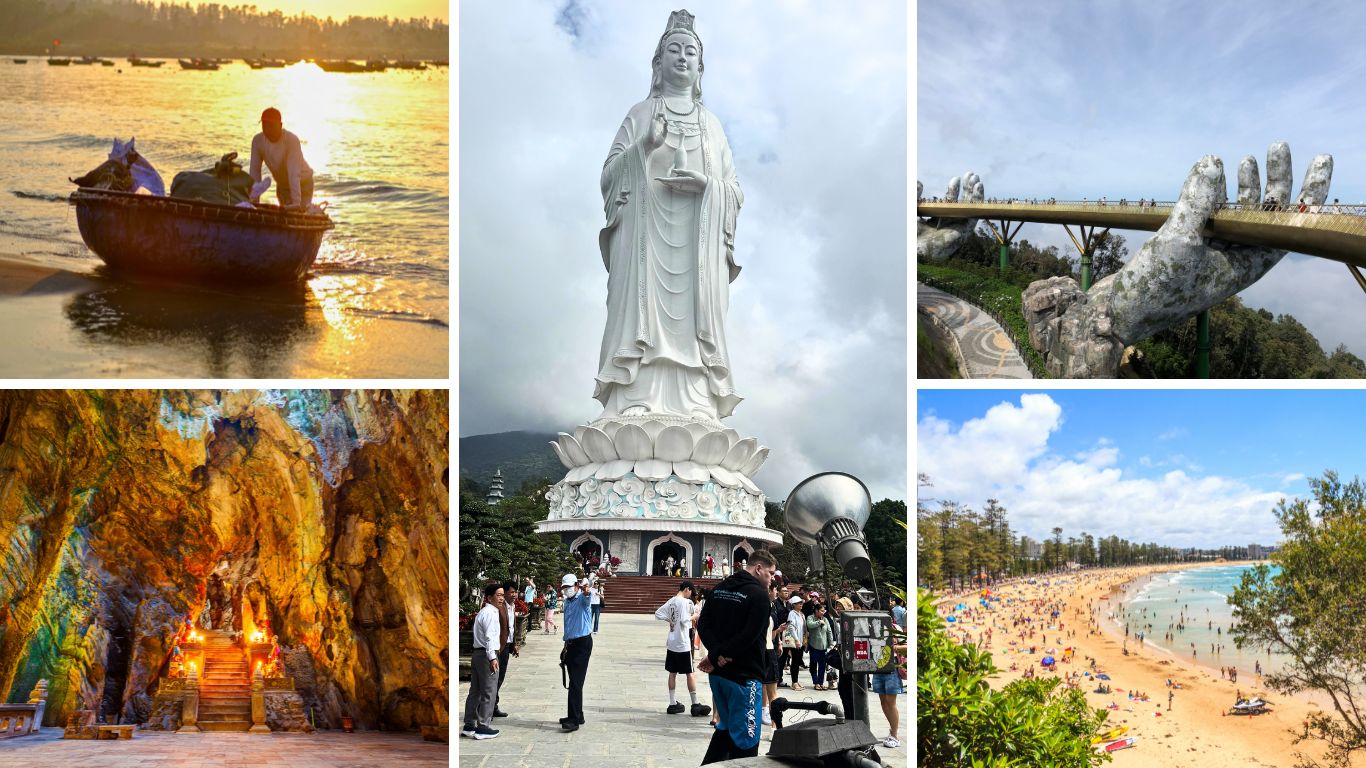
- My Khe and Non Nuoc Beaches, long and open, are ideal for unhurried walks and early morning swims
- Son Tra Peninsula, where forest roads, wildlife spotting, hidden pagodas, and a cooler highland climate all come together
- The Han River waterfront is especially peaceful in the early morning and beautifully lit after dark
- Marble Mountains (Ngu Hanh Son), a cluster of limestone hills packed with ancient caves, Buddhist pagodas, and sweeping city views
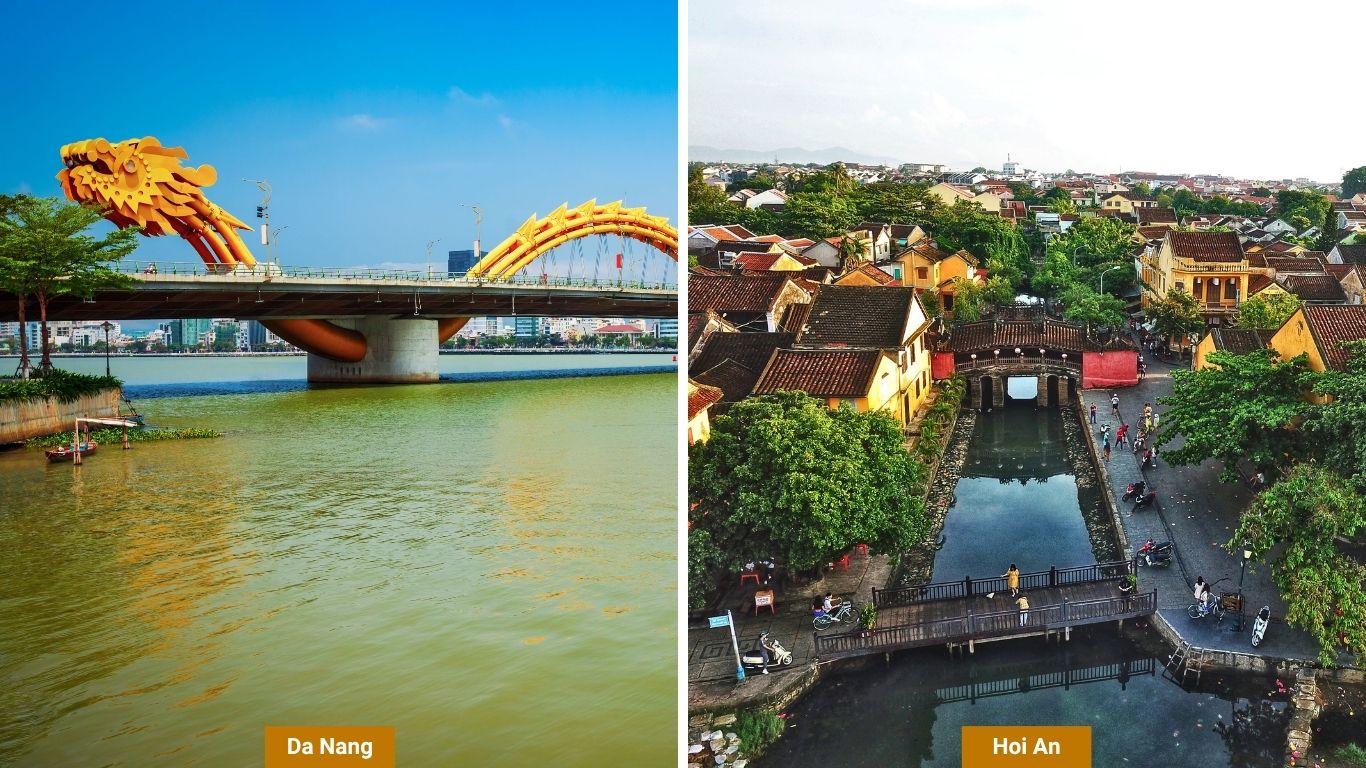
- Dragon Bridge, Da Nang’s most iconic landmark that breathes fire and water on weekend nights
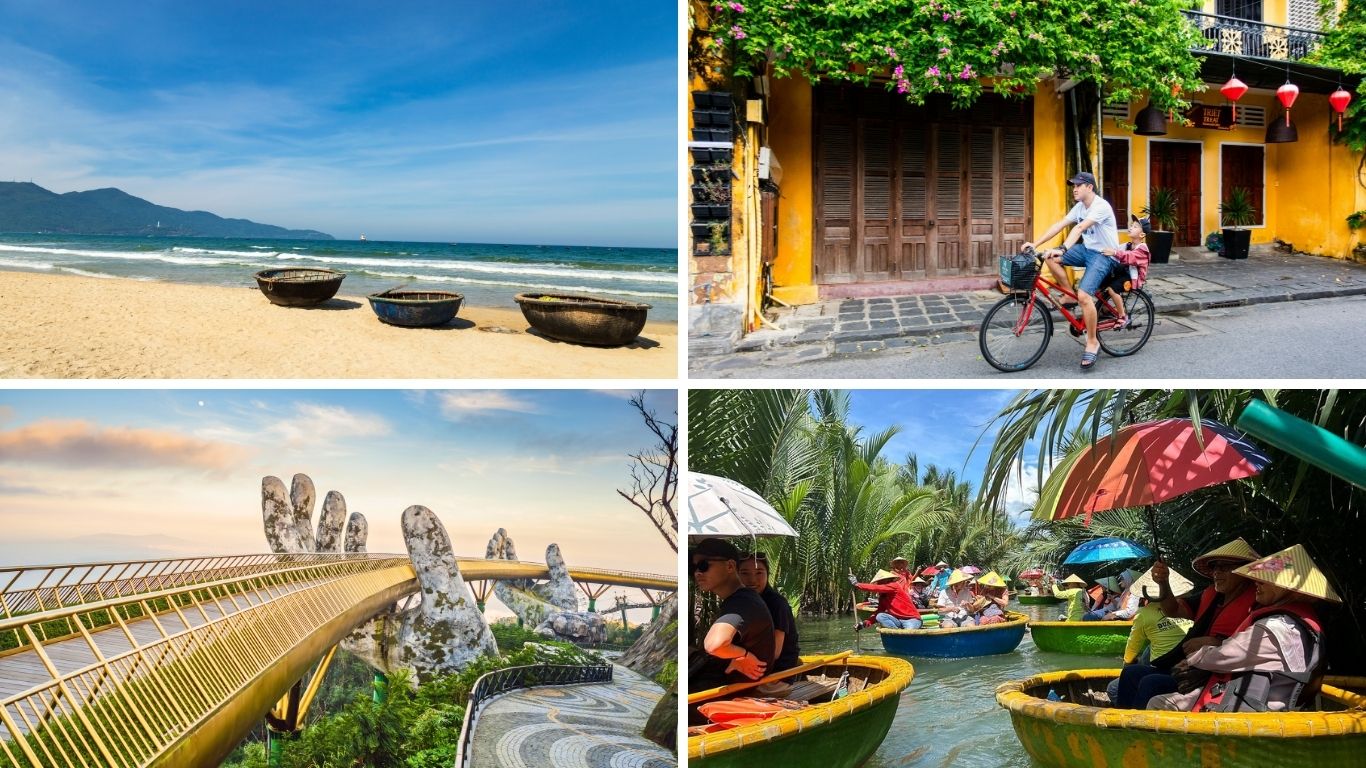
- Ba Na Hills, a mountaintop resort featuring a French village aesthetic and the world-famous Golden Bridge held by giant stone hands
- Hai Van Pass, one of Vietnam’s most scenic coastal mountain roads, with Lang Co Bay stretching out below
Hoi An: A Landscape That Gathers Inward
Hoi An’s setting works in the opposite way. The town is intentionally contained, with most experiences orbiting a compact core. The ancient town, with its narrow streets and tiled-roof houses, forms the emotional center. Beyond it, rice paddies, riverside paths, and nearby beaches like An Bang feel close, almost folded into the town’s daily rhythm rather than standing as separate worlds.
This closeness creates intimacy. Early mornings in the old town or late evenings by the river feel calm and personal. However, because everything sits within a small radius, the landscape reveals itself quickly. For travelers who enjoy variety and spatial change, the setting can begin to feel repetitive after several days.
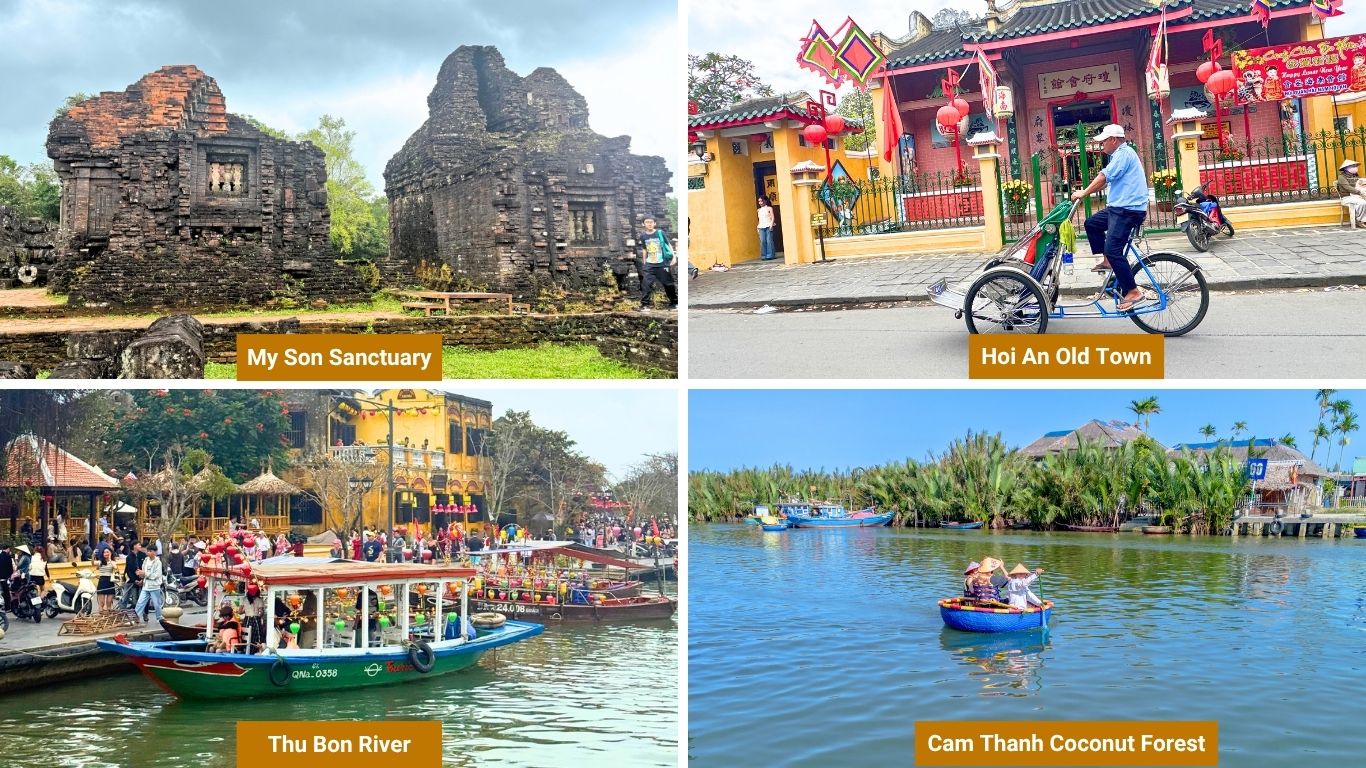
Landscape highlights in Hoi An include:
- Hoi An Ancient Town, visually rich but geographically compact
- Thu Bon River, central to the town’s atmosphere and evening life
- Rice paddies around Cam Chau, peaceful and closely woven into the town’s daily rhythm
- An Bang Beach, a relaxed and less commercialized stretch popular with expats and long-stay travelers
- Tra Que Vegetable Village, a charming farming community where visitors can join hands-on cooking and gardening experiences
- Cam Thanh Coconut Forest, a serene waterway perfect for exploring by traditional basket boat
- My Son Sanctuary, a UNESCO-listed collection of ancient Cham temple ruins set within a jungle valley just outside town
Visual Character: Modern Energy vs Preserved Memory
Da Nang’s visual identity is contemporary and forward-looking. Glass-fronted cafés sit beside seafood stalls. Beach roads feel breezy and informal. The city does not try to freeze itself in time. Instead, it feels alive and evolving, which many travelers find refreshing after visiting more traditional destinations elsewhere in Vietnam.
Hoi An’s beauty is more deliberate. Lantern-lit streets, yellow-walled houses, and wooden shophouses create a strong emotional pull. The town feels like a memory carefully protected. This visual consistency is powerful, but it also means that experiences can begin to repeat visually, especially during peak hours.
The key difference lies in how long the beauty continues to surprise you.
What You Actually Do: Activities That Shape the Experience
Activities in Da Nang and Hoi An do more than fill an itinerary. They quietly shape how travelers move, rest, and feel at the end of each day. Although both destinations offer beaches, culture, and nearby excursions, the way these activities are experienced is very different. In one place, activities are spread across open space and long roads. In the other, they are gathered tightly around a historic core. Understanding this difference helps travelers choose a base that supports their natural travel rhythm, rather than working against it.
Activities in Da Nang: Variety Through Distance and Movement
In Da Nang, activities unfold across a wide physical landscape. Experiences are rarely stacked back-to-back. Instead, they are connected by scenic drives, coastal roads, and natural pauses that allow travelers to reset between stops. This makes days feel balanced rather than full, even when sightseeing is involved.
Beach time often becomes a daily anchor rather than a special event. Cultural and natural attractions are easy to access but never feel overwhelming, because the space absorbs the flow of visitors. After excursions, returning to the city still feels calm, not crowded.
Common Da Nang activities include:
- Relaxed mornings at My Khe or Non Nuoc Beach, often without planning, and easy to fit into any kind of day
- Scenic exploration of Son Tra Peninsula, combining viewpoints, forest roads, and the occasional wildlife sighting
- Visits to Marble Mountains, paired with flexible lunch or cafe stops along the way
- Day trips to Ba Na Hills, famous for the Golden Bridge, or rides along the Hai Van Pass, without any pressure to rush
- Surfing or surf lessons at My Khe Beach, one of the most accessible surf spots in Vietnam for beginners and experienced riders alike
- Motorbike rides along the coastal roads connecting Da Nang to Hoi An, offering some of the most scenic stretches in the country
- Visiting Dragon Bridge on weekend nights to watch the fire and water show that draws both locals and tourists
- Exploring the Museum of Cham Sculpture, home to the world’s largest collection of Cham artifacts, is a worthwhile stop for history lovers
- Kayaking or paddleboarding along the Han River or the coastline, a quieter and more active way to experience the city’s waterways
Activities in Hoi An: Immersion Within a Compact World
Hoi An’s activities are shaped by proximity. Most experiences sit close to one another, which creates an immersive and walkable environment. Days tend to revolve around a small number of key zones, especially the ancient town and its surrounding villages. This closeness encourages slow exploration and repetition, allowing travelers to notice small details over time.
However, because activities are concentrated, days can feel full quickly. Even light plans may involve navigating busy streets or timed experiences. For travelers who enjoy atmosphere and ritual, this feels engaging. For others, it can feel limiting after several days.
Common Hoi An activities include:
-
Walking explorations of the Ancient Town are often repeated at different times
-
Cooking classes and lantern-making workshops are typically scheduled in advance
-
Cycling through Cam Chau rice paddies and nearby villages
-
Short trips to An Bang or Cua Dai Beach, often combined with town visits

Movement and Daily Rhythm: How Your Days Unfold Over Time
How you move through a place and how it feels after a few days are deeply connected. In central Vietnam, this connection is especially clear in Da Nang and Hoi An. Although the two destinations sit close to each other, they shape daily life in very different ways. One encourages expansion and choice. The other encourages stillness and repetition. Understanding this helps travelers avoid choosing a base that feels right on day one but tiring by day three.
Da Nang: Flexible Movement and a Gradual Rhythm
When you stay in Da Nang, movement becomes part of the pleasure rather than a burden. Distances are longer, yet roads are wide, smooth, and scenic. You might spend one morning at the beach, another afternoon driving toward the mountains, and still return to a quiet hotel area in the evening. Travel time feels purposeful, not wasted.
This physical openness shapes the city’s rhythm. Da Nang does not impress all at once. Instead, it reveals itself gradually. Mornings feel spacious and unhurried. Afternoons offer options rather than obligations. Evenings remain relaxed, with locals filling beachfront cafés and river promenades instead of tightly packed tourist zones. The city supports both slow days and active ones without friction.
Because of this balance, Da Nang works well as a longer base. Many travelers feel comfortable staying 4 – 6 nights, especially if they enjoy mixing rest with exploration and appreciate having room to adjust plans as they go.
Hoi An: Close Distances and an Intense, Immediate Rhythm
Hoi An encourages stillness. Most attractions sit close together, making walking or cycling the natural way to move. This is deeply appealing to travelers who want to disconnect from schedules and vehicles. Days often unfold within a small radius, creating a sense of immersion and familiarity.
However, this closeness also shapes the rhythm quickly. Hoi An shines early. The first evenings feel magical as lanterns glow and the old town comes alive. Over time, the town’s small scale amplifies crowds, especially in the early evening. By the third or fourth day, some travelers find themselves adjusting schedules to avoid peak hours or repeating the same routes.
For those who love atmosphere and ritual, this rhythm feels engaging and emotional. For others, it can feel demanding. As a base, Hoi An often feels most comfortable for two to three nights, particularly when paired with quieter mornings or planned excursions beyond the old town.
Crowds and Personal Space
Crowds behave very differently in Da Nang and Hoi An, not just in size but in how they are felt.
Da Nang: Space to Step Away
In Da Nang, crowds rarely dominate the experience, even during peak travel periods. The city’s long coastline, spread-out neighborhoods, and multiple activity zones allow visitors to disperse naturally. Beaches never funnel everyone into the same stretch, and cultural sites sit far enough apart that movement feels fluid rather than congested. You are aware of tourism, but you rarely feel trapped by it.
This sense of space gives travelers flexibility. When one area feels busy, it is easy to shift plans without losing the day. Crowd levels in Da Nang are also closely tied to seasonality and weather patterns. Understanding the best time to visit Da Nang helps travelers enjoy the city at its calmest, especially if personal space and relaxed pacing matter.
Hoi An: Shared Energy in a Small Frame
Hoi An’s crowds feel different because they gather inward. The ancient town becomes the focal point, especially from late afternoon through evening. Narrow streets, lantern-lit walkways, and riverside paths draw visitors into the same compact spaces. For many travelers, this shared energy enhances the atmosphere and creates a strong emotional pull.
However, the same concentration can challenge those seeking quiet or privacy. Timing becomes essential. Early mornings and the right travel season reveal a softer, more intimate side of the town. Planning around crowd patterns, as explained in this guide to the best time to visit Hoi An, makes a noticeable difference in how the experience feels.
Choosing What Fits You Best. Da Nang or Hoi An?
If You’re Planning a Relaxed Holiday or Summer Escape
Da Nang suits travelers who want breathing room and choice. Days can move easily between beach time, light sightseeing, and quiet downtime. Even in summer, the city feels spread out rather than compressed. You can stay flexible, decide plans at the last minute, and enjoy evenings that feel local instead of staged.
This destination works well for beach holidays, longer stays, or travelers who want comfort without committing to a fixed routine. A short Da Nang beach-focused stay fits naturally into this slower, open rhythm.
If You Travel for Atmosphere, Culture, and a Sense of Place
Hoi An appeals to travelers who enjoy immersion over movement. The old town encourages walking, repetition, and lingering moments. Many visitors return to the same streets, cafés, and river views each day, especially in the evenings when the town comes alive.
This is a better match for heritage-focused trips, romantic breaks, or short cultural escapes where mood matters more than space. A curated Hoi An stay-and-explore experience aligns well with travelers who value charm and visual storytelling.
Can You Combine Da Nang and Hoi An?
Absolutely, and for many travelers, this is often the most balanced approach. Staying primarily in one place while visiting the other through private transfers or well-paced day trips allows you to experience both rhythms without the fatigue of constant packing and unpacking. It keeps the journey smooth, especially for travelers who value comfort, flow, and time to actually enjoy each destination.
This combination works particularly well when the itinerary is designed with intention. For example, a short, focused program like the Best of Da Nang and Hoi An – 3 Days tour shows how the two destinations can complement each other when movement is efficient, and experiences are carefully selected. Instead of rushing, travelers get a clear sense of Da Nang’s openness alongside Hoi An’s intimacy, without feeling pulled in two directions.
For longer journeys, this same logic can be extended further. Using one destination as a calm base and visiting the other selectively often results in a more relaxed and rewarding experience than splitting nights evenly between both.
Practical Travel Tips for Da Nang and Hoi An
Before choosing Da Nang or Hoi An, it helps to understand how small practical differences can shape the entire experience. These tips often matter more than landmarks.
- Getting Around and Daily Pace
Da Nang is spread out, so private cars, taxis, or ride-hailing apps work best. This setup suits travelers who prefer door-to-door comfort and flexible schedules. In contrast, Hoi An is compact. Walking and cycling feel natural, but movement stays within a smaller radius.
If mobility and ease matter most, Da Nang feels lighter. If routine and walkability appeal to you, Hoi An feels intuitive.
- Weather Awareness and Timing
Both destinations share central Vietnam’s climate, yet they feel different under the same weather. Da Nang handles heat better due to coastal breezes and wider streets. Hoi An can feel warmer and busier, especially during humid afternoons.
When deciding between Da Nang and Hoi An, weather tolerance plays a quiet but important role.
- Crowds and Daily Rhythm
Da Nang absorbs visitors easily. Even in high season, beaches and neighborhoods spread people out. Hoi An concentrates activity into the old town, especially after sunset.
Travelers who value personal space usually lean toward Da Nang. Those who enjoy shared energy may prefer Hoi An.
FAQs
Is Da Nang or Hoi An better for a first-time visit to Central Vietnam?
For many first-time visitors, Da Nang feels easier to navigate. The city offers space, modern infrastructure, and flexible day trips. However, travelers who prioritize heritage and atmosphere may find Hoi An more immediately engaging.
Which destination works better for a relaxed beach holiday?
Da Nang is better suited for a beach-focused stay. Its long coastline, wide beaches, and resort areas allow for swimming, walking, and quiet downtime. Hoi An’s beaches are pleasant, yet the town itself remains the main focus rather than seaside relaxation.
Is Da Nang or Hoi An more comfortable for older travelers or those seeking ease?
Da Nang often feels more comfortable due to shorter transfers, wider streets, and hotels designed for privacy and space. Hoi An suits travelers who enjoy walking and staying within a compact area, though evenings can become crowded.
Can travelers stay in one place and still experience both Da Nang and Hoi An?
Yes. Many travelers choose to stay in Da Nang and visit Hoi An through short private transfers or half-day excursions. This approach allows you to experience both environments without frequent hotel changes.
Which destination feels more authentic overall?
Hoi An offers a preserved historical setting with a strong visual identity. Da Nang reflects everyday coastal life with a modern rhythm. Authenticity depends on whether you are drawn to heritage or contemporary local culture.