

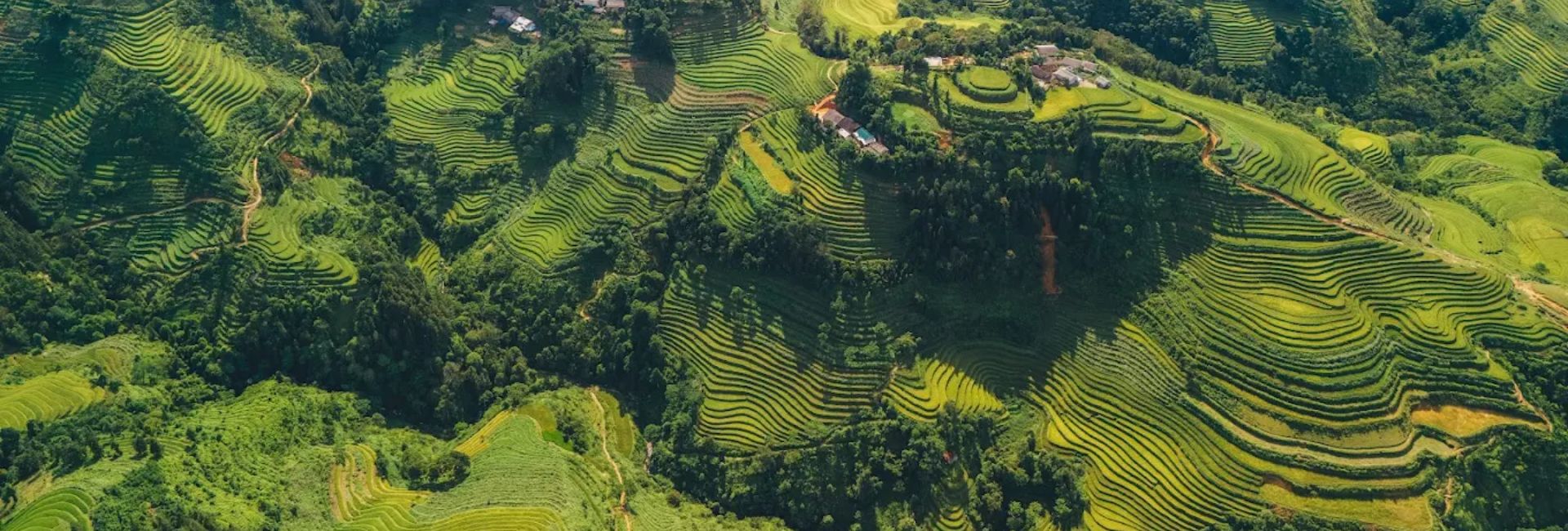
If you’re planning to ride the Ha Giang Loop in July, you’re making a better decision than you might think. Most travelers time their trip for October, when the buckwheat flowers bloom, and the terraces turn gold. But July brings something different: a landscape so deeply, vividly green that it barely looks real, and roads quiet enough that you can stop at any viewpoint without fighting for space.
Yes, July sits in the middle of the rainy season. Yes, there will be afternoon showers. But that’s exactly what feeds the waterfalls, fills the terraces, and wraps the limestone peaks in cloud. And for a brief window in late June to early July, something extraordinary happens in Hoang Su Phi: the flooded paddies reflect the sky like mirrors before the rice shoots grow in. This phenomenon, known locally as Mua Nuoc Do (water pouring season), creates one of the most photogenic landscapes in northern Vietnam, one that most visitors simply never see because they arrive at the wrong time.
If you’re willing to embrace the weather and pack smart, the Ha Giang Loop in July rewards you with scenery that autumn can’t match and crowds that peak months won’t allow.
What can you find in this travel blog?
- Is July a Good Time to Do the Ha Giang Loop?
- Ha Giang Weather in July
- Best Places and Landscapes Along the Loop in July
- Things to Do on the Ha Giang Loop in July
- Crowds and Travel Costs in July
- What to Pack for the Ha Giang Loop in July
- Sample 4-Day Ha Giang Loop Itinerary for July
- July Travel Tips for the Ha Giang Loop
- FAQs About the Ha Giang Loop in July
Is July a Good Time to Do the Ha Giang Loop?
The short answer is yes, with eyes wide open. July isn’t a compromise. It’s a different kind of experience, and for the right traveler, it’s genuinely the best time to ride. Here’s what to know before you commit.
What Makes July Special on the Loop?
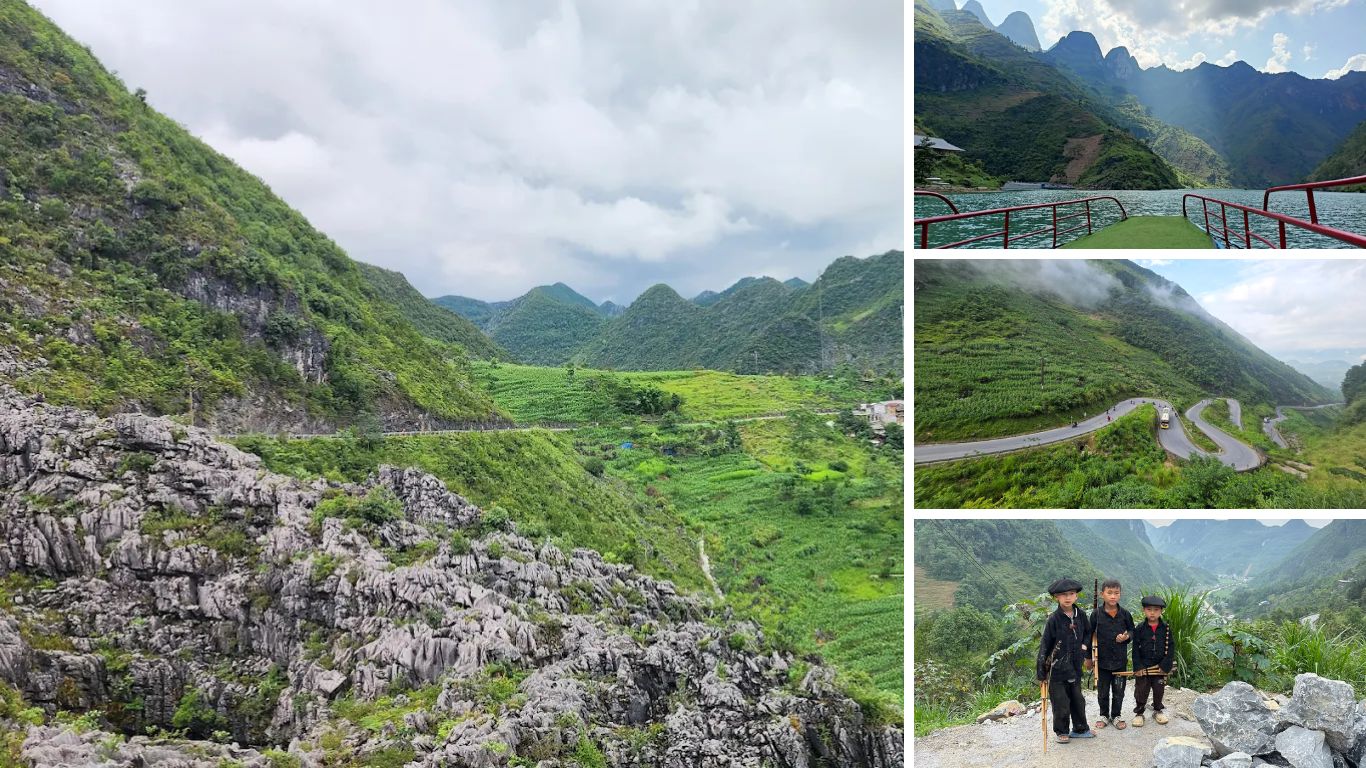
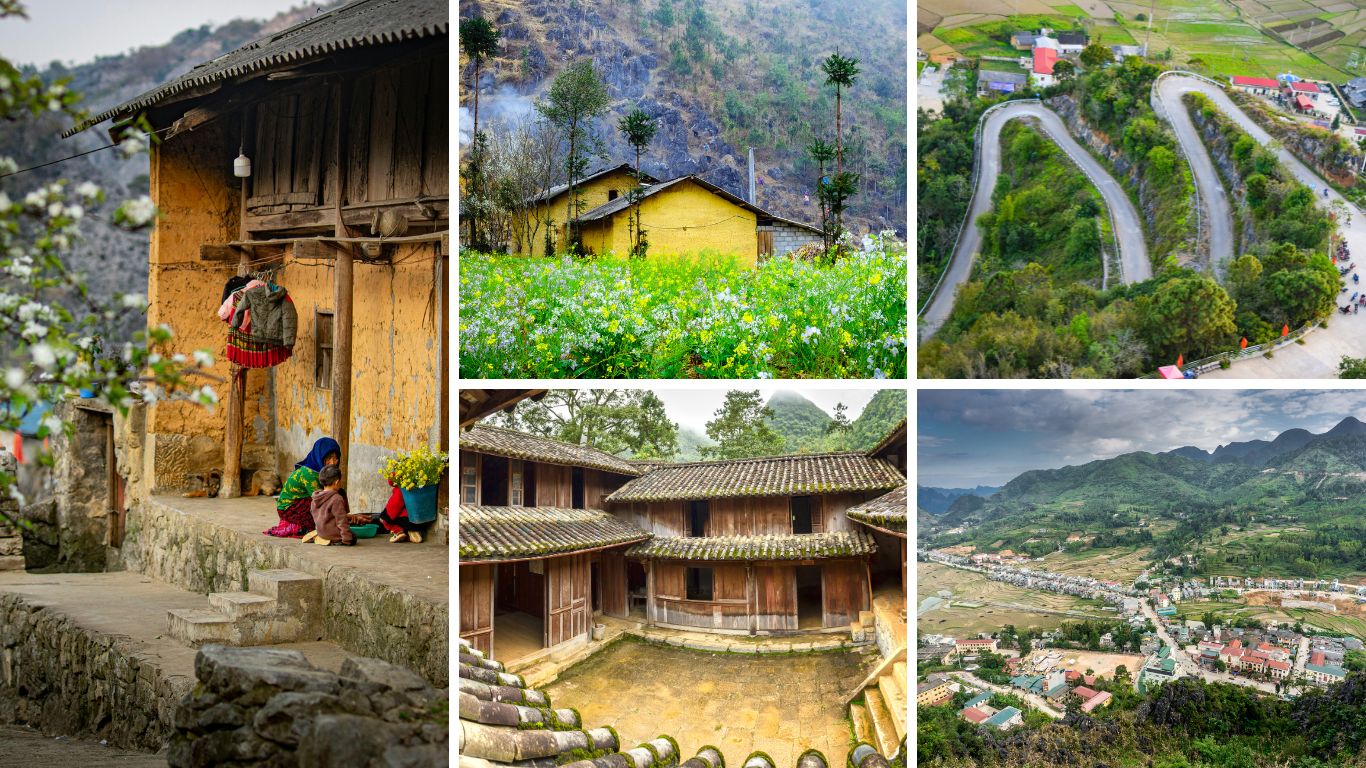
The mountains are at their greenest. Every slope, every terrace wall, every valley road between Ha Giang city and Dong Van is draped in rich emerald, and the contrast against the grey limestone peaks of the Dong Van Karst Plateau is something no other season delivers. The rice terraces are in active growth, the rivers run full, and the waterfalls that barely trickle in spring become genuinely dramatic.
International tourist numbers are low too. You’ll have the viewpoints largely to yourself, homestay hosts are less stretched, and accommodation prices drop noticeably. It’s the kind of trip where the loop feels like it belongs to you.
Pros and Cons of Riding the Ha Giang Loop in July
Every season has its trade-offs, and July is no different. Knowing them up front means you can plan around them rather than be caught off guard.
- The upsides are hard to argue with:
- Lush, cinematic green scenery across the entire loop
- Fresh mountain air and cool temperatures after rainfall
- Lower guesthouse and homestay rates compared to autumn
- Quieter viewpoints and a more relaxed pace overall
- But go in with realistic expectations:
- Afternoon rain showers are frequent, sometimes heavy
- Some mountain roads become slippery after downpours
- Fog can roll in and reduce visibility on the passes
- Vietnamese domestic tourism peaks during the summer school holidays, so you’ll share the road with local families and student groups, particularly around Dong Van. It won’t feel crowded by autumn standards, but it’s worth knowing
Ha Giang Weather in July
Ha Giang’s weather in July is best described as dynamic. Sunshine, cloud, rain, and mist can all arrive within the same afternoon, and that unpredictability is part of what makes the landscape so alive. Understanding the patterns helps you plan your days well and stay safe on the road.
Average Temperature and Climate
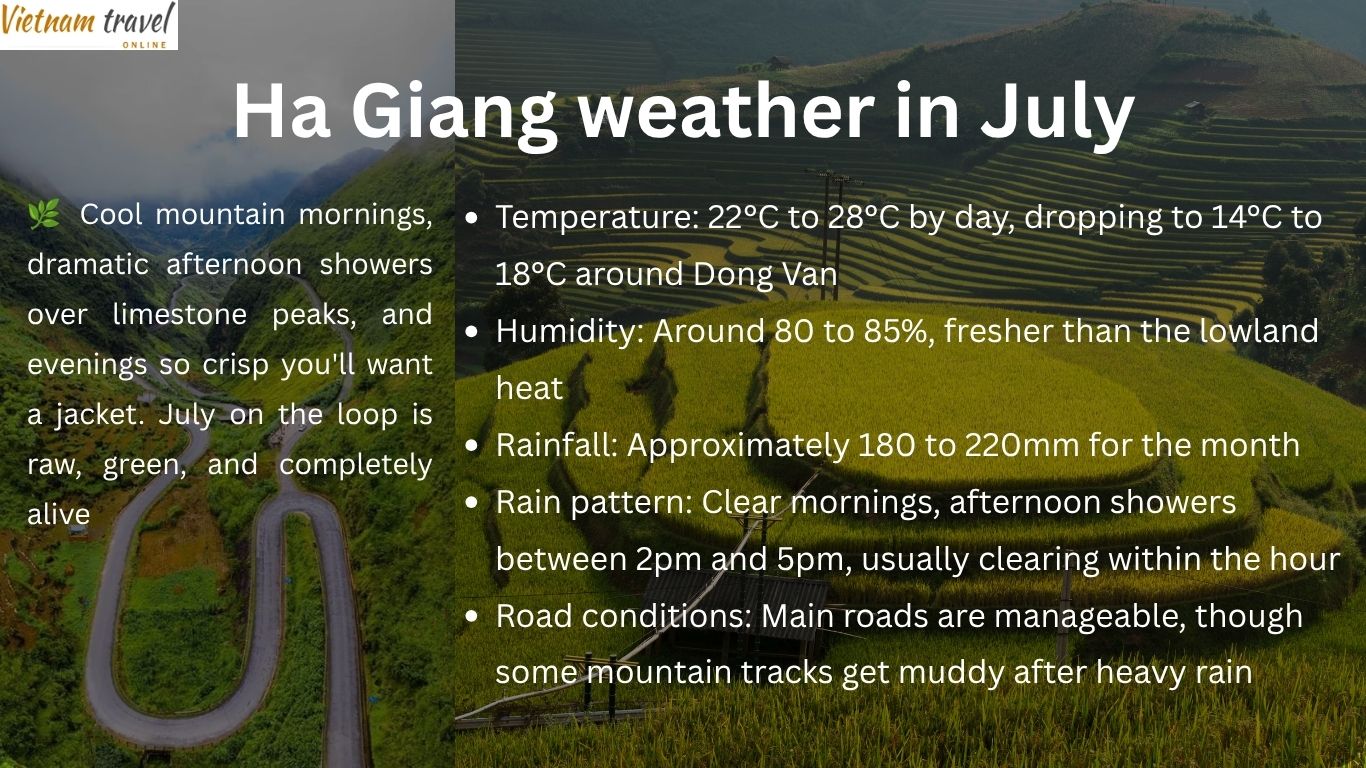
Daytime temperatures across the loop typically sit between 22°C and 28°C (72°F to 82°F), though higher-altitude areas like Dong Van and the Quan Ba Pass feel noticeably cooler, especially after rain. Evenings drop further, often into the mid-teens at elevation, so a light layer is always worth having in your bag.
Compared to Hanoi, which is hot and sticky in July, Ha Giang feels refreshingly mild. The mountain air is cleaner, the humidity is high but not oppressive, and the breeze along the passes keeps things comfortable even in the middle of the day. For a deeper look at how the seasons shift across the year, the Ha Giang weather and best time to visit guide breaks it down month by month.
Rainfall and Road Conditions
Rain in July follows a fairly predictable rhythm: mornings tend to be clear and bright, afternoons bring showers, and evenings can go either way. The heaviest rain usually falls between 2 pm and 5 pm, which makes early starts one of the smartest moves you can make on the loop.
Road conditions vary depending on where you are. The main paved sections handle rain reasonably well, but narrower mountain tracks and the descent toward Du Gia can get muddy and slippery after sustained downpours. Landslides, though uncommon, do occur on steeper sections during heavy rain. For riders who aren’t confident on wet roads, booking a private car tour through the loop is a genuinely smart option, not a shortcut.
What to Expect During a Typical July Day
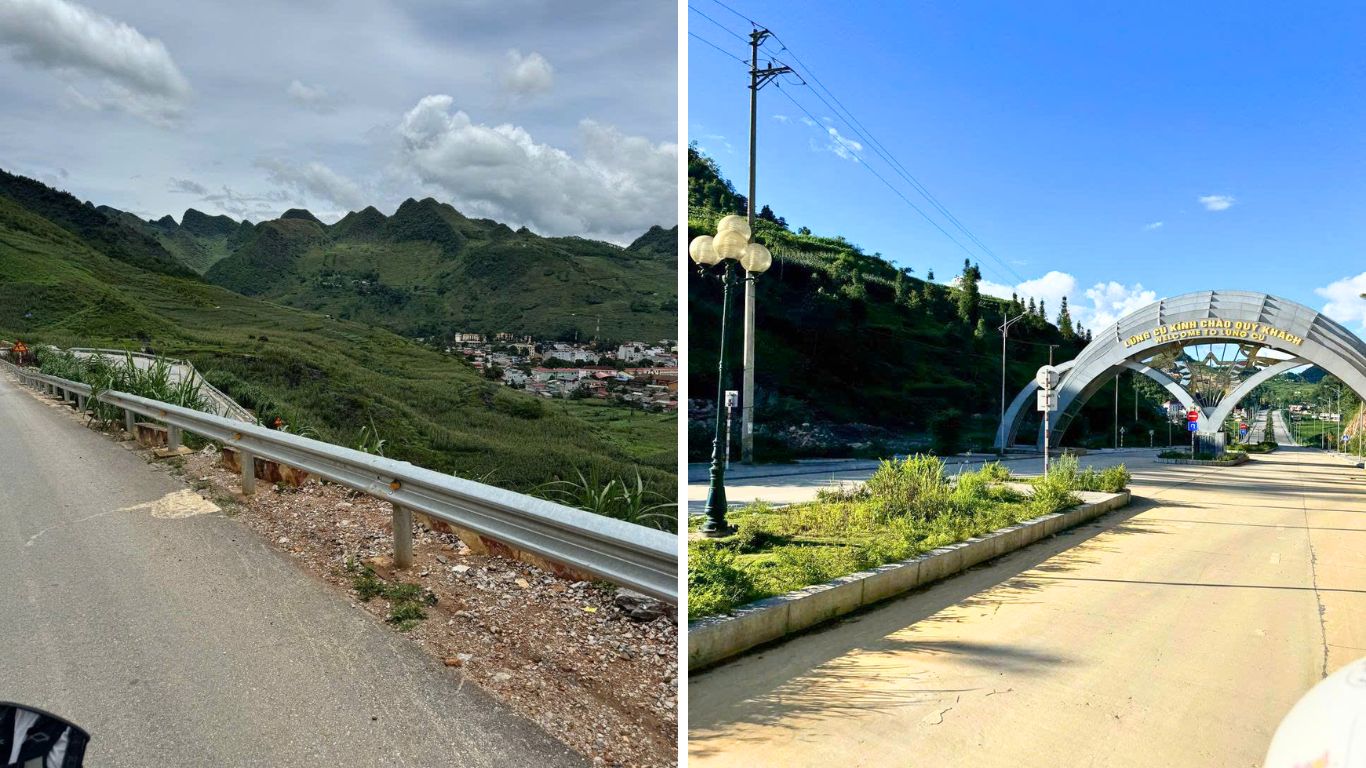
Your mornings are your best asset. Most days open clear, with golden light across the terraces and good visibility on the passes. That’s your window for riding and photography. By early afternoon, the clouds build, the temperature cools slightly, and rain tends to follow. The sensible move is to stop somewhere, eat well, and wait it out. By evening, the air turns crisp, and the mountains often emerge from the mist looking like a watercolor painting.
Best Places and Landscapes Along the Loop in July
The Ha Giang Loop is full of highlights year-round, but July brings out a specific kind of beauty that other seasons simply can’t replicate. From mirror-like flooded terraces to mist-draped passes and thundering waterfalls, this is where to focus your time and your camera.
Hoang Su Phi: Mirror Terraces and the Green Transition
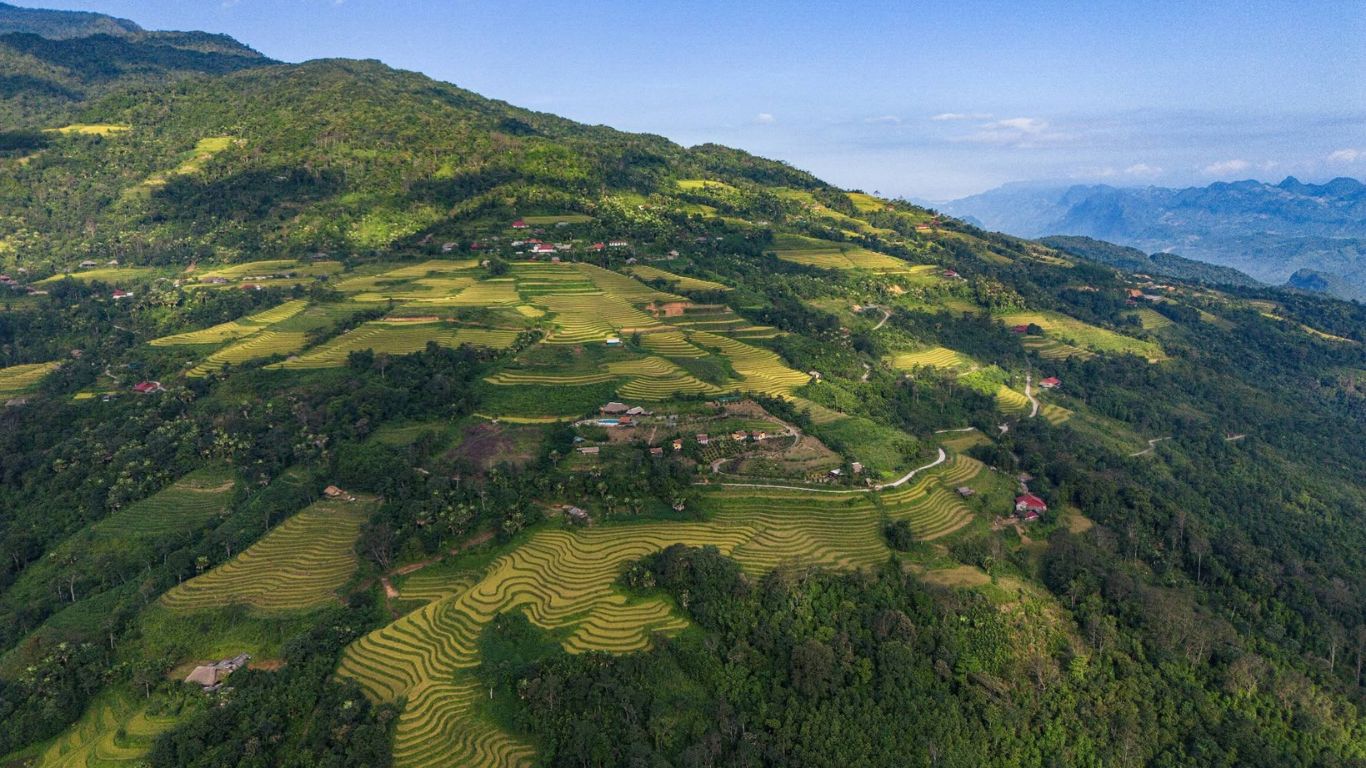
Hoang Su Phi is worth the detour any month, but in late June and early July, it becomes something else entirely. This is when Mua Nuoc Do takes hold: the terraces are flooded before planting, and on calm mornings the water reflects the sky, the trees, and the surrounding hills in perfect symmetry. It’s a mirror effect that disappears once the rice shoots grow in, making this a genuinely narrow window that rewards those who time it right.
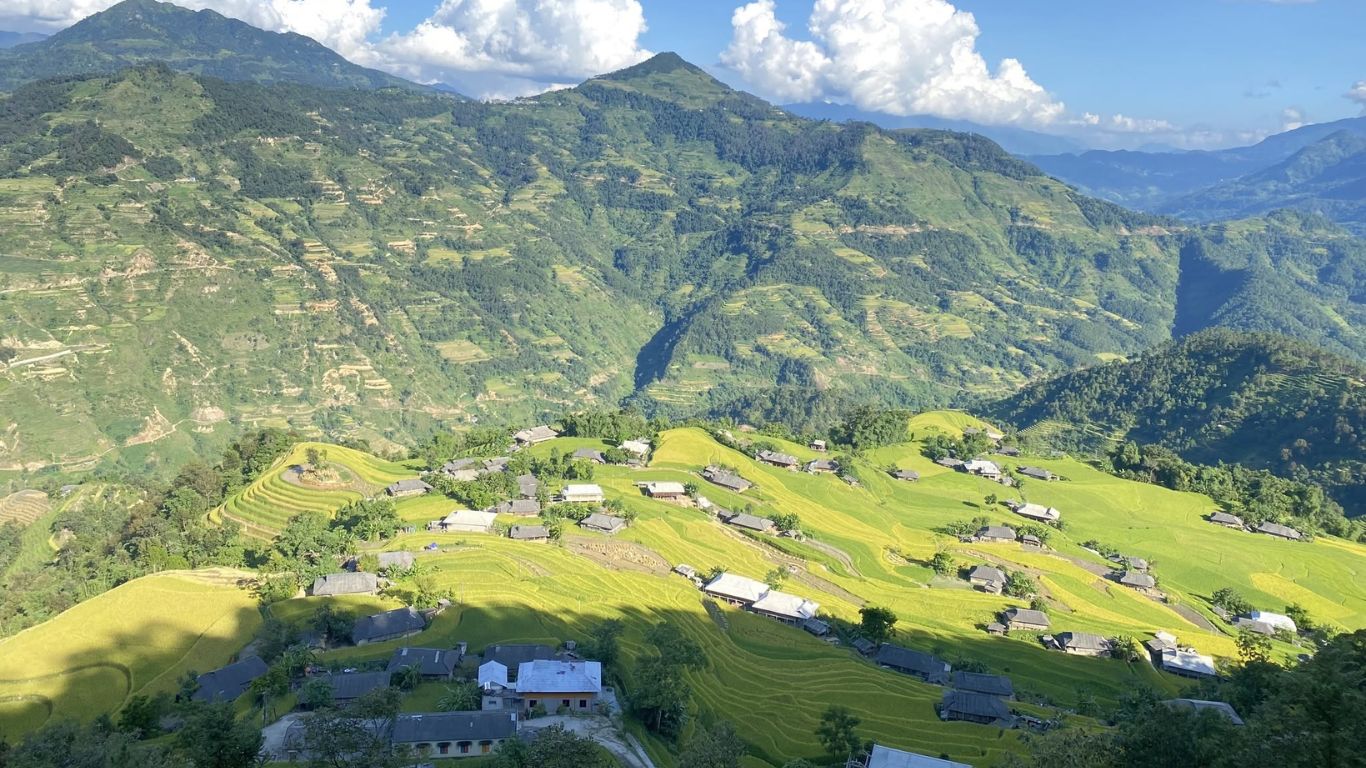
By mid-July, the green has fully taken over, and the terraces shift from reflective to lush. Both phases are photogenic in completely different ways. Our team can help you build a custom private itinerary that captures both.
Dong Van Karst Plateau
The Karst Plateau looks dramatically different in July than it does in the dry season. The stark, rocky landscape softens under a layer of green, and the peaks are frequently wrapped in low cloud after rainfall, creating an almost otherworldly atmosphere. The old town itself is worth an afternoon, with its French-colonial shophouses and quiet stone alleyways. For more on what makes Dong Van worth the journey, the Ha Giang travel guide covers it in depth.
Ma Pi Leng Pass and Nho Que River
Ma Pi Leng is one of Vietnam’s great mountain drives regardless of season, but July gives it a particular drama. Mist clings to the cliffs below, the Nho Que River runs a deep jade green from the rainfall upstream, and the sheer scale of the gorge feels even more pronounced when the clouds shift across the peaks. Go early, go slowly, and stop often.
Yen Minh Pine Forests and Valley Roads
The stretch between Yen Minh and Dong Van is one of the most underrated drives on the loop, and in July it’s extraordinary. Pine forests line the ridgeline, the valleys below are thick with green, and the road winds through a series of bends that keep revealing new views. It’s easy to rush through in the push toward Dong Van, but this section deserves a slower pace.
Du Gia Village
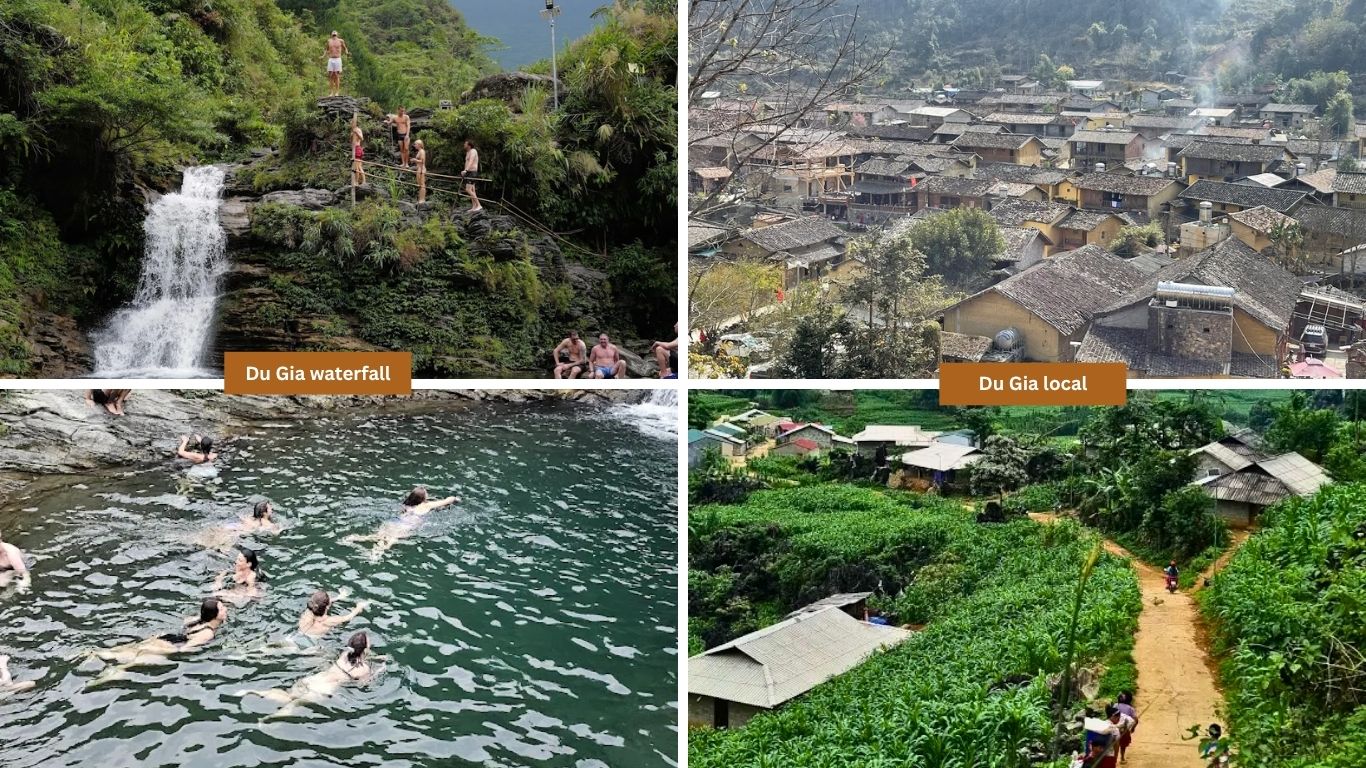
Du Gia is the kind of place that makes you want to stay longer than planned. Set among rice fields with a river running alongside and seasonal waterfalls tumbling down the surrounding hills, it’s one of the most beautiful stops on the loop and one of the best places to slow down in July. The waterfalls are at their most powerful after rain, and the swimming spots in the mountain streams are genuinely refreshing. Note that the road down to Du Gia can get muddy after heavy rain, so ask locals about conditions before leaving Dong Van.
Things to Do on the Ha Giang Loop in July
The loop isn’t a destination you experience through a checklist. It’s a route you move through, stop in, and absorb. That said, July comes with its own rhythm, and knowing how to work with the weather rather than against it makes a real difference.
Ride the Loop Early and Often
Starting early is everything on the Ha Giang Loop in July. You get the best light, the clearest roads, and the calmest weather before the afternoon showers roll in. If you’re not confident riding on wet mountain roads, a private driver lets you focus on the scenery rather than the surface. Our team arranges both self-guided and fully guided loop experiences tailored to your pace and comfort level.
Visit Local Markets on Rainy Afternoons
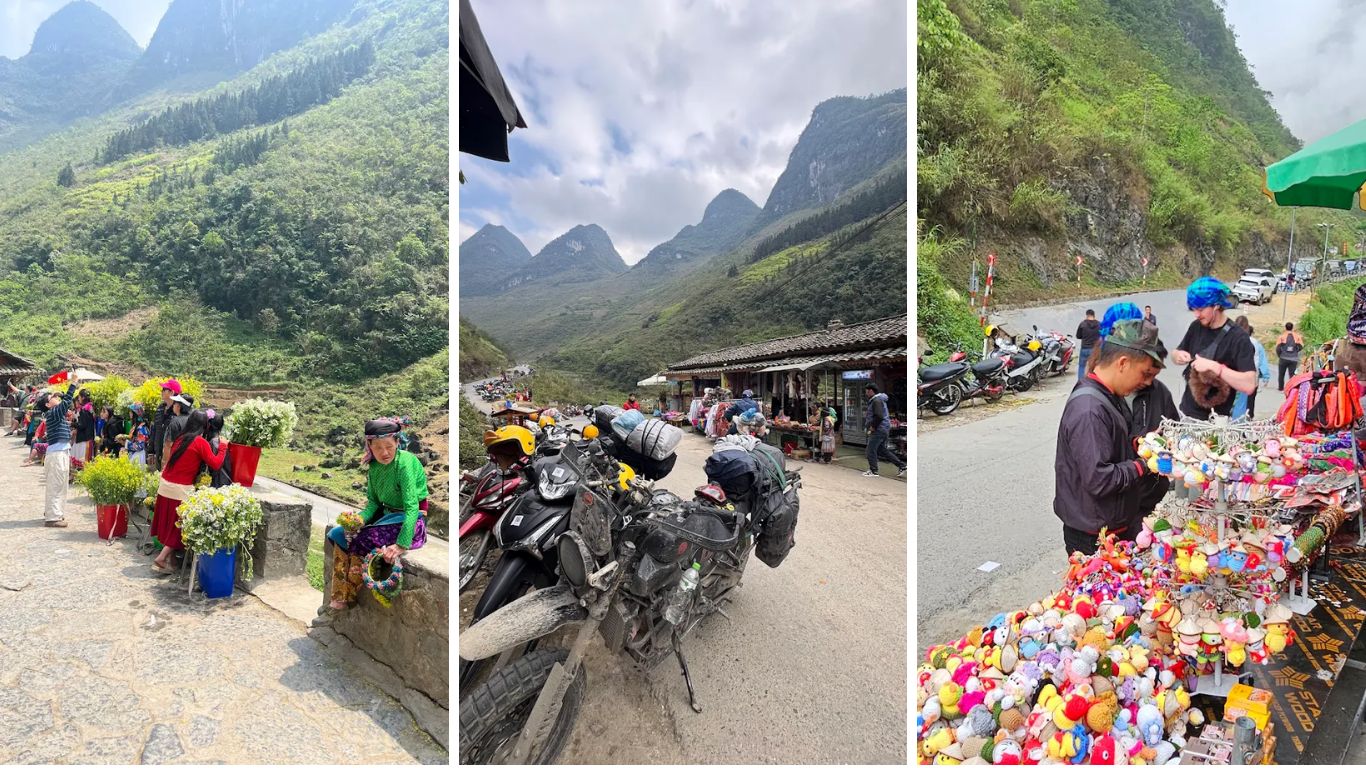
When the afternoon rain hits, and the road ahead looks uninviting, a local market is one of the best ways to spend your time. The Sunday market in Dong Van and the weekly markets in smaller towns along the loop give you a window into highland minority culture that no viewpoint can. Hmong, Tay, and Dao communities come down from the surrounding villages, and the colour, noise, and produce on display are worth the detour in any weather.
Stay with Local Families in Traditional Homestays
Homestays along the Ha Giang Loop aren’t just a budget accommodation option. They’re one of the best parts of the trip. Staying with a local family in villages around Yen Minh, Dong Van, or Du Gia puts you closer to the daily rhythms of the mountains: shared meals, early mornings, rice wine if you’re offered it. Our team can recommend and book vetted homestays to match your itinerary. Reach out at [email protected] to get options sorted before you travel.
Chase Cloud Oceans After Summer Rainfall
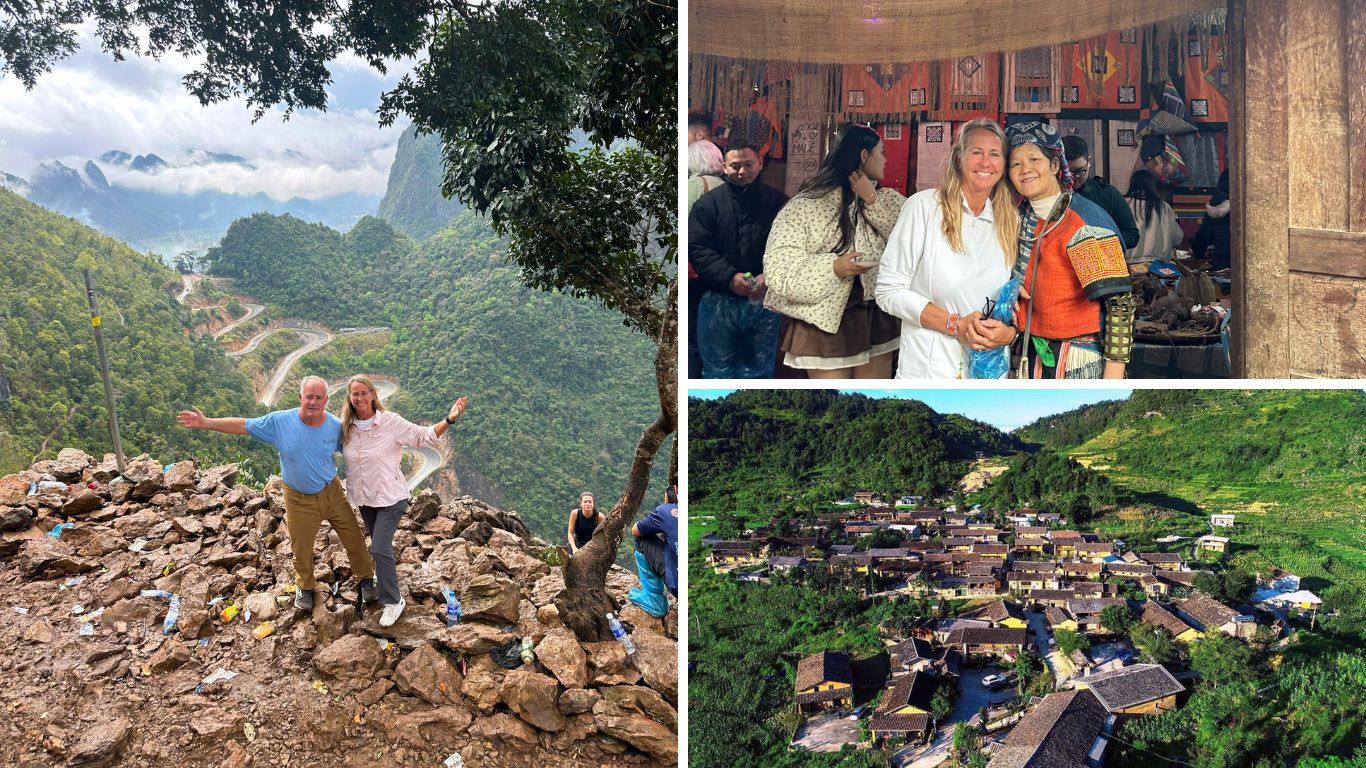
One of July’s quiet rewards is the sea-of-clouds effect that appears after heavy rain, particularly in the early morning. The valleys fill with mist, and from the higher passes you look down over a white ocean with limestone peaks rising out of it. The viewpoint above Quan Ba, also known as the Fairy Bosom viewpoint, and the plateau above Dong Van are two of the best places to catch this. Set your alarm.
Cool Off in Mountain Streams
The streams running through Ha Giang in July are clean, cold, and genuinely inviting after a hot morning on the road. Du Gia is the best base for this, with several swimming spots along the river that locals use throughout the summer. It’s the kind of unplanned moment that tends to become a highlight of the trip.
Slow Down in Dong Van Old Quarter on a Rainy Afternoon
Not every hour on the loop needs to be spent moving. When the rain settles in over Dong Van, the old quarter becomes one of the most atmospheric places to simply sit. The French-colonial architecture, the quiet stone lanes, and a cup of local tea in a small cafe make for a genuinely good afternoon, and a practical one: waiting out the rain in comfort means you hit the road again when conditions are better.
Planning the Ha Giang Loop in July but not sure where to start? Our team at Vietnam Travels Online specialises in private loop tours, guided itineraries, and custom routes that work around the July weather. Whether you want a fully supported private car experience or a guided motorbike journey with local expertise, we’ll handle the details so you can focus on the ride. Get in touch at [email protected] or browse our Ha Giang tour options to find the right fit.
Crowds and Travel Costs in July
One of the strongest arguments for doing the Ha Giang Loop in July is the combination of quieter roads and lower prices. But “quiet” doesn’t mean empty, and it’s worth understanding who you’ll be sharing the route with.
Is the Ha Giang Loop Crowded in July?
International backpacker numbers are well below the autumn peak. You won’t be queuing at viewpoints or hunting for the last homestay bed. However, Vietnamese domestic tourism is at its summer high during July and August, driven by school holidays. Families and student groups are a visible presence, particularly in Dong Van town and around the more accessible sections of the loop. It gives the region a livelier, more local feel than October, which suits some travelers perfectly and surprises others. Overall the experience is significantly less crowded than peak season. If you’re weighing Ha Giang against other northern destinations, the Ha Giang versus Cao Bang comparison is worth a read.
Hotel and Homestay Prices
Accommodation prices in July are noticeably lower than in September and October. Guesthouses and homestays along the loop are easier to book, and many offer better rates without the need to reserve weeks in advance. For those wanting a more comfortable base, small boutique guesthouses in Ha Giang city and Dong Van town offer good value. Our team can arrange accommodation along the loop to match your budget and style, whether that’s a simple local homestay or a well-positioned guesthouse with a view.
Tour Availability
July is a reliable month for joining or booking a guided loop experience. Motorbike tours, private car tours, and fully guided itineraries are all available, and operators are generally less stretched than in autumn. If you’re weighing up how to tackle the loop, the guide on whether foreigners can ride the Ha Giang Loop by motorbike is a useful starting point before you decide.
What to Pack for the Ha Giang Loop in July
Packing for the loop in July is mostly about staying dry without overloading your bag. The temperatures are mild, the days are long, and the rain is manageable if you’re prepared for it.
Rain Gear Essentials
A waterproof jacket is non-negotiable, not just for comfort but for safety on a motorbike when the temperature drops during a downpour. Quick-dry clothing is worth prioritising over cotton, which stays damp for hours after rain. A waterproof cover for your backpack rounds out the basics and keeps everything inside dry when you’re caught on the road mid-shower.
Footwear for Mountain Travel
Grip matters more than style in July. Non-slip shoes or trail runners are the practical choice for walking on wet paths, slippery stone steps, and muddy tracks around waterfalls and village trails. A pair of sandals is useful for evenings and for crossing streams where you’d rather not soak your main shoes.
Camera Protection and Electronics
Your camera and phone will face humidity, unexpected rain, and the occasional very wet road. A waterproof dry bag or a ziplock system inside your pack is simple and effective. A portable power bank is worth carrying too: charging options in smaller villages and homestays can be inconsistent, and you don’t want a dead battery when the clouds break over Ma Pi Leng.
Sample 4-Day Ha Giang Loop Itinerary for July
Four days is a comfortable pace for the main loop, giving you enough time to stop, explore, and wait out rain without feeling rushed. This route follows the classic circuit and focuses on the experiences that are at their best during the green season.
Day 1: Ha Giang City to Yen Minh
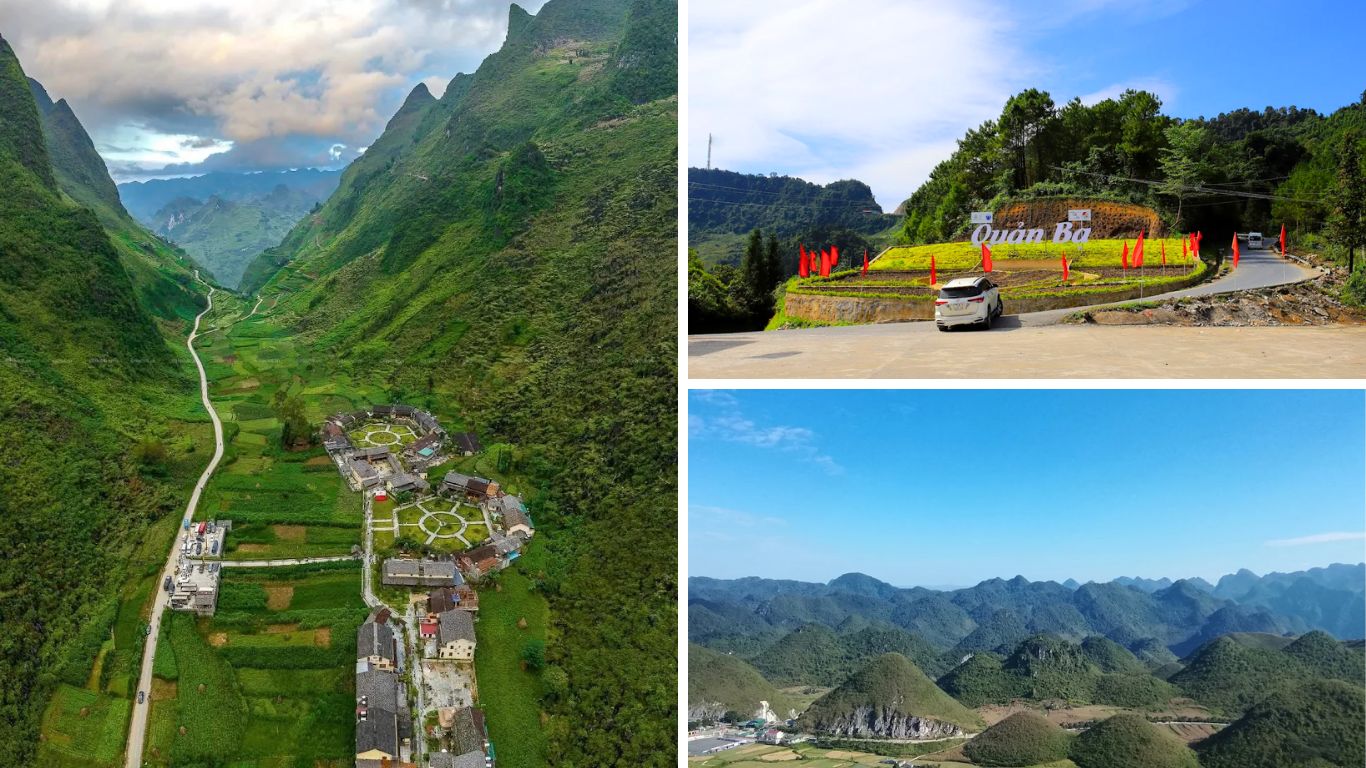
The first day eases you in with some of the loop’s most rewarding early scenery. Leaving Ha Giang city in the morning, you pass through the Quan Ba Pass and the iconic twin-hill viewpoint before dropping into the pine-forested valley toward Yen Minh. July light through the pines is extraordinary in the early hours, so don’t be tempted to sleep in. Yen Minh is a quiet town with good local food and a relaxed pace, making it an ideal first night.
Day 2: Yen Minh to Dong Van
This stretch takes you deeper into the karst landscape, with the terrain becoming more dramatic as you push north. The road to Dong Van winds through rocky passes and green valleys, with several viewpoints worth stopping at along the way. Dong Van old quarter is your base for the night, and an evening walk through the stone lanes is a good way to settle in before the bigger riding day ahead.
Day 3: Dong Van to Du Gia
Day 3 includes Ma Pi Leng Pass, the undisputed highlight of the loop. Ride it in the morning for the best light and clearest conditions, then descend toward the Nho Que River before continuing south toward Du Gia. One important note: before leaving Dong Van, ask locals or your guesthouse about road conditions on the descent to Du Gia. After heavy rain, this section can get muddy and prone to minor debris. Taking it slow and checking conditions first is simply good practice in July.
Day 4: Du Gia to Ha Giang City
The final day brings you back through rice field valleys and quieter roads toward Ha Giang city. Du Gia’s morning light over the fields is worth getting up early for, and if the waterfall is running well after recent rain, it’s worth a quick stop before you leave. The return leg is generally straightforward and makes for a satisfying close to the loop.
July Travel Tips for the Ha Giang Loop
A few practical habits make a significant difference to how smoothly a July loop runs:
- Start early every day. Mornings are your best weather window. Getting the big riding done before lunch means you’re rarely caught out on exposed passes in a downpour.
- Check forecasts before long rides. A basic weather app gives you a reasonable read on what’s coming. It won’t be perfect in the mountains, but it helps you make smarter calls about when to push on and when to wait.
- Build in extra travel time. Wet roads, photo stops, and the occasional road check all slow things down. Treating your daily distances as flexible rather than fixed makes for a much more enjoyable trip.
- Waterproof everything valuable. Phone, passport, cash, and camera all need protection. A dry bag or a simple ziplock system inside your pack is enough.
- Consider a private driver if you’re unsure about wet-road riding. A private car lets you see exactly the same scenery with far less stress. Browse our private Ha Giang tour options to find the right fit.
FAQs About the Ha Giang Loop in July
Is July part of the rainy season in Ha Giang? Yes, July falls within the rainy season, which generally runs from May to September. Expect frequent afternoon showers, though mornings are usually clear and the loop is completely rideable with the right preparation.
Can I do the Ha Giang Loop in July? Absolutely. The loop runs year-round and July is one of the greenest and most scenic months to ride it. Wet roads require extra caution on certain sections, and a private car is a solid alternative for those who prefer not to ride in variable conditions.
Are rice terraces green in July? Yes, fully. By July the terraces are in active growth and the entire mountainside turns a vivid layered green that’s completely different from the golden tones of autumn harvest season.
Is July cheaper than September and October? Generally yes. Accommodation is easier to find and rates are lower than during the autumn peak. See the Crowds and Costs section above for more detail.
How many days should I spend on the Ha Giang Loop in July? Four days covers the main loop at a comfortable pace. Adding a day or two for Hoang Su Phi or slower exploration around Du Gia is worthwhile if your schedule allows.
What should I pack for the Ha Giang Loop in July? A waterproof jacket, quick-dry clothing, non-slip shoes, and a dry bag for electronics cover the essentials. The full breakdown is in the What to Pack section above.
Is July suitable for photography on the Ha Giang Loop? Very much so. The green terraces, post-rain mist, cloud oceans, and mirror effect at Hoang Su Phi all make July one of the most photogenic months on the loop, even if you need to work around the afternoon rain.