

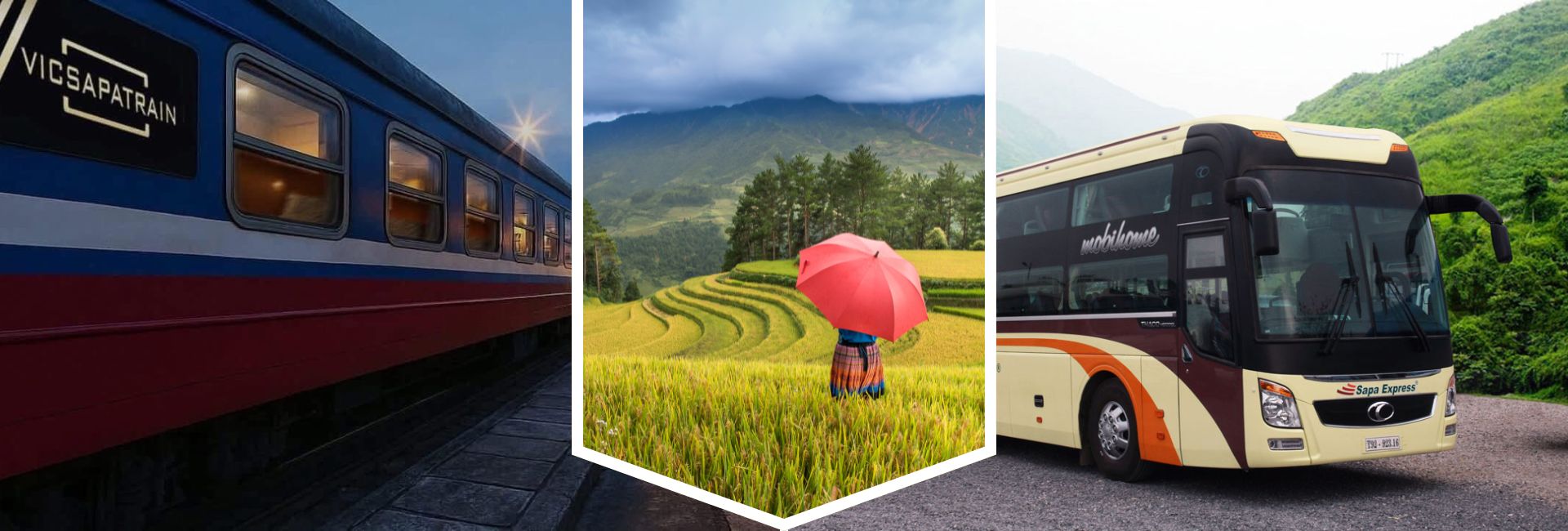
Traveling from Hanoi to Sapa is a long overnight journey, and the choice between a train and a sleeping bus to Sapa directly affects how rested you feel. Both are popular among travelers, but they offer very different experiences in comfort, sleep quality, and scenery. So, which one will be better, for whom, and how? This guide shares practical insights, from small details to the overall journey, helping you choose the option that best fits your travel rhythm.
What can you find in this travel blog?
- How Travelers Get to Sapa from Hanoi
- Taking the Train to Sapa: What to expect
- Taking the Sleeping Bus to Sapa: The Experience
- Train or Sleeping Bus to Sapa: Experience-Based Comparison
- Which Option Fits Your Travel Style Best
- How to Book Your Journey to Sapa
- Planning Sapa: Timing, Activities, and Comfort
- Planning Your Sapa Experience Beyond the Journey
- FAQs
How Travelers Get to Sapa from Hanoi
Why Sapa Has No Train Station?
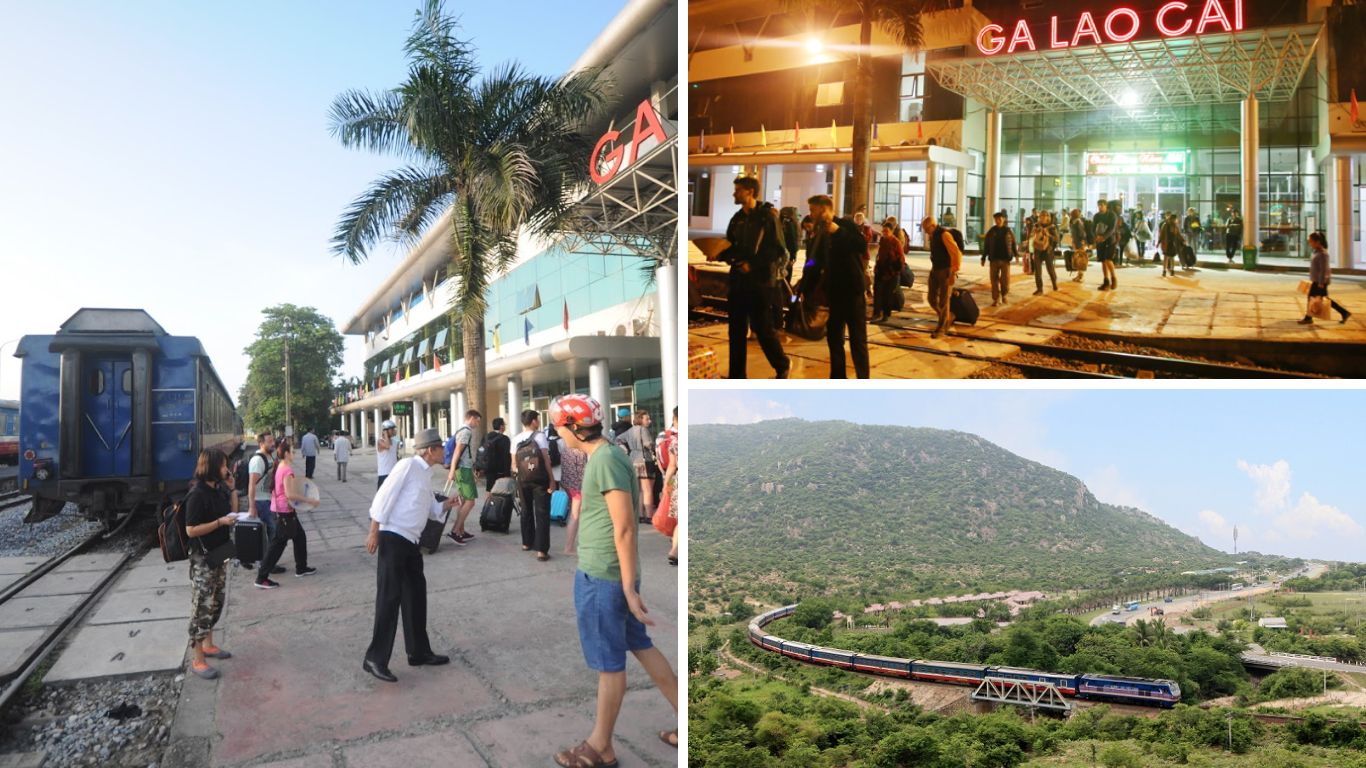
Sapa itself has no railway line, which is why all trains stop at Lao Cai. From there, you must take a short road transfer into the mountains. This structure is predictable and allows you to plan rest, meals, and luggage handling carefully.
Two Common Overnight Routes
Travelers generally pick one of two overnight routes: a train to Lao Cai followed by a short road transfer into the mountains (about 8–9 hours on the train, plus an hour on the road), or a direct sleeping bus all the way to Sapa town (around 5.5–6 hours). Both have their charm. The train feels more relaxed and restful, while the bus is quicker and easier on the wallet, though your body will feel the winding roads by morning.
Taking the Train to Sapa: What to expect
Route and Travel Flow
Evening trains leave Hanoi for Lao Cai, with arrivals in the early morning. After arrival, a road transfer takes you through valleys and small villages into Sapa town. This gradual transition into the mountains allows travelers to adjust slowly, making the arrival less abrupt.
What You See Along the Way
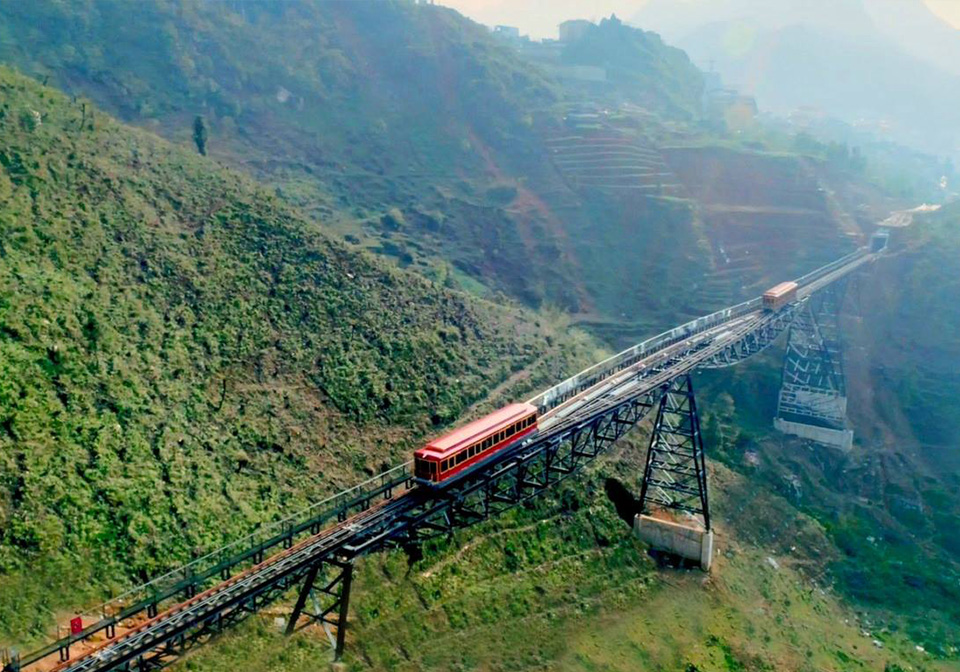
Nighttime travel means you will miss most scenery initially. However, by dawn, the train approaches lush river valleys, rice terraces near Lao Cai, and distant mountain ranges. The short transfer into Sapa provides your first real mountain views, making it feel like a gentle introduction.
Sleeping Experience and Body Comfort
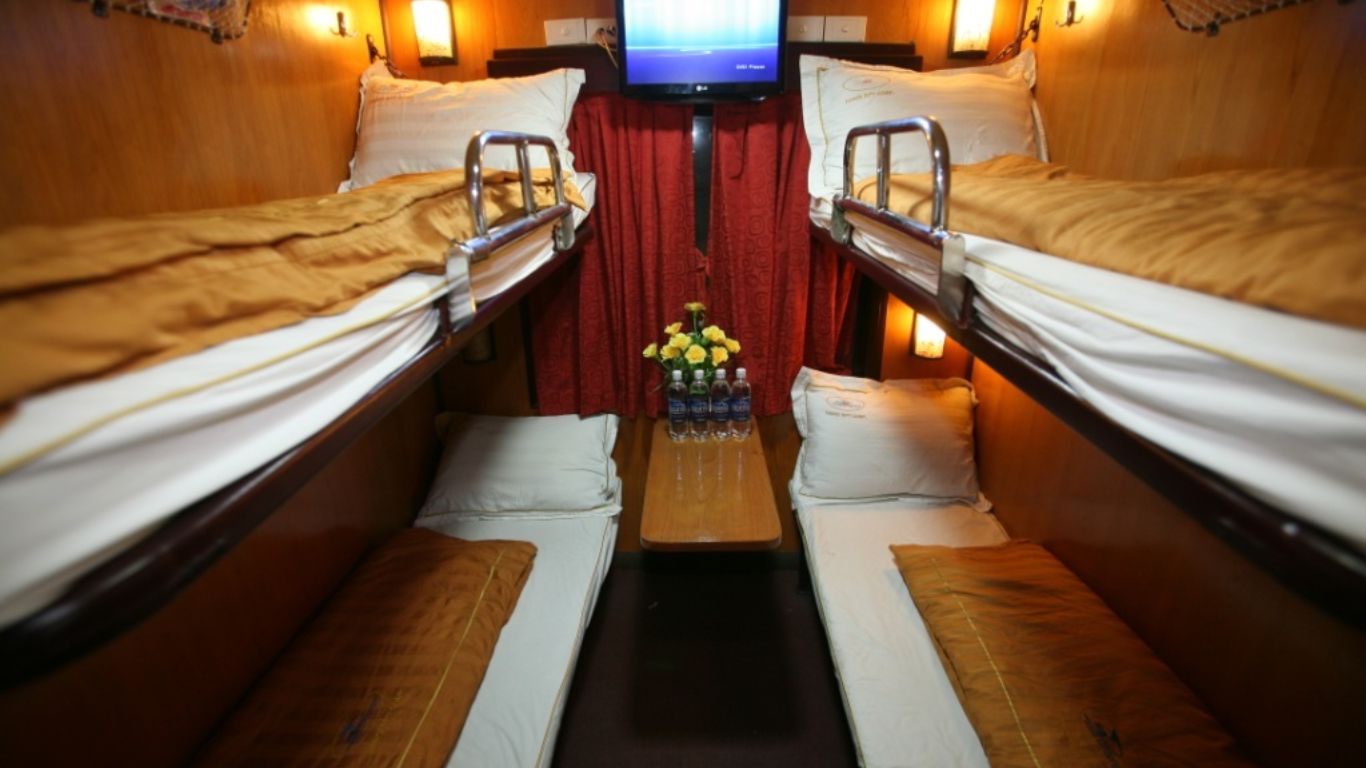
Trains offer stable movement, allowing your body to relax fully. Soft sleeper cabins provide ample space, quieter surroundings, and better bedding than buses. Hard sleepers are functional but slightly less private. Many travelers sleep in longer stretches, arriving with minimal fatigue.
Emotional Experience
The structured schedule of the train helps travelers mentally disconnect overnight. The calm movement, predictable stops, and soft lighting create a relaxed atmosphere. By the time you step off the train, you often feel mentally and physically ready to start exploring.
Drawbacks to Be Aware Of
One small thing worth packing: earplugs. The train rattles and rocks through the night in that classic way, which most people find oddly soothing, but light sleepers will appreciate the extra help. Also worth noting: early morning transfers can feel quite chilly if you’re visiting in winter, so keep a layer handy in your carry-on.
Departure Times and Overnight Logic
Most trains leave Hanoi in the evening, typically between 7:00 PM and 9:00 PM, arriving in Lao Cai early the next morning. Daytime trains exist but are limited and less practical for overnight travelers. Choosing an evening departure allows you to maximize daytime activities in Hanoi, sleep through most of the journey, and arrive refreshed for the morning transfer to Sapa.
Taking the Sleeping Bus to Sapa: The Experience
Route and Travel Flow
Sleeping buses depart directly from Hanoi to Sapa town, often overnight. No transfers are needed, and the drop-off points are convenient for central accommodation. This makes buses a practical option for travelers on tight schedules.
What You See Along the Way
Traveling overnight means almost no scenery. Mountain views, valleys, and rivers are mostly skipped. You trade visual experiences for direct arrival, which may matter less if your priority is time or budget.
Sleeping Experience and Body Comfort
One practical thing to know: standard sleeper beds are typically around 180 x 55 cm, so if you’re on the taller side (generally over 175 cm), it can feel a little cozy. Stepping up to a VIP limousine bus gives you noticeably more room, with wider and longer beds that are much more forgiving for taller travelers. And if you really want to treat yourself, the newer private cabin buses take it even further with full curtains, massage-style recline, and a genuinely comfortable night’s sleep even on those winding mountain roads.
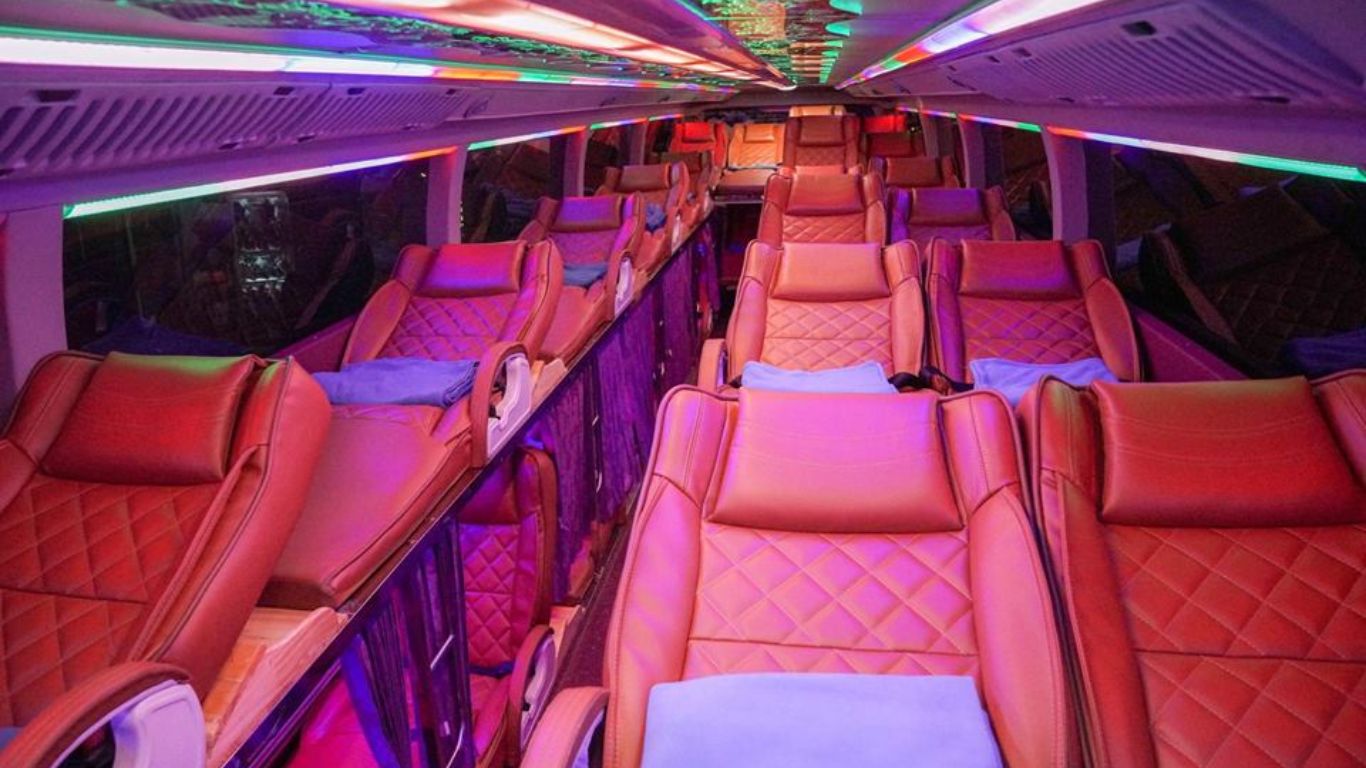
Emotional Experience
The bus feels efficient but less gradual. Continuous curves and road noise can make the night feel longer, and arrival in early morning may feel abrupt. For some, it is a practical, functional option rather than a restful or scenic journey.
Drawbacks to Be Aware Of
Sleep quality depends heavily on your tolerance for motion. Nighttime bus travel eliminates scenery entirely. Physical fatigue can affect energy levels on your first day in Sapa. Despite these limits, many travelers accept the trade-off for speed and convenience.
Departure Times and Daily Flexibility
Sleeping buses depart throughout the day and night from multiple points in Hanoi. Evening and overnight departures are the most popular, allowing you to sleep while traveling, but daytime departures are also available for those who prefer seeing the lowland countryside before reaching the mountains. High frequency gives travelers flexibility to match schedules, though nighttime motion can affect sleep quality.
Train or Sleeping Bus to Sapa: Experience-Based Comparison
At the end of the day, it really comes down to how you want to feel when you wake up in Sapa. Here’s a quick side-by-side to help you decide:
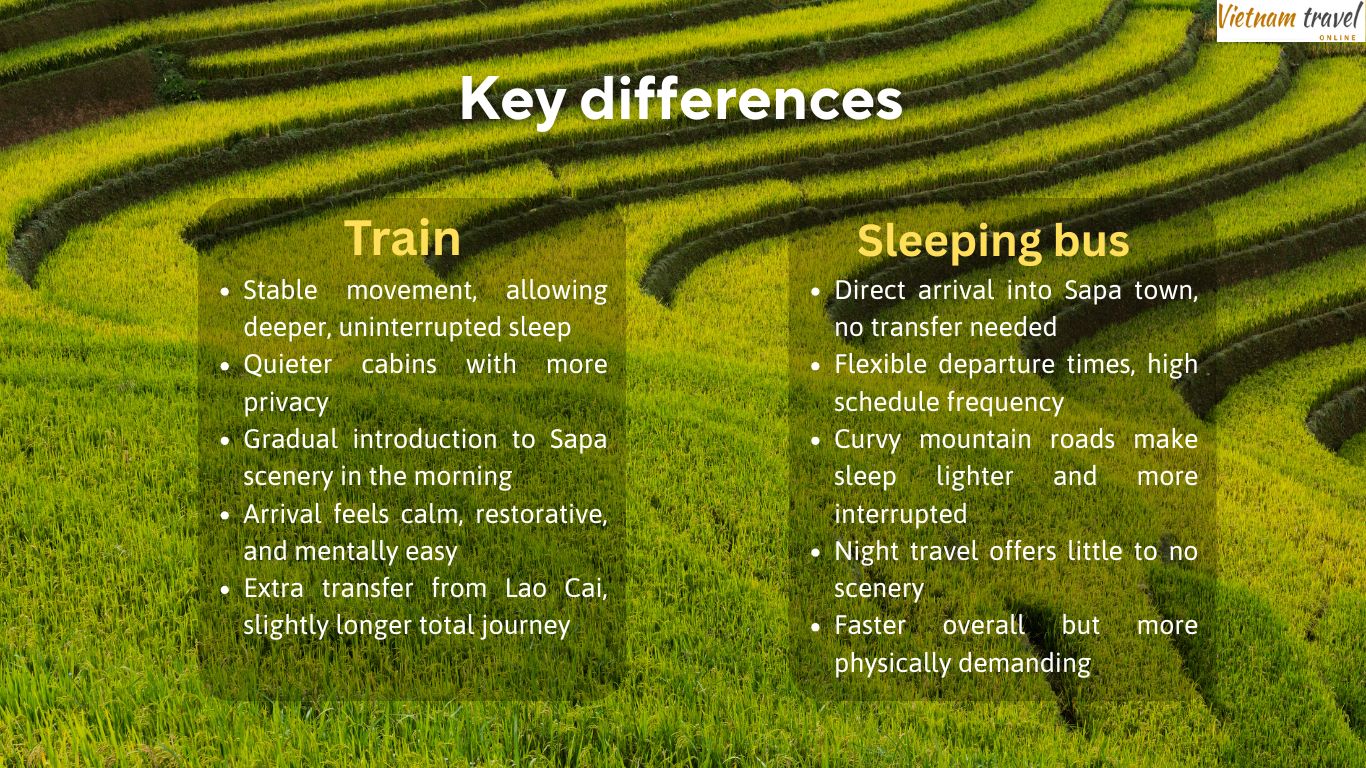
The train gives you a steadier, quieter night and those beautiful early morning views as you roll into the mountains. The bus gets you there faster and saves you some money, just expect a more restless night on the winding roads.
Neither option offers classic sightseeing overnight, but the train introduces scenery gently, while the bus prioritizes efficiency. The choice comes down to whether you want a restful transition or a time-saving, direct route.
Which Option Fits Your Travel Style Best
Choose the train if you prioritize rest, comfort, and mental ease. Its steady movement allows deeper sleep, and early morning views near Lao Cai provide a gentle introduction to the mountains. This option suits travelers with sensitive sleep, families, or anyone wanting to arrive feeling refreshed and ready for trekking or exploring.
Choose a sleeping bus if flexibility, speed, and budget matter more than comfort. Buses save time and drop you directly in Sapa town, but motion on winding roads can affect rest, and night departures offer little scenery. Consider how your body responds to motion, the season, and whether a slightly rougher arrival will impact your first day in Sapa.
Why Book Through Us Instead of On Your Own?
Booking an overnight train or bus to Sapa sounds simple until you’re deep in it. Sold-out cabins, unreliable operators, confusing schedules, and no one to call when something goes wrong. That’s exactly where we can help.
Here’s what you get when you book your Sapa journey through us:
How to Book Your Journey to Sapa
Getting your tickets sorted before you travel makes a real difference, especially during busy seasons when trains fill up fast. Here are your main options.
Booking Online Yourself
If you prefer to handle things independently, a few platforms make it relatively straightforward. Vietnam Railways’ official website lets you book train tickets directly, and third-party sites like Vexere, Traveloka, or domestic banks, if you have friends, use domestic banks, which offer English-friendly interfaces with multiple operators in one place. For sleeping buses, most operators have their own websites or can be found through these same platforms.
A few things to keep in mind if you go this route: read reviews carefully before choosing an operator, double-check departure points as they can vary across Hanoi, and make sure your booking confirmation is clear before you travel. It works well for experienced travelers who are comfortable navigating the details on their own.
Why Book Through Us?
Booking online yourself is doable, but there’s a lot of small print between clicking “confirm” and actually having a great first morning in Sapa. Here’s what booking through us looks like instead:
- The right option for your group. We match you with the best cabin, bus tier, or private transfer based on your travel style, budget, and dates.
- Tickets confirmed and double-checked. No guessing whether your booking actually went through.
- Someone is watching your back. If there’s a delay, a schedule change, or anything unexpected, you have a real local contact to reach out to, not a chatbot.
- A smooth arrival, not a scramble. Your transport connects directly to your accommodation, guide, and first day plans. No figuring out which minivan to jump into at Lao Cai station at 6 am.
- Local knowledge you can’t Google. We know which operators are reliable, which cabins are worth the upgrade, and what to watch out for by season.
It’s a small thing to hand off, but it makes the start of your Sapa trip feel completely different.
Planning Sapa: Timing, Activities, and Comfort
Once you understand the journey, the next question is usually what Sapa will be like when you arrive. Many experiences here start early and involve walking, village visits, or time outdoors. Because weather and visibility change noticeably by season, knowing the best time to visit Sapa helps you plan days that match your energy and expectations. For first-time visitors still deciding how to spend their time, this guide to things to do in Sapa offers a clear overview, while those considering village walks can explore this Sapa trekking guide to understand the pace and terrain.
If you prefer not to manage these details yourself, private travel arrangements can simplify the experience. With private transport, flexible timing, carefully chosen hotels, and a local guide who adjusts activities to your pace, Sapa becomes easier to enjoy, especially when combined smoothly with other destinations in Vietnam.

Planning Your Sapa Experience Beyond the Journey
Getting to Sapa is only the first step. How you enjoy it once you arrive often matters more. Many of Sapa’s best moments come from slow mornings, village walks, local markets, and time spent away from the main roads. Experiencing Sapa like a local usually means flexible timing, the right accommodation, and activities adjusted to the weather and personal pace.
For travelers who prefer this style of travel, private journeys make a real difference. Sample itineraries such as Taste & Beauty of Sapa 3 Days or the broader Northern Charm Discovery 8 Days show how Sapa can be combined naturally with other northern destinations, while still leaving space for local encounters and unhurried exploration. With private transport, handpicked hotels, and a local guide who adapts the day as conditions change, Sapa feels less like a checklist and more like a lived experience.
💡Contact Vietnam Travels Online if you would like help tailoring your Vietnam journey. We are always happy to assist with customized trips across Vietnam, whether traveling from south to north or the other way around. We also design cross-country journeys throughout the wider Indochina region. Simply fill in the contact form or email us at vietnam@indochinavoyages.com, and our team will guide you from there.
FAQs
Is the train or the sleeping bus to Sapa more comfortable for sleeping?
The train wins here for most people. The movement is smooth and steady, the soft sleeper cabins are surprisingly spacious, and you tend to wake up feeling a lot more human. Buses do the job, but the mountain curves mean your body never fully switches off. If you do go by bus, look into the VIP limousine or newer private cabin options. They are a noticeable step up from the standard sleeper.
Do you see scenery when traveling overnight to Sapa?
Overnight travel offers limited scenery on both options. However, train travelers may see early morning landscapes near Lao Cai, while bus travelers usually miss the views entirely.
Which option is better if I plan to trek in Sapa?
If you’ve got big hiking plans, we’d lean toward the train. Arriving well-rested really does make a difference when you’re facing long walks and mountain trails on day one. A good night’s sleep on the train beats stumbling off a bus at 5am feeling like you’ve been in a tumble dryer.
Are sleeping buses safe on mountain roads?
Sleeping buses are widely used and generally safe, but road conditions and motion can feel demanding. Choosing reputable operators and VIP buses improves comfort.
Is it worth booking transport in advance?
Absolutely, especially if you’re traveling during peak seasons like the rice harvest in September and October, or around December and January when Sapa can get snow, and everyone wants in. Booking ahead won’t necessarily save you money, but it will save you stress and get you the better berths before they’re gone.
.