

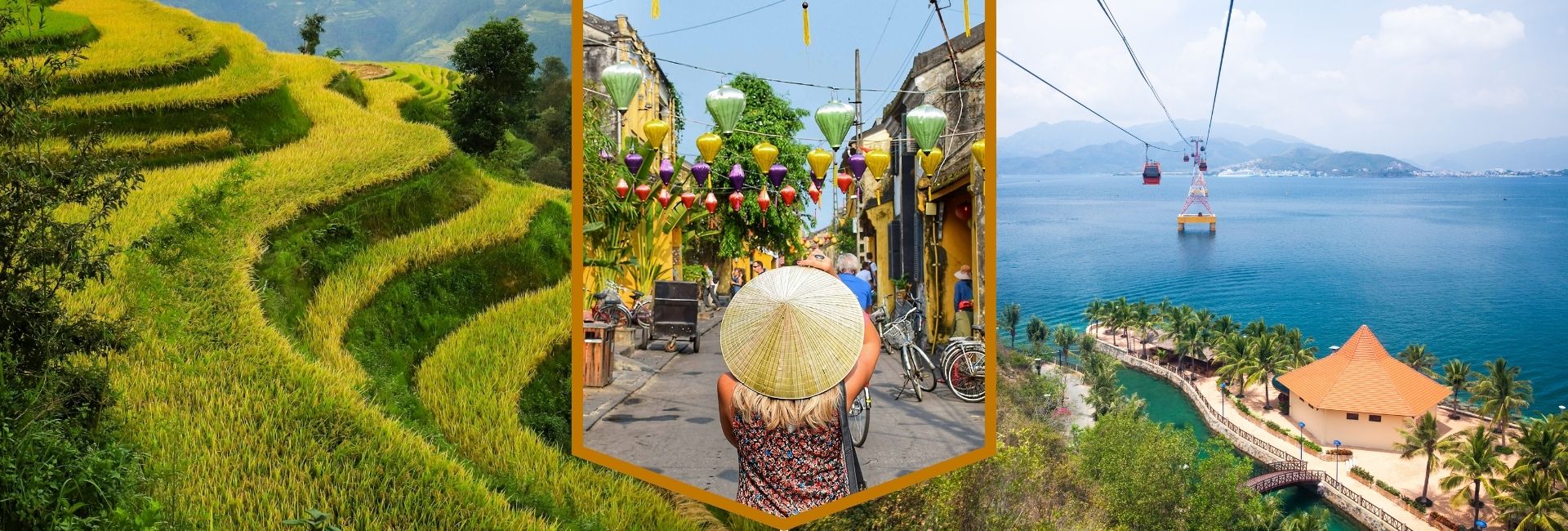
Planning a holiday during winter in Vietnam gives you a perfect blend of cool northern cities, warm southern beaches, and bright blue skies. You can enjoy crisp, peaceful mornings in the north and sunny, relaxing afternoons in the south. This guide helps you choose the best places for your winter getaway so you can explore with comfort, confidence, and a festive holiday spirit.
What can you find in this travel blog?
- Things You Should Know About Winter in Vietnam
- What Winter Feels Like Across Vietnam
- Best Places to Visit in Vietnam in Winter
- How Many Days to Explore Vietnam in Winter
- Practical Tips for Visiting Vietnam in Winter
- FAQs
Things You Should Know About Winter in Vietnam
Vietnam stretches for more than one thousand kilometers, so the weather changes gently from one region to another. When you visit Winter in Vietnam, you will notice how the temperature shifts from the cool north to the warm south in a single journey.
This season feels special because the cities become quieter and the air turns fresh. Moreover, the mountains are clear enough for trekking, and the coast welcomes dry and pleasant days. You will find that every part of the country offers something charming and relaxing. The tone stays gentle and clear, which suits travelers who enjoy comfort and smooth planning.
When Does Winter Start in Vietnam
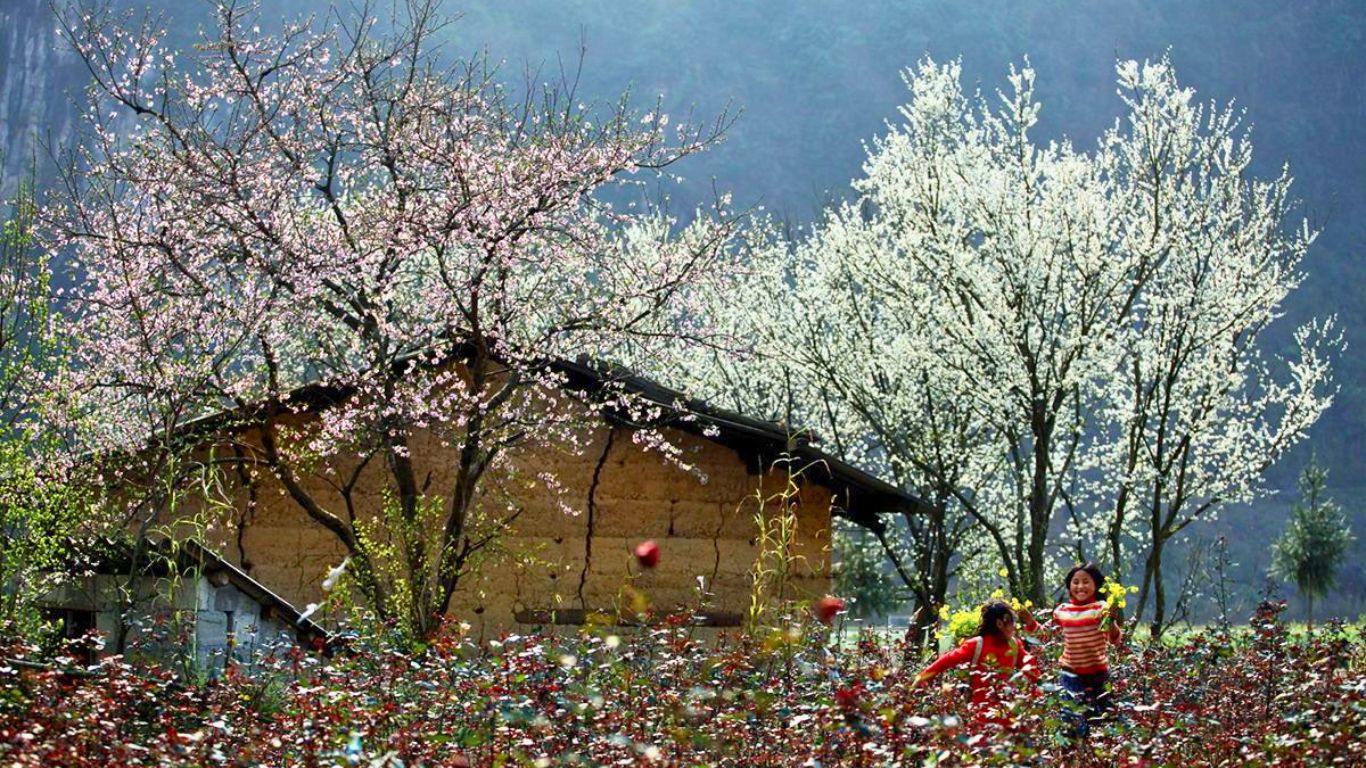
Winter usually begins in late November. It becomes clear in December and stays until February. You will feel the strongest change in the north, where the temperature drops early. Meanwhile, December also welcomes the dry season along the central and southern coasts. This gives you pleasant days and beautiful sunlight for your trip.
What to Pack for Vietnam in Winter
Pack light layers for the north so you can stay comfortable during early walks. Bring a warm jacket for mountain regions since evenings can feel colder. You should also bring light clothes and swimwear for the south because the water remains warm. Comfortable footwear helps you explore both cities and beaches. You can add quick-drying clothes if you plan to move between regions often.
If you want private transport, curated hotels, and a guide who follows your pace, we can prepare a tailor-made plan for your winter trip.
Local Food to Enjoy in Vietnam in Winter
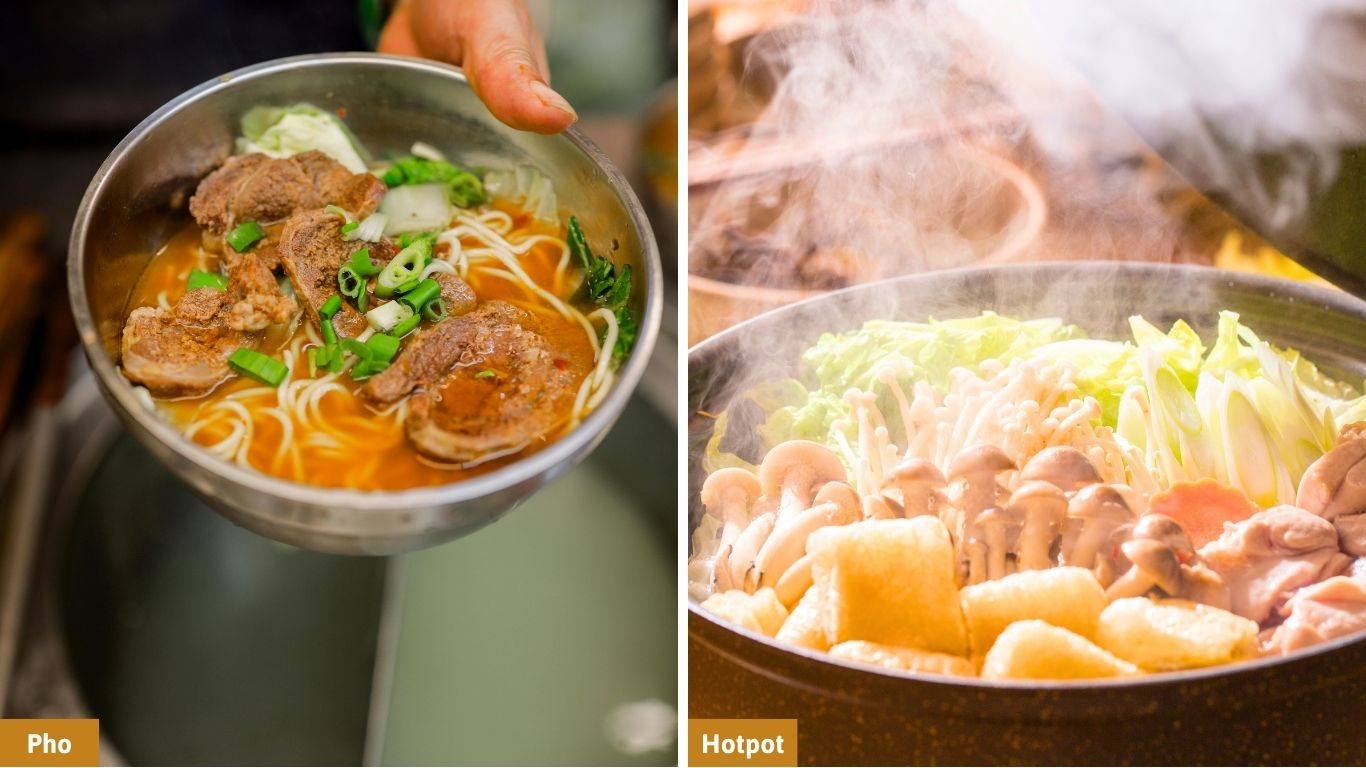
Winter brings warm dishes that feel perfect in every region. The north offers pho, beef stew, sticky rice, and charcoal-grilled snacks. The central coast brings spicy noodles, warm rice cakes, and hot soups with local herbs. The south brings fresh seafood, grilled fish, sweet desserts, and tropical fruits. Every region gives you comfort food that matches the weather.
What Winter Feels Like Across Vietnam
The north feels cool and sometimes cold. You may see mist around lakes and tall buildings, which gives the cities a cozy touch. The central coast enjoys warm afternoons and cooler mornings. This is a gentle change after the rainy weeks of November. The south remains bright and sunny with very low humidity. You will enjoy warm air and clear blue water. When you travel across this long country, you will feel every shift in a soft and pleasant way.
Winter Weather in Detail
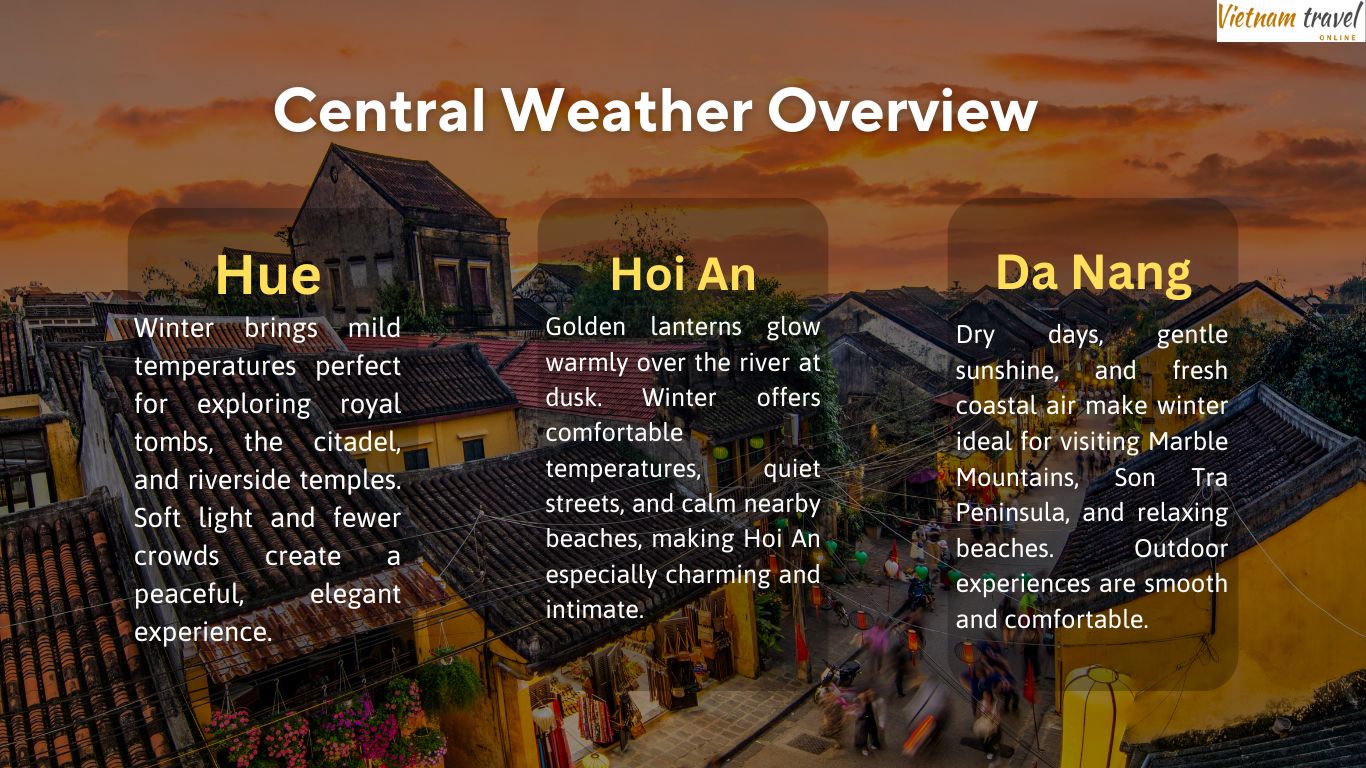
The north stays the coolest. Hanoi remains between 15 and 22°C. Sapa and Ha Giang drop to 6 to 15°C. The central region feels warmer. Hue sits around 20 to 24°C while Hoi An and Da Nang remain between 22 and 27°C. The south enjoys real warmth. Nha Trang stays between 25 and 29°C. Ho Chi Minh City and Phu Quoc usually stay between 26 and 33°C. These conditions shape your days. Mornings in the mountains feel crisp, while afternoons near the sea feel calm and sunny.
Best Places to Visit in Vietnam in Winter
North Vietnam
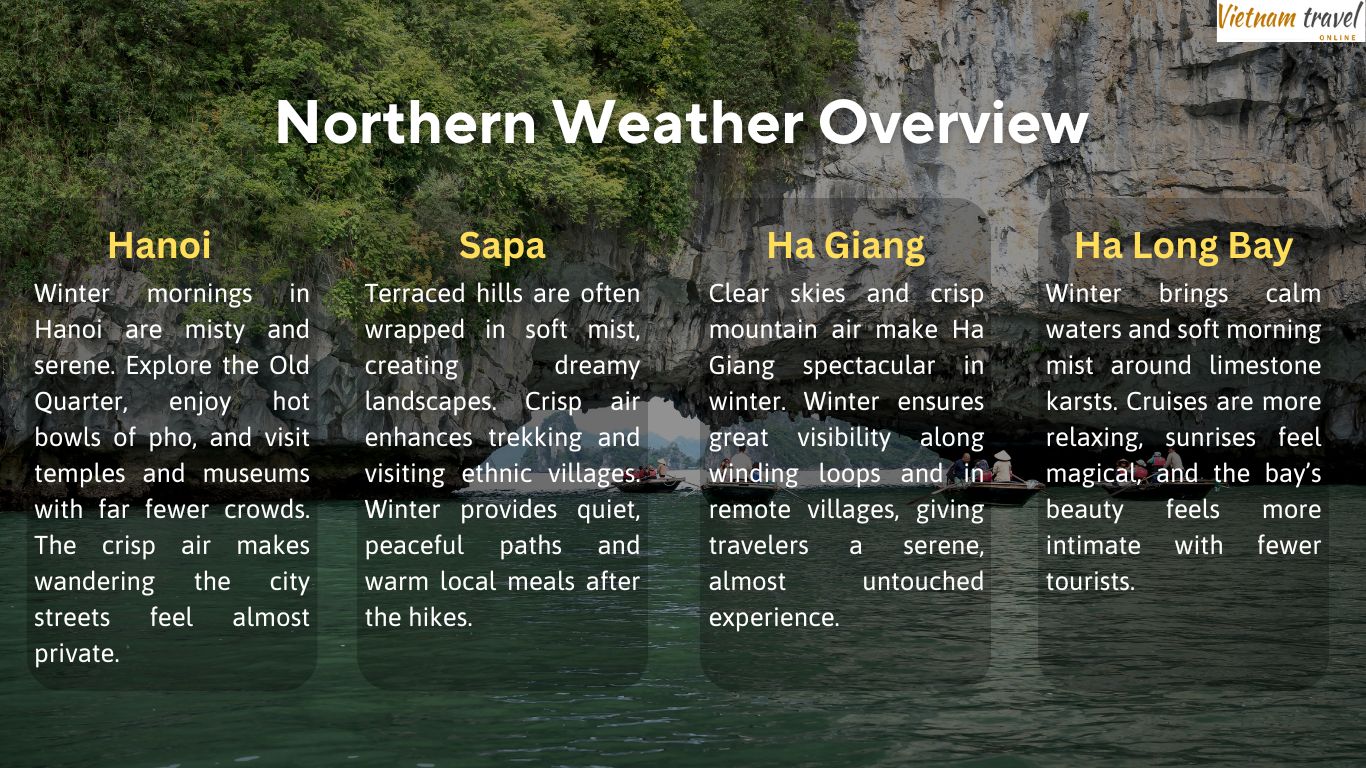
The north feels especially refreshing during winter, offering cool, crisp air and a peaceful atmosphere that makes cities like Hanoi, Sapa, and Ha Giang ideal for slow mornings, cozy walks, and scenic mountain views.
Central Vietnam
Central Vietnam brings a gentle, pleasant warmth during the winter, making places like Hue, Da Nang, and Hoi An perfect for relaxed sightseeing, beach strolls, and exploring heritage sites without the intense summer heat.
Southern Vietnam
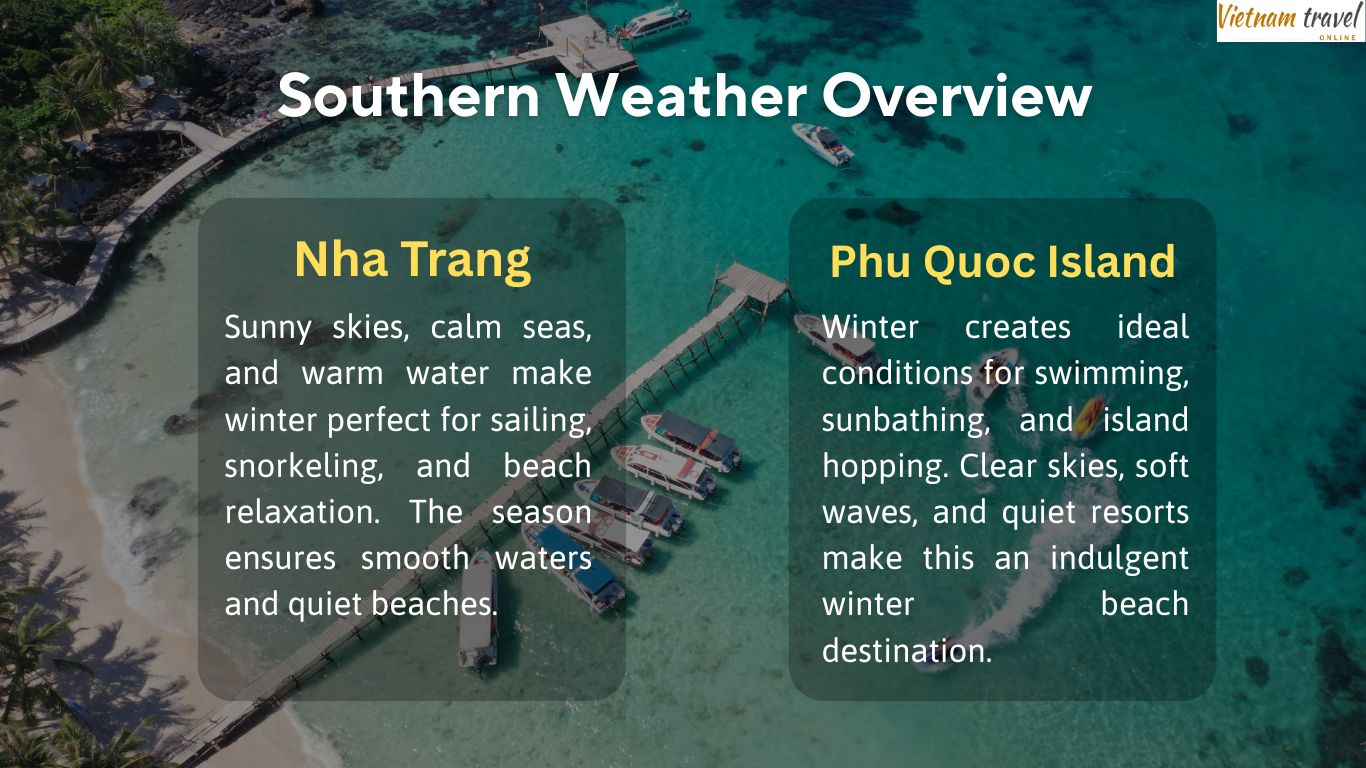
Southern Vietnam stays bright, warm, and inviting, giving you ideal weather for beach holidays, island escapes, and vibrant city life. It is the best region for visitors who want reliable sunshine, smooth travel conditions, and a true tropical holiday vibe.
How Many Days to Explore Vietnam in Winter
Traveling across the whole country really depends on how you want to enjoy your holiday. If you have a nice, long break to slow down and soak everything in, you can explore Vietnam’s mountains, cities, beaches, and cultural sites at a comfortable pace. With enough days, your journey feels smooth and unhurried, giving you time for scenic drives, quiet mornings, and relaxing evenings in each region. It becomes a holiday where you truly experience the country, not just pass through it.
And if you’re looking for a clear starting point, we do have a suggestion for you: a 20-day journey. 20 days work beautifully because they give you enough time to see Vietnam from north to south without feeling rushed. You can spend meaningful time in each region, enjoy the long-distance transitions comfortably, and still keep room for rest days, beach time, and unexpected discoveries. It’s the kind of duration that blends adventure with comfort, which is exactly what most travelers want for a full-country holiday.
Northern Vietnam (7–8 Days)
Start in Hanoi, exploring the Old Quarter, Hoan Kiem Lake, and strolling around West Lake at a gentle pace. Then venture to Sapa or Ha Giang to discover terraced valleys, ethnic minority villages, and scenic mountain viewpoints. Conclude the northern segment with a peaceful Ha Long Bay cruise, gliding past dramatic limestone karsts and quiet fishing villages.
Central Vietnam (5–6 Days)
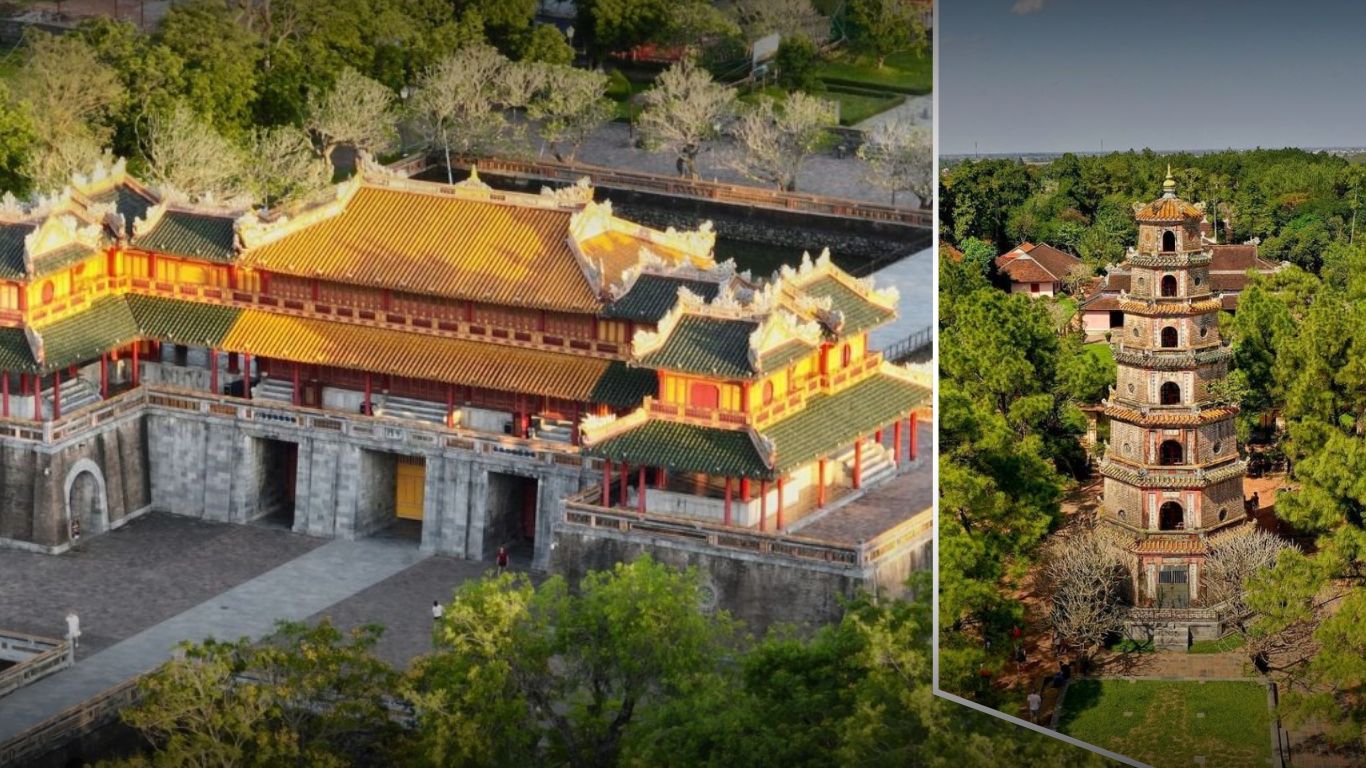
Fly to Hue and explore the Imperial Citadel and the elegant royal tombs of Khai Dinh or Minh Mang. Continue to Hoi An, wandering through the Ancient Town, visiting artisan villages like Tra Que or Thanh Ha, and enjoying the charm of riverside streets and nearby beaches.
Southern Vietnam (5–6 Days)
Finish in Nha Trang with island hopping and coastal viewpoints, then relax on Phu Quoc, where you can unwind on soft sandy beaches, explore quiet resorts, or go snorkeling around the southern islands before concluding your journey.
💡 Whether you want to explore Vietnam in winter your own way but need help with hotels, transportation, or bookings, or you’d like us to design a route that perfectly fits your schedule, we’ve got you covered. While the journey above is ready-made, we’re happy to tailor it just for you. At Vietnam Travel Online, we craft tailor-made experiences shaped around your pace and interests. Discover more with our Vietnam tours, email us at [email protected], or use our contact form to start planning a truly personalized adventure.
Practical Tips for Visiting Vietnam in Winter
-
Clothing: Layered for the north, light and breathable for the south
-
Transport: Domestic flights are busy, so book in advance
-
Tet Holiday: Services fill fast; plan early
-
Safety: Mountain roads can be misty; drive carefully
-
Planning: Our team can arrange private transport, curated hotels, and guides for a stress-free journey
FAQs
When is winter in Vietnam?
Late November to February.
How cold does it get in Vietnam in winter?
Mountains can reach 6°C; Hanoi stays 15–22°C; southern beaches remain warm.
What should I wear in Vietnam in winter?
Layered clothing for the north, light clothes and swimwear for the south.
Is it warm enough to swim in winter?
Yes, especially along central and southern coasts.
Is Vietnam worth visiting in winter?
Definitely, because dry weather, clear skies, warm beaches, and comfortable trekking make it ideal.