

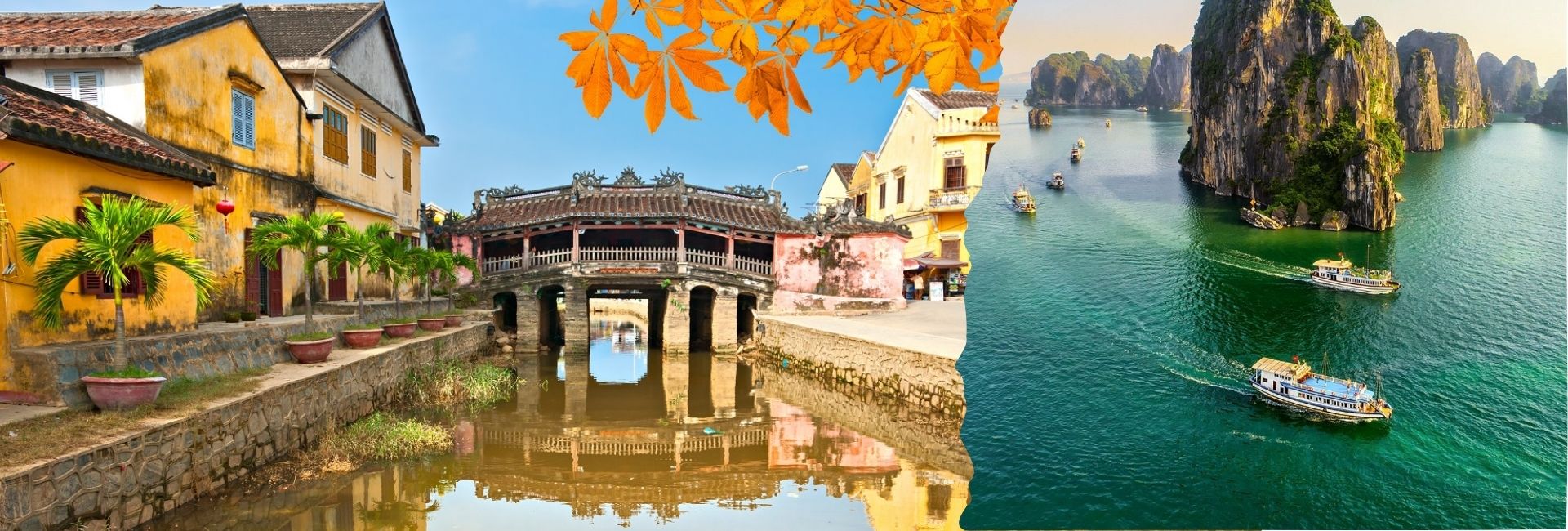
Ten days is the sweet spot for exploring Vietnam. It gives you enough time to move through three distinct regions. Yet it stays short enough to keep every stop meaningful, not rushed. This itinerary strings together Vietnam’s most iconic destinations into a rhythm that feels natural.
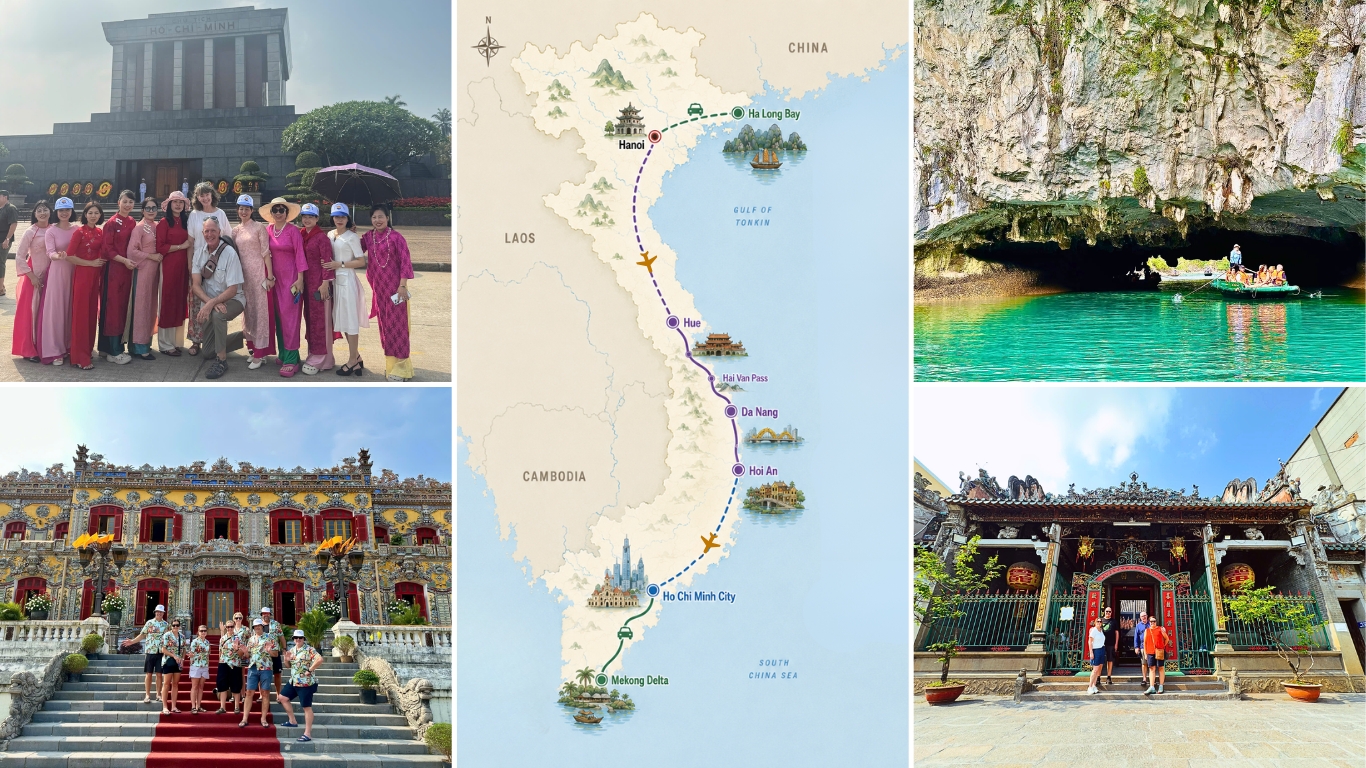
Vietnam stretches over 1,600 kilometers from north to south. The direction you travel shapes the entire feel of the trip. Some travelers start slow in Hanoi and build toward Saigon’s buzz. Others land in the south first and let the journey wind down into Ha Long Bay’s calm. Both routes below cover the same highlights. Each one uses private transport and private guiding, so every transfer, flight, and hotel check-in runs smoothly.
What can you find in this travel blog?
- Why 10 Days in Vietnam?
- What If You Want More or Less Time?
- How This 10 Day Vietnam Itinerary Works
- Route 1: Hanoi to Ho Chi Minh City, North to South
- Route 2: Ho Chi Minh City to Hanoi, South to North
- Choosing Between the Two Routes
- Practical Tips for 10 Days in Vietnam
- Why Choose a Slow Travel Style for 10 Days in Vietnam
Why 10 Days in Vietnam?
Ten days hits a rare balance. It gives you enough time to see the north, center, and south without cramming every hour with sightseeing. Shorter trips force you to pick one or two regions and skip the rest. Ten days let you experience all three without that trade-off.
This length also matches Vietnam’s geography well. The country is long and narrow, and moving between regions takes real time, even with flights. Ten days allows two to three nights per stop. That gives you enough time to settle into a place, not just glance at it from a bus window.
Most first-time visitors also want variety. They want city life, mountain and bay scenery, imperial history, and river culture, all in one trip. Ten days delivers exactly that mix. You get Hanoi’s Old Quarter, Ha Long Bay’s cliffs, Hue’s palaces, Hoi An’s lanterns, Saigon’s energy, and the Mekong Delta’s canals. Few other trip lengths pack in this much range while still feeling relaxed.
For travelers with limited vacation time, ten days also fits neatly around a single trip from most major flight hubs. It justifies the long-haul flight without demanding weeks away from work or home.
What If You Want More or Less Time?
Not every traveler has ten days to spare, and not every traveler wants to stop there. Both directions work well, and both can flex shorter or longer depending on your schedule.
If you only have one week, focus on two regions instead of three. A popular option pairs Hanoi and Ha Long Bay with Hoi An, skipping Hue or the Mekong Delta. This keeps travel days low and lets you spend real time in each place instead of rushing between airports.
If you have two weeks or more, this itinerary expands naturally. Add Ninh Binh’s karst landscapes north of Hanoi, or the Cao Dai Temple near Ho Chi Minh City. Sapa’s mountain treks or a few extra days on Phu Quoc Island also fit well onto either end of the route. Our 14 Day Vietnam Highlights tour builds on this exact north-to-south path with these extra stops included.
Every version of this trip, whether five days or twenty, works best when it is planned around your pace, not a fixed template. Want a version built around your own timeline? Contact our team, and we will shape the days, region mix, and pacing entirely around you.
How This 10 Day Vietnam Itinerary Works
A well-built Vietnam itinerary depends on rhythm as much as sightseeing. Ten days gives you two to three nights per region. That is enough time to settle in, not just pass through. Domestic flights cover the longer distances. Private cars and drivers handle the shorter, more scenic stretches. This keeps travel time from eating into the experience itself.
This pacing matters because Vietnam rewards travelers who slow down. A rushed trip means viewing landmarks through a bus window. A well-paced one means walking the Old Quarter at dusk, or watching the sun set over Ha Long Bay from your cruise deck. Both routes below follow this same principle. Every stop earns its place, not just its photo.
Private transport removes the biggest source of stress in independent travel: logistics. A driver waits for you at the airport. A guide already knows your interests. Your hotel is booked before you land. You spend your ten days experiencing Vietnam, not managing it, from the first pickup to the final departure transfer.
Route 1: Hanoi to Ho Chi Minh City, North to South
This route starts in the cultural heart of the north and ends in the energetic pulse of the south. It suits travelers who want their trip to build in intensity. Private transfers, guided city tours, and a signature overnight cruise in Ha Long Bay carry you through each day.
Day 1: Arrive in Hanoi
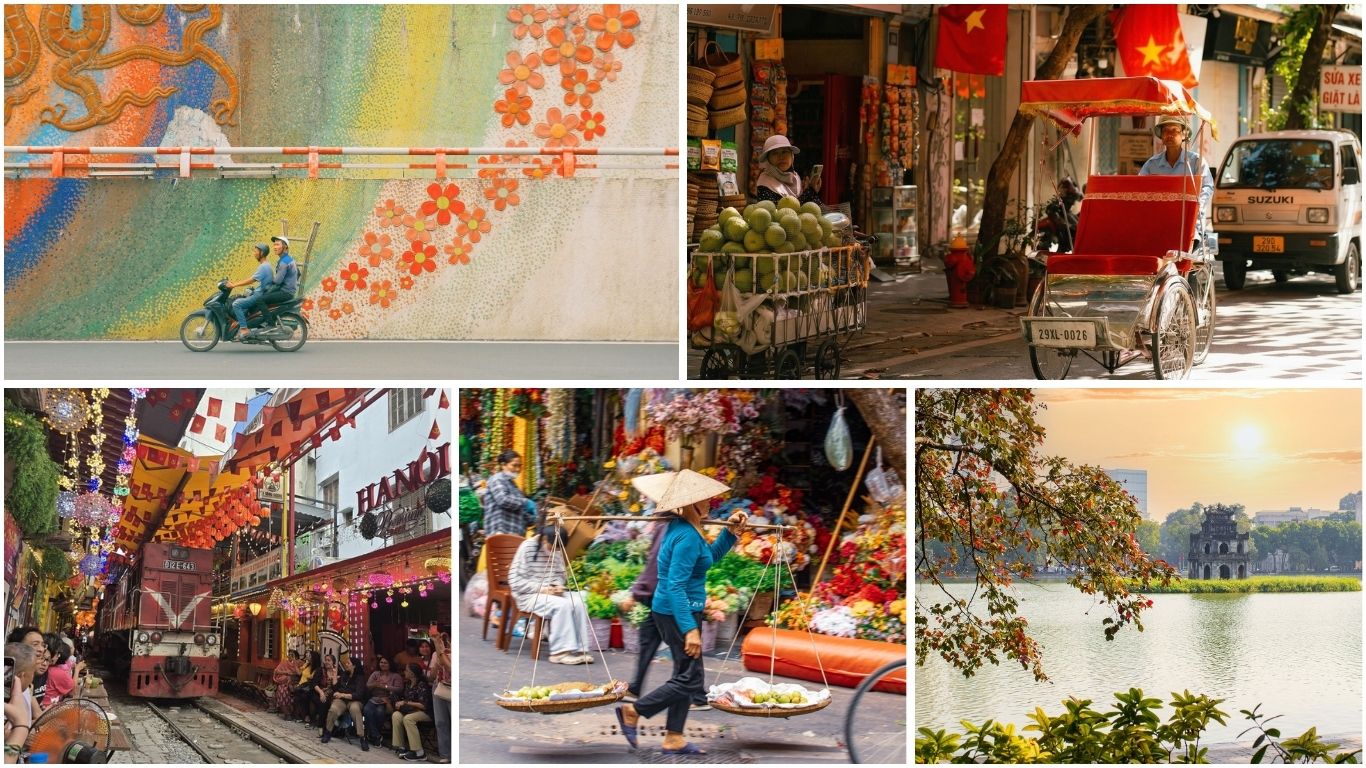
Vietnam’s capital greets you with French colonial architecture, ancient pagodas, and the constant hum of scooters. A private driver meets you at Noi Bai Airport and takes you straight to your hotel. You skip the hassle of public transport after a long flight. Once you check in, take an easy evening stroll around Hoan Kiem Lake. Its red bridge and lakeside pagoda offer a calm first look at Hanoi life.
As evening settles in, the Old Quarter comes alive. Food stalls serve crispy spring rolls, steaming bowls of pho, and Hanoi’s famous egg coffee. Walking these streets on your first night sets the tone for the whole trip. Hanoi rewards slow, on-foot exploring with plenty of stops. This Hanoi travel guide covers everything worth knowing before you arrive, from neighborhood layout to seasonal weather.
Day 2: Hanoi City Highlights
A full day with a private guide unlocks Hanoi’s layered history. The morning starts at the Ho Chi Minh Complex, where the mausoleum, stilt house, and Presidential Palace tell the story of modern Vietnam. From there, visit the Temple of Literature, the country’s first university, built in the 11th century. Its quiet courtyards make for a reflective stop.
In the afternoon, the Vietnam Museum of Ethnology introduces the diversity of Vietnam’s 54 ethnic groups. This context helps for the regions still ahead on your trip. A relaxed cyclo ride through the Old Quarter and French Quarter follows. You take in the architecture without walking every street yourself.
The day closes with a traditional water puppet show. This centuries-old Hanoi art form blends folklore, music, and craftsmanship into a memorable evening.
Ready to build your own version of this route? Our team can arrange every private transfer, guide, and hotel for your Vietnam trip. Get in touch to start planning.
Day 3: Ha Long Bay Overnight Cruise
A private car collects you mid-morning for the drive to Ha Long Bay, one of the most photographed landscapes in Southeast Asia. Thousands of limestone karsts rise from emerald waters. Boarding your cruise for an overnight stay beats a rushed day trip every time.
Afternoon activities usually include kayaking through hidden lagoons, a cave visit, and time to relax on the sundeck. Many travelers climb Ti Top Island for one of the best panoramic views in the bay. Dinner on board, often fresh seafood, pairs perfectly with the sunset. Sleeping surrounded by karst cliffs is an experience no hotel room can match.
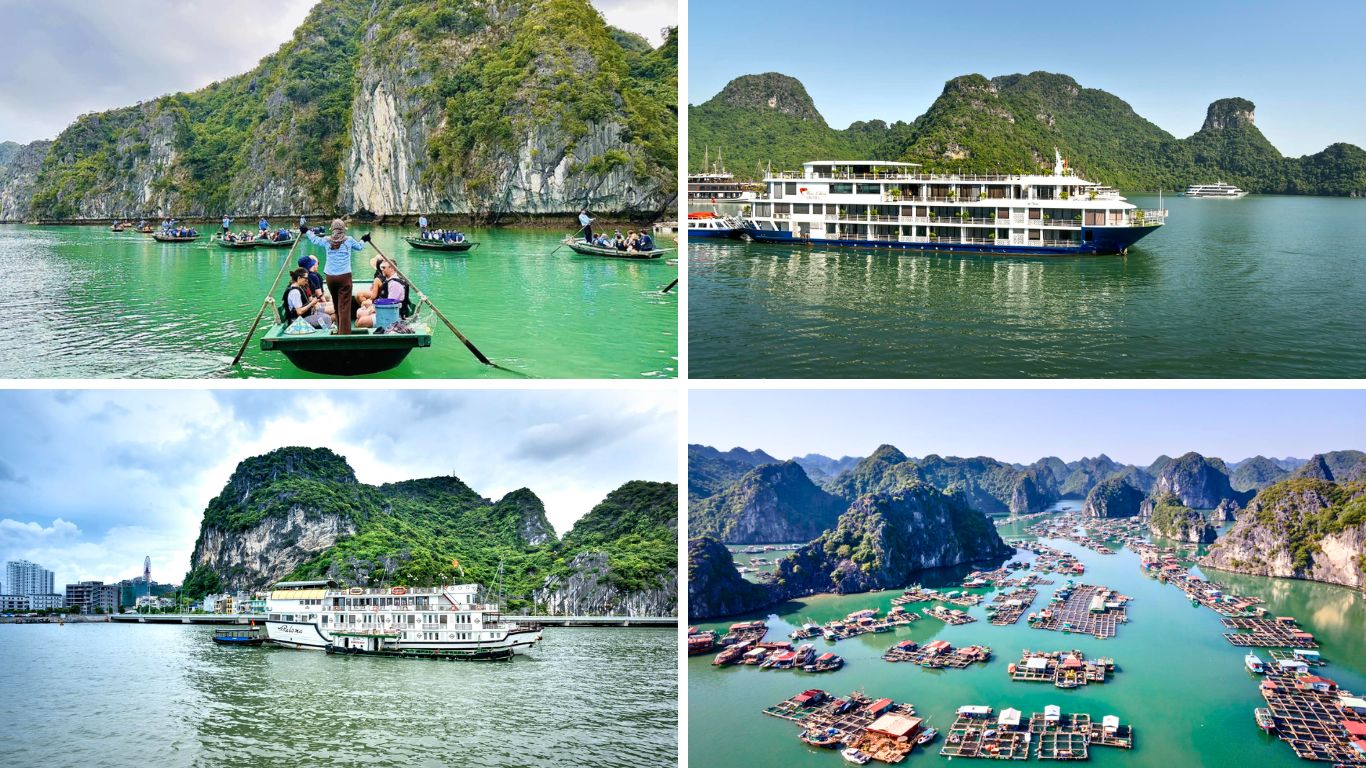
Halong Junk Cruise offers private and small group vessels at different comfort levels. You can shape this day around exactly how much activity or relaxation you want from the bay.
Day 4: Morning in the Bay to Flight to Hue
Mornings on Ha Long Bay move slowly, and that is part of the appeal. An optional sunrise tai chi session on deck comes first. Breakfast follows as the boat cruises back toward the harbor, often stopping at a grotto like the well-known Surprise Cave, where towering stalactites create a dramatic scene.
Back on land, a private transfer returns you to Hanoi for a short flight to Hue, Vietnam’s former imperial capital. The flight takes roughly ninety minutes and saves a full day compared to the train. Your guide and driver meet you on arrival and take you straight to your hotel.
Evenings in Hue move at a gentler rhythm than Hanoi. A quiet walk along the Perfume River eases you into the city. Try a bowl of bun bo Hue, the region’s spicy beef noodle soup, for a perfect introduction to central Vietnamese cuisine.
Day 5: Hue Imperial City and Royal Tombs
Hue rewards a full day of exploration. A private guide makes the difference between wandering and truly understanding what you see. The Imperial City anchors the day, a sprawling UNESCO-listed complex of palaces, temples, and gates that once housed Vietnam’s emperors and their court.
A boat ride along the Perfume River leads to Thien Mu Pagoda, one of the country’s most recognizable religious landmarks. The afternoon covers the royal tombs, and choosing between them takes some thought. The elegant, poetry-inspired Tu Duc Tomb feels intimate and reflective. Khai Dinh Tomb blends Vietnamese and European architecture in a way that surprises most first-time visitors.
This guide to things to do in Hue gives you a fuller picture before you arrive. Hue’s slower pace contrasts nicely with Hanoi’s energy. It often becomes a trip highlight for travelers who love history over hustle.
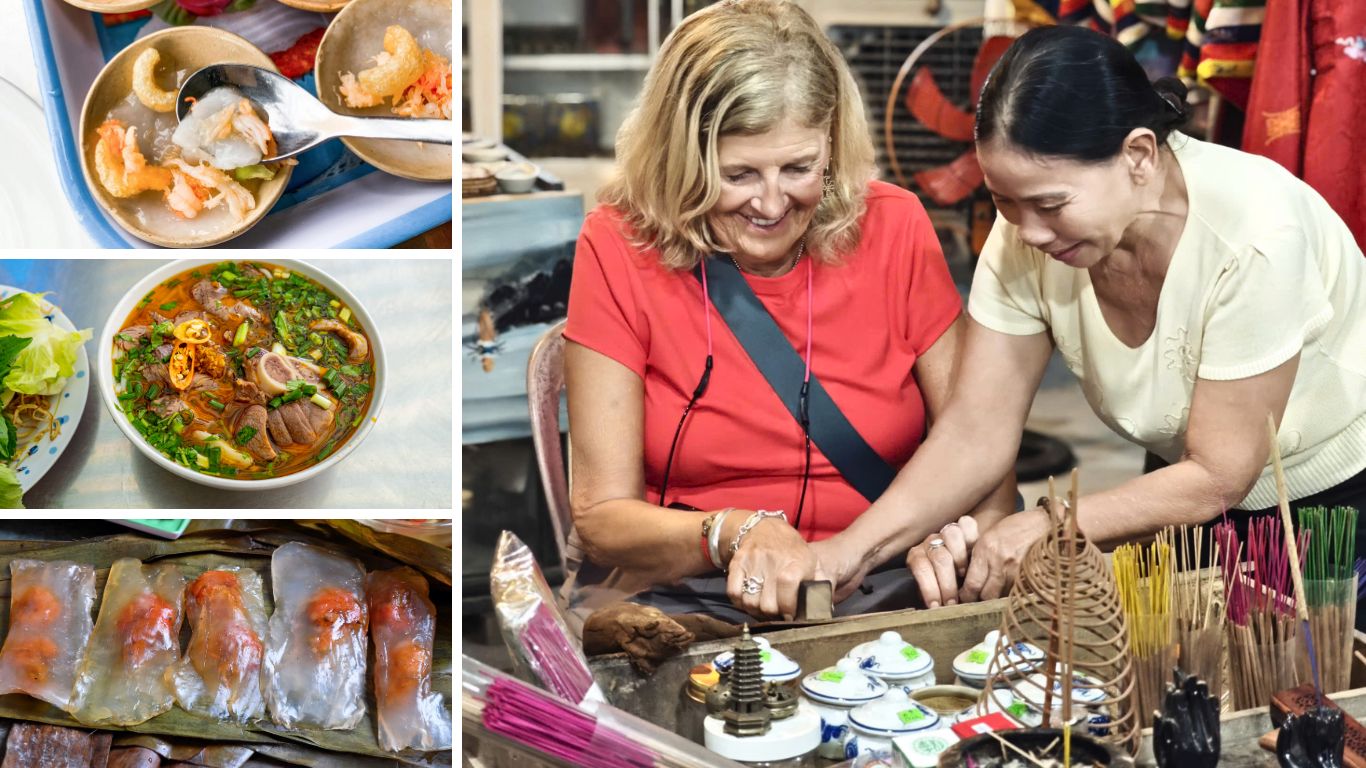
Day 6: Scenic Hai Van Pass to Hoi An
The drive south from Hue to Hoi An counts among the most scenic in the country. Traveling by private car, rather than public bus, means you can stop wherever the view demands. The Hai Van Pass climbs the coastline with mountains on one side and open ocean on the other. A stop at Lang Co Beach breaks up the journey with sweeping views back toward the pass.
Before reaching Hoi An, visit Da Nang’s Marble Mountains. This site mixes caves, pagodas, and panoramic viewpoints carved into marble and limestone peaks. Arriving in Hoi An by late afternoon catches the town at its best moment, just as lanterns start lighting the riverside.
Evenings in Hoi An feel unlike anywhere else in Vietnam. Wander the lantern-lit streets, browse riverside stalls, or float a paper lantern down the river. These simple pleasures never feel touristy. This town rewards slow evenings, so give it extra time rather than rushing through.
Day 7: Hoi An Ancient Town
Hoi An’s Ancient Town is a UNESCO World Heritage Site that has kept its 16th-century character remarkably well. A morning walk reveals merchant houses, assembly halls, and the iconic Japanese Covered Bridge. Traders from Japan, China, and Europe built these structures centuries ago, and most still stand intact today.
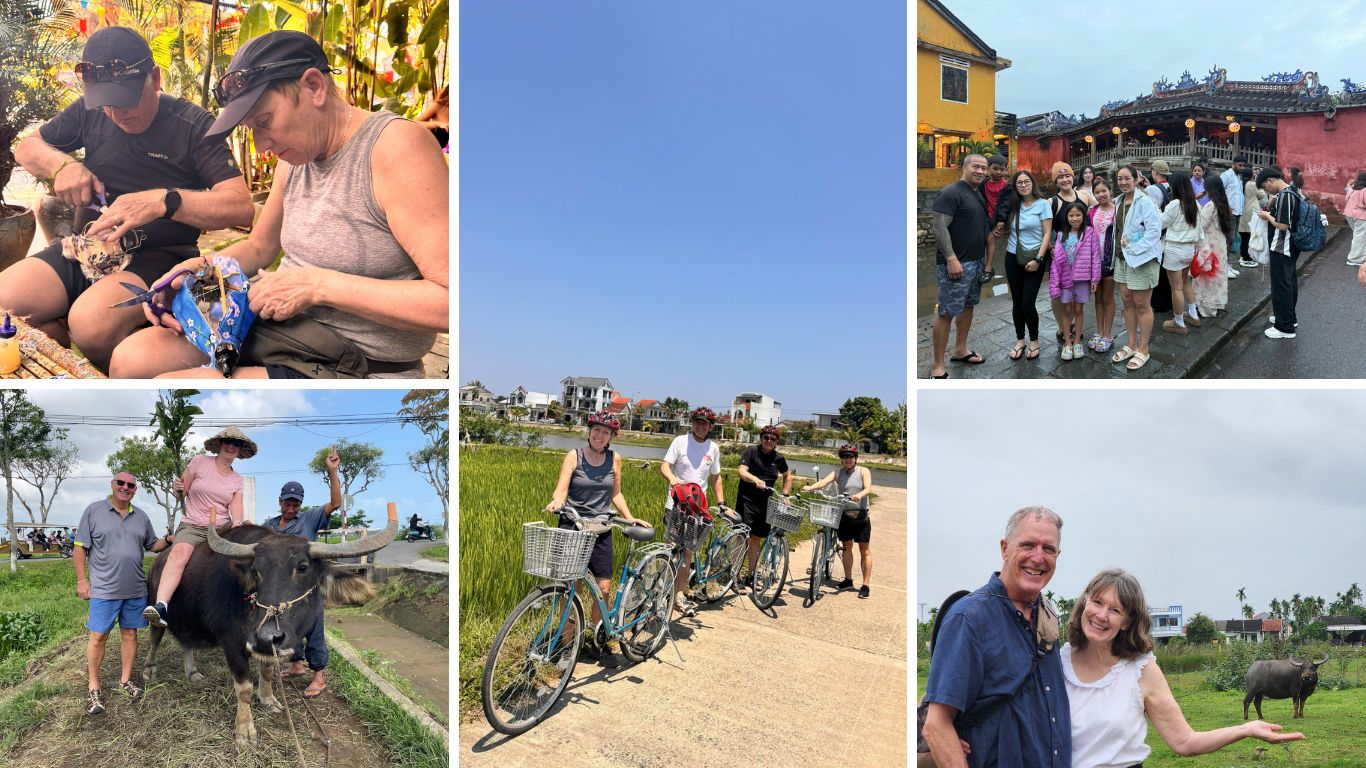
If you want a custom suit or dress, Hoi An’s tailor shops can finish one within a day or two. This makes an early order and later pickup easy to fit into your schedule. In the afternoon, cycle through nearby rice fields for a change of pace. Or take a coconut boat ride through the palm forests of Cam Thanh village for something more playful.
As night falls, seek out local specialties like cao lau noodles and white rose dumplings. Join a private Hoi An cooking class beforehand to learn the techniques from a local chef before you taste them yourself.
Day 8: Fly to Ho Chi Minh City
A short morning flight takes you from Da Nang to Ho Chi Minh City, once called Saigon. The shift in energy hits immediately. Hoi An feels quiet and preserved. Saigon moves fast, loud, and confidently modern, with skyscrapers rising above streets still lined with colonial facades.
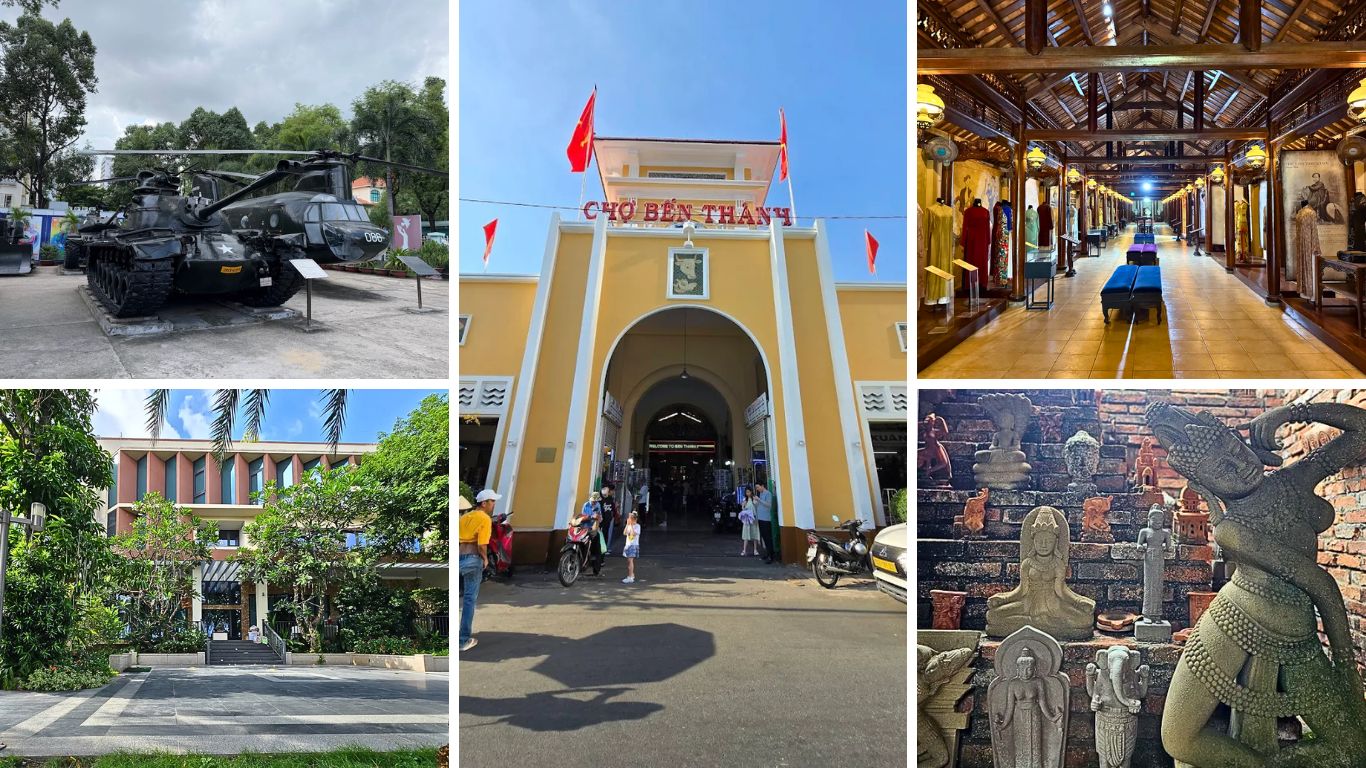
The afternoon covers the city’s twentieth-century history. The War Remnants Museum offers a sobering look at the Vietnam War. Nearby, the Reunification Palace, formerly Independence Palace, was the seat of the Southern Vietnamese government. It stays frozen in its 1975 state. A walk past Saigon Notre Dame Cathedral and the old Central Post Office rounds out the city’s French colonial layer.
As evening arrives, head to a rooftop bar for Saigon’s skyline and fast-paced rhythm. It contrasts sharply with the quiet lantern lit evenings you left behind in Hoi An just a day earlier.
Day 9: Cu Chi Tunnels and City Exploration
A private half-day tour to the Cu Chi Tunnels delivers one of Vietnam’s most visceral history lessons. This underground network, used during the war, includes narrow crawl spaces and hidden trapdoors. No museum display makes the scale of the conflict feel this tangible.
Back in Saigon by early afternoon, the rest of the day opens up to your interests. Shop at Ben Thanh Market if you enjoy the energy of bargaining. Or explore Cholon, the city’s Chinatown district, for a quieter, more local atmosphere away from the main tourist trail.
For food lovers, join the Saigon from the Back Vespa Tour. It takes you through back alleys a taxi could never reach. You sample banh xeo and fresh seafood exactly where locals eat, ending the day with a genuinely local perspective.
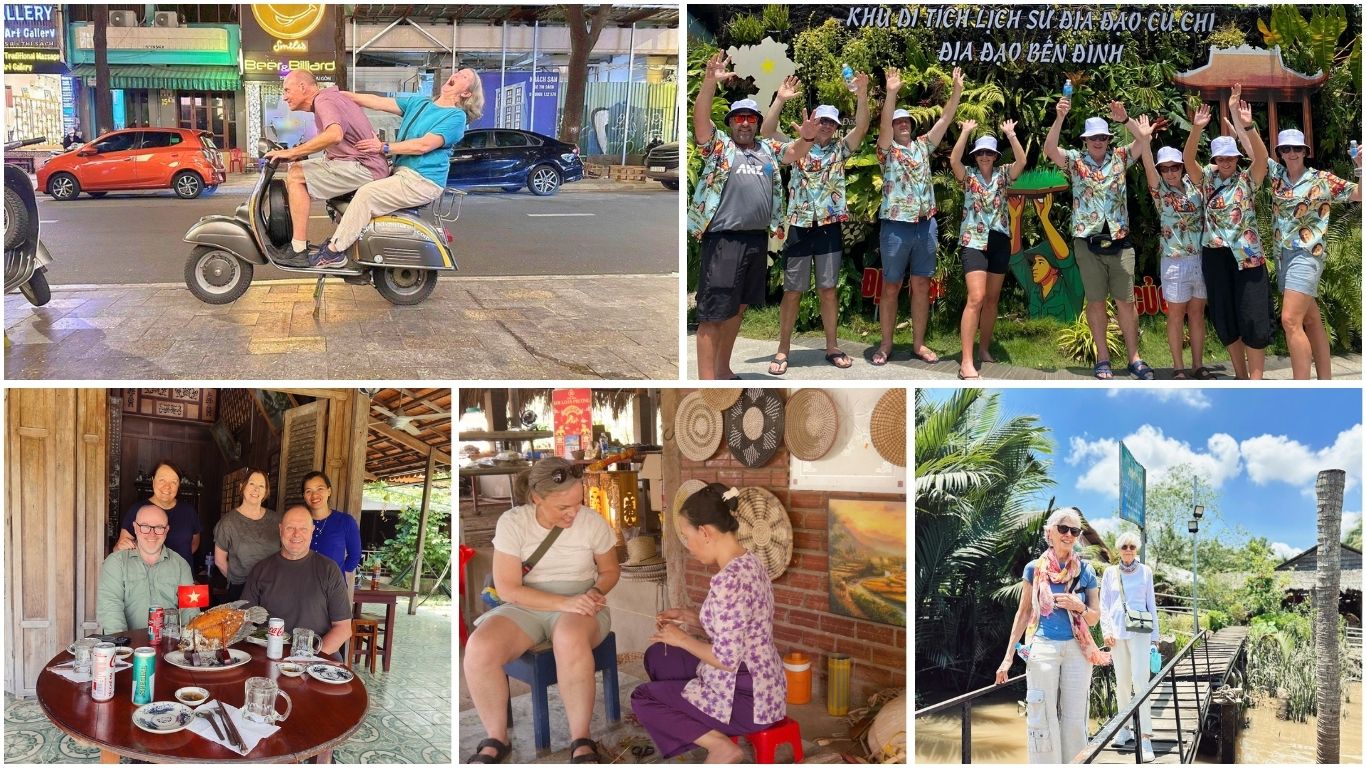
Day 10: Mekong Delta Excursion
The trip closes with a full day in the Mekong Delta, often called Vietnam’s rice bowl. A private boat cruises through narrow waterways lined with fruit orchards. It passes a coconut candy workshop and heads toward a floating market, where rural river life plays out in full view.
Small canal boats offer glimpses of stilt houses and traditional villages. These feel a world away from Saigon’s skyline, just an hour behind you. Vendors sell fruit and vegetables straight from their boats, adding color to the water. Sample tropical fruit at a local garden to round out the day. For a longer version of this experience, look into Luxury Cruise Mekong’s overnight journeys deeper into the delta.
By evening, a private transfer returns you to Ho Chi Minh City. Your ten-day journey ends here, having carried you from the misty north to the sun-soaked south.
Route 2: Ho Chi Minh City to Hanoi, South to North
Some travelers prefer to start in Saigon’s energy and let the trip wind down into Ha Long Bay’s calm. This works especially well when international flights route through the south. This direction covers the same highlights in reverse, with a few different stops that give it its own character.
Day 1: Arrive in Ho Chi Minh City
Landing in Saigon sets an energetic tone from the first moment. A private driver meets you at Tan Son Nhat Airport, close to the city center, and takes you straight to your hotel. Saigon’s buzz hits immediately, from the traffic to the neon signs to the smell of street food on every corner.
Keep this first night simple. A short walk near your hotel or an early dinner is enough to adjust before tomorrow’s city tour. With transport and accommodation already arranged, nothing is left to figure out after a long flight. Many travelers use this evening to try their first taste of southern Vietnamese cuisine. It tends to run sweeter and more herb-forward than dishes further north, a small preview of the culinary variety still ahead.
Day 2: Ho Chi Minh City Half Day Tour
After a free morning to recover from travel, a private guide leads a half-day tour through Saigon’s key landmarks. The War Remnants Museum and Reunification Palace anchor the afternoon. They offer a clear window into the events that shaped modern Vietnam.
From there, Notre Dame Cathedral and the old Central Post Office showcase the city’s French colonial architecture. Builders raised both during very different eras of Saigon’s history. The tour finishes at Ben Thanh Market, where the history lesson gives way to spices, textiles, and street food stalls.
Thinking about a fully private itinerary like this one? Browse our full range of Vietnam tours or reach out directly at vietnam@indochinavoyages.com to start customizing.
Day 3: Mekong Delta Full Day Tour
A private boat carries you into the heart of the Mekong Delta. It starts at Cai Be, where an orchard walk and traditional folk music set a relaxed tone. A rowing boat then glides deeper into narrow canals, where the countryside feels genuinely untouched by Saigon’s pace.
Crossing the Mekong River to An Binh Island, the day continues at a local workshop producing rice paper, coconut candy, and pop rice, along with homemade sweets and tea. If you want to move at your own pace, take a leisurely bike ride past orchards, schools, and pagodas before returning to the boat.
The day wraps up back in Ho Chi Minh City by evening. You have now seen a side of Vietnam that feels entirely different from the cities on either end of the trip. Extend this experience with Luxury Cruise Mekong’s longer river cruise options, or explore Saigon’s outskirts on the Ho Chi Minh Motorcycle Tour before heading north.
Day 4: Fly to Da Nang, Transfer to Hoi An
A relaxed morning in Saigon precedes a short flight north to Da Nang. It takes just over an hour and covers ground that would otherwise mean a full day on the road. On arrival, a private transfer carries you onward to Hoi An, a drive of around forty minutes along the coast.
Arriving by early evening means catching the lantern-lit streets just as they come alive. It makes a fitting introduction to one of Vietnam’s most photogenic towns. The contrast with Saigon hits immediately: quieter streets, softer light, and a noticeably slower pace of life along the river.
Checking into your hotel and settling in for the evening is enough for this transition day. Hoi An rewards patience. After two days of Saigon’s fast pace and the Mekong’s humidity, a slower first evening, perhaps with a riverside dinner, feels well earned.
Day 5: Hoi An Biking and Tra Que Village
A gentle morning bike ride through the countryside leads to Tra Que village. A hands on farming session here offers a genuine glimpse into traditional Vietnamese agriculture. Working the fields alongside local farmers, even briefly, is one of the most grounding moments on this route. Lunch follows, made from the morning’s harvest. For a deeper dive into local cuisine, join a private Hoi An cooking class later in the day.
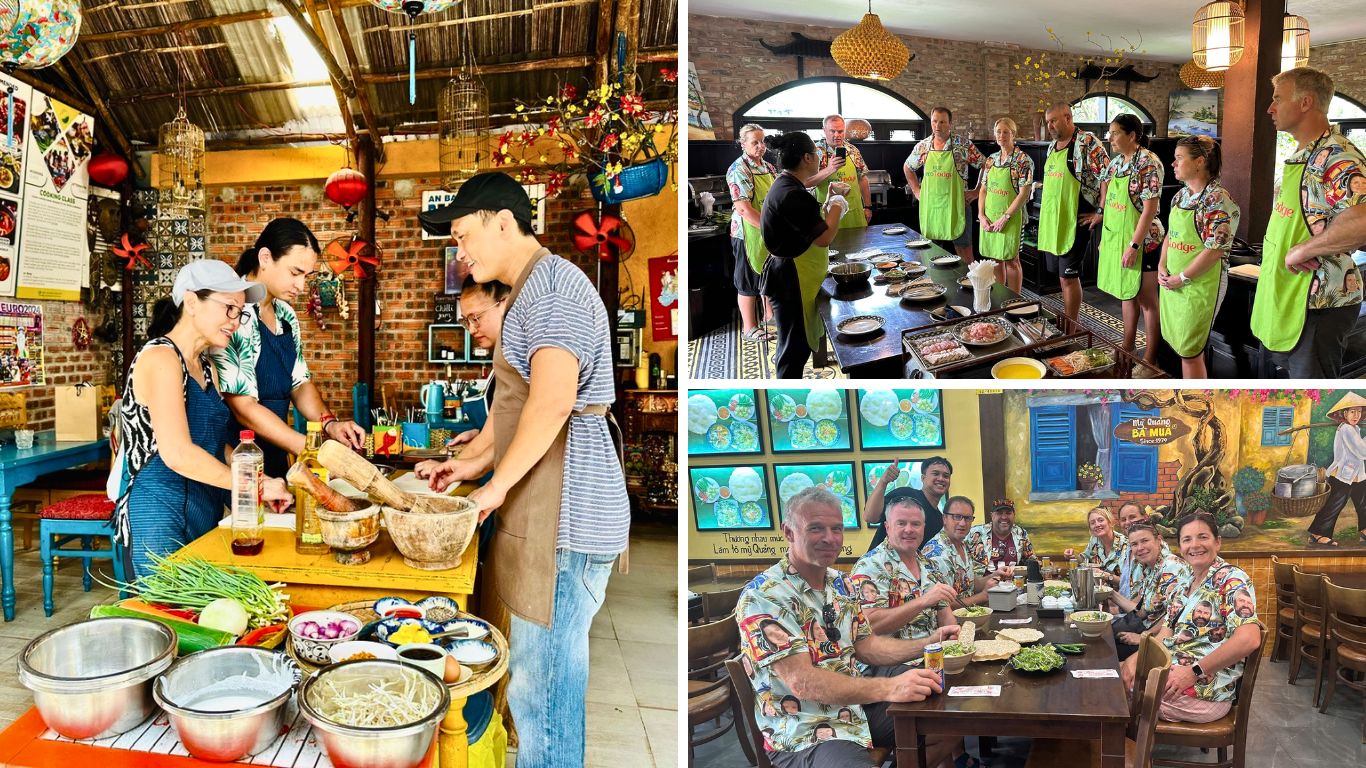
The afternoon shifts into exploring Hoi An’s Ancient Town. Centuries of Chinese, Japanese, French, and Vietnamese influence show up in the architecture along every street. The Japanese Covered Bridge remains the town’s most iconic landmark. Spend your free time afterward browsing tailor shops or relaxing at a riverside cafe as the lanterns glow overhead.
Day 6: My Son Sanctuary Half Day Tour
A half-day trip inland leads to My Son Sanctuary, a UNESCO World Heritage Site and the former spiritual and political center of the Champa Kingdom. This civilization flourished here between the 4th and 13th centuries. Set in a dramatic valley surrounded by forested hills, the weathered brick towers still carry a quiet, powerful atmosphere, despite centuries of erosion and, in places, wartime damage.
My Son offers something more intimate than larger Southeast Asian temple complexes: fewer crowds and a genuine sense of discovery. A private guide adds real value here. Most travelers know far less about Champa history than Vietnam’s more recent past, and a guide turns the carvings and symbolism into a genuinely fascinating story.
Return to Hoi An by early afternoon, with time to relax before the next leg north. Take one last stroll through the Ancient Town, or simply rest ahead of tomorrow’s flight.
Day 7: Fly to Hanoi
A free morning in Hoi An offers one last chance to shop, relax, or simply enjoy the town. A private transfer then takes you to Da Nang Airport for the flight to Hanoi, around ninety minutes and covering the full length of the country in a single hop.
The shift from central Vietnam’s slower rhythm to the capital’s dense, energetic streets hits within minutes of landing. Hoi An moves at the pace of a river. Hanoi moves at the pace of its traffic. That change of scenery is part of what makes this route so rewarding.
Your guide and driver meet you on arrival and take you straight to your hotel in the city center. The rest of the evening stays free. After six days of movement, this lighter arrival day offers a welcome pause before Hanoi’s full day tour ahead. A quiet dinner near your hotel is often the best way to spend it.
Day 8: Hanoi Full Day City Tour
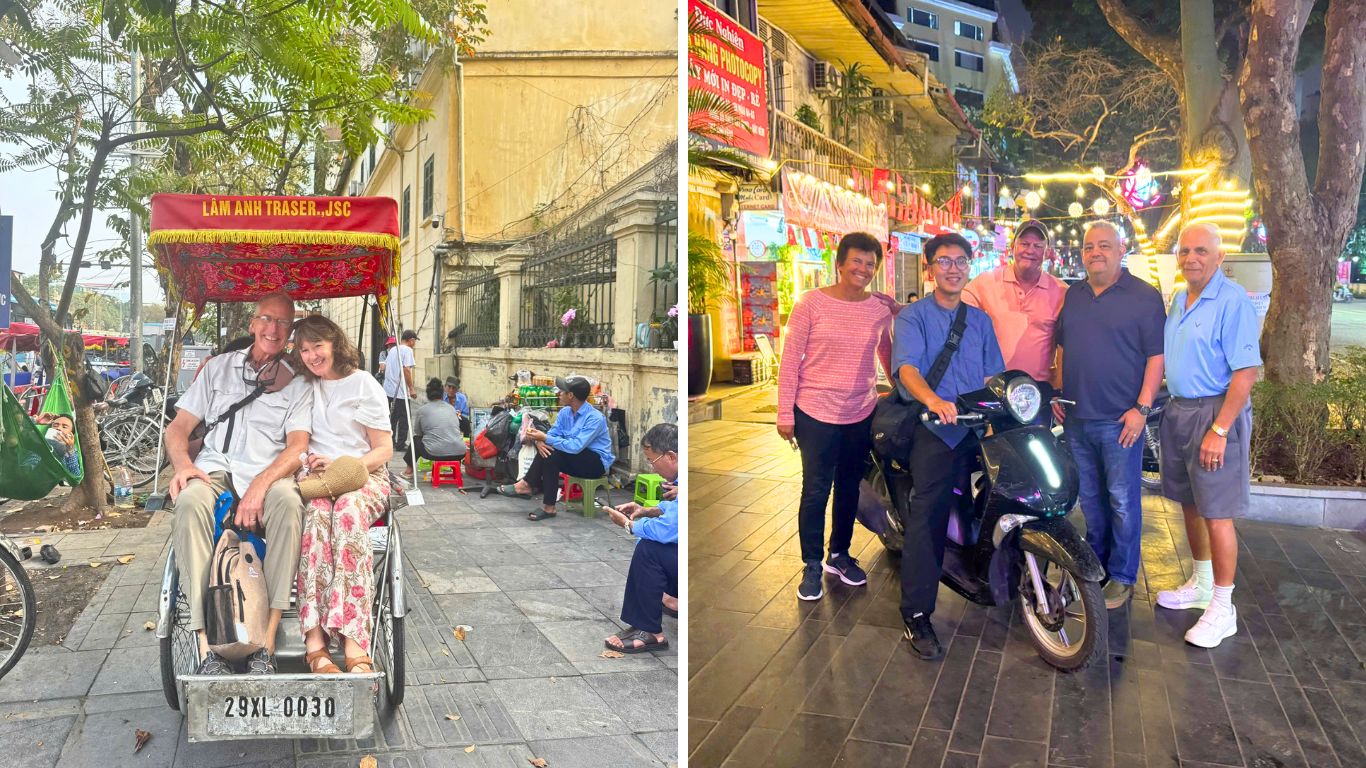
Hanoi’s history unfolds across a full day with a private guide. The Ho Chi Minh Complex leads into the Temple of Literature. The Vietnam Museum of Ethnology rounds out the morning with insight into the country’s ethnic diversity, a useful reference point after seeing the Cham ruins at My Son two days earlier.
A cyclo ride through the Old Quarter and French Quarter offers a relaxed way to take in the architecture in the afternoon. Evening brings a traditional water puppet show, a distinctly Hanoi experience that blends storytelling, music, and craftsmanship. This full immersion into the capital makes a strong final city stop before the trip winds down into Ha Long Bay. Give it the full day rather than splitting it across other activities.
Day 9: Hanoi to Ha Long Bay
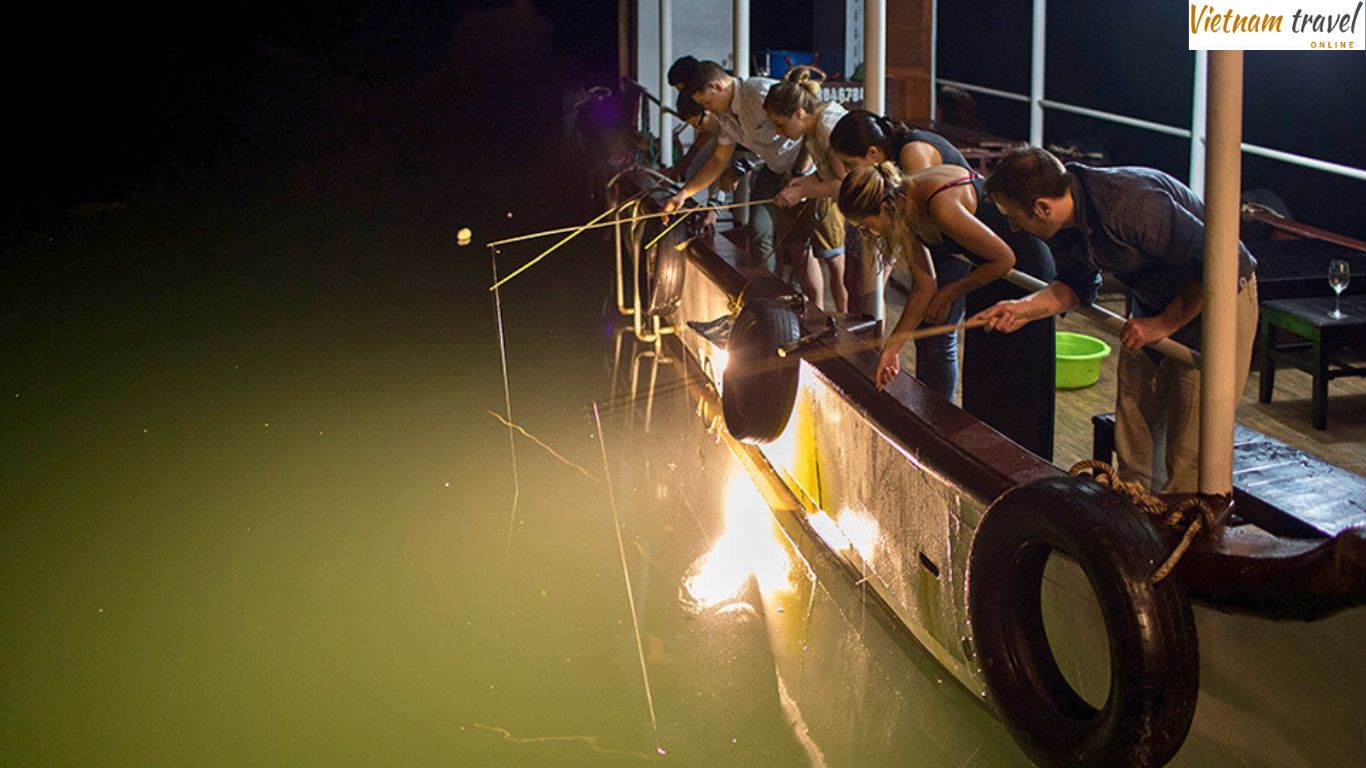
A private car collects you for the drive to Ha Long Bay, where boarding your cruise starts the trip’s most scenic finale. Limestone karsts rise from the water in every direction. The afternoon typically includes kayaking, a cave visit, or simply relaxing on deck as the boat moves between islands.
Dinner on board, paired with the sunset over the bay, ranks among the most photographed moments of any Vietnam trip. Sleeping surrounded by these cliffs makes the entire detour north worth it. Halong Junk Cruise offers private cabin options for travelers who want extra comfort on this final leg, from larger suites to boats with dedicated sundecks for stargazing after dinner.
Day 10: Ha Long Bay to Departure
The final morning begins slowly. The bay’s calm water and cool air set a peaceful tone before departure. A visit to a limestone grotto often comes before the boat cruises back toward the harbor, giving one last look at the scenery that made the previous night so memorable.
By late morning, a private transfer takes you to Hanoi for your onward flight. This closes a ten-day journey that began in Saigon’s fast-paced streets and ended in the quiet beauty of Ha Long Bay. Reversing the route this way gives the trip a distinctly different arc. It builds excitement early and winds down gently at the very end, leaving you with a last impression of stillness rather than departure lounge rush. For many travelers, this closing rhythm makes the south-to-north direction feel like the more satisfying way to experience the country.
Choosing Between the Two Routes
Both routes cover the same unmissable highlights, so the decision often comes down to logistics and mood, not which one wins outright. Hanoi first suits travelers who want a gentle introduction before building toward Saigon’s energy. Ho Chi Minh City first suits those who want an energetic opening and a calm, scenic finish in Ha Long Bay.
- Flight routing: pick the direction that matches your international arrival city to avoid extra domestic legs.
- Travel style: north to south builds toward excitement, while south to north winds down toward relaxation.
- Season: central and southern Vietnam’s weather patterns differ, so your travel dates may naturally favor one direction.
- Group dynamics: families with young children often prefer the calmer south-to-north finish, while couples and solo travelers sometimes enjoy building toward Saigon’s nightlife.
Whichever direction fits best, book your private guides, drivers, and accommodation in advance. This keeps all ten days running smoothly, from the first airport pickup to the final departure transfer.
Practical Tips for 10 Days in Vietnam
1. Visa & Entry Requirements
Visa policies change periodically, so confirm the current rules before you book. Most travelers can apply for an e-visa online, and approval usually takes a few days. Some nationalities qualify for short-term visa-free entry. Check Vietnam’s official immigration site for the current list and exact duration.
2. Budget & Money Matters
Daily costs vary by travel style. Budget travelers spend roughly $40 to $50 a day. Mid-range travelers spend $70 to $120 a day, covering boutique hotels, guided tours, and nicer meals. Luxury travelers spend $200 or more a day on private tours and high-end stays. Bring a mix of cash and a debit or credit card. USD exchanges easily in most cities. ATMs work well in cities but run less reliably in rural areas.
3. Getting Around
- Hanoi to Ha Long Bay: about 2.5 to 3 hours by private car or shuttle
- Hanoi to Hue or Da Nang: a 1 to 1.5 hour domestic flight, which saves a full day compared to the train
- Hue to Hoi An: a scenic private car transfer over the Hai Van Pass, with stops for photos
- Da Nang or Hoi An to Ho Chi Minh City: a quick domestic flight
- Within cities: walking, cyclos, ride-hailing apps like Grab, or bicycles
4. Best Time to Travel
Weather shifts significantly from north to south. Spring, from March to April, and autumn, from September to November, generally offer the most balanced conditions. Even the low season brings a benefit: fewer crowds and lower prices.
5. Staying Connected
Pick up a local SIM card at the airport for cheap, reliable data. Wi-Fi is widely available in hotels, cafes, and even on trains.
6. Health & Comfort
Pack mosquito repellent and sunscreen, especially for the Mekong Delta or beach stops. If you’re new to street food, start with cooked dishes. Move on to raw herbs and salads once your stomach adjusts.
7. Bargaining & Shopping
Bargaining is expected at markets like Hanoi’s Dong Xuan or Saigon’s Ben Thanh. A friendly smile goes a long way. Aim to settle around 30 to 40 percent below the initial asking price.
8. Local Etiquette
Dress modestly at temples. Remove your shoes before entering someone’s home. Learn a few basic greetings, like xin chào for hello and cảm ơn for thank you. Locals appreciate the effort.
Why Choose a Slow Travel Style for 10 Days in Vietnam
Ten days might sound short, but it doesn’t have to feel rushed. Many travelers try to tick off as many cities as possible. They end up spending more time on buses and flights than actually experiencing the country. A slower approach changes that. Focus on three or four destinations instead of six or seven. This lets you savor each place and connect with local culture, rather than collecting a blur of photos.
Picture a relaxed morning coffee in Hanoi’s Old Quarter before exploring hidden alleys, instead of rushing to catch a train. Picture two full nights on a Ha Long Bay cruise, watching the light shift over the limestone cliffs, instead of squeezing the bay into a rushed day trip. Slow travel lets Vietnam reveal itself at its own pace.
Frequently Asked Questions
Is 10 days enough time to see Vietnam?
Ten days lets you experience highlights across the north, center, and south. This length suits first time visitors who want breadth without feeling rushed.
Should I travel north to south or south to north?
It mostly depends on your flight routing and preferred pace, since both directions cover the same core destinations in a different order.
What’s the budget for 10 days in Vietnam?
If you’re planning independently, $1,000 to $1,500 per person covers mid-range hotels, domestic flights, meals, and day tours. Luxury travel runs higher. Our Vietnam in 10 Days Tour starts from $861 per person, based on a group of 7 to 8 sharing twin rooms, and includes accommodation, a guide, domestic flights, and most meals.
Do I need a visa to enter Vietnam?
Visa requirements vary by nationality and change periodically. Confirm current rules closer to your travel dates.
Is Vietnam safe for solo travelers?
Vietnam is generally safe and welcoming for solo travelers. Standard precautions apply. Stay aware in crowded markets, use registered taxis or ride-hailing apps, and keep copies of your important documents.
Is this itinerary suitable for families?
Most stops work well for families. The Cu Chi Tunnels and War Remnants Museum can feel intense for younger children, so private guides can easily swap in a lighter alternative.
How much walking is involved?
A moderate amount. Expect city exploring on foot, some cycling in Hoi An, and light hiking at spots like the Cu Chi Tunnels and temple grounds. Most fitness levels handle it well, but bring comfortable shoes.
Should I extend the trip beyond 10 days?
Ten days works well if you stick to three or four core regions, as this itinerary does. To add Ninh Binh, Phu Quoc Island, or Sapa, plan for 12, 14 days or more.
Do I need to book flights and hotels in advance?
Domestic flights sell out and get pricier closer to the date, especially around December to February and July to August. Book those ahead. Hotels offer more flexibility, though popular spots in Hoi An and Ha Long Bay cruises are worth reserving early too.
What food and drink concerns should I know about?
Street food is generally safe when it’s freshly cooked, and the stall stays busy, since high turnover means fresher ingredients. Drink bottled or filtered water rather than tap. Larger cities handle dietary restrictions easily; smaller towns may need advance notice.
Can this itinerary be customized?
Yes. Every element, from hotel category to daily pacing, can be tailored around your interests and travel dates.
What’s included with a private tour?
Private transfers, an English-speaking guide, accommodation, and most meals are typically included. International flights, visas, and travel insurance are not.