

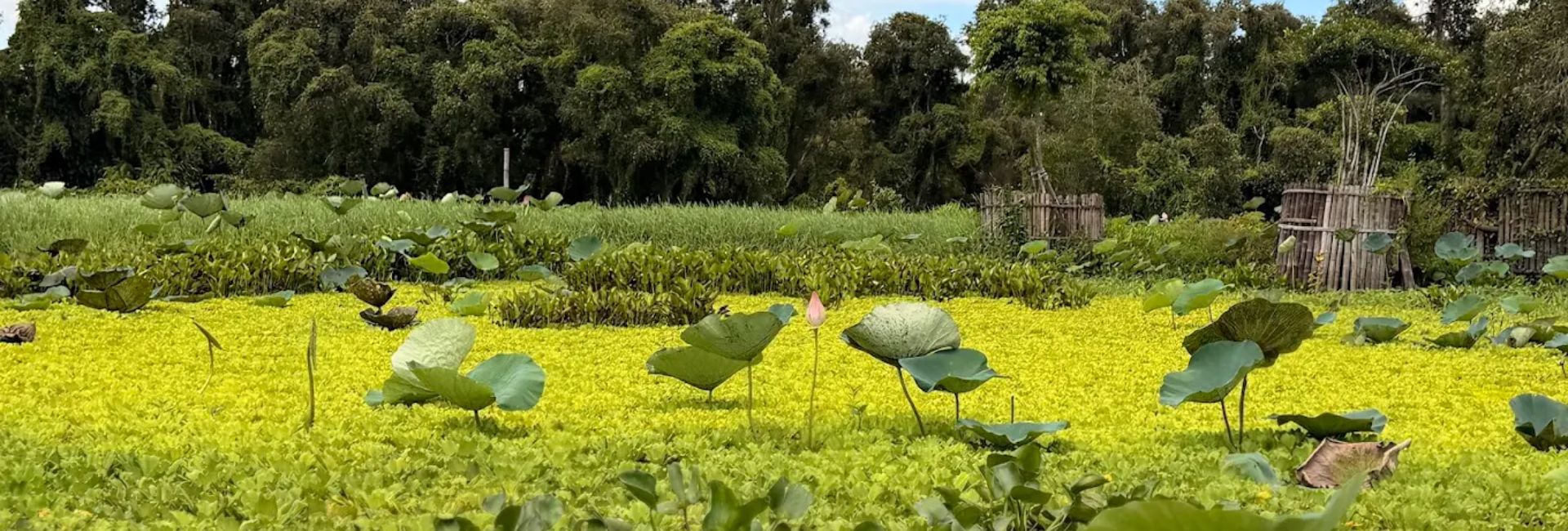
The Mekong Delta in July is lush, green, and full of life. Rivers rise, orchards ripen, and rice paddies turn a deep emerald. This is Vietnam’s rainy season in full swing. But rain rarely ruins a trip here. Showers tend to arrive in short afternoon bursts. Mornings stay calm and bright.
Compared with the dry winter months, the Mekong Delta in July offers something different. Crowds are thinner. The scenery is richer. Locals call this time mua nuoc noi, or the rising water season. Canals grow fuller and more scenic, not dangerous. For travelers who want authentic scenery without the crowds, July is often the sweet spot. A trusted guide to Mekong Delta seasons can help match the right month to the right kind of trip.
What can you find in this travel blog?
- Is July a Good Time to Visit the Mekong Delta?
- Weather in the Mekong Delta in July
- What Makes the Mekong Delta Special in July?
- Best Things to Do in the Mekong Delta in July
- What to Pack for July
- July Travel Costs and Crowd Levels
- July vs Other Months: Is It the Right Time for You?
- Suggested Mekong Delta Tours for July
- Practical Tips for Visiting the Mekong Delta in July
- FAQs
Is July a Good Time to Visit the Mekong Delta?
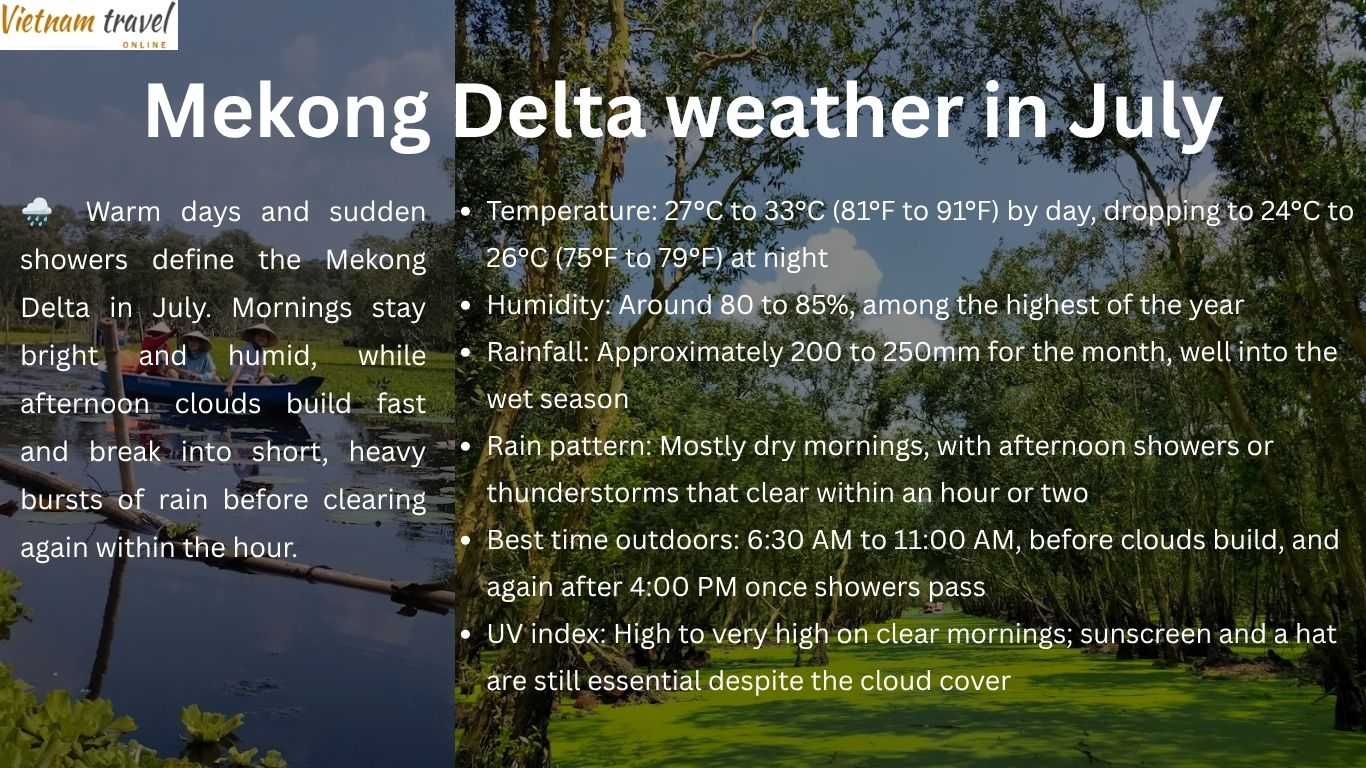
July sits inside the wet season. But that single fact only tells part of the story. Here’s what the weather actually looks like day to day, and why it rarely gets in the way.
What the rainy season really feels like
Mornings are calm, bright, and humid. They’re ideal for boat rides and market visits. Clouds build through early afternoon. Then showers arrive in short bursts, rarely lasting more than an hour. Thunderstorms roll through occasionally, with real drama. They pass quickly, too. The air cools, and the light softens after each one, which is great for photography. Rivers grow fuller as the rising water season begins. The countryside turns a green that feels almost too vivid to be real.
Pros and cons of visiting in July
Pros:
- Lush, saturated scenery across rice fields and orchards
- Fewer tourists than the winter peak
- Better rates on private tours and hotels
- Peak tropical fruit season
- Smooth, comfortable boat trips despite the rain
Cons:
- Rural roads can get muddy after heavy showers
- Itineraries need some flexibility around afternoon weather
- A few outdoor activities may need rescheduling
Weather in the Mekong Delta in July
Weather shapes everything about a trip to the Delta, from which boat rides feel best to how the light looks in photos. Here’s what July actually brings, and how to plan around it rather than against it.
July weather at a glance
- Temperature: Typically ranges from 27 to 33 degrees Celsius
- Rainfall: Frequent but concentrated, often in short, defined bursts
- Humidity: Regularly above 80 percent, even on drier days
- Sunshine hours: Around five to six hours daily, mostly in the morning
How the rainy season shapes your trip
Rain in July rarely settles in for the whole day. Showers tend to arrive in short afternoon bursts, then clear just as quickly. Mornings are usually dry and bright, making them the best window for sightseeing, orchard visits, and market runs. A flexible itinerary works best here, with the busiest activities scheduled early and rainy afternoons left open for food or rest. River cruises and boat trips stay enjoyable throughout, since a passing shower on the water often adds to the atmosphere rather than disrupting it.
Is July weather suitable for your travel style?
July rewards a certain kind of traveler more than others. Nature lovers and photographers tend to get the most out of this month, thanks to saturated greenery, dramatic skies, and soft post-rain light. Travelers who don’t mind the occasional shower will find the weather easy to work around, especially with a private itinerary that can shift with the day. Those who want guaranteed all-day sunshine, however, may find the dry winter months a better fit instead.
What Makes the Mekong Delta Special in July?
Weather aside, July has its own personality. Fruit, water, and rice all peak at once. This gives visitors a version of the Delta that simply doesn’t exist the rest of the year.
The tropical fruit season is at its best
Orchards hit full stride in July. Rambutan, mangosteen, longan, durian, and mango all ripen at once. Many family-run orchards welcome visitors to walk the rows and sample fruit straight from the tree. This guide to the Delta’s best orchards is a good starting point before booking a private orchard tour.
Rivers and canals are full of life
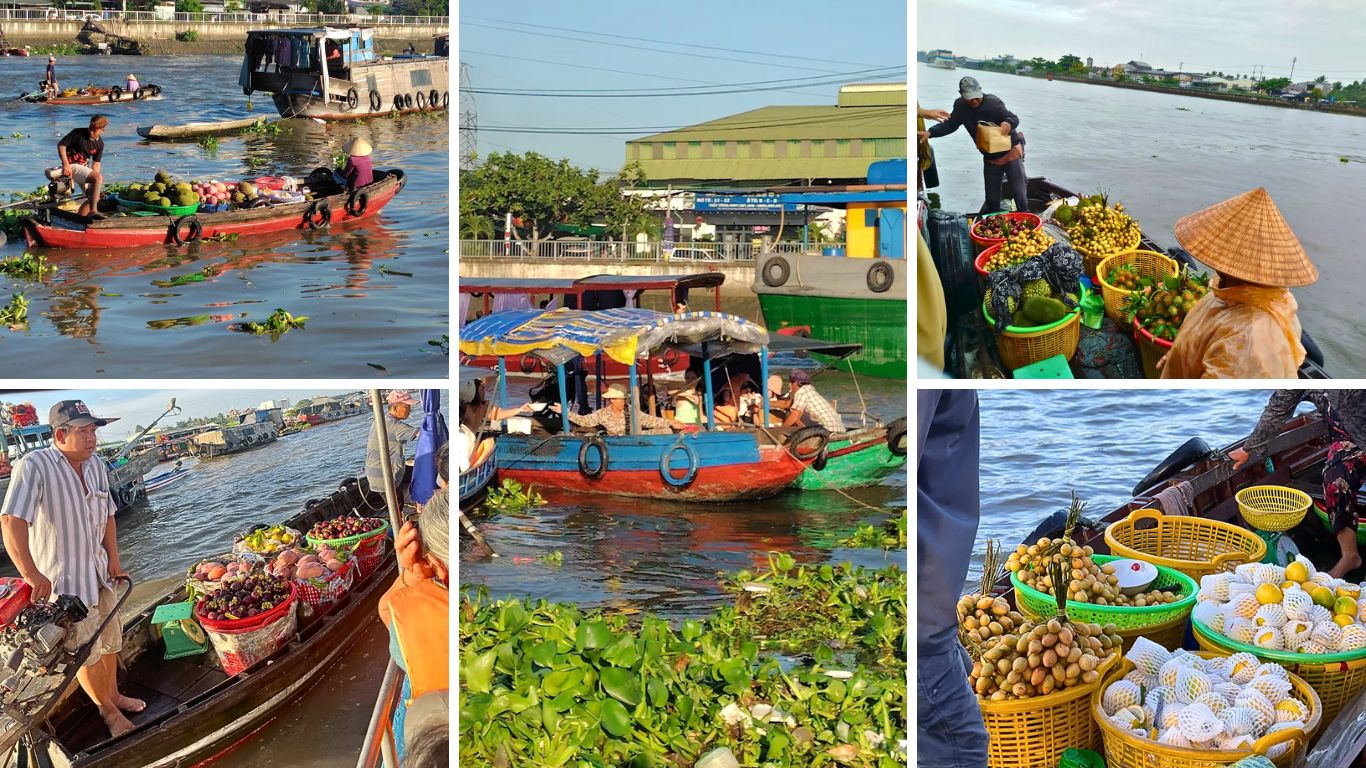
As the rising water season begins, canals swell. Early mornings bring a mirror-like stillness, with reflections of palm trees and stilted houses. Boat rides feel more immersive, too. They glide through narrower waterways that sit lower and less scenic during the dry months. Life on the water becomes more visible, from floating homes to mobile vendors and fishing boats.
Tra Su Cajuput Forest turns into a green fantasy world
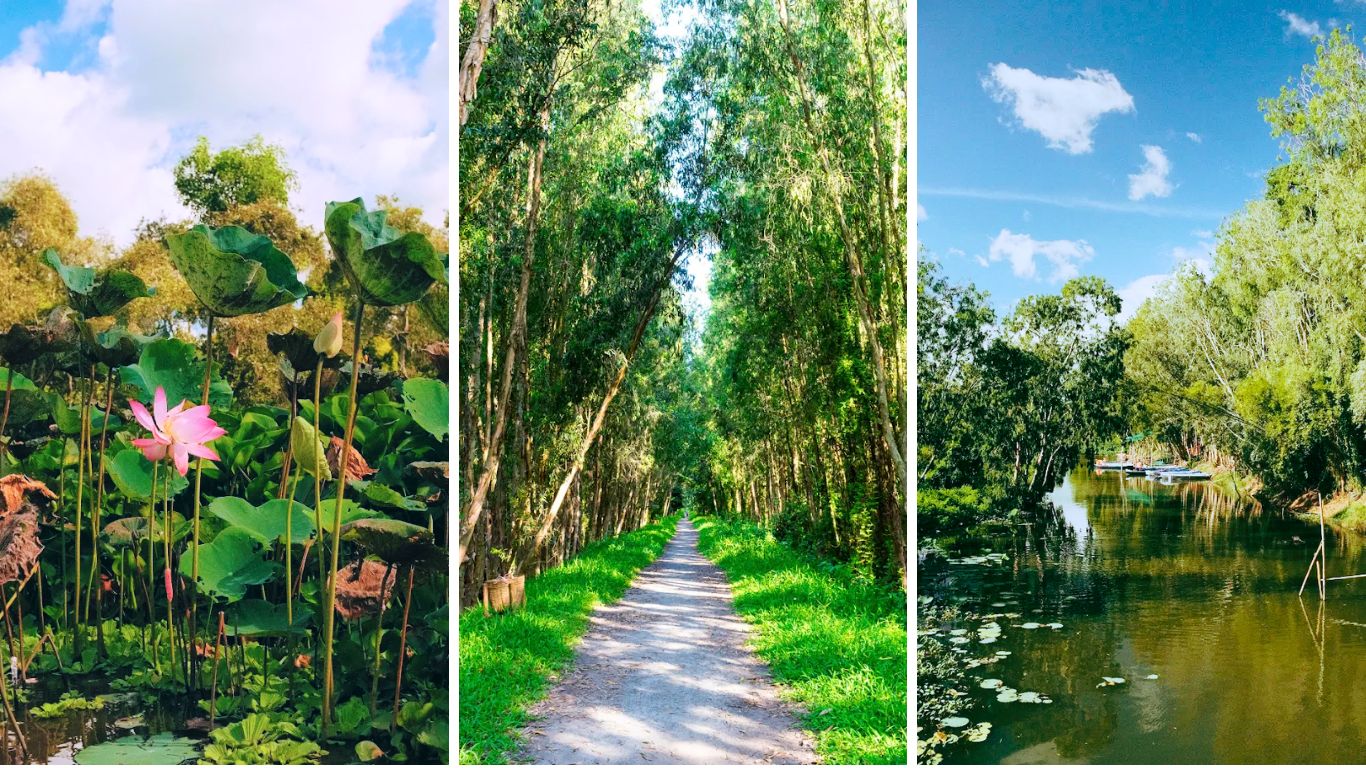
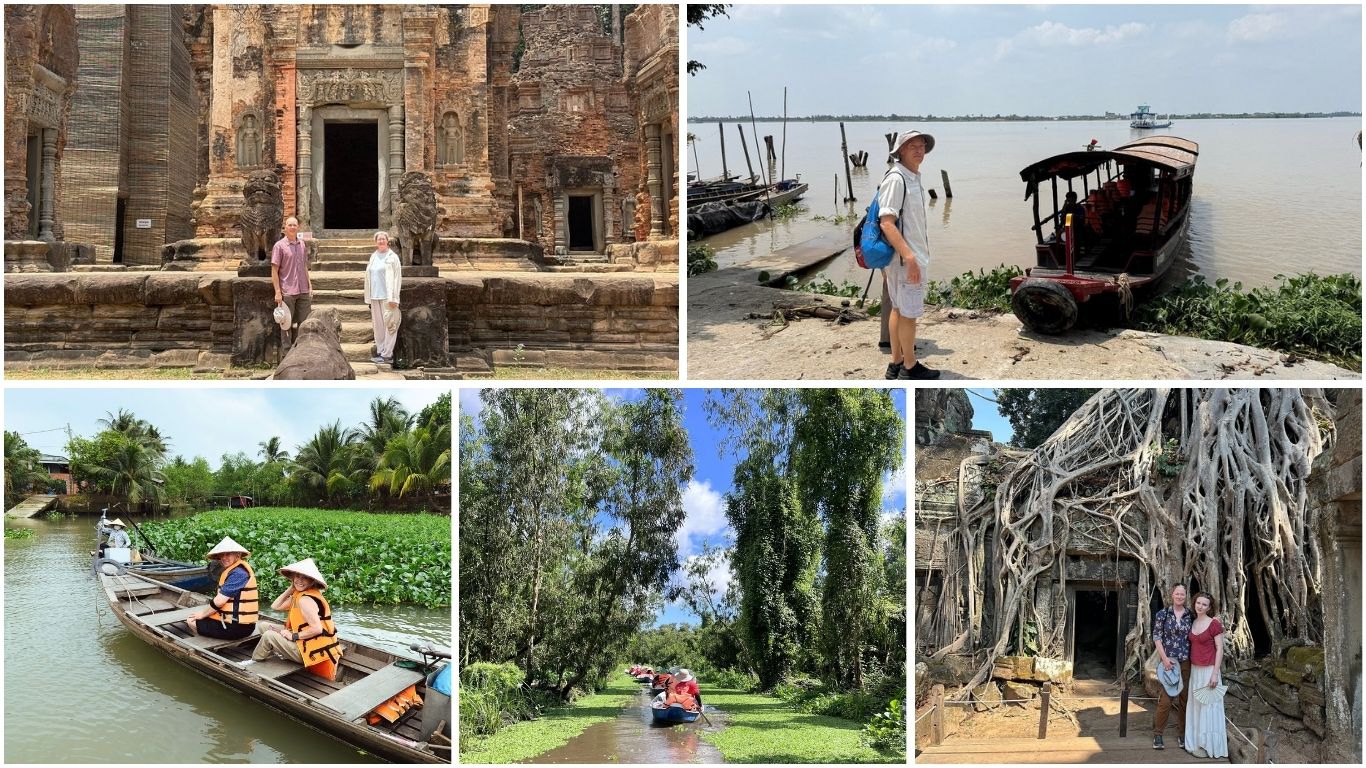
Few places capture the change better than Tra Su Cajuput Forest in An Giang. As water levels rise, the forest floor disappears under a thick carpet of duckweed. The whole landscape turns a surreal shade of green. Gliding through by small boat or canoe, weaving between flooded trees, is one of the most photogenic experiences the region offers all year. This guide to the region’s water landscapes covers it in more depth.
Rice fields turn brilliantly green
Freshly planted paddies deepen into saturated emerald across the flatlands. This creates some of the best photography conditions of the year. Soft light after an afternoon shower only adds to the effect.
Peaceful atmosphere with fewer visitors
Crowds are thinner than during winter’s high season. That means more time to linger at a floating market or chat with an orchard owner, without a packed schedule pushing you along.
Best Things to Do in the Mekong Delta in July
This mix of rain and richness opens up a specific set of experiences. They work best when the day is planned around the weather, not against it.
Visit fruit orchards during harvest season
Ben Tre and Vinh Long are two of the best provinces for orchard visits in July. Both are known for dense canals and family-run fruit gardens. A private guide can time the visit around the freshest harvest of the week, something a fixed group tour rarely allows. These guides to Ben Tre and Vinh Long are worth reading before choosing a base.
Take a sampan ride through shaded canals
Narrow wooden sampans slip through canopied canals that larger boats can’t reach. This offers a quieter, more intimate view of daily riverside life.
Explore floating markets in the early morning
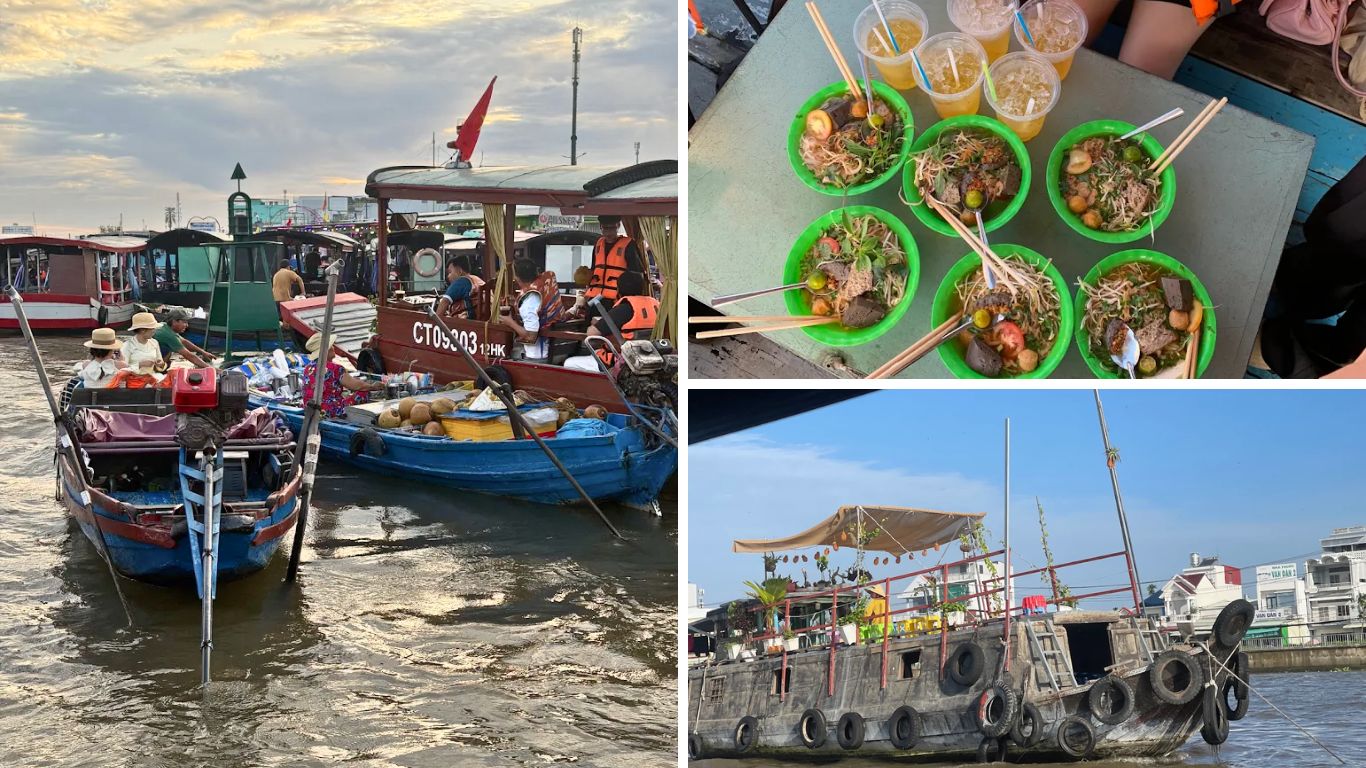
Markets like Cai Rang stay active in July. They have shrunk somewhat over the past decade, as land routes made it easier to move goods by road. But what they lose in scale, they make up for in atmosphere. Morning mist drifting over full rivers makes this one of the most photogenic times of year to visit. This guide to the reaching Cai Rang floating market covers timing and transport.
Enjoy local food on rainy afternoons
A sudden shower is the perfect excuse to sit down for canh chua ca linh hoa dien dien. This sour soup, made with linh fish and Sesbania flowers, only appears on menus once the waters rise. Paired with fresh seasonal fruit, it’s one of the most authentic tastes of the region this time of year.
Join a cycling tour between villages
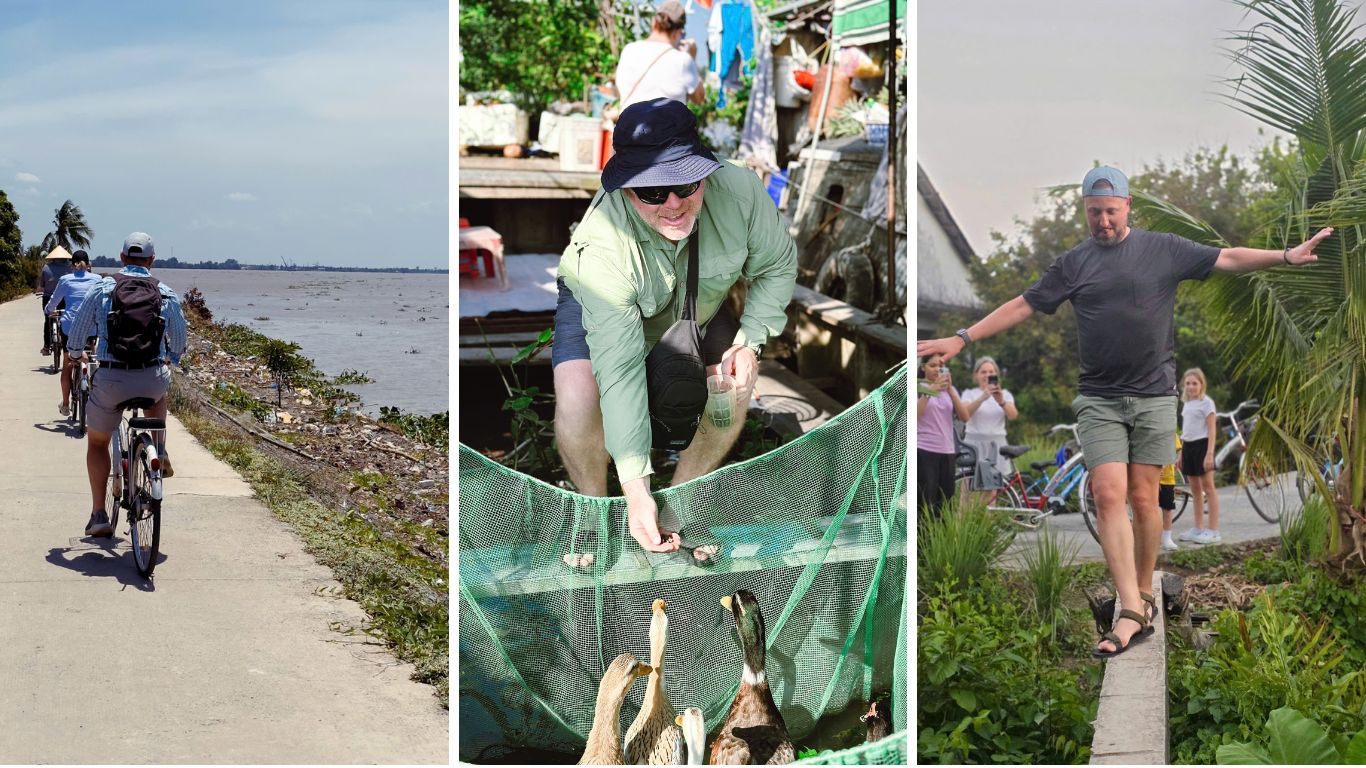
Cycling is still a wonderful way to see rural life up close. But July calls for shorter, local routes rather than a full day in the saddle. Rural paths can turn slick with mud and moss after rain. A sudden downpour offers little shelter mid-route. Early, dry mornings are the best window. This three-day Mekong cycling tour is built with exactly this seasonal pacing in mind.
Planning a private orchard visit, a sampan ride, or a full day of guided sightseeing is easier with local support. My team at Indochina Voyages can build a private itinerary around the season’s best moments. Reach out at [email protected] or browse available Vietnam tours to start planning.
What to Pack for July
The right bag makes all the difference between fighting the weather and simply moving with it. A few smart choices keep you dry, cool, and ready for whatever the afternoon sky decides to do.
Rain-friendly essentials
- Light, packable rain jacket that folds small enough to live in a day bag
- Compact umbrella for sudden downpours between boat stops
- Waterproof phone pouch, since spray and splashes happen more than expected
- Quick-dry clothing that won’t cling after a shower
- Comfortable sandals built for wet ground and muddy paths
- Insect repellent with DEET or Picaridin, non-negotiable given the humidity and fuller canals
Clothing for humid weather
Heavy layers lose the battle against Delta humidity every time. Breathable, lightweight fabrics stay comfortable even when the air feels thick, and humidity rarely dips below 75 percent, even right after a shower cools things down.
Camera protection for boat trips
Sampan rides come with a bit of spray, and sudden rain has a habit of catching photographers off guard. A simple dry bag or waterproof case keeps cameras and phones safe without slowing anyone down.
July Travel Costs and Crowd Levels
Traveling in July doesn’t just mean lusher scenery. It also changes the entire rhythm of the trip, from how crowded a boat feels to how much say you get over where you stay. Here’s what that looks like in practice.
Fewer tourists create a more relaxed travel experience
Rain keeps many international visitors away, and the Delta feels different because of it. Boats leave with room to breathe instead of being packed shoulder to shoulder. Homestays welcome guests without the assembly-line feel of peak season. Even popular stops like Cai Rang floating market or Tra Su Cajuput Forest can be taken in slowly, without a queue of other groups waiting behind you. For travelers who’d rather explore than compete for space, that shift alone makes July worth considering.
Greater choice of accommodations and flexible bookings
With fewer visitors in town, the Delta’s accommodation options open up considerably. Boutique riverside stays and family-run homestays that book out weeks ahead in winter often have rooms available with just a few days’ notice in July. That flexibility extends to service too. Smaller crowds mean hosts and guides have more time and attention for each guest, which tends to translate into a warmer, more personal experience rather than a rushed one.
Better value without sacrificing the experience
Lower demand naturally pushes rates down, and July often brings some of the best hotel deals and tour promotions of the year. None of that comes at the cost of the experience itself. The Delta’s rhythm, canals, orchards, floating markets, and river life, runs year-round regardless of season. Travelers get the same rich atmosphere for less, which leaves more room in the budget for an upgrade elsewhere, whether that’s an extra night on a cruise or a better room category.
July vs Other Months: Is It the Right Time for You?
| Month | Weather | Crowds | Fruit Season | Best For |
|---|---|---|---|---|
| June | Beginning of rainy season | Moderate | Starting | Early summer travelers |
| July | Peak greenery with regular showers | Low | Excellent | Nature lovers and photographers |
| August | Wetter but richer waterways | Low | Very good | Relaxed slow travel |
| December to February | Dry and cooler | High | Limited | First-time visitors |
Each month brings a different version of the Delta. Matching the season to your priorities makes for a better trip than simply picking the busiest months.
Suggested Mekong Delta Tours for July
Not every traveler wants the same pace. Some want a quick taste of river life. Others want days to lose themselves in orchards and canals. Here’s how to match the season to the right kind of trip.
A short escape into the Delta’s waterways (1 to 2 days)
Even a single day is enough to trade city noise for the sound of paddles cutting through water. A short private trip weaves together narrow canals, a working orchard, and a floating market still busy with morning trade. It’s an easy add-on for travelers based in Ho Chi Minh City who want the Delta’s atmosphere without reshaping their whole trip around it.
Discover the authentic Mekong beyond the highlights (3 to 4 days)
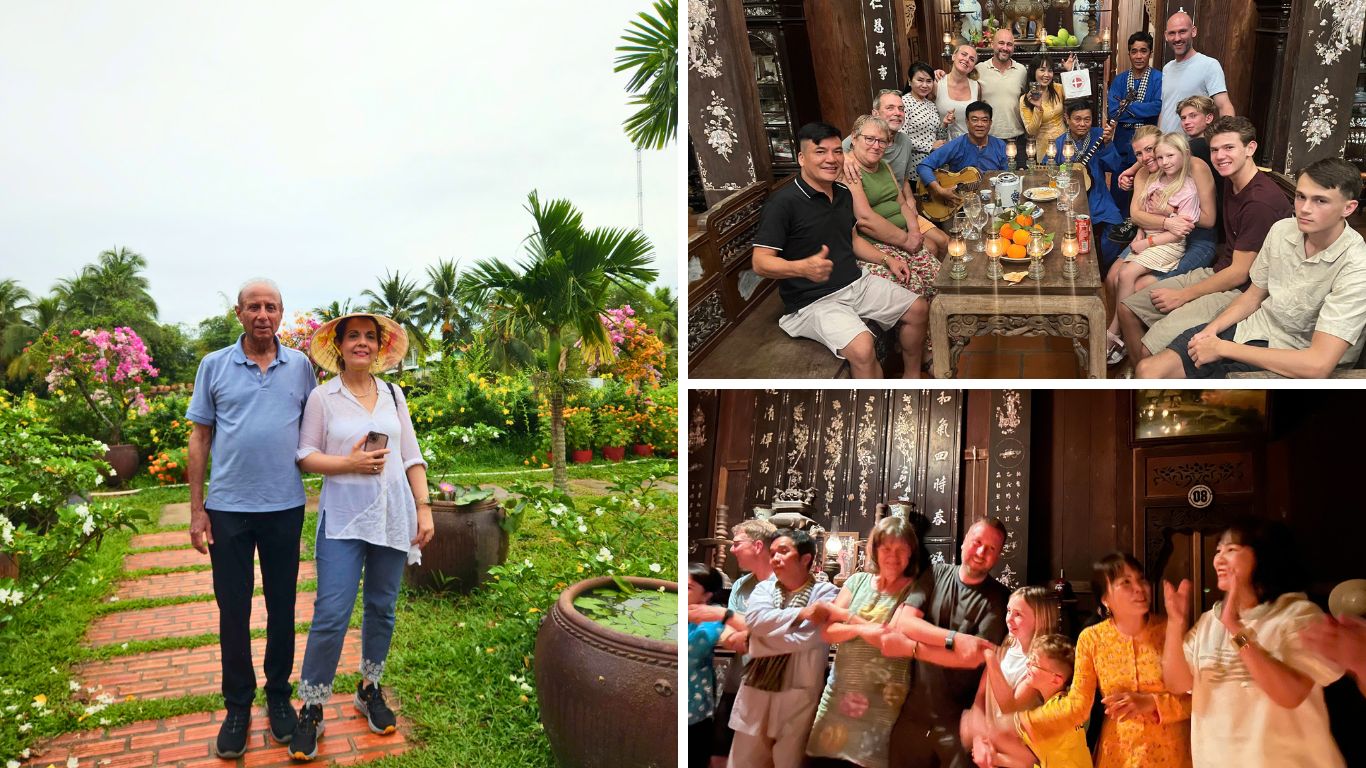
Slow down, and the Delta opens up. A longer private itinerary makes room for orchard mornings in Ben Tre or Vinh Long, a quiet cycling route between villages, and a night sleeping in a homestay along the river. It’s the difference between passing through and actually arriving. Travelers craving even more distance from the everyday can extend south with this six-day Mekong to Con Dao Island itinerary, trading canals for coastline.
Extend your journey with a Mekong River cruise
There’s a particular magic to watching the Delta drift by from the deck of a boat. In July, the river runs fuller and greener, and the crowds thin out just enough to make it feel personal. Multi-day cruises that push on into Cambodia turn the trip into something bigger: two countries, one river, and days of scenery that rarely repeats itself. For a fuller regional journey, this thirteen-day southern Vietnam and Cambodia discovery is worth a look. Travelers who want to stay focused purely on the water can compare Mekong cruise options directly.
Practical Tips for Visiting the Mekong Delta in July
- Start sightseeing early, before afternoon clouds build
- Carry cash for small villages and local markets
- Keep electronics in a waterproof pouch or dry bag
- Don’t cancel plans over a forecast alone; most showers pass quickly
- Book accommodation with flexible cancellation policies
- Taste seasonal fruit while it’s freshest
- Choose a private driver or guided transport over a self-driven motorbike, since wet roads make self-driving riskier
FAQs
Is July too rainy to visit the Mekong Delta? Not at all. Showers are usually short and predictable, and most itineraries continue smoothly around them.
Can you visit floating markets in July? Yes, markets like Cai Rang remain active, though they have shrunk somewhat over the years as land routes expanded.
What fruits are in season in July? Rambutan, mangosteen, longan, durian, and mango are all at their peak, making orchard visits especially rewarding.
Are Mekong Delta cruises available in July? Yes, and the rising water season makes for lush, scenic cruising with fewer crowds than the winter months.
How many days should I spend in the Mekong Delta in July? A one to two day trip covers the highlights. Three to four days allows time for orchards, cycling, and a homestay.
Is July suitable for families with children? Yes, as long as the pace stays flexible. Use rainy afternoons for food, markets, or shorter activities instead of long outdoor excursions.
Ready to plan a private trip to the Mekong Delta in July? My team can build a tailored itinerary around the best orchards, canals, and floating markets. Get in touch through the contact page or explore more travel inspiration at Vietnam Travels Online.