

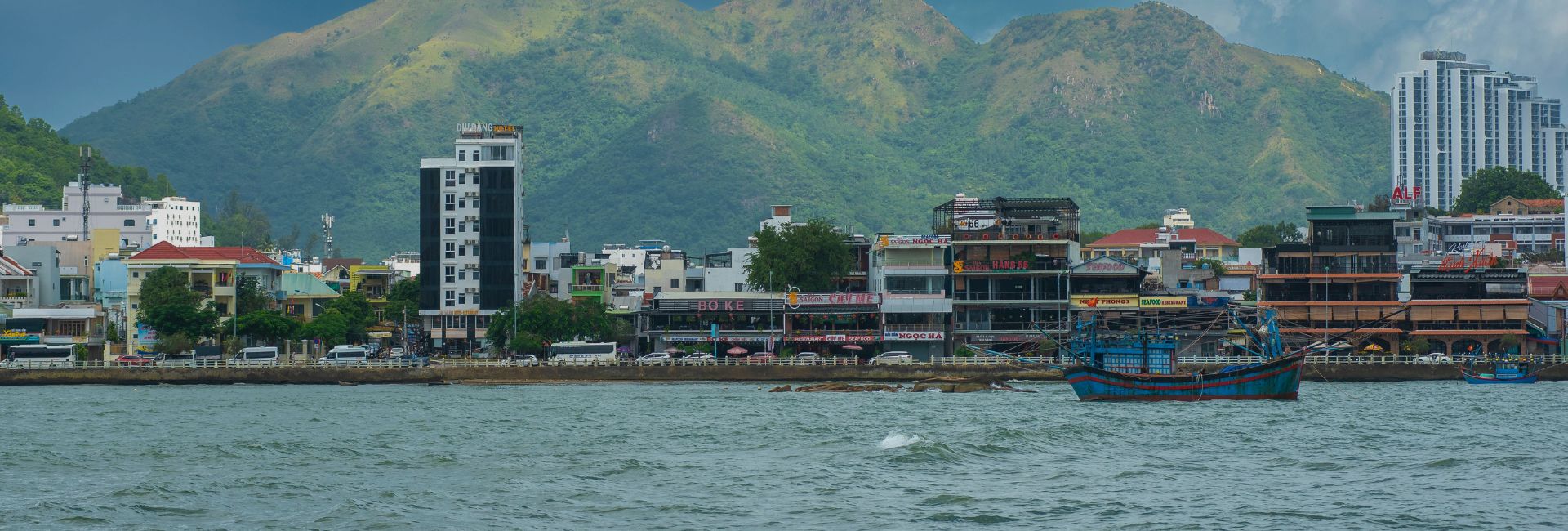
Planning the best time to visit Nha Trang is the first step toward the beach holiday this city is famous for. Stretching along a sheltered bay with turquoise water, a backdrop of forested hills, and a lively waterfront promenade, Nha Trang delivers the kind of coastal escape that stays with you. Whether you’re after world-class diving, island-hopping adventures, or simply a sun-lounger and a cold drink, it delivers. But only if your timing is right.
Knowing when to go makes a real difference to your experience. Weather, sea conditions, crowds, and prices all shift meaningfully across the year. The best time to visit Nha Trang for a family looks quite different from the ideal window for a budget diver or a honeymooning couple. This guide covers everything from water clarity and typhoon risks to festival dates and flight deals, so you can plan with real confidence.
Quick answer: For most international travellers, March to June is the sweet spot. You get reliable sunshine, calm seas, clear water, and reasonable prices before the domestic summer rush. If that window doesn’t work, read on. Every season has its case.
What can you find in this travel blog?
- Understanding Nha Trang’s Seasons
- When Is the Sea at Its Best? Swimming, Diving & Island Hopping
- Best Time to Visit Nha Trang Based on Your Travel Style
- Month-by-Month Guide to Nha Trang — Weather & Highlights
- Nha Trang Weather vs. Travel Costs
- How Nha Trang Compares to Other Vietnamese Beach Destinations
- How to Integrate Nha Trang into Your Vietnam Itinerary
- Practical Tips for Planning Your Nha Trang Trip
- FAQs
Understanding Nha Trang’s Seasons
Nha Trang’s climate doesn’t follow a single dramatic wet-dry split like other parts of Vietnam. Its geography, sheltered by mountains to the north and south, creates a more forgiving weather pattern. That said, two distinct seasons shape the travel experience here.
Dry Season (January to August) — Sun, Calm Seas & Peak Months
The dry season is long, generous, and excellent for beach travel. Temperatures sit between 25°C and 34°C across most of this window. Humidity rises gradually toward summer, but rainfall stays minimal from January through late May. The sea is calm, clear, and warm, making it the prime window for swimming, diving, and island tours.
Within the dry season, two distinct moods emerge. January through March is quieter and relaxed, with pleasant breezes and cooler evenings perfect for exploring the city on foot. From June through August, the atmosphere shifts entirely. Vietnamese domestic tourism peaks, beaches fill up, and the city takes on a vibrant, festive energy. Both have their appeal, but they offer very different experiences.
Rainy Season (September to December) — What to Expect & Silver Linings
Honesty first: October is Nha Trang’s most challenging month. Rainfall peaks, seas turn rough, and island tours get cancelled. November follows closely. These months bring heavy, sometimes prolonged downpours. The rain doesn’t fall every hour, but it’s unpredictable enough to genuinely affect beach plans.
That said, the rainy season isn’t a write-off for every traveller. Prices drop sharply, the city feels more local, and cultural sites like Po Nagar Cham Towers and Long Son Pagoda are perfectly enjoyable in light rain. December marks a turning point. Rainfall eases, the festive atmosphere builds toward Christmas and New Year, and the sea begins to settle. For flexible travellers on a budget, September and December offer surprising value.
When Is the Sea at Its Best? Swimming, Diving & Island Hopping
Sea conditions are the single biggest factor for most visitors to Nha Trang. They vary more than you might expect across the year. Knowing when the water is calm, clear, and safe transforms how you plan every activity, from a casual morning swim to a full-day island tour. Here’s what the sea actually looks like month by month.
Best Months for Swimming & Beach Relaxation
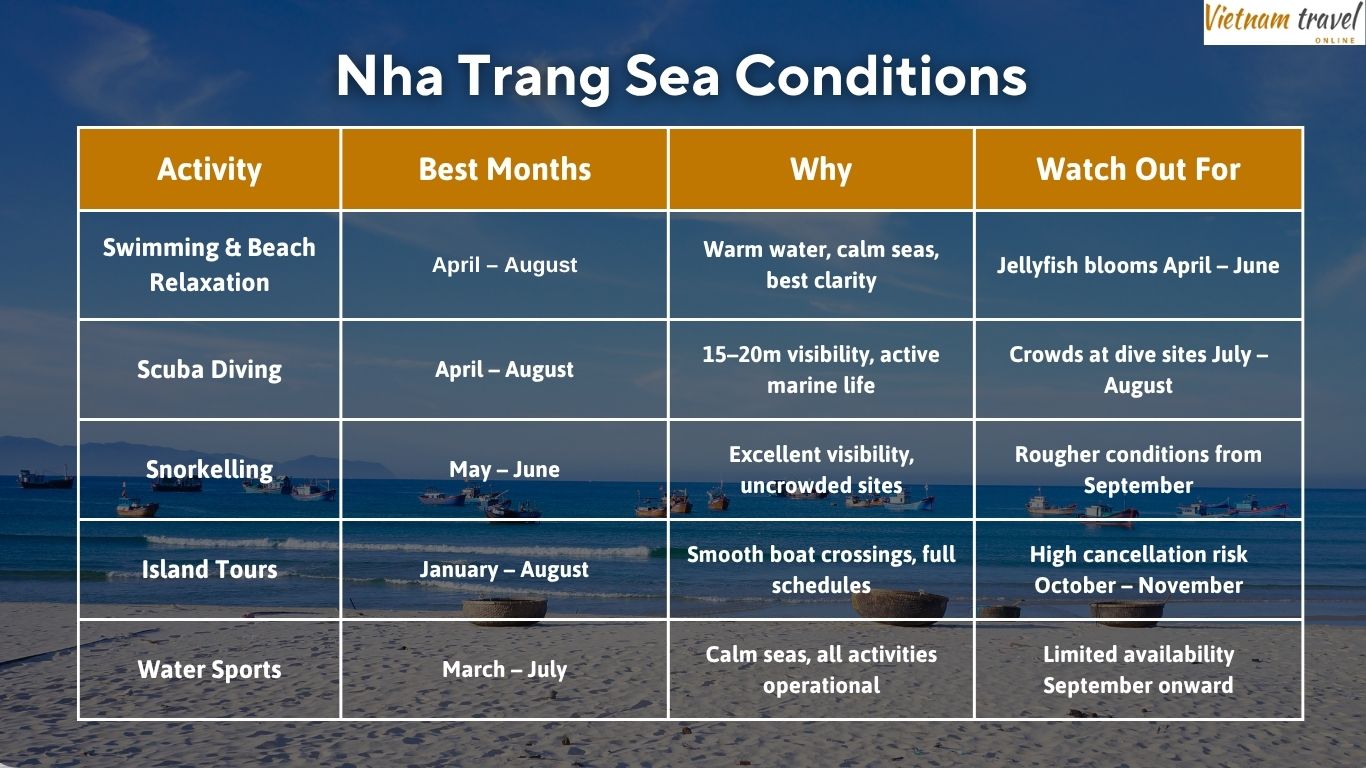
The calmest and most inviting swimming conditions fall between April and August. April, May, and June offer the clearest water before summer crowds arrive. Water temperatures hover around 27°C to 29°C, warm enough to stay in for hours.
One thing many visitors don’t anticipate: jellyfish. Nha Trang’s waters see periodic jellyfish blooms, most commonly between April and June and occasionally in August. It varies by year and beach, so check locally before you swim. Bai Dai Beach tends to be less affected. If you’re planning a beach relaxation holiday and want to know which stretch of sand suits the season best, this guide to Nha Trang’s beaches and activities is a solid starting point.
Best Months for Scuba Diving & Snorkelling
April through August is peak diving season around Nha Trang. Visibility regularly reaches 15 to 20 metres. Marine life around Hon Mun Marine Protected Area is at its most active, with reef fish, sea turtles, moray eels, and occasional whale sharks on deeper dives.
For snorkelling, May and June hit a particular sweet spot. Visibility is excellent, boat conditions are calm, and sites around Hon Mun, Hon Tam, and Hon Mot are uncrowded compared to July and August. First-time divers do well booking in April or May when operators have more availability. Our team arranges private diving and snorkelling day trips with hotel pickup, equipment, and a bilingual guide. Reach out via Vietnam Travels Online to put something together.
Best Months for Island Tours & Water Sports
Island tours run reliably from January through August, with the best conditions between March and July. Boat crossings to Hon Mun, Hon Tam, Hon Tre, and the outer islands are smooth. Operators run full schedules, and water sports like kayaking, parasailing, and jet skiing are all available.
From September onward, cancellations increase, particularly in October. If you’re visiting in the shoulder months, book with a private operator rather than a group boat. Private arrangements have more flexibility to reschedule around daily weather windows. Key activities to book ahead during peak season:
- Island-hopping day tours combining Hon Mun and Hon Tam
- Snorkelling and kayaking packages
- Parasailing and water sports at Bai Dai or Vinpearl Beach
- Sunset boat cruises along the bay
Best Time to Visit Nha Trang Based on Your Travel Style
The best time to visit Nha Trang depends as much on what kind of traveller you are as on the weather itself. Families, couples, and budget travellers all have different priorities. Nha Trang accommodates each of them, just at different points in the calendar.
For Families
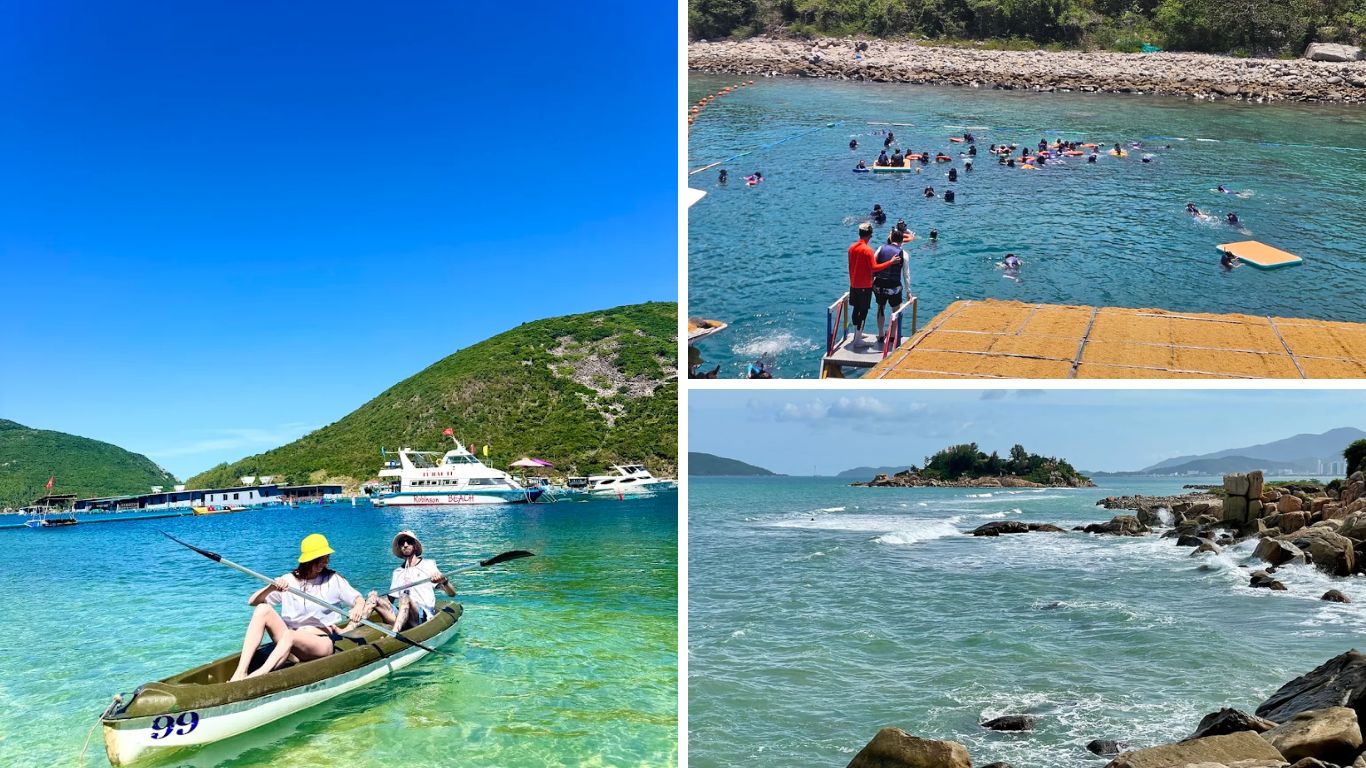
Families tend to do best in March, April, or early May. The weather is reliably sunny without the intense midday heat of July and August. Seas are calm enough for children to swim safely, and beaches haven’t yet filled with the domestic summer crowd. Western Easter breaks land right in the middle of prime conditions.
Vinpearl Land on Hon Tre Island is a year-round option for families. It combines a water park, amusement rides, and an aquarium under one roof. That makes it a reliable backup plan on any overcast day. Here’s a closer look at what Vinpearl Land offers if you’re planning to include it. For families wanting a structured itinerary with private transport and a guide, our 6-day Dalat and Nha Trang package pairs the cool highlands with the coast beautifully.
For Couples & Honeymooners
January through March is the most romantic window in Nha Trang. The weather is settled and pleasant, the beaches are quiet, and beachfront resorts are far more affordable than in peak summer. There’s a stillness to the city in these months that lends itself to long dinners, slow mornings on the beach, and spontaneous boat trips without the crowds.
Late May and early June also work well for couples who want good weather without summer crowds. Luxury properties along Tran Phu Beach and out toward Bai Dai offer genuine seclusion during this window. For honeymooners wanting a fully arranged experience with private transport, curated stays, and guided excursions, our team at Indochina Voyages can build an itinerary around exactly what you’re looking for.
For Budget Travellers
September, October, and November are the cheapest months to visit Nha Trang. Hotel rates drop 30 to 50 percent compared to peak season. Flights into Cam Ranh Airport follow a similar curve. The trade-off is real: October brings rough seas and unpredictable rain, and some island tours simply won’t operate.
The smarter budget play is March or late May. Dry season conditions without peak prices, and good mid-range hotels are easy to find without booking months ahead. A few practical tips for keeping costs down:
- Book accommodation 6 to 8 weeks ahead for March and May
- Travel on weekdays since domestic tourists drive up weekend rates
- Choose private half-day tours over full-day group boats for better value
- Look at boutique hotels on streets behind Tran Phu rather than the beachfront strip
Month-by-Month Guide to Nha Trang — Weather & Highlights
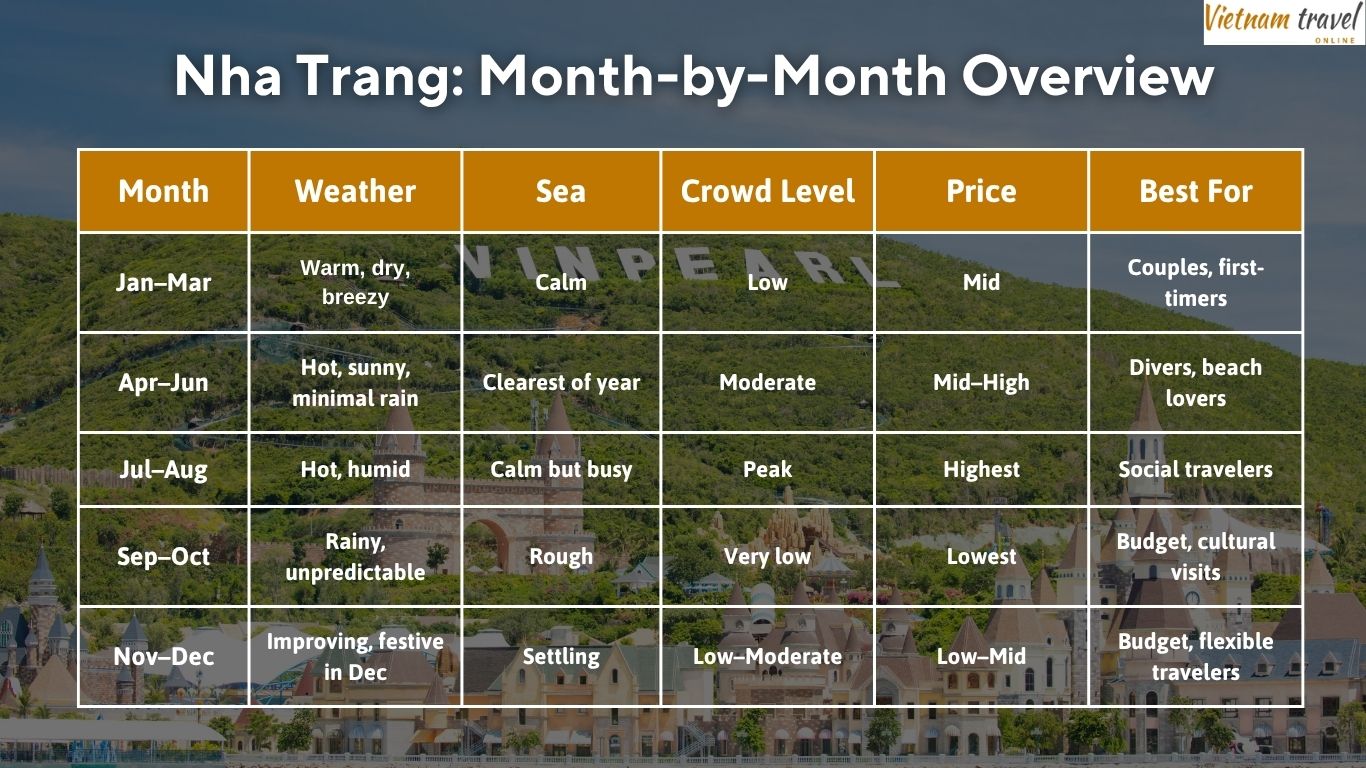
Each month in Nha Trang has its own character, and the difference between visiting in April versus October is not just a matter of weather. It shapes everything from what activities are available to how much you pay and how crowded the beaches feel. If you’re still weighing up whether Nha Trang is the right destination altogether, here are five compelling reasons to visit Nha Trang Beach before diving into the breakdown.
A few things worth knowing before you scan the table. Tet, Vietnam’s Lunar New Year, falls in late January or early February and brings a brief but noticeable surge of domestic visitors. The Nha Trang Sea Festival typically takes place in June, filling accommodation fast around that window. And October stands alone as the one month where the weather risk genuinely outweighs the savings. Every other month has a legitimate audience. Here’s the full picture at a glance:
Nha Trang Weather vs. Travel Costs
Knowing the best time to visit Nha Trang for your budget is just as important as knowing the weather. Accommodation, flights, and tours all follow the seasonal rhythm closely. But there are windows where the value-to-weather ratio works strongly in your favour.
Peak Season — High Demand, Higher Prices
Peak season runs roughly from April through August, with July and August at the absolute ceiling. Beachfront hotels along Tran Phu Beach sell out two to three months ahead for summer weekends. Flights into Cam Ranh Airport (CXR) from Ho Chi Minh City and Hanoi are more expensive and fill quickly during school holiday weeks.
If peak season is your only option, book accommodation three to four months ahead. Prioritize mid-week arrivals, and consider properties one or two streets back from the beach. You’ll find significantly better rates without much loss in convenience.
Shoulder Season — The Sweet Spot
January through March and late May to early June are when savvy international travellers tend to land. The weather is excellent, sea conditions are reliable, and prices sit noticeably below peak levels. Good mid-range and boutique hotels can typically be booked two to four weeks ahead without stress.
This is also when private guided experiences offer the best value. Our team at Vietnam Travels Online arranges private day trips, hotel recommendations, and full multi-day itineraries across this window with genuine availability and competitive rates.
Low Season — Budget-Friendly but Eyes Open
September through November brings the lowest prices of the year. A beachfront room costing $120 in July can drop to $60 or less in October. Airline prices from major regional hubs follow a similar pattern. For travellers who genuinely don’t mind overcast skies and occasional rain in exchange for savings, this window delivers.
The honest caveat: October is the one month where the trade-off tilts too far for most visitors. Rough seas and unpredictable weather mean you may spend days waiting for conditions to clear. If budget is the priority, September and late November are far safer bets than October itself.
Is There Really a Bad Time to Visit Nha Trang?
Straight answer: October is the only month with a strong case against visiting, particularly for beach-focused travellers. For everyone else, the question isn’t whether to go but what kind of trip you’re planning and how flexible you can be.
Every other month serves someone well. January suits slow travellers and couples. April suits divers and beach lovers. August suits social travellers who enjoy a buzzing resort energy. December suits those who want a festive atmosphere with improving weather. Nha Trang’s sheltered bay position makes it more weather-resilient than most of Vietnam’s coast. Even in the rainy season, cultural and culinary experiences remain fully accessible.
How Nha Trang Compares to Other Vietnamese Beach Destinations
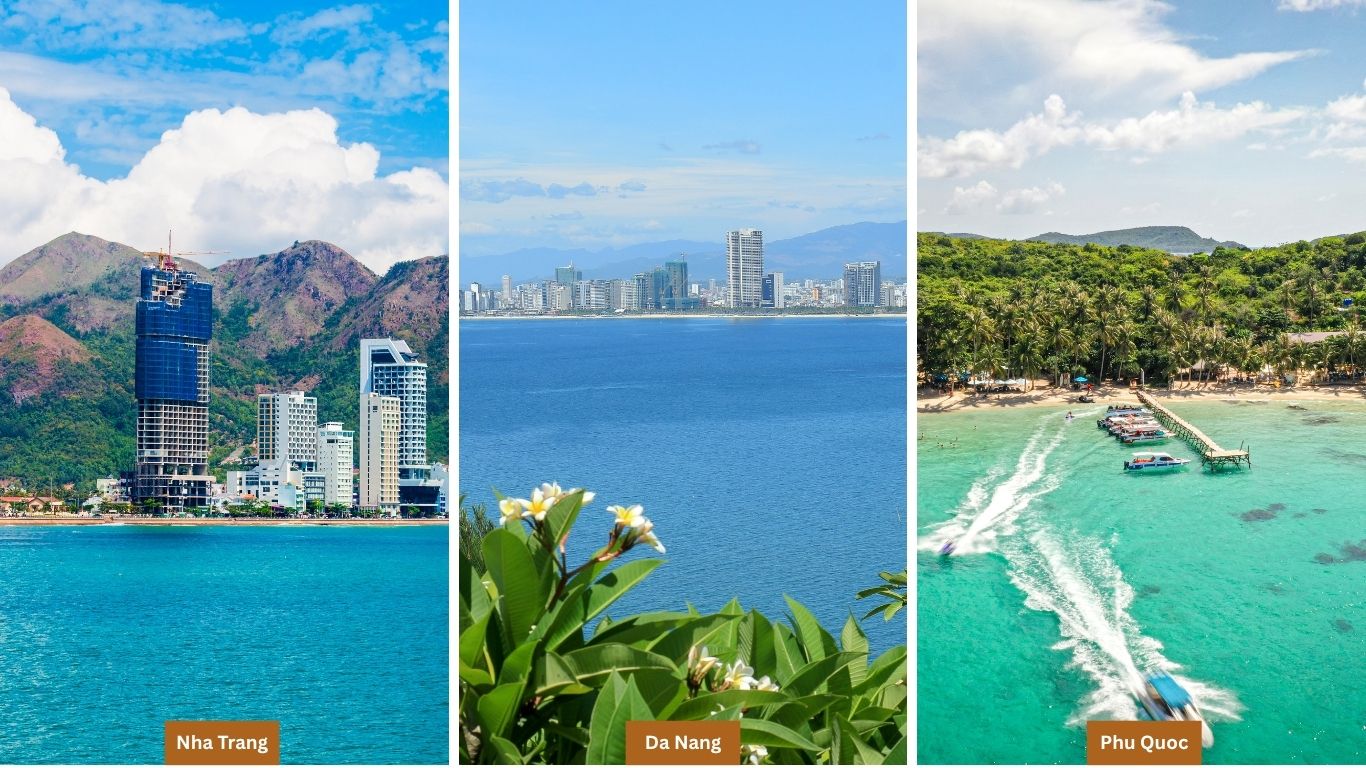
One comparison worth knowing: Nha Trang’s rainy season runs later than Da Nang’s. Da Nang and Hoi An hit their wettest and most typhoon-prone window in October and November. Nha Trang is drying out in November and recovering well by December. If you’re planning a multi-city itinerary, this timing difference matters.
If guaranteed beach weather in November or December is essential, Phu Quoc in the south is worth considering. Its driest months fall precisely when Nha Trang is still settling. Nha Trang is not a destination you need to perfectly time to enjoy. You just need to know what to expect and plan around it, honestly.
How to Integrate Nha Trang into Your Vietnam Itinerary
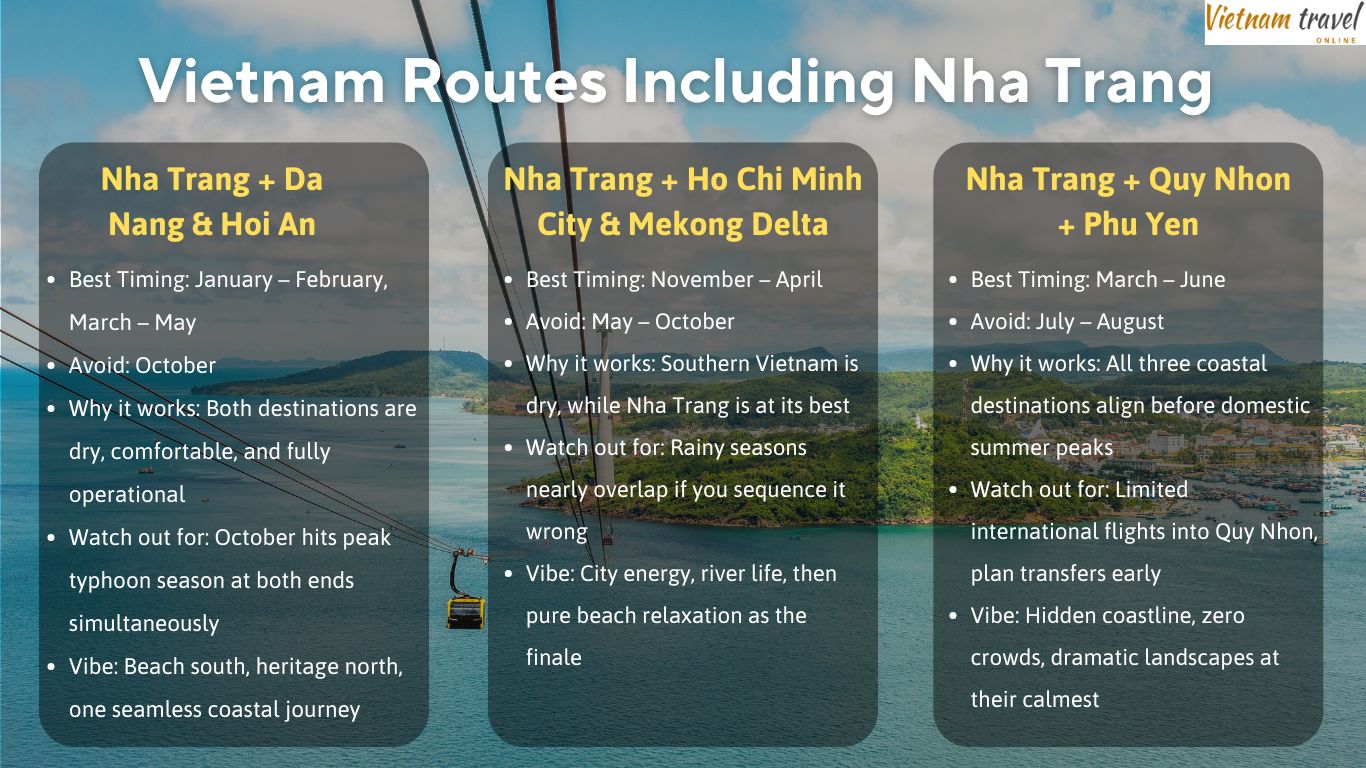
The popular Nha Trang, Da Nang and Hoi An pairing works beautifully from January through May, though October is a hard avoid as typhoon season hits both destinations simultaneously. Our team has put together a dedicated guide on travelling from Hoi An to Nha Trang, covering transport options and pacing. Pairing Nha Trang with Ho Chi Minh City and the Mekong Delta works best from November through April, sequencing the city and river first, then finishing on the beach. Our team at Luxury Cruise Mekong arranges private cabin experiences that connect naturally with a Nha Trang extension. For travellers seeking something off the beaten track, the Nha Trang, Quy Nhon, and Phu Yen coastal route is worth serious consideration. All three destinations align well from March through June, offering dramatic scenery, calm seas, and a fraction of the crowds you’d find further north.
Full North-to-South Vietnam with Nha Trang as a Beach Break
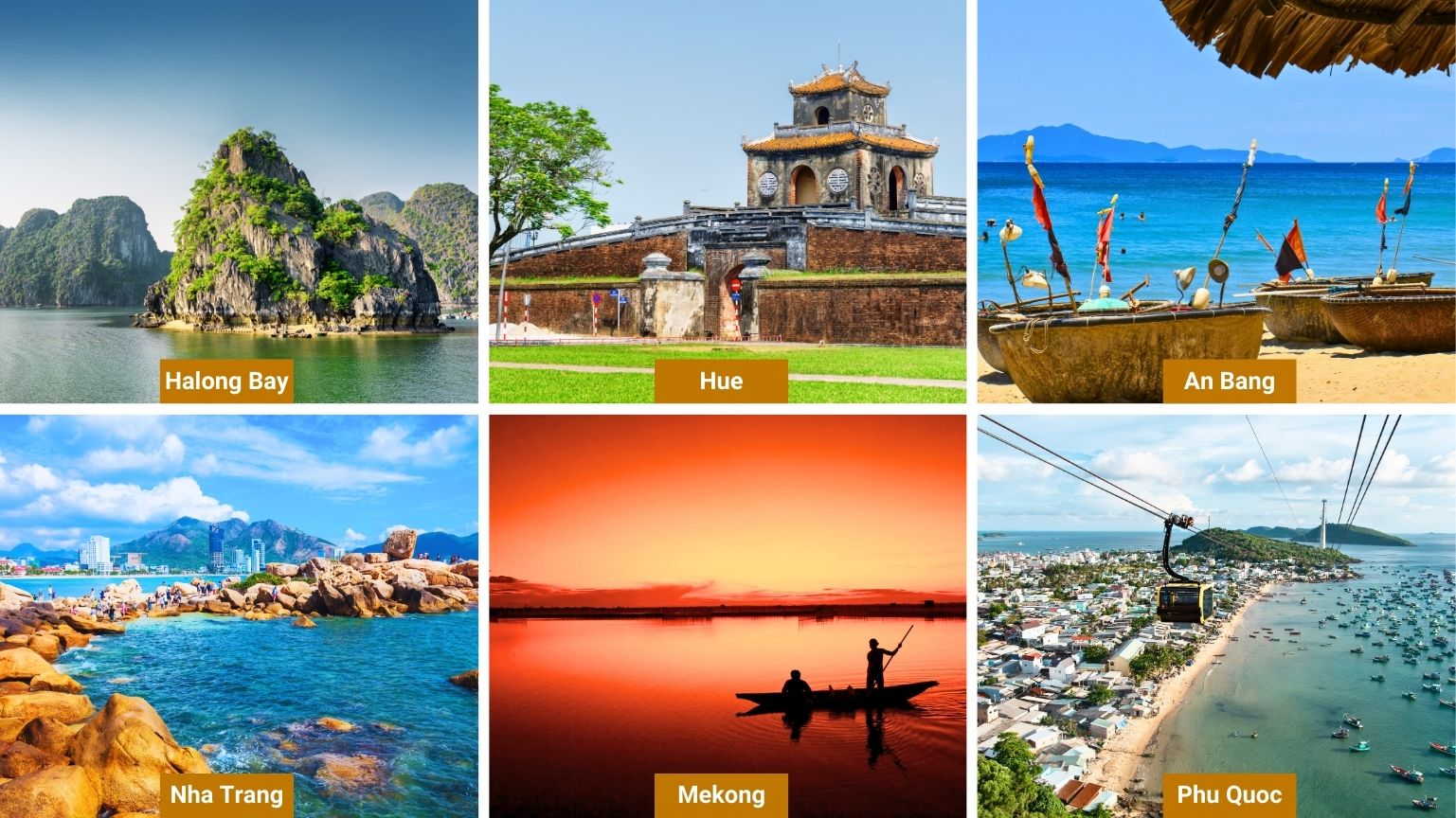
For travellers doing the full Vietnam sweep from Hanoi to Ho Chi Minh City, Nha Trang slots in perfectly as a mid-trip decompression stop. A few days of beach, seafood, and a slower pace between the intensity of Hanoi and the energy of the south. The best overall window for the full route is February through April. Hanoi and Halong Bay are past their coldest phase, central Vietnam is dry, and Nha Trang is in excellent shape. Our 20-day in-depth Vietnam itinerary covers this full route with Nha Trang built in as a proper rest stop rather than a rushed overnight.
Ready to Plan Your Nha Trang Trip?
Whether you’re dreaming of diving Hon Mun at dawn, island-hopping on a private boat, or finding the perfect beachfront villa for your honeymoon, getting the timing and logistics right makes all the difference. Our team specializes in private, tailored experiences across Vietnam. From boutique hotel bookings and private guided tours to full multi-week itineraries built around your travel style and budget.
Browse our Vietnam travel experiences at Vietnam Travels Online or explore curated Vietnam tours at Indochina Voyages. Prefer to talk it through directly? Drop us a line at vietnam@indochinavoyages.com and our team will get back to you with options tailored to exactly when and how you want to travel.
Practical Tips for Planning Your Nha Trang Trip
A well-timed trip still needs thoughtful logistics. Here are the practical details that make the difference between a holiday that flows and one that runs into avoidable friction.
- What to Pack by Season
January through June calls for light cotton clothing, reef-safe sunscreen, and a hat. July and August bring serious midday heat, so a portable fan or neck cooler is worth packing. Come September through November, swap the sunscreen for a compact waterproof jacket and keep a dry bag handy for your electronics and camera.
- Booking Beachfront Hotels in Peak Season
Properties directly on Tran Phu Beach fill quickly from May onward. For July and August, booking two to three months ahead is standard practice. For shoulder season visits, four to six weeks is typically sufficient. Flexible mid-week arrivals consistently get better rates.
- Sea Conditions and Island Tour Reliability
Check conditions with your operator the evening before rather than assuming the morning will be fine. Reputable private operators will proactively offer reschedules if the sea is rough. Group boat tours are far less flexible on this point, which is one practical advantage of booking privately.
- Avoiding Holiday Crowd Spikes
Beyond Tet and the domestic summer school holidays, Vietnamese national holidays, including Reunification Day on April 30th and Labour Day on May 1st, bring short but intense spikes in domestic tourism. If your dates overlap, book accommodation and tours at least six to eight weeks ahead.
- Getting to Nha Trang
Cam Ranh International Airport sits about 35 kilometres south of the city centre. Direct flights connect from Ho Chi Minh City, Hanoi, Da Nang, and a growing number of international routes. Private airport transfers are straightforward to arrange and strongly preferable to metered taxis, especially for late-night arrivals.
FAQs
What is the best time to visit Nha Trang? April and May hit the sweet spot for most travellers: dry weather, calm and clear seas, good availability, and prices that haven’t peaked for summer yet.
Is Nha Trang worth visiting during the rainy season? For beach holidays, September and October carry a real risk. For cultural visits, food experiences, and budget travel, September and late November offer genuine value with acceptable conditions.
When is the cheapest time to visit Nha Trang? October and November see the lowest hotel and flight prices. Late November and March offer the best value-to-weather ratio if you want savings without the weather gamble.
What month has the calmest sea in Nha Trang? April through June delivers the calmest, clearest water consistently. This is the best window for swimming, diving, and island tours.
Is Nha Trang hotter than Da Nang? Nha Trang runs slightly warmer year-round. More relevant is that their rainy seasons don’t align: Da Nang peaks in October and November, while Nha Trang recovers through November into December.
How does Nha Trang’s weather compare to Phu Quoc’s? Phu Quoc’s dry season runs from November through April, almost the inverse of Nha Trang’s. They work better as complementary destinations on a longer trip than direct alternatives.
How many days should I spend in Nha Trang? Four to five days covers beaches, at least one island day trip, a dive or snorkel excursion, and the city’s food scene without feeling rushed.
Can you swim at Nha Trang Beach in December? Yes. By mid-December, the sea has settled considerably, and swimming is generally fine, though water clarity won’t match the April to June peak.