
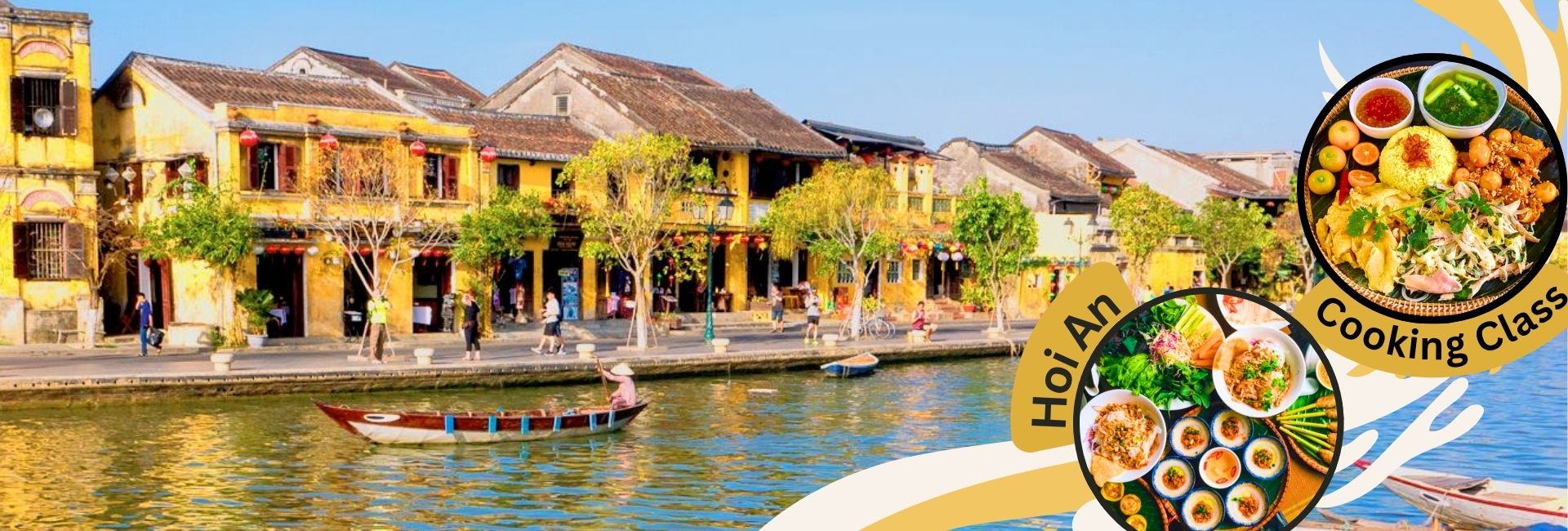
Hoi An pulls you in slowly. First come the amber-lit lanes and centuries-old shophouses, then the unmistakable aroma drifting from every corner kitchen. Central Vietnam’s cuisine is a world of its own: herb-forward, beautifully balanced, and rooted in traditions that local families have protected for generations. Sweeter than the north and more delicate than the south, the food here carries a character no other region of Vietnam can replicate.
And the best way to truly understand it? You cook it yourself.
What can you find in this travel blog?
- What Makes Hoi An’s Food So Unique?
- Why a Cooking Class Is the Best Thing You Can Do in Hoi An
- Hoi An vs. Other Cities: Why Here?
- What a Hoi An Cooking Class Actually Looks Like
- Modern Add-Ons Worth Knowing About
- Cooking With a Conscience: Sustainability in Hoi An
- Which Type of Cooking Class Suits You?
- Short on Time? A One-Day Hoi An Itinerary That Works
- What You’ll Take Home From a Hoi An Cooking Class
- Other Hoi An Experiences Worth Adding to Your Day
- Tips for Choosing the Right Cooking Class in Hoi An
- Frequently Asked Questions
What Makes Hoi An’s Food So Unique?
Central Vietnamese cuisine isn’t just about flavor; it’s about identity. Every dish here tells a story tied to the land, the water, and the people who’ve lived along the Thu Bon River for centuries. The herbs come from village gardens, the seafood from boats that went out at dawn, and the spice blends from recipes passed down through family kitchens rather than restaurant chains.
What truly sets Hoi An apart is its hyper-local ingredient culture. Take Cao Lau, for example. These thick noodles are processed using water from the ancient Ba Le Well, giving them a texture and flavor impossible to recreate elsewhere. That’s not a travel brochure claim; that’s centuries of culinary geography at work.
A Quick Foodie Dictionary Before You Cook
Before you step into a kitchen, here’s a taste of what you’ll be working with:
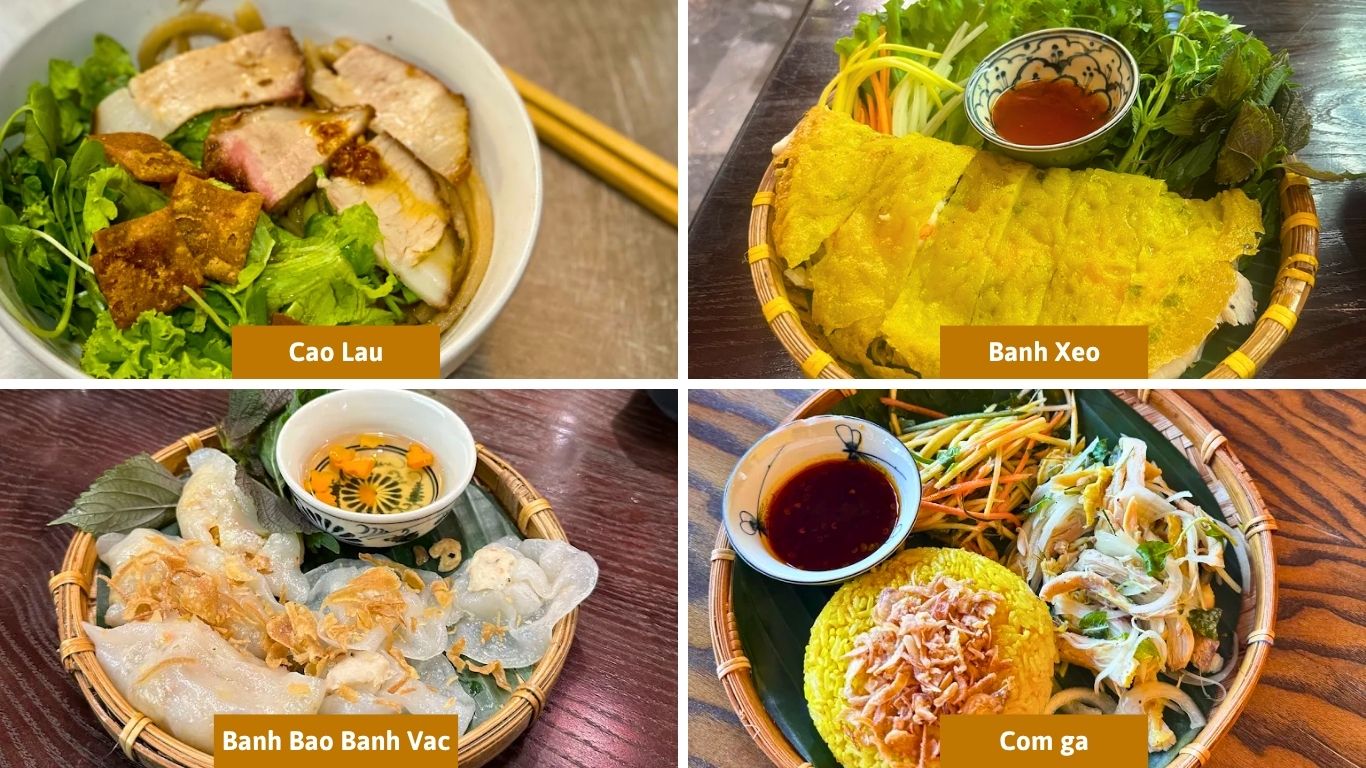
- Cao Lau: Thick, chewy noodles made with Ba Le Well water and ash-treated flour, served with pork, herbs, and crispy croutons. Only genuinely made in Hoi An.
- White Rose Dumplings (Banh Bao Banh Vac): Translucent shrimp dumplings folded to resemble blooming roses, finished with crispy fried shallots. Delicate, beautiful, and completely local.
- Banh Xeo: Sizzling, crispy rice-flour crepes stuffed with shrimp, pork, and bean sprouts, named after the sound they make when hitting a hot pan.
- Banh Mi Hoi An: The local evolution of Vietnam’s most famous street sandwich, layered with pate, pickled vegetables, slow-braised fillings, and fresh herbs.
These aren’t just dishes. They’re the starting point for understanding what this town is truly made of.
Why a Cooking Class Is the Best Thing You Can Do in Hoi An
There are plenty of ways to spend a day in Hoi An: walking the ancient streets, getting measured for custom clothing, and watching lanterns reflect on the river at night. All of it is worth your time. Even so, a cooking class offers something none of the above can, which is direct, hands-on access to the culture behind the beauty.
Food has always been Vietnam’s most honest language. When words don’t cross the barrier, making a meal together closes the gap in a way that sightseeing simply doesn’t. Travelers who join a cooking class here consistently describe it as the moment Vietnam finally clicked for them. Not at a temple or a viewpoint, but at a kitchen counter with flour on their hands and a local chef laughing beside them.
If you want your trip to feel genuinely meaningful rather than just well-photographed, a private cooking tour in Hoi An is the experience our team always recommends first.
Hoi An vs. Other Cities: Why Here?
Cooking classes exist across Vietnam, so it’s fair to ask why Hoi An deserves the spot on your itinerary. The answer lies not just in what you cook, but in how the whole experience is structured.
| City | Style | Setting | Highlight |
|---|---|---|---|
| Hanoi | Classic northern dishes: pho, bun cha | Urban kitchens, local markets | Technique-driven, fast-paced, tradition-rooted |
| Hue | Royal imperial cuisine | Formal resort or heritage kitchens | Elegant presentations, historic recipes |
| Ho Chi Minh City | Bold southern street food | Busy city streets | Vibrant, energetic, street food-led |
| Hoi An | Local specialties: cao lau, white rose dumplings | Market → river boat → countryside kitchen | Scenic, community-based, full cultural journey |
Technique defines Hanoi’s kitchen culture. Ceremony shapes every plate in Hue. But Hoi An is where connection happens. The countryside setting, the herb gardens, and the family-run kitchens create something far warmer and more personal than any city studio class ever could.
What a Hoi An Cooking Class Actually Looks Like
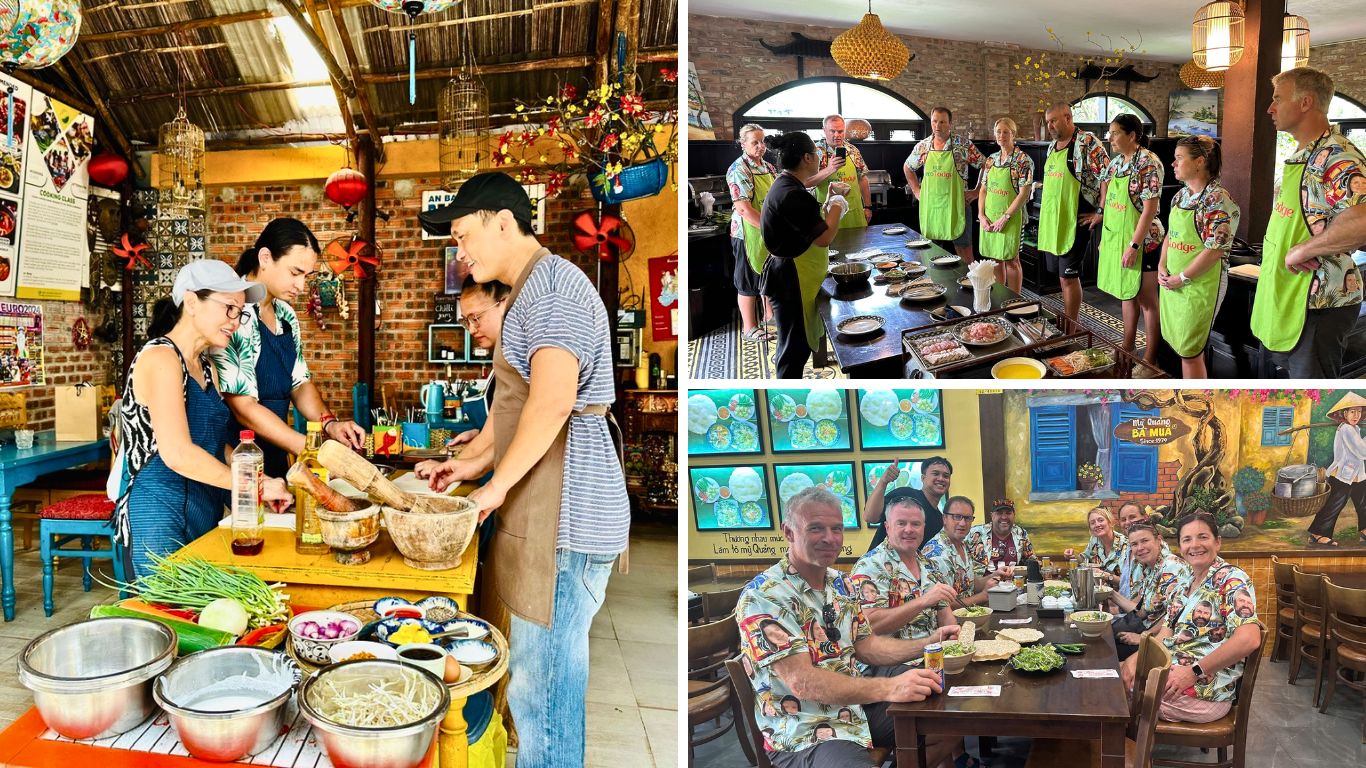
Most people picture a cooking class as standing at a counter watching a chef demonstrate. In Hoi An, it looks nothing like that. Here’s how a typical half-day private experience unfolds, from the first market stall to the last bite at the table.
The Morning Market Visit
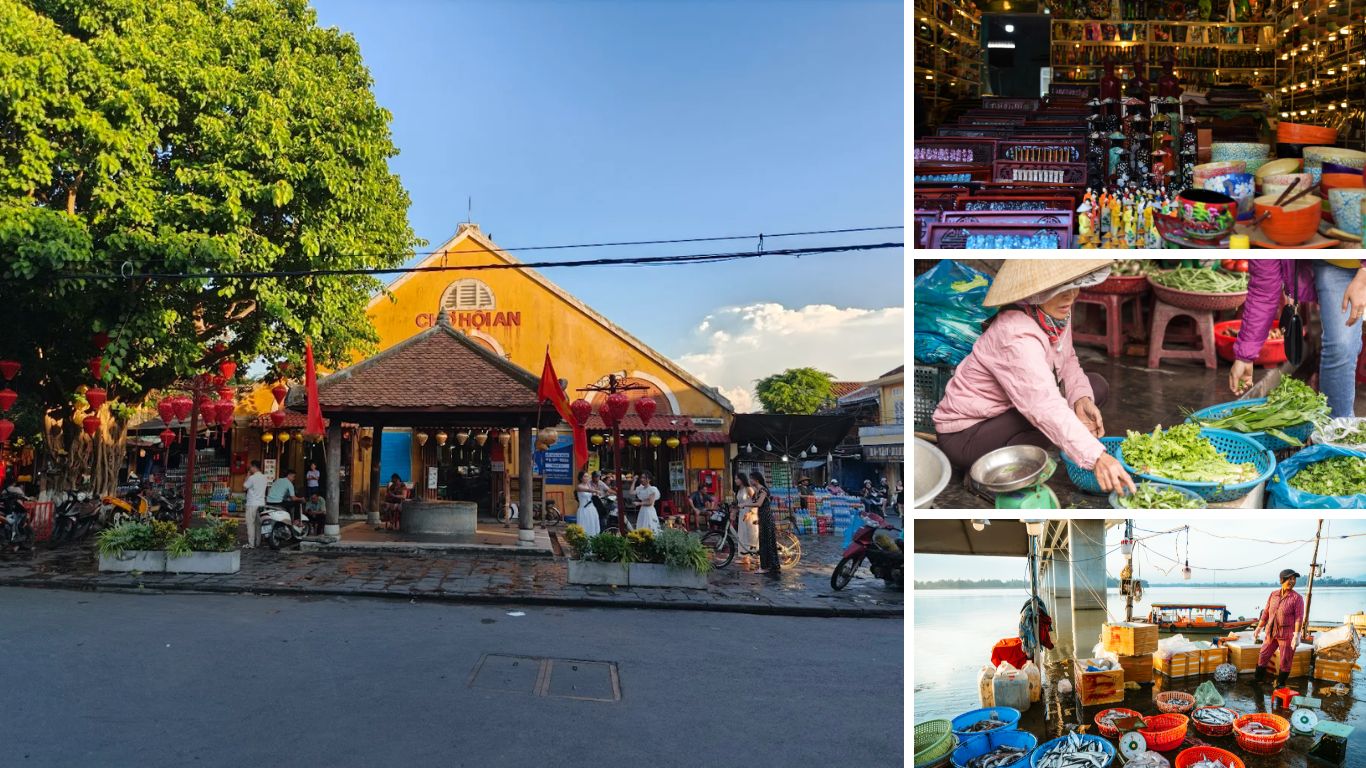
Your day usually starts before the town fully wakes up. A guide walks you through a local wet market, pointing out ingredients you’ve never seen labeled in English and explaining which herbs balance heat and which ones cut through richness. Together, you select what you’ll use in the kitchen a few hours later. It’s part cultural tour, part grocery run, and entirely fascinating.
The Scenic Transfer
This is where Hoi An stands apart from every other cooking class city in Vietnam. Rather than heading straight to a kitchen, many classes include a boat ride along the Thu Bon River or a bicycle ride through rice fields on the way to a countryside cooking space. If your itinerary passes through Tra Que Herb Village, you’ll arrive at the kitchen already surrounded by the very ingredients growing in the ground beside you.
The Hands-On Cooking Session
Here’s where it gets genuinely fun. You’ll prepare three to five dishes with guidance from a local chef. That includes rolling spring rolls, folding dumplings, and getting the crêpe batter for Banh Xeo to sizzle at exactly the right pitch. No previous cooking experience is required; the whole point is learning, not performing.
Popular dishes across most Hoi An cooking classes include:
- Cao Lau
- Fresh and fried spring rolls
- Banh Xeo (Vietnamese sizzling crêpes)
- Grilled eggplant with peanut sauce
- Green papaya or mango salad
The Tasting Session
You eat everything you make, usually at a riverside table or in an open-air countryside kitchen. Chefs often add a bonus dish or two, and the relaxed atmosphere at the end of a session is where most of the real conversation happens.
Modern Add-Ons Worth Knowing About
Hoi An’s cooking experiences have grown well beyond the kitchen. The best private classes now bundle in extra layers that make the day feel genuinely complete. These are the two add-ons our team recommends most consistently.
Traditional Vietnamese Coffee Workshop
After your meal, consider staying for a coffee session using the traditional phin drip filter. You’ll learn to brew regional specialties like Hanoi’s velvety Egg Coffee or the surprisingly complex Salt Coffee from Hue: slow, meditative, and nothing like pressing a button on a machine. It’s a natural and satisfying way to wind down before heading into the afternoon.
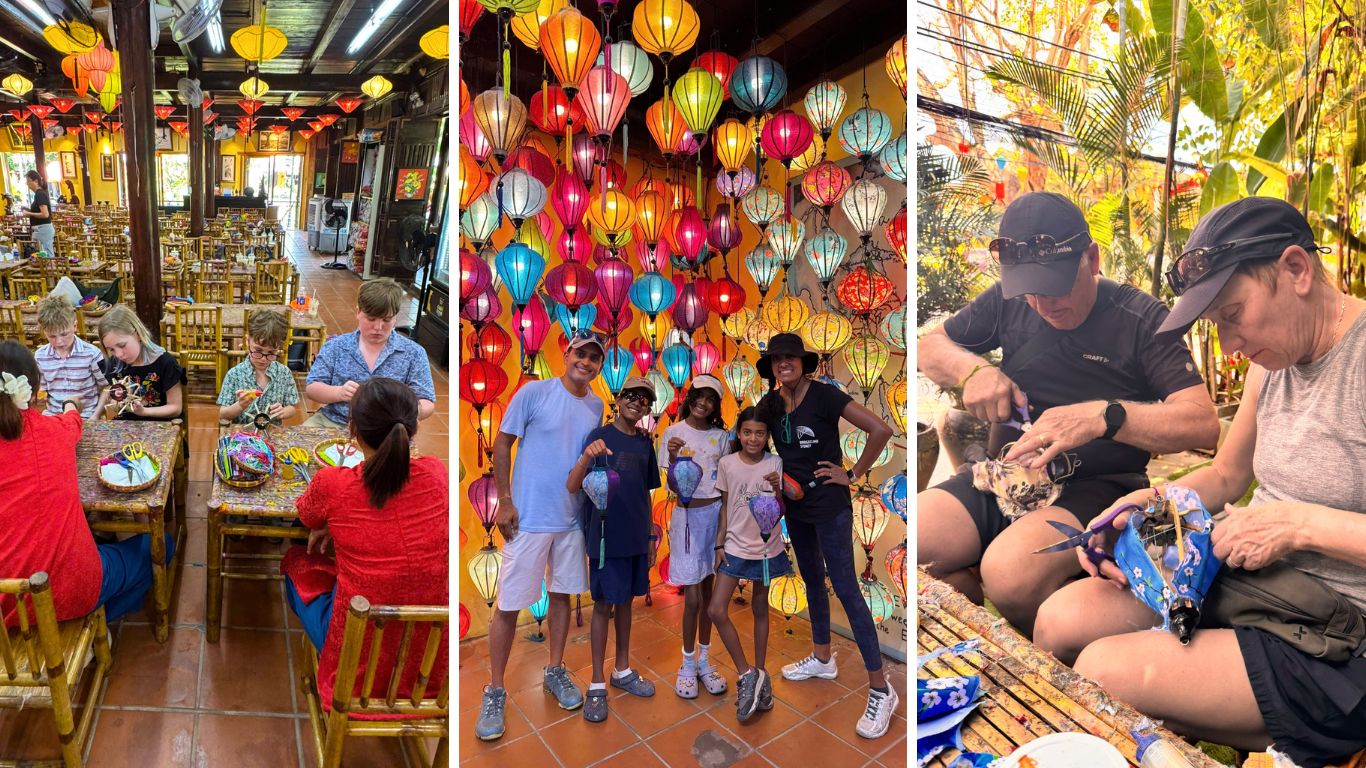
Lantern Making Workshop
Hoi An’s silk lanterns are everywhere, but there’s a real difference between buying one off a hook and making one yourself. A lantern-making session, often available as an afternoon add-on, lets you choose the silk, shape the frame, and take home something that actually means something. Pair it with an evening walk through Hoi An Ancient Town as the lanterns glow along the river, and you’ll understand why people fall so hard for this place.
Cooking With a Conscience: Sustainability in Hoi An
One of the things that makes Hoi An’s countryside cooking scene genuinely special is what it supports beyond the plate. When you cook in a family kitchen in Cam Thanh or spend a morning at Tra Que Herb Village, your booking goes directly to local farming and fishing families rather than to a hotel group or large tour operator.
The ingredients here are almost entirely organic and hyper-local. Vegetables are harvested from the fields you walk through, and herbs are picked that same morning. As a result, the phrase “farm to table” isn’t a menu category here; it’s simply how things have always worked. Choosing a private cooking class through our team means we connect you directly with these communities, so your experience contributes to the people who keep this food culture alive.
Want a cooking experience that’s both meaningful and private? Our team arranges fully customized culinary days in Hoi An, including private transport, a dedicated guide, and market access. Start planning here or write to us atvietnam@indochinavoyages.com.
Which Type of Cooking Class Suits You?
Not every traveler wants the same thing from a cooking class. Fortunately, Hoi An’s culinary scene is flexible enough to meet you where you are. Whether you prefer something intimate and tailored or something lively and social, there’s a format that fits.
Private Classes
A private class gives you full control over the pace, the dishes, and the overall experience. It’s ideal for couples who want something romantic and unhurried, or for families who need flexibility around children. Passionate food lovers who want to go deeper into technique will also find it far more rewarding than a shared group setting. Our team can tailor the entire day around your preferences, from which market you visit to which dishes you prioritize.
Group Join-In Classes
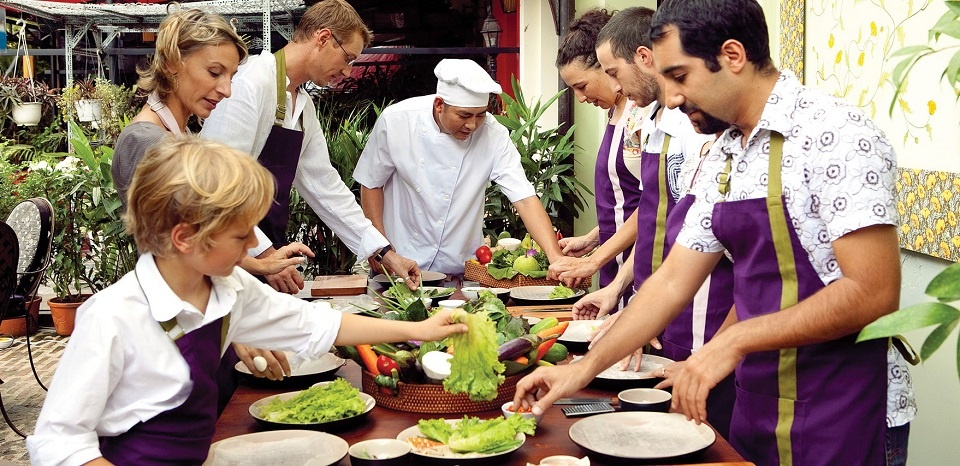
A join-in class is more social and more spontaneous. You’ll share the kitchen with other travelers from around the world, which brings a welcome mix of skill levels, stories, and laughter. Often, that dynamic makes the day more memorable than expected. These classes are also more budget-friendly, making them a great option if you’re traveling solo or simply want to meet people along the way.
Still unsure? Browse our Hoi An cooking options or get in touch, and our team will match you with the right experience.
Short on Time? A One-Day Hoi An Itinerary That Works
If you only have one day in Hoi An, this route covers the food, the culture, and the atmosphere without feeling rushed. Our team can arrange private transport throughout, so you can move between each stop without thinking about logistics.
Morning: Start with a private market visit followed by your cooking class, either out at Tra Que Herb Village or in a riverside countryside kitchen. Finish with lunch made by your own hands.
Afternoon: Head into the heart of Hoi An Ancient Town. Cross the Japanese Covered Bridge, step inside the Phuc Kien Assembly Hall, and wander the old merchant houses at your own pace. If you have time, squeeze in a fitting at one of Hoi An’s legendary tailor shops.
Evening: Wind down with a sunset drink at An Bang Beach, just 15 minutes from town. Alternatively, end the night with the extraordinary Hoi An Memories Show, a riverside outdoor performance featuring over 500 performers bringing four centuries of the town’s history to life.
Get in touch here to put the full day together with a private guide and vehicle included.
What You’ll Take Home From a Hoi An Cooking Class
Beyond a very full stomach, a cooking class in Hoi An leaves you with things that last well past the trip.
- Skills you can recreate at home: The recipes, the techniques, and the confidence to cook Vietnamese food in your own kitchen
- A real cultural connection: An understanding of Vietnamese hospitality, family eating traditions, and the values behind the food
- A human memory: Not a photo of a dish, but the experience of making it beside someone who’s been cooking it their whole life
- Physical keepsakes: Many classes include recipe cards, handmade rice paper, or photos taken in traditional kitchen settings
Moreover, if you’re exploring Vietnam beyond Hoi An, our 12-day Vietnam Culinary Highlights tour weaves this kind of experience through the entire country, from Hanoi’s street kitchens to the Mekong Delta’s floating markets.
Other Hoi An Experiences Worth Adding to Your Day
Hoi An rewards slow exploration, and a cooking class pairs naturally with nearby experiences that round out the day beautifully.
- Coconut Boat Ride in Cam Thanh: Glide through palm-fringed waterways in a traditional round bamboo basket boat, with folk music and fishing demonstrations along the way. A playful, family-friendly contrast to the kitchen.
- My Son Sanctuary: Often called the Angkor Wat of Vietnam, this ancient Cham temple complex sits hidden in the jungle about an hour from Hoi An. A private guided visit adds serious historical depth to a cultural day.
- An Bang Beach: Hoi An’s most beloved stretch of coast, with laid-back cafes, soft sands, and calm water. Perfect for an easy afternoon after a busy morning in the kitchen.
- Hoi An Memories Show: End the day with this spectacular riverside performance featuring 500 dancers and actors retelling Hoi An’s 400-year story under open skies.
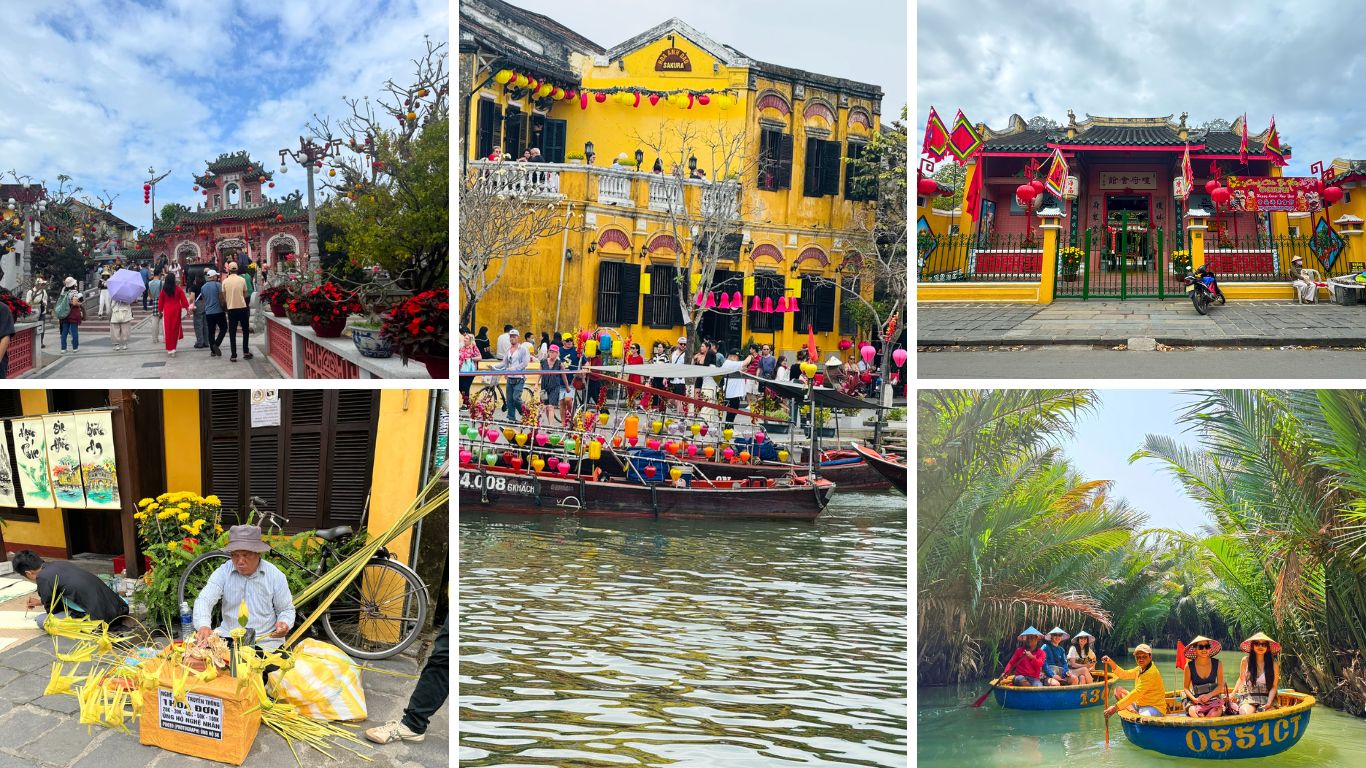
All of these can be arranged as part of a private day tour. Our team handles the transport, timing, and bookings so your day flows without friction. See our full Vietnam tours here or contact us directly at vietnam@indochinavoyages.com.
Tips for Choosing the Right Cooking Class in Hoi An
With so many options available, it helps to know what separates a good cooking class from a great one.
- Group size matters — smaller groups of ten or fewer mean more one-on-one time with the chef and a more relaxed pace overall
- Check guide quality — look for reviews that mention the English level, warmth, and knowledge of the guide, not just the food
- Ask about dietary flexibility — most reputable classes accommodate vegetarian, vegan, and gluten-free requests if you flag them at booking
- Book in advance — private classes fill quickly during peak season, which runs roughly from February through August
- Go private if you can — a private class lets the experience move at your pace and focus on dishes that genuinely interest you
Frequently Asked Questions
How long does a cooking class in Hoi An typically last? Most half-day classes run three to four hours, including the market visit and transfer. Full-day private experiences can extend to six or seven hours.
Do I need any cooking experience to join? Not at all. Classes welcome all levels, from complete beginners to experienced home cooks exploring regional technique.
What is the best time of year to do a cooking class in Hoi An? Classes run year-round, but February to August offers the most comfortable conditions, especially for outdoor countryside kitchens.
Can children join a cooking class? Yes. Family-friendly options include spring roll rolling and fruit carving, both designed to keep younger participants fully engaged.
Is a private cooking class much more expensive than a group class? Private classes cost more, but the gap is often smaller than expected. For families and couples, the flexibility and personal attention make it well worth it.
Can a cooking class be combined with other activities in the same day? Absolutely. A morning class pairs beautifully with an Ancient Town walk, a tailor visit, or a sunset at An Bang Beach. Our team can arrange everything as a private itinerary with transport included.
Planning a trip to Hoi An or across Vietnam? Our team at Vietnam Travels Online specializes in private tours, custom itineraries, and curated culinary experiences built around what matters to you. Reach us at vietnam@indochinavoyages.com or visit our contact page to start the conversation.