

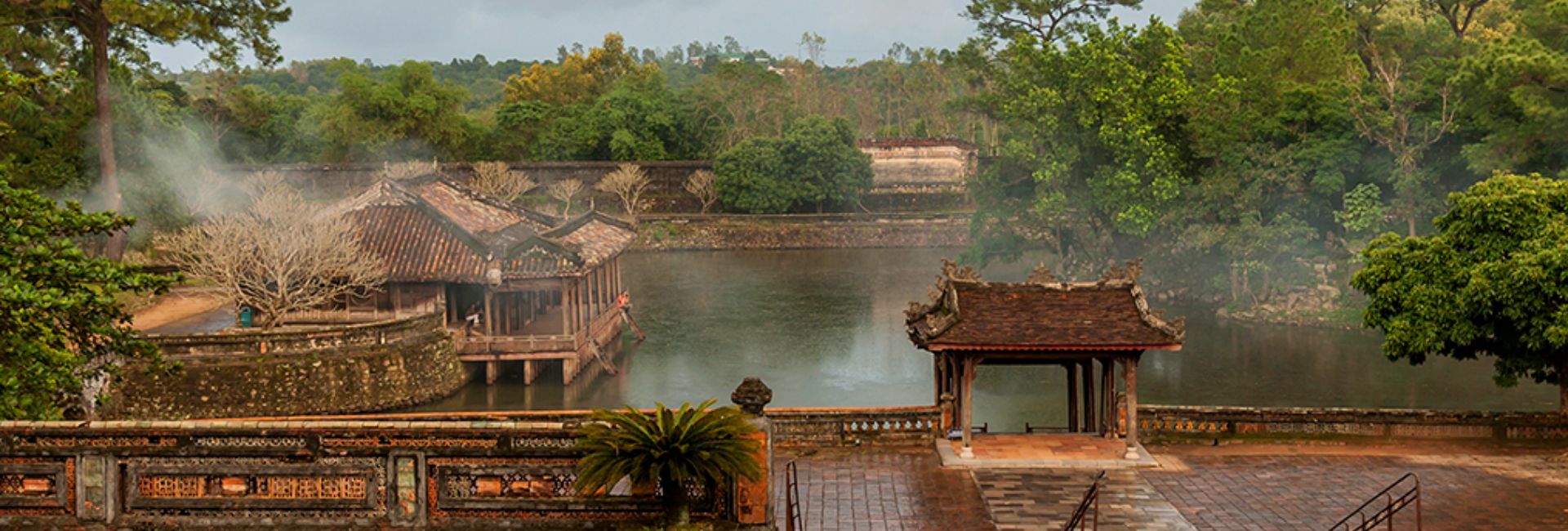
Tucked away in a pine forest just a short ride from Hue city center, the Tomb of Tu Duc is one of the most poetic and spacious royal mausoleums in Vietnam. Built between 1864 and 1867 for Emperor Tu Duc, the site was not only his final resting place but also served as his retreat during his lifetime. The serene setting, which completes with lotus ponds, pavilions, and poetic inscriptions, reflects the emperor’s romantic personality and love for nature and literature.
What can you find in this travel blog?
- The Story Behind Emperor Tu Duc’s Tomb
- What’s Inside the Tu Duc Tomb Complex?
- Why Is the Tu Duc Tomb Worth Visiting?
- Practical Visitor Information
The Story Behind Emperor Tu Duc’s Tomb
History of the Tomb
Emperor Tu Duc ruled from 1848 to 1883, the longest reign of the Nguyen Dynasty. Known for his scholarly ways, he built this tomb complex as a retreat, a place for rest and reflection long before his death. Over 50,000 laborers were involved in its construction, a project that was so demanding it caused an uprising among the workers. The rebellion was later suppressed, and Tu Duc wrote a formal apology, which is still remembered today.
Secret story behind
The Tomb of Tu Duc is also known by its original name: Khiem Mausoleum (Lăng Khiêm). This title comes from Emperor Tu Duc’s posthumous name, as was traditional with Nguyen Dynasty royalty. You’ll notice that many of the structures in the complex include the word “Khiêm” (meaning modesty or humility), such as Xung Khiem Pavilion, Du Khiem Pavilion, and Khiem Cung Gate. These names reflect Tu Duc’s self-image and philosophical outlook, despite his royal status.
What’s fascinating and often overlooked is the mystery surrounding Tu Duc’s actual burial site. While the tomb complex is expansive and majestic, the emperor was not buried here. Fearing that grave robbers might loot his treasures or desecrate his body, Tu Duc ordered his real burial to be kept completely secret. It’s said that those who helped bury him were executed afterward to ensure silence, and his true resting place remains unknown to this day somewhere in the hills of Hue, still hidden. Instead, the tomb holds the graves of his main wife and adopted son.
This element of secrecy gives the Khiem Tomb a haunting, almost mythical character. You walk through a royal space that was deeply personal in life, yet empty in death. Even until now, this tomb is just a mausoleum without a body, standing as a poetic paradox of power and isolation.
- Location: Thủy Xuân Ward, about 6km southwest of Hue city
- Opening hours: Daily, 7:00 AM – 5:30 PM
- Entrance fee: 150,000 VND ($6 USD) for adults; 30,000 VND ($1.25 USD) for children
Combination tickets with other royal tombs (like Khai Dinh or Minh Mang) are available and often good for 2 days.
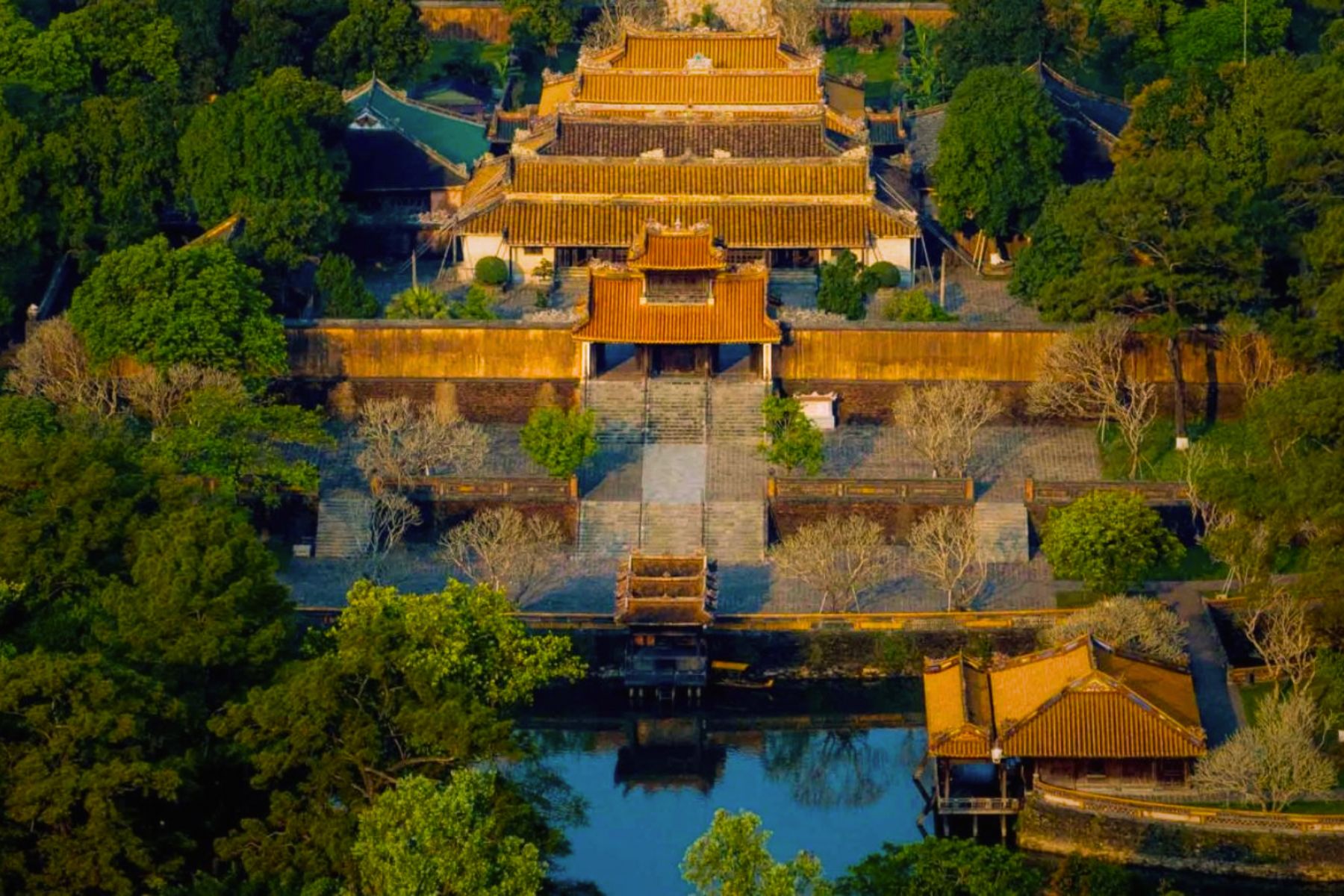
Structure of the Tomb
Unlike some other imperial tombs, Tu Duc’s tomb is vast and designed more like a royal park. It includes two main areas:
- The temple area: where the emperor would relax, write poetry, and perform ceremonies. It includes the Khiem Cung Gate, the Luu Khiem Lake, and the Xung Khiem Pavilion, a charming lakeside spot.
- The tomb area: contains the stele pavilion, the Honor Courtyard, and the empty tomb itself.
The entire space is harmonious, surrounded by pine trees, frangipani flowers, and tranquil lotus ponds.
What’s Inside the Tu Duc Tomb Complex?
As you explore, you’ll find a blend of traditional architecture, natural beauty, and personal touches from the emperor himself:
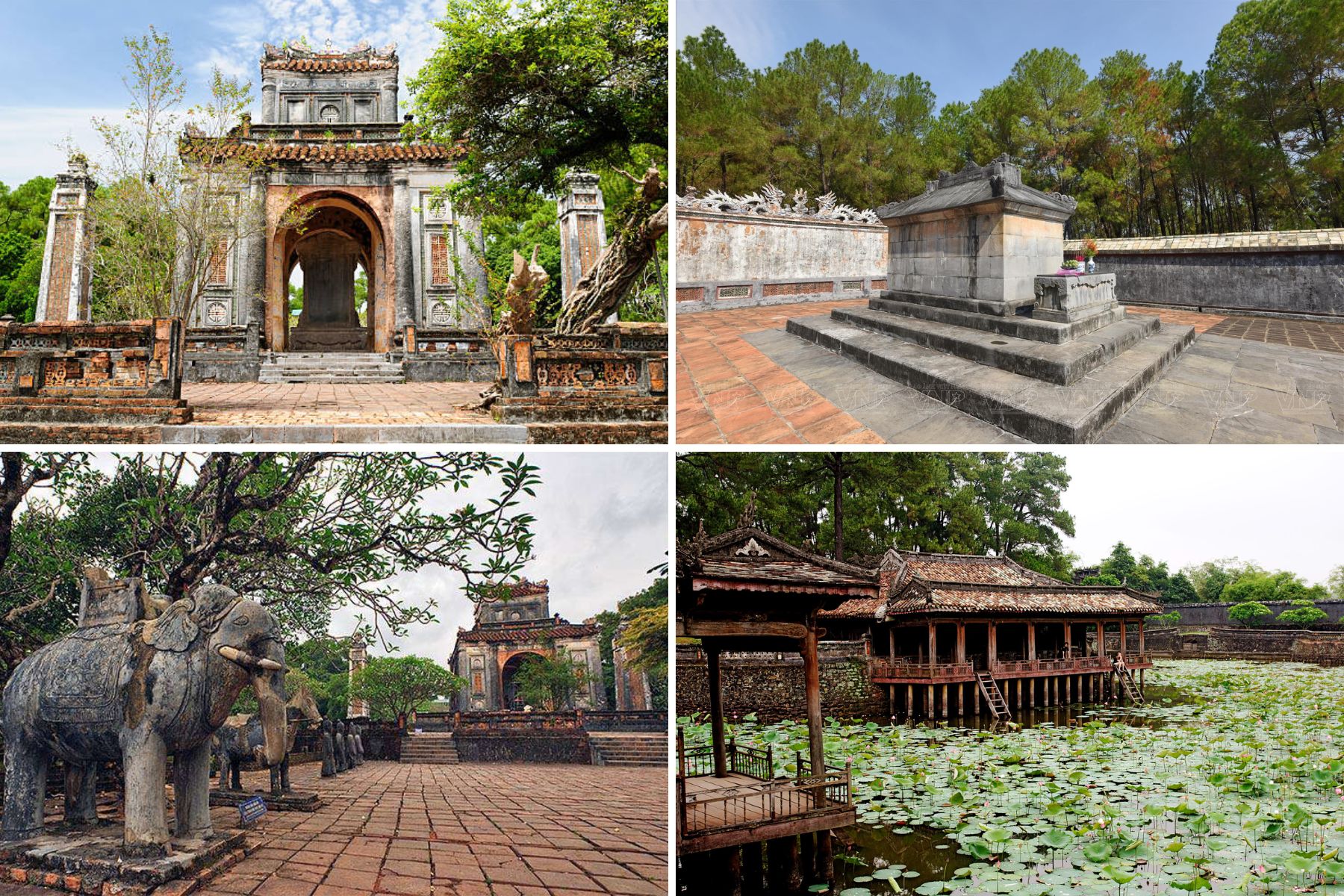
Luu Khiem Lake
A peaceful pond where the emperor used to sail. A small island dots the lake, while pine trees cast their shade over the water that creates a serene setting once favored for royal leisure.
Xung Khiem & Du Khiem Pavilions
Located beside the lake, these elegant wooden pavilions were where Emperor Tu Duc read, wrote poetry, and reflected. The view from here is especially calming, with water lilies and chirping birds.
Stele Pavilion
This pavilion houses an enormous stone stele carved with Tu Duc’s own autobiography. Uniquely, it expresses his regrets and reflections, a deeply personal and rare insight into a royal figure’s thoughts.
Honor Courtyard
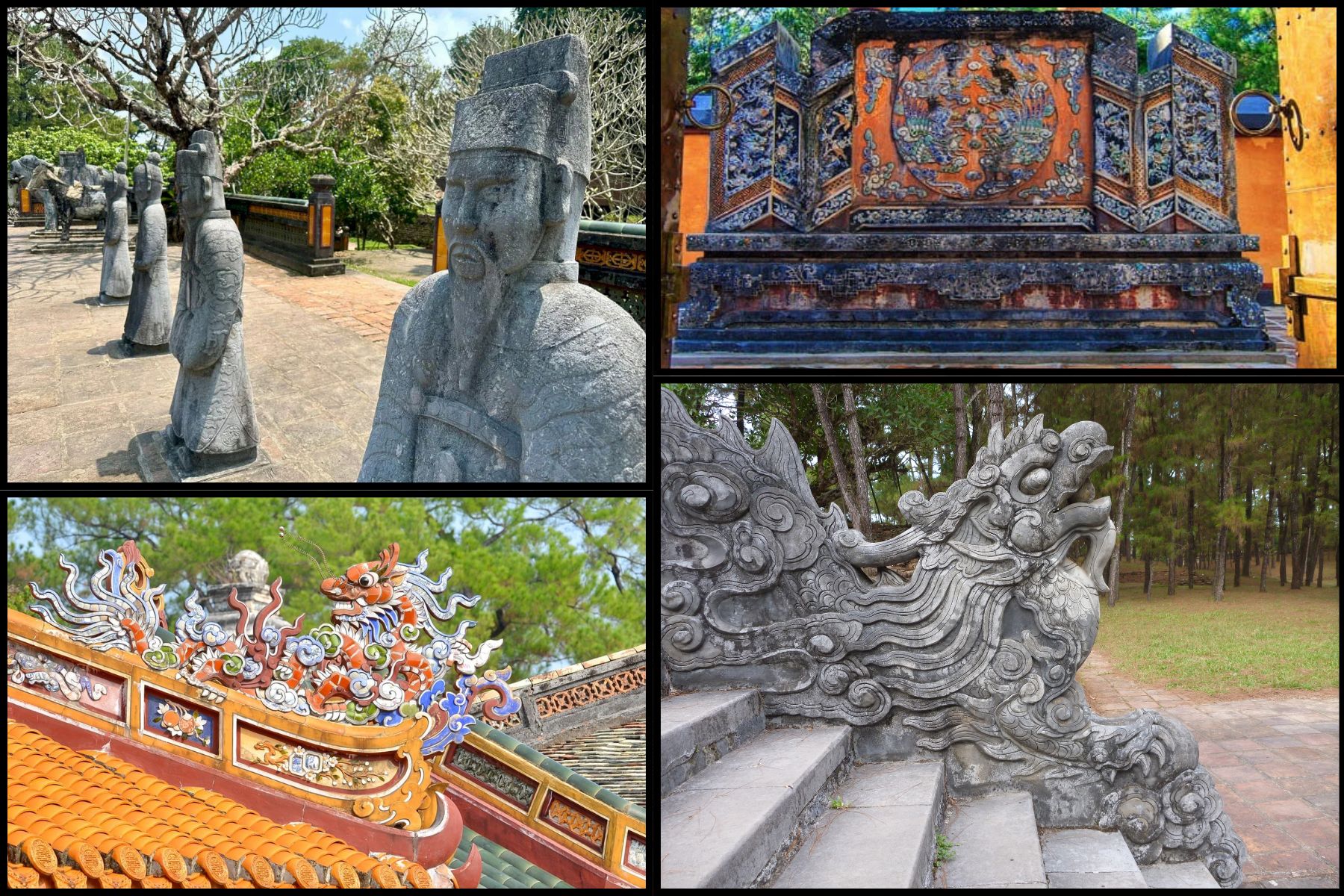
Lined with stone statues of elephants, horses, and mandarins, this courtyard symbolized loyalty and honor. This courtyard represents a classic feature of royal tombs, yet the craftsmanship here stands out for its remarkable refinement.
Tomb Pavilion (Buu Thanh)
Many believe this richly decorated pavilion to be symbolic rather than the emperor’s actual burial site, yet it draws the eye as a central highlight of the tomb. Intricate carvings and faded royal colors make it feel timeless.
Nearby Temples & Museum
Shrines and temples dedicated to Tu Duc’s wives surround the grounds, offering even more glimpses into imperial family life. A small but engaging museum displays imperial furniture, a royal palanquin, and other artifacts.
Why Is the Tu Duc Tomb Worth Visiting?
What Makes Tu Duc’s Tomb Different?
Compared to other royal tombs, Tu Duc’s feels more like a tranquil retreat than a grand statement. Its landscape-focused layout and poetic features reflect a peaceful, introspective side of imperial life. It’s perfect for travelers who enjoy nature, history, and quiet moments.
If you have more time in Hue, consider following the full Royal Tomb Trail, which includes:
- Khai Dinh Tomb: A bold contrast to Tu Duc’s. This tomb mixes Eastern and Western design elements, with dark concrete, glass mosaics, and European flair.
- Minh Mang Tomb: Classical and symmetrical, with Confucian design. Known for its peaceful walkways, lotus lakes, and harmony with nature.
- Gia Long Tomb (less visited): Remote, scenic, and historically rich, ideal for those seeking quiet and authenticity.
Should You Visit Another Tomb Too?
Absolutely. Hue is home to seven royal tombs from the Nguyen Dynasty, and each one has a unique personality. Visiting another tomb alongside Tu Duc’s will give you a broader sense of imperial history, design, and changing aesthetics over time.
If you only have time for one more, we highly recommend the Tomb of Khai Dinh. While Tu Duc’s tomb is peaceful, traditional, and immersed in nature, Khai Dinh’s is almost the opposite: bold, dramatic, and heavily influenced by French and Gothic architecture. Built on a steep hill with grand staircases, mosaic-covered walls, and a majestic burial chamber, Khai Dinh’s tomb is an unforgettable contrast.
Practical Visitor Information
Getting to the Tomb of Tu Duc
Located approximately 6 kilometers southwest of Hue’s city center, the Tomb of Tu Duc is easily accessible by various means of transport:
- Private car or taxi: The most comfortable option, especially in warm weather. Travel time is about 15–20 minutes, with fares ranging from 100,000–150,000 VND.
- Motorbike: A flexible and popular choice for independent travelers. Motorbike rentals are widely available in Hue, and parking is convenient at the site.
- Cycling: Ideal for active visitors who enjoy a scenic ride. The route offers a pleasant countryside experience.
- Guided tour: Many full-day Hue tours include Tu Duc’s tomb as part of the royal heritage itinerary, a hassle-free and informative option.
What to Wear and Bring
To ensure a respectful and comfortable visit:
- Dress modestly: This is a heritage and temple site, so avoid sleeveless tops, short skirts, or beachwear.
- Wear comfortable footwear: You’ll be walking across uneven stone paths and spacious grounds.
- Bring sun protection: A hat, sunscreen, and a bottle of water are essential during warmer months.
- Photography: Don’t forget your camera or smartphone — the landscape and architecture are highly photogenic.
Best Times to Visit
For the most pleasant experience:
- Visit in the early morning or late afternoon to enjoy softer light and cooler temperatures.
- Avoid the midday heat between May and August, especially if you’re exploring multiple sites.
- During the rainy season (October to December), the tomb becomes lush and green, though some paths may be slippery.
Nearby Historical Sites Worth Exploring
Extend your journey through Vietnam’s royal past with other nearby landmarks:
- Khai Dinh Tomb: Known for its Gothic-European fusion and dramatic hillside architecture.
- Minh Mang Tomb: Celebrated for its balance, symmetry, and serene garden layout.
- Thien Mu Pagoda: A graceful, riverside pagoda and symbol of Hue.
- Hue Imperial City (The Citadel): A UNESCO World Heritage Site and former imperial capital, rich in history and architecture.
The Tomb of Tu Duc offers more than history, it offers insight. From his poetic soul to his political regrets, Tu Duc’s legacy lives in every stone and reflection in the water. Whether you’re chasing quiet beauty or exploring Vietnam’s royal roots, this tomb is a must-see in Hue.
Need help planning your royal route through Hue? Vietnam Travel Online is here to design a journey that’s insightful, comfortable, and tailored just for you.