

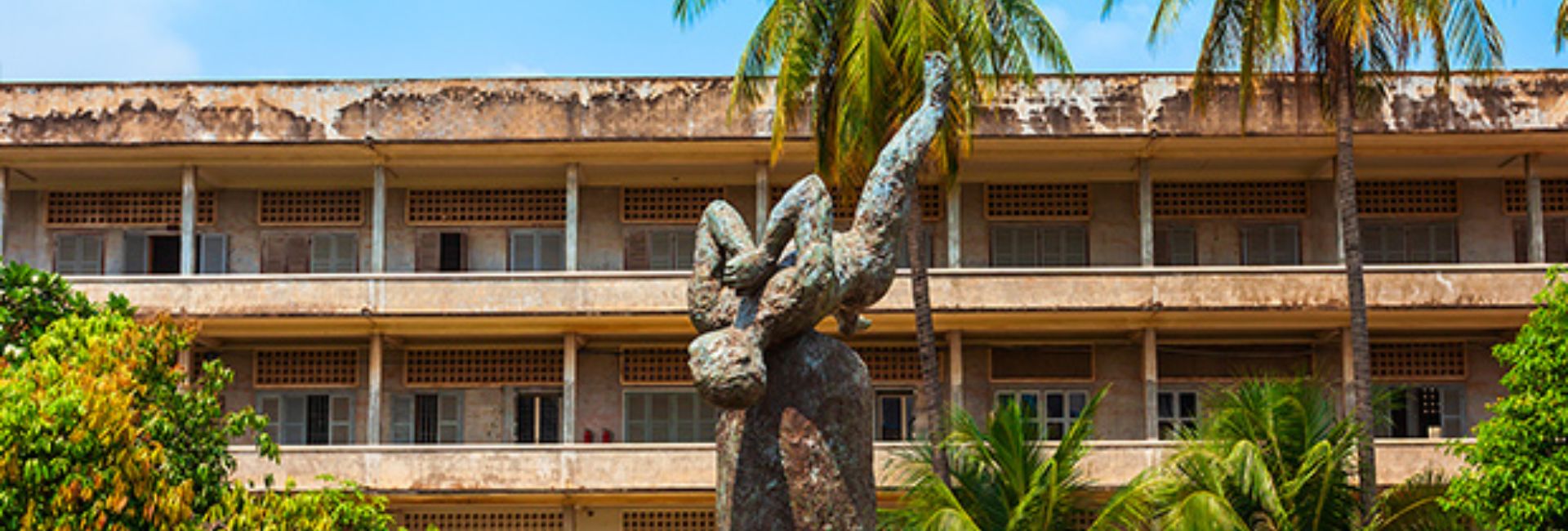
If you’re planning a trip to Phnom Penh and want to see more than just temples and markets, Toul Sleng Genocide Museum is a stop that will stay with you. It’s not your typical attraction, it’s a place where history feels close, personal, and necessary.
While the museum reflects one of the darkest chapters in Cambodia’s past, visiting it can deepen your appreciation for the country’s resilience. It’s not about horror; it’s about memory, mercy, and the human spirit.
What can you find in this travel blog?
- A Short Look Into the History of Toul Sleng Museum
- What to Expect When You Visit Toul Sleng Museum
- Simple helpful tips for your exploration at Toul Sleng Museum
- Highlight Places to Visit Near Toul Sleng Museum
A Short Look Into the History of Toul Sleng Museum
What Is Toul Sleng?
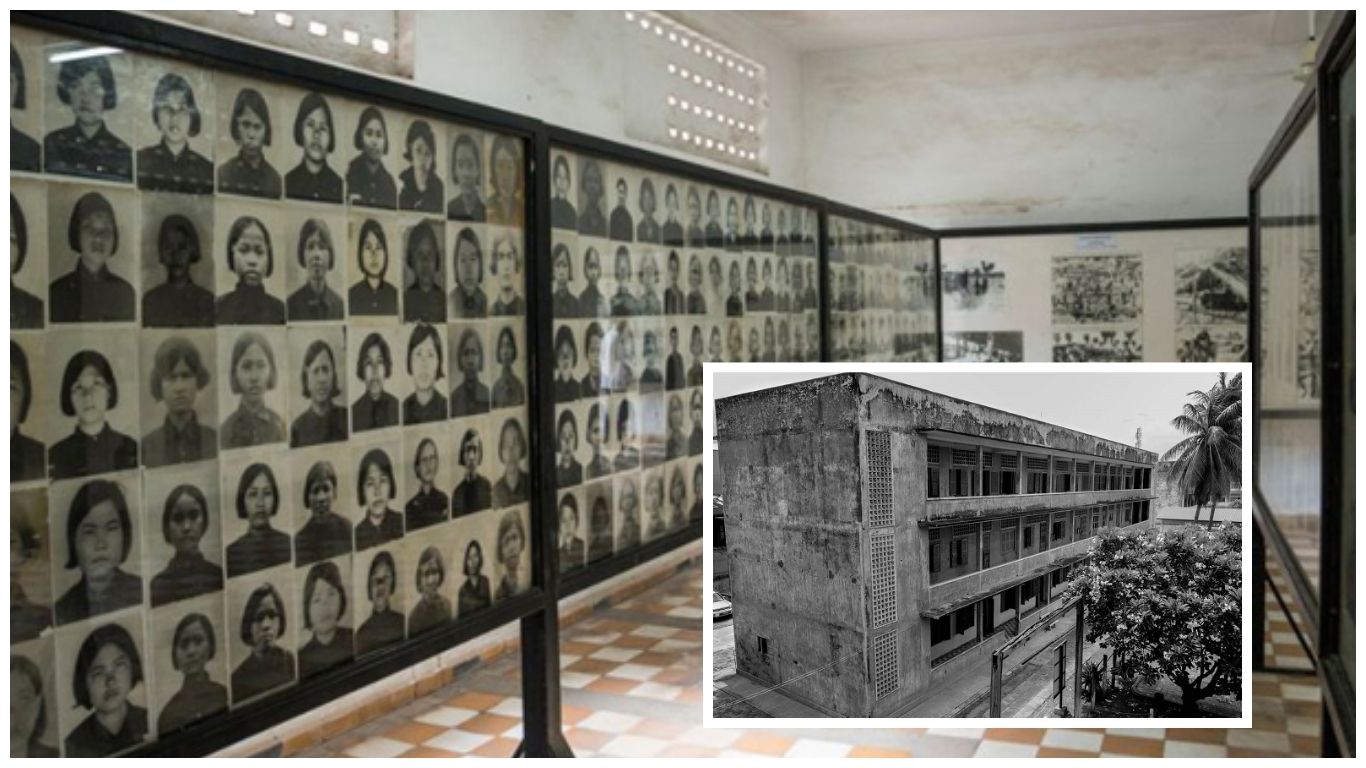
The name Toul Sleng comes from the Khmer language, where “Toul” means hill and “Sleng” refers to a type of poisonous plant. Together, it translates roughly to “Hill of the Poisonous Trees” or “Poison Hill.” The meaning feels chillingly appropriate for what the site became under the Khmer Rouge: a place of silent suffering and death.
You may not expect to find a genocide museum in the middle of the city, but that’s exactly what Toul Sleng is. Once a peaceful high school, it became Security Prison 21 (S-21) during the Khmer Rouge regime (1975–1979). Under Pol Pot’s rule, this site turned into a secret interrogation center where thousands of Cambodians were detained.
Today, Toul Sleng has been preserved as a genocide museum. When you step inside, you’ll see the classrooms, photos, and even confessions left behind. But more than that, you’ll walk away with a better understanding of Cambodia and the reason why remembrance matters.
What happened here?
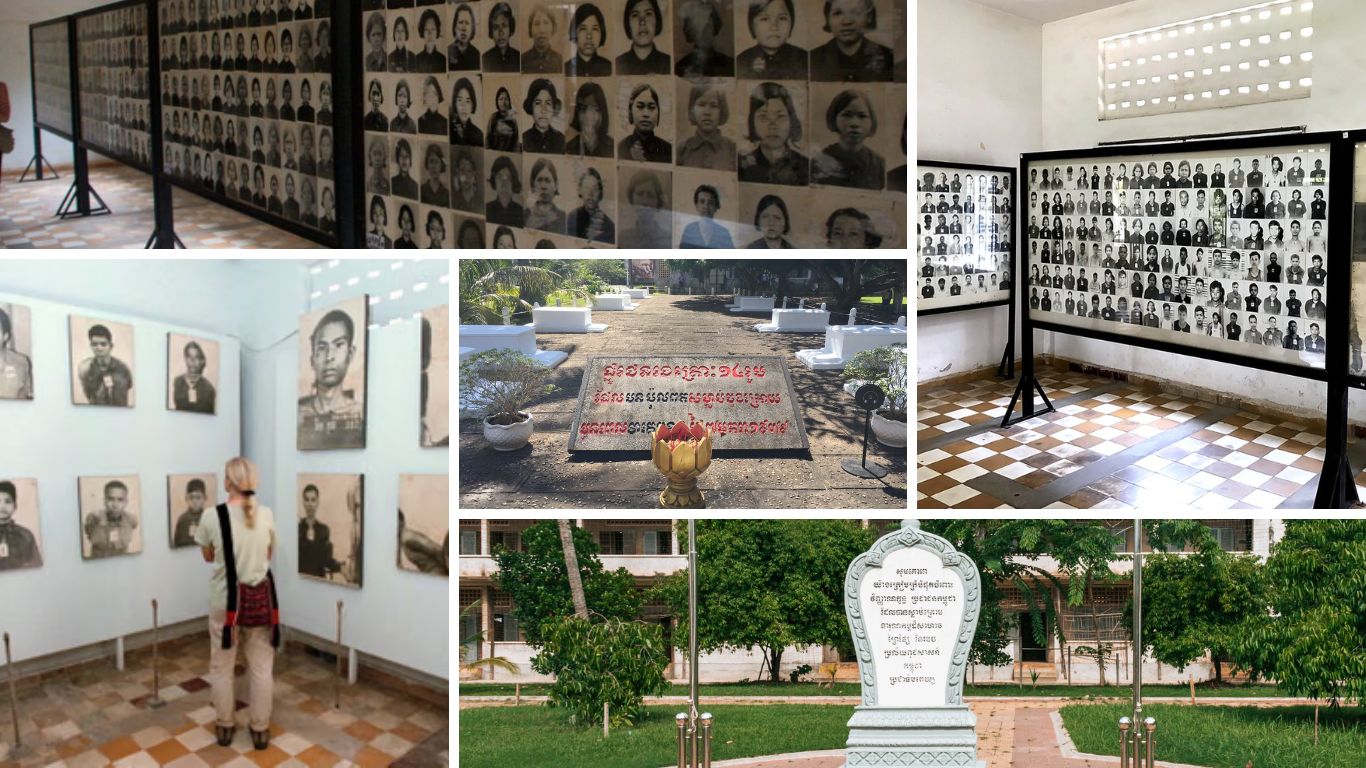
To truly understand what you’re seeing, it helps to know what happened here. Between 1975 and 1979, the Khmer Rouge aimed to erase class, education, and culture. In pursuit of that goal, nearly 2 million Cambodians died, and Toul Sleng was at the heart of it.
Roughly 18,000 people were imprisoned here. Almost all were eventually sent to the Choeung Ek Killing Fields, just outside the city. The museum today displays their faces, their stories, and the remnants of the place where they spent their final days.
As difficult as it is, visiting this museum helps to give those stories a voice. And for you as a visitor, it’s an opportunity to reflect. It’s not just about Cambodia’s past, but on how far it’s come.
What to Expect When You Visit Toul Sleng Museum
As soon as you walk through the gates of Toul Sleng, you’ll feel the stillness, the weight of memory in the air. The museum is quiet, but what it holds speaks volumes. You won’t find flashy displays or modern tech here. What you’ll find is the raw truth.
- Address: Street 113, Phnom Penh, Cambodia
- Opening Hours: Daily, 8:00 AM – 5:00 PM
- Tickets: ~$5 USD per adult
- Audio Guide: ~$3 USD extra (highly recommended)
- Time Needed: 1.5 to 2 hours
Getting here is easy. Most hotels can help you arrange a tuk-tuk or private transfer. And if you’d like, we can build a custom tour that includes this site along with Phnom Penh’s top cultural highlights.
Is Toul Sleng Museum Worth Visiting?
Sure, as long as you’re prepared. This isn’t a tourist spot in the traditional sense. But if you’re the kind of traveler who values depth, culture, and context, Toul Sleng offers something profoundly real.
You may feel overwhelmed…and that’s okay. Toul Sleng confronts you with a painful truth: the lives lost, the families shattered, the silence that followed. But from that pain grows a deeper sense of humanity even though it’s quiet but it calls to kindness and mercy in the world we build today.
Here’s what you’ll see as you move through each section:
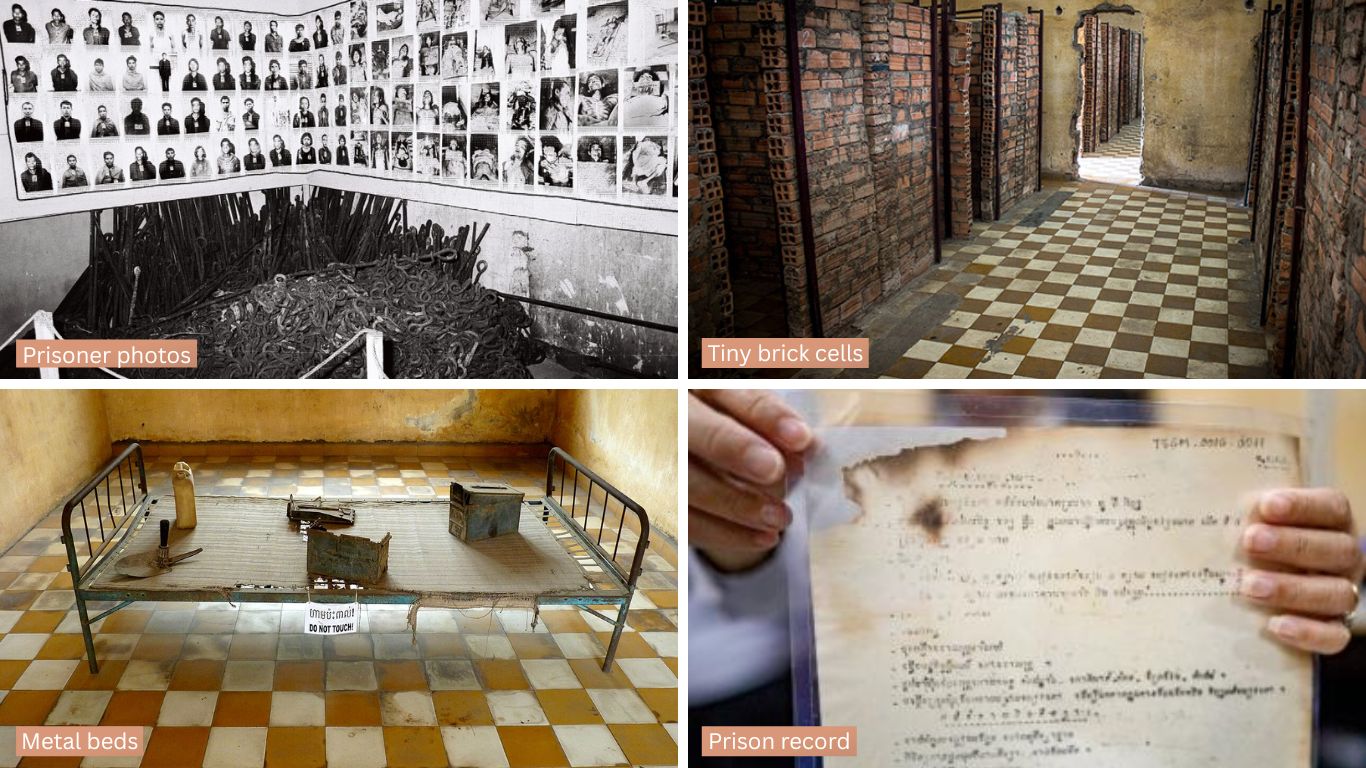
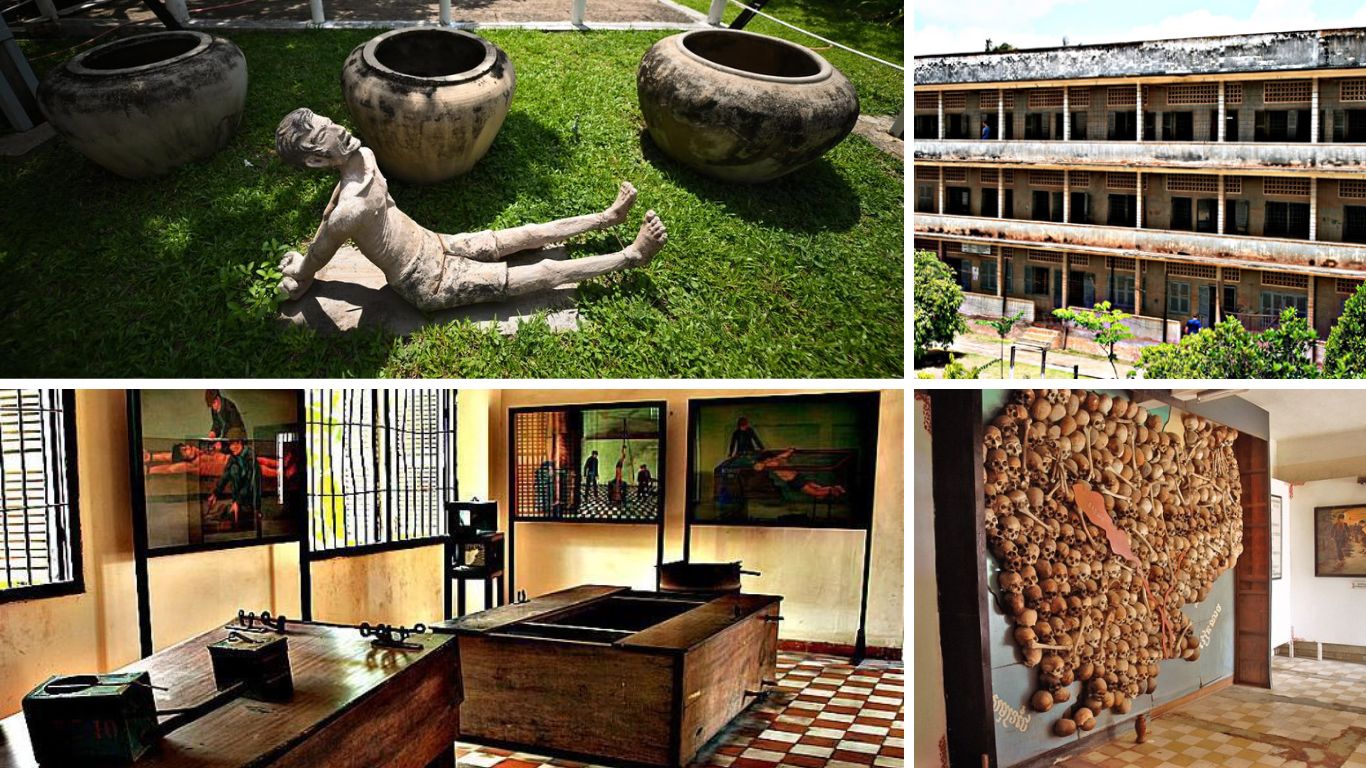
Rows of black-and-white prisoner photos
These are the faces of real people. Hundreds of them. Men, women, even children were photographed when they first arrived at the prison. Some stare directly at the camera, others look terrified, confused, or numb.
Each photo forces you to slow down. You’ll find yourself wondering: Who were they? What were their lives like before this? Seeing these portraits lined up wall to wall can be one of the most haunting parts of the visit, and one of the most human.
Tiny brick and wooden cells
In the former classrooms, you’ll walk past rows of small, hastily built cells made from brick or rotting wood. Some are barely wide enough to lie down in.
Try to imagine: dozens of prisoners, confined in silence, day and night. The windows were covered. The light dimmed. The air is heavy. These spaces weren’t designed for rehabilitation, they were meant to break people down.
If you’re visiting with a guide or audio narration, you’ll hear survivor testimonies that describe what it was like to be held in one of these cells. It’s difficult to listen to, but it’s very important.
Metal beds still in place
In some rooms, a single rusty bed frame sits in the middle of an otherwise empty space. These were the interrogation rooms. On the wall, a photograph of the exact scene taken by Vietnamese soldiers when they entered the prison in 1979 is displayed right above the bed. The photo matches the setting in front of you. It’s chilling yet it hits hard.
This moment often brings silence from every visitor in the room.
Handwritten confessions and prison records
In glass cases and on display boards, you’ll see documents written in Khmer and French. They all talked about prisoner confessions, forced statements, meticulous logs.
The regime recorded everything. Not because they valued truth, but because they believed in control. Some prisoners wrote letters begging to see their children. Others confessed to crimes they never committed, just to end the torture.
Reading these can feel heavy, a very deep touch to you but they are powerful. They’re the voices of people who were almost erased from history.
Each of these exhibits invites you to reflect, not only on what happened, but on how Cambodia found the strength to rebuild. It’s not just about pain; it’s about remembrance, healing, and the hope that such horrors are never repeated again.
Take your time. There’s no rush. If you need a break, step outside into the courtyard. There’s a small memorial stupa, surrounded by trees thus there will be a place to sit, breathe, and let it all sink in.
Simple helpful tips for your exploration at Toul Sleng Museum
We highly recommend using the audio guide, which lets you explore the museum at your own pace while hearing survivor stories and historical context. Guided tours are also available, depending on your preference.
Most travelers spend about 1.5 to 2 hours here. It’s not an easy stop emotionally, so don’t feel rushed. Step outside for air if you need a breather. Please dress modestly. Remember, you’re visiting a place that honors thousands of victims, so it’s not just a historical site.
If you’re building a meaningful cultural day in Phnom Penh, here’s a route that flows well:
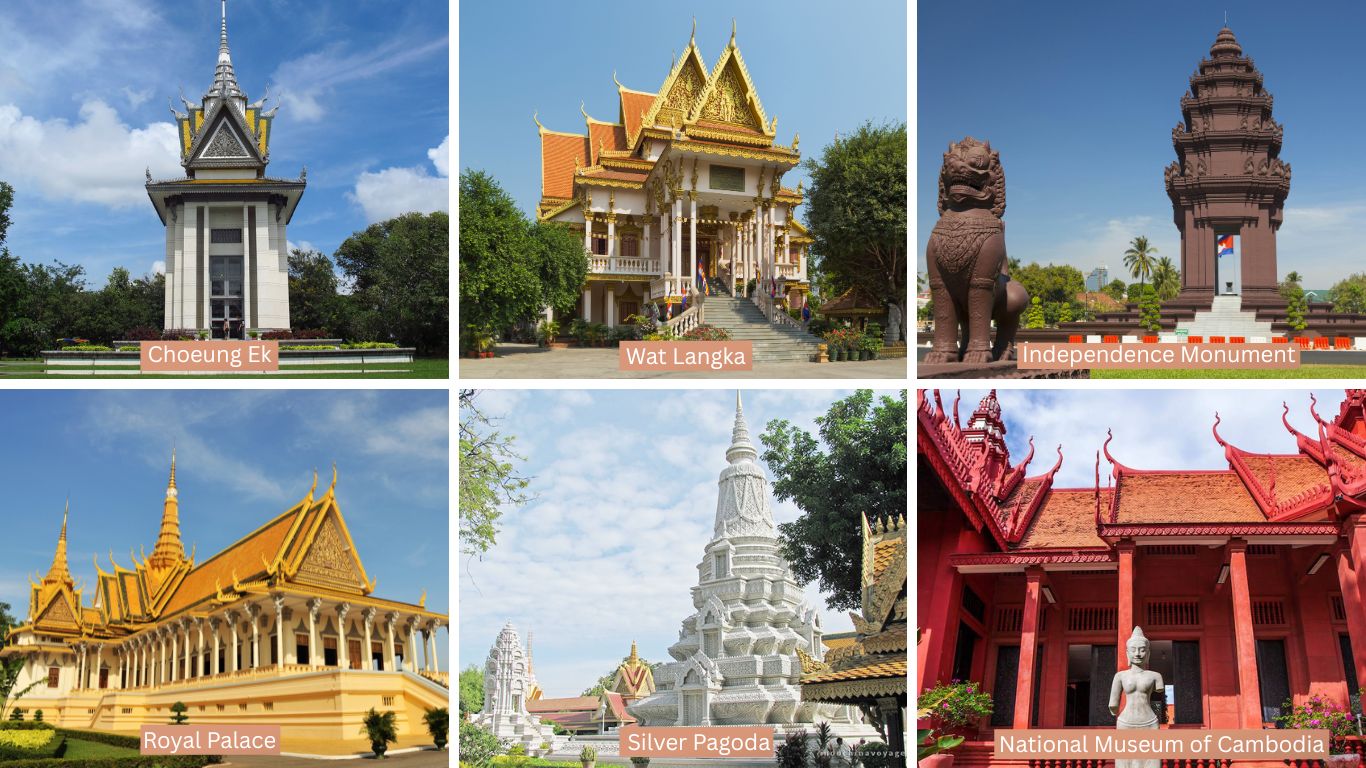
Toul Sleng Genocide Museum → Choeung Ek Killing Fields → Lunch at a local Khmer restaurant → Wat Langka Pagoda → Independence Monument → Royal Palace & Silver Pagoda → National Museum of Cambodia
💡Tip: We suggest hiring a tuk-tuk for the full day or booking a private city tour to keep things simple and stress-free.
How to Pay for Entrance
When you arrive at Toul Sleng, tickets are sold only at the ticket booth at the entrance. You can pay using either USD or KHR. Both currencies are accepted. In fact, Cambodia operates on a dual-currency system, so carrying USD and Khmer Riel gives you flexibility and convenience
💡Important tip: If you pay in USD, make sure your bills are in pristine condition, with no tears, folds, or markings, otherwise they may be refused
Credit Cards Are Not Accepted
Neither Toul Sleng Museum nor the Choeung Ek Killing Fields accept credit or debit cards at the entrance booths, so you must pay in cash. Please remember to bring cash in USD or Riel because cards aren’t an option at the museum entrance
You’ll likely receive change in Cambodian Riel, especially for amounts under $1 or when vendors don’t carry enough USD in small bills
Highlight Places to Visit Near Toul Sleng Museum
-
The Killing Fields of Choeung Ek – A powerful continuation of the S-21 story, located just outside the city.
-
Wat Langka – One of Phnom Penh’s oldest pagodas, offering a peaceful spot for quiet reflection.
-
Independence Monument – A national symbol of Cambodia’s freedom from French rule, great for photos and contemplation.
-
Royal Palace & Silver Pagoda – A striking complex showcasing Cambodia’s royal heritage and Buddhist culture.
-
National Museum of Cambodia – Home to centuries of Khmer art and sculpture, connecting Cambodia’s ancient past to its present.
-
Russian Market (Phsar Toul Tom Poung) – A bustling local market where you can shop for handmade goods and enjoy authentic street food.
If you’re interested in a day that blends culture, history, and quiet reflection, we at Vietnam Travel Online are here to help you plan it. Over the years, we’ve crafted personalized Phnom Penh itineraries for travelers who want more than just a checklist — they want meaning. Whether you’re looking for a full-day historical journey or a gentle half-day cultural route, we’ll tailor it to your interests, comfort, and pace.