

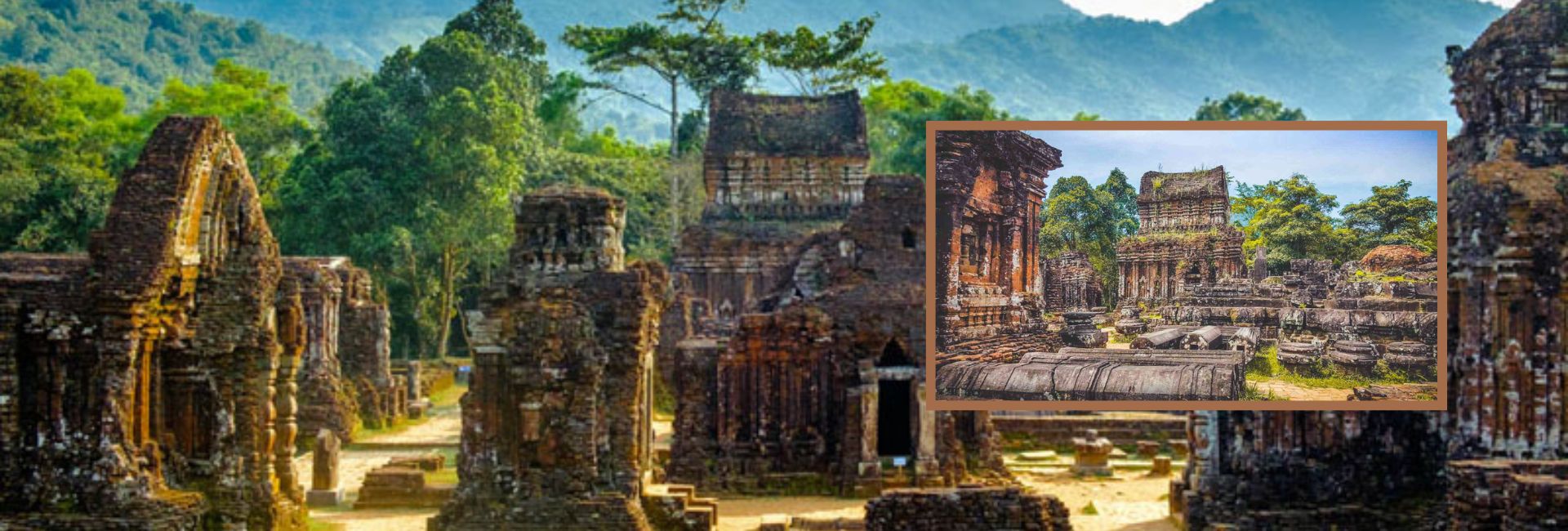
Hidden in a quiet valley of Quang Nam Province, My Son Sanctuary is one of Vietnam’s most important historical sites. Recognised by UNESCO as a World Heritage Site, it was once the spiritual centre of the ancient Champa Kingdom, flourishing from the 4th to the 13th century.
Although only about 20 of the original towers remain, the red brick temples still reflect remarkable craftsmanship and deep religious meaning. Surrounded by jungle and mountains, the site feels intimate and contemplative rather than grand. Located about 40 km from Hoi An, My Son offers a meaningful glimpse into Vietnam’s Hindu heritage and layered cultural history.
What can you find in this travel blog?
- The Historical and Spiritual Foundation
- Planning Your Visit Thoughtfully
- Architecture That Still Inspires Questions
- The Atmosphere: What You Truly Feel
- Who Will Appreciate My Son Most?
- Want to Do More?
- FAQs
The Historical and Spiritual Foundation
The Rise of the Champa Kingdom
To truly appreciate My Son Sanctuary, it helps to understand the rise of the Champa Kingdom. From the 4th to the 13th century, this powerful maritime civilization controlled much of Central Vietnam’s coastline and prospered through trade with India and other parts of Asia. These cultural exchanges shaped Champa society in lasting ways, particularly through the adoption of Hinduism.
Over time, Hindu beliefs became deeply woven into royal life and political authority. My Son was established as the kingdom’s most sacred complex, dedicated primarily to Shiva, worshipped locally as Bhadresvara. For Champa kings, this valley was more than a place of prayer. It was where spiritual devotion reinforced royal legitimacy and affirmed their divine right to rule.
A Valley Built for Worship
The location of My Son was carefully chosen. Surrounded by mountains and once nourished by nearby rivers, the valley reflects sacred geography common in Hindu tradition, where landscapes hold symbolic and spiritual meaning.
Nature was not simply a backdrop to the temples. It formed part of the sanctuary’s spiritual identity. Even today, standing within this quiet enclosure feels purposeful rather than accidental, as if the valley itself was meant to protect and preserve what once took place here.
Planning Your Visit Thoughtfully
A visit to My Son Sanctuary is most rewarding when approached with a bit of planning. Because the site is both historical and atmospheric, small logistical decisions can significantly shape your experience.
Entrance Fee & Practical Information
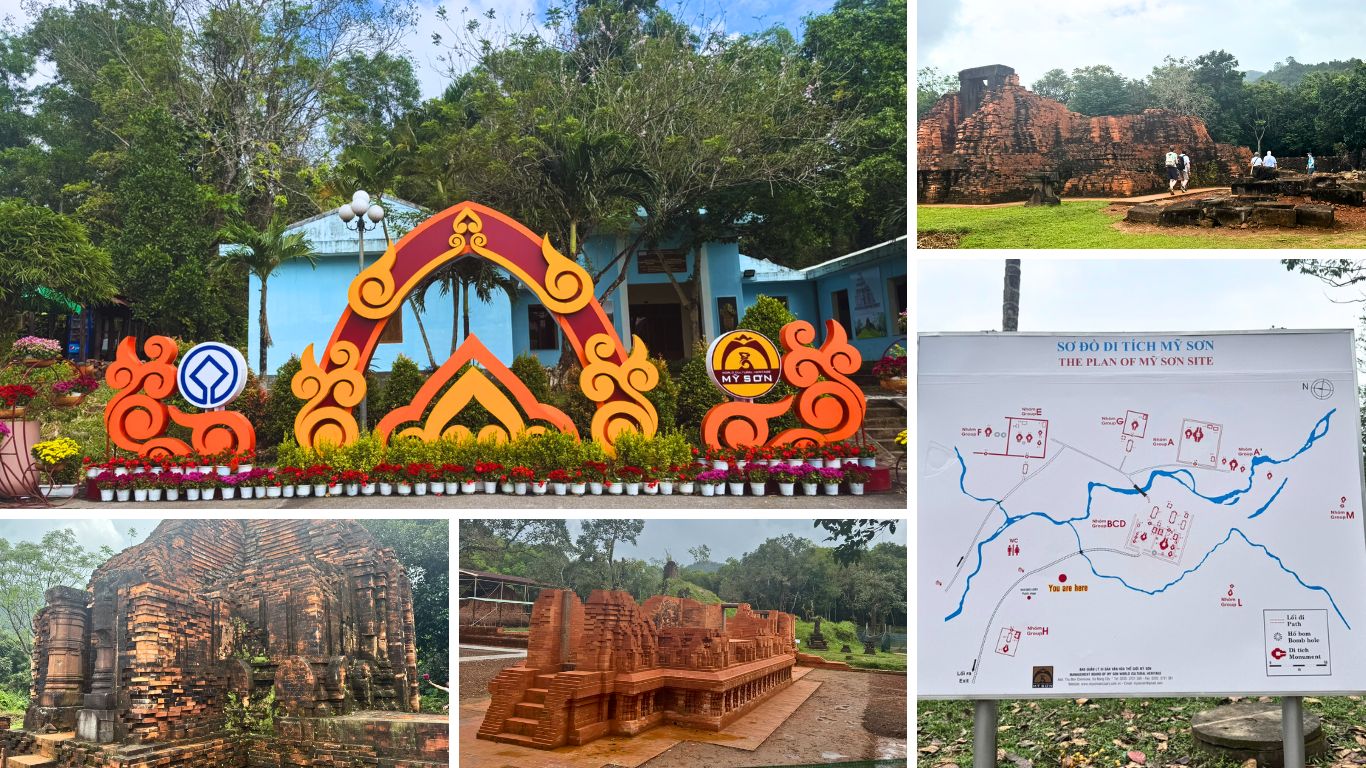
The entrance ticket to My Son Sanctuary is approximately 150,000 VND per person (around 6 USD). This fee includes access to the archaeological site and the electric shuttle service from the main gate to the temple complex.
Opening hours are generally from 6:30 AM to 5:00 PM, with the last entry in the late afternoon. Arriving early not only enhances the atmosphere but also ensures a more comfortable and unhurried visit.
If you book a guided tour, the entrance fee is often included in the package price. Always confirm this in advance to avoid confusion on arrival.
How to Get There
Getting to My Son is relatively easy, and you have a few good options:
- By car or private transfer: The most comfortable option, especially if you’re staying in Hoi An or Da Nang. Travel time is about 1 to 1.5 hours.
- By motorbike: Adventurous travellers can rent a scooter and enjoy the scenic countryside route. Just be cautious with road conditions and traffic.
- By group tour or day trip: Many agencies (including us – Vietnam Travel Online) offer guided tours with hotel pickup, entrance tickets, and commentary included.
There is a small electric cart that takes you from the main gate to the sanctuary entrance (included in the ticket), so you won’t need to walk far before reaching the temples.
⭐ Accessibility note: Visitors with limited mobility should be aware that while the main routes are relatively flat, they are not fully adapted for wheelchairs. Access to the visitor centre and shuttle area is straightforward, but exploring deeper into the temple clusters may require assistance due to uneven ground, stone fragments, or muddy surfaces during rainy months. Visiting in the dry season and allowing extra time can significantly improve comfort.
Best Time to Visit
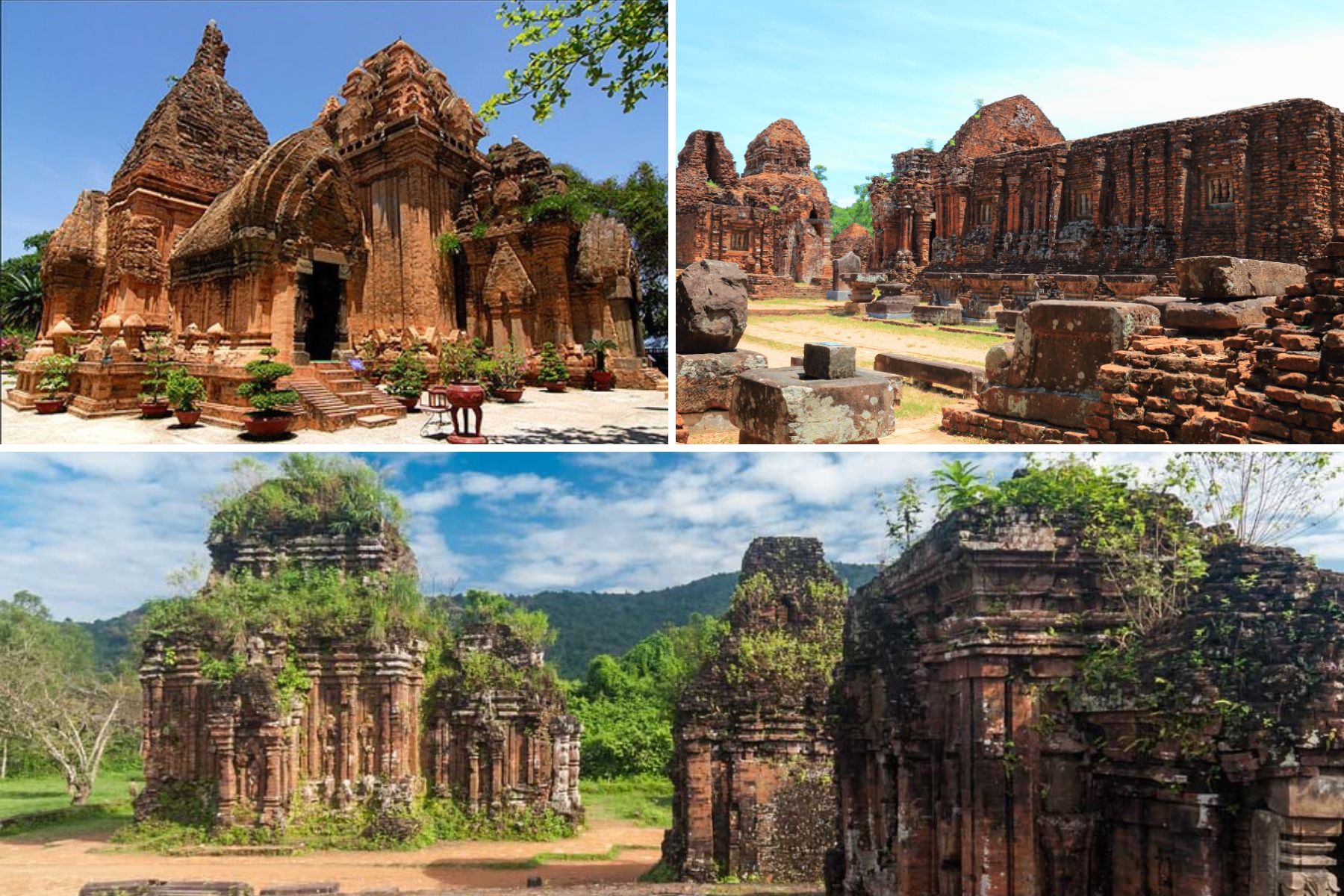
Morning remains the ideal time to explore. Temperatures are cooler, and the soft light enhances the warm red tones of the ancient brick towers. Arriving before 9:00 AM helps avoid larger tour groups and allows you to experience the valley in relative quiet.
The dry season, from February to August, offers clearer skies and firmer ground underfoot, making movement easier. However, light mist or gentle rain during other months can add a mystical dimension to the valley. Because My Son encourages slow exploration and reflection, timing influences not just comfort, but the emotional depth of your experience.
What to Bring
- Comfortable walking shoes: Some paths are uneven or slightly muddy after rain.
- Water & sunscreen: Shade is limited in the temple area.
- Insect repellent: Especially useful during early morning visits.
- Camera or phone with a good battery: The views and ruins are incredibly photogenic.
- Light raincoat or poncho: If you’re visiting during the rainy months (Sep–Jan), just in case.
Architecture That Still Inspires Questions
The architecture of My Son Sanctuary is not impressive because of size, but because of precision. At first glance, the towers appear modest. However, once you step closer, the details begin to reveal a level of craftsmanship that still puzzles experts today.
Seamless Brick Bonding Without Mortar
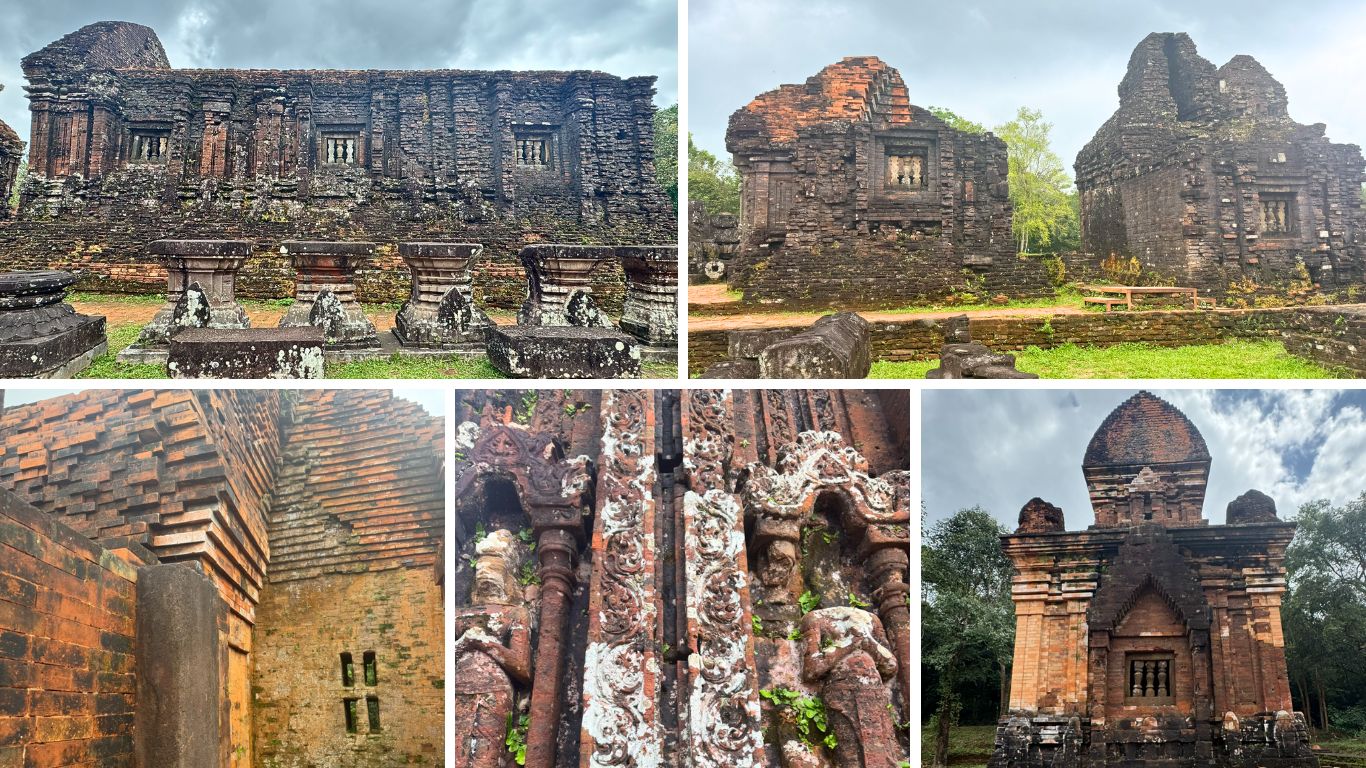
One of the most remarkable features of My Son Sanctuary is how the red bricks connect almost invisibly. Unlike conventional construction, there is no clear mortar line between them. The surfaces appear fused together, creating smooth, uninterrupted walls.
Scholars continue to debate how this was achieved. Some believe the Champa builders used organic resin extracted from local plants. Others suggest the bricks were assembled first and then fired as a unified structure. Although no definitive answer exists, this unresolved mystery adds intellectual intrigue to the site.
A Unique Brick Composition
The bricks themselves are unusually refined. They were fired at high temperatures, making them both durable and slightly porous. Because of this composition, the surface reflects light beautifully, shifting from deep red to warm orange depending on the time of day.
Despite centuries of tropical humidity in Quang Nam Province, many surfaces remain intact. This resilience highlights not only aesthetic mastery but also advanced material knowledge.
Carving After Construction
Another fascinating detail lies in the carving technique. Instead of sculpting individual bricks before assembly, many decorative elements were carved after the towers were completed.
As a result, patterns flow seamlessly across brick joints. Images of Hindu deities, apsara dancers, and sacred animals feel integrated into the structure rather than attached to it. This required extraordinary precision, because one mistake could damage an entire wall.
Why These Bricks Matter Today
Understanding these construction techniques transforms your visit. Without context, the towers may seem like simple ruins. However, once you notice the seamless joints and continuous carvings, the site becomes far more impressive.
Moreover, as sunlight moves across the valley, the textured brick surfaces respond dramatically. Shadows deepen the carvings, while morning light softens the red tones. Therefore, the architecture of My Son Sanctuary feels dynamic rather than static, shaped continuously by time and nature.
The Atmosphere: What You Truly Feel
While history explains My Son Sanctuary, the atmosphere is what truly defines it. The valley feels enclosed and protective, surrounded by jungle-covered hills that soften every sound. Early mornings often bring drifting mist, and birds echo gently through the trees. As a result, the experience becomes reflective rather than dramatic. Instead of feeling overwhelmed, you feel drawn inward.
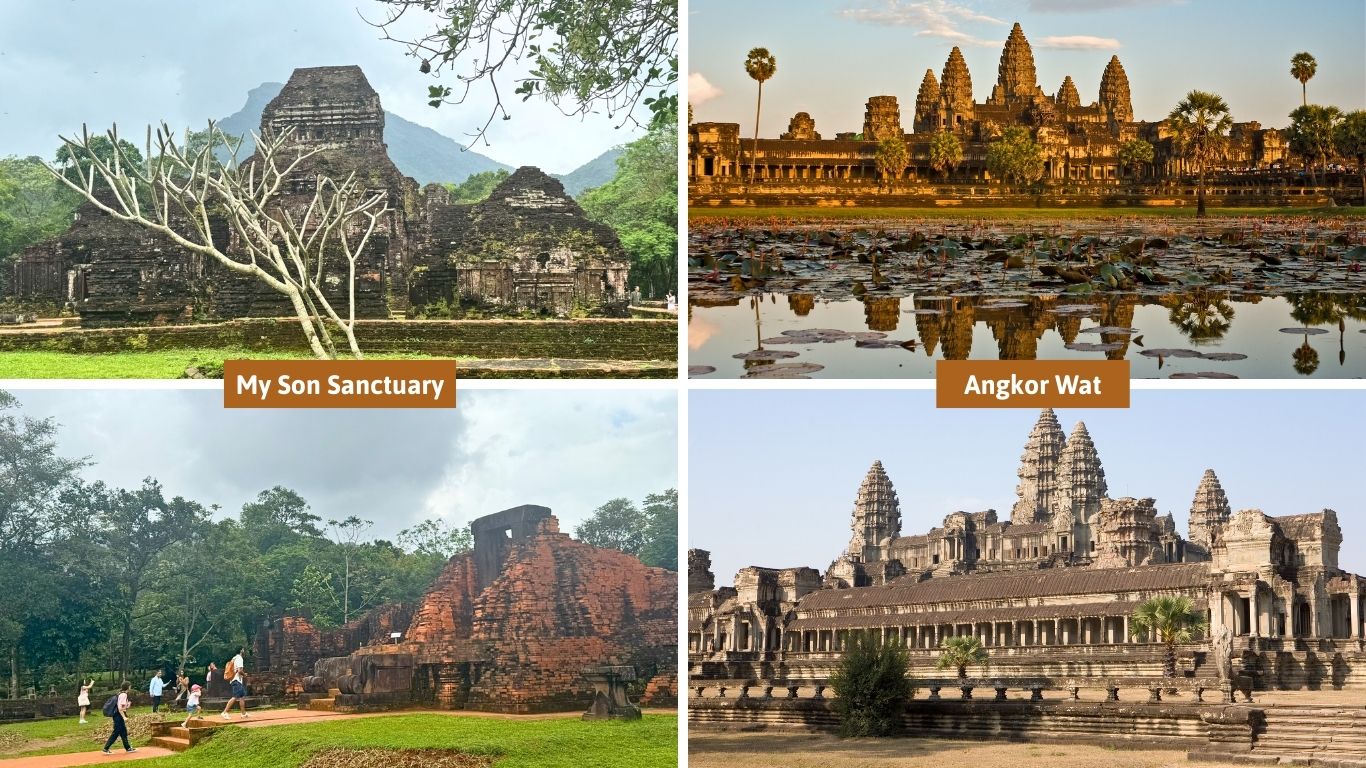
Many travellers naturally think of Angkor Wat when visiting ancient temple complexes in Southeast Asia. However, the emotional experience differs significantly. Angkor impresses with monumental scale, wide causeways, and towering silhouettes rising against the sky. It feels expansive and majestic. In contrast, My Son Sanctuary feels intimate and contemplative. There are no vast horizons or endless corridors. Instead, the valley creates a sense of quiet isolation. Therefore, while Angkor inspires awe through grandeur, My Son Sanctuary leaves a quieter, more personal impression that often lingers longer than expected.
Who Will Appreciate My Son Most?
My Son Sanctuary particularly appeals to travellers who value depth over spectacle. This is not a place to rush from tower to tower, checking off highlights. Instead, it invites slow exploration as walking quietly along shaded paths, pausing to notice carvings, and standing still long enough to feel the atmosphere settle around you.
Because the complex is compact and walkable, movement feels natural and unhurried. You are not navigating vast distances like at Angkor Wat. Rather, you drift gently between clusters of towers, discovering details gradually. The experience rewards curiosity and patience.
Travellers Who Connect Most Deeply
Couples often appreciate the sanctuary’s quiet, almost romantic mood. Early morning light filtering through mist creates a soft, intimate setting that feels far removed from busy city life. It is less about dramatic moments and more about shared stillness.
Photographers value the textured brick surfaces and shifting light throughout the day. As the sun rises higher, shadows carve depth into the reliefs, transforming even partially ruined walls into powerful compositions.
Mature travellers and culturally curious explorers frequently find My Son more engaging than larger, busier attractions. Without crowds dominating the space, reflection becomes possible. The site does not overwhelm; it reveals itself slowly.
Why a Guide Makes a Difference
Because much of My Son’s meaning lies beneath the surface, interpretation matters. Without context, the towers may appear simply as ruins. With a knowledgeable guide, however, stories of the Champa kings, Hindu symbolism, and architectural mysteries bring each structure to life.
For travellers who appreciate nuance, storytelling, and cultural layers, My Son Sanctuary becomes more than a historical stop. It becomes an experience shaped by movement, atmosphere, and understanding.
Want to Do More?
While My Son Sanctuary works beautifully as a half-day trip, extending your journey can deepen your understanding of Central Vietnam’s cultural layers. Exploring with a knowledgeable guide adds valuable historical and spiritual context, transforming ancient ruins into meaningful stories rather than silent structures.
A half-day visit from Hoi An or Da Nang is ideal for travellers short on time, especially with an early morning departure. Cooler temperatures and softer light enhance both comfort and photography.
If your schedule allows, consider expanding your visit into a full-day cultural experience. Pairing My Son with nearby heritage and countryside stops creates a more complete narrative of the region.
Combine It with Other Stops
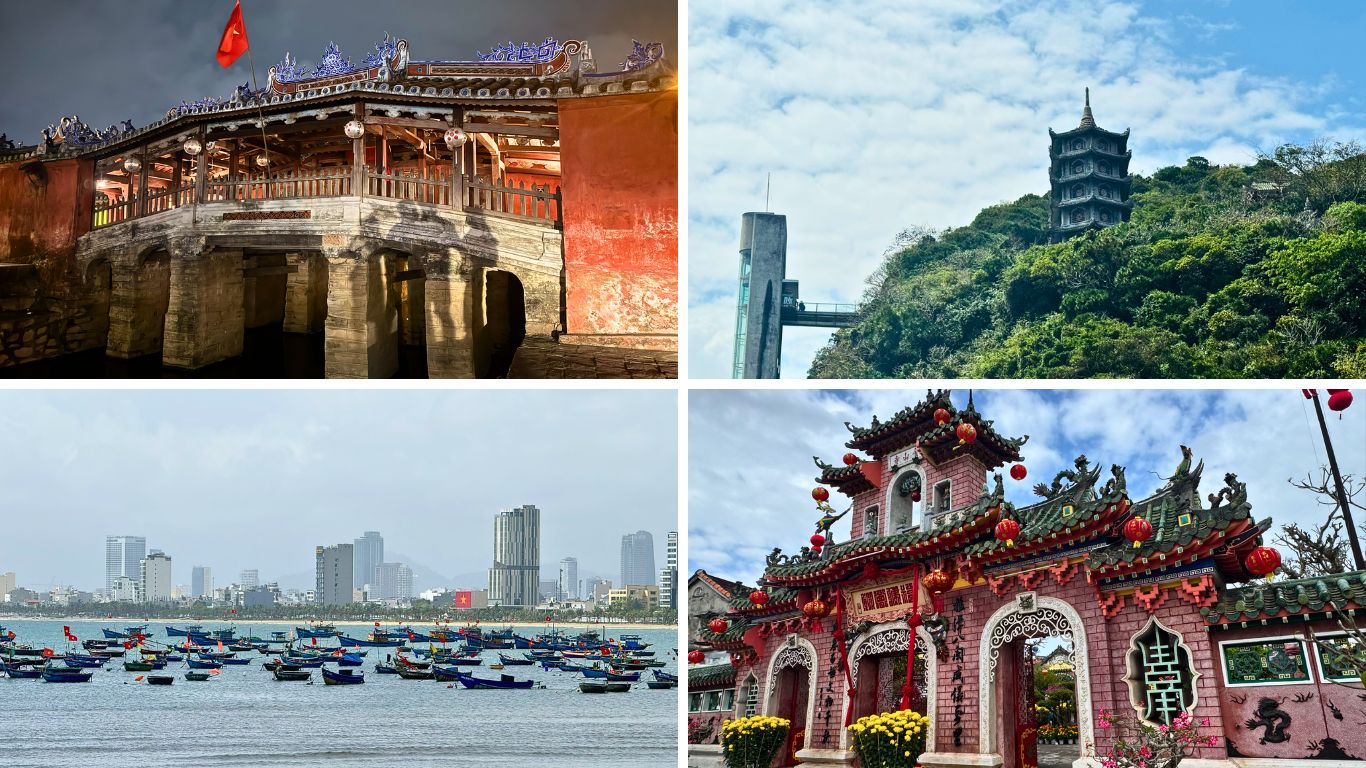
• Marble Mountains – Wander through cave temples carved into limestone cliffs, climb stone steps to hidden shrines, and take in sweeping coastal views. It feels like stepping into a different spiritual world after My Son’s quiet valley.
• Hoi An Ancient Town – Slow down with a riverside coffee, explore lantern-lit streets, and step inside centuries-old merchant houses. The town’s layered trading history complements the ancient story of Champa.
• Son Tra Peninsula – Forested hills, ocean breeze, winding coastal roads, and panoramic viewpoints. A refreshing nature escape if you’re based in Da Nang.
• My Khe Beach – After a morning of temple exploration, nothing feels better than sand under your feet and sea air on your skin.
• Countryside Villages – Cycle past rice paddies, visit a small family workshop, or share a simple home-cooked meal. These moments often become the most memorable part of the day.
Turning It into a Deeper Cultural Day
When thoughtfully combined, ancient temples, mountain sanctuaries, and village life create a richer and more balanced day. Rather than rushing between attractions, the experience unfolds naturally and comfortably.
At Vietnam Travel Online, we design private journeys tailored to your schedule and interests. Our goal is not simply to show you more places, but to help you understand the connections between history, landscape, and daily life. If you would like assistance planning your visit, feel free to contact our team via email: [email protected] or through our website contact form for a personalised itinerary.
FAQs
How long should I plan for my visit?
Most travellers spend around two to three hours exploring the main temple clusters. A half day is usually sufficient unless you are combining it with other nearby attractions.
Is My Son Sanctuary suitable for children?
Yes, especially for families interested in culture and history. However, parents should note that some paths are uneven and shade is limited in certain areas.
Is the site wheelchair accessible?
The visitor centre and shuttle service are accessible, but the temple grounds include uneven surfaces. Wheelchair users may need assistance, particularly during wet weather conditions.
What should I wear when visiting?
Light, breathable clothing and comfortable walking shoes are recommended. While it is not an active temple site, modest attire is respectful given its religious history.
What makes My Son different from other temple complexes in Southeast Asia?
Unlike vast temple cities, My Son offers a quieter and more intimate atmosphere. Its sacred valley setting and mysterious brick construction create a reflective experience rather than an overwhelming spectacle.