

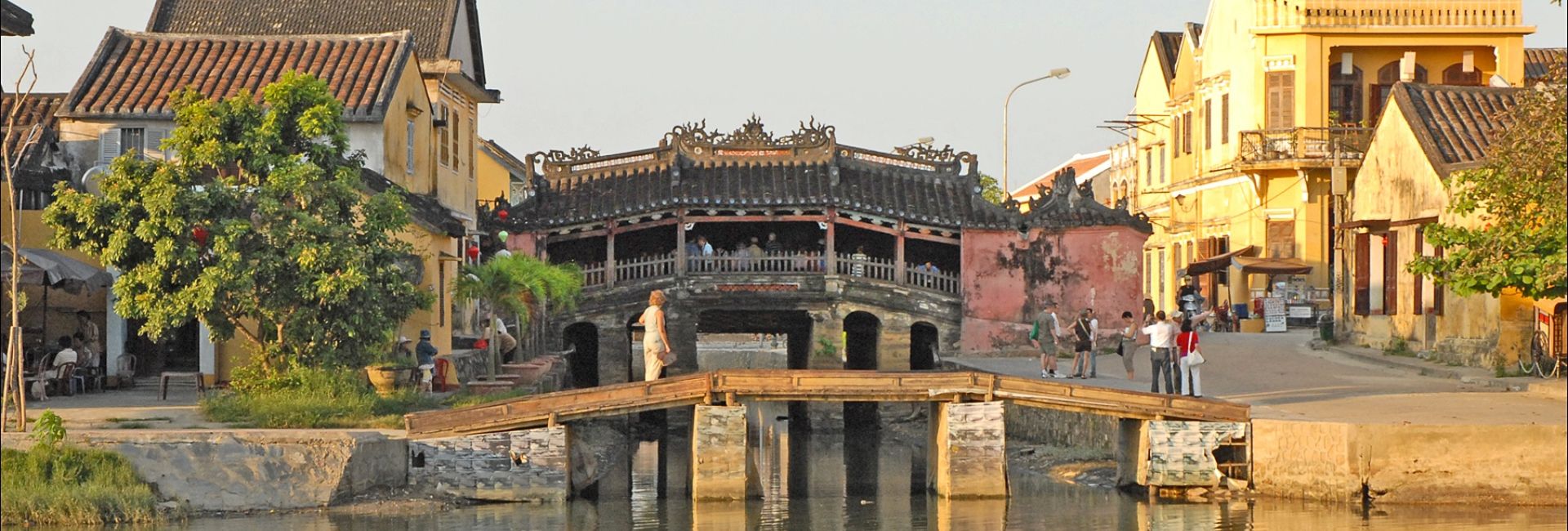
If there’s one place in Hoi An that truly captures the spirit of the town, it’s the Japanese Covered Bridge. Locally known as Chùa Cầu, this centuries-old structure isn’t just a crossing point, it’s a symbol of Hoi An’s rich trading history, cultural harmony, and timeless charm. Featured on Vietnam’s 20,000 VND note, the bridge is a must-see on any visit to Hoi An Ancient Town.
What can you find in this travel blog?
- The Story Behind the Japanese Covered Bridge
- What to Explore on the Japanese Covered Bridge
- Why the Japanese Covered Bridge Is Worth Visiting
- FAQs
The Story Behind the Japanese Covered Bridge
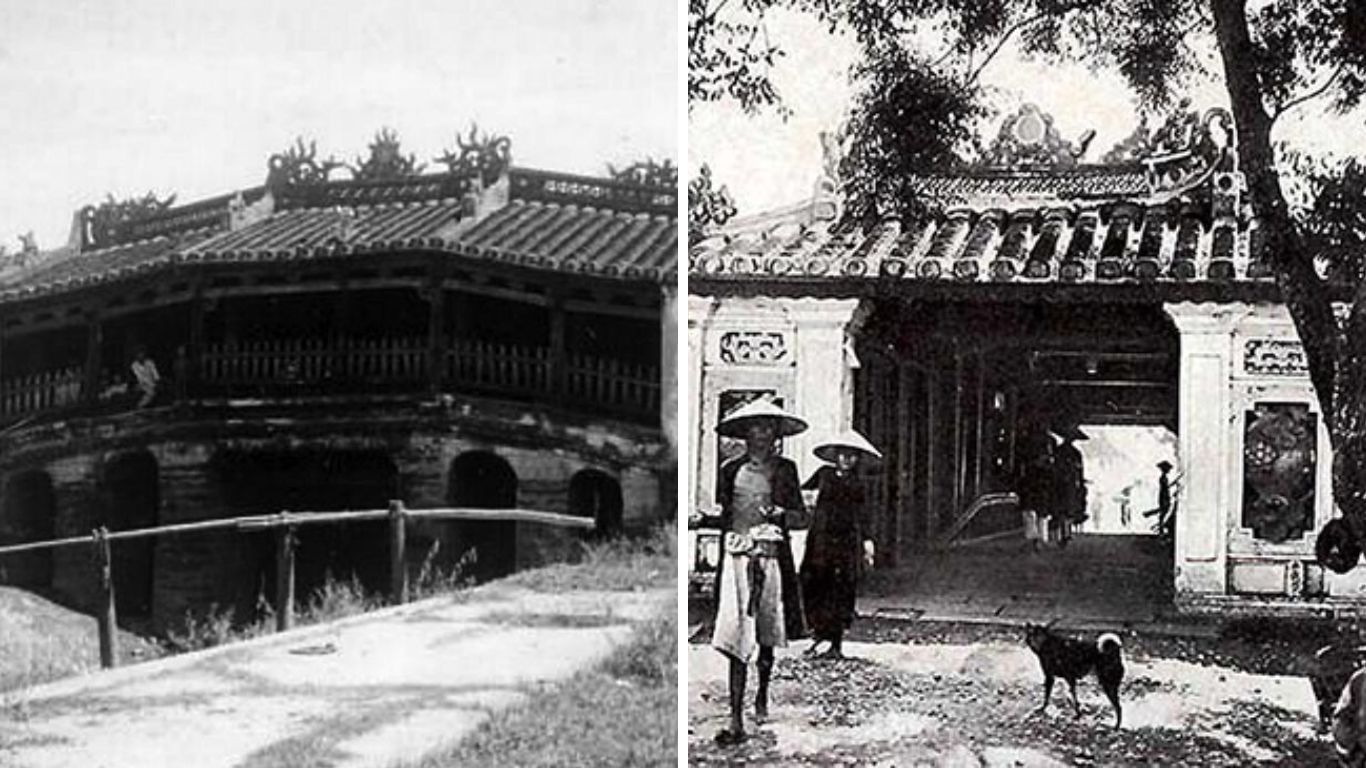
Built in the late 16th century by Japanese merchants, it was meant to link their community with the Chinese quarter across the stream. Today, it stands as one of the most iconic and photographed landmarks in Vietnam.
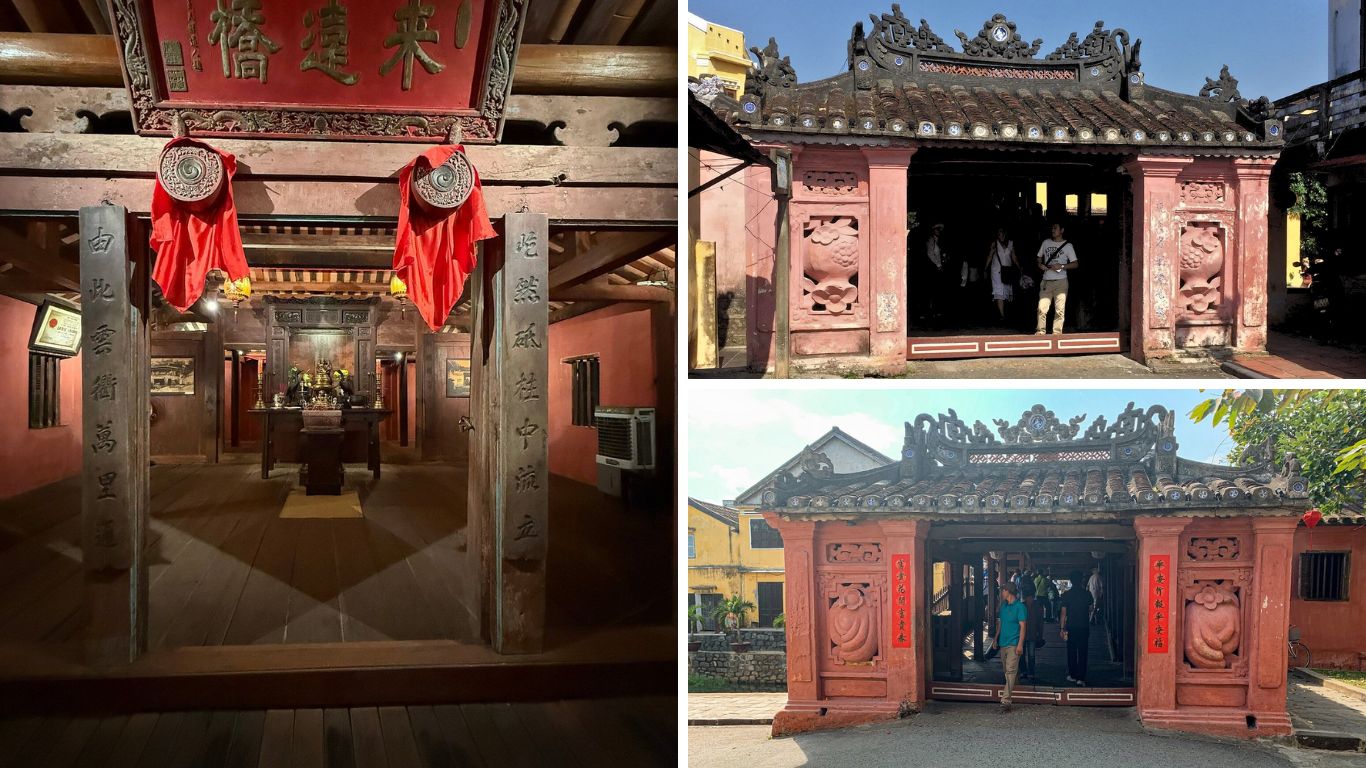
When you step onto the bridge, you’ll notice its distinctive roof, wooden floor, and quiet, shaded passageway, all designed to offer shelter from Hoi An’s sun and rain. More than a bridge, it feels like stepping into a living piece of history.
Location of the Japanese Covered Bridge
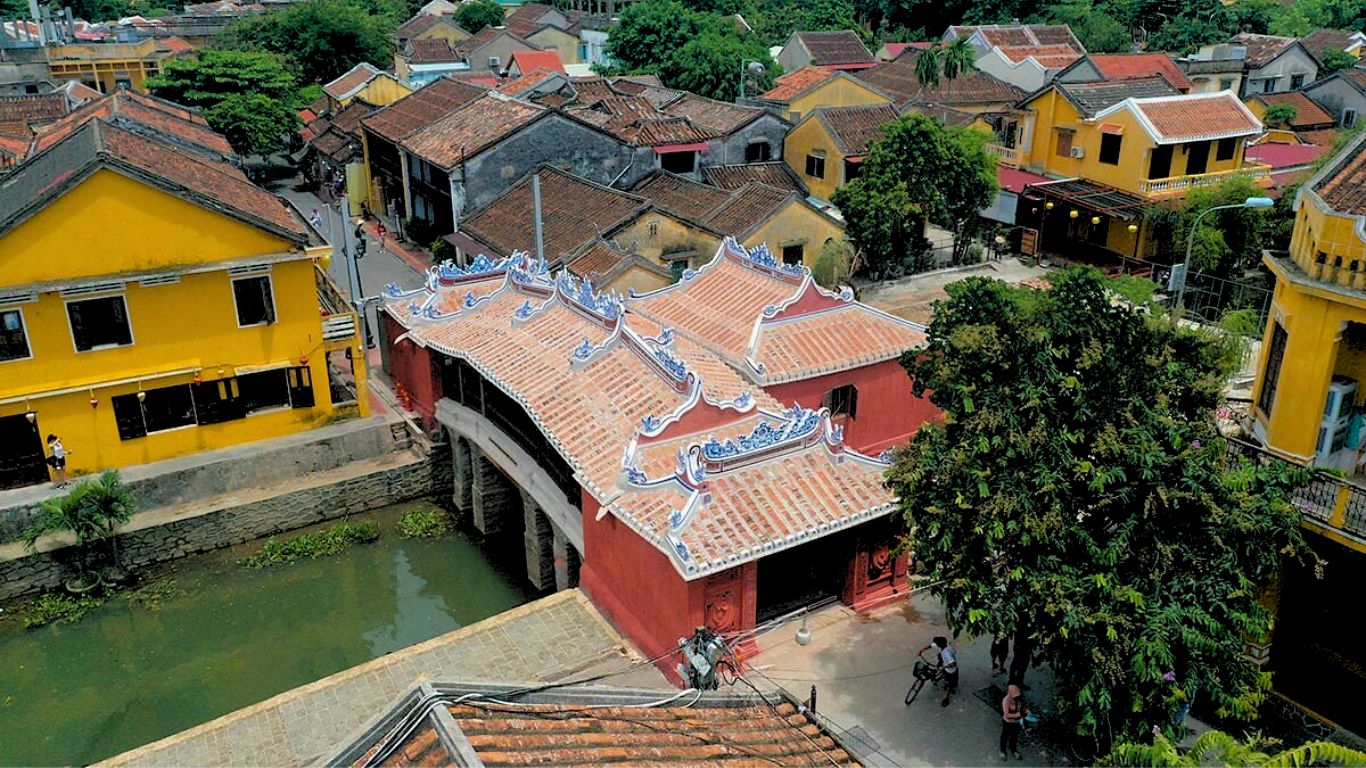
The bridge sits right in the center of Hoi An Ancient Town, spanning a small canal between Tran Phu Street and Nguyen Thi Minh Khai Street. Because the Ancient Town is a pedestrian, only zone, you’ll need to enter on foot or by bicycle, but that’s exactly what makes it so atmospheric.
How to Get to the Japanese Covered Bridge
-
From Da Nang: About 30 km away (45 minutes by car). You can book a private transfer, take a taxi, or rent a motorbike.
-
Within Hoi An: If you’re staying in or near the Ancient Town, you can simply walk. Many hotels also offer free bicycles, which are a charming way to explore.
-
Guided Tours: Most walking tours of Hoi An include the Japanese Covered Bridge, along with merchant houses and assembly halls. This option gives you deeper insights into its history.
Best Time to Visit the Japanese Covered Bridge
-
Time of Day:
-
Morning (7:00–9:00 am) → Peaceful, fewer crowds, softer light for photos.
-
Evening (after 6:00 pm) → Lanterns glow, the bridge looks magical, and the Ancient Town comes alive.
-
-
Season:
-
Dry Season (February–August) → Clear skies, perfect for walking and photography.
-
Rainy Season (September–January) → Still atmospheric, but be prepared for occasional floods.
-
💡 For a deeper guide on when to plan your visit, check out our post on the Best Time to Visit Hoi Anto help you have better idea
What to Explore on the Japanese Covered Bridge
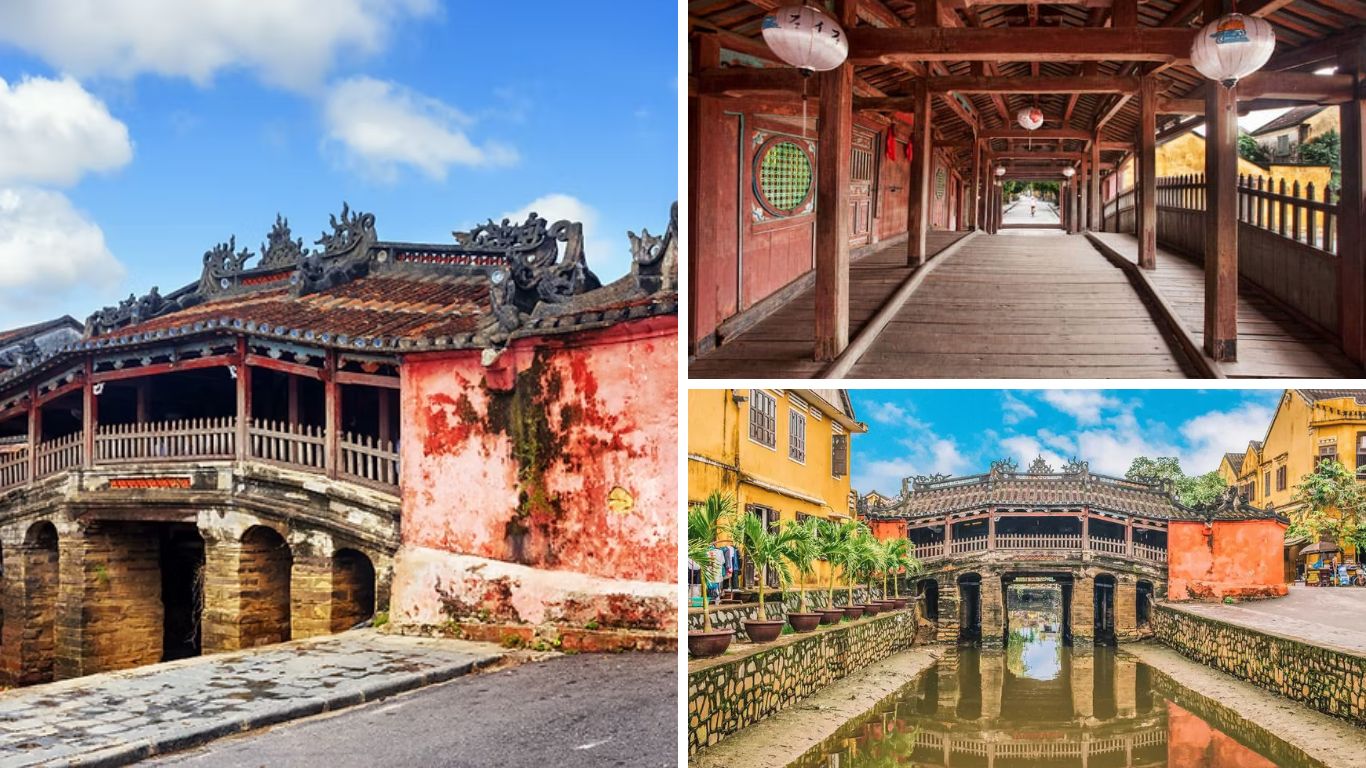
From a distance, the Japanese Covered Bridge already stands out as one of the most graceful structures in Hoi An Ancient Town. Its curved roofline, mossy tiles, and solid wooden base make it feel both elegant and timeless. Unlike many bridges, this one was designed not just for crossing but for shelter and reflection, a covered walkway that has endured for over 400 years
Once you step onto the bridge, the details reveal themselves little by little:
-
The Passageway
Inside, the roofed walkway offers shade and coolness, a welcome pause from Hoi An’s heat. The symmetry and balance of its design reflect Japanese aesthetics, while still blending harmoniously with Vietnamese surroundings.
-
Wooden Beams and Carvings
Look closer at the beams and railings, They are simple, sturdy woodwork, yet full of character. The structure tells a story of practical craftsmanship that has lasted centuries.
-
Guardian Statues
At each end, you’ll find monkey and dog statues. Beyond their charm, they’re believed to protect the bridge and symbolize the years of its construction.
-
The Shrine of Tran Vo Bac De
At the bridge’s center lies a shrine to Tran Vo Bac De, the God of the North. Blending Vietnamese, Chinese, and Japanese styles, it’s where locals pray for peace and good health, a quiet moment worth pausing for
-
Views Over the Canal
Finally, don’t miss looking out from the side openings. The canal below reflects the bridge beautifully, while on either side you see Hoi An’s colorful old streets bustling with life.
By moving from the overall structure into its smaller details, the Japanese Covered Bridge feels less like a stop for a photo and more like a story you can walk through, step by step.
Why the Japanese Covered Bridge Is Worth Visiting
The Japanese Covered Bridge isn’t just another landmark in Hoi An, it’s the heart of the Ancient Town. Many visitors say their trip wouldn’t feel complete without stepping onto this historic structure, and it’s easy to see why. The bridge beautifully captures the essence of Hoi An: a meeting point of cultures, history, and timeless charm.
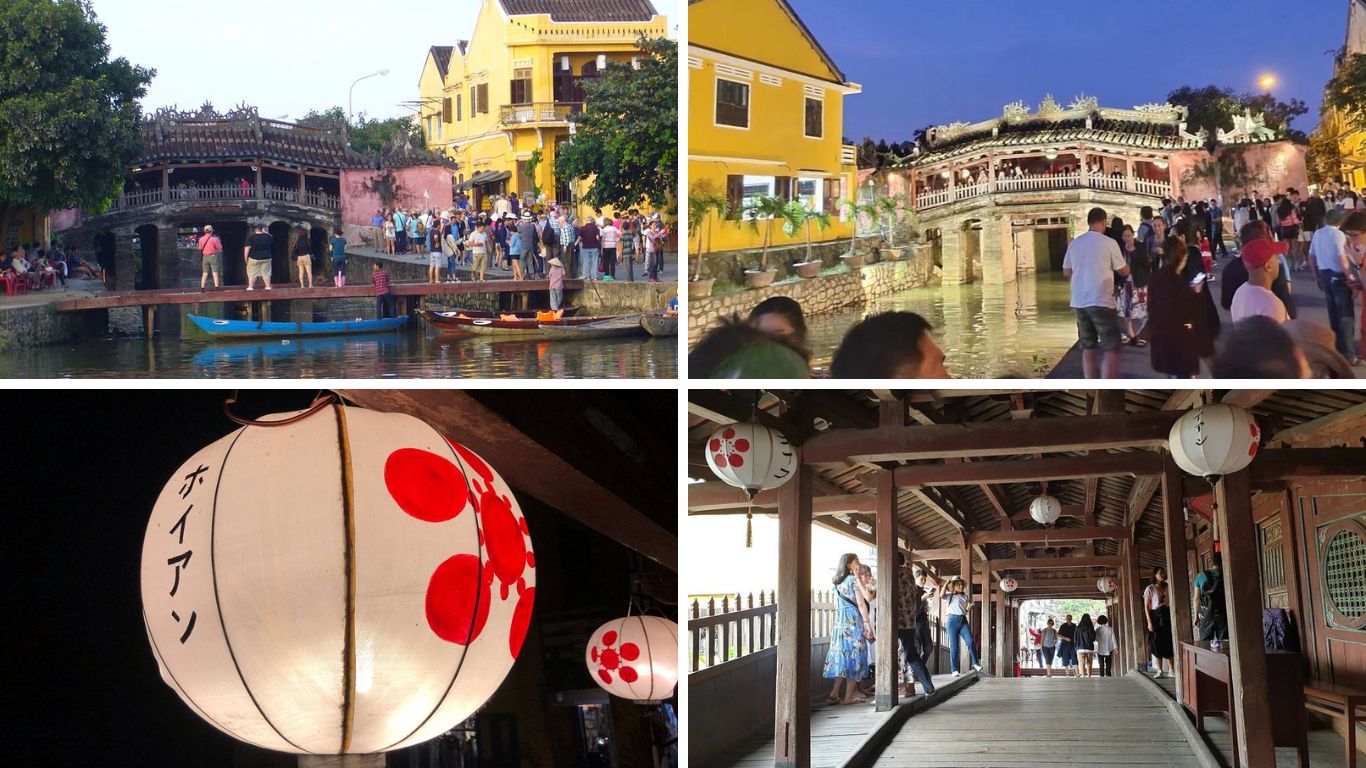
By day, its architecture draws you in with carved wooden details, dragon statues, and the small temple nestled inside. By night, the bridge glows with lantern light, reflecting softly on the canal and creating one of the most romantic scenes in the old town. Whether you’re traveling as a couple, a family, or solo, you’ll find yourself pausing here for photos, for atmosphere, and often just for a quiet moment of appreciation.
Even as Hoi An has grown busier over the years, the Japanese Covered Bridge remains the town’s most enduring symbol. It’s no coincidence that it appears on Vietnam’s currency, it represents not just a beautiful piece of architecture, but the spirit of Hoi An itself.
How to Visit the Japanese Covered Bridge Today
Today, visiting the Japanese Covered Bridge feels like walking through a living piece of history. The town around it buzzes with life because of tailor shops, lantern stalls, and coffee corners, but the bridge still holds a slower rhythm that invites you to stop and take it in.
-
Daytime is best if you want to notice the details: the statues of the monkeys and dogs guarding each end, the curved wooden beams, and the centuries-old design that still holds strong.
-
Evening is when the atmosphere transforms. As lanterns are lit along the Thu Bon River, the bridge becomes one of the most photographed and unforgettable sights in Hoi An.
A ticket to the Ancient Town (120,000 VND) usually covers entry to the bridge, though many people simply enjoy crossing it freely. For the most peaceful visit, go early in the morning before the town fully wakes up, or return after dinner to see it glowing under lantern light.
Despite the popularity of Hoi An today, standing on the Japanese Covered Bridge is still a reminder of why travelers fall in love with this town: it blends history and beauty in a way that never feels out of date.
Suggested One-Day Route in Hoi An
If you have just one day in Hoi An and prefer to travel slowly but meaningfully, here’s a route you can follow:
Japanese Covered Bridge → Phuc Kien Pagoda & Tan Ky House → Stroll along Nguyễn Thái Học Street (cafés, shops, galleries) → Riverside drink & relaxation → Japanese Covered Bridge at sunset → Dinner or lantern-lit stroll by Thu Bồn River
This route balances cultural highlights, quiet corners, and the lantern-lit beauty that makes Hoi An unforgettable—all without rushing.
💡 If you’d like to explore more beyond one day, such as cycling through villages or visiting An Bang Beach, check out our 2-day itinerary for Hoi An.
Practical Tips for Visiting the Japanese Covered Bridge
-
Opening hours: 8:00 AM – 5:00 PM (though the bridge remains open for viewing and looks stunning when lit up at night).
-
Entrance fee & ticketing: The bridge is not ticketed separately. To enter, you’ll need a Hoi An Ancient Town ticket (120,000 VND per person), which allows access to five heritage sites of your choice. Tickets are sold at official booths around the Old Town, easiest to pay in cash (VND), though some accept cards.
-
Best time to visit: Early morning for peaceful photos, or evening when lanterns glow and the bridge feels magical. Avoid midday if you can, as it gets crowded and hot.
-
What to wear: Comfortable clothes and walking shoes, since you’ll likely explore more of the Ancient Town.
-
Photography tips: Step back along the riverbank for the most striking full view. Inside, don’t miss close-ups of the intricate wooden carvings and the shrine to Bắc Đế Trấn Võ.
FAQs
1. Do I need a ticket to visit the Japanese Covered Bridge?
Yes. The bridge is included in the Hoi An Ancient Town ticket (120,000 VND per person). The ticket also allows entry to a few other historic houses, museums, and assembly halls in the town.
2. How long should I spend at the bridge?
You’ll only need about 15–20 minutes to walk through and explore the details, but we recommend staying longer in the surrounding streets. The bridge looks different in the morning, afternoon, and evening, so it’s worth passing by more than once in a day.
3. Is the Japanese Covered Bridge worth visiting at night?
Absolutely. At night, the bridge is beautifully lit and the nearby lanterns create a magical atmosphere. It’s a favorite spot for both photography and slow evening strolls.
4. Can I cross the bridge without a ticket?
No, you’ll need the Ancient Town ticket to step onto the bridge. However, you can admire and photograph it freely from the riverbanks outside the ticket zone.
5. What else can I do nearby the bridge?
Plenty! Just steps away, you’ll find charming cafés, souvenir shops, art galleries, and historic houses like Tan Ky Old House. The bridge is right in the heart of Hoi An, so it’s the perfect starting point for your Ancient Town walk.
At Vietnam Travel Online, we design personalized Hoi An journeys that go beyond the usual checklist, whether it’s a gentle half-day around the Japanese Covered Bridge and Ancient Town, or a full-day route with hidden corners, local markets, and lantern-lit evenings, everything is tailored to your pace and interests. Share your travel passions with us and receive a personalized quote by filling in this form or simply emailing [email protected] because your time in Hoi An should be meaningful, not just memorable.