

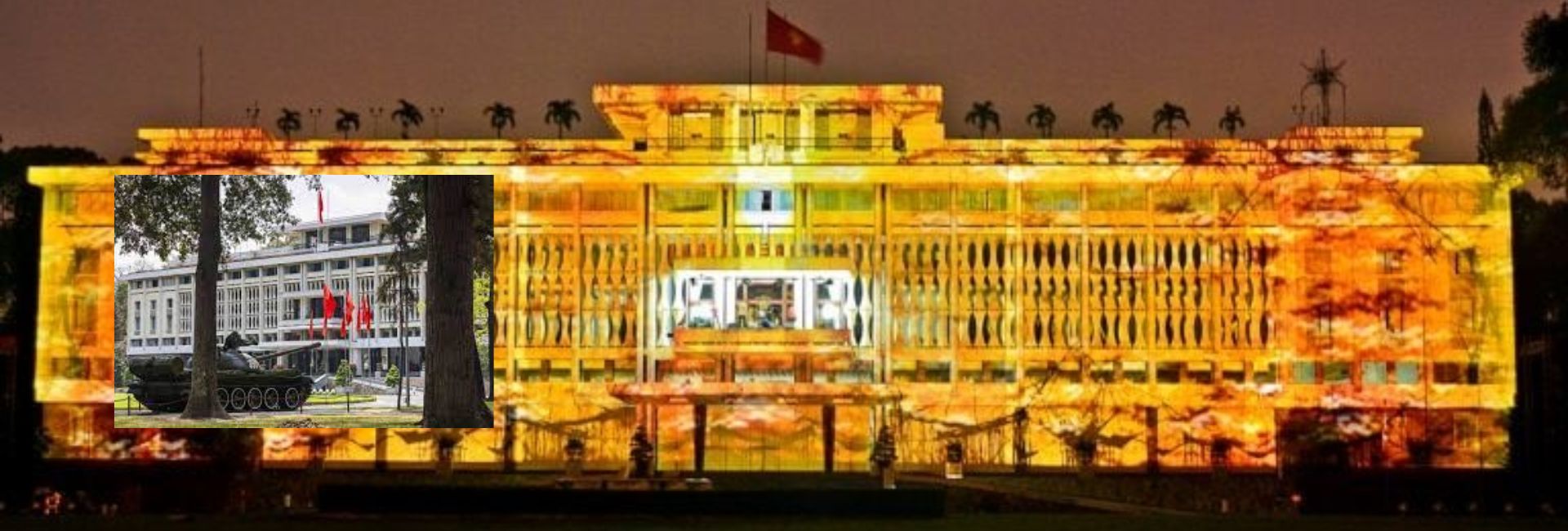
If you’re planning a trip to Saigon (or Ho Chi Minh City) and want to understand Vietnam’s modern history in a way that’s immersive, visual, and deeply emotional. Independence Palace is where you need to go.
Also known as the Reunification Palace, this building witnessed the final moments of the Vietnam War and symbolizes a turning point in the nation’s past. But it’s more than just a historic site, it’s a beautifully preserved time capsule filled with stories, military secrets, bold architecture, and cultural symbolism.
What can you find in this travel blog?
- The story of the Independence Palace
- What Can You Explore Inside the Independence Palace?
- Practical Tips Before You Visit the Independence Palace
- Is the Independence Palace Worth Visiting?
- Other Places Nearby to Visit in One Day
The story of the Independence Palace
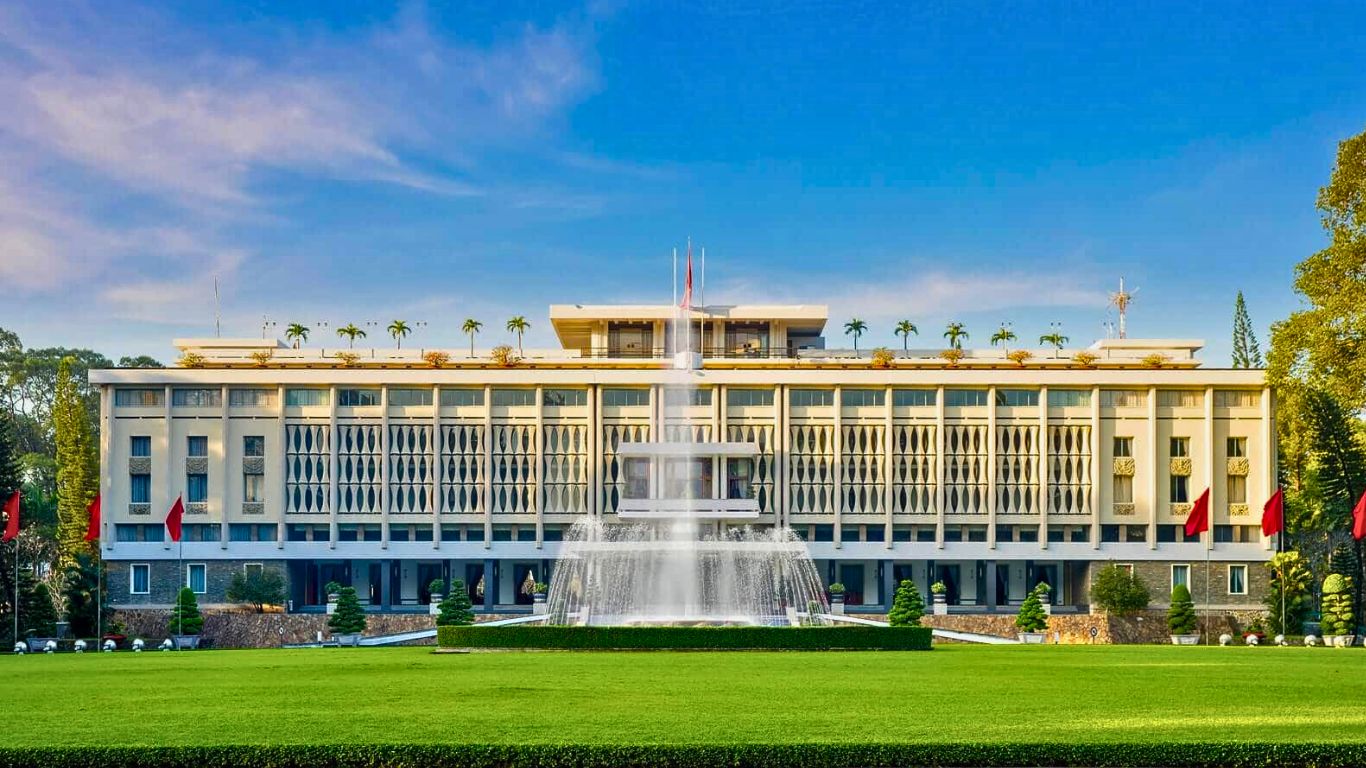
Located in District 1, the most central and walkable part of Saigon, the Independence Palace was once the home and working office of the President of the Republic of Vietnam (South Vietnam).
- Official name today: Independence Palace (Dinh Độc Lập)
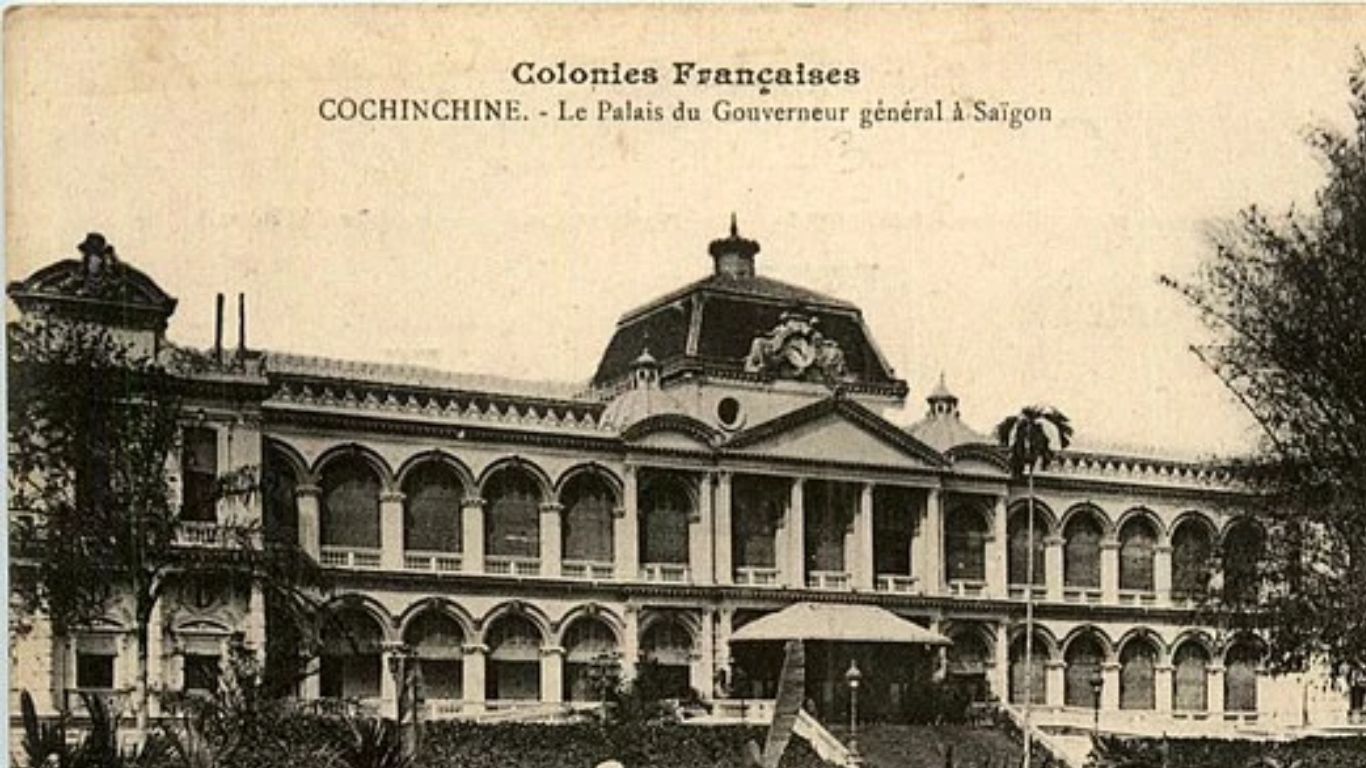
- Old name: Norodom Palace (under the French)
- Built: 1962–1966 (current structure)
- Architect: Ngô Viết Thụ – the first Vietnamese to win the prestigious Prix de Rome in architecture
- Function: Presidential residence, command center, and symbolic heart of South Vietnam
- Symbol of reunification: When a North Vietnamese tank burst through its gates on April 30, 1975, it marked the fall of Saigon and the end of decades of conflict
From the outside, it’s an elegant mid-century building. On the inside, it’s a living museum of war, diplomacy, and design.
A Deep Dive into the History of the Independence Palace
This building carries layers of Vietnamese political transformation, colonization, and conflict.
From French Rule to Presidential Palace:
- Originally built in 1868 by the French colonialists and called Norodom Palace.
- Used as the Governor-General’s residence of French Indochina from 1887 until WWII.
- In 1955, President Ngo Dinh Diem renamed it the Independence Palace after Vietnam was split into North and South.
Bombed and Rebuilt:
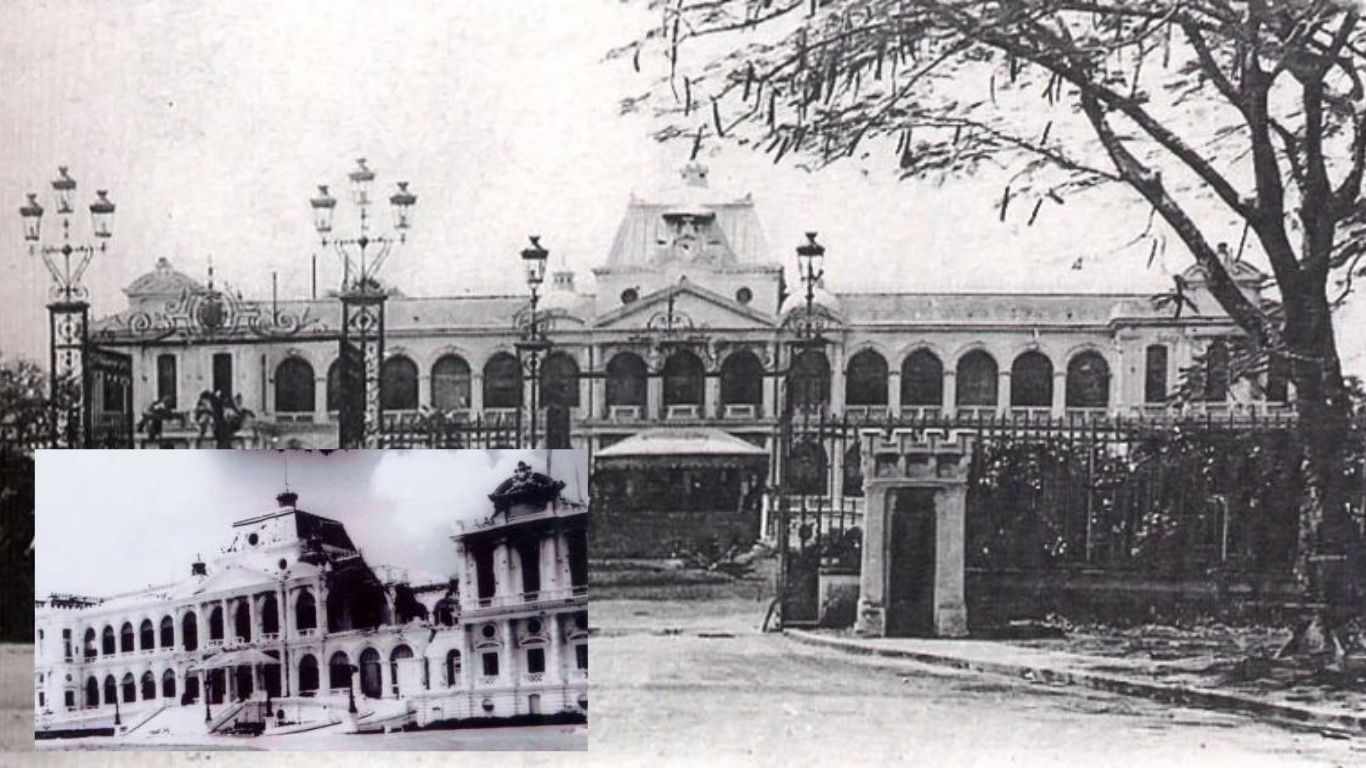
- In 1962, the palace was bombed by two of Diem’s own Air Force pilots in a failed assassination attempt.
- Instead of repairing, Diem decided to rebuild it from scratch, hiring Ngô Viết Thụ to design a more modern structure.
- Completed in 1966, the new design reflected Vietnamese philosophy, feng shui, and Western modernism.
End of the Vietnam War:
- On April 30, 1975, a North Vietnamese Army tank broke through the gates, marking the end of the war.
- The moment was broadcast around the world and remains one of the most iconic scenes in Vietnam’s history.
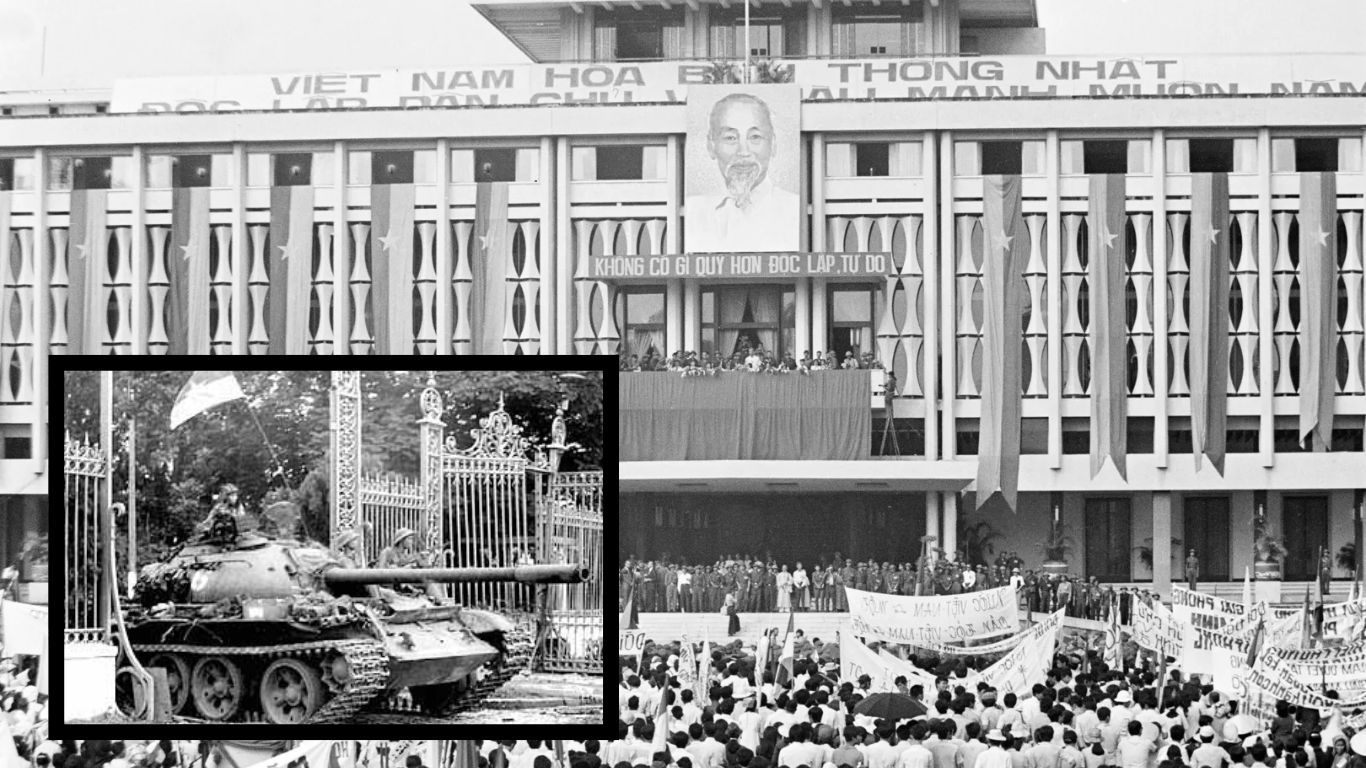
Visiting this site allows you to stand where history shifted, where power changed hands, and where reunification began.
What Can You Explore Inside the Independence Palace?

Expect to spend at least 1.5 to 2 hours here if you want to fully absorb what’s on display. You’ll explore four above-ground floors, a basement command center, and the rooftop.
Here’s a room-by-room breakdown of highlights:
Formal Rooms (Ground & First Floor)
- Cabinet Room: Where the President held meetings with ministers. Large table, microphones, and flags still intact.
- National Security Council Chamber: You can picture the intensity of war-time strategy sessions here.
- Ambassador Receiving Room: A blend of diplomatic formality and Vietnamese aesthetics.
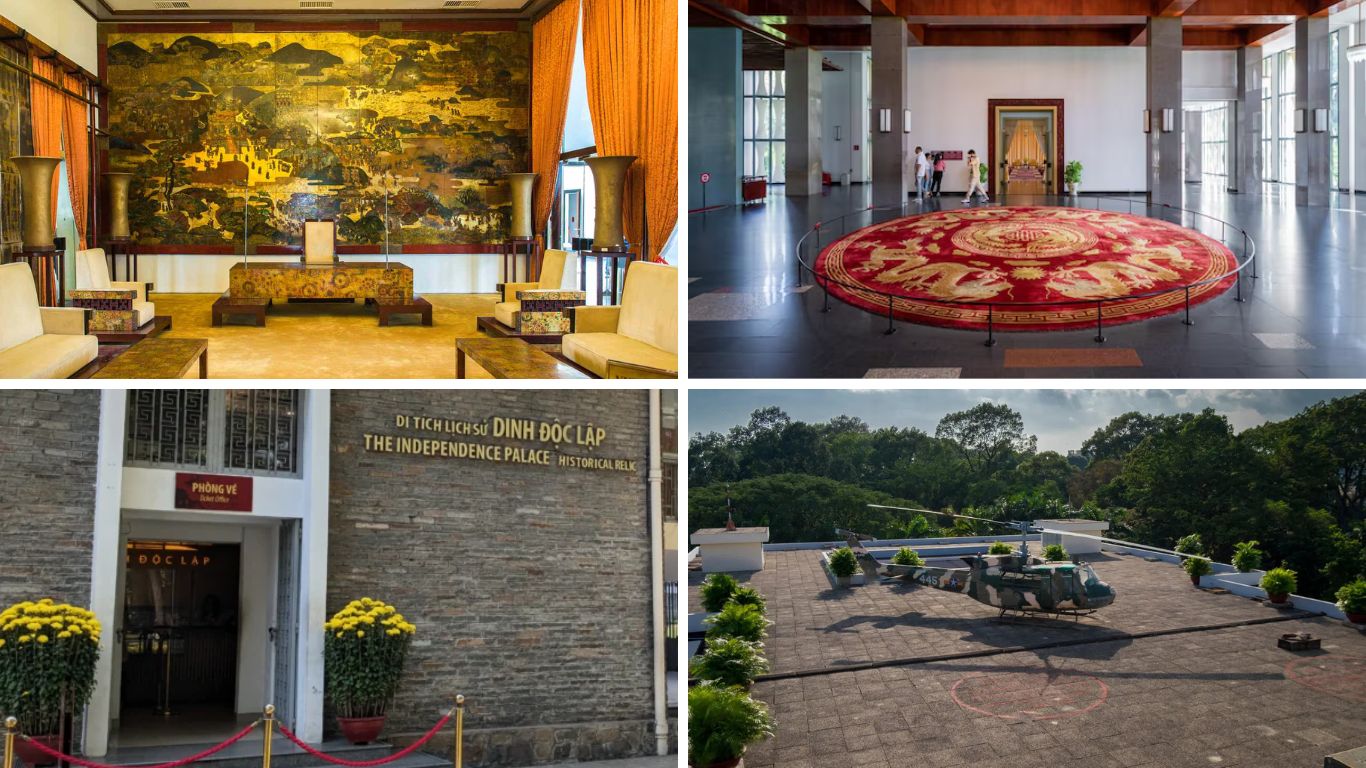
Look at the carpets, decorations, and placement, you will see every detail here reflects diplomatic hierarchy.
Presidential Living Quarters (Upper Floors)
- The modest but functional are bedrooms, a private cinema, dining space, and a gaming room.
- One of the most interesting pieces is the Presidential Office, left exactly as it was.
- A helicopter pad still sits on the rooftop, built in anticipation of an emergency escape.
The circular carpet in one room was a gift from a Hong Kong businessman. Subtle symbols of diplomacy are scattered throughout.
The War Bunker (Basement)
This is where the real action took place during the war.
- Underground strategy rooms, communication centers, and emergency exit tunnels
- Maps of South Vietnam still hang on the walls
- You’ll see old telephones, radio transmitters, and war-era control systems
- Some areas remain restricted, making it even more intriguing
You’ll feel the difference as soon as you descend. It’s cold, dim, and heavy with tension. A reminder of what was at stake here.
Other Highlights
- Presidential Vehicles: Two armored cars used during official duties.
- Palace Kitchen: Surprisingly modern for the time, built to serve both the household and military command.
- Rooftop Terrace: Offers views over the front square and is a nice rest stop.
Practical Tips Before You Visit the Independence Palace
Here’s what you should know to plan your visit smoothly and make the most of your time.
Opening Hours
- Daily: 7:30 AM – 11:00 AM and 1:00 PM – 4:00 PM
- Last ticket sold: 10:30 AM / 3:30 PM
Entrance Fees
- Adults: 65,000 VND (~$2.50 USD)
- Audio Guide: 45,000 VND (highly recommended)
- Guided tours available in multiple languages
Dress Code
- No strict enforcement, but smart-casual or respectful attire is best.
- Avoid tank tops and short shorts, this is a place of historical significance.
Best Time to Visit
- Weekdays early in the morning are the most peaceful.
- Avoid 10:30 AM onward on weekends or local holidays, it gets busy with school groups and local visitors.
Is the Independence Palace Worth Visiting?
Absolutely!!! It’s not only about history buffs. The Independence Palace is more than a tourist attraction; it’s a living museum where everything has been preserved in its original form. Unlike typical exhibits behind glass, here you walk through the very halls where decisions were made, where war was coordinated, and where Vietnam’s future was shaped.
What makes the experience especially compelling is the contrast between the elegance of the upper floors. Including their grand reception rooms and presidential living spaces, together with the raw, tense atmosphere of the underground war bunker. It’s a rare chance to physically step between two very different worlds within the same building.
You don’t need to be a historian to appreciate it. The palace is well-organized, clearly labeled, and accessible to all visitors, even if it’s your first time learning about the Vietnam War. Plus, it’s visually striking from the rooftop helicopter and symbolic front gates to the color-coded interiors and preserved artifacts, everything feels meaningful.
💡Tip: If you’re short on time and need to choose just one historical site in Ho Chi Minh City, this should be it. It gives a balanced and immersive view of the country’s most defining chapter, especially when paired with the nearby War Remnants Museum.
Other Places Nearby to Visit in One Day
To maximize your time, here’s a suggested route:
1. War Remnants Museum
- Distance: 5 mins walk
- Time: 1–1.5 hours
- Why go: Understand the human cost of the war from Vietnamese perspectives. Some exhibits are graphic but important.
2. Notre-Dame Cathedral of Saigon
- Distance: 8 mins walk
- Time: 20–30 minutes
- Why go: A symbol of French colonial architecture. It’s under renovation, but still worth a look.
3. Central Post Office
- Distance: Next to the Cathedral
- Time: 20 minutes
- Why go: Designed by Gustave Eiffel. Stunning interior, great for photos and sending postcards.
If you want a deeper understanding, especially on your first trip to Vietnam, consider booking a private guided tour or using the audio guide available on-site. While the palace signage is informative, a professional guide can bring the place to life with untold stories from the personalities of South Vietnam’s former presidents to behind-the-scenes wartime decisions and little-known political deals.
At Vietnam Travel Online, we can help arrange a personalized palace visit with a knowledgeable local guide, ensuring you get more than just a walk-through, you’ll gain the kind of insight that sticks with you long after your visit ends.