

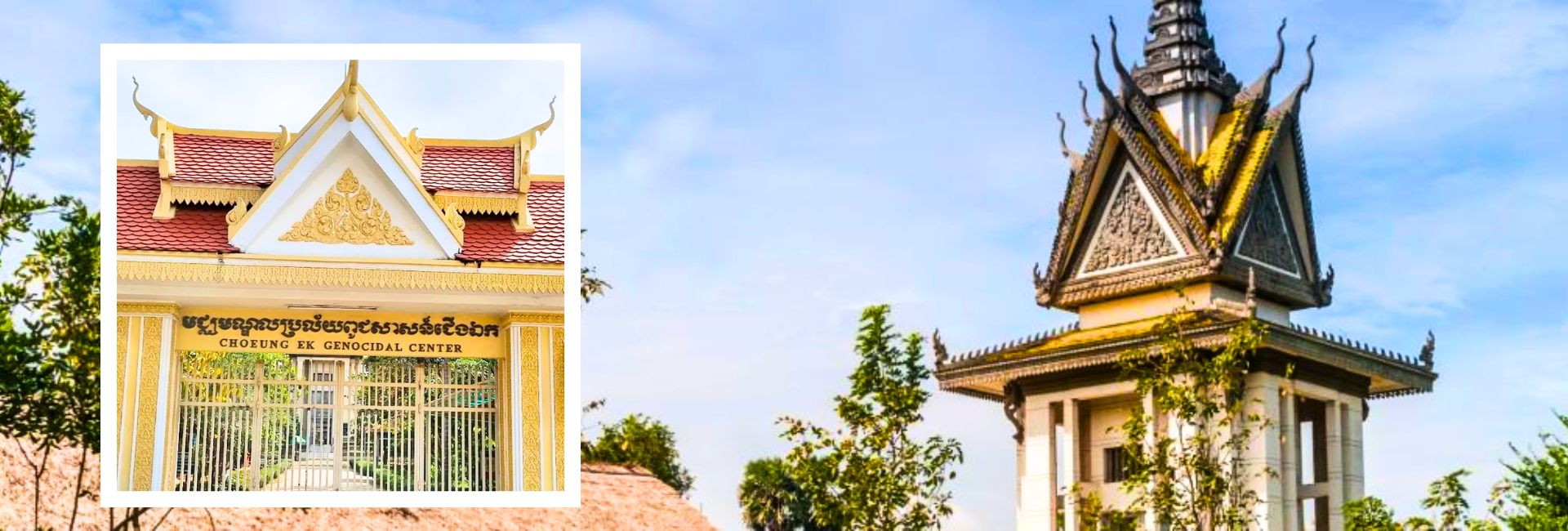
If your time in Phnom Penh calls for more than the city’s lively streets and bustling charm, a visit to the Choeung Ek Killing Fields offers a profound step into Cambodia’s poignant history. Far from being just another sightseeing stop, it’s a solemn memorial, a place to pause, reflect, and honor the countless lives taken and silenced under the Khmer Rouge regime.
Here, the silence is powerful. And the experience is unforgettable.
What can you find in this travel blog?
- Why Choeung Ek lies quiet but history creams
- What to Expect When Visiting Choeung Ek
- Other Places to Visit Around Choeung Ek
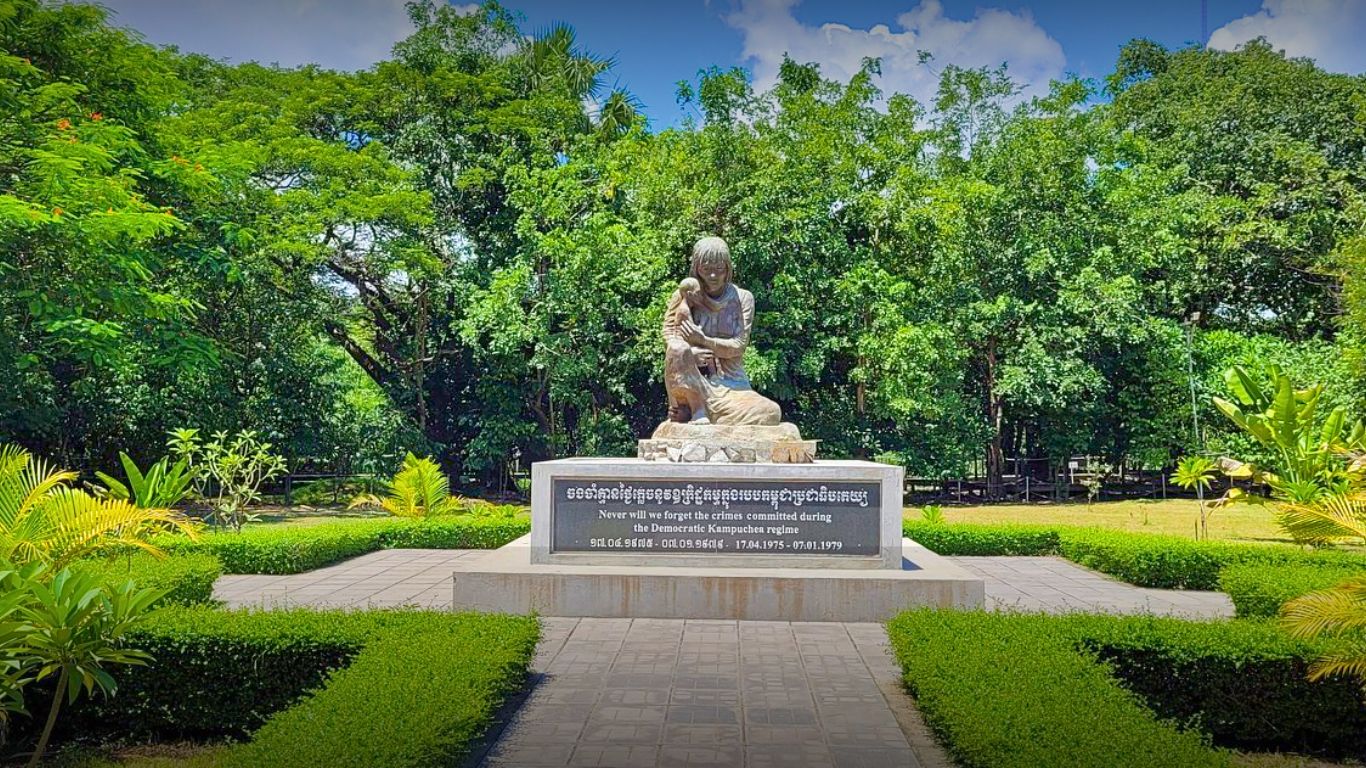
Why Choeung Ek lies quiet but history creams
What is Choeung Ek?
Choeung Ek pronounces “Chuh-ung Ek.” The name comes from the Khmer language, and while local pronunciation may sound a bit softer or more fluid, this version is clear and respectful for visitors. Saying it right is a small but meaningful gesture, just because that shows care for the place and the stories held within it.
“Choeung” means “to pour out” or “to overflow,” and “Ek” is believed to refer to a type of tree that once grew in the area. Together, the name may describe a place once rich with nature, perhaps a spot where water or trees once flourished. Ironically, this peaceful-sounding name now marks one of the most tragic places in Cambodia’s history, adding another layer of contrast between past beauty and human sorrow.
A Short Look Into the History of Choeung Ek
Just 15km southwest of Phnom Penh lies a quiet, grassy field. Peaceful on the surface, but beneath it rest the remains of more than 17,000 people. During the Khmer Rouge regime (1975–1979), Choeung Ek was turned from an orchard into a mass execution site.
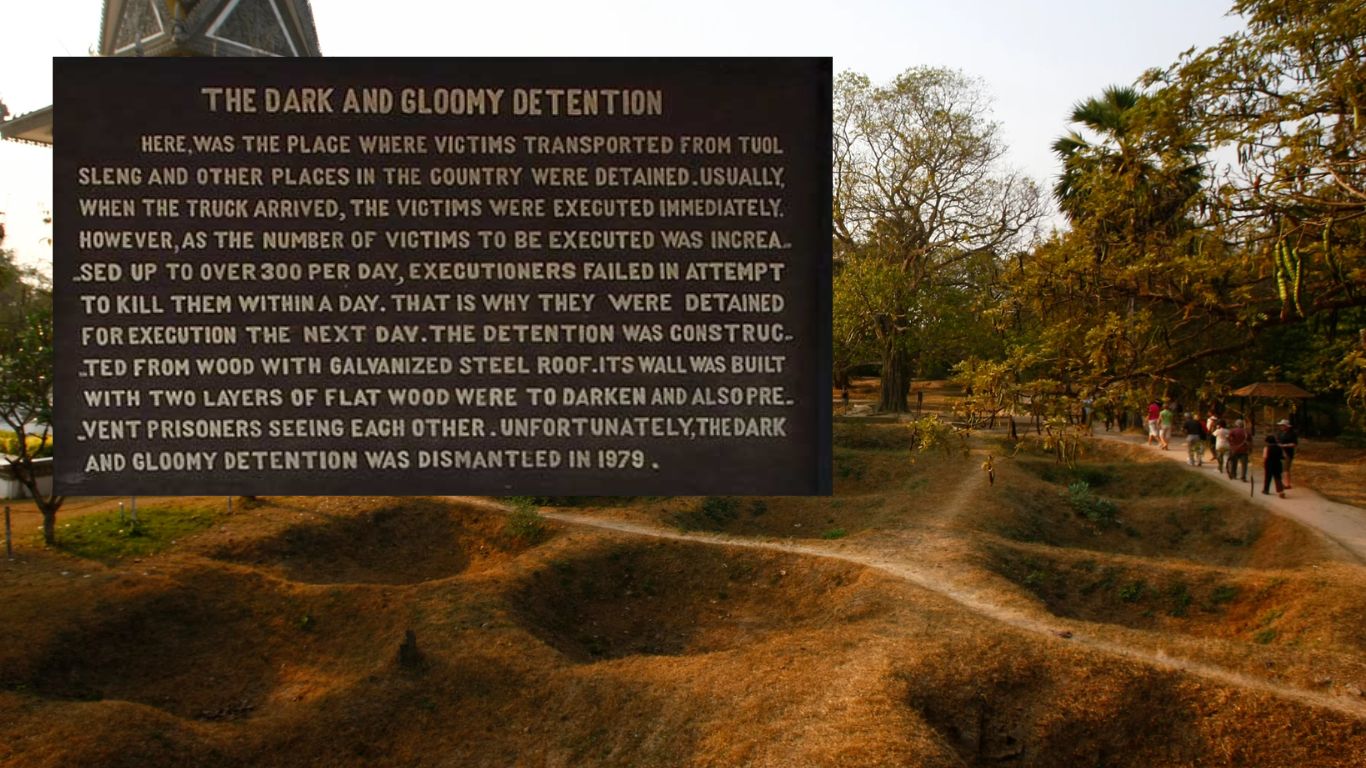
Many of the victims were transferred here from Toul Sleng Prison (S-21). They arrived blindfolded, shackled, and unaware of what awaited them. Today, Choeung Ek is one of the most well-known “Killing Fields” in Cambodia, preserved as a memorial and a chilling reminder of the country’s darkest chapter.
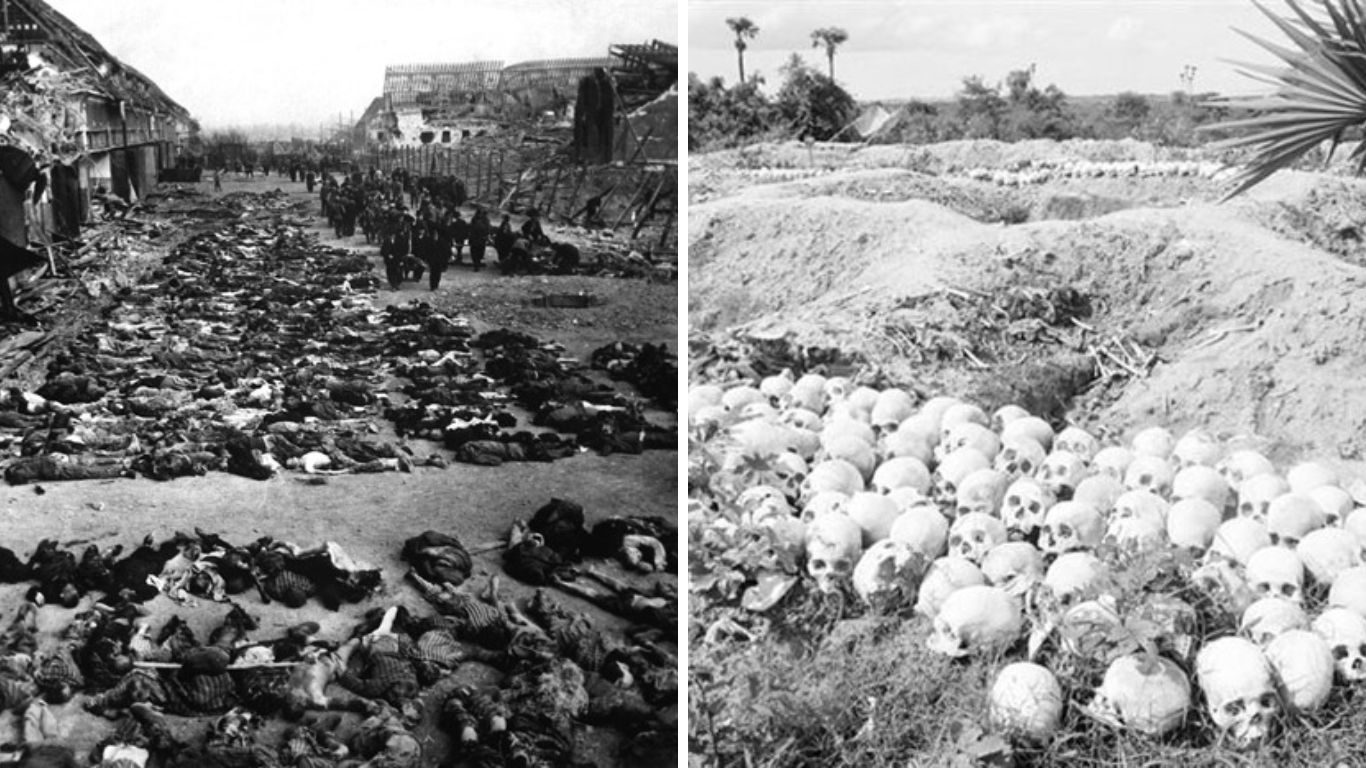
At the center of the site stands a Buddhist stupa filled with more than 8,000 human skulls, many showing signs of trauma. The message is clear: these were real people, and they must not be forgotten.
Did You Know?
The world first heard the term “killing fields” through the voice of Dith Pran, a Cambodian journalist and survivor of the Khmer Rouge regime. He coined the phrase after escaping Cambodia, and his story was recorded alongside American journalist Sydney Schanberg, then later portrayed in the Oscar-winning film The Killing Fields (1984).
The film helped bring global awareness to the Cambodian genocide. Dith Pran’s survival and testimony became vital in telling the world what had happened in places like Choeung Ek. Today, “killing fields” has become a haunting synonym for genocide across the world.
Who Manages Choeung Ek Killing Fields?
Though deeply sacred and somber, Choeung Ek doesn’t belong to the government themselves. Since 2005, the Phnom Penh Municipality has granted management rights to a Japanese company, JC Royal Co., under a 30-year concession agreement. While the company oversees daily operations, the site remains publicly owned and protected.
Importantly, JC Royal operates as a non-profit. Any revenue generated goes to the Sun Fund, an education-focused initiative created by the Cambodian government to ensure that the lessons of the past support the future of the country.
In 2025, Choeung Ek was officially recognized by UNESCO as a World Heritage Site, a meaningful step in preserving Cambodia’s painful but essential history.
Simple Tips before visiting
- Tickets: Around $6 USD per person (usually includes audio guide)
- Opening Hours: 7:30 AM to 5:30 PM daily
- Getting There: 30–45 minutes from the city center by tuk-tuk or private car
- Dress Respectfully: Shoulders and knees covered
- Cash Payment: USD is widely accepted; Cambodian Riel also works
- Time Needed: About 1.5 to 2 hours
- Best Time to Visit: Mornings are cooler and quieter
How to Pay When Visiting Choeung Ek Killing Fields?
When you arrive at the Choeung Ek Genocidal Center ticket booth, here’s everything you need to know about payment:
- Cash is only either USD or Cambodian Riel (KHR), also reference is Cambodian Riel as it’s easy for paying vendors or getting small change. Having some smaller KHR notes (like 1,000–10,000 riel) is useful for buying water, small snacks, or refreshments at the memorial grounds
- Credit or debit cards are not accepted onsite. So make sure to bring enough cash with you
- USD is widely preferred, but bills must be in pristine condition. All needs to be no tears, folds, or writing, otherwise they might be rejected
What to Expect When Visiting Choeung Ek
Visiting Choeung Ek is quiet, emotional, and deeply personal. Unlike other tourist attractions, there’s no noise, no rush, and no crowds with cameras. Most people walk slowly, listen, and reflect. The atmosphere is solemn, heavy at times, yet a sense of peace and resilience has been carrying over here
According to Cambodian statistics, over 20,000 people were executed at Choeung Ek alone. Since the Khmer Rouge fell in 1979, only around 8,985 remains have been recovered. Many graves still lie undisturbed.
Some mass graves have names that are deeply haunting:
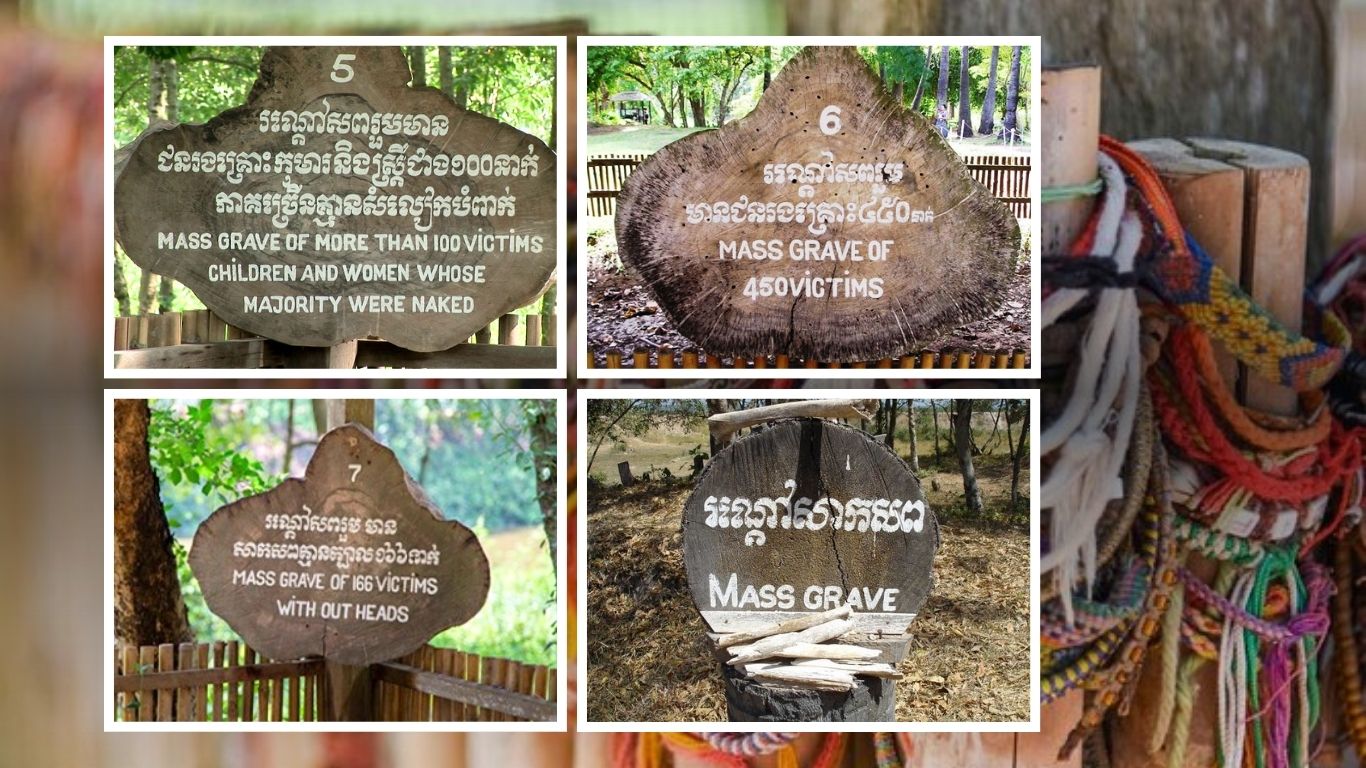
Reading these titles on simple wooden signs can be heart-wrenching. These aren’t just numbers — each site tells a fragment of a human story lost. Visitors often pause in front of these graves in silence, some laying bracelets or flowers in remembrance.
Here’s what you can expect:
- Audio Guide Included: Highly recommended. As you follow the path, you’ll hear stories told by survivors, former guards, and historians. The audio is rich with facts and emotion, guiding you through each area of the site with care and context.
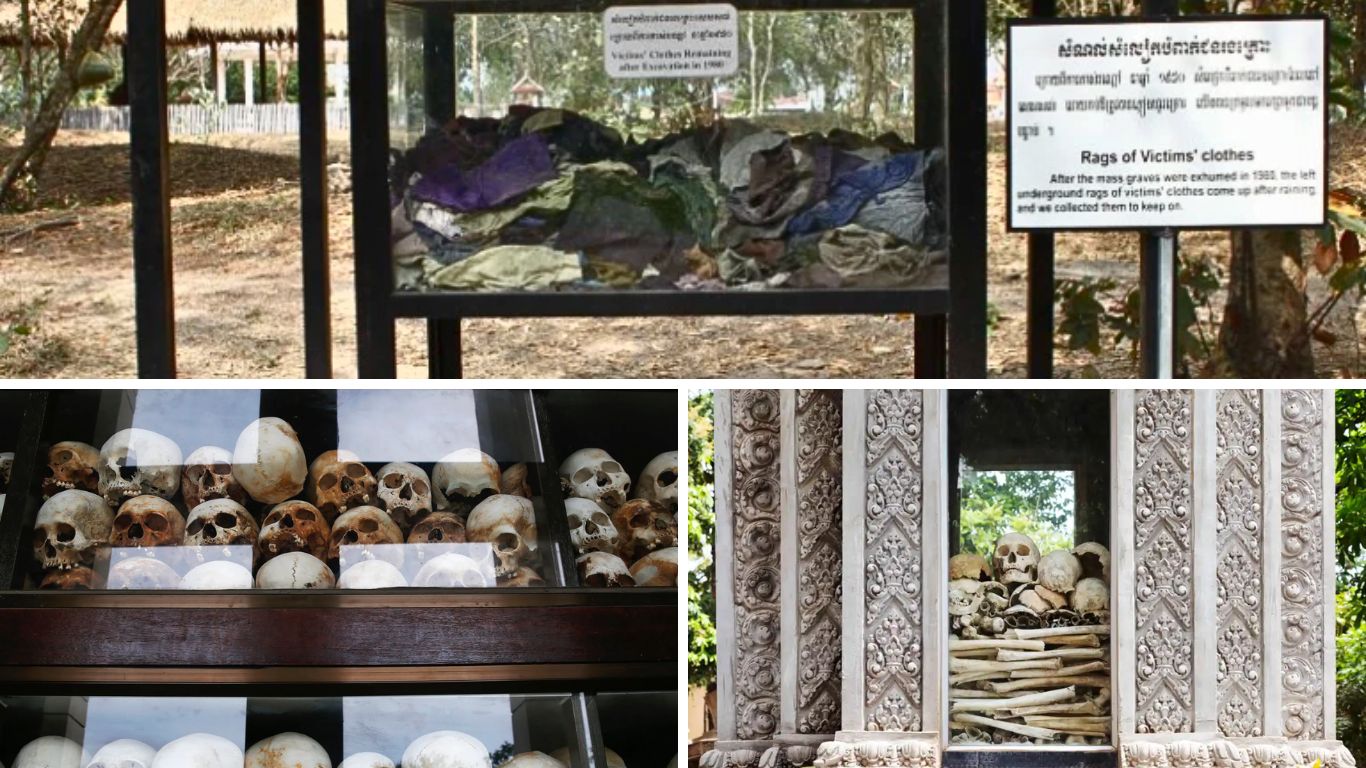
- The Memorial Stupa: A towering glass monument housing over 8,000 skulls of the victims, arranged by age and gender. It stands as a visible and visceral reminder of the scale of the tragedy. Most visitors pause here in silence.
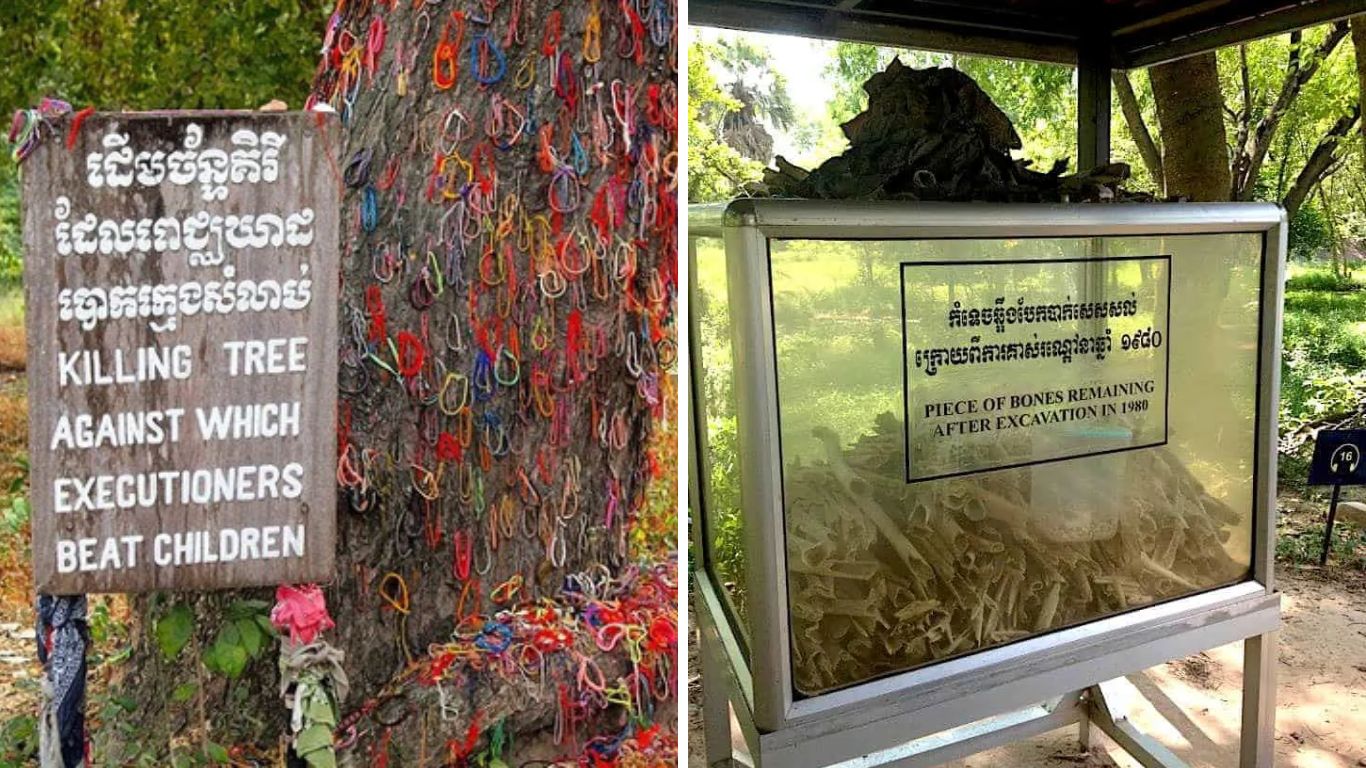
- Mass Graves: There are more than 100 mass graves, many still partially open. Some are marked with signs, others display remnants of bone and cloth that continue to surface after heavy rains. It’s confronting—but important.
- The Killing Tree: Perhaps the most emotionally crushing part of the site. The Khmer Rouge used this tree to torture and kill children. A sign next to it explains what happened here, and you’ll often see flowers and bracelets left behind by visitors.
- Peaceful Walking Paths: The paths are shaded and bordered with trees, simple plaques, and signs that offer gentle guidance through the memorial. Benches are placed along the way for those who need a moment to sit and reflect.
If you aren’t rush. There’s time to breathe, to think, and to feel. Many people leave in tears, others in silence, but almost everyone leaves with a deeper understanding of Cambodia’s resilience.
💡 Suggested cultural reflection route: Toul Sleng Genocide Museum ➔ Choeung Ek Killing Fields ➔ Wat Langka ➔ Independence Monument ➔ Royal Palace/Silver Pagoda
Is It Worth Visiting?
Absolutely, if you’re someone who values cultural depth and human stories. Choeung Ek Killing Fields is not for thrill-seekers. It’s a memorial that speaks to the resilience of the Cambodian people and the importance of peace.
It’s heartbreaking, yes. But it’s also an act of remembrance.
Many travelers describe the visit as life-changing, and we agree. It stays with you long after you leave.
Other Places to Visit Around Choeung Ek
After your visit, if you’re ready to see more of Phnom Penh, here are a few nearby highlights:
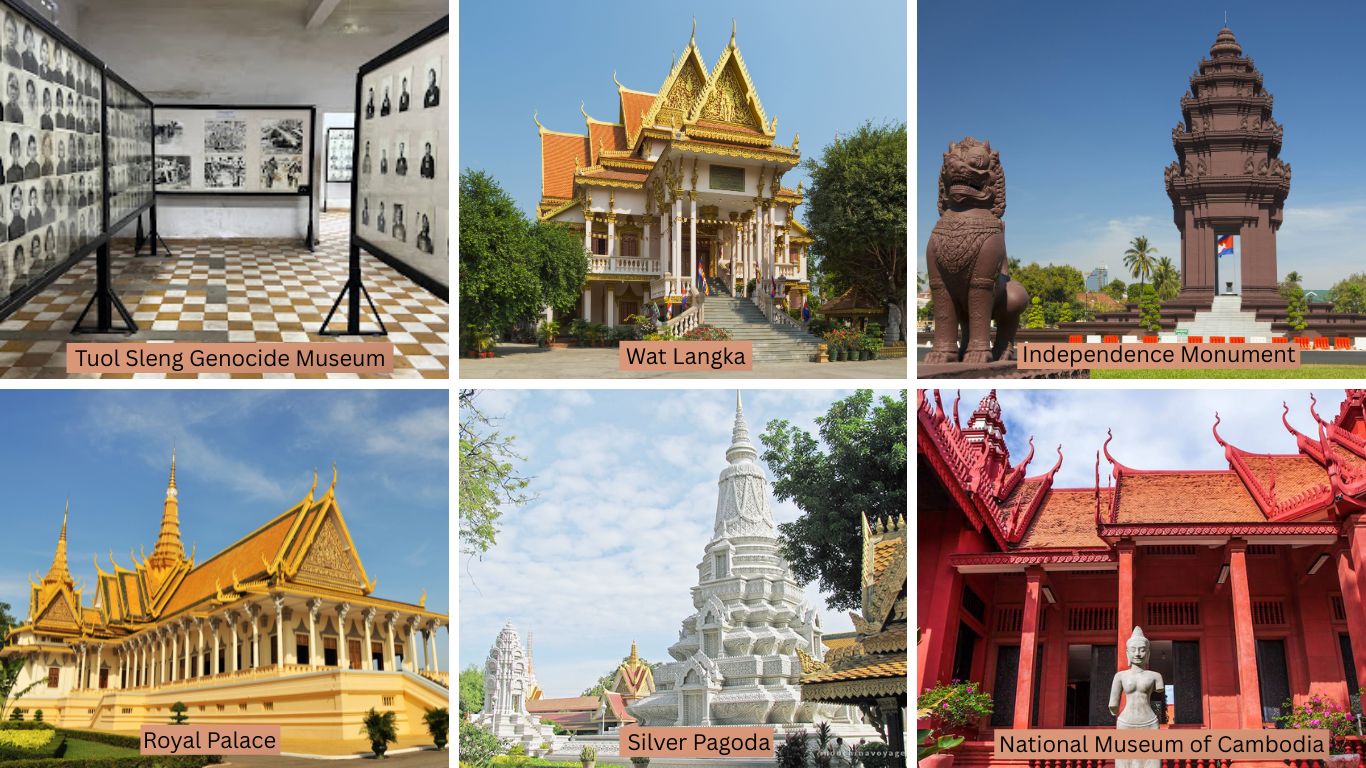
- Toul Sleng Genocide Museum – Understand where the prisoners came from
- Wat Langka – A peaceful temple ideal for quiet thought
- Independence Monument – A symbol of Cambodia’s strength
- Royal Palace & Silver Pagoda – Stunning architecture and Khmer culture
- National Museum – Home to ancient Khmer art and history
- Russian Market – A good stop for a local lunch or souvenir
If you have an interesting in a day that blends culture, history, and reflection, we’d be honored to help you plan it. At Vietnam Travel Online, we design personalized Phnom Penh experiences that go beyond the usual. Whether you want a half-day historical route or a full-day cultural journey, we tailor everything to your pace and interests.
Let your travel be meaningful, not just memorable.