

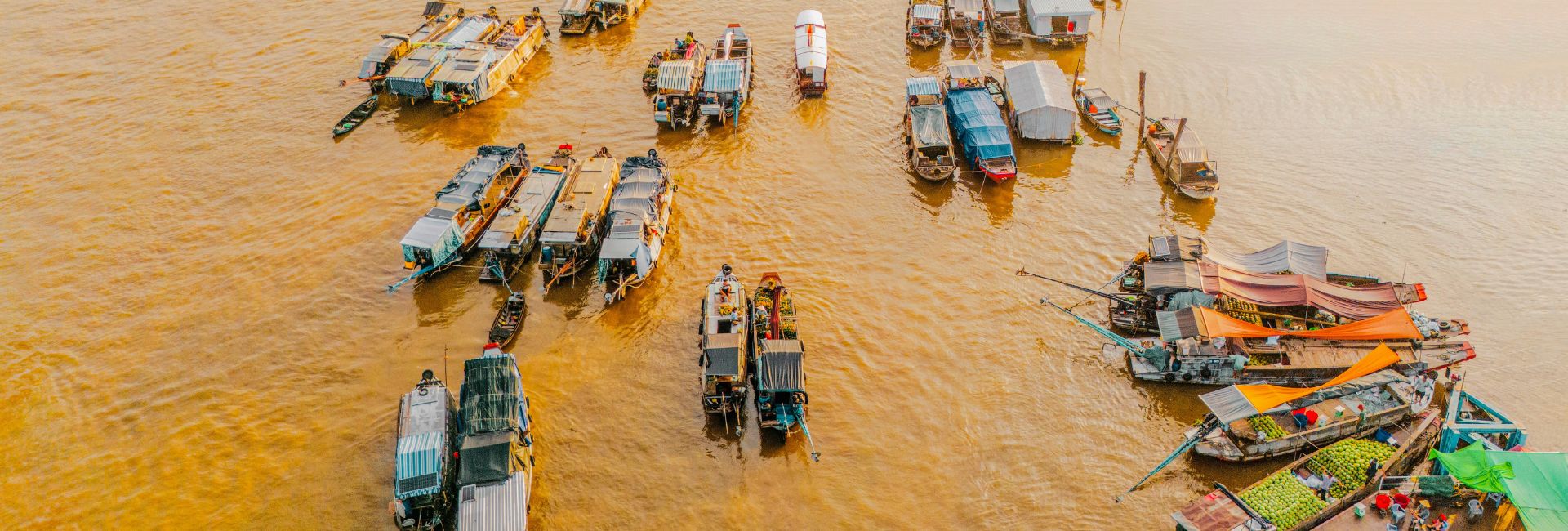
The Mekong Delta is one of Vietnam’s most distinctive regions, shaped by rivers, fertile land, and a lifestyle closely connected to water. Located in the far south of the country, this vast delta is where the Mekong River divides into countless branches before flowing into the sea.
For travelers, the Mekong Delta offers a calm contrast to Vietnam’s busy cities. Instead of iconic landmarks, the region reveals everyday life through floating markets, orchard villages, and quiet canals. This ultimate guide explains how the Mekong Delta works, what first-time visitors often misunderstand, and how to plan a meaningful visit based on real travel experience.
What can you find in this travel blog?
- Where Is the Mekong Delta and Why It Feels Different
- Best Time to Visit the Mekong Delta (All Year Round)
- How Many Days Are Enough in the Mekong Delta
- Getting There and Moving Around the Mekong Delta
- Choosing Where to Go in the Mekong Delta
- Experiences That Truly Define the Mekong Delta
- Mekong River Cruises: When They Make Sense
- Suggested Journeys Through the Mekong Delta
- Nearby Places to Combine with the Mekong Delta
- Practical Tips for Visiting the Mekong Delta
- FAQs
Where Is the Mekong Delta and Why It Feels Different
The Mekong Delta lies southwest of Ho Chi Minh City and covers a wide lowland area of rivers, floodplains, and farmland. It is Vietnam’s most productive agricultural region, supplying rice, fruit, and seafood nationwide.
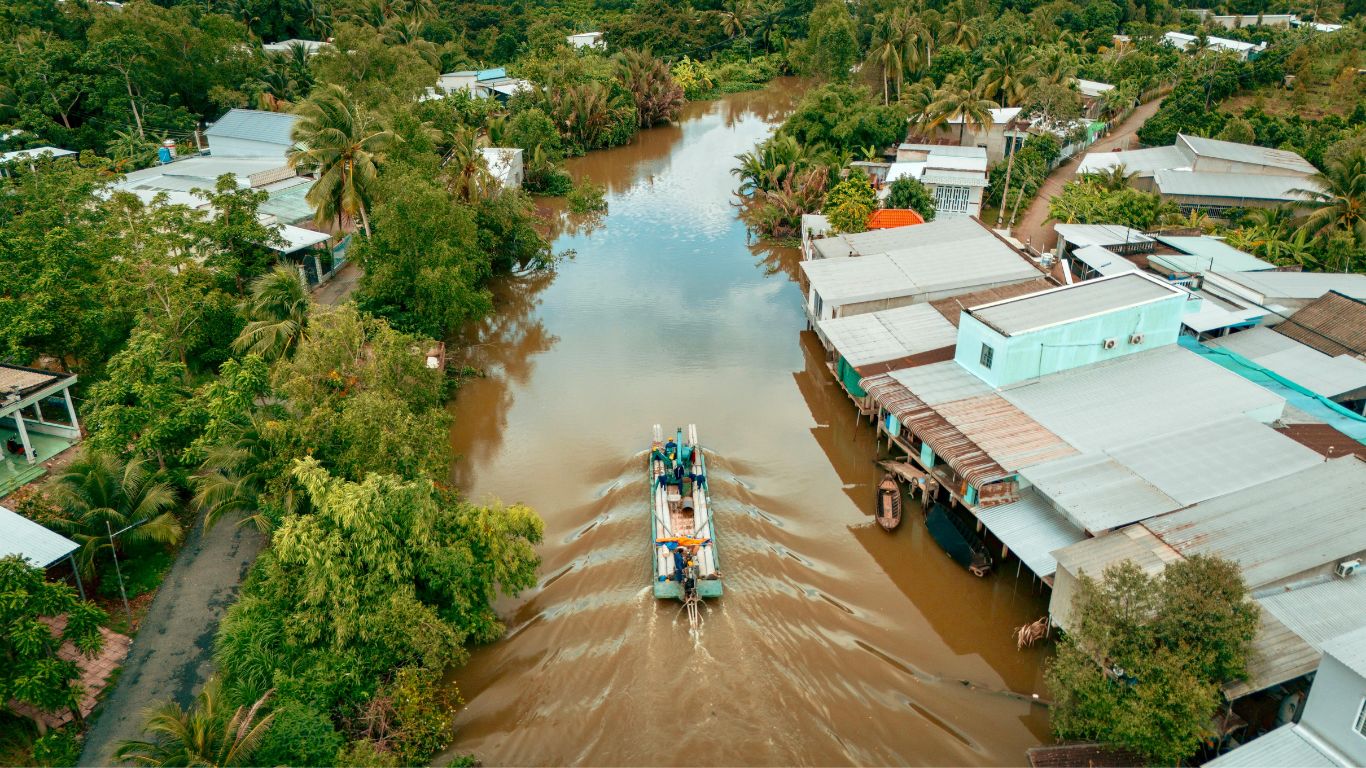
However, what truly sets the Mekong Delta apart is its lifestyle. Here, water replaces roads. Boats function as transport, markets, and even homes. Because of this, travel feels slower and more personal. Visitors should not expect dramatic scenery or monuments. Instead, the value lies in observing daily routines, local interactions, and the rhythm of river life.
Best Time to Visit the Mekong Delta (All Year Round)
The Mekong Delta can be visited comfortably throughout the year, as seasonal changes affect scenery more than accessibility.
From December to April, the dry season offers stable weather and easy travel conditions. This period suits travelers who prefer predictable schedules and smoother road transfers. From May to November, higher water levels create greener landscapes and improve boat travel through smaller canals.
Rain usually comes in short showers and rarely disrupts full-day activities. Therefore, the best time to visit depends more on travel style than on weather alone. For a detailed month-by-month explanation, you can refer to this guide on the best time to visit the Mekong Delta on Vietnam Travel Online.
How Many Days Are Enough in the Mekong Delta
The right amount of time in the Mekong Delta depends less on distance and more on the depth of experience. Many travelers underestimate this, which often leads to rushed visits.
- A one-day trip offers a brief introduction. You usually visit a floating market, take a short boat ride, and return to Ho Chi Minh City the same day. While convenient, this option rarely shows the true rhythm of the region and often misses quieter village life.
- A two-day stay changes the experience significantly. Staying overnight allows early floating market visits at the correct time, village exploration beyond main routes, and a slower evening pace. For most first-time visitors, this is the most balanced option.
- A three to four-day journey suits travelers who value immersion. With more time, you move into less-visited areas, experience smaller canals, and understand how daily life unfolds. This pace works well for couples, slow travelers, and those continuing toward Cambodia.
For longer stays, Mekong River cruises become a practical choice, offering continuity and comfort while covering wider areas.
Getting There and Moving Around the Mekong Delta
Most journeys into the Mekong Delta begin in Ho Chi Minh City. Road transfers connect the city with key hubs such as Can Tho and Ben Tre.
However, once inside the delta, waterways dominate. Boats are not optional experiences here; they are essential for reaching villages and floating markets. Public transport exists, but it limits access to smaller canals. As a result, travelers relying only on buses often see a simplified version of the region.
Private transfers or guided tours allow better timing, smoother logistics, and deeper access to local life. In the Mekong Delta, travel is intentionally slow, and the journey itself becomes part of the experience.
Choosing Where to Go in the Mekong Delta
The Mekong Delta is not a single destination. Each area offers a different atmosphere, and choosing the right base shapes the entire trip.
Can Tho – Floating Markets and First-Time Access
Can Tho is the most practical base for first-time visitors. It offers riverside hotels, good infrastructure, and access to famous floating markets such as Cai Rang. However, its popularity also means a more structured and busier environment.
This destination suits travelers with limited time who want a clear introduction without complex logistics.
Ben Tre – Quiet Canals and Coconut Villages
Ben Tre focuses on narrow waterways, coconut groves, and village life. Compared to Can Tho, it feels calmer and more rural. This area suits travelers who enjoy short cycling routes, small boat rides, and close community interaction. Ben Tre works best for those seeking atmosphere rather than famous names.
Chau Doc – Cultural Diversity and Cambodia Gateway
Chau Doc stands out due to its border location and cultural mix. It offers ethnic communities, religious sites, and river landscapes. More importantly, it serves as a natural transition point for travelers continuing to Phnom Penh by river. This destination fits well into Vietnam–Cambodia itineraries.
As Chau Doc can link to Cambodia, if you wanna know how it works, check out this blog: How to get from Chau Doc to Phnom Penh?
Tra Vinh – Khmer Heritage and Slow Exploration
Tra Vinh remains one of the quieter areas of the Mekong Delta. Known for its strong Khmer influence and peaceful countryside, it attracts travelers seeking cultural depth and fewer crowds. This area suits repeat visitors or those escaping main travel routes. Choosing the right area matters more than trying to see everything.
Floating Markets Note: When to Visit and Why Timing Matters
Floating markets are often the highlight of a Mekong Delta trip. However, timing determines whether the experience feels authentic or disappointing.
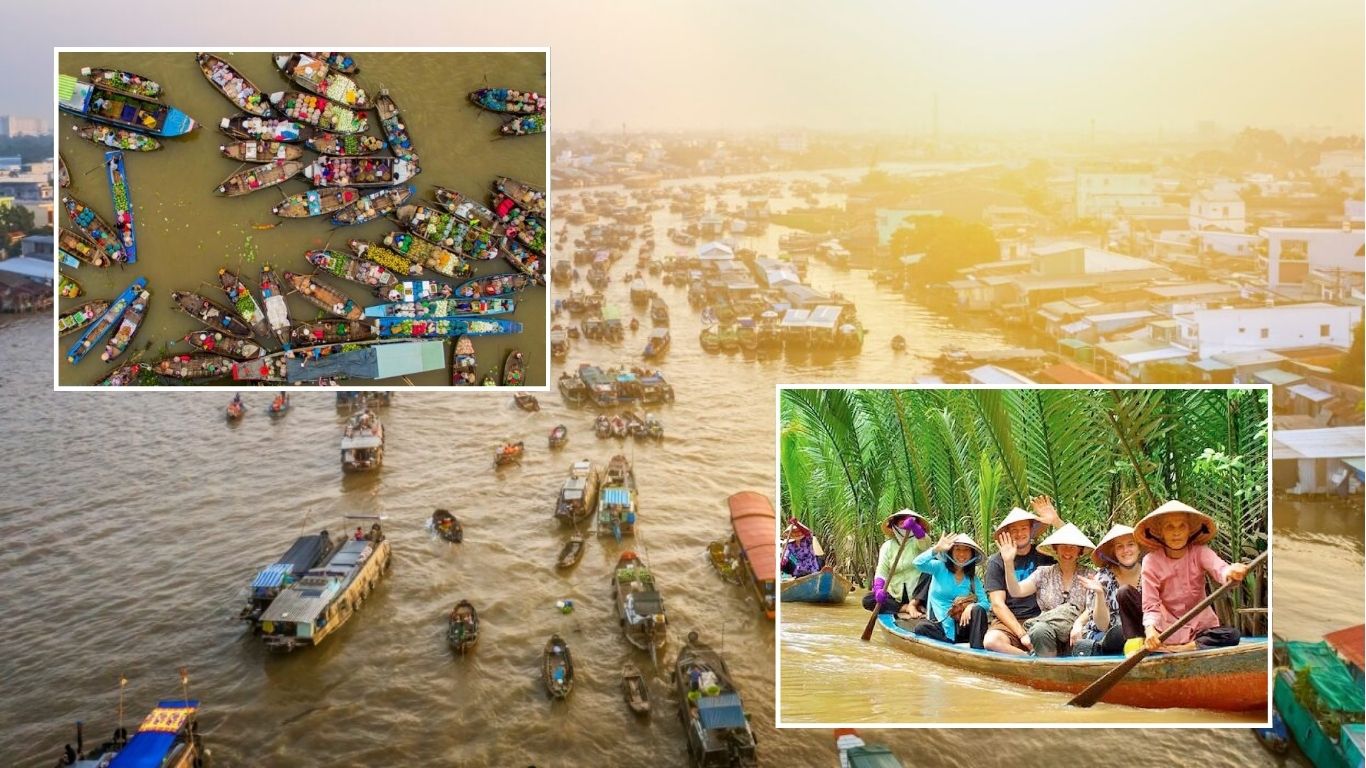
Most floating markets, including Cai Rang, are active between 5:30 AM and 7:30 AM. This is when real trading takes place, with boats selling fruit and daily goods. After 8:00 AM, activity drops quickly. By mid-morning, many boats leave, and the market becomes observational rather than functional.
This is why overnight stays are essential. Travelers arriving late often miss the genuine atmosphere. From experience, early visits consistently deliver better impressions and stronger cultural insight.
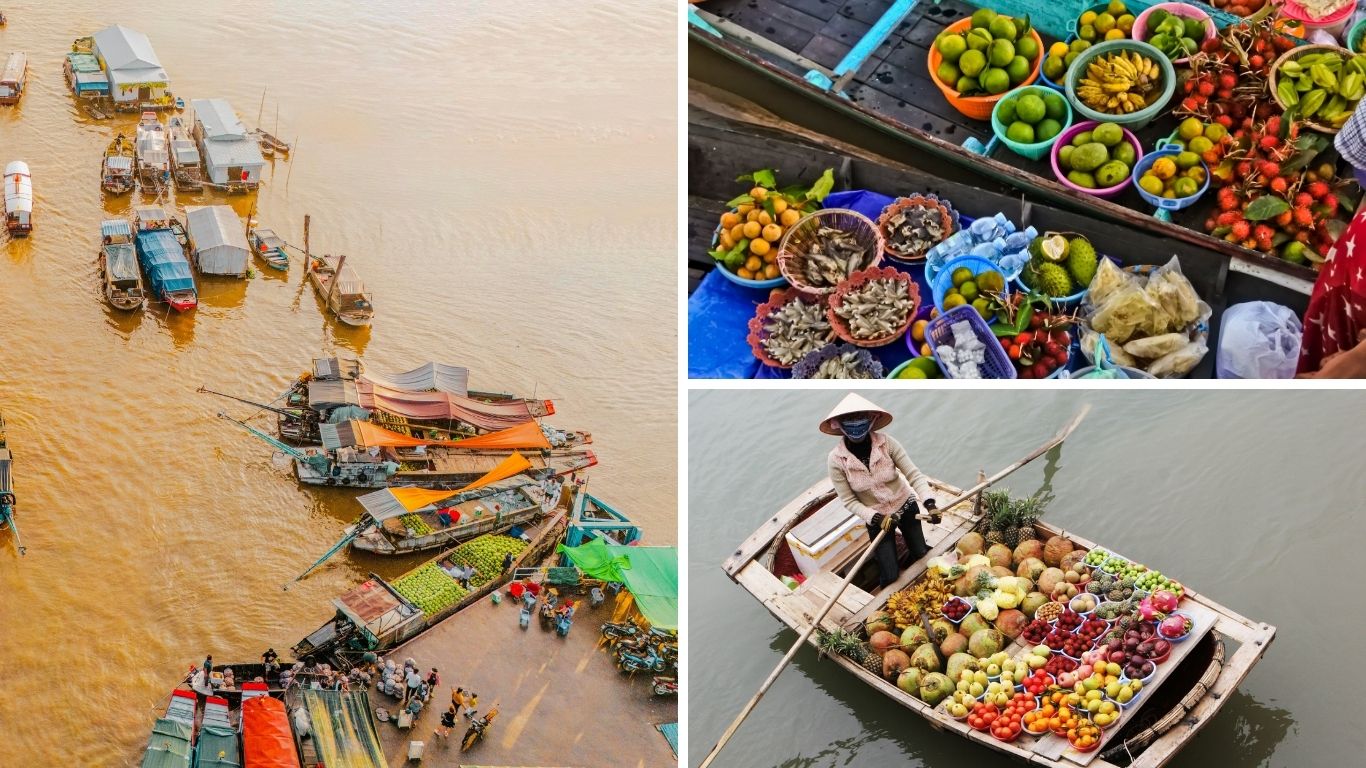
Today, floating markets are also less crowded than in the past, especially on weekdays. While tourism has increased, the early morning trade remains genuine. From experience, travelers who visit early consistently leave with stronger impressions and better cultural understanding.
Experiences That Truly Define the Mekong Delta
The Mekong Delta is defined by rhythm, not attractions. Travelers expecting monuments often miss their real value.
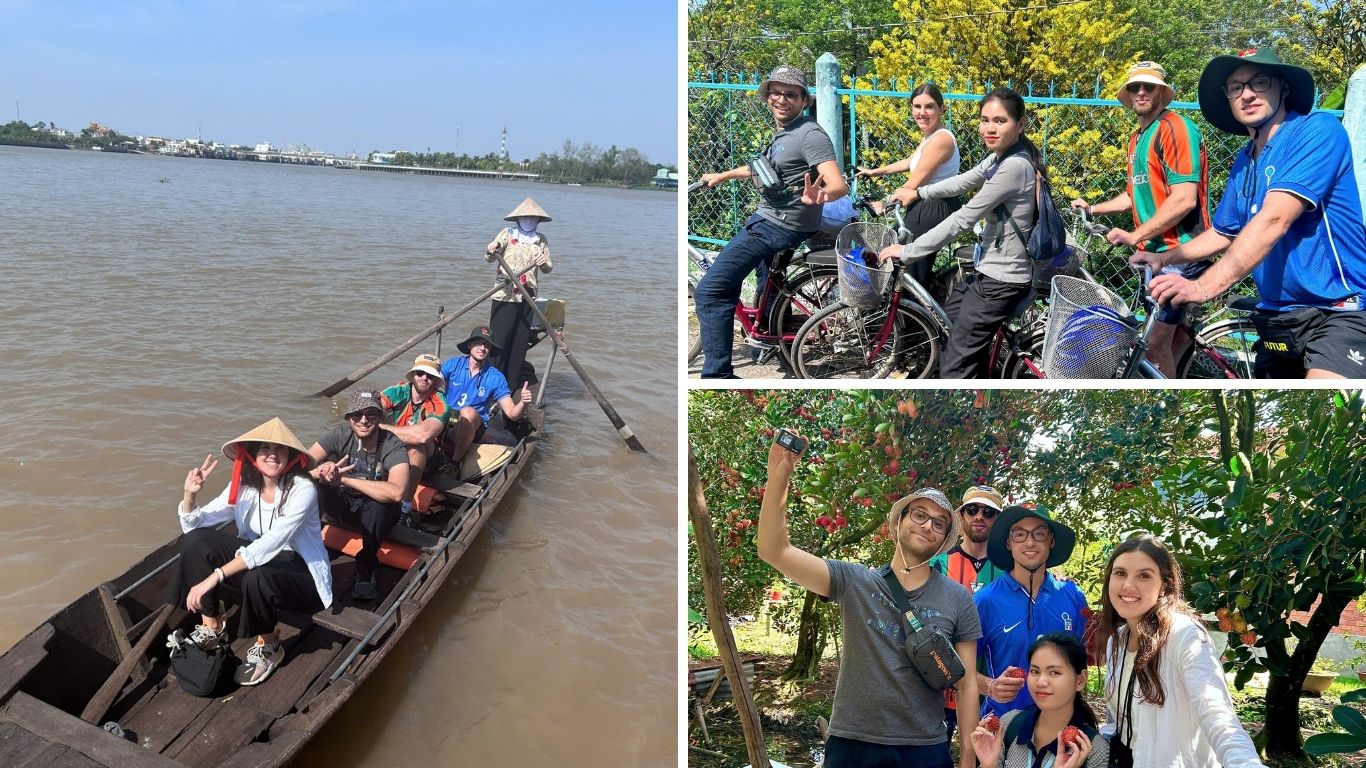
Narrow canal boat rides reveal more than wide rivers, especially when combined with village visits. Cycling or walking through rural paths adds a perspective that boats alone cannot provide. Most importantly, overnight stays allow you to experience early mornings and quiet evenings, which day trips never capture.
Mekong River Cruises: When They Make Sense
Mekong River cruises suit travelers who value comfort, steady pacing, and cultural depth over fast sightseeing. Instead of moving between destinations by road, the river itself becomes the journey.
This approach works especially well for travelers exploring Vietnam as part of a wider Indochina journey. Flowing from southern Vietnam into Cambodia and Laos, the Mekong connects river communities, religious centers, and trading towns across borders, offering a broader regional perspective that land travel rarely provides.
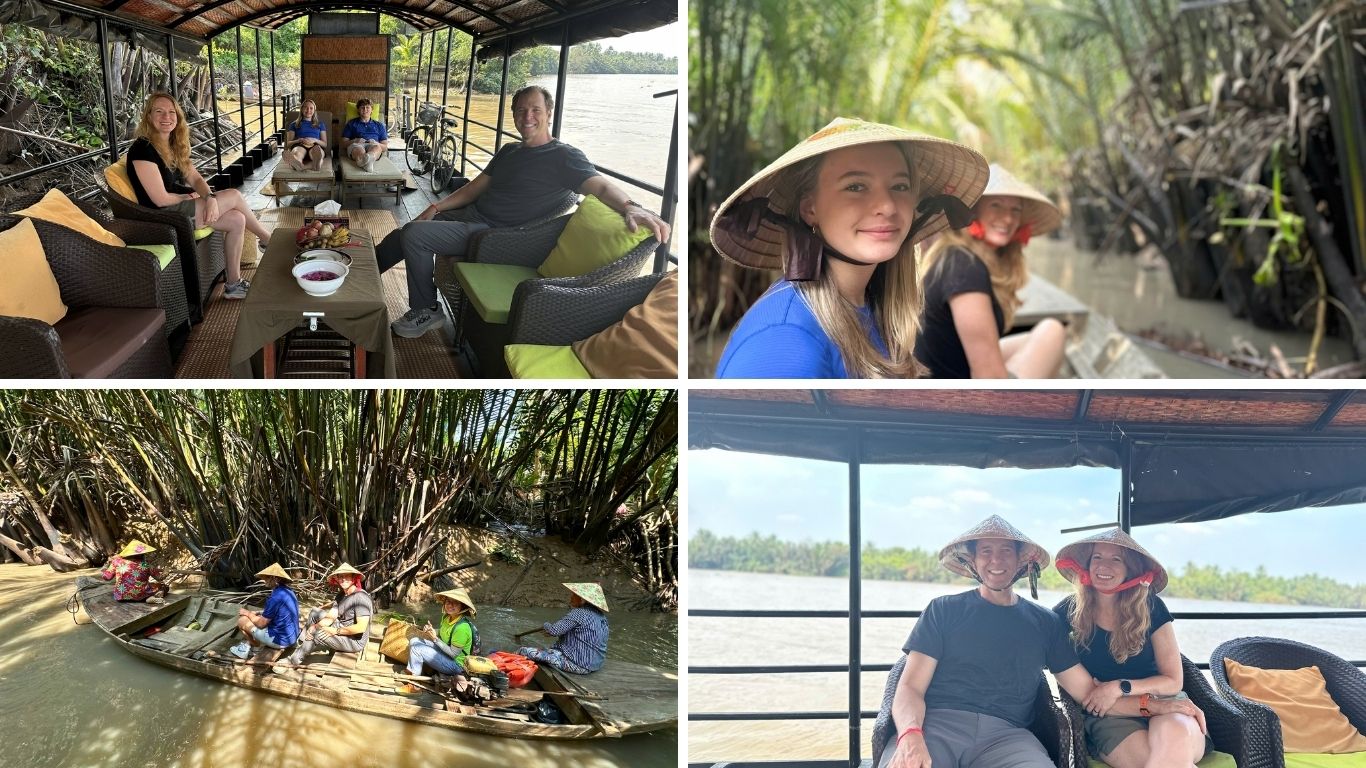
For Vietnam–Cambodia routes, cruises create a seamless transition from the Mekong Delta toward Phnom Penh, reducing border logistics and travel fatigue. Operators such as Luxury Cruise Mekong focus on small-ship experiences that balance comfort with meaningful local encounters.
A Mekong cruise is not simply transportation. It is a focused way to understand Vietnam and neighboring Indochina countries through the river that shapes them.
Suggested Journeys Through the Mekong Delta
Here are some recommended Mekong Delta journeys designed to suit different travel styles and schedules, from immersive a few-day routes to deeper cultural explorations. Each plan highlights key experiences while helping you travel with rhythm and context rather than rushing from place to place.
A Slow Introduction to Life in the Mekong Delta (4 Days)
Day 1 – Ho Chi Minh City → My Tho → Ben Tre → Dong Thap
The journey begins with a morning departure from Ho Chi Minh City, leaving the urban landscape behind as the road enters the delta’s fertile plains. In My Tho, a boat ride along the Mekong offers a first look at river life, with stilt houses, fishing boats, and fruit orchards lining the banks.
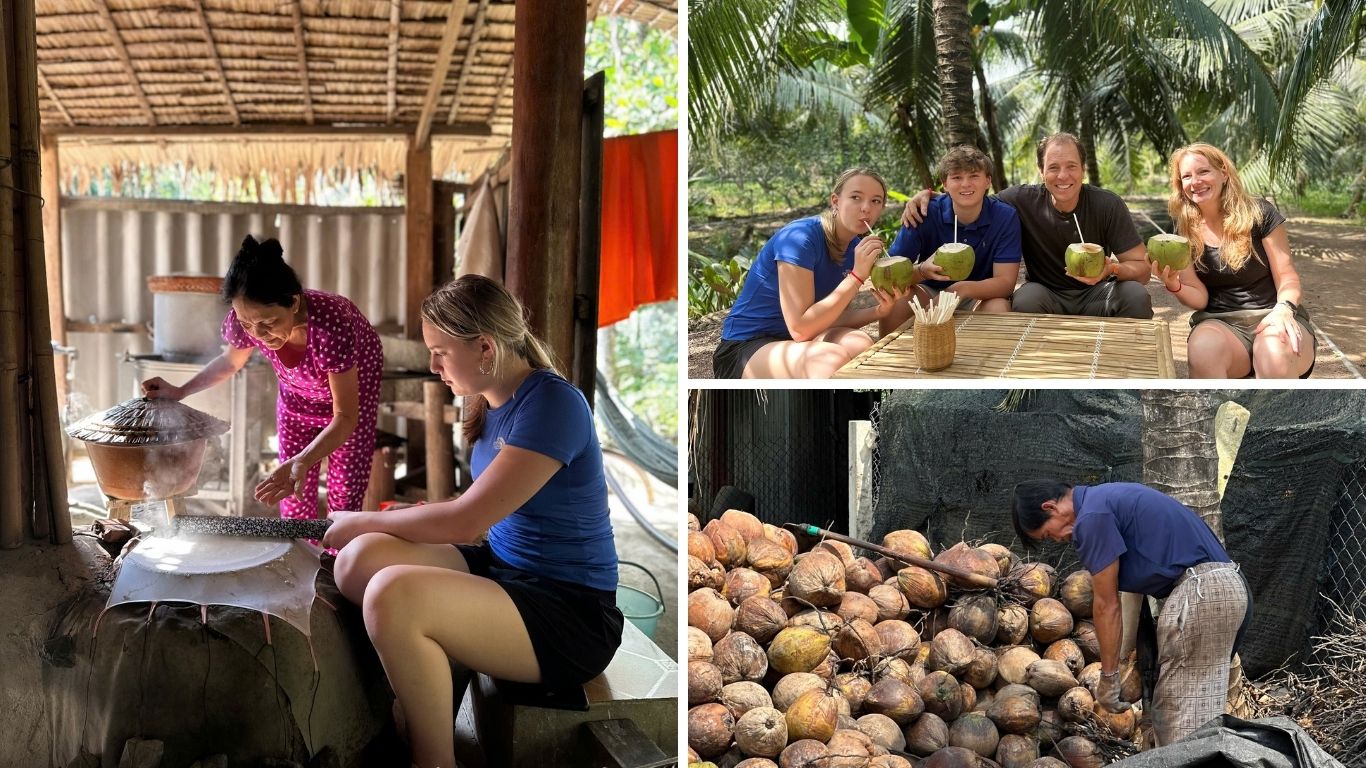
The route then continues into Ben Tre, where smaller canals replace wide rivers. A sampan ride under coconut palms reveals a quieter, more intimate side of the delta, complemented by visits to local workshops and orchard gardens. By late afternoon, travel moves deeper into the region toward Dong Thap, where the pace slows noticeably for an overnight stay.
Day 2 – Dong Thap → Sa Dec → Can Tho
After breakfast, the route crosses the river by ferry to Sa Dec, a town known for its flower villages and colonial-era architecture. Walking through plant nurseries and riverside streets offers insight into the delta’s horticultural traditions and trading history.
From Sa Dec, the journey continues south toward Can Tho, the largest city in the Mekong Delta. Arriving in the afternoon allows time to settle in and prepare for the following morning’s early river activity, which defines the Can Tho experience.
Day 3 – Can Tho → Tra Su Cajuput Forest → Chau Doc
The day starts early with a visit to Cai Rang Floating Market, best experienced at dawn when trading activity is at its peak. Boats cluster on the river selling fresh produce, offering a genuine view of the delta’s commercial rhythm.
After returning to shore, the route heads toward Tra Su Cajuput Forest, a wetland sanctuary near the Cambodian border. A quiet boat ride through flooded forests highlights the delta’s ecological side before continuing on to Chau Doc, a border town shaped by Vietnamese, Cham, Khmer, and Chinese cultures.
Day 4 – Chau Doc → Phnom Penh
The final leg follows the Mekong upstream by speedboat from Chau Doc to Phnom Penh. This river route provides a smooth and natural transition from Vietnam into Cambodia, mirroring historic trade paths and avoiding overland border congestion. Arrival in Phnom Penh marks the end of the Mekong Delta journey and the beginning of Cambodia’s cultural heartland.
A Complete Vietnam Journey with the Mekong at Its Heart (20 Days)
For travelers who want to go beyond a short regional experience, the In-Depth Vietnam Explore 20-Day journey is ideal for families and multi-generation trips. Instead of rushing, this itinerary connects Vietnam from north to south at a comfortable pace, combining cultural highlights, nature, and downtime.
The Mekong Delta appears as a meaningful chapter rather than a standalone stop, allowing travelers to understand river life in context with Hanoi’s heritage, central Vietnam’s history, and coastal relaxation. From experience, longer journeys like this work especially well for families who value balance, fewer hotel changes, and shared cultural moments without daily pressure. It is a strong option for first-time visitors who want to see Vietnam once, properly, and without compromise.
Let Vietnam Travel Online Guide You Through the Mekong Delta and Beyond
Travel with a team that understands the region in depth. Our Vietnam tours focus on culture, nature, and meaningful local experiences, designed for families, couples, and mature travelers. Beyond Vietnam, our Indochina tours connect Cambodia, Laos, Thailand, and Myanmar through well-paced routes by road, flight, and river. For travelers drawn to life along the water, our Mekong cruises offer a slower and more immersive way to explore the region, combining comfort with cultural insight. All journeys are privately tailored, with support for transportation, flights, cruises, and accommodation booking from start to finish.
For personalized planning, contact us at [email protected] or fill out this contact form
Nearby Places to Combine with the Mekong Delta
Ho Chi Minh City – Urban Contrast and Cultural Context
After the slow rhythm of the Mekong Delta, Ho Chi Minh City adds energy and historical depth. Many travelers start or end their delta journey here to understand how southern Vietnam developed beyond agriculture.
In Ho Chi Minh City, visitors often focus on:
-
French colonial architecture and wartime landmarks to gain historical context
-
Local markets and street food scenes to see how rural produce flows into urban life
-
Cafés and riverfront areas that contrast sharply with the delta waterways
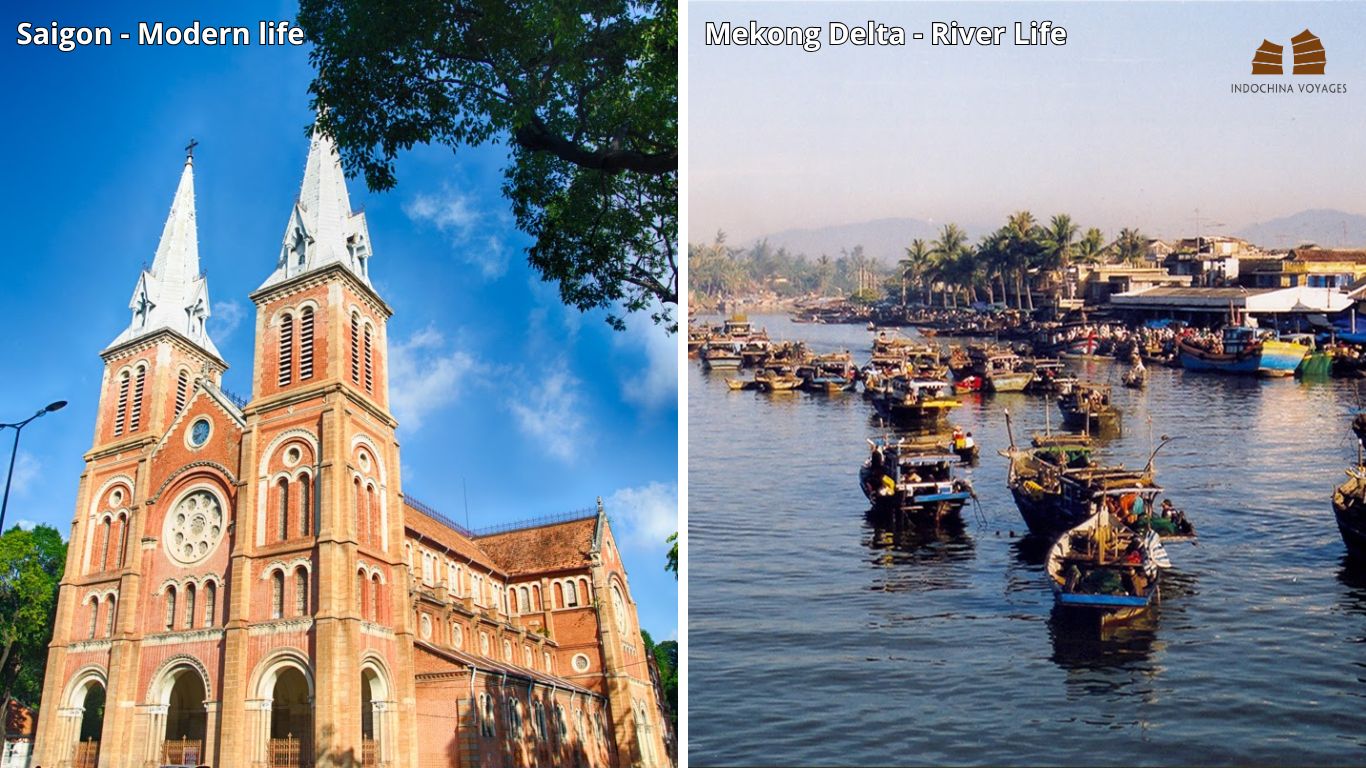
This combination works well because the city provides structure and scale, while the Mekong Delta offers intimacy and calm.
Cambodia via Chau Doc – A Natural Cultural Extension
Chau Doc serves as a natural gateway for travelers continuing from Vietnam into Cambodia. Traveling by river from Chau Doc to Phnom Penh mirrors the traditional trade routes that once connected the region.
Along this route, travelers experience:
-
A gradual cultural transition rather than a sharp border change
-
Floating villages and river communities before reaching Phnom Penh
-
Direct access to Cambodia’s capital, where history, architecture, and river life continue the narrative
This route suits travelers interested in a deeper regional understanding, especially those combining Vietnam and Cambodia in one seamless journey.
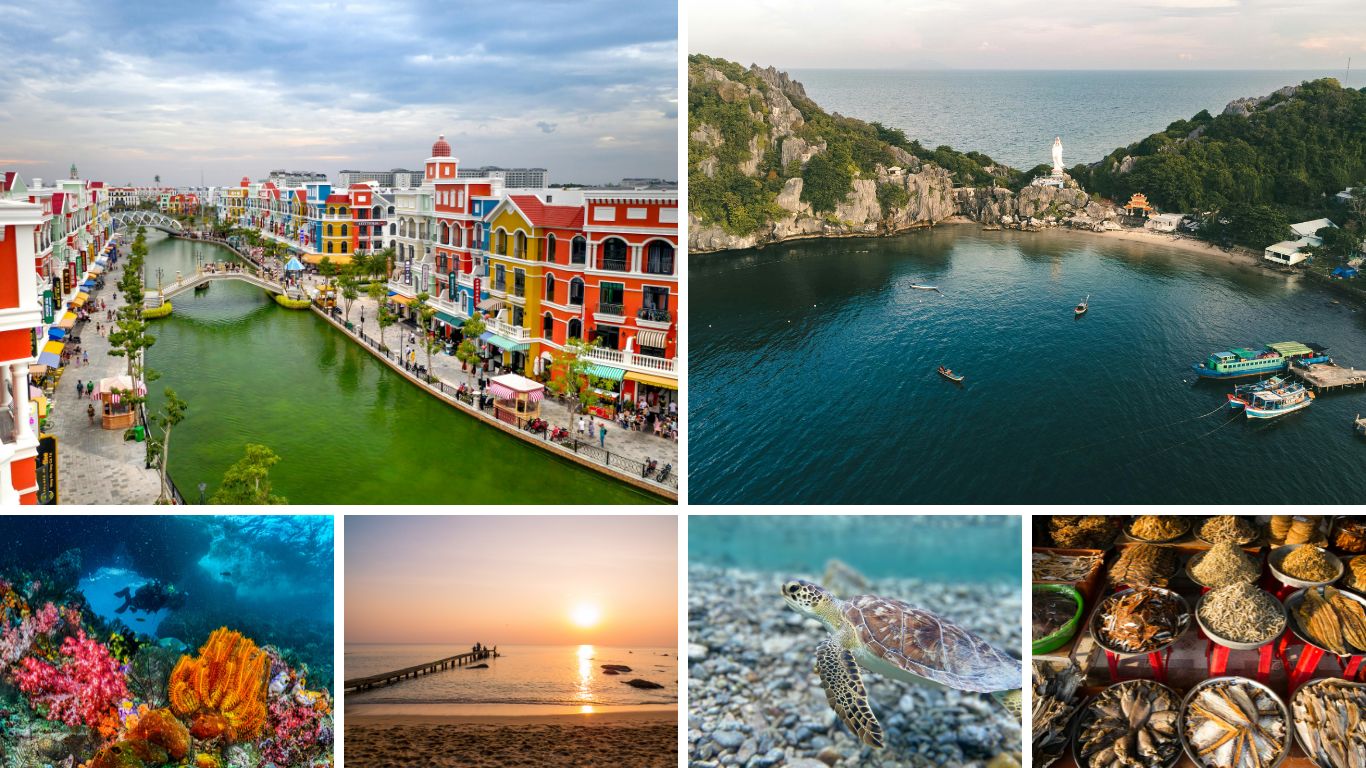
Phu Quoc Island – Rest and Recovery After River Travel
Phu Quoc pairs naturally with the Mekong Delta for travelers who want to slow down after cultural exploration. After days of early mornings and boat travel, the island offers rest without sacrificing quality experiences.
Typical activities in Phu Quoc include:
-
Beach time at quiet coves or well-serviced resort beaches
-
Light excursions such as snorkeling or sunset cruises
-
Spa treatments and resort dining are especially appealing to couples and mature travelers
Phu Quoc works best as a reward phase of the journey, turning an exploration-focused trip into a balanced experience.
Practical Tips for Visiting the Mekong Delta
-
Start early to experience the floating markets properly
-
Overnight stays offer more value than day trips
-
Light, breathable clothing suits humid conditions
-
Boat travel is frequent, so pack minimal luggage
-
Local guides add cultural context and access
Good preparation turns simplicity into richness.
FAQs
Is the Mekong Delta suitable for first-time visitors to Vietnam?
Yes. It offers cultural insight and relaxed pacing, especially when combined with Ho Chi Minh City.
Can the Mekong Delta be done as a day trip?
It can, but overnight stays provide a far more complete experience.
Are floating markets open every day?
Most major floating markets operate daily, but activity peaks early in the morning.
Is a Mekong cruise better than a land tour?
Cruises suit travelers seeking comfort and longer journeys, especially to Cambodia.