

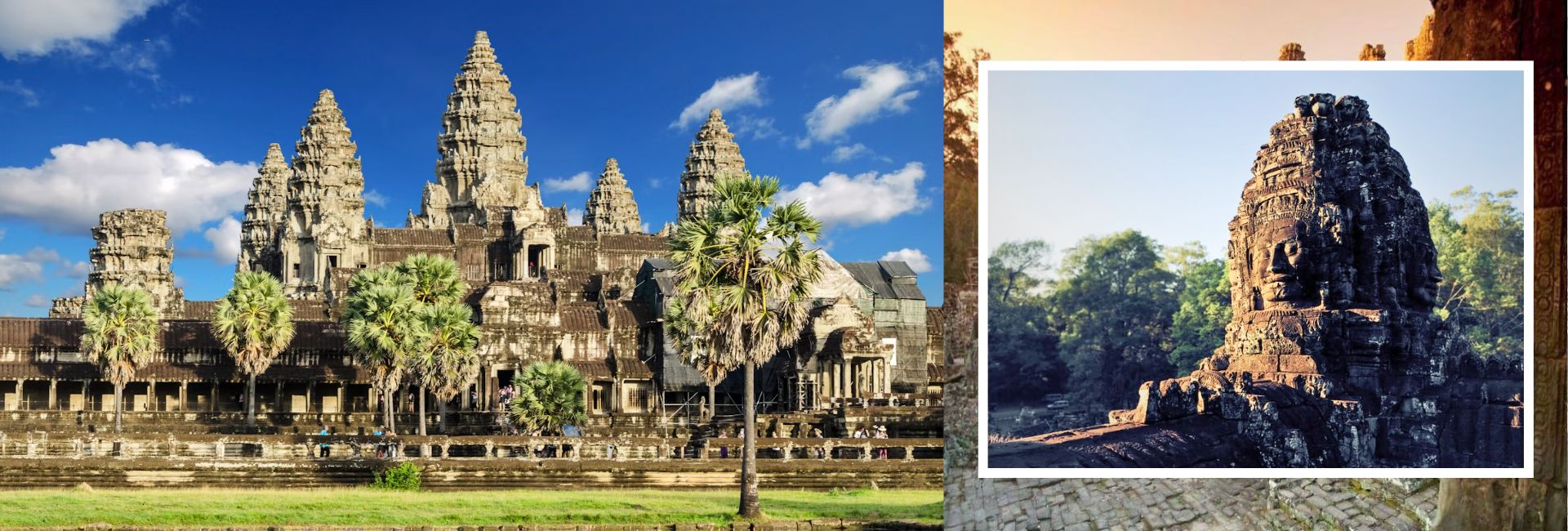
When you visit Siem Reap, there are two must-see landmarks that define Cambodia’s ancient past: Angkor Wat and Angkor Thom. These majestic temple complexes are not only architectural wonders but also spiritual symbols that continue to inspire travelers from around the world.
I will help you to discover what makes Angkor Wat and Angkor Thom so special, how to explore both efficiently, and the best travel tips for a smooth and rewarding visit.
What can you find in this travel blog?
- Where Are Angkor Wat and Angkor Thom and How to Visit
- Angkor Wat: The Heart of Cambodian Heritage
- Angkor Thom: The Walled City of Stone Faces
- Why Visit Both Angkor Wat and Angkor Thom?
- What to Bring, Wear, and Prepare For
- What Else to Explore Nearby
Where Are Angkor Wat and Angkor Thom and How to Visit
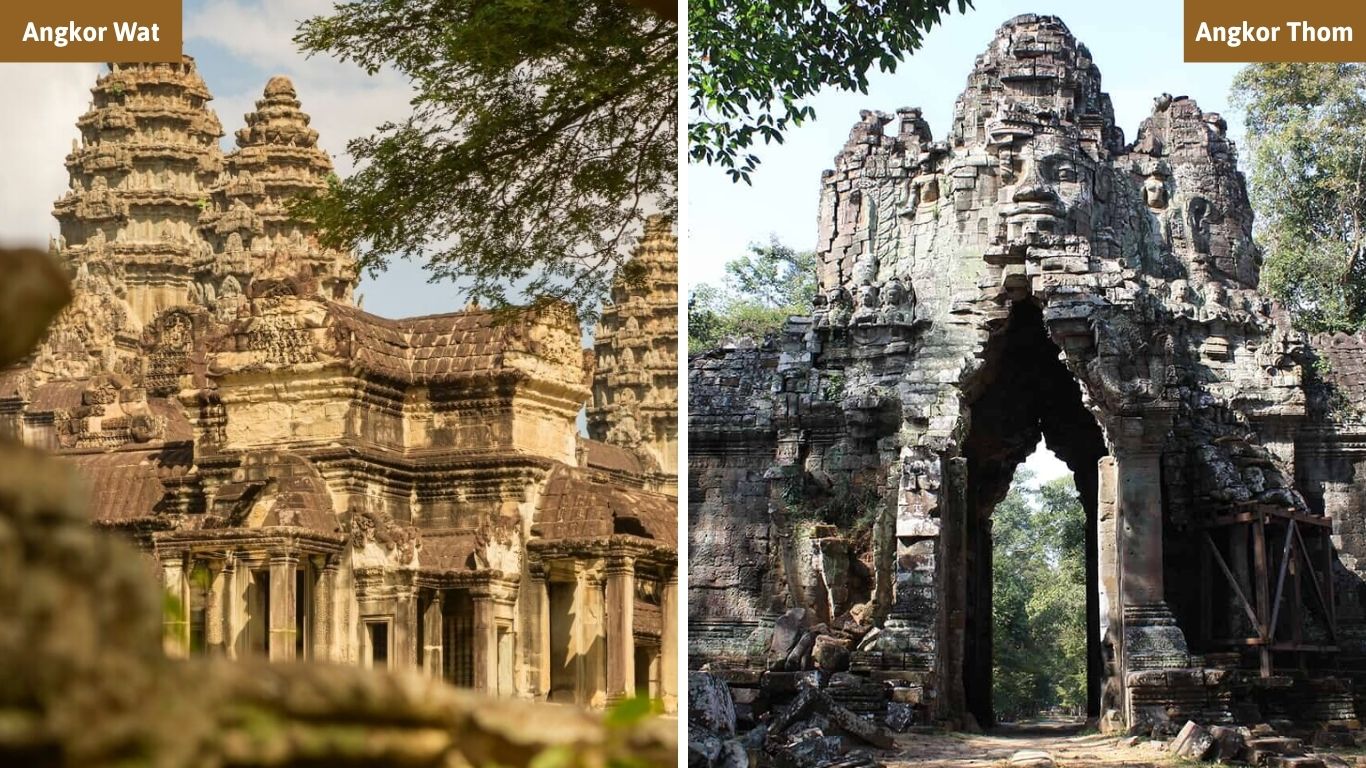
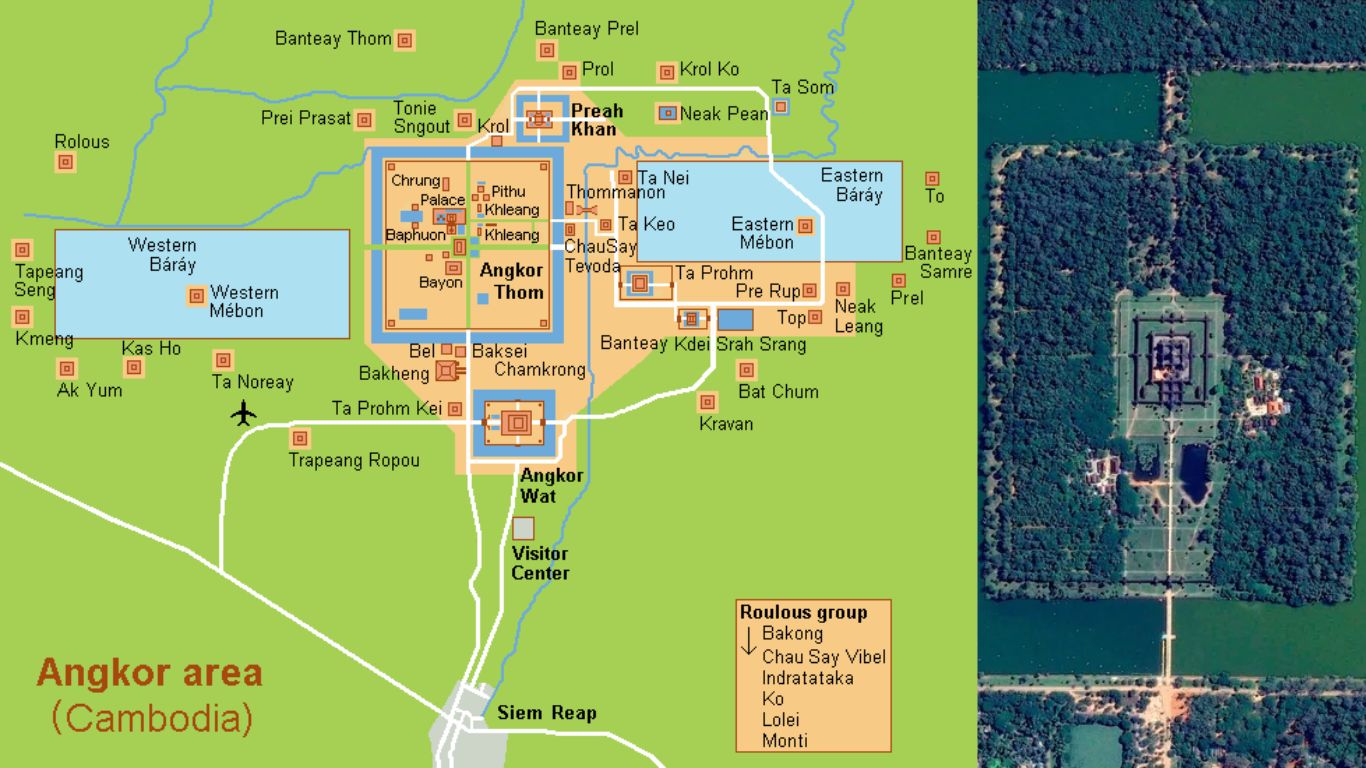
Both Angkor Wat and Angkor Thom are located inside the Angkor Archaeological Park, about 6 km (3.7 miles) north of Siem Reap, Cambodia. It’s easy to combine both sites in a half- or full-day itinerary.
Distance from Siem Reap: Around 15–20 minutes by tuk-tuk or private car
Distance between Angkor Wat and Angkor Thom: Just 1.7 km (around 5 minutes driving or 20 minutes walking)
Time to visit both places: November to February, it’s cool and dry Season
Best ways to get there:
- Private car or van – great for families or comfort in the heat
- Tuk-tuk – a local and breezy way to get around
- Bicycle – suitable for active travelers in cooler months
- Guided tour – highly recommended for first-time visitors
Suggested route:
Start with Angkor Wat at sunrise, it’s perfectly aligned for the morning light and far less crowded early on. Then continue to Angkor Thom mid-morning, when the light hits Bayon’s stone faces beautifully and the crowds are more spread out. This route also makes the visit smoother and cooler, especially for older travelers.
Entry tickets (Angkor Pass):
- 1-day: $37
- 3-day: $62
- 7-day: $72
- Purchase at the official Angkor Ticket Center (not available at the temples)
- Valid for both Angkor Wat and Angkor Thom, plus other temples in the park
Family Travelers: Children Under 12
- Good news: Kids under 12 enter free of charge, you only need to show their passport or ID to verify age.
- There is no official age-based ban on temple areas, but steep climbs at Angkor Wat or Bayon might be discouraged by guides or staff for safety.
- Plan ahead: If your child is young or less steady on stairs, focus on ground-level temples, quiet courtyards, and shaded paths where everyone can enjoy the visit comfortably.
Angkor Wat: The Heart of Cambodian Heritage
Angkor Wat is the crown jewel of Cambodian tourism and the largest religious monument in the world. Built in the early 12th century by King Suryavarman II, this temple was originally dedicated to the Hindu god Vishnu and later became a Buddhist site.
Despite its popularity, Angkor Wat maintains a surprisingly serene and spiritual atmosphere. As you walk through its ancient corridors, you’ll feel a deep connection to both history and devotion.
Top Highlights Inside Angkor Wat
Central Tower and Lotus-Bud Domes
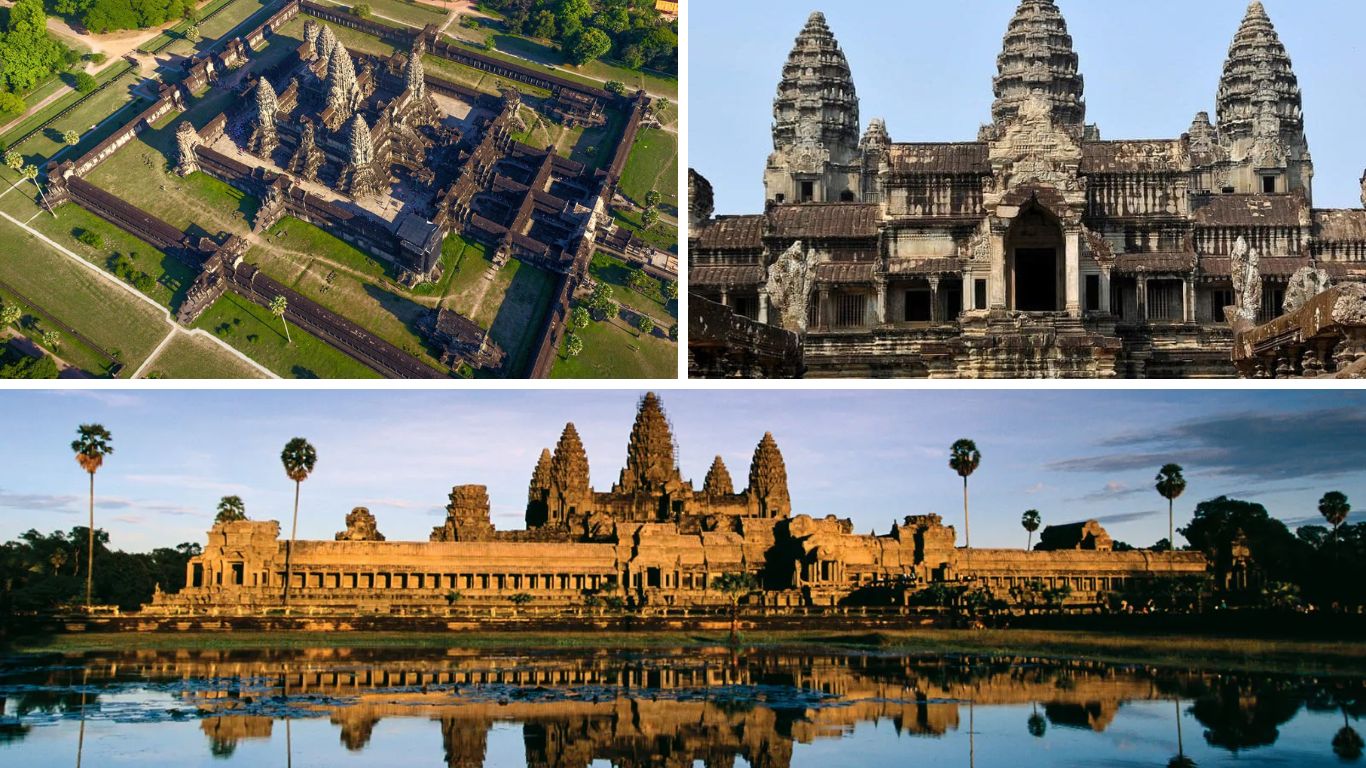
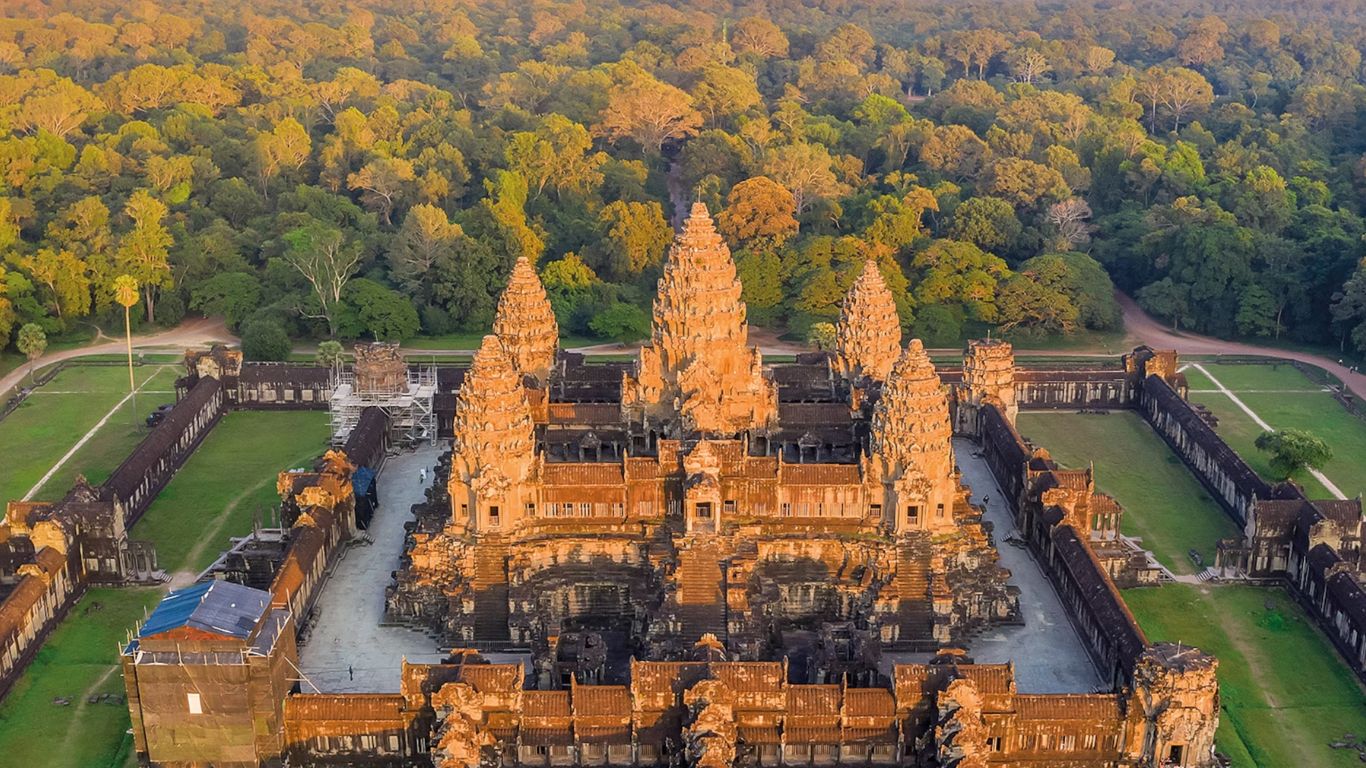
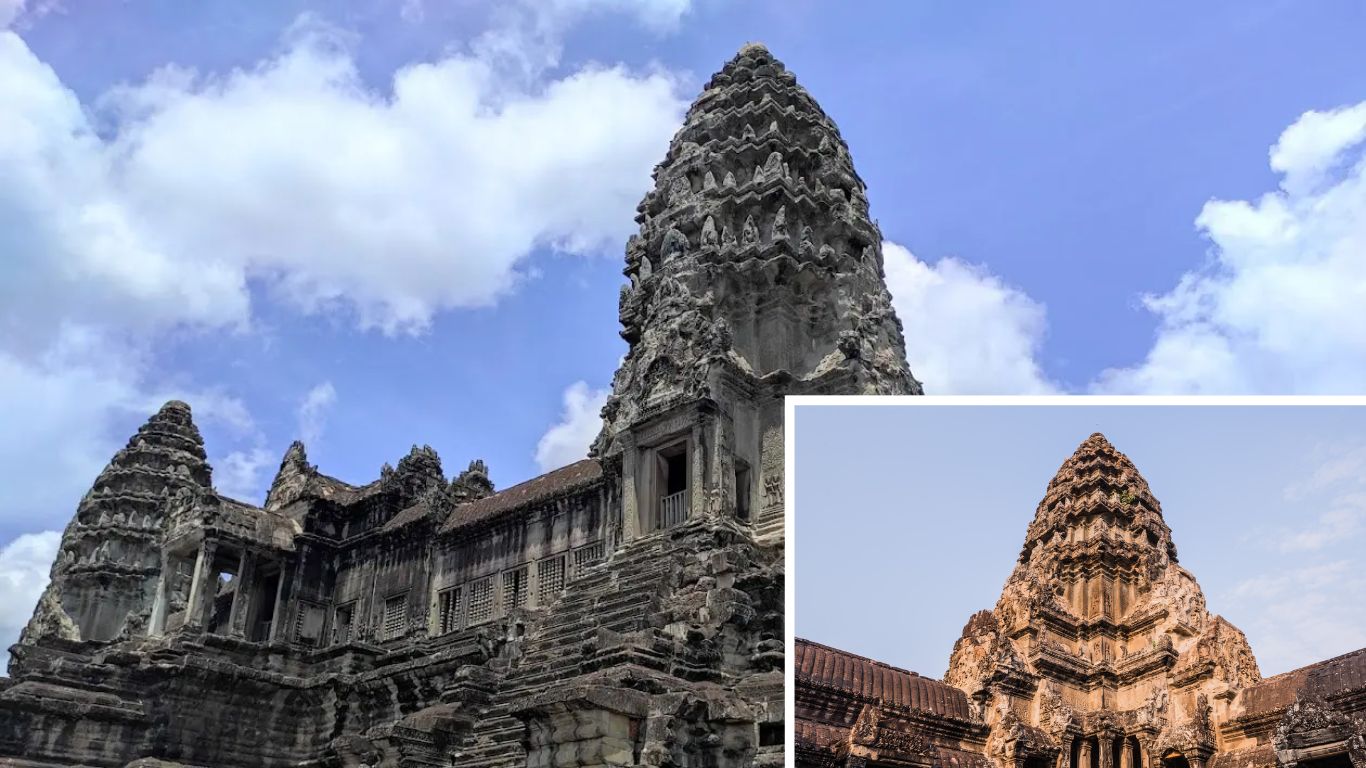
The five towers of Angkor Wat, shaped like blooming lotus buds, form Cambodia’s most iconic image. The central tower rises nearly 65 meters (213 feet), symbolizing Mount Meru, the mythical center of the universe in Hindu cosmology. From almost any angle, these towers offer postcard-perfect silhouettes, especially just before sunrise. As you enter the complex, take a moment to look up and feel the grandeur of its spiritual symbolism.
Bas-Relief Galleries
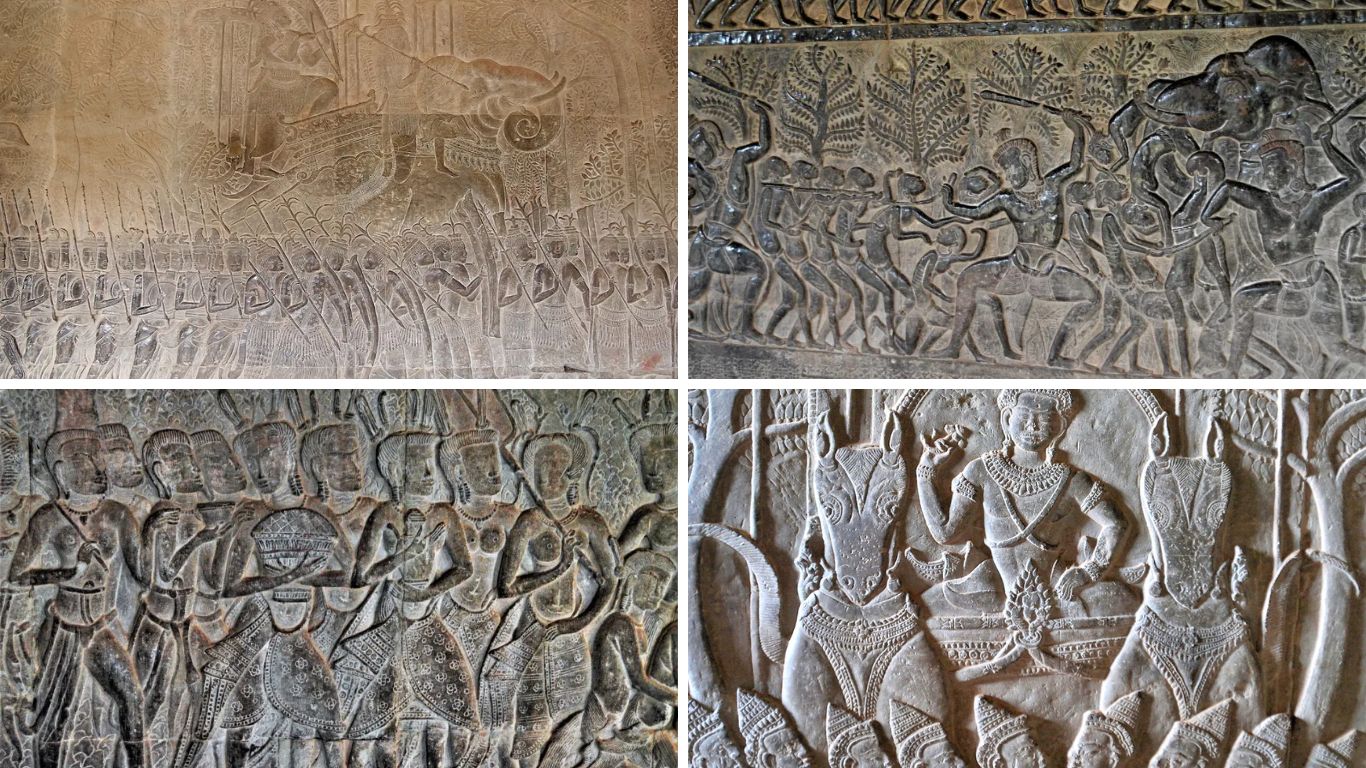
Stretching over 800 meters in total, the outer gallery walls carry full of intricate bas-reliefs, low-relief carvings that narrate epic tales. The most famous is “The Churning of the Ocean of Milk”, a dramatic scene from Hindu mythology showing gods and demons working together to obtain immortality. These carvings aren’t just art, they’re alive with movement, emotion, and detail. Walk slowly and let the stories unfold.
💡 Tip: Start from the southwest corner and walk clockwise to follow the sequence in the traditional Hindu style.
Sunrise Reflections
If you’re an early bird, this is the moment you’ll remember forever. Arrive by 5:00 AM and head straight to the northern reflecting pond in front of the temple. From here, you’ll see the towers mirrored perfectly in the water as the sky turns from indigo to gold. It’s a magical, almost surreal experience and one of the most photographed sunrises in the world.
The Best photo spot: Stand near the back of the crowd to capture both the reflection and temple in full frame, especially if the water is still.
Bakan Sanctuary (Upper Level)
Climb the steep staircase (it’s regulated and may require a short wait) to reach the Bakan, or upper sanctuary. This sacred inner core was once reserved for kings and high priests. From the top, you’ll get sweeping views across the forested plain, and a true sense of spiritual elevation.
The carvings here are more refined and the atmosphere is incredibly peaceful, despite its height and popularity.
Quiet Corners and Courtyards
Don’t just follow the main path. Angkor Wat is full of hidden hallways, quiet courtyards, and tucked-away libraries that many visitors rush past. Step away from the crowd and you might find a monk meditating, a bird nesting above a crumbling arch, or a shaft of light illuminating ancient stone. These moments bring a calm contrast to the temple’s grandeur, and are often where the magic happens.
Suggestion: After visiting the upper level, loop around the outer courtyards before exiting, it’s peaceful and less trafficked.
Tips for Visiting Angkor Wat
- Best time to visit: At sunrise (arrive around 5:00 AM for a front-row view)
- How long to spend: 2 to 3 hours
- Physical effort: Moderate; includes steep steps and uneven paths
- What to wear: Cover shoulders and knees (required for sacred areas)
- Photo tip: Use panorama mode or wide-angle lens to capture the scale
Angkor Thom: The Walled City of Stone Faces
Just north of Angkor Wat lies Angkor Thom, the last great capital of the Khmer Empire. Built by King Jayavarman VII in the late 12th century, this walled city spans 9 square kilometers and includes multiple temples and royal structures.
While Angkor Wat feels majestic and spiritual, Angkor Thom brings a more mysterious and adventurous vibe. The iconic Bayon Temple, with its giant smiling faces, is the star attraction here.
Top Things to See in Angkor Thom
Bayon Temple – The Temple of Smiling Faces
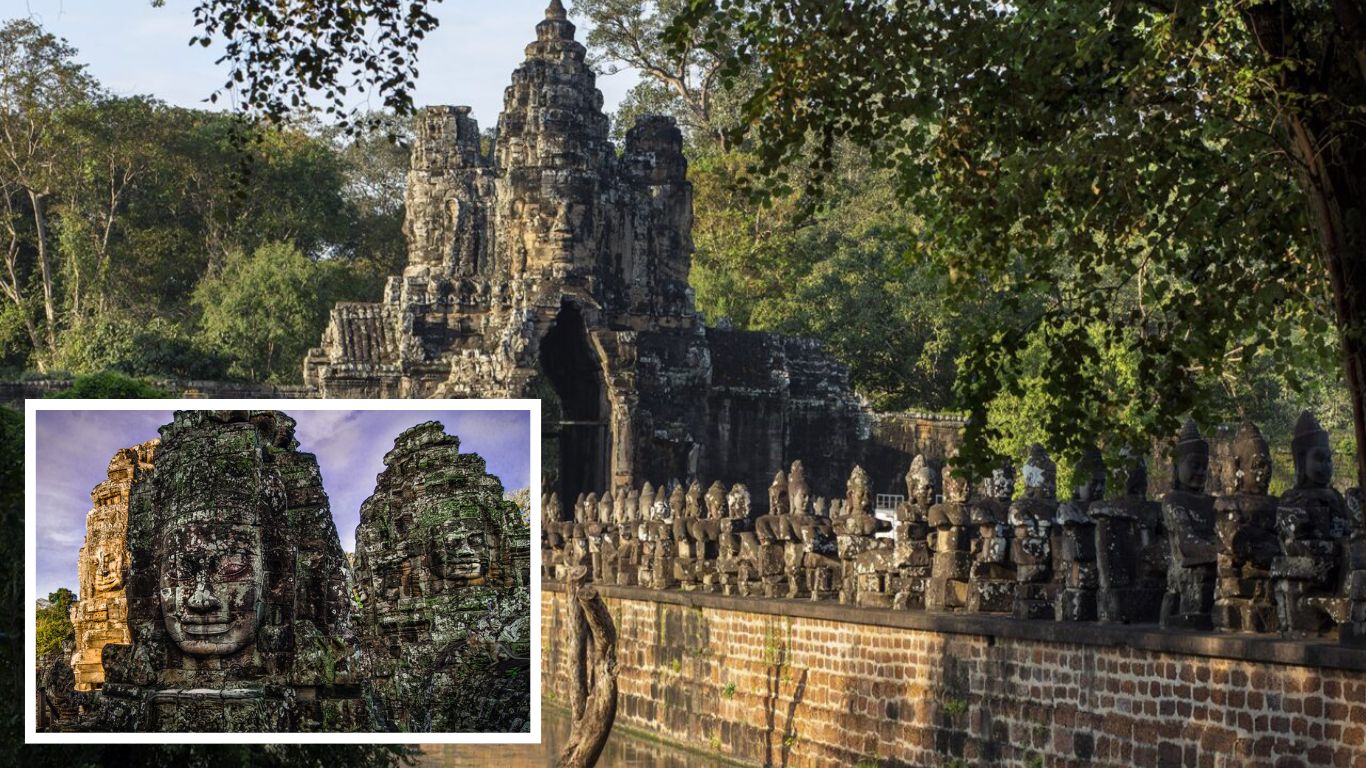
At the heart of Angkor Thom lies Bayon, a surreal, unforgettable temple with 54 towers and 216 enormous stone faces, each with a serene, mysterious smile. These faces are thought to represent either the Bodhisattva Avalokiteshvara or King Jayavarman VII himself. As you wander through the narrow corridors and upper terraces, the faces seem to follow you, creating a deeply spiritual and almost dreamlike atmosphere.
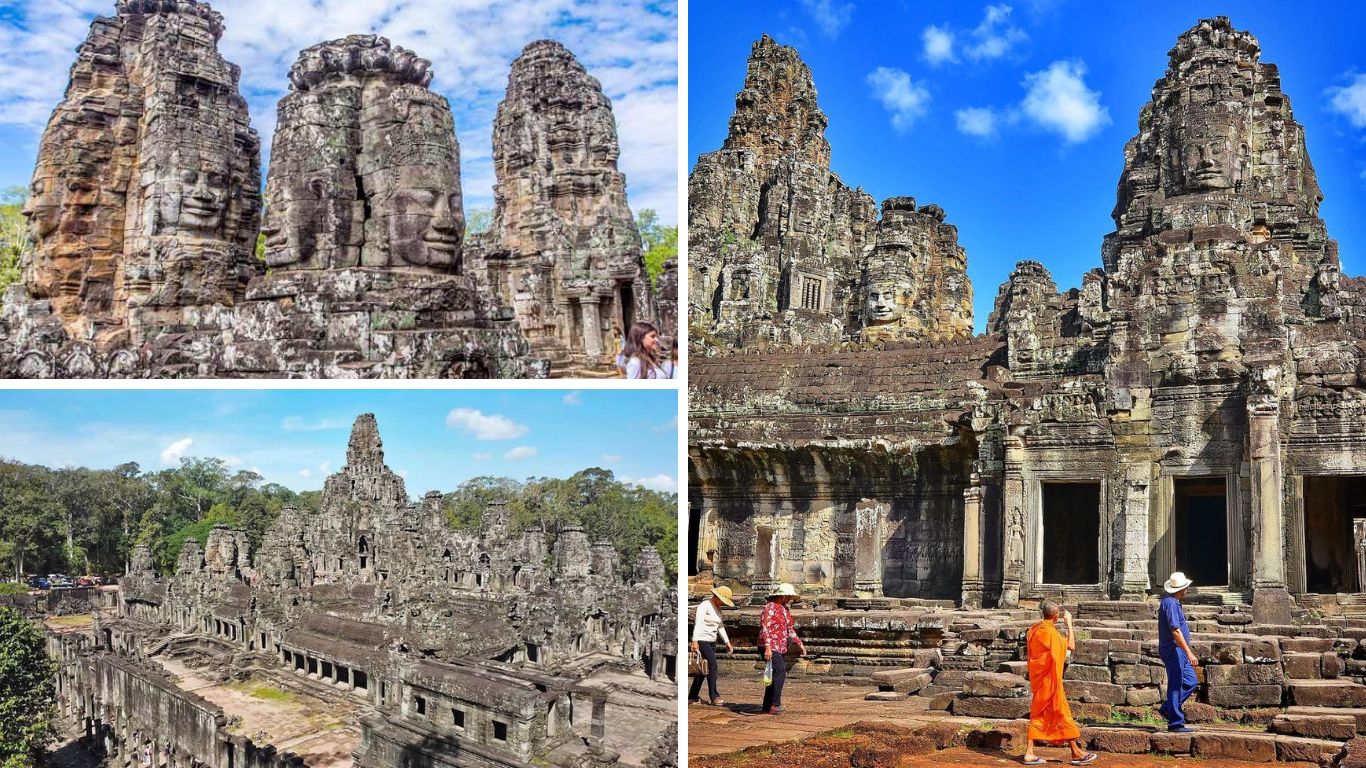
Don’t miss: The detailed bas-reliefs at the base of the temple showing daily life, battles, and market scenes from 12th-century Cambodia.
Terrace of the Elephants: Royal Viewing Platform
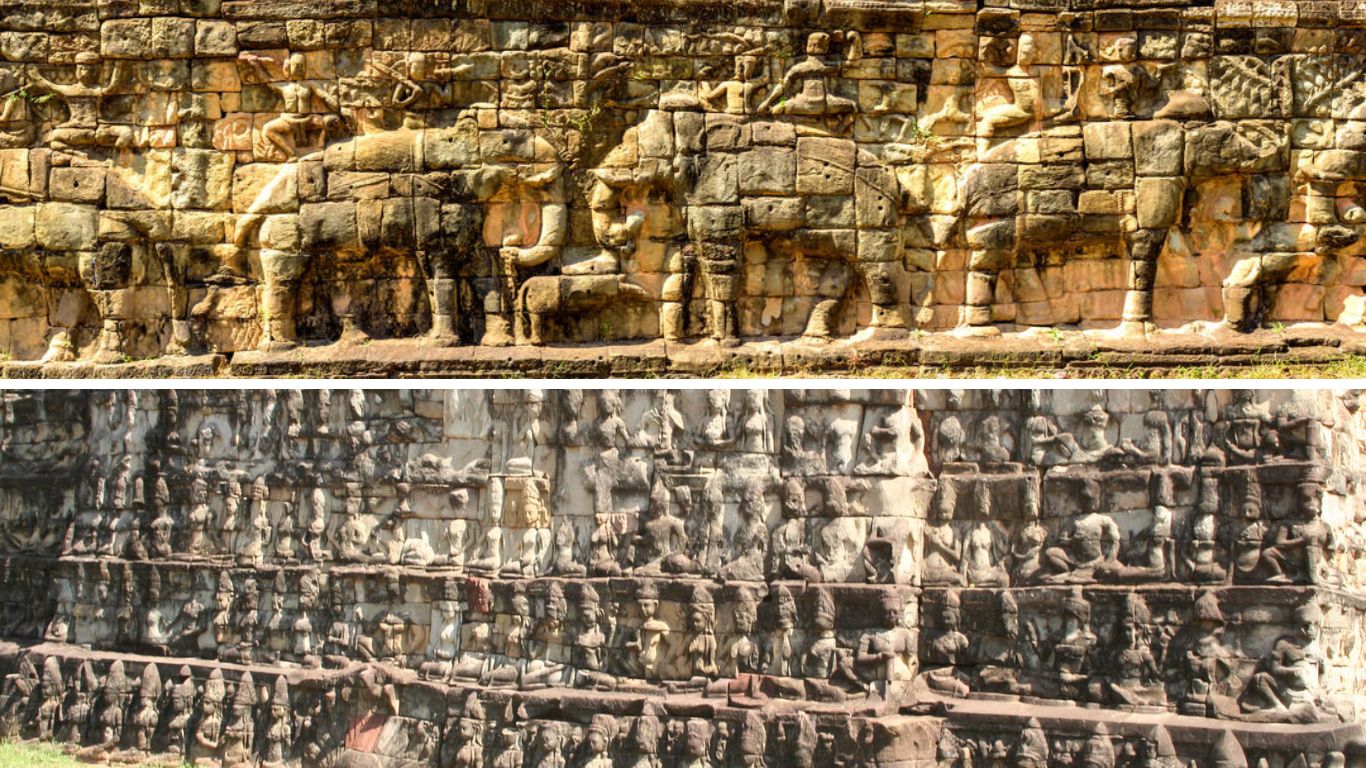
Stretching 350 meters along the eastern wall of the Royal Palace area, this intricately carved terrace was once used by the king to watch parades and public ceremonies. Its name comes from the life-sized elephant carvings that decorate the base, complete with detailed trunks, tusks, and Khmer warriors riding them. Walk along the terrace to feel the grandeur of Angkor’s royal court life.
💡 Tip: Visit in the late morning when the light highlights the carvings best, and it’s easy to imagine the processions that once filled this space.
Terrace of the Leper King – Hidden Carvings & Mysteries
Just north of the Elephant Terrace, this elevated platform is named after a weathered statue believed to depict Yama, the god of death; though some legends say it’s a Khmer king who suffered from leprosy. What makes this terrace unique is the double wall of carvings hidden within. You can walk through a narrow passage to see beautiful, well-preserved figures of demons, dancers, and mythical beings. It’s like stepping into a forgotten world.
Secret Spot: The hidden inner gallery is often missed, make sure you’ll look for the entryway at the back corner.
Baphuon Temple: The Mountain Temple
Just behind the Elephant Terrace stands Baphuon, a massive three-tiered sandstone temple representing Mount Meru. Once called the “world’s tallest temple” before Angkor Wat was built, it was nearly lost to time, but has been beautifully restored. Climb to the top for panoramic views over Angkor Thom and admire the long elevated walkway that leads to the base.
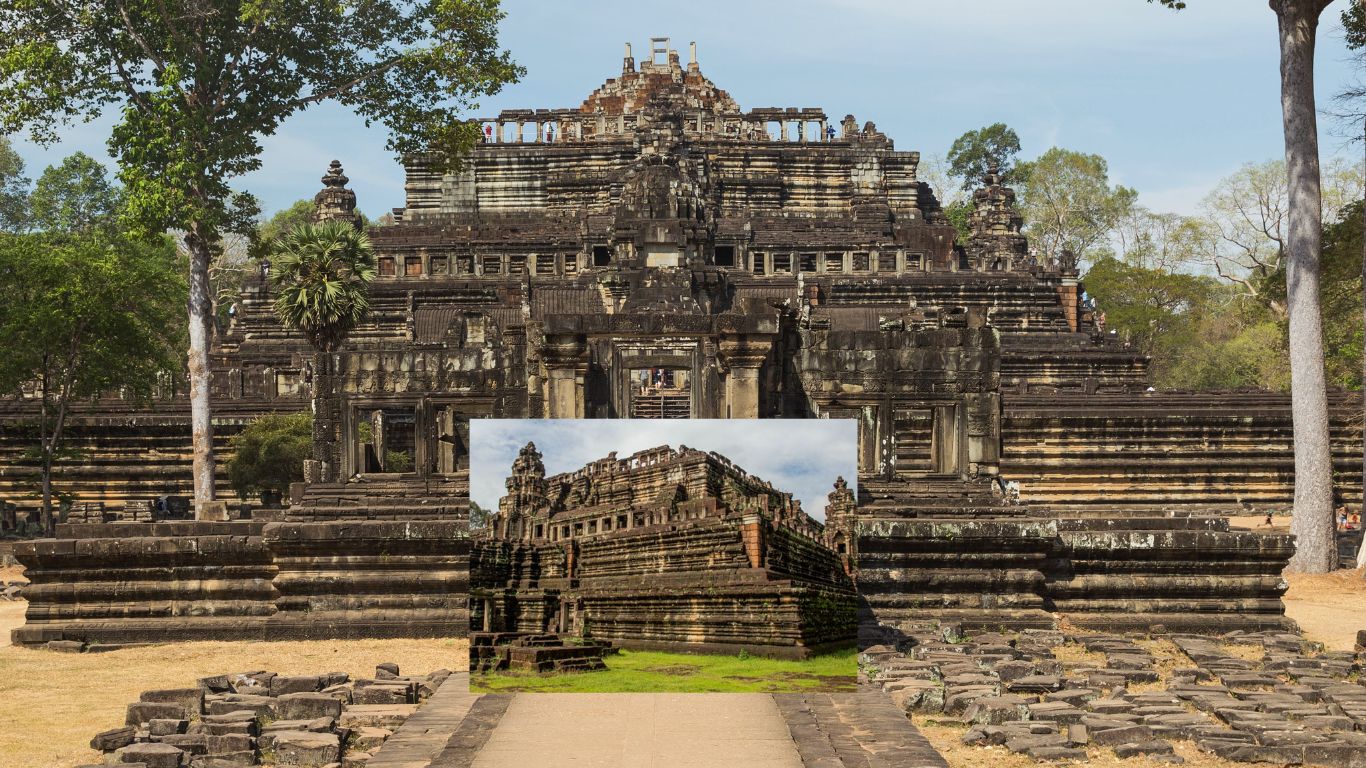
💡 Note: The climb is steep and uneven, but the view and peacefulness at the top are worth the effort if you’re physically able.
South Gate Causeway: Gods vs. Demons
Most visitors enter Angkor Thom through the dramatic South Gate, and it’s more than just an entrance, it’s a mythological scene come to life. On either side of the stone bridge are rows of 54 guardian figures, depicting gods (on the left) and demons (on the right) in the act of “Churning the Ocean of Milk.” Each holds a naga (serpent) in a cosmic tug-of-war. It’s a powerful symbol of balance, good vs. evil, and spiritual transformation.
Photo Tip: Get a shot from the far side of the moat looking back at the gate, the giant face tower framed by jungle and statues is breathtaking.
Tips for Visiting Angkor Thom
- Best time to visit: Mid-morning or early afternoon
- How long to spend: Around 2 hours
- Physical effort: Mostly flat walking, with occasional temple steps
- Photo tip: For best lighting on the Bayon faces, visit before 10:30 AM or after 3:00 PM
- Extra note: Paths between temples are shady and great for a quiet stroll
Why Visit Both Angkor Wat and Angkor Thom?
| Feature | Angkor Wat | Angkor Thom |
| Style/Vibe | Sacred and serene | Grand and mysterious |
| Time to visit | 2–3 hours | Around 2 hours |
| Effort Level | Moderate stairs | Mostly flat paths |
| Best For | First-timers, photographers | Explorers, history lovers |
Both of these sites are deeply rewarding in their own way. If you only have a few hours in Siem Reap, Angkor Wat is the ideal introduction to Cambodia’s temple legacy. But to really understand the power and mystery of the Khmer Empire, Angkor Thom is equally essential.
If you have the time, I strongly encourage you to explore both. Seeing them together provides a deeper appreciation of ancient Cambodia and gives you a well-rounded day of discovery.
What to Bring, Wear, and Prepare For
What to Wear: Dress with Respect and Comfort
- Modest clothing is required at Angkor Wat and other temple sites. Because Angkor temples are active spiritual sites, not just historical ruins. Dressing respectfully honors Cambodian culture and ensures you’ll be allowed into all areas.
- Both men and women should cover shoulders and knees to enter sacred areas (especially the upper levels of Angkor Wat)
- Choose lightweight, breathable fabrics because Cambodia can be very hot and humid, especially from March to May
- Bring a wide-brim hat or cap, and wear comfortable walking shoes or sandals with good grip, because you’ll walk a lot and sometimes on uneven stones
What to Pack: Be Ready for the Heat & the Adventure
- Light packing reference: Because you’ll be on your feet for hours. Even if you hire a tuk-tuk or have a private guide, you’ll still walk a lot. Packing light helps you stay mobile and stress-free.
- Reusable water bottle: staying hydrated is key, and bottled water is available but brings plastic waste
- Sunscreen and bug spray: sunburn and mosquito bites are common here
- Small towel or tissues: for wiping sweat or using in public toilets
- Camera or phone: photos are allowed in most areas (except some sacred rooms), and sunrise at Angkor Wat is iconic
- Portable charger: your phone battery will drain quickly with all the photos and GPS use
- Foldable umbrella or light raincoat: if visiting during the rainy season (May–October)
Entry Fees and Payment Info
- Angkor Pass is required for entry to both Angkor Wat and Angkor Thom
- Purchase it at the official Angkor Ticket Center, open daily from 5:00 AM to 5:30 PM
- Payment methods: Credit/debit cards are accepted (Visa, Mastercard), along with cash in USD or Cambodian Riel
- Important: You cannot buy tickets at the temples themselves — only at the ticket center
💡 Pro Tip: No need to bring your own photo, the staff will take your picture on-site and print it on your Angkor Pass. Because this pass gives you access to multiple temples over several days, the photo simply helps confirm it belongs to you (and prevents others from reusing it).
What Else to Explore Nearby
While you’re already near two of Cambodia’s top sights, consider extending your visit with these nearby spots:
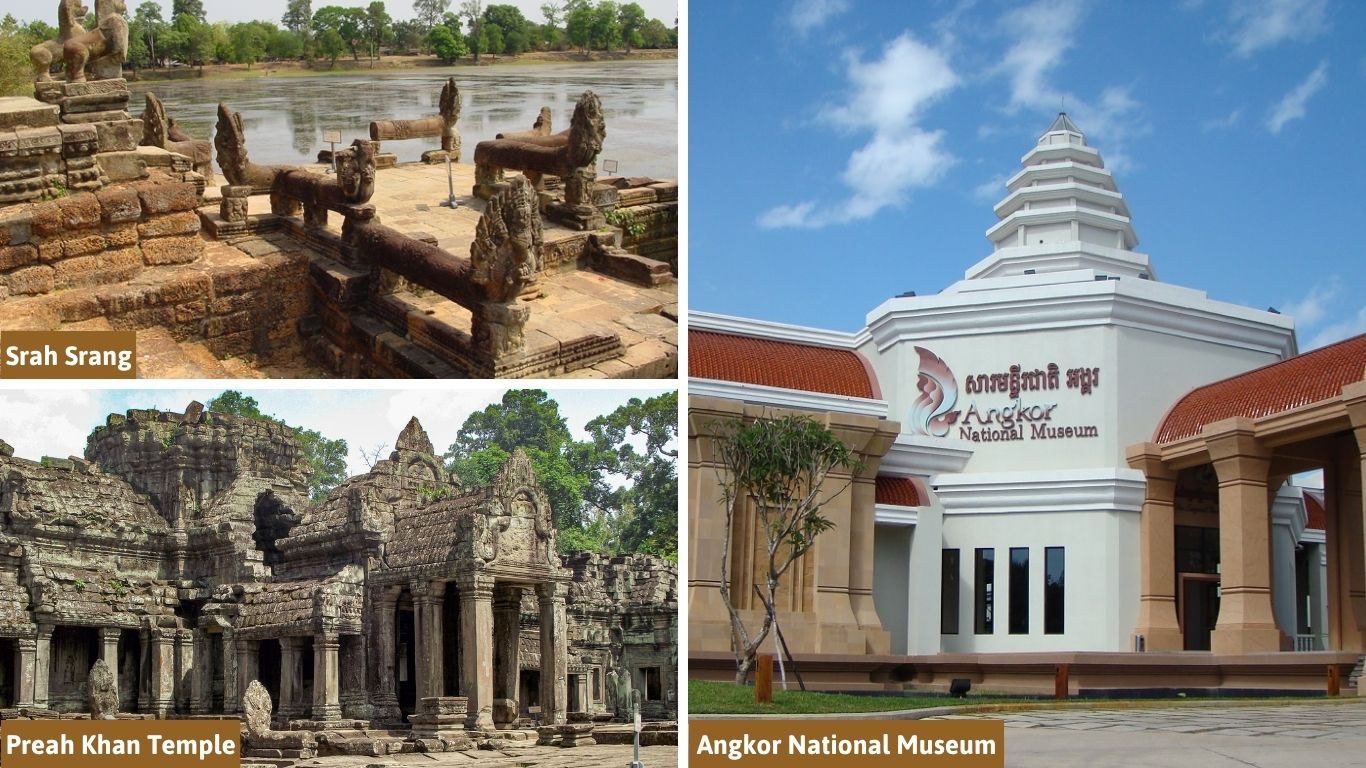
- Srah Srang – A peaceful lake that’s perfect for sunrise or a quiet break
- Preah Khan Temple – A lesser-known temple with overgrown roots and long corridors
- Angkor National Museum – Ideal for context before or after your temple tour
Angkor Wat and Angkor Thom aren’t just places to tick off your list, they’re deeply moving experiences that stay with you long after your trip ends. Each stone tells a story. Each carving holds a memory. Whether you’re watching the sun rise over lotus towers or standing face to face with Bayon’s smiling giants, you’ll feel like you’ve stepped into something timeless.
If you’re dreaming of a day that blends ancient wonders, peaceful moments, and rich cultural insights, we’d love to help you plan it. At Vietnam Travel Online, we craft personalized Angkor adventures that go far beyond ticking off famous sites. Whether you want a deep dive into Angkor Wat’s symbolic carvings, a gentle stroll through Angkor Thom’s hidden corners, or a full-day experience that flows at your pace, we’ll shape the journey around you.
Let your visit to Angkor be personal, not just popular. Travel in a way that feels meaningful, thoughtful, and truly yours.