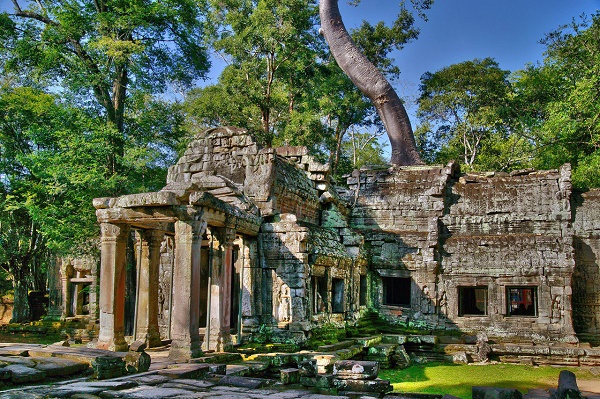

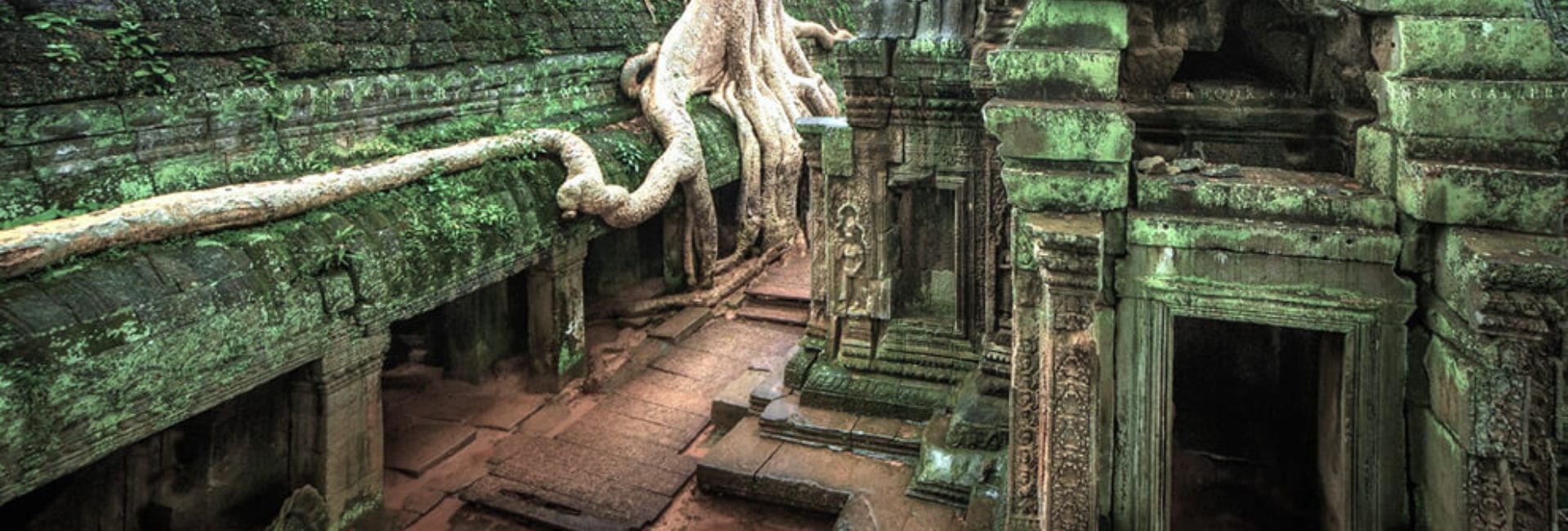
If you’re dreaming of a place where nature and ancient architecture blend seamlessly, Ta Prohm Temple should be at the top of your Cambodia bucket list. This is where trees grow out of ruined walls, massive roots stretch across stone like veins, and the silence speaks of centuries past. Located deep within the Angkor Archaeological Park, Ta Prohm is one of the most atmospheric and photogenic temples you’ll ever lay eyes on.
Whether you’re chasing cinematic landscapes, craving a brush with history, or simply looking for a unique place to explore, Ta Prohm delivers something truly unforgettable.
What can you find in this travel blog?
- Things You Should Know about Ta Prohm Temple
- What Makes Ta Prohm Temple so Special
- Practical Tips to Visit Ta Prohm Temple
Things You Should Know about Ta Prohm Temple
A Short Look Into the History of Ta Prohm
Built in the late 12th century by King Jayavarman VII, Ta Prohm was originally called Rajavihara, meaning “Monastery of the King.” It was designed as a Mahayana Buddhist monastery and university. At its height, it was home to more than 12,500 people, including priests, monks, dancers, and workers. Inscriptions suggest that over 600 dancers alone were assigned here.
Unlike many temples that have been restored, Ta Prohm was deliberately left mostly in its natural state. What you see today is close to how it was first found: with thick jungle growth curling around weathered stone walls. This preservation choice was made to highlight the poetic contrast between human creation and nature’s unstoppable force.
- Location: About 3 km from Angkor Wat, inside the Angkor Archaeological Park
- Opening Hours: 7:30 AM – 5:30 PM daily
- Tickets: Access is included in the Angkor Pass (1-day: $37, 3-day: $62, 7-day: $72)
- How to Get There:
- From Siem Reap city center: It’s about 10 km (25–30 minutes by tuk-tuk or car)
- From Angkor Wat: Just a 10-minute drive
- You can get there by tuk-tuk, private car, bike, or as part of a guided tour
A Short Love Into History
Ta Prohm was built around 1186 AD by King Jayavarman VII and dedicated to his mother. It functioned as a major Buddhist monastery and university, once housing over 12,500 people, including monks, priests, and royal dancers. Like many other Angkor temples, it was eventually abandoned and reclaimed by the jungle.
In recent times, Ta Prohm became one of the first temples preserved in its natural, overgrown state which is turning it into a powerful symbol of the poetic struggle between nature and human creation.
The Ta Prohm Diamond Carving Mystery
One of the most talked-about curiosities in Ta Prohm is a small diamond-shaped carving tucked into the stonework of the temple. It’s not just its shape that draws attention.
Locals and tour guides often share a tale about a precious diamond once embedded in Ta Prohm’s walls. They possibly set within a lotus motif or sacred statue. According to the story, looters removed or stole the jewel during times of conflict, either centuries ago or in more recent history. Some believe it held protective powers, while others think it was a rare decorative offering placed by the temple’s original builders.
Whether or not the diamond ever existed, the smooth, hollowed-out spot where it supposedly sat remains visible today. Travelers often seek it out during their visit, some even touch it for good luck or to connect with the temple’s spirit.
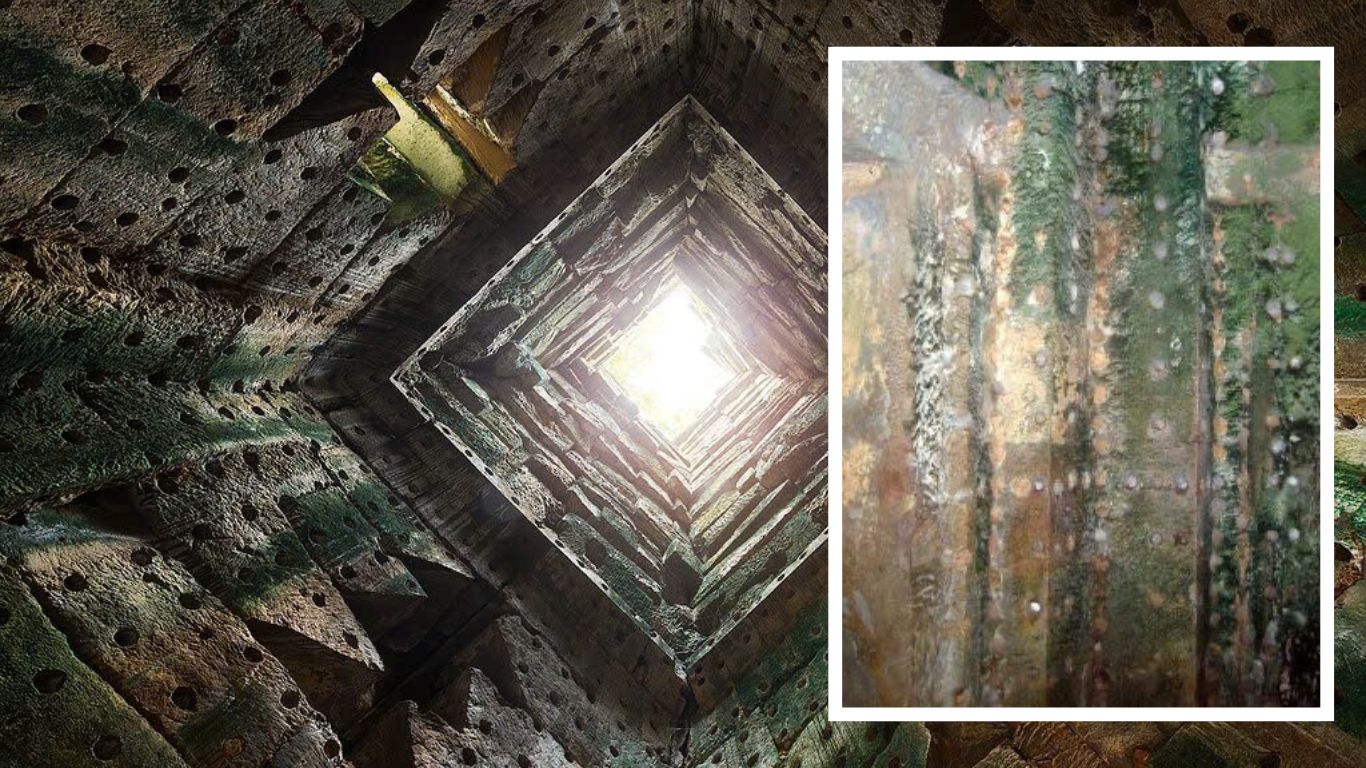
Is it real? A myth? That’s part of the charm. Like much of Ta Prohm, it leaves you with more questions than answers, and that’s exactly why people love it.
What Makes Ta Prohm Temple so Special
Ta Prohm is more than just a temple, it’s a living painting where time seems to stand still. It captures the hearts of visitors from around the world
Worthwhile Things to Explore at Ta Prohm Temple
Iconic Tree Roots
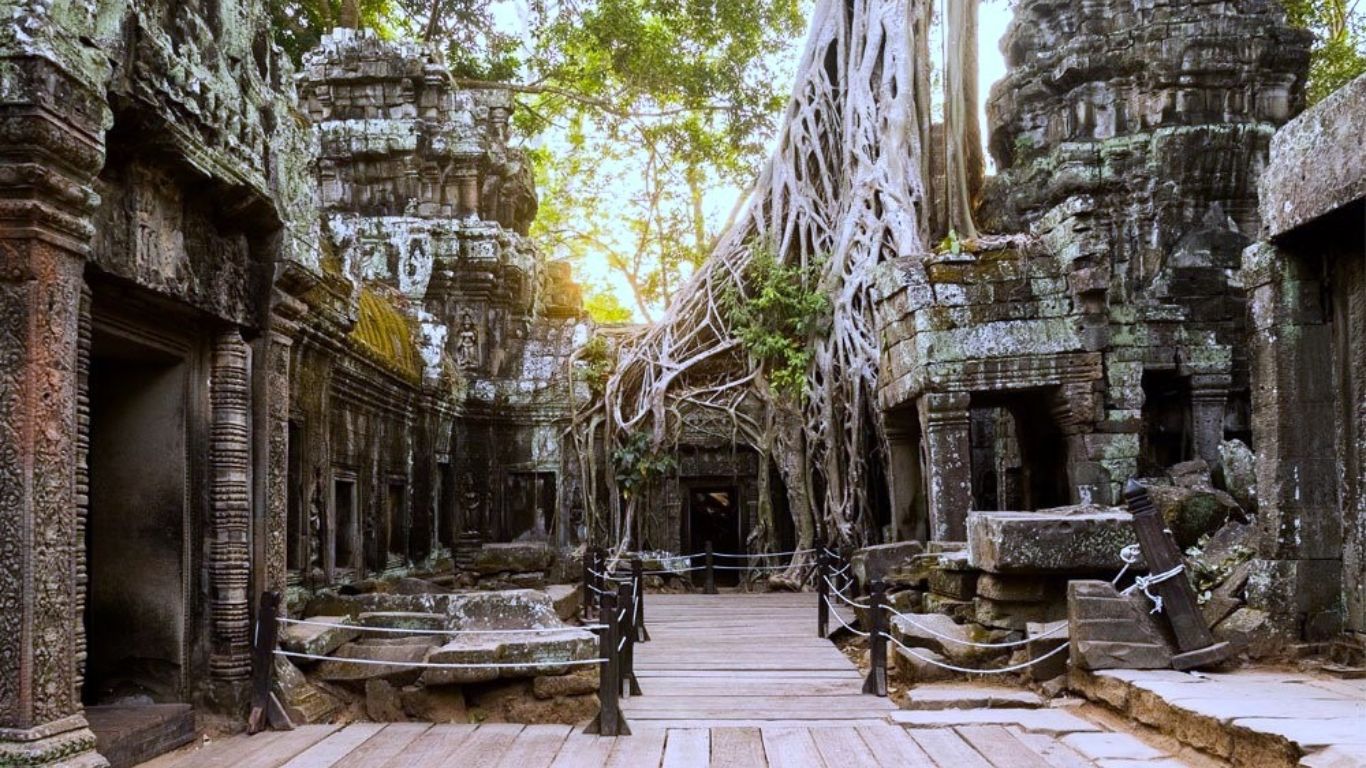
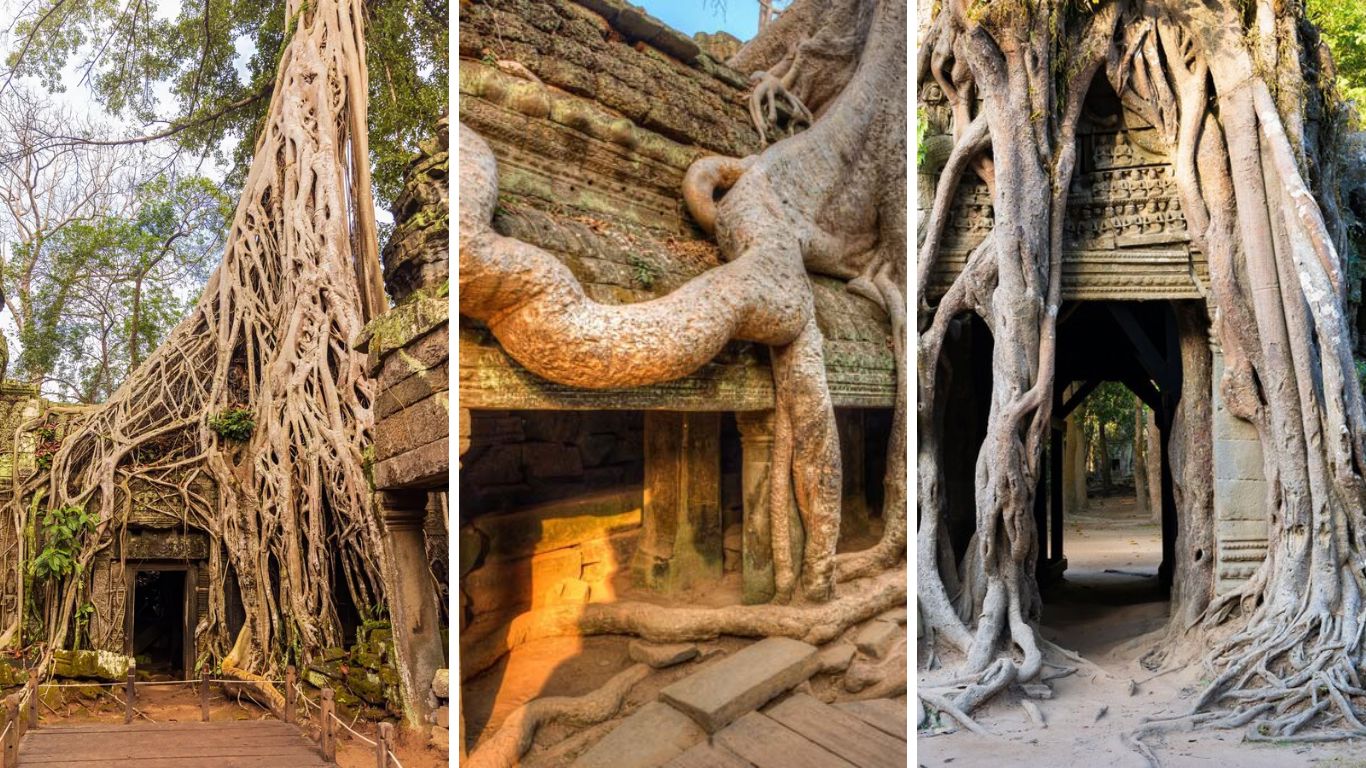
The most iconic image of Ta Prohm is the overwhelming embrace of nature, there are massive tree roots snaking through and gripping the stone structures. These trees, mainly silk-cotton and strangler figs, weren’t planted here by design. Instead, over centuries, they grew wild, wrapping around walls, archways, and towers. Some trunks split the walls in half, while others hang like curtains over doorways. The scene feels almost surreal like something from a fantasy novel, and it’s precisely this blend of jungle and ruin that makes Ta Prohm so hauntingly beautiful.
Tomb Raider Entrance
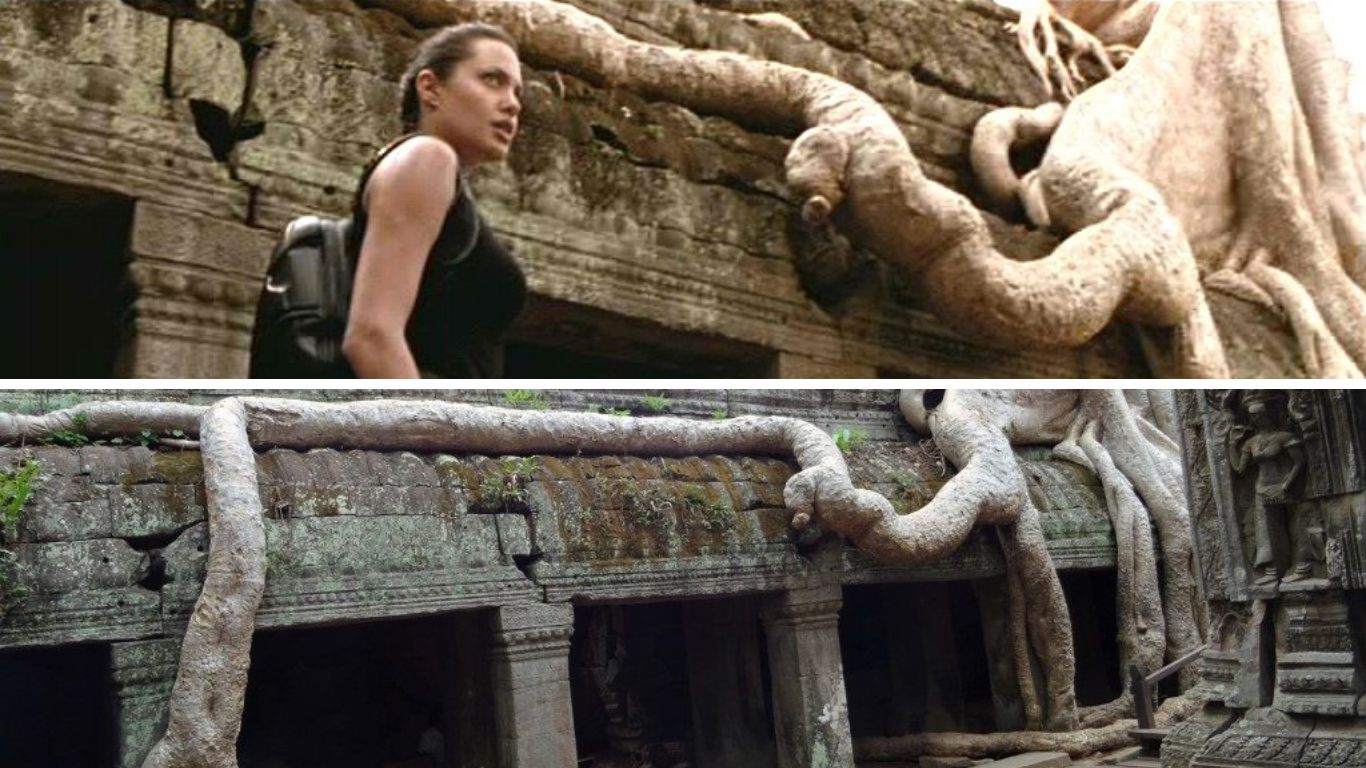
If you’ve seen Lara Croft: Tomb Raider (2001), this spot will feel instantly familiar. One of the temple’s doorways, covered in roots and surrounded by collapsed stones, became the film’s most iconic setting. And today, it’s one of the most photographed locations in the Angkor complex. Visitors love to stand in the doorway or peek through it for that signature “lost world” photo. Despite its popularity, the spot still carries a mysterious, cinematic energy that makes it feel like a hidden portal to another era.
Bas-Reliefs and Inscriptions
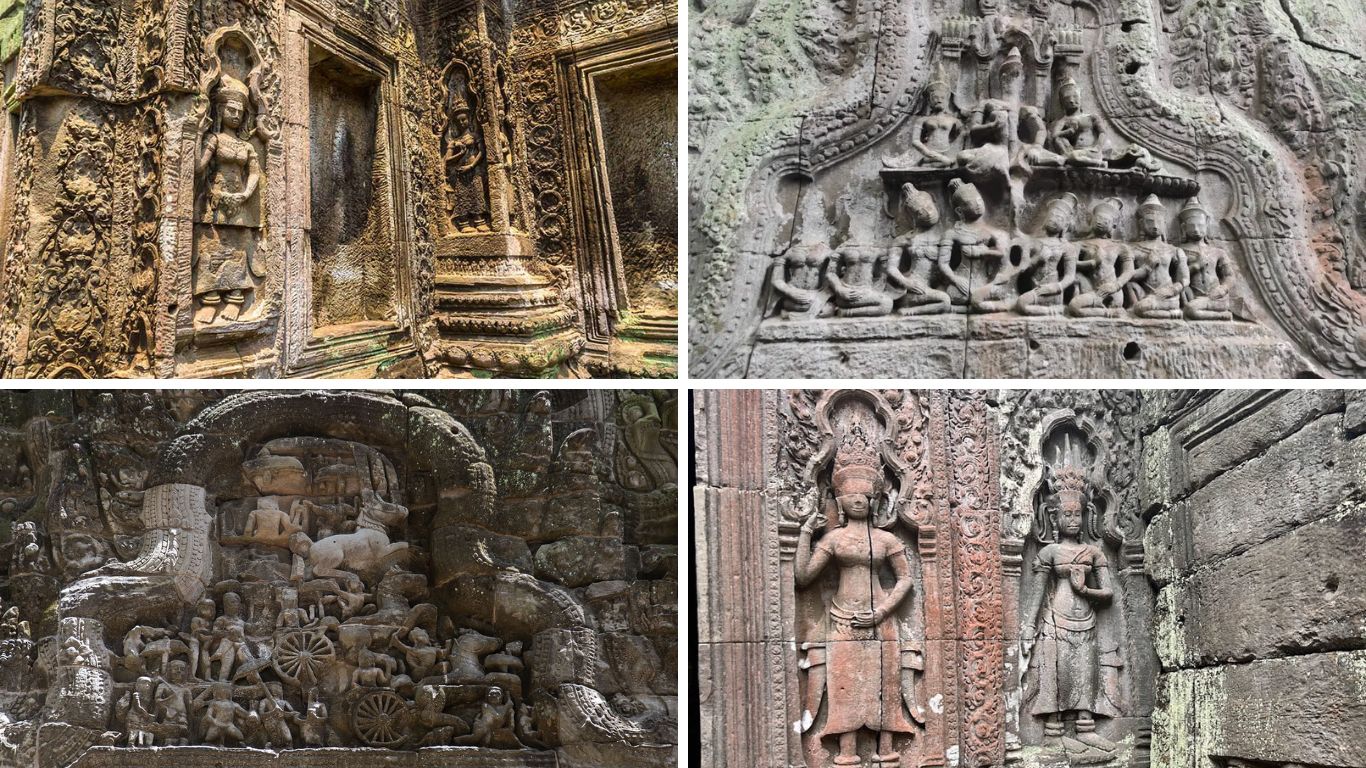
Although Ta Prohm is known for its trees, don’t overlook the intricate stone carvings that still adorn many of the temple’s walls. You’ll find delicate devatas (female celestial dancers), floral motifs, and Buddhist iconography, some weathered by time, others still surprisingly sharp. In certain corners, Sanskrit and Khmer inscriptions remain etched into stone, whispering stories of ancient times. These bas-reliefs give us insight into the artistic soul of the Khmer Empire and are a reminder that this was once a thriving religious sanctuary, not just a ruin swallowed by trees.
Inner Sanctuary
At the heart of Ta Prohm lies its inner sanctuary, a quieter and more contemplative space. Here, you’ll walk through narrow, dim corridors that suddenly open up into hidden courtyards. The air is cooler, the jungle canopy offers shade, and the ruins around you feel more intimate. While many parts have collapsed, the spirit of the temple remains intact. This area invites silence, but not in a somber way, but in a deeply peaceful one. Many travelers find this part of the temple perfect for a moment of reflection or a peaceful pause away from the crowds.
Collapsed Structures
Time, weather, and neglect left Ta Prohm in partial ruin, and that’s part of its charm. Throughout your visit, you’ll navigate stone piles, leaning walls, broken towers, and corridors that have caved in. Rather than being completely restored, the temple was deliberately preserved in this semi-ruined state to show how nature had reclaimed it. Wooden beams now support certain areas to keep them safe, but the overall feel is authentic and raw. Every step feels like an exploration, as if you’re discovering an abandoned world left untouched for centuries.
Mystery Relief (“Stegosaurus Carving”)
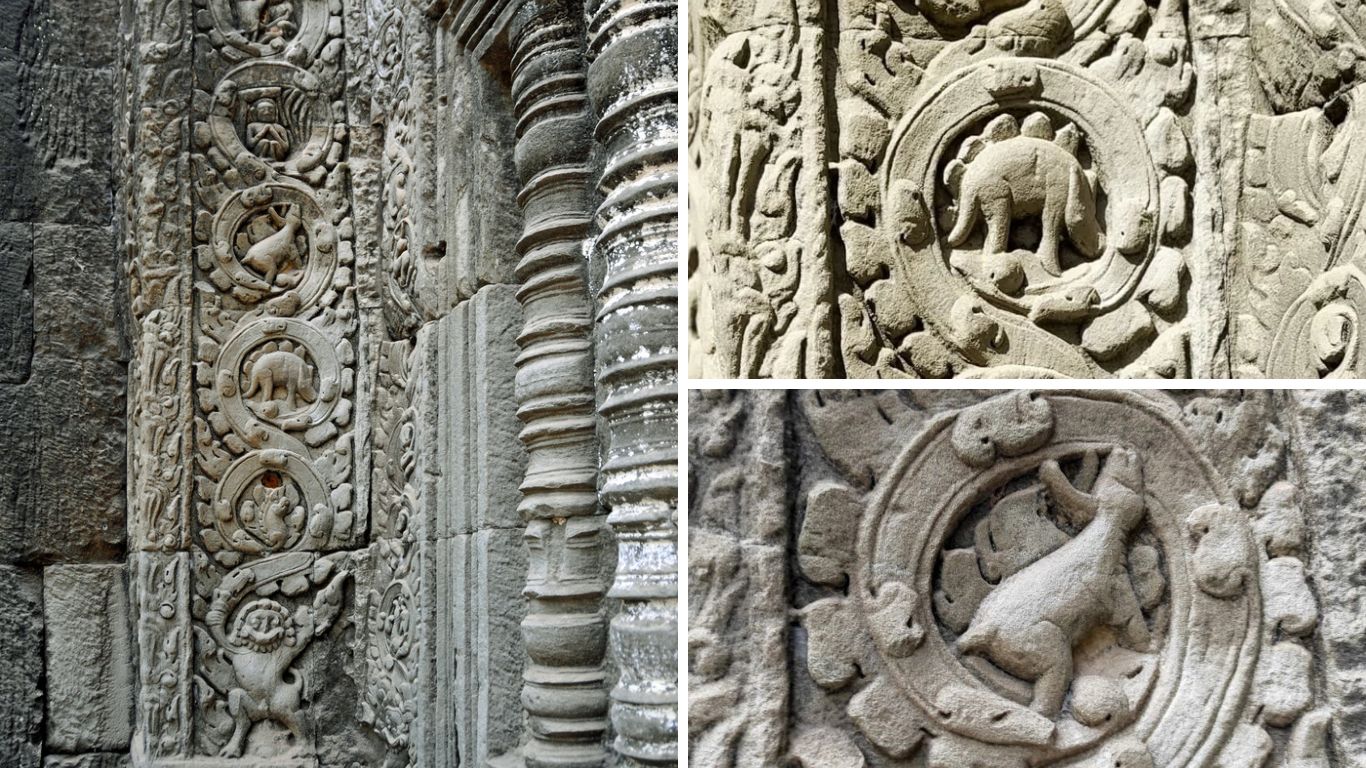
One quirky detail that often captures visitor curiosity is a carving that some say resembles a stegosaurus dinosaur. People say that is a creature obviously predating the Khmer Empire by millions of years. While experts believe it may be a stylized depiction of a rhinoceros or simply decorative foliage, the carving has gained fame as the “dinosaur of Ta Prohm.” It adds a layer of mystery and even playfulness to your visit, especially for travelers who love a good legend or conspiracy theory.
Sounds of the Jungle
Ta Prohm doesn’t just enchant the eyes because it seduces the ears too. As you wander its mossy paths, you’ll hear birds chirping, cicadas humming, leaves rustling, and the occasional call of a monkey in the distance. There are no traffic sounds or city noise, only just the living jungle speaking its ancient language. This natural soundtrack amplifies the sense that you’ve stepped outside time and into something ancient, wild, and sacred.
Would It Be Worth a Visit?
Absolutely, especially if you have interests into places that feel cinematic, mysterious, and spiritual. While Angkor Wat impresses with grandeur, Ta Prohm stirs something deeper with its haunting beauty. It’s a temple that feels alive, whispering stories of the past through roots and ruins.
Practical Tips to Visit Ta Prohm Temple
- Dress Code: Wear clothing that covers your shoulders and knees, because this is a sacred site.
- Best Time to Visit: Early morning (7:00–9:00 AM) or late afternoon for cooler weather and fewer tourists
- What to Bring:
- Water bottle (it gets hot!)
- Insect repellent
- Sunscreen and a hat
- Comfortable walking shoes
- Payment Info: Purchase your Angkor Pass at the official ticket center near Siem Reap before entering the park
- Stay Alert: Some paths are uneven and tree roots can be slippery — walk carefully, especially in the rainy season
💡Tip: Avoid mid-day (11:00 AM – 2:00 PM), especially during the dry season (March–May), when the sun is strongest and crowds peak.
Suggesting Places to Visit
If you’re staying in Siem Reap for a few days, you can build a rich itinerary around Ta Prohm. These nearby landmarks you should explore:
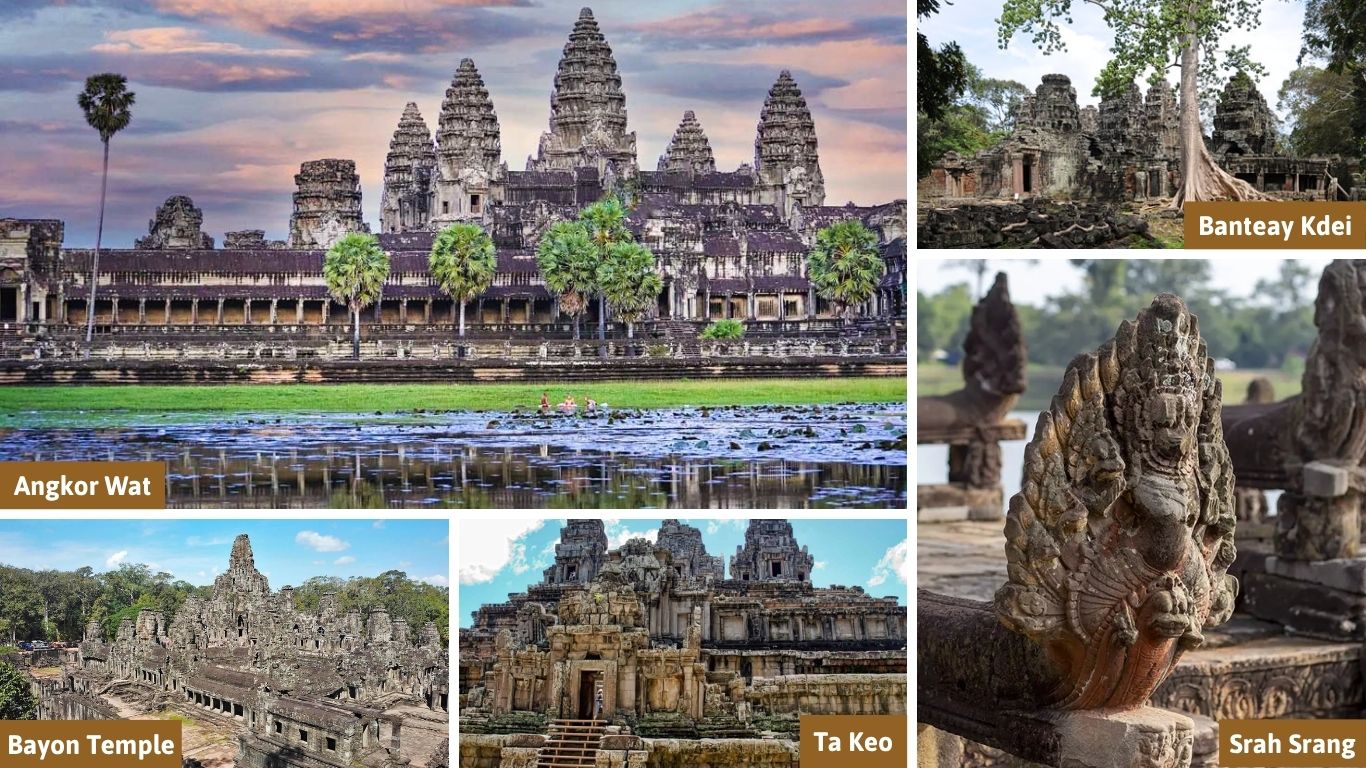
- Angkor Wat – The crown jewel of Khmer architecture and the world’s largest religious monument; just 3km (approx. 10 minutes by tuk-tuk) from Ta Prohm
- Bayon Temple – Famous for its many smiling stone faces, located in the heart of Angkor Thom and about 4km (15 minutes by tuk-tuk) from Ta Prohm
- Banteay Kdei – A quieter temple complex often overlooked by big crowds, situated right across the road from Srah Srang, around 2km from Ta Prohm
- Srah Srang – A tranquil reservoir ideal for sunrise or a quiet rest, about a 5-minute drive from Ta Prohm
- Ta Keo – A massive mountain-temple nearby, great for a quick climb and panoramic views
Suggested Day Itinerary Including Ta Prohm
If you only have one day in the Angkor complex and want to make Ta Prohm your focus, here’s a suggested route:
Ta Prohm → Banteay Kdei → Srah Srang → Angkor Wat → Bayon Temple
This loop offers a full day of discovery with a perfect balance between energy, photography, and comfort. You can easily stretch this route into a 2- or 3-day itinerary by slowing down and exploring more deeply. Add Preah Khan, Ta Keo, or Phnom Bakheng for a memorable sunset.
If you’re down to a day that blends nature, history, and quiet reflection, we’d be honored to help you plan it. At Vietnam Travel Online, we design personalized Angkor experiences that go beyond the typical sightseeing. Whether you prefer a focused half-day around Ta Prohm or a full-day journey through ancient temples, we tailor everything to match your rhythm and interests.
Let your travel be meaningful, not just memorable.