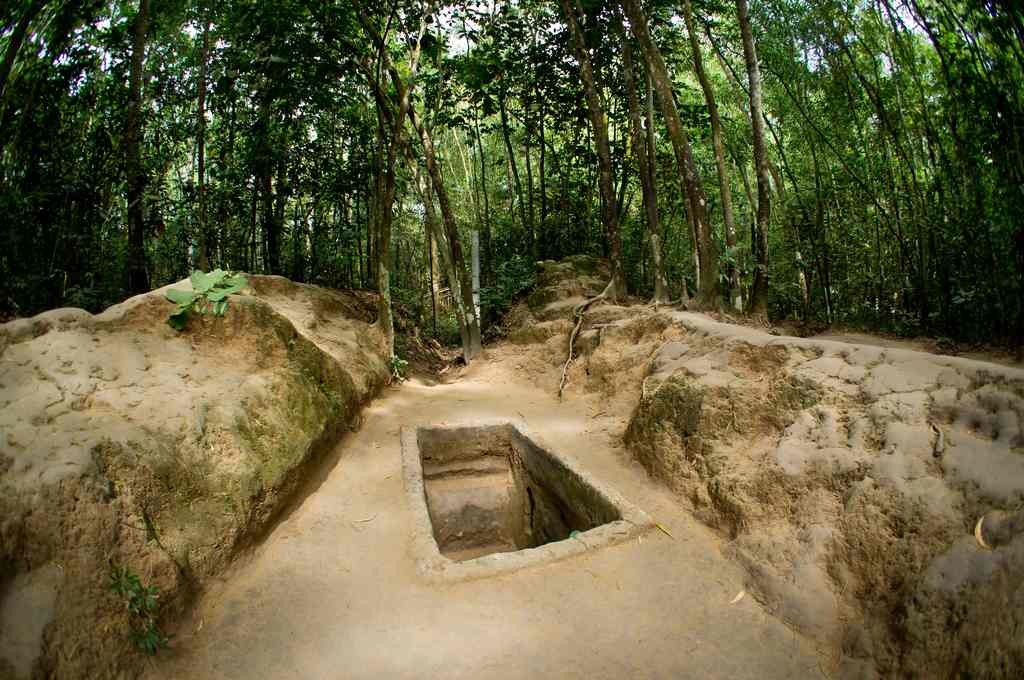

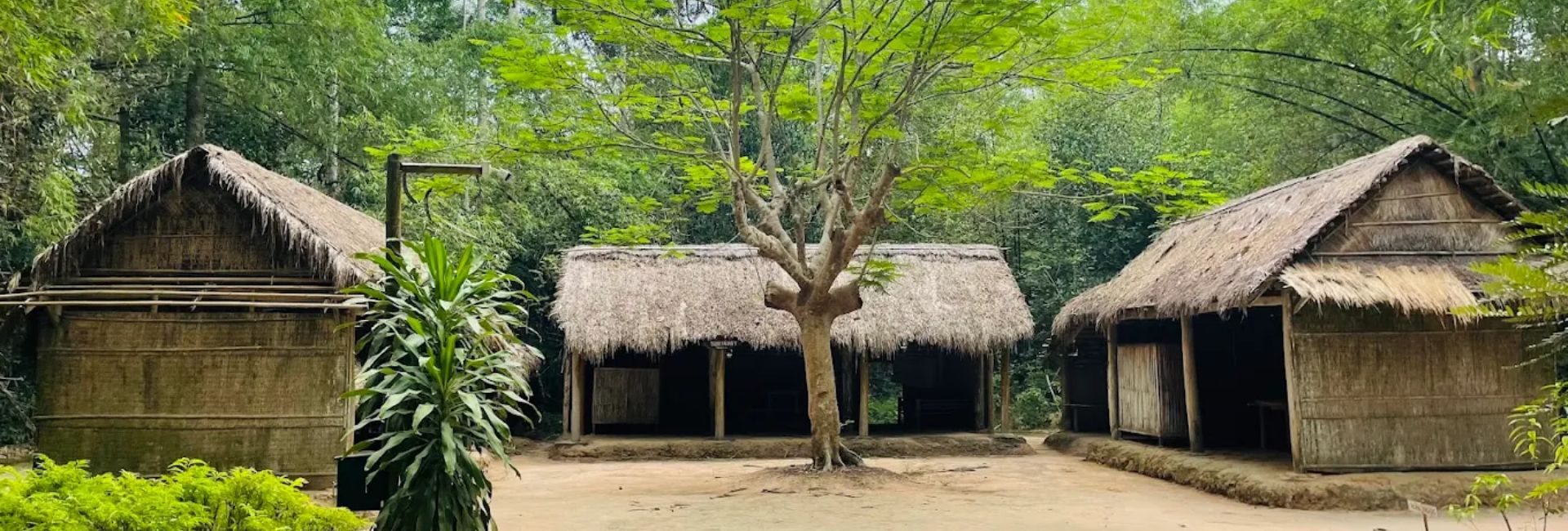
Just an hour and a half from Ho Chi Minh City, the Cu Chi Tunnels are one of Vietnam’s most fascinating wartime landmarks. This intricate underground network once stretched over 250 kilometers and played a key role in the Vietnam War, serving as living quarters, supply routes, and hideouts for Vietnamese soldiers. Today, it’s a popular half-day destination where you can step into a piece of history.
What can you find in this travel blog?
- History of the Cu Chi Tunnels
- A Revealed Secret in Cu Chi Tunnels You Shouldn’t Miss
- Is It Worth Visiting the Cu Chi Tunnels?
- Suggested Half-Day Itinerary
- Tips for Visiting Cu Chi Tunnels
History of the Cu Chi Tunnels
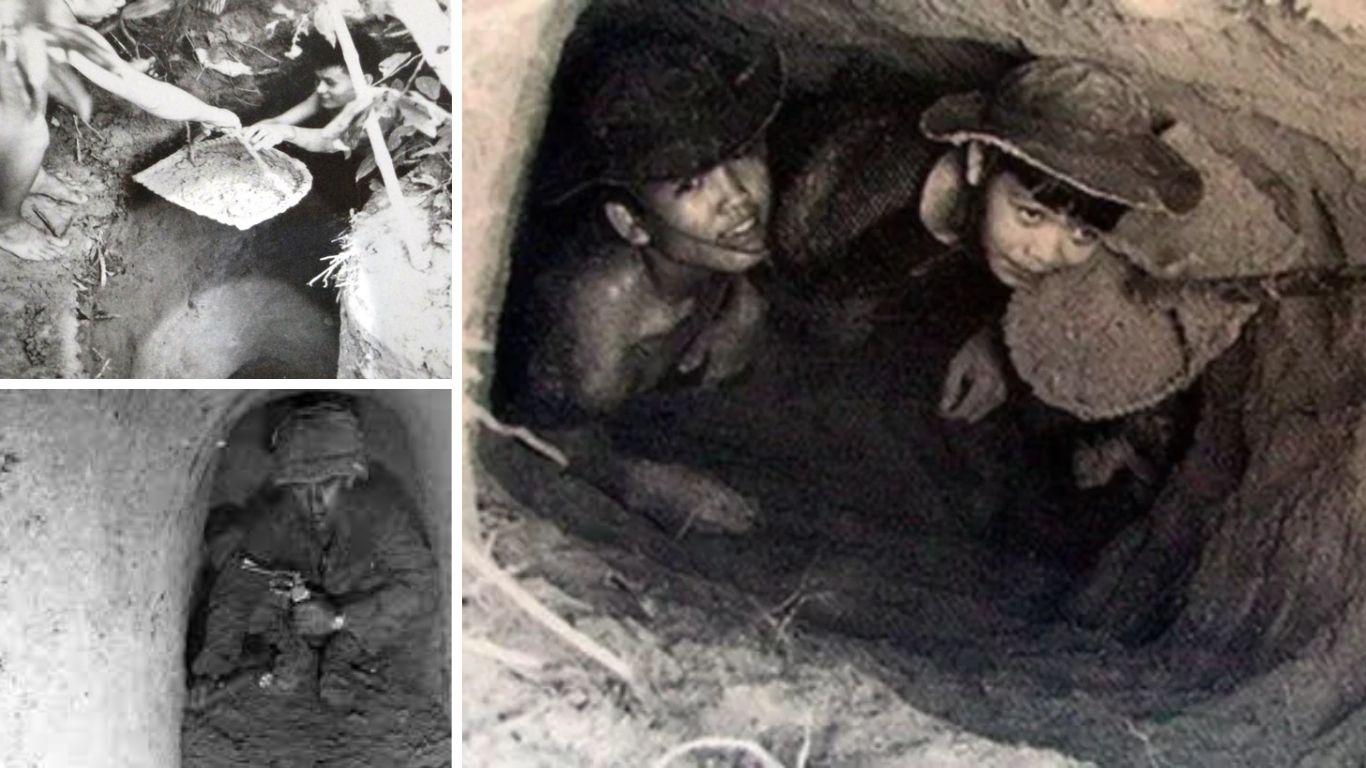
Built in stages starting in the late 1940s during the resistance against the French, the tunnels were later expanded during the American War. They became a vital part of the Viet Cong’s strategy, allowing fighters to hide, move unseen, and launch surprise attacks. Life underground was incredibly harsh, with limited food, poor ventilation, and constant threats of discovery. Despite all that, these tunnels became a symbol of resilience and ingenuity.
How to Get to Cu Chi Tunnels from Ho Chi Minh City
- By Bus: Take bus #13 or #79 from Ben Thanh or Cho Lon bus stations. It’s the cheapest option but takes around 2.5 hours.
- By Taxi or Private Car: Comfortable and faster (about 1.5 hours). Good if you’re traveling with family.
- By Tour: The most hassle-free. Most day tours include round-trip transfers, a guide, and entry tickets. Look for small group options for a more personal experience.
Tickets and Visiting Time
- Ticket price: Around 110,000 VND (subject to change)
- Opening hours: 7:00 AM – 5:00 PM daily
- Time needed: Around 2.5–3 hours on-site, plus travel time. Perfect for a half-day trip.
💡Note: You can pay in cash (VND), and some ticket counters accept credit cards. Always bring some cash for drinks or souvenirs, just in case.
A Revealed Secret in Cu Chi Tunnels You Shouldn’t Miss
A visit to Cu Chi isn’t just about crawling through tunnels. It’s a hands-on experience that blends history, emotion, and even a little adrenaline.
Inside the Tunnels
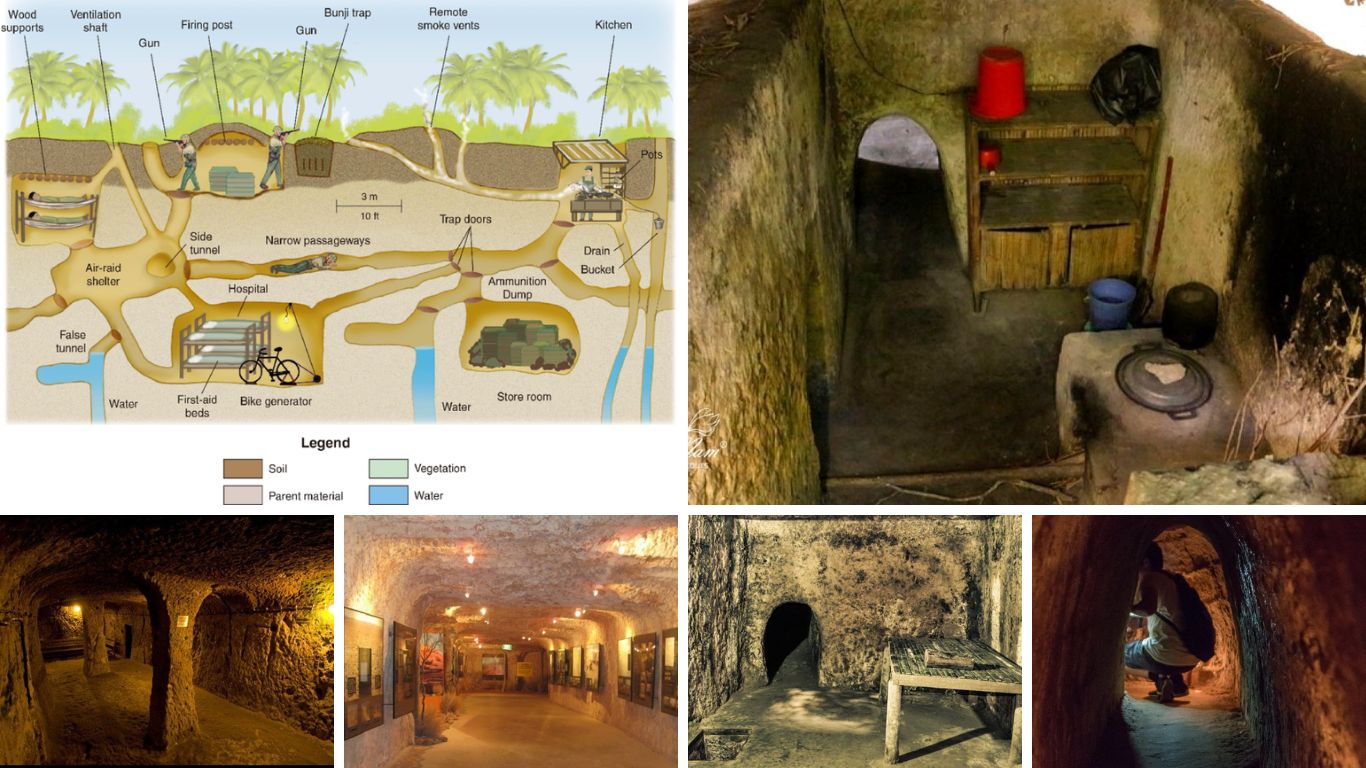
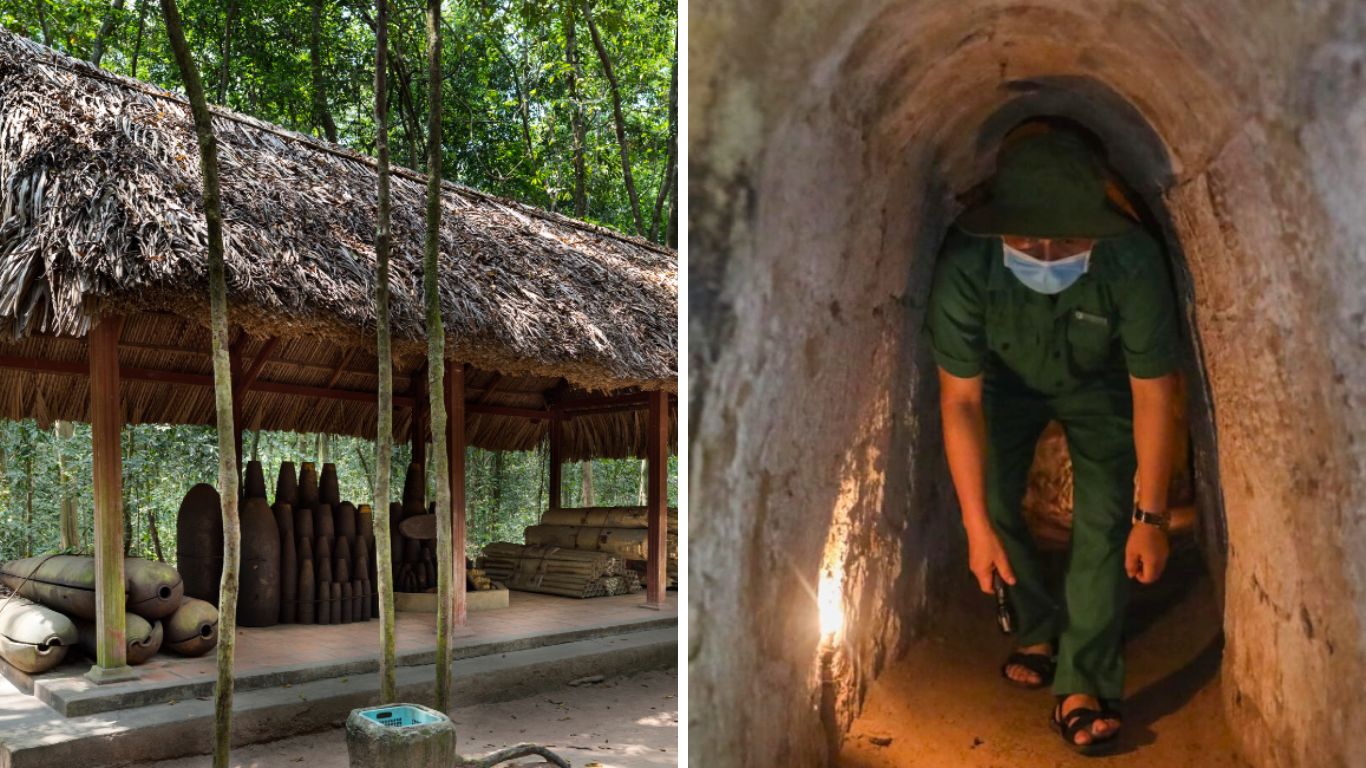
You can enter reconstructed sections of the original tunnels, which have been widened slightly for tourists but are still incredibly narrow. Some are just 0.8 to 1.2 meters wide!
When you go underground at Cu Chi, you’re stepping into a wartime world that was hidden in plain sight. The tunnel system wasn’t just for hiding or moving around—it was a full underground community designed to sustain life during long stretches of conflict.
Here’s what you’ll find inside:
- Living Quarters: Small chambers where Viet Cong soldiers slept, ate, and planned their next moves. These rooms were dark, hot, and cramped, but they were safe from enemy air raids.
- Meeting Rooms & Command Centers: Strategically built spaces where military plans were discussed and coordinated. Some even had simple furniture and maps.
- Field Hospitals: Medical rooms where injured soldiers were treated. Conditions were extremely basic, they only had bamboo stretchers, minimal lighting, and herbal remedies, but they kept fighters alive and in the fight.
- Kitchens with Smoke Dispersal Systems: Called Hoang Cam kitchens, these clever setups cooked food while redirecting smoke through long, camouflaged vents, so U.S. planes couldn’t detect the source.
- Weapon Storage Rooms: Secure nooks to store rifles, explosives, and ammunition. Some areas even displayed how local fighters recycled bomb fragments into functional weapons.
- Escape Routes: Secret pathways that led to rivers or forests, those are vital in case of sudden attacks. These exits were incredibly well hidden, even to this day.
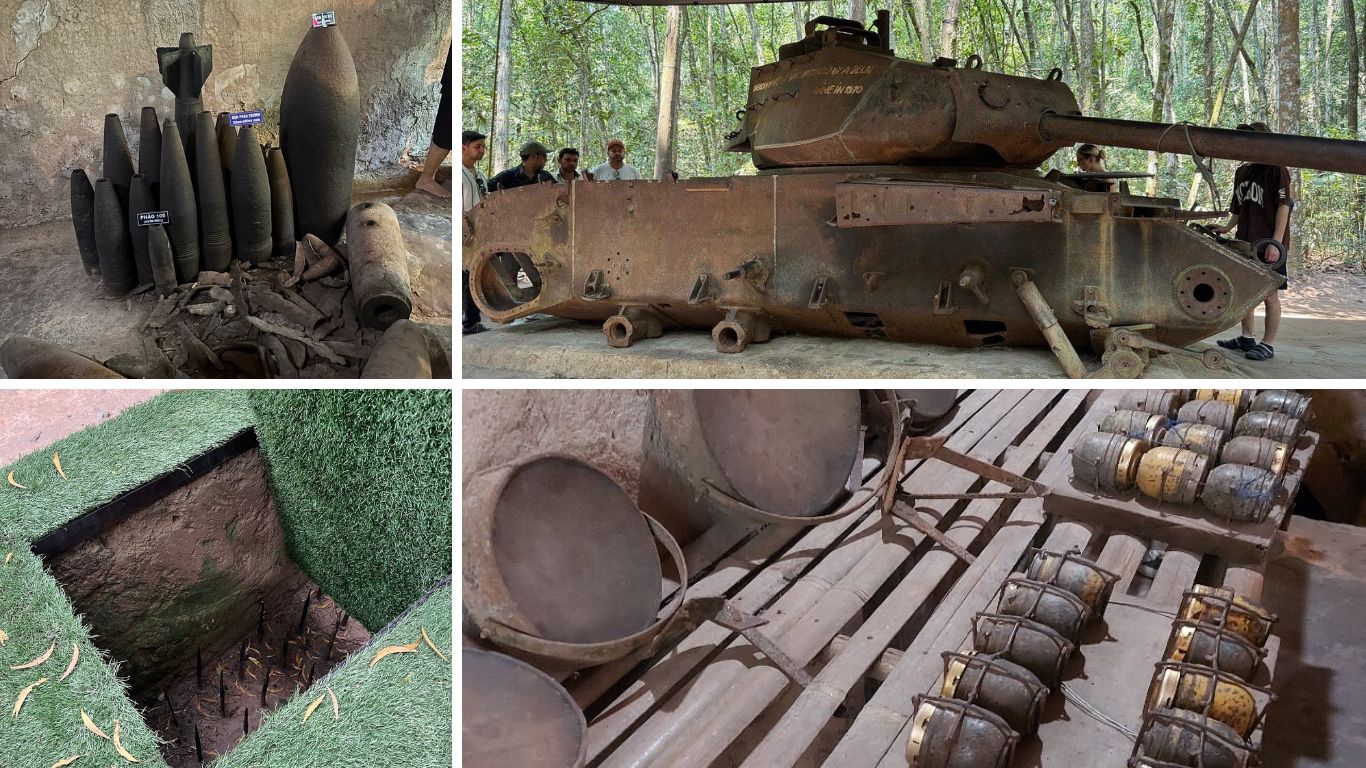
- Booby Traps and Defense Mechanisms: As part of the experience, you’ll see demonstrations of simple but deadly traps made from bamboo and metal. They show the resourcefulness and the harsh realities of guerrilla warfare.
Guides will often demonstrate how guerrilla traps worked, it’s gruesome but fascinating. You’ll hear stories of how entire communities lived underground for months.
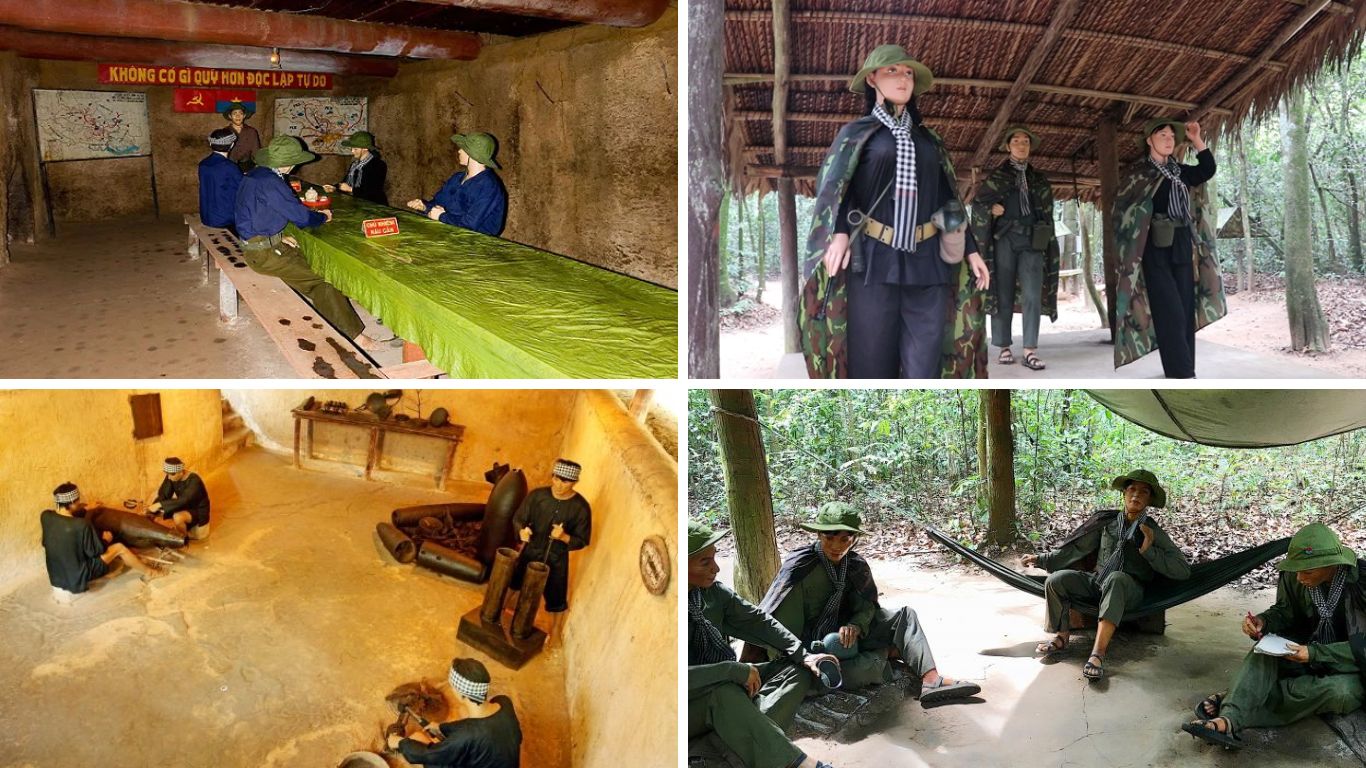
Must-See Stops Within the Complex
- The B52 Bomb Crater: A massive pit left behind by American bombing runs. It’s a striking reminder of the scale of destruction during the war and how close danger was to the tunnels.
- The Weapon Workshop: This area displays how Vietnamese fighters repurposed leftover U.S. weaponry and bombs into homemade arms, landmines, and traps using whatever materials they had.
- The Firing Range: A hands-on area (optional) where you can test-fire classic Vietnam War weapons like the AK-47, M16, and M60. Note: There’s an extra fee, and you must follow safety rules.
- Hoang Cam Kitchen: A clever innovation of the Viet Cong. These kitchens had a system of long chimneys that cooled the smoke so it would rise away from enemy detection. You’ll see mock-ups of the stoves and smoke tunnels.
- Trap Exhibit Area: A chilling yet fascinating display of the different types of booby traps used to slow or injure U.S. troops. Traps like the bamboo spike pit, rolling trap door, and spiked swinging logs are all explained and demonstrated.
Don’t worry, if you’re claustrophobic, most areas are optional. You can walk around above ground and still enjoy the entire experience.
Is It Worth Visiting the Cu Chi Tunnels?
Absolutely worth a try!! If you’re curious about Vietnam’s past or want something different from museums and pagodas. It’s a powerful place to learn about war from the Vietnamese perspective.
Who Should Visit?
- History lovers: You’ll get a ground-level view (literally!) of guerrilla warfare.
- Families: Kids aged 6+ often find it exciting. Teens love the tunnels and the firing range.
- Photographers: The scenes and settings are striking.
- Anyone looking for a unique, immersive experience
It might not be ideal for those with limited mobility or a strong fear of tight spaces. But there are still plenty of above-ground exhibits to enjoy.
Is It Family-Friendly?
Of course! Older kids often enjoy the excitement, and there are optional parts to skip for comfort. The site is not stroller or wheelchair accessible, though.
Suggested Half-Day Itinerary
A visit to the Cu Chi Tunnels usually lasts around 4–5 hours (including travel time), which leaves you with plenty of daylight to explore more of southern Vietnam. Here are a few ideas to complete your day:
- Option 1: Combine with a Mekong Delta Tour
If you’re up for more adventure, head southwest to the Mekong Delta. A half-day boat ride through coconut canals and local villages in Ben Tre offers a peaceful contrast to the wartime intensity of Cu Chi. - Option 2: Visit the War Remnants Museum in Ho Chi Minh City
After learning how the tunnels worked, the War Remnants Museum offers deeper insight into the Vietnam War, through powerful photos, war artifacts, and real aircraft and tanks. - Option 3: Explore District 1’s Hidden Cafes and Rooftop Bars
Back in Ho Chi Minh City? Wind down with a stroll around Dong Khoi Street or Nguyen Hue Walking Street, and enjoy a cold drink at a rooftop bar overlooking the city skyline. - Option 4: Visit the Independence Palace or Notre-Dame Cathedral
Both sites are in the heart of the city and easy to combine with your return trip. They offer more history, but in a very different (and more relaxed) setting.
Bonus stop: If you’re interested in something spiritual and unique, the Cao Dai Temple in Tay Ninh is about an hour away and can be combined with a morning Cu Chi visit.
Tips for Visiting Cu Chi Tunnels
Best Time to Visit
- Dry season (Dec–Apr) is most pleasant
- Early mornings or late afternoons help avoid heat and crowds
What to Wear
- Lightweight clothes you don’t mind getting dusty
- Closed-toe shoes (sneakers or trekking shoes are ideal)
- A hat, sunscreen, and water bottle
- Optional: flashlight or small towel for sweat
Cu Chi Tunnels aren’t just a tourist stop, they’re a deeply personal story of resilience. Visiting them helps you understand Vietnam beyond what you read in books or see in museums. Whether you crawl through the tunnels or stay above ground, the experience will stick with you.
Plan your visit with Vietnam Travel Online and discover not only the tunnels but the human stories that still echo through them today. Let us know if you have mobility or comfort concerns. Our guides will tailor the route for your group.