

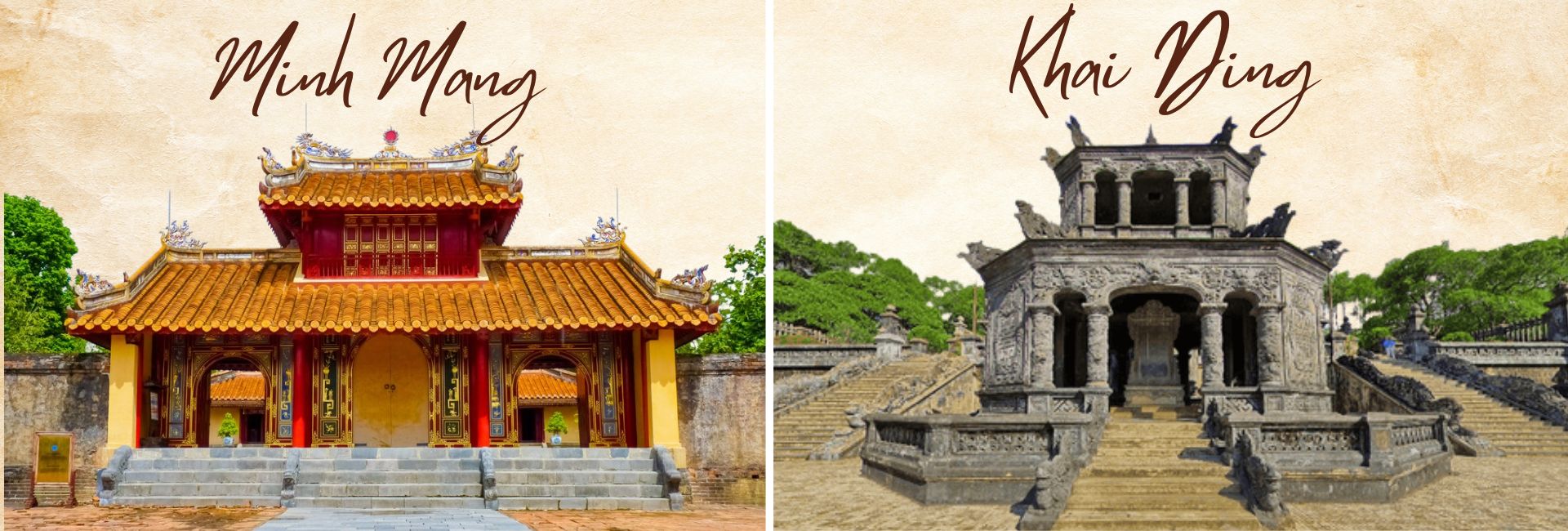
Just outside Hue’s ancient Citadel walls, two royal tombs sit quietly in the hills, each telling a completely different story. Minh Mang Tomb breathes tradition, symmetry, and Confucian calm. Khai Dinh Tomb dazzles with drama, mosaic grandeur, and a boldness that broke every royal convention before it. Visiting both in one trip isn’t just recommended; it’s the only way to truly feel how Vietnam’s imperial legacy evolved across centuries.
This guide walks you through everything: the history behind each emperor, what to expect on the ground, how to plan your visit practically, and what else is worth your time nearby.
What can you find in this travel blog?
- Minh Mang vs. Khai Dinh: Two Emperors, Two Very Different Tombs
- At a Glance: Minh Mang vs Khai Dinh
- Minh Mang Tomb: Where Peace and Symmetry Reign
- Khai Dinh Tomb: Bold, Unforgettable, and Unlike Anything Else
- Planning Your Visit: Everything Practical in One Place
- Why You Shouldn’t Miss either Minh Mang or Khai Dinh Tombs
- Ready to Make It Effortless?
- What to Explore Nearby
- FAQs
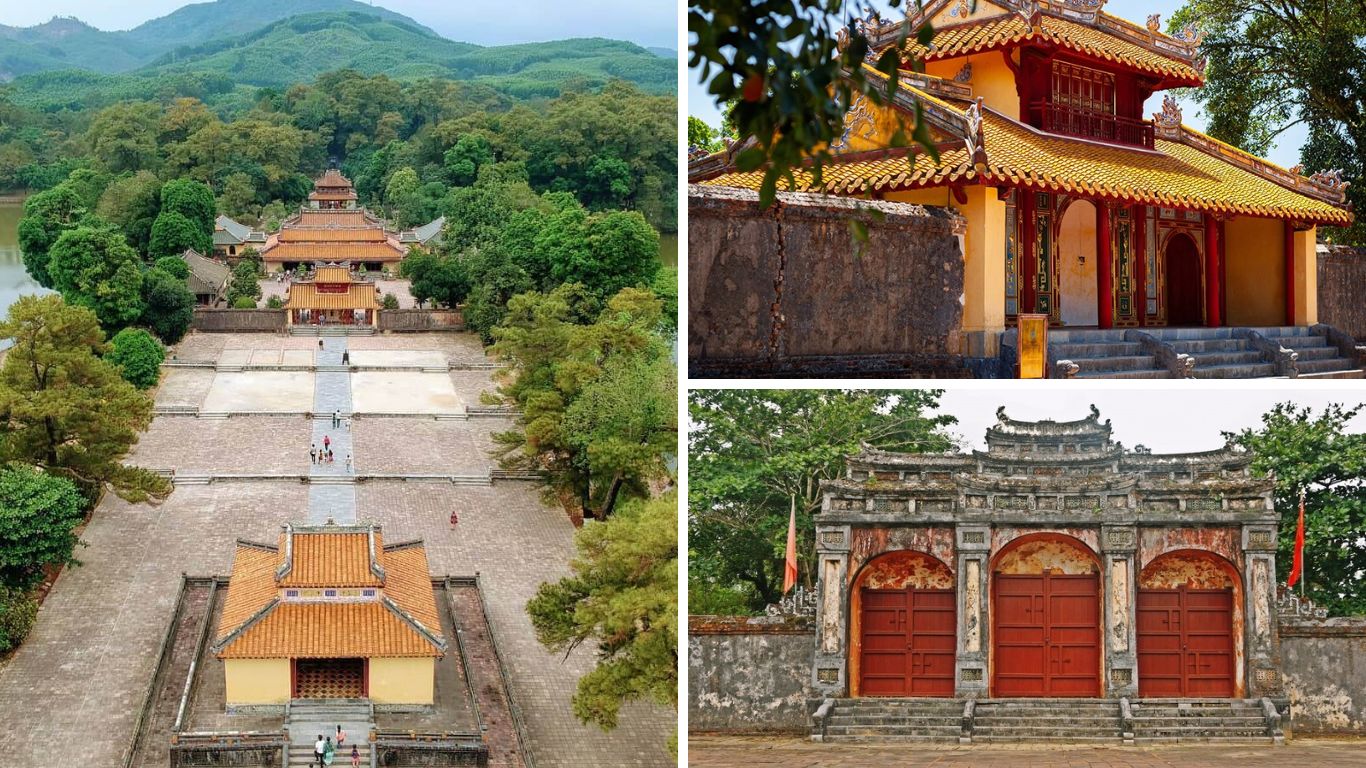
- Dai Hong Mon Gate: The ceremonial main entrance, opened only for the emperor’s funeral procession and now a striking frame for photographs.
- Stele Pavilion: Houses the stone stele inscribed with Minh Mang’s biography, written by his successor.
- Sung An Temple: The main place of worship, where the emperor and his queen are honored with offerings to this day.
- Bright Lake and the Three Bridges: The most photographed spot in the complex, especially beautiful in early morning light when the mist sits low over the water.
- Circular Tomb Mound: The innermost and most solemn area, enclosed by a crescent-shaped wall and surrounded by dense forest.
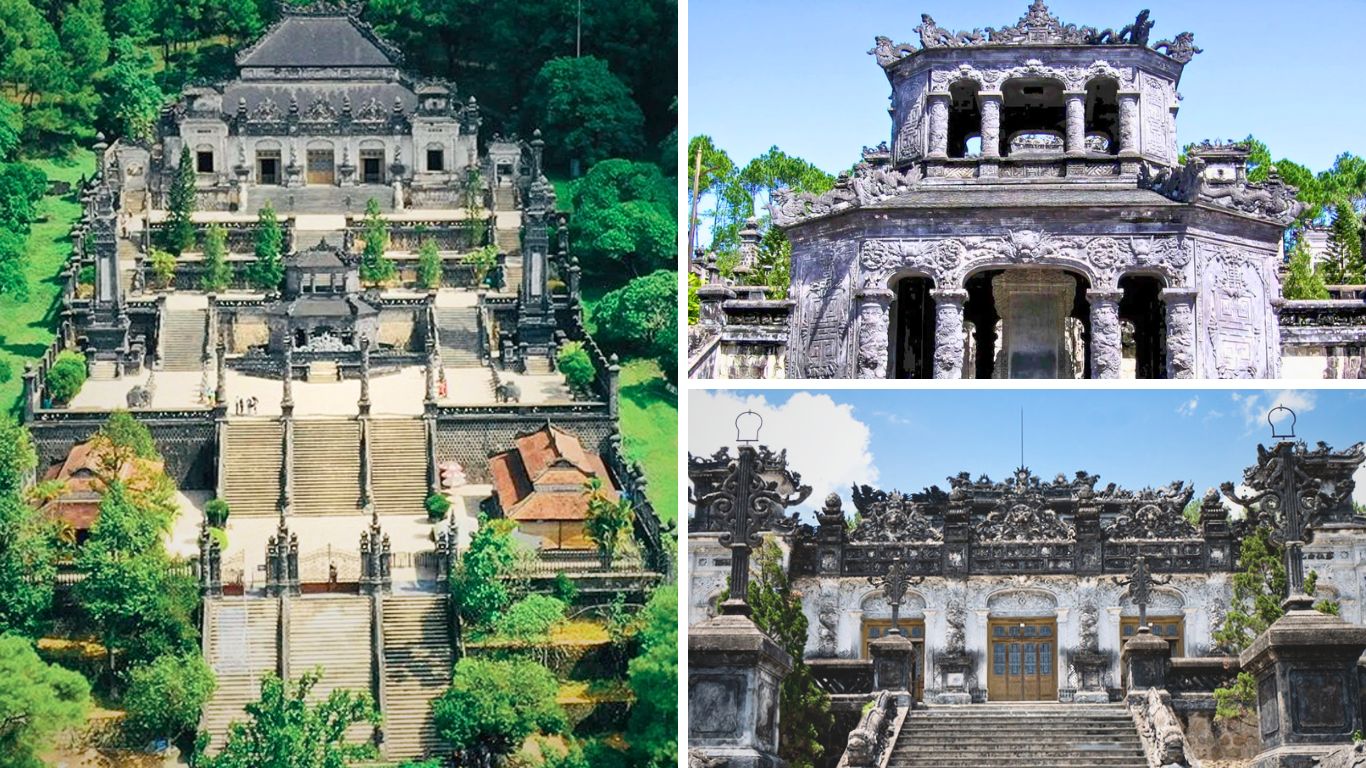
- Dragon Staircase: The grand entrance, flanked by fierce stone dragons. It’s one of the most striking photo opportunities before you even enter.
- Honor Courtyard: Rows of stone mandarins, horses, and elephants stand in solemn formation, a tradition borrowed from Chinese imperial tombs.
- Thien Dinh Palace: The crown jewel. Every centimeter of the interior walls and ceiling is covered in hand-crafted glass and porcelain mosaics, depicting dragons, phoenixes, and celestial scenes in extraordinary detail.
- Royal Statue and Sarcophagus: Khai Dinh’s bronze likeness sits beneath a painted celestial dome. The emperor’s remains lie directly beneath the statue, seven meters underground.
Minh Mang vs. Khai Dinh: Two Emperors, Two Very Different Tombs
Before you set foot on either site, knowing the men behind the monuments makes every detail richer and more meaningful.
Minh Mang: The Philosopher King
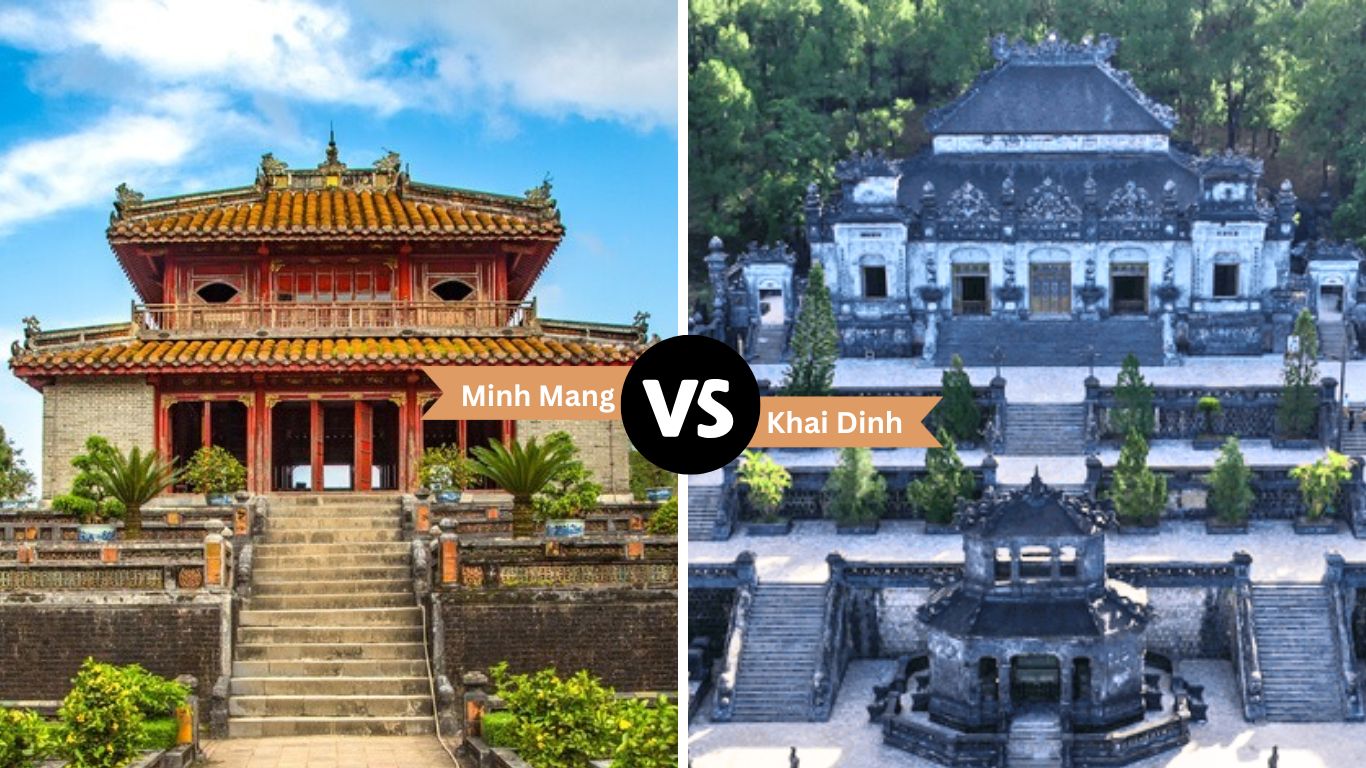
Emperor Minh Mang ruled from 1820 to 1841 and is widely regarded as one of the Nguyen Dynasty’s most capable rulers. A devout Confucian, he valued order, scholarship, and national unity above all else. His tomb, built between 1840 and 1843, mirrors that worldview perfectly: symmetrical gardens, reflective lakes, and a strict central axis that guides you from entrance to resting place in one unbroken line of intention. Walking through it feels less like sightseeing and more like stepping inside a philosophy.
Khai Dinh: The Rule-Breaker
Emperor Khai Dinh ruled from 1916 to 1925 during the height of French colonial influence, and his reign remains one of the most debated in Vietnamese history. His tomb, constructed between 1920 and 1931, reflects exactly that tension: Gothic arches meet dragon motifs, porcelain mosaics crowd every surface, and the whole structure climbs dramatically up Chau Chu Mountain. It is smaller than most royal tombs but impossible to forget. Khai Dinh wanted to stand apart from every emperor before him, and he succeeded completely.
At a Glance: Minh Mang vs Khai Dinh
Both tombs are part of the Hue Imperial Complex, a UNESCO World Heritage Site, yet they feel like they belong to entirely different worlds. Here’s a quick comparison to help you plan:
| Feature | Minh Mang Tomb | Khai Dinh Tomb |
|---|---|---|
| Style | Traditional Vietnamese, Confucian symmetry | East-meets-West fusion |
| Atmosphere | Peaceful, green, poetic | Grand, dramatic, visually striking |
| Opening Hours | 7:00 AM – 5:30 PM | 7:00 AM – 5:30 PM |
| Single Ticket | ~150,000 VND | ~150,000 VND |
| Combo Ticket | Covers both + Tu Duc + Imperial Citadel, valid 2 days | Same combo |
| Distance from Hue center | ~12 km southwest | ~10 km south |
| Physical Effort | Easy, flat walking paths | Steep staircases |
| Best For | Quiet beauty, nature, reflection | Bold design, photography, drama |
| Recommended Time | 45 to 60 minutes | 30 to 45 minutes |
| Accessibility | Suitable for most visitors | Challenging for elderly or mobility-limited |
Ticket prices are approximate and subject to change. Check locally or ask our team when booking your private Hue day tour.
Minh Mang Tomb: Where Peace and Symmetry Reign
If you’re looking for a place to slow down and actually feel Hue rather than just photograph it, Minh Mang is your answer. Set among pine trees, lotus ponds, and layered gardens, this tomb is a masterpiece of traditional Vietnamese landscape design.
A Garden of Thoughtful Design
Built between 1840–1843, Minh Mang Tomb perfectly reflects the emperor himself as a reserved and philosophical ruler with a deep love for structure and beauty. Set among pine trees, lotus ponds, and forested hills, the tomb is arranged along a perfectly straight axis. It starts from the Honor Courtyard to the crescent-shaped lake where he rests.
You’re not just walking through architecture here; you’re walking through a worldview that values order, balance, and deep spiritual calm.
What to See Inside
Every element here is intentional, and moving through the site from front to back is the best way to experience it:
Why You Shouldn’t Miss It
Minh Mang Tomb offers serenity in every step. If you seek quiet beauty, historical depth, and traditional Vietnamese design surrounded by nature, this is your place.
Whether it’s your first time in Hue or your fifth, Minh Mang provides a sense of escape — a place to breathe, reflect, and step back into a different rhythm.
Photo Tip
Come early. Soft morning light hits the bridges and lake reflections perfectly, and you’ll have the paths mostly to yourself before the tour groups arrive. Wide-angle shots along the central axis capture the full sense of symmetry that defines this place.
Khai Dinh Tomb: Bold, Unforgettable, and Unlike Anything Else
No other royal tomb in Vietnam looks anything like this. Khai Dinh breaks every convention of traditional Vietnamese funerary architecture, and that is precisely what makes it so compelling. The climb up the staircases alone sets the tone: steep, ceremonial, and lined with stone guardians watching your every step.
A Fusion of East and West
Built between 1920–1931, Khai Dinh Tomb is smaller in size but overwhelming in detail. It climbs dramatically up Chau Chu Mountain, offering sweeping views from its staircases and terraces.
Inside, Thien Dinh Palace is an explosion of color and texture, walls and ceilings adorned with glass mosaics, porcelain dragons, and gold-painted reliefs. It’s part Gothic cathedral, part royal shrine, and fully unique.
Khai Dinh was the last emperor to build his own tomb, and he made sure it would stand apart from every ruler before him.
What to See Inside
Every level of this tomb reveals something new, so take your time working your way up:
Why You Shouldn’t Miss It
If you’re drawn to the unusual and unforgettable, Khai Dinh Tomb is a visual and historical feast. It’s perfect for travelers who love design, contrast, and a bit of edge to their heritage sites.
Even those less into history often walk away impressed by its craftsmanship and sheer unexpectedness.
Photo Tip
Overcast or diffused light works best to highlight the mosaic colors without harsh glare. Be sure to capture the symmetry of the staircases and the dramatic ceiling above the emperor’s altar.
Planning Your Visit: Everything Practical in One Place
A little preparation goes a long way in making your day comfortable, especially during Hue’s hot and humid months from May through August.
Getting There from Hue City Center
Both tombs are accessible from Hue’s center by Grab (Vietnam’s ride-hailing app), private car, or motorbike rental. A Grab ride to Minh Mang costs roughly 80,000 to 120,000 VND one way, and to Khai Dinh around 70,000 to 100,000 VND. If you’re booking a private Hue day tour, transport between all sites is handled for you, which makes the logistics far easier, particularly in peak heat.
Visit Order and Timing
Start at Minh Mang in the morning when the light is soft and the atmosphere is at its most meditative. After a local lunch, head to Khai Dinh in the early afternoon when you’re energized enough to tackle the staircases. This order also keeps you out of the peak midday heat at the more physically demanding site.
What to Wear
Light, breathable clothing works best given Hue’s humidity. Comfortable walking shoes are essential, especially for Khai Dinh’s stairs. Pack sunscreen, a hat, and a refillable water bottle. Respectful attire is appreciated at both sites as they remain active places of historical and spiritual significance.
Why You Shouldn’t Miss either Minh Mang or Khai Dinh Tombs
Minh Mang and Khai Dinh Tombs are like two sides of the same imperial coin.
Minh Mang speaks of tradition, nature, and quiet grandeur. Khai Dinh shouts modernity, extravagance, and fearless individuality. Seeing both in one trip lets you witness the evolution of the Vietnamese royal style and feel the contrast between two emperors who ruled in very different times.
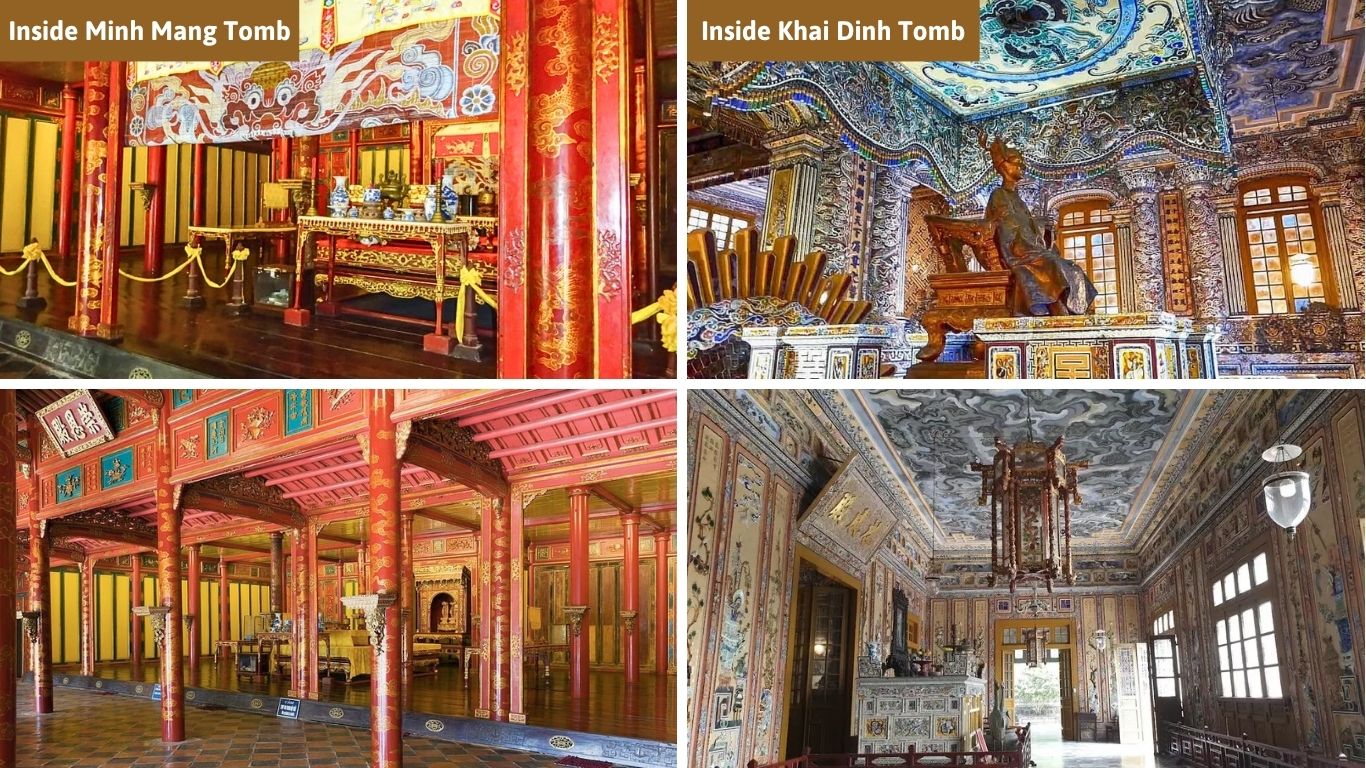
So don’t choose one over the other. Choose both, and let their stories guide you through Hue’s imperial legacy. Have a quick look, and you will get it easier:
|
Feature |
Minh Mang Tomb |
Khai Dinh Tomb |
| Style | Traditional Vietnamese with Confucian symmetry and nature | Unique blend of Eastern and European-style architecture |
| Atmosphere | Peaceful, green, poetic | Grand, dramatic, visually striking |
| Physical Effort | Gentle walking paths | Steep staircase to the top |
| Best For | Those who enjoy quiet beauty, history, and nature | Travelers who love bold design, details, and photography |
| Recommended Visit Time | 45–60 minutes | 30–45 minutes |
Which One to Visit First?
We recommend starting your day at Minh Mang Tomb when it’s cooler and quieter, especially if you enjoy a gentle, reflective stroll. Then, move to Khai Dinh Tomb, where the bold interiors are best appreciated when you’re energized.
If you’re visiting during hotter months (May–August), this order also helps you avoid climbing Khai Dinh’s stairs in the peak heat.
Ready to Make It Effortless?
Hue’s royal tombs are stunning on their own, but having a knowledgeable local guide beside you transforms a sightseeing day into something genuinely memorable. Our team at Vietnam Travel Online specializes in private, customized Hue experiences that go beyond the standard route. From private transport and skip-the-queue tickets to expert storytelling at every gate and courtyard, we handle every detail so you can simply absorb it all.
Reach out to us at vietnam@indochinavoyages.com or visit our contact page to start planning your Hue itinerary.
What to Explore Nearby
Once you’ve covered both tombs, this corner of Hue has more to offer than most visitors realize. The surrounding countryside holds some of the city’s most authentic and unhurried experiences, well worth lingering for rather than rushing back.
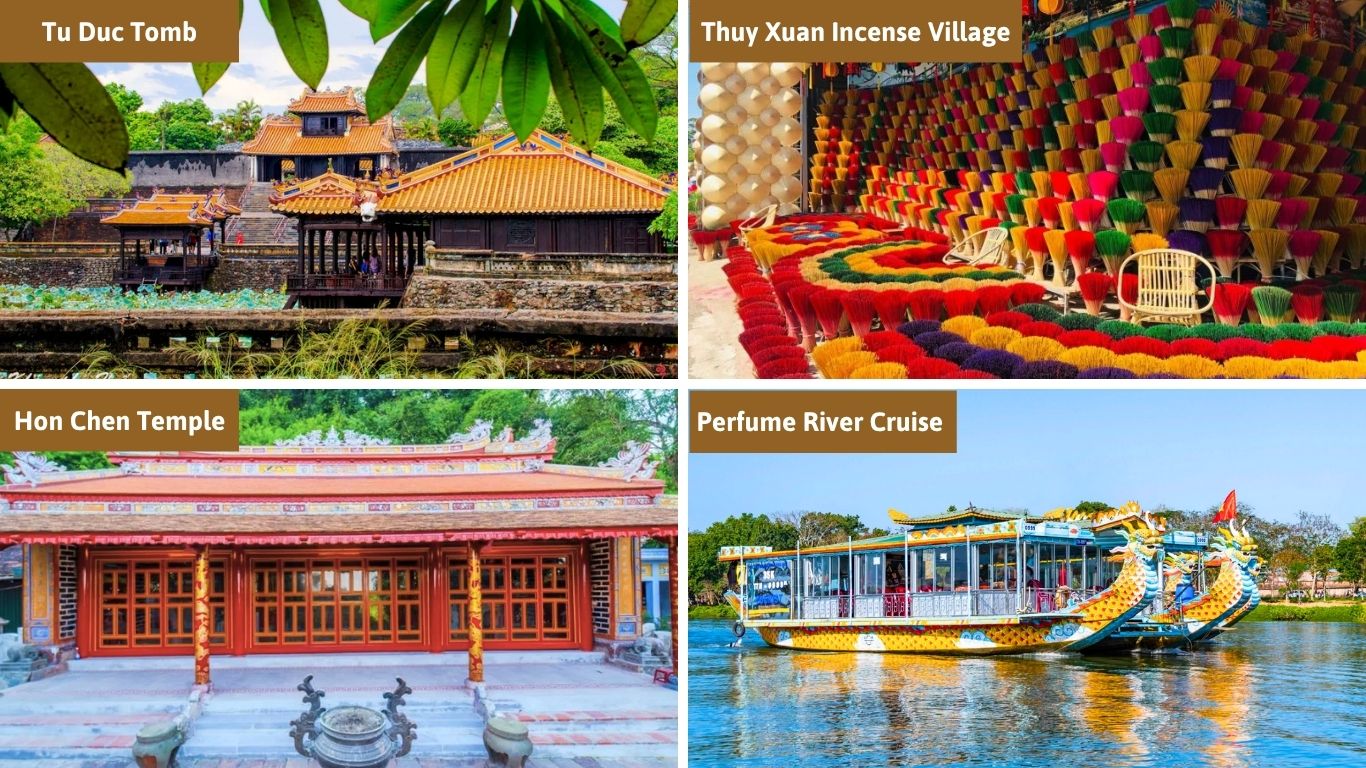
Tu Duc Tomb: The Emperor’s Poetic Retreat
About 5 to 6 km from Khai Dinh, Tu Duc Tomb is a world of pine trees, lotus ponds, and pavilions built for an emperor who spent more time writing poetry than governing. If Minh Mang felt meditative, Tu Duc feels melancholic in the most beautiful way. Late afternoons here are especially quiet and worth the extra hour.
Thuy Xuan Incense Village: Color, Craft, and Fragrance
On the road between Khai Dinh and Hue city, Thuy Xuan is one of Hue’s most photogenic living-culture stops. Bundles of vividly colored incense sticks are fanned out to dry in the sun, and local artisans are usually happy to show you how they’re made. The scent of cinnamon and agarwood lingers in the air long after you leave.
Thien Mu Pagoda: Hue’s Most Iconic Silhouette
Standing on a bluff above the Perfume River, Thien Mu Pagoda is one of Vietnam’s most recognizable landmarks. Its seven-story tower has stood since 1601 and carries centuries of religious and political history within its walls. Combine it naturally with a Perfume River boat ride for one of Hue’s most iconic half-day experiences.
Perfume River Cruise: A Slower, Softer Way Back
Rather than heading straight back to the city by car, consider a dragon boat ride along the Perfume River. Some private boats can be arranged to pick you up near the tomb area or at Thien Mu Pagoda and drop you back in the city center, floating past riverside pagodas, villages, and forested hills along the way. It’s an unhurried and genuinely lovely way to close out the day.
Dong Ba Market: Where Hue Comes Alive After Sundown
If you’re spending the evening in the city, Dong Ba Market is where locals shop, eat, and gather. Come for bun bo Hue, banh khoai, and fresh fruit, and stay for the energy of one of Central Vietnam’s busiest and most colorful markets.
FAQs
Can you visit both tombs in one day? Absolutely. Most visitors comfortably cover both within a half-day, especially with private transport arranged in advance.
Which tomb is better for photography? Both reward photographers differently. Minh Mang’s lakes and bridges shine in soft morning light, while Khai Dinh’s mosaics and staircases are best on overcast afternoons.
Are the tombs suitable for elderly visitors or those with limited mobility? Minh Mang is largely flat and accessible for most. Khai Dinh involves long, steep staircases and can be challenging; it’s worth knowing before you go.
Is a private guide worth it? Very much so. The symbolism embedded in both sites goes far beyond what you can read on a sign, and a good local guide brings the emperors and their stories to life in a way that sticks with you.
Make Your Hue Day Count
Minh Mang chose harmony. Khai Dinh chose grandeur. Together, they tell the full arc of Vietnam’s imperial story, and no single day in Hue captures that story better than one spent moving between these two remarkable places.
Whether you’re planning a first visit or returning to go deeper, our team can craft a private Hue itinerary built entirely around your pace and interests. Browse our Vietnam tours or get in touch directly at Vietnam Travel Online, and let’s build something worth remembering.