

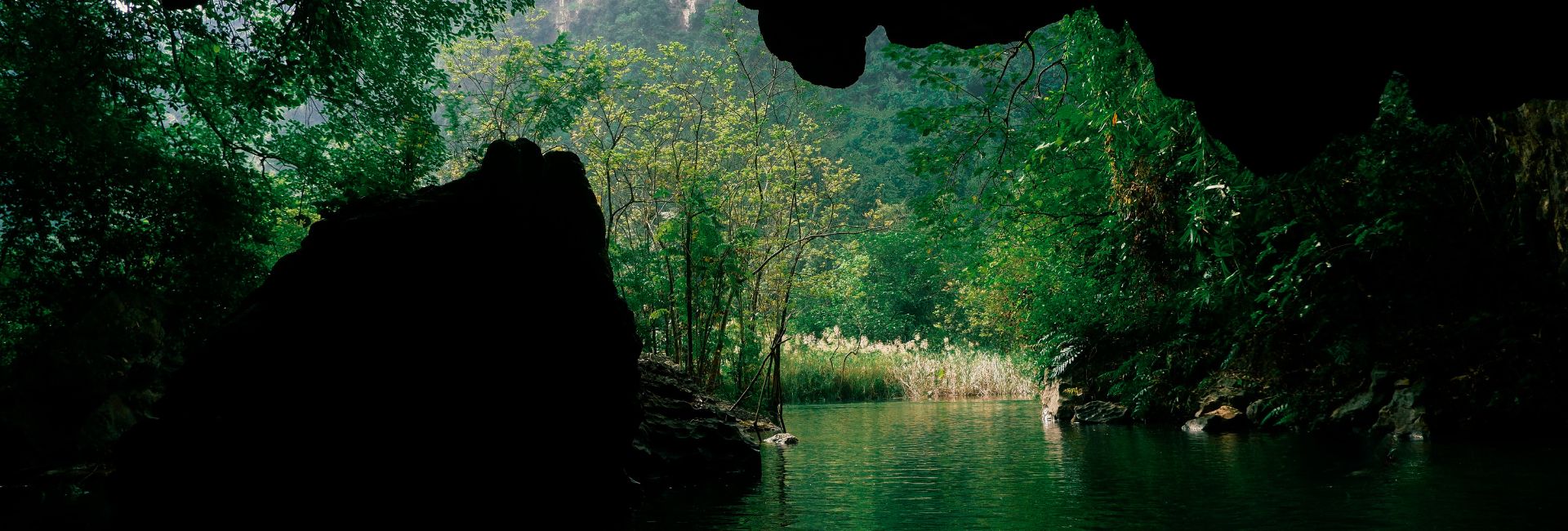
Deep in the jungles of central Vietnam lies a place that genuinely defies imagination. Son Doong Cave isn’t just the world’s largest cave. It’s an entirely separate world underground, complete with its own weather, its own jungle, and species found nowhere else on Earth. Whether you’ve stumbled across a breathtaking photo or been planning this trip for years, this guide covers everything you need to know before you go.
What can you find in this travel blog?
- Things You Need to Know about Son Doong Cave
- What Will You See Inside Son Doong?
- How to Visit Son Doong Cave
- How Long Does It Take to Explore Son Doong?
- Things to Prepare for Son Doong
- Best Time to Visit Son Doong
- Other Spots to Explore Near Son Doong
- FAQs
Things You Need to Know about Son Doong Cave
Size & World Record Status
Son Doong holds the title of the world’s largest natural cave passage, and it isn’t even close. Its main chamber stretches 9 kilometres long, reaches up to 200 metres high, and spans 150 to 200 metres wide. That’s large enough for a Boeing 747 to fly through without touching the walls. To put it another way, the Empire State Building could fit inside with room to spare. Furthermore, the cave claimed the world record in 2009, dethroning Malaysia’s Deer Cave, and no discovery since has come anywhere close to matching it.
Where is Son Doong Cave Located?
Son Doong sits within Phong Nha-Ke Bang National Park in Quang Binh Province, central Vietnam, roughly 500 kilometres south of Hanoi and 200 kilometres north of Hue. The nearest town is Phong Nha, which serves as the base for all expeditions. As a UNESCO World Heritage Site, the national park ranks among the oldest and most extensive karst mountain systems in all of Asia.
In other words, you’re not just visiting a cave. You’re stepping into one of the most geologically significant landscapes on the planet.
How to Get to Son Doong Cave
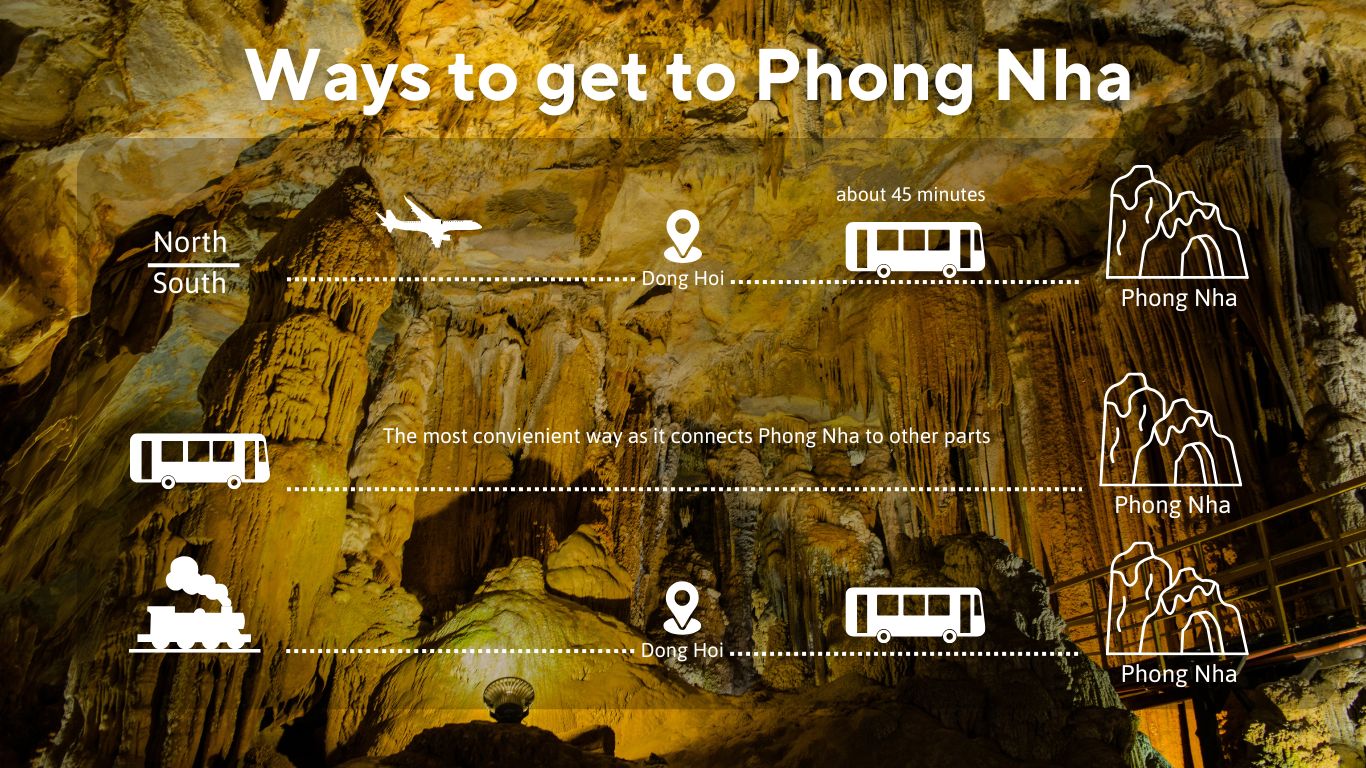
Dong Hoi is the gateway city to Phong Nha and the starting point for all Son Doong expeditions. Fortunately, there are two practical and comfortable ways to reach it from Vietnam’s major cities. From Dong Hoi, Phong Nha sits approximately 45 kilometres away, around a 45-minute drive through the countryside. Better still, our expedition package includes return transfers between Dong Hoi and Phong Nha, so no separate arrangement is needed once you’ve confirmed your booking with us.
How Was Son Doong Discovered?
The story of Son Doong’s discovery is as extraordinary as the cave itself. Local farmer Ho Khanh first stumbled upon the entrance in 1991 while sheltering from a storm deep in the jungle. The steep drop and the roar of the underground river were so intimidating that he fled and didn’t return for nearly two decades. It wasn’t until 2009 that a British caving team led by Howard Limbert fully explored and mapped the cave, finally revealing its true scale to the world. What they found, as a result, left the global scientific community completely speechless.
What Will You See Inside Son Doong?
No photograph fully prepares you for what waits inside. Son Doong isn’t a cave you simply walk through. Instead, it’s a place that unfolds new wonders around every corner, and here’s what you can expect to encounter.
The Underground Jungle
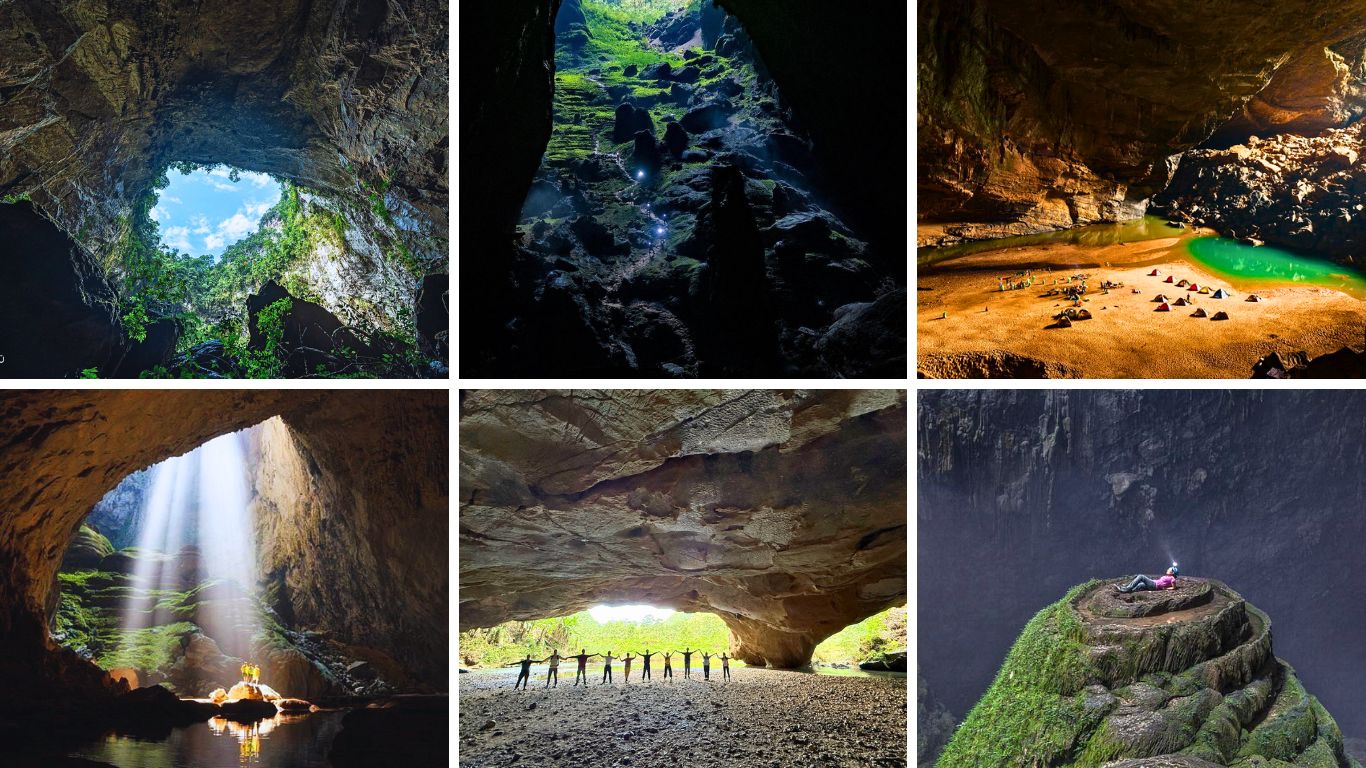
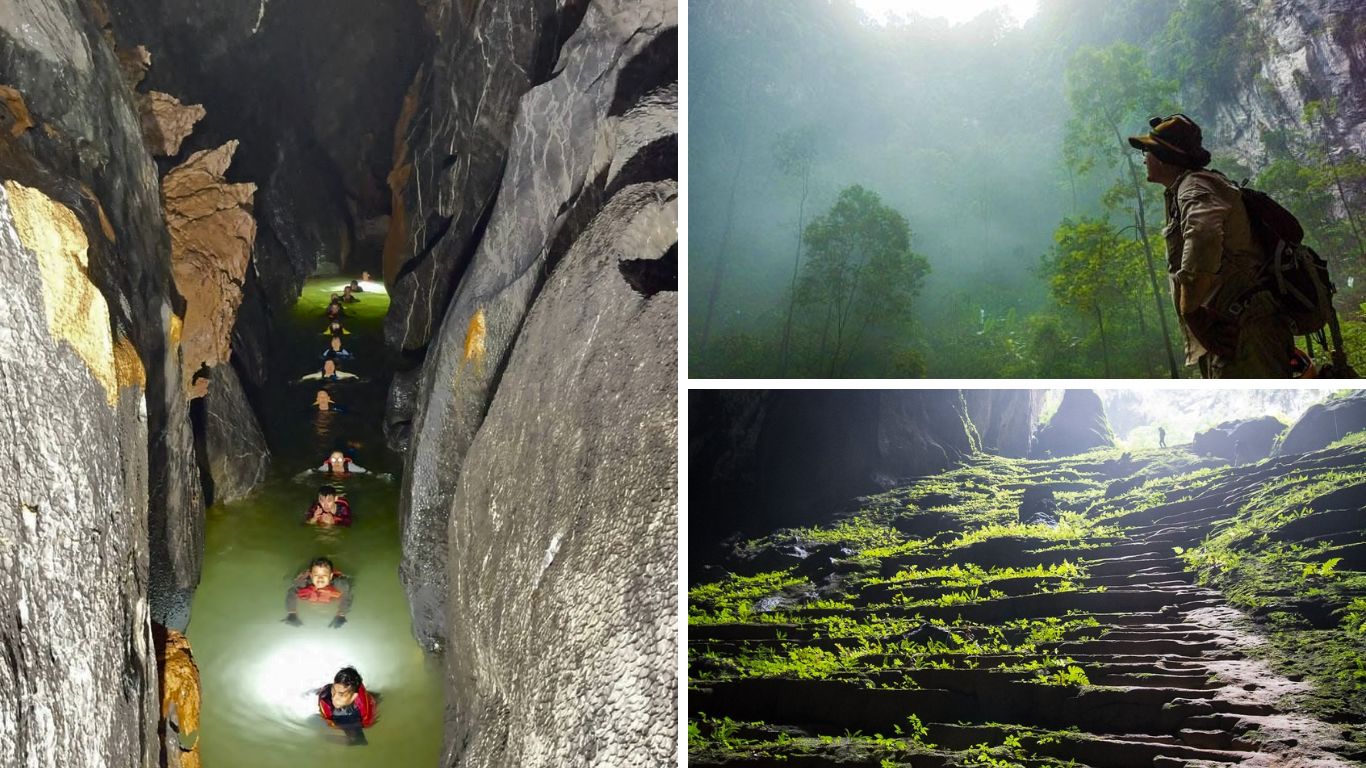
Beneath two massive ceiling collapses, enough sunlight pours in to sustain a fully self-contained tropical rainforest growing right on the cave floor. Trees reach 30 metres tall, clouds form at ground level in the early morning, and the calls of birds and monkeys echo through the darkness around you. Explorers have nicknamed it the Garden of Eden. Once you’re standing inside it, staring up at a jungle canopy growing beneath the earth, the name makes complete sense.
The Dolines (Skylights)
The dolines are the collapsed sections of the cave ceiling that allow light and life to penetrate the darkness below. Son Doong has two of them, and each one creates a dramatic shaft of sunlight cutting through the cave’s misty atmosphere. These are the moments that produce Son Doong’s most iconic photographs. Picture beams of golden light piercing through cloud into an ancient underground world that feels completely untouched by time.
Cave Pearls & Stalactites
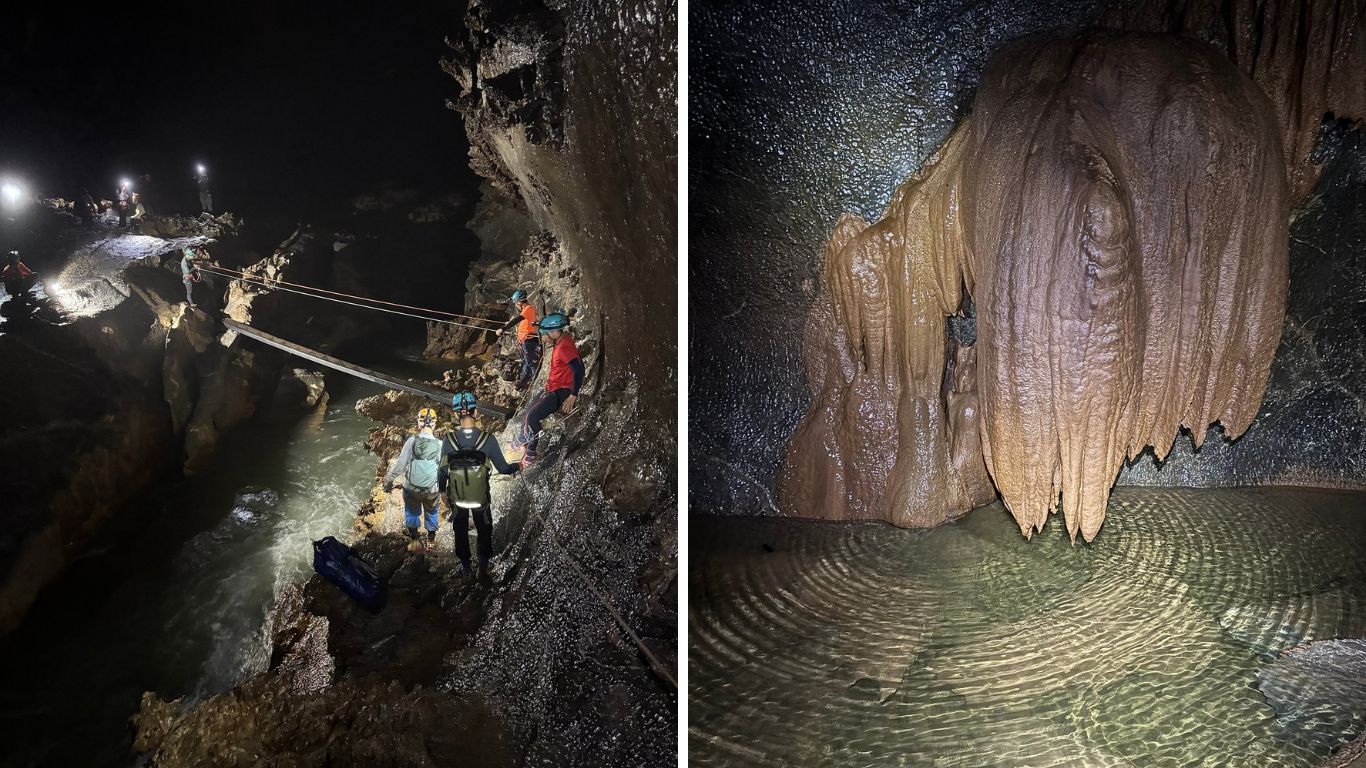
Son Doong contains some of the largest cave pearls ever documented anywhere on Earth. Mineral-rich water drips repeatedly around a tiny nucleus over tens of thousands of years, gradually building smooth spherical formations that can grow to the size of baseballs. Alongside them, towering stalactite and stalagmite columns rise over 70 metres from the cave floor, shaped across millions of years of geological time. Standing next to them, you feel genuinely small in the best possible way.
The Cactus Garden
Deeper into the cave, past the first doline, the Cactus Garden awaits. White speleothems jut upward in sharp, irregular formations that resemble a field of pale cacti frozen in stone. There’s nothing quite like it anywhere else in the cave system, and photographers on the expedition consistently name it as one of their favourite subjects. It’s the kind of scene that stops you mid-stride and holds you there.
The Great Wall of Vietnam
At the far end of the explored cave, a 90-metre calcite wall rises dramatically from floor to ceiling, blocking all further passage. The guides have nicknamed it the Great Wall of Vietnam. Scaling it by ladder is one of the most physically rewarding moments of the entire expedition. Moreover, the view from the top, looking back over the full length of the cave, is something you’ll carry with you long after returning home.
Wildlife & Endemic Species
Son Doong’s extraordinary isolation has turned it into an accidental laboratory for evolution. As a result, scientists have identified several species found nowhere else on Earth, all uniquely adapted to life in permanent darkness, including:
- Blind cave fish living in the underground river systems
- White cave shrimp thrive in the cold subterranean waters
- Albino millipedes and eyeless spiders navigate the cave floor
- Rare cave-adapted frogs and insects in the damp passages
- Ancient algae fields growing in the cave’s oldest lake systems
Beyond the cave itself, the surrounding national park is home to primates, civets, and over 100 bird species in the jungle above. In short, the whole experience feels like stepping into a living nature documentary.
How to Visit Son Doong Cave
Vietnam Travel Online — Your Son Doong Expedition Partner
Here’s something every traveller needs to know before booking anything: Son Doong Cave cannot be visited independently. All expeditions into the cave require a licensed operator, and access is strictly controlled by the Vietnamese government to protect the cave’s fragile ecosystem. As a result, availability is extremely limited and the experience is unlike anything else in the world.
Each group is capped at just 10 guests per expedition and supported by a team of approximately 30 professionals, including experienced cave guides, safety assistants, forest rangers, porters, and a dedicated cook team. That ratio isn’t just impressive. It’s what makes the experience both safe and genuinely personal.
Get in touch with our team at vietnam@indochinavoyages.com and we’ll help you plan and secure your Son Doong expedition with ease.
Tour Availability & How to Book
Booking is straightforward but requires planning well ahead. Simply reach out to our team directly at Vietnam Travels Online to discuss your preferred travel dates, and we’ll arrange your private Son Doong expedition from there. Since only around 1,000 visitors enter Son Doong per year, availability is extremely limited and books up months in advance.
💡2026 & 2027 Booking Status
As of early 2026, all Son Doong expedition slots for the year are fully taken. Fortunately, we have limited availability opening up for 2027 departures, so if this is on your bucket list, now is the time to get in touch. Planning 12 to 18 months ahead isn’t an exaggeration. It’s simply the reality of how sought-after this experience has become.
Conservation & Rules Inside the Cave
What’s Prohibited
Son Doong is one of the most environmentally sensitive places on the planet, and the leader team enforces its rules firmly and without exception. Inside the cave, therefore, the following are strictly prohibited:
- Touching any cave formations, including stalactites, stalagmites, and cave pearls
- Collecting rocks, minerals, or any biological samples
- Littering of any kind, including food waste (all waste, including human waste, is carried out by porters)
- Making excessive noise that could disturb the cave ecosystem
- Straying from designated paths and established campsites
- Smoking outside of designated areas
These rules aren’t bureaucratic red tape. Son Doong’s formations grow at just a few millimetres per century, and a single careless touch can undo thousands of years of natural work in an instant.
Why the 1,000-Visitor Annual Cap Exists
The Vietnamese government, working alongside UNESCO and leading environmental scientists, established an annual visitor cap of approximately 1,000 people for Son Doong. They calculated this figure based on the cave’s ecological carrying capacity, factoring in the fragility of its endemic species, the slow regeneration rate of its formations, and the minimal human footprint needed to keep the ecosystem intact for future generations. As a result, it’s a cap that puts the cave’s long-term survival ahead of short-term commercial gain, and it’s precisely why Son Doong remains as pristine and awe-inspiring as it does today.
How Long Does It Take to Explore Son Doong?
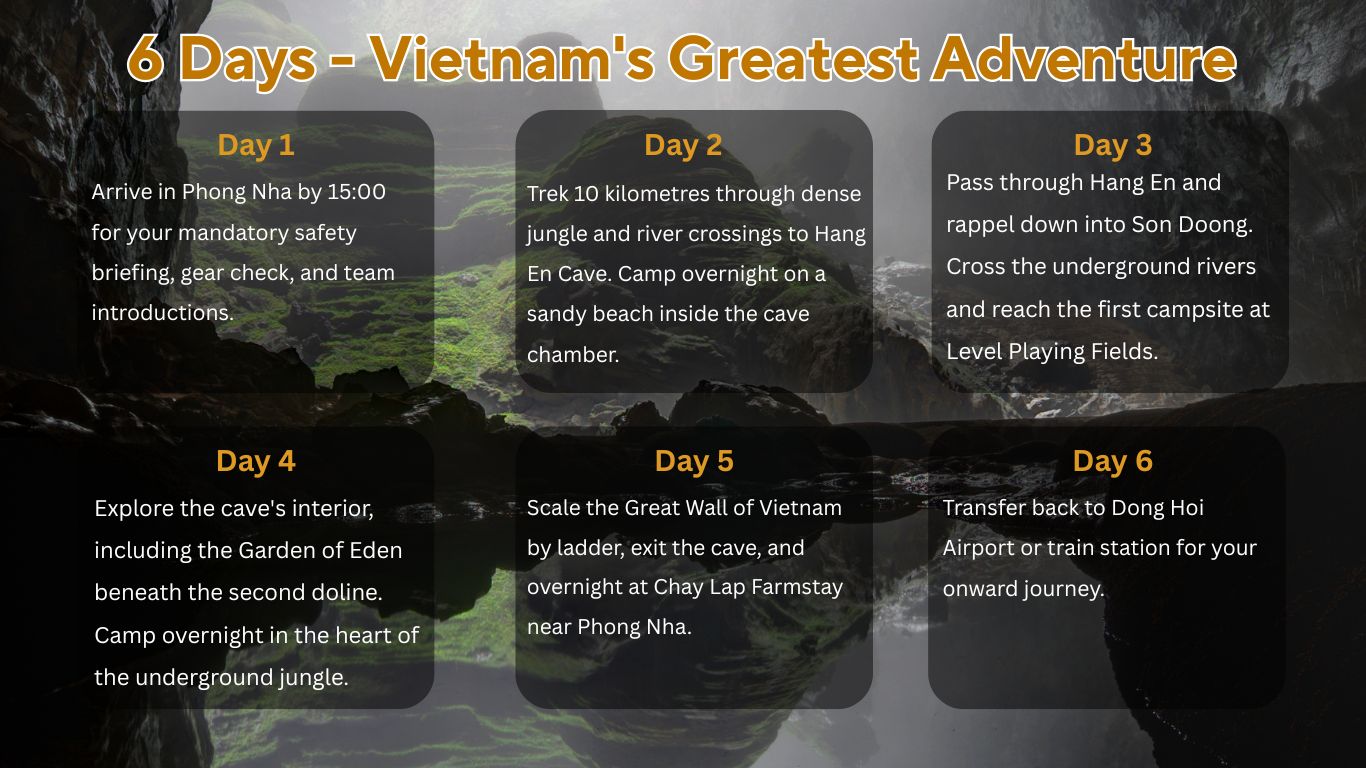
The full Son Doong expedition runs for 6 days and 5 nights, covering everything from your arrival briefing in Phong Nha to your return transfer to Dong Hoi. Of those 6 days, you spend approximately 3 full days, somewhere between 48 and 60 hours, living and exploring inside Son Doong itself. Therefore, when planning your Vietnam itinerary, build in at least 8 days for the region to account for travel connections on either side. This isn’t a rushed highlights tour.
In fact, you camp inside the cave on two consecutive nights, waking up each morning in one of the most extraordinary places on the planet. That level of immersion is exactly what sets Son Doong apart from any other travel experience in the world.
Day-by-Day Breakdown
How Much Does It Cost?
The price for the Son Doong Expedition at approximately USD $3,000 per person. Please note that this rate may vary slightly depending on the timing of your booking and current exchange rates. For what the experience delivers, most people who’ve done it will tell you it’s worth every cent.
⭐What’s Included in the Price
The expedition is fully all-inclusive, so once you’ve paid, there are very few additional costs to worry about. Specifically, your fee covers:
- Return transfers between Dong Hoi and Phong Nha
- Two nights’ accommodation in Phong Nha before and after the trek
- All meals and drinking water across all 6 days
- Full camping equipment and sleeping gear for cave nights
- Safety equipment, including helmets, harnesses, and ropes
- National park entry permits
- The complete 30-person professional support team
The only extras to budget for separately are your flights to Dong Hoi, personal travel insurance (mandatory), and any personal spending in Phong Nha before or after the expedition.
Things to Prepare for Son Doong
Physical Requirements & Age Restrictions
Son Doong is a genuine physical challenge, not a scenic tourist walk. The trip requires all participants to arrive in excellent physical health with a solid base level of fitness. In the weeks leading up to the expedition, prepare yourself with:
- Long hikes carrying a loaded backpack
- Regular swimming sessions
- Consistent cardiovascular exercise
Additionally, there are a few firm requirements every participant must meet before joining:
- Must be between 18 and 70 years old, with no exceptions
- Children and teenagers are not permitted regardless of fitness level
- Anyone with serious heart conditions, chronic respiratory issues, or significant joint problems should not participate
These requirements exist for your own safety and the safety of everyone in the group.
What the Trek Actually Demands
Over the 6-day expedition, you’ll cover 25 to 30 kilometres of terrain that includes:
- Dense jungle trails with steep climbs and descents
- Multiple river crossings, some reaching waist depth
- Crawling through tight cave passages in full gear
- Rappelling down into Son Doong on Day 3
- Scaling the 90-metre Great Wall by ladder on Day 5
No prior caving or climbing experience is required at all. What matters most is stamina, a positive mindset, and a genuine willingness to push yourself beyond your comfort zone. Throughout the expedition, our support team is always present, always experienced, and genuinely excellent at what they do.
Essential Gear to Pack
Packing smart makes a real difference on this kind of expedition. With that in mind, the essentials to bring include:
- High-grip, waterproof trekking boots (inspected at your briefing, so trail runners won’t cut it)
- Moisture-wicking base layers and quick-dry trekking clothes for the jungle sections
- A warm mid-layer for the cave interior, which averages 18 to 20 degrees Celsius and feels cooler when wet
- Waterproof dry bags to protect cameras, phones, and valuables during river crossings
- Personal medication and a small first aid kit
- High-SPF sunscreen and strong insect repellent for the jungle approach days
- A quality headlamp with spare batteries, non-negotiable inside the cave
- Camera equipment is kept light, manageable, and fully waterproofed
The leadership team supplies all technical and group equipment, including helmets, harnesses, tents, sleeping gear, all meals, drinking water, and porters to carry the majority of heavy communal equipment. So you can focus entirely on the experience itself.
Best Time to Visit Son Doong
Open Season (January to August)
Son Doong is only accessible during Vietnam’s dry season, which runs from January through August. This means all expedition departures fall strictly within this window, with no exceptions. If you’re planning your trip, make sure your travel dates land within these months, as the cave closes completely to all visitors outside of this period.
Why the Cave Closes from September to December
During Vietnam’s monsoon season, the underground river inside Son Doong floods dramatically, submerging entire passages metres deep in fast-moving water. Entry becomes physically impossible and extremely dangerous as a result. The closure isn’t a bureaucratic policy decision. It’s a natural one enforced by the cave itself, and even the world’s most experienced cavers wouldn’t attempt entry during this period.
Best Months for Photography
January to March offer the most dramatic light conditions inside the cave. During these months, the sun angle sends near-vertical shafts of golden light through the dolines, creating the iconic beams-through-mist images that Son Doong is famous for worldwide. Therefore, if capturing those photographs is a priority, targeting the early dry season gives you the best possible chance.
Best Months for Swimming
June to August bring warmer conditions and higher water levels in the cave’s underground rivers and pools, making them perfect for swimming. Additionally, the underground jungle reaches its most lush and visually spectacular state during these months, with the Garden of Eden looking greener and more dramatic than at any other time of year.
Other Spots to Explore Near Son Doong
Most travellers spend at least a few days in the Phong Nha-Ke Bang region before or after their expedition, and honestly, that’s a great call. The area around Son Doong is packed with remarkable experiences that deserve your time. Here are some of the best spots worth adding to your itinerary while you’re in the area.
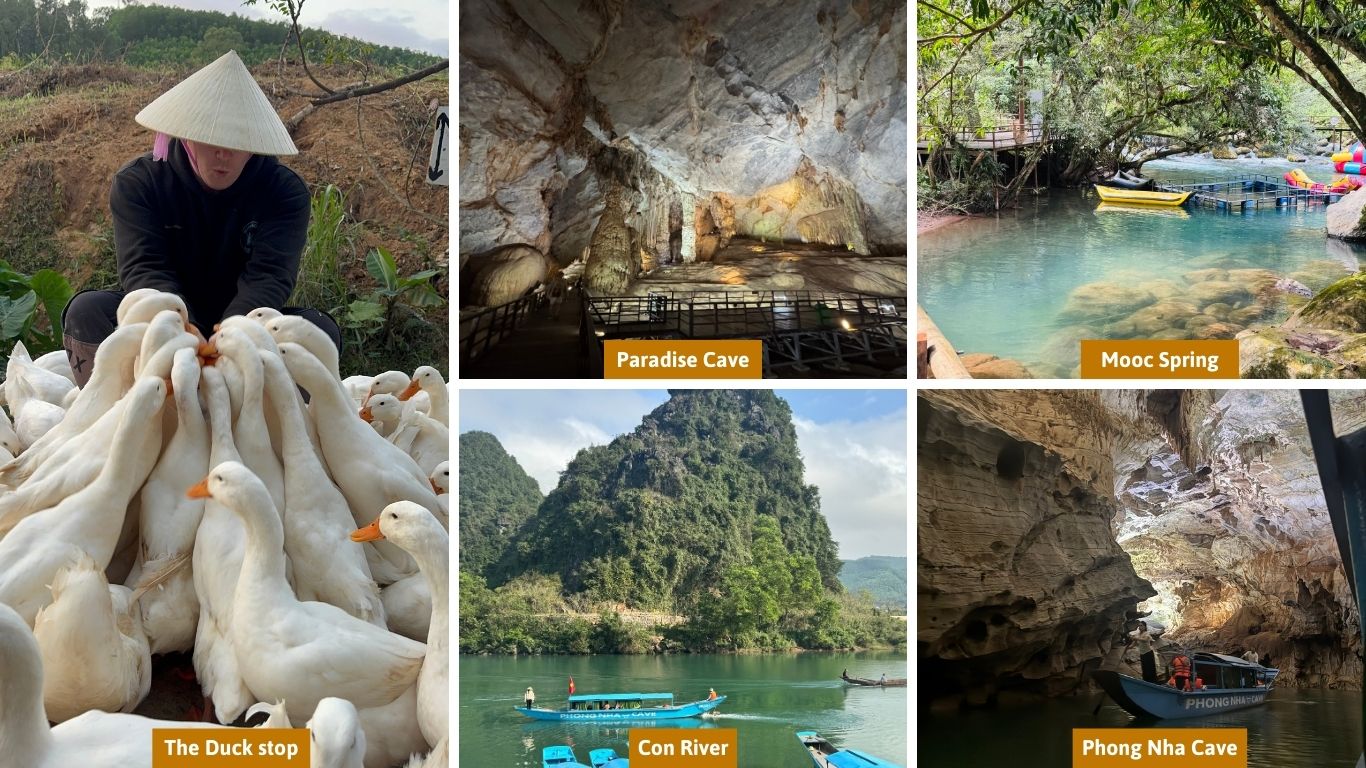
- Phong Nha Cave: The most accessible cave in the national park, best explored on a scenic half-day boat tour along the underground river.
- Paradise Cave (Thien Duong Cave): One of the longest dry caves in Asia, stretching over 31 kilometres with breathtaking stalactite and stalagmite formations throughout.
- Dark Cave (Hang Toi): A thrilling mix of zip-lining, kayaking, and mud bathing inside a cave. Perfect if you’re travelling with a group or looking for something more playful.
- Nuoc Mooc Spring: A stunning turquoise jungle spring ideal for swimming and unwinding after days of intense trekking.
- Phong Nha town: The charming base village for the whole region, with excellent local food, a laid-back riverside atmosphere, and plenty of warm hospitality.
FAQs
Is Son Doong Cave open in 2026? Yes, but all 2026 slots are fully booked. Contact our team at vietnamtravelsonline.com to register for 2027 departures.
How hard is the Son Doong trek? Challenging but manageable. Good fitness is required, but no prior caving or climbing experience is needed.
Can I visit Son Doong independently? No. All access requires a fully licensed operator. Get in touch with our team at vietnamtravelsonline.com to book safely and confidently.
What is the Son Doong cave tour price? Approximately 75 million VND per person (around USD $3,000), fully all-inclusive.
How long is the Son Doong expedition? 6 days and 5 nights in total, with around 3 days spent inside the cave itself.
What is the best time to visit Son Doong? January to March for photography, June to August for swimming. Closed September through December.